Rome 2023 – EUR’s modernism and a cemetery
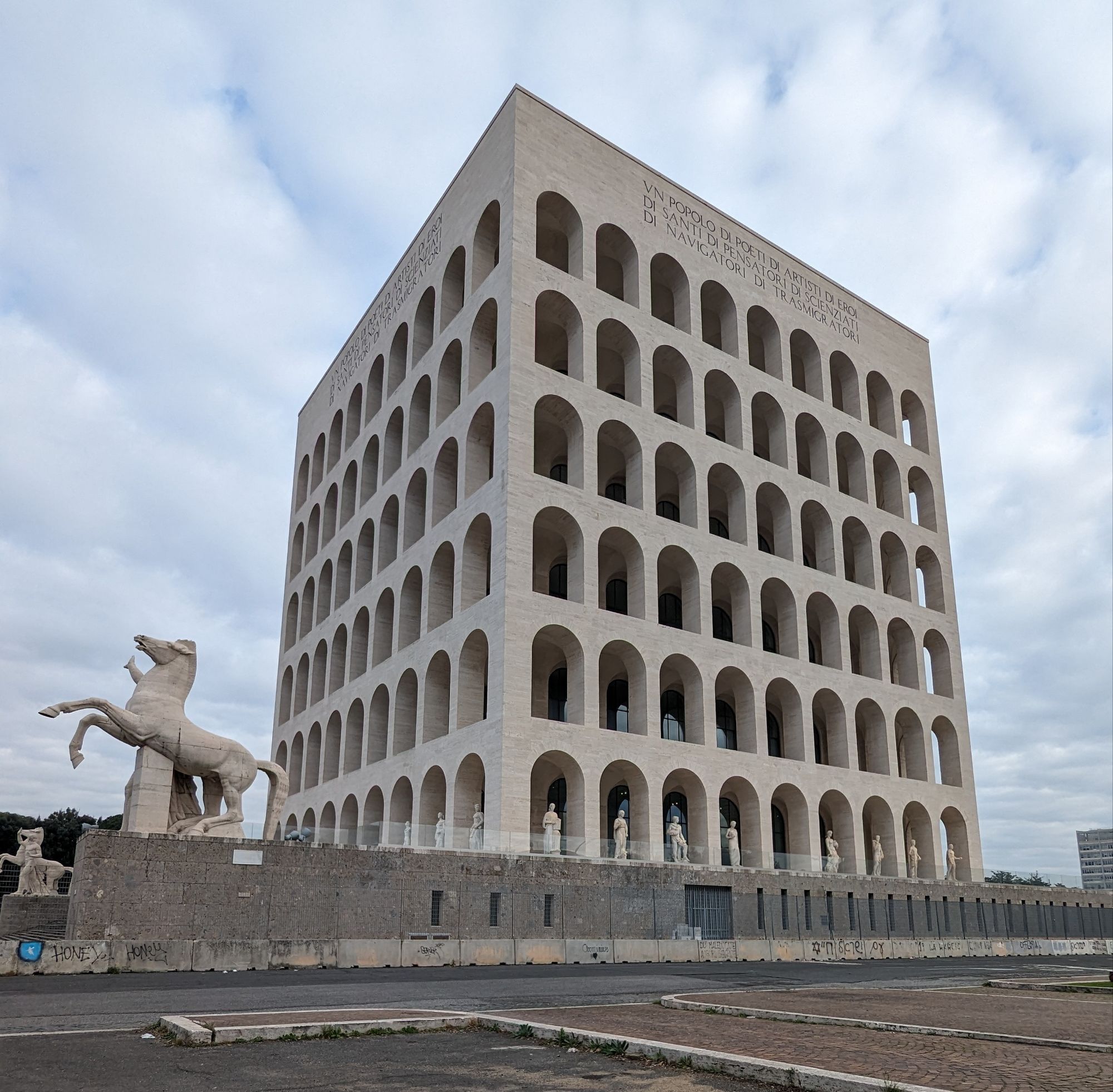
EUR was Mussolini’s attempt in Rome at building a (new) Rome at scale using 20th century materials and techniques. And by goodness, the results are impressive. The neighbourhood is reached on Line B of the metro system. The Palazzo della Civiltà Italiana (left) is visible directly from the metro station, EUR Magliana. It is as striking as anything in the old city. It stands in a fenced-off space with very little in the way of greenery. Like much of Rome, wildlife does not easily cohabit the space with humans. Feral cats do – also not good for birds and small mammals. Unfortunately the building is not open to visitors. Through the entrance door, one can see a big Fendi sign which suggests how the building’s purpose may have changed.

Don’t stop there, though. The wide avenues are themselves of interest and contrast. The coffee is a good price, too. The owner of such a businesses gave some advice as to where else we should go.
EUR is very much an administrative centre with at least two major offices of state parked there. The Finance Department has a fantastic frieze outside….fantastic in the sense of how it sends a shiver down the spine – Mussolini is depicted as being Mussolini on it. (lRight – first line on a horse).
Mussolini’s legacy is everywhere to be seen in this part of Rome. As much as that of Trajan and Augustus and Nero in the old city.
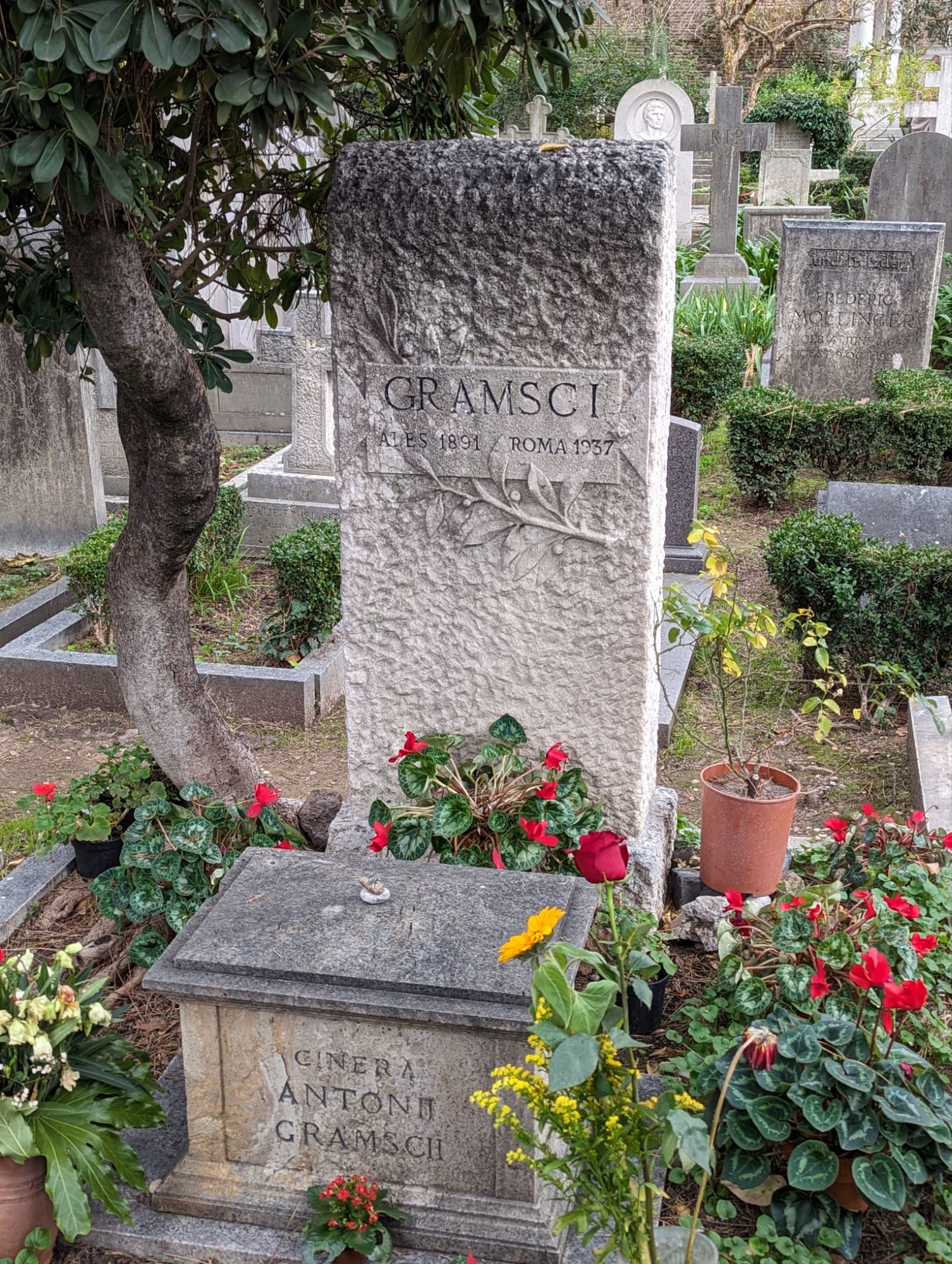
In the nearby “English” cemetery (Cemitero Acattolico – accessible from Pyramide Metro station) lies one of Mussolini’s greatest critics, and paid the ultimate price for it. Antonio Gramsci resided on the absolute opposite of Mussolini’s vision. Mussolini imprisoned him. And it was in prison where he died after 13 years’ incarceration. But those years were spent writing his so-called notebooks. I read a lot of Gramsci when I was a student of politics (my first degree) and to find his grave was extraordinary. No plan here, but it is what comes from random conversations with unexpected café owners in Mussolini’s new city.
Who else is in this cemetery? Well, Keats is (and his long-term friend, Joseph Severn). He went to Rome to get well (undoubtedly a better climate, but succumbed nonetheless). His tombstone bears the words “HERE LIES ONE WHOSE NAME WAS WRIT IN WATER”. This can be read in a number of ways – fleeting, ripples (when a pebble is thrown into it). He was a poet after all. You’ll find Percy Shelley there, too. What is important though is the tranquility of the space. Whilst it is notionally free to enter, a donation of 5 Euros is advised.
 Be informed
[…] This post belongs with others published earlier including Bernini and Borromini and Mussolini’s Rome architecture and district. […]