Archive for the ‘Book reviews’ Category
Why solar power is the answer

Demonstrations against nuclear power, Hull, 1983
Again, showing my age, there was a time before chiller vending machines. I had just started at college and one arrived on campus. There seemed to me to be two things instantly wrong with them. First, the drinks – sticky water really – were packaged in aluminium cans. Giving back aluminium cans to supermarkets had been one of my earliest experience of environmental activism. I’ve never liked them because of the energy required to make single-use containers. Second, chillers used energy to chill something that really did not need chilling. It was purely an aesthetic, especially in the middle of winter. Chillers just multiplied from that point onward. It seemed to me throughout my formative years that we used energy for things that did not need energy. Shop windows at night. What was that all about?
It kind of didn’t matter in those days. Aluminium smelters were located near to hydro-electricity stations and there was plenty of coal  and generating capacity to burn it. Plus, chillers and lit shop windows made life better. Apparently. It is true, it was a piffling amount of energy relative to the big users: iron and steel producers, paper mills, bitumen manufacturers, water-treatment works, industrial-scale refrigeration. What I did not know before reading Chris Goodall’s book, The Switch, was that some smart people run businesses that sign up some of these large energy users and gain permission to turn off their equipment when the grid is under pressure at peak times. One Belgian company, REstore (now part of Centrica), operates a platform that monitors the real-time use of electricity of its clients and gauges whether they can be taken off-grid for a certain amount of time to level out demand. The platform is clever – or at least the people behind it are – in that it works out just how much energy can be taken from a big customer without affecting production. For example, molten steel stays that way for some time. Even 5 minutes off-grid can provide enough capacity to keep everyone else secure in supply. The company receives money from the grid in exchange for its clients coming off grid when requested to do so.

Hastings Railway Station: why no solar panels?
Why is this important? it is important because despite the startling fact supported by a logic that I am not going to argue with, photovoltaics (PVs) can supply humanity with all of the electrical energy that it needs more cheaply than by any other renewable mode. Contrary to what I had thought about chillers and well-lit shop windows, actually energy consumption is declining in developed countries. In the UK, apparently, we are back down to levels of consumption as of 1970 driven by two things. First, it is actually difficult for those in the rich west to consume much more. There is unlikely to be more chillers because – probably – there is nowhere to put them and we cannot realistically drink more sugared water. Second, many of the things we still consume are getting more efficient, in particular lighting (see below). Semi-conductors, too, are becoming energy efficient, exponentially so.
How much electrical energy does humanity need? Goodall thinks that a decent standard of living can be achieved by a total running energy demand of 3kw per person (one-third more than the running demand in 2015). Scale that up, that is about 30 terawatts of power (twice the level in 2015). Goodall notes, too, that the amount of available solar energy is: ten times that of the nearest renewable alternative, wind; one-hundred times that of biomass; wave and hydro are some 13 times less than biomass. All we have to do is collect the solar energy and covert it. Well, not quite.
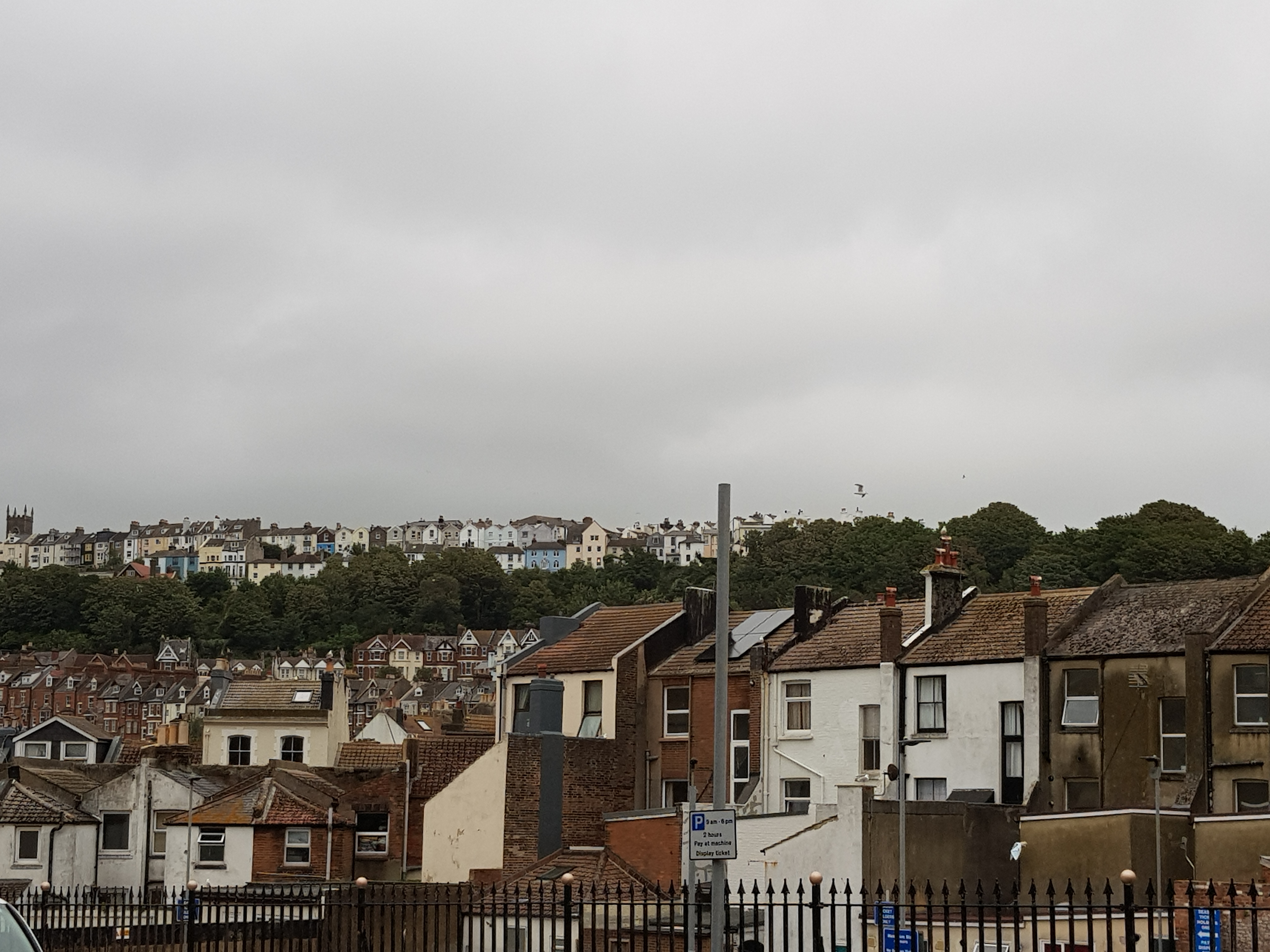
Roofs in Hastings. Spot the solar panels
PV cells are getting cheaper. Goodall uses the concept of the learning curve to explain this. Essentially, the more units manufactured, the more learning about how to manufacture them quicker and more efficiently. The decline in the costs of manufacture has a name, Swanson’s law (Like Moore’s law in semi-conductors, but bigger).
And maybe my chiller and shop window lighting gripes are actually valid? In a solar-dominated world – and especially in the temperate North – energy use peaks between 1600 and 2000 daily. There is an overlap between businesses shutting down and people arriving home, turning on lights and cooking dinner. Goodall reminds us how crazy it is that we do not have demand pricing for energy at these peak times. In the zero carbon world, we are going to have to turn off our lights and appliances at peak times. Ensuring that all light fittings are LEDs, seemingly would make a huge difference – demand can be reduced by one-third by this very simple change. Goodall goes further and advocates we all sign-up for smart meters on the basis that, in the  end, suppliers will be able to shut off energy-hungry appliances at times of stress for the grid. He’s thinking particularly of our washing machines, tumble driers and dishwashers. My supplier invites me weekly to install a smart meter; I have been reluctant to let them into my house, but maybe there is a utilitarian case for it?
So, controlling demand at peak times is one element of the solution. Another element is alternative sources. As noted above, wind is the second-best option here; conveniently there is an inverse relationship between solar and wind – when it is not sunny, it is often windy. Wind turbines, however, cannot compete on price with solar. At the time of Goodall’s writing, the best solar conversions were coming in at US$0.06 per Kwh. Swanson’s law suggests that this conversion can go down further. However, such prices are half that of the best performing fossil fuel sources (p47). Wind can do about US$0.07 in its best places (Texas, for example), so it is a good complementer, and works at night and when the sun does not shine so brightly. Wind’s experience curve, however, is much less steep and sustained. It is also more expensive to site turbines (rental charges can be quite high; offshore has quite high maintenance costs).
 There is also room for public policy – a south-facing roof in a city should have solar cells mounted on it. Equally, dwellings need to be made energy-efficient. A bit of insulation is insufficient. Rendering UK housing stock energy-efficient, in particular, is a major task. It is going to take central government support to transform regular houses, but companies like Energie Sprong (right) in the Netherlands (operating in the UK) show the way; though at £30k, it is quite a commitment. One house in a block seems a little pointless. We may need to do a bit of getting together to make this happen. Though disappointingly, there was no sign of money for these kinds of developments in UK budget statement of 8 July 2020.
Then there is the battery solution which has been driven by a rapid diffusion of electric cars. Elon Musk’s Tesla vehicles’ high performance depends on high capacity battery storage – in his case based on lithium ion technology (fast discharge). Seemingly there is enough lithium on the planet to build the necessary batteries. The United States Geological Service estimates that there is 13.5m tonnes available, which is more than enough and is recyclable. What Goodall doesn’t tell us, however, is whether this lithium is accessible, subject to geopolitics and/or would have environmental implications if it was exploited. There are other battery technologies – flow batteries are slow discharge, so not much use for cars, but work for other less dynamic applications such as mobile phone masts.
 Then there is pumped hydro – excess daytime electricity is used to pump water up for hydro-release when the sun does not shine. There is one in the UK at Dinorwig in Snowdonia (left). It can react quite quickly at peak times. But scaling up is not easy; there would be more damning needed and lots of power lines. Effectively, we are still short.
Fuels are stores of energy. Fossil fuels are particularly good because they are concentrated stores which means you get a lot of energy per bundle rendering it possible to have meaningful fuel tanks in cars and aeroplanes. Goodall doesn’t hold out too much hope in the hydrogen economy – it is way too dangerous and difficult to store and is not particularly dense in its energy. Time to turn to microbes. Carbon neutral fuels are possible. Here’s the logic: take hydrogen and carbon dioxide, literally feed it to known microbes in return for energy-rich molecules containing hydrogen, carbon and oxygen. These can be stored in existing oil storage infrastructure – a bonus for what will need to be a rapid switch.
Goodall advises us to keep an eye on a couple of pioneering companies – Electrochaea and LanzaTech. Both use microbes to convert various elements and compounds – carbon dioxide, carbon monoxide oxygen and hydrogen – often taken from the environment, sewage installations or from industrial plants such as cement factories before emission, and converted into a liquid fuel – methane and ethanol – that can be stored and used when needed. Just like with hydro, excess summer electricity is used in the conversion process. The excess, argues Goodall, is actually worthless. PV generates more electricity than is needed in the summer, so putting it to good use is no bad thing.
Finally, there is air capture of carbon dioxide. This is inherently a good thing as it would actually remove carbon dioxide from the atmosphere. It does not require the burning of fossil fuels to capture it to then use it to make liquid fuels. A company called Climeworks in Switzerland leads the way here. Carbon dioxide is captured, combined with other elements to produce liquid fuels. It is expensive at the moment and would benefit immensely from the world adopting realistic carbon taxes as Climeworks’ carbon dioxide would be tradeable. Investment costs are equally important. Low interest rates help in the development of technology and installation, particularly of PVs for consumers.
I am still convinced that saving energy is still important and might contribute to reducing the deficit between what renewables can achieve in the winter and dark months. It does not seem to me just to be a case of our appliances becoming more energy efficient. Those drinks chillers and shop windows can still be turned off.
Pictures:
Energie Sprong – https://www.energiesprong.uk/
Dinorwig – https://www.fhc.co.uk/en/power-stations/
Book Review – Rutger Bregman, Humankind
Filed under: Book reviews, Environment, History, Politics, Privatisation |
 Leave a comment
  I was going to start with what I dislike about this book, but that would be contrary to its whole ethos. I had in my head that there was something opportunist in Bregman’s prose, and hence the man himself. I have to say that this book could be life-changing, or in the case of oldies like me, a bit of a booster, like one gets to top up a vaccine every now and again. In life I can see myself slipping into pure cynicism. Bregman is a check on that. So I am going to change the criticism to give readers some idea of how I should be thinking rather than the way that I have come to think.
So, here is the re-writing of my original first paragraph (I’ve moved what was the original first paragraph to the end of the review for anyone who is remotely interested).
Regular readers know that I do not watch much television, though I did when I was a child. As I got older and was allowed to stay up later and watch adult television, my father insisted that we watch documentaries rather than sit-coms and soaps (we’re talking the 1970s). The format was always the same: an expert or knowledgeable person (or both, James Burke, right), would present in a quite succinct way some science or current affairs. There was never any music and the expert or knowledgeable person had no dress sense, even then. With hindsight, one of the reasons for the no frills was limited bandwidth. Broadcasting hours were fewer back then, and there were no specialist stations. It was broadcasting in the true sense. There was insufficient airtime to waste on unnecessary graphics, or choreography. In recent times, I have been reading much more than I used to – the pandemic has helped. I have noticed a style of writing in popular non-fiction (a genre that I have traditionally avoided out of snobbery). It is akin to current TV documentary style. There’s a soundtrack, an extended narrative with cliffhangers and expansive prose. I realise that this book in this style is not produced for me. Though if it gets people engaged with science, current affairs, art, philosophy, then all well and good.

SONY DSC
I started reading this book, not because I want to be convinced at how kind humans can be – which is the point of the book – but because I know Bregman is an important commentator. I finished it, incidentally, because I wanted to be convinced of how kind humans can be. Bregman made a big splash at Davos in 2020 in telling rich people that they should pay their taxes, and in the US when he took on Fox News’ Tucker Carlson. He is not going away in a hurry. I commend him for that because ultimately he is on the right side of history, albeit a white history. But the style of writing is not entirely to my liking but I know this view is not shared!
The first part of the book seeks to debunk the hypothesis that there is a human predilection to violence and being beastly to one another. I have not checked the veracity of many of the claims made in the book, but here are a few that I really want to be true:
- blanket bombing of populations in war does not result in the surrender of those subject to it
- soldiers do not like shooting at other soldiers, even if they are deemed to be the enemy
- Lord of the Flies is a work of fiction; left to their own devices, boys will create order and manage their way through
- the people of Easter Island did not engage in tribal warfare that decimated the population (colonialists did that)
- The Stanford Prison Experiment was a contrived hoax to enhance the reputation of social psychology and academics
 The philosophers at the heart of Bregman’s analysis are Hobbes and Rousseau. The Hobbesian world is that of the Leviathan – the human need for strong leaders, discipline and order to prevent a state of chaos, barbarism and cruelty. The Rousseau-ian world is one of the social contract, cooperation and common interests regulating behaviour. Bregman makes the argument that it all started going wrong when private property was conceived, when people – who became powerful and rich – were able to enclose common land and exploit it for private gain. These people built a civilisation on slavery, private property and the exploitation of natural resources. This has been a theme of other books that I have recently read; namely, Adreas Malm’s Fossil Capital and Tim Lang’s Feeding Britain.
There’s a chapter on Stanley Milgram and the “shock machine” – an experiment in 1961 where volunteers administered electric shocks of up-to 450 volts to so-called “learners” in an adjacent room. Milgram was Jewish and, claims Bregman, devised the study to to offer an explanation for the Holocaust. People follow orders, hypothesised Milgram, irrespective of the implications, genocide being one of them. All is not, however, as it seems. Bregman argues that the experiment did not test obedience, as stated, rather it tested goodness! The subjects, although paid, participated because they believed that the research would result in a contribution to knowledge. An explanation for the Holocaust was a worthy study. There was trust in the research and people in white coats who kept insisting that they needed to continue to administer the electric shocks for the research to be valid.
It was also the time of Adolf Eichmann’s trial in Jerusalem. Bregman’s case for human kindness could not exclude a discussion on the Holocaust. I do not have the authority or knowledge to engage with the terms of Eichmann’s guilt. What is recorded is that Eichmann presented himself as someone who just followed orders. Hannah Arendt who witnessed the trial first hand coined the term, banality of evil, to capture the essence of the Eichmann phenomenon as she saw it from the courtroom. There is much debate about exactly what she meant, though it was largely interpreted as her accepting Eichmann’s defence. Bregman concludes that Eichmann’s motive for his actions was actually a commitment to a cause that he believed would lead to a better society, however perverted.
What about the German citizenry who fought to the very end of the war, despite the inevitability of both the eastern and western fronts being breached? The evidence points to camaraderie, argues Bregman, rather than ideology as the cause of seemingly pointless resistance.
More optimism
Bregman takes us with him to visit some interesting people. For example trained nurse and economics degree dropout, Jos de Blok (right), not someone I’d previously been aware of. He runs a large healthcare company in the Netherlands called Buurtzorg. He does this not by d esign, but as a consequence of working in the sector and realising that it the care service was not fit-for-purpose. Care is not delivered optimally as a product (i.e. commoditised) and by people who get their orders hierarchically, rather by people who work in small autonomous teams. De Blok is not unknown; he is in receipt of the the Royal Society of Arts’ Albert Medal. Previous recipients of this medal have been Stephen Hawking (physicist), Tim Berners-Lee (the www) and Francis Crick (DNA). So, he’s in good company.
Then there is the story of the transition of South Africa from Apartheid state to inclusive democracy under Nelson Mandela. The period between Mandela’s release in 1990 and the presidential election in 1994 was precarious. I was aware of the ugliness of Eugène Terre ‘Blanche and his Afrikaner Volksfront. I was not aware of the Viljoen  twins. The family resource meant that only one of them could go to university. Constand said that brother Abraham should go. Constand (left) joined the army and became a senior officer in the South African Defence Force in Apartheid South Africa. Abraham studied abroad and found himself irreconcilably parted from his brother and aligned with the ANC and Mandela. Constand joined Terre ‘Blanche. I’ll leave it there – it is worth reading the book just for this section and only goes to raise my emotions. Mandela is the leader that we all need.
If any reader thinks that I have covered everything in this book, I have not. It is packed with ideas about positive reforms: education, democratic, penal, protest and warfare! The protest issue is so pertinent as I write at a time when the USA is convulsed by the racist Murder of George Floyd. Drawing on a study by American sociologist, Erica Chenoweth: “In the real world, she thought, power is exercised through the barrel of a gun. To prove it, she created a huge database of resistance movement going back to 1990. ‘Then I ran the numbers,’ she wrote in 2014. ‘I was shocked.’ More than 50 per cent of the nonviolent campaigns were successful, as opposed to 26 per cent of the militant ones. The primary reason, Chenoweth established, is that more people join nonviolent campaigns. On average over eleven times more. And not just guys with too much testosterone, but also women and children, the elderly and people with disabilities. Regimes just aren’t equipped to withstand such multitudes. That’s how good overpowers evil – by outnumbering it.” (p359). At a time of Covid-19, however, maybe not.
Bregman keeps caveating his narrative with admissions of imperfection in the characters and methods he presents. Deliberative democracy works sometimes, not others. There are some truly bad people around – power corrupts, absolute power corrupts absolutely in Lord Acton’s famous phrase. But Bregman is right, too, that if we treat one another badly in our places of work, jails, schools, communities, we cannot be surprised if it is reciprocated. We have seen during the pandemic real goodness in people, communities coming together to help one another and even the act of self-isolating and observing the lockdown are unexpected demonstrations of togetherness. Let us try to retain some of that as we move on, starting with the rewriting of my first paragraph.
Here is the original first paragraph:
The more I have been reading recently, the more I have seen this style of writing. Now, I do not watch much television these days. But when I was growing up – I know I keep going on about this – television documentaries used to have an expert or knowledgeable person (or both), would present in a quite succinct way some science or current affairs. There was never any music and the expert or knowledgeable person had no dress sense. One of the reasons for this succinctness, I imagine, was limited bandwidth. TV programmes did not start showing until late afternoon and TV stations shut down by midnight, apart from at the weekend. And then it was half-past midnight. There was such a shortage of airtime, so every minute mattered. Hence the quality of the output. Bregman’s book is a documentary with music, and is excrutiating for it. Moreover, it is extremely patronising: “This may get a little technical, but we need to understand where he went wrong” (p88). It then proceeds to be not very technical.
Pictures:
Bregman: Victor van Werkhooven
James Burke: https://archive.org/details/james-burke-connections_s01e10
Jos de Blok: https://www.josdeblok.com/biography/
Constand Viljoen: https://en.wikipedia.org/wiki/Constand_Viljoen
I work in a Business School: Shut down the Business School
Filed under: Book reviews, Co-operatives, education, The Academy | Tags: Business Schools
Leave a comment  Martin Parker (left) tells us in his new book, Shut Down the Business School (below right), what we already know. We know that Business Schools are – to use that always unhelpful metaphor – cash cows – for universities the world over. They are a volume business in themselves. They also sell a product – the dream or aspiration of riches with the right formula learned at the Business School.
That definition of riches – or personal wealth – is a capitalist-managerialist one. It is one in which (let me turn this into a powerpoint presentation):
- bosses boss and everyone else does as they are told;
- bosses – managers – are worth more than the people who work for them (defined in salary and benefits/perks)
- managers’ decisions are right (until they are not);
- meeting or exceeding shareholder expectations is the purpose of firms;
Business Schools are multi-disciplinary – that is definitely a plus – and the aggregate business discipline is a social science. The disciplines, for Parker, are (pp 26-34):
- Finance (always assuming that earning rent on capital is a legitimate and perhaps even praiseworthy activity, with skillful investors being lionized for their technical skills and success);
- HRM (not particularly interested in what is like to be a human being);
- Management information systems (premised on the sensible assumption that high-quality, relevant and timely information is necessary to make high-quality relevant and timely decisions, but agnostic about direction or context of the made decisions);
- Operations management (aimed at shrinking time and space, and when successful destroys the local);
- Accountancy (the production of different versions of the truth for different purposes);
- Marketing (predicated on maximising the number and value of transactions within a given organisation, market or economy, promoting hyper-consumption);
- Strategy (an attempt to predict the future and shape an organization in such a way that it profits most from what that future looks like).
Economists are spared character assassination, MBAs (the award and the award holders) are not, and there is not much that is good to be said about professional organisations such as Business School accreditation and Accountancy bodies. Government and regulators are also chastised and the universities obliquely for currying favour with them.
Of course, practitioners in these disciplines are likely to be unhappy with these characterisations. But Parker is trying to make a point and breaking a few eggs in the process. For whilst in each Business School there are scholars happily teaching to formula, many are not. He puts himself in the not category as a critical management theorist. These iconoclasts are generally tolerated in Business Schools. And successfully ignored, though their books and papers are, usually, counted in the compilations of league tables of excellence in publishing.
Where is this going?
This book follows the formula for the books that I currently read and review: tell a ghastly story of how it is, and then lead the reader to a new and enlightened future. For the Business School, Parker has a number of ideas. The marketisation of education has turned education into a product. The Business School then provides the customer – students, their parents – with what it thinks they want; namely, the formula for being a manager, creating wealth (for self and others) and “success” (judged against spurious measures).
Parker’s solution is a School for Organising; one that does not view organising and management as synonymous. There is no reason – as demonstrated in countries such as Germany – for workers and their representatives to be excluded from Executive Boards. There is no reason for firms to prioritise shareholders over employees, workers and community. There can be no justification for the raison d’etre of firms to be to externalise pollution and bring about the collapse of civilisation (which is the likely outcome of uncontrolled climate change). The “hollowed-out” state, as we witness currently (writing in the middle of the Covid-19 pandemic lockdown in the UK), has left citizens vulnerable to a virus for want of Personal Protective Equipment, the provision of which in the UK was outsourced and subject to minimal inventory control, something that the managers of the supply companies and the politicians, learned in Business Schools.
The new Business School asks “How can people come together to do stuff”? (p113). What are the alternative modes of organising, both political (for example, anarchy) and business (for example, co-operatives such as wholefood wholesaler, SUMA, pp116-119)? It is truly interdisciplinary – not just within the School’s disciplines, but external, too. Other faculties such the natural sciences and humanities (art and business are very good companions). For myself and my own writing (I am writing a strategy textbook, please get in touch if you want to read it), the natural sciences are the starting point of our business courses. The planetary boundaries are the starting point for organising, not an afterthought. It is the job of the new Business School to alert students to the possibility of alternative ways of organising, evaluation and making decisions.
The disciplines ridiculed earlier are repositioned. “Accountancy is no longer about finding and hiding profits” (p169), marketing works for the people who buy things, not those who sell; operations management correctly prices carbon and other pollutants against speed and price. Economists teach de-growth or reformulate GDP in human terms.
Parker is also aware of the dangers of setting up a School for Organising. Over time, it becomes its own Business School, packed with salaried professionals with pensions detached from the people who are subject to the School’s teachings. There is a need, he argues, for de-schooling (drawn from the work of Ivan Illich), a much more co-operative approach to learning – learning being the operative word. That said, there has to be room for study – a discipline, a task – without which more bad decisions get made. De-schooling to its natural conclusion of no School at all is no panacea. The Business School is politics and politics is about power and the control of resources. There is nothing, however, to say that what the Business School teaches has to be capitalist-managerialist.
Picture: University of Leicester
Food security in the UK – time to worry
Filed under: Book reviews, Brexit, Co-operatives, education, Environment, Food | Tags: Tim Lang
Comments (5) Tim Lang (right), professor of Food Policy at City University’s Centre for Food Policy, is the go-to person by the media when fo od policy and security make the headlines. He was a frequent contributor to BBC Radio 4’s Today programme when it became clear that the UK faced food shortages in the event of a hard Brexit. Reading his latest book, Feeding Britain: our food problems and how to fix them, one can see the extent that he should host the show, not just contribute to it when the headlines demand. Food security in the UK is a big problem, and its fragility has much to do with British exceptionalism, a situation that, in the context of Brexit, is fast receding. This is the first book that I have read that actually makes a credible case for Brexit; it is not intended to do so and it is something that Lang stumbled upon rather than explicitly endorsed. More on that in a moment.
Feeding Britain is published by Pelican Books (below left), an imprint of Penguin/Random House, The imprint publishes work on hugely topical issues in accessible styles. In reading Lang, one senses the haste with which it was written. It is in no way sloppy, far from it, but Lang knows every reference whether it be a long-published academic article, government report or personal interaction. It has inspired me to get moving on my own work. It demonstrates what is possible from a life of accrued knowledge. There are 470 pages of text. Each one is a gem. Each one leaves the reader out of breath.
 Where to start? Actually, it is quite simple – some history basics. Britain’s imperial past is, to put it generously, chequered. It is, seemingly, the origin of the British thought, paraphrased here, that someone else will feed us, so we do not need to bother growing stuff ourselves. The growing is usually done by people in far-away lands, the rural poor, who receive a small fraction of the value of the product ascribed to it by end users, usually in the rich West. And even when fresh produce comes from near neighbours such as Spain, the back-breaking work is done by migrant labour often paid below minimum levels in the country, and affording them a lifestyle far short of that enjoyed by the beneficiaries of their labour. It also comes with a huge carbon footprint, a consequence of mono-culture and extensive transportation.
Coupled with the imperialism argument, the concentration of land ownership in the UK which started with the Enclosures of common land in the 17th and 18th Centuries; annexation of Church land under Henry VIII and more recently, enclosures arising from the privatisation of much of the public sector since 1980. Lang puts a figure on it – 189,000 families own 2/3 of UK land or one-half of England is owned by 25,000 people (p368). This is all made worse by the commodification of land – it is an investment, not a source of sustenance or habitat. 3,660 per cent is the figure by which land values have increased in the last 50 years. This means that, at the very least, it is difficult for small farmers to produce appropriately and sustainably. It forces tenants – and they usually are tenants – to use intensive methods to increase yield and further inflate the value. And on top of that, owners attract production subsidies from the EU – and post Brexit, presumably from UK taxpayers! (That mechanism is described in pages 370-7.)
Allied to the land ownership debate, Lang charts the changing percentage of income people spend on food vis-à-vis other things; notably, housing costs. The land owners, by this argument, not only enclose land and extract a high Gross Value Added from it (relative to the growers), they also own the properties in which the majority live. In extracting more from tenants, the margin has to be squeezed out of food prices (and by definition costs). Cheap food, argues Lang, is then equated with good food (not because it is nutritious, but because it seems to be good for someone else’s wealth). Moreover, the price of food rarely incorporates the externalised costs of production – environmental damage, health and society more generally such as life expectancy (which bad food shortens).
More positively, shortening supply chains would be a positive example of taking back control! And this is the Brexit argument. Though we know only too well, that Brexiters see the extension of food chains as being a Brexit benefit, and with it a reduction in quality, safety and increased insecurity, the UK no longer has the capability to defend those supply chains against hostile state actors or have the global influence to guarantee supply in time of scarcity, unlike in the imperial past. Security is also threatened by cyber attack on those supply chains, something that Lang believes is under appreciated within Government (and society more generally).
Lang argues that the National Minimum Wage or the National Living Wage needs to be re-calibrated to pay for, what he calls, sustainable diets. The factors above have been made worse – and particularly in the UK – by the population moving on to super-processed foods that are high in fat, salt and sugar (HFSS). Again, the costs of this are externalised (the National Health Service costs obesity alone as £6.5bn and a wider societal cost of £27bn – p207). Lang is adamant that an escalator tax on HFSS foods needs to be introduced. Pension funds, too, should divest from firms that manufacture HFSSs. Ad-spend (marketing is also disproportionate relative to health promotion, and it is targeted at children through social media. Lang also argues that the large supermarkets – singling out Tesco with its 30 per cent share of UK grocery market should be broken up.
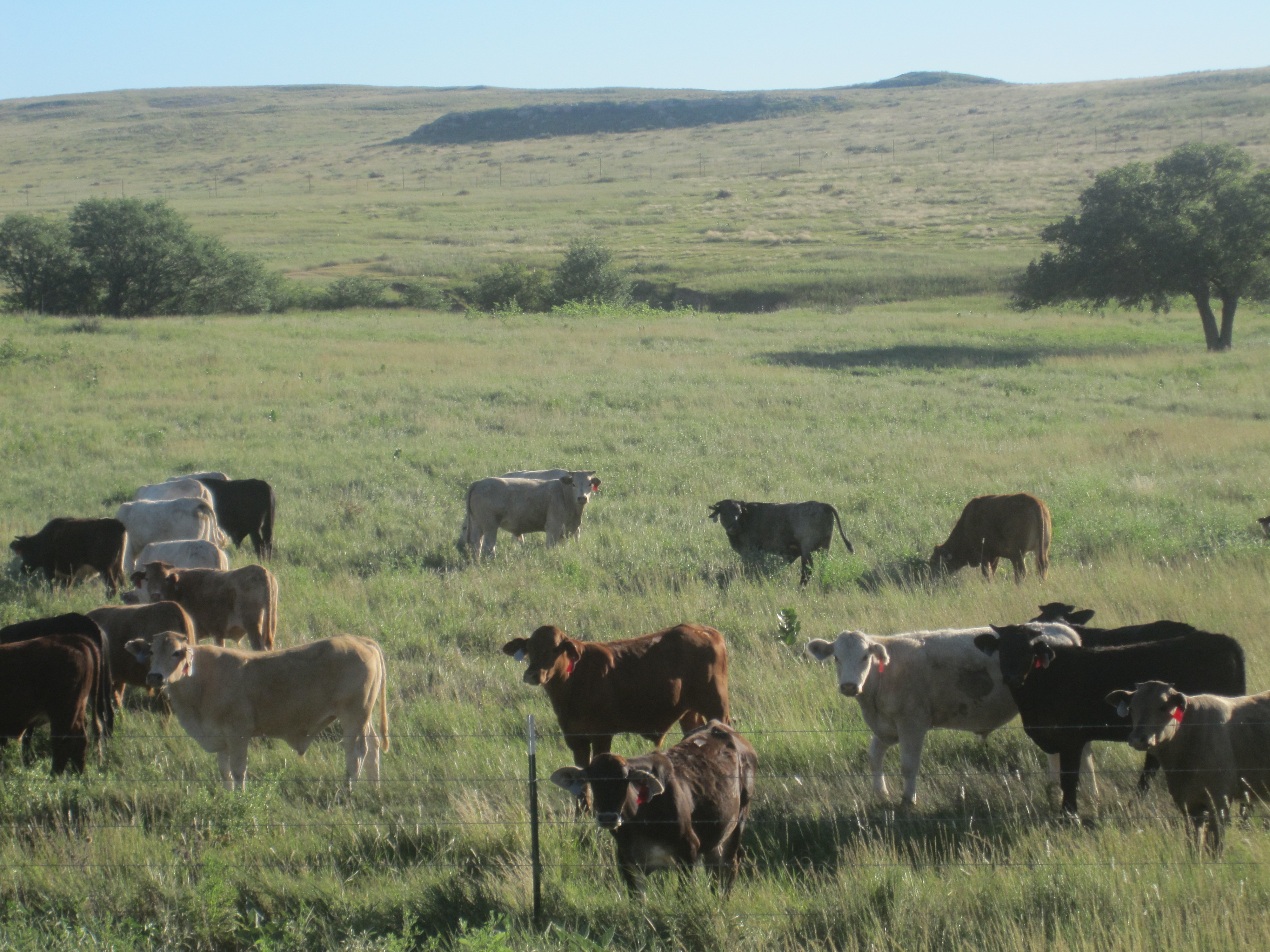
Lang is not making an argument for growing out-of-seasonal foods in the UK in the middle of winter under lights and heat (even if
Source: Billy Hathorn
they had taste, which he clearly thinks such produce does not); that does not help the carbon footprint much. Rather, he is saying, that we have to grow more food in he UK (the country produces only 53 per cent of its own food) that is consumable directly and not, as seems to be true of much of arable farm produce in the UK, fed to animals, some of which like ruminants are hugely inefficient converters of plants into meat as well as huge greenhouse gas manufacturers. They fart. A lot. Land use is dominated by rearing and feeding animals. That very process, too, has an external cost that could be fatal in the future, antibiotic resistance as such valuable medicines are routinely fed to animals to retain “yields”.
There are also things about imported foods that I had not thought about. For example, we should not take water for granted, even though the UK is temperate and generally wet. If we import food from countries that are short of water, but whose products are full of it (fruit, vegetables, etc.), there is a net imbalance and a cost to the growing country and its people, nothwithstanding their foreign earning from the produce (often imported by air). Huge volumes of water are in foodstuffs that we do not anticipate, such as rice. Lang’s section on water imperialism is a must-read, pp225-44.

Cornish Aromatic apples (source: Brogdale)
Lang highlights that the UK produces so little of its own fruit. Whilst many exotic soft fruits are not viable in the UK, apples, pears and berries are eminently feasible and desirable. The population does not get anywhere near 5-a-day fruit and vegetable consumption (which seems truly bizarre and frightening at the same time). On horticulture, in 1950, there were 3000 apple growers in the UK, by the mid-1990s there were 800. Government grubbing regulations facilitated the destruction of orchards through subsidy! (p91). Lang contrasts the UK case with France where small growers and cooperatives are significant suppliers (the cooperatives provide the scale). Scale in the UK is provided by very large and concentrated growers and importers.
Finally, there is an important role for education, not only in terms of teaching children about food, its origins, how to grow it (sustainably), and how to cook primary ingredients, but also in what children are fed at school. Diet regulations for school meals, argues Lang, need to be universal, not just in the poorest, most regulated schools.
OK, I’ve done some hard work on the reading; it is time for us all to do some hard work in changing the way food is understood, used as a political tool, traded and prepared.
How capital took on labour and gave us climate change in 400 pages
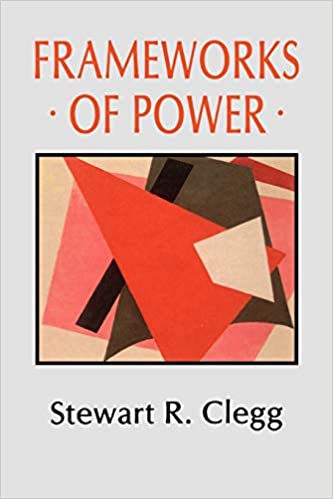 Back in 1989 when I was a student, I took a “course”, as they were called then, entitled Political Sociology. I took it because the other options were over-subscribed. I don’t know whether it was because I was not favoured that particular year and simply did not make the cut for other courses, or whether someone unbeknownst to me, concluded that Political Sociology was just what I needed. If the latter is correct, whoever it was, thank you. Without it I would not/never have read Stuart Clegg’s phenomenal book, Framworks of Power (left). There were 10 weeks of seminars (no lectures) and, each week, I or one of my peers would lead a chapter. Under normal circumstances, this would have been quite straightforward, but this book is tough going. Really tough going. Each chapter, I recall, took about 7 or 8 hours to get anywhere near understanding. Clegg was mischievous, he knew how difficult he had written it. He knew that students like myself would be required to read it. It is that requirement that meant that one had to persevere. The seminar leader was uncompromising on that, thankfully. The rewards for completion and assimilation were immense.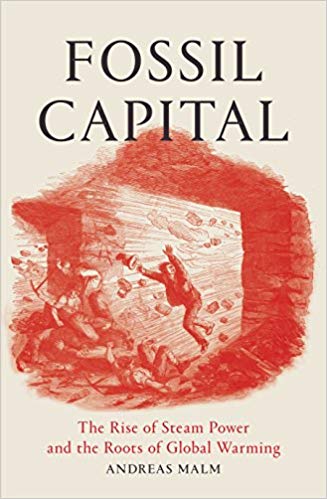
And so it is with Andreas Malm’s, Fossil Capital (right). This book takes no hostages. Its 400 pages are some of the most uncompromising prose. Malm is not in a hurry; and the reader is not invited to be in a hurry either. To be so would result in a less-than satisfactory outcome. It lends itself to being the subject of a “course” with 10 weeks of study. I am not sure that happens anymore. Malm’s book is basically in three parts. The first section is a history of the machinery that delivered the industrial revolution in Britain. The machinery was powered by coal (steam generation) – the reasons for that “prime mover” makes up 250 of the 400 pages. The second section is philosophical – Malm applies an essentially Marxist analysis (about 80 pages) to get to the nub of the cause. The third section is Malm conceding a certain pessimism about the future; about humanity’s ability to get out of this mess. Verso, the publisher, was, apparently, committed to the project. They must have because had they not been, an editor would have cut by a third, if not more. That would have been a shame because the detail, often repeated, assists with the final analysis.
Prime Movers in the industrial revolution – water or steam
The detail is awesome. Malm’s account of the work of Robert Thom’s water projects, the pinnacle of which was

Greenock Cut sluice building
the Greenock Reservoir and its 6-mile long acqueduct (the Cut). Much space is given over to Thom and his projects in order to demonstrate how water as a “prime mover” – with imaginative and skilled civil engineers at the helm – could have provided all of the power needed by the textile industry. That was not the purpose of the Greenock reservoir, but the engineering that delivered water to the town could also deliver water to mills, turning wheels to power spinners inside factories. In fact, the Greenock project offered 1666hp as a basis for a “vibrant” – probably sustainable – cotton industry around the town. (It was calculated that mills could share this power, each with 50hp – the average from steam at that time was 29hp.) The potential was never realised and the reasons clear.
First, flowing water was a shared resource. It was a commons – it could not be owned, only managed. The mill owners simply could not co-operate to provide the necessary investment and also self-regulate. Some sites were better than others; the less-well served sites would require other users to regulate their own consumption to maximise the utility of the resource on a daily, monthly and yearly basis. Plans for developing the River Irwell in Lancashire ultimately foundered here. Other schemes were unable to get parliamentary approval not least because cotton industrialists were well represented in the House of Commons.

Quarry Bank Mill, Styal, Cheshire
Second, labour militancy and mobility. On the latter, water mills were located along river courses outside of main towns and cities, such as Manchester. In order fully to attract and maintain a workforce, mill owners had to provide additional resources such as housing, education, leisure and places of worship. There are exemplars – Richard Arkwright’s so-called colony in Cromford, Derbyshire and Finlay’s in Catrine, Ayrshire, for example. Colonies had their issues, but they provided sanitary conditions for employees and their families. The benevolence was not always appreciated and workers often “absented” themselves which resulted in owners taking on “unfree” workers – nothing short of slave labour, that was dispensed with after 10 years’ of indentured service. The apprentices were recruited from the age of 12 and often came from workhouses. The colonies also bred labour militancy – wages were going down and work rates increasing. In March 1830 there was a definitive and violent strike in Arkwright’s New Eagely Mill.

The Apprentice House, Quarry Bank Mill
Where capital is not mobile, it is not optimised. Whilst coal needed for the steam engines that drove the spinning machines was expensive relative to water, it was mobile. It could be deployed in major towns and cities relinquishing the need for additional “colony” investment. It could be controlled and managed by individuals – the owners themselves. Labour was also eminently more controllable. With no colony commitments, costs were managed. Coal was expensive to transport so mills and mines were often co-located (e.g. Wigan, Oldham, Ashton).

Steam engine,_Nortonthorpe Mills, Scissett
Come the legal curtailment of the the working day in the Factory Acts of 1833 and 1844, whilst consistently violated by mill owners, eventually capital substituted machines for labour and intensified the work of those remaining (easier to do with steam than water). Though this new intensity often led to steam engines exploding! Resistance was inevitable and the targets were the steam engines (whose plugs were pulled releasing the water) and the coal mines. The resistance movement is usually remembered as that of the Chartists seeking representation (of men) in the Parliament. From 7 August 1842 increasing numbers marched through the mill towns pulling the plugs on steam engines (seemingly more damage than that was done to mills). There was little resistance.
The ability of strikers to maintain their action was, however, tempered by two factors: hunger and the intervention of the state. The army was deployed on 14 August in the mill towns enabling the mill owners to re-insert the plugs and restart their engines. Malm notes that some 15000 “[S]trike leaders and Chartist agitators were nabbed in batches” (p235). Perpetrators were imprisoned, some were transported (to foreign colonies); meanwhile, damaging or sabotaging coal mines was made a capital offence leading to the execution of textile workers.
Explaining why steam

Andreas Malm
Malm’s logic circuits are never opaque. When one finally reaches (p255) his analysis chapters, there are no great surprises. What is a surprise – though I have no idea why I am surprised – is the lengths that he goes to to eliminate independent variables as causes of steam/fossil over water as industry’s prime mover. It is clear already that Malm points the finger at capital’s control over labour. Malm, however, has to deal with the arguments from others such that coal was a means for humans to realise the natural inclination towards growth and overcoming a dependence on nature for life. He refers to this as the Rickardian-Malthusian explanation. Growth using fossil fuels was always latent, it just needed the right moment to flourish, goes the argument. He concludes that this is rather circular: “The shift to fossil fuels is explained by the impossibility of self-sustaining growth without them, the onset of self-sustaining growth by the shift to fossil fuels.” (p259) Step-by-step Malm takes away competing theories leaving one only: capital. At the heart of capital is ownership – property rights, rentierism. The crown privatised land and minerals below it in the 1570s – the so-called Elizabethen leap – leading to further enclosure of the commons. Granting of mineral rights lead to the commodification of coal.
Comparative advantage – globalisation of capital

Environmental Kuznets Curve
The Kuznets Curve (right) posits that as populations get richer, pollution – and greenhouse gas emissions – declines. Whilst the initial growth is dirty when incomes are low, the environment is cleaned up as incomes grow. Malm points out, however, that the Kuznets curve is only “true” if capital is static. The rising incomes are geographically specific. However, capital moves usually as Foreign Direct Investment. Generally it moves to where incomes are low (drawing on comparative advantage). An element of the comparative advantage, argues Malm, is carbon emissions. Firms relocate their dirtiest activities to countries with low incomes in order to externalise their emissions. Those emissions are then not counted against emissions for the firm’s host country or the consumer’s. Significantly, Malm writes: “In 2001, China entered the WTO, dismantled the remaining barriers to investment, abolished restrictions on foreign ownership, relaxed requirements on local cooperation and, in general, flung the gates wide open: then the real explosion began.” (p331). The western world externalised CO2 emissions to China in exchange for unimaginable growth in GDP. The Kuznets Curve is reversed. Rising incomes lead to fresh waves of capital mobility and more environmental degradation geographically dispersed.
Fossil fuels always win out against renewables
 In 2006 Shell sold its solar subsidiary. By 2013 BP had exited the solar business, too. The margins were insignificant and the electrical energy generated were too cheap to make the necessary profits. For as long as oil had a market price, company boards look to focus on maximising earnings, not contributing to climate change mitigation – which is perhaps what the solar industry had become. Oil and coal still have healthy market prices for a number of reasons: when countries like China are looking to industrialise fast, they turn to coal to produce the electricity for the factories. Not to renewables. Coal and oil are commodities. They are tradable and they themselves have an exchange value in the chain or flow of production. They are commodity inputs that add value and require considerable capital deployed on which numerous other stakeholders benefit – from banks, pension funds and other industrialists. Moreover, the assets are long-lived. Coal-fired power stations coming on line now will produce electricity for 50 years or so; and for some of that time, they will produce electricity at high margins once the debt has been serviced.
Those with vested interests in fossil fuels do not necessarily deny human-induced climate change, rather they advocate a technical solution rather than a social and structural one. Bill Gates (right), notes Malm, is one of  the biggest global investors in geoengineering research. He owns shares in a venture that seeks to put sulphates into the higher atmosphere to reflect away the sun and cool the planet. This technology has dramatic side-effects and has to be administered yearly. Sulphates “deplete the ozone layer, upset precipitation patterns, possibly shut down the Asian monsoon, disrupt photosynthetic productivity, whiten the sky, tinker with the balance between day and night as well as winter and summer, contribute to thousands of air pollution deaths per year…lower the efficiency of solar panels by diluting the sunlight”. (p387) Other geoengineering options include carbon capture and something to do with mirrors!
That leads to a further challenge – and it is the same problem that besets attempts at carbon mitigation; namely, global coordination. Humanity simply cannot do it. The current incumbent of the Whitehouse sees the world in zero-sum terms: winner takes all. No politician is willing or able to countenance the structural changes necessary to bring about the scale of change needed. I write this whilst in the middle of the Covid-19 pandemic shutdown in the UK. The UK Government was not even willing to join with EU member states to procure PPE for health service workers, let alone coordinate global climate mitigation. Indeed, the pandemic has shown us only too well how incapable the international community is to work for some kind of global good that does not confer advantage, and that facilitates a transfer of wealth from the rich to poorer, even if such a transfer is it own interests (rich countries, that is). Consumers, too, are complicit, especially those of us in those rich countries. Are we prepared to consume less, or are we, too, looking for the technological fix that enables business-as-usual? We seem to be prepared to wait and see what Bill Gates comes up with. There’s a 10-week course in there somewhere.
Pictures:
Greenock Cut:
Quarry Bank Mill: Mike Peel (www.mikepeel.net)
Apprentice House: Peter Fuller
Steam Engine: Chris Allen / Steam engine, Nortonthorpe Mills, Scissett
Andreas Malm: https://www.goodreads.com/author/show/292496.Andreas_Malm
Environmental Kuznets Curve:
Bill Gates:
Makers and Takers, review
Filed under: Book reviews, Environment, Finance and Economics |
Leave a comment  There I am in the bookshop and the owner offers me Rana Foroohar’s lastest book, Don’t be Evil..., about the inherently evil Big Tech. He detects my interest, but not quite in this book at this moment. Then he reaches for Foroohar’s earlier work from 2016, Makers and Takers. In true Douglas Adams style I bought it because it was slightly cheaper, but unlike the Hitch Hiker’s Guide to the Galaxy, it did not have a reassuring title (Don’t Panic). Indeed, this book’s subtitle, How Wall Street Destroyed Main Street, could actually be re-titled, Panic. It is that troubling.
How does this book fit into my current reading? Regular readers know that climate change is occupying my thoughts at the moment, indeed my current reading (right) is shockingly pertinent (also used by my bookseller to cause an exchange of money from me to him). The finance industry is both a cause and solution to the climate crisis. To understand how it might solve the crisis, it is worth knowing – or at least reminding oneself – about the dark side of finance. How, despite the financial crisis of 2008, in Jarvis Cocker’s words, The cunts are still running the world. And indeed, ruining it.
This is a gripping book. I know most of the story, but here it is nicely sewn together. Essentially as a Financial Times journalist – unusually so – Foroohar has been a chronicler of the story in bite-sized chunks, in real time. She reminds us about the banking industry’s original functional purpose for capitalism, to provide the funds for investment in the productive economy. She takes us through the deregulation of the industry in both the USA and the UK that crucially broke the separation of boring, low-return retail and business banking and lending and the riskier investment, speculative and hedging activities. Moreover, the central banks in those countries are both lenders of last resort (always reassuring when engaged in risky trading), regulators and, in tandem with the state, secure a compliant civil society and the system of law that favours capital over labour.
Wall Street is also complicit in the financialisation of business. Faroohar reminds us how large firms avoid tax by offshoring their earnings abroad; how they increase the value of their firms by share buy-backs financed by lending (for example, Apple) at the expense of innovation in product and services; and how the executives of these firms remunerate themselves not on the basis of salary like their employees, but rather by shares attracting capital gains tax rather than income tax. This provides the incentive to inflate the value of the firm independent of its products. Here Faroohar cites the case of Pfizer, so desperately short of innovative products, but rich nonetheless.
We see how the finance industry thrives on private and public debt, itself fuelled by low interest rates. The lower the interest rates, the more lending (and hence money generation) becomes feasible. The lower the interest rates, the more money there is to buy property which squeezes out of property ownership a good percentage of private citizens – or at least gets them to overstretch themselves in pursuit of loans. And when whole neighbourhoods become bankrupt, the finance sector provides the money for equity funds to buy up swathes of cheap properties, rent them out, often supported by the state and tax payers, and take rather than make.
The finance sector steals our pensions, ensures the high price of commodities, including essential foodstuffs. And, particularly in the USA, personnel enjoy the revolving door between Government and Banking and vice versa, over and over again. We see how the banks, private equity, and their customers monetise public goods like research and development executed in publicly-funded universities and research centres but privatise the benefits. By offshoring their profits, they return only a fraction of the value generated to source.
Where does the environment come into this? The climate crisis that is ramping up can be still solved by investing in zero carbon technologies, infrastructures, public procurement, education and lifestyle changes. It does not. The finance sector has become an end in itself rather than the means by which an economy can be radically changed in a relatively short space of time. Not only do they not lead in investment in green technology, but they actively lobby against it. And because of the revolving door, a bubble is generated whereby business-as-usual – that is, making money – remains the priority. Challenging this is the struggle of the century. And if we do not win it, the climate will change. Badly.


