Archive for the ‘Cycling’ Category
Tandem Tour 2014
 Having previously done the Rhine and Elbe, sort of, this year the tandem takes another ferry, this time from Dover, England to Dunkerque, France, in to Belgium taking in the cities of Brugges and Ghent. Then onward to Maastricht and Aachen. From there, who knows? We have limited time.
 We are armed with a new tent (Octane 3 person tent, pictured left). It weighs in at 3.5kg, but it is generous in terms of space and has two layers. It is worth the extra weight so we discovered on our first tour with a very light single-skinned tent. Last year’s tent was a bit old and did not make it back from Holland.
The tandem has been serviced. The two tours so far (both are recorded in the cycling tab, right) had taken their toll on the chain wheel and the chain. Both have been replaced. We look forward to trouble-free cycling.
Tandem tour 2013: Zandvoort to Europoort
 Zandervoort aspires to be Nice (in France). The beach is occupied by rows of sunbeds and associated bars and cafés. We selected one of these cafés for breakfast. We were served a curious concoction. Surprisingly lacking in cereals, toast and jam. Breakfast, but not as we know it.
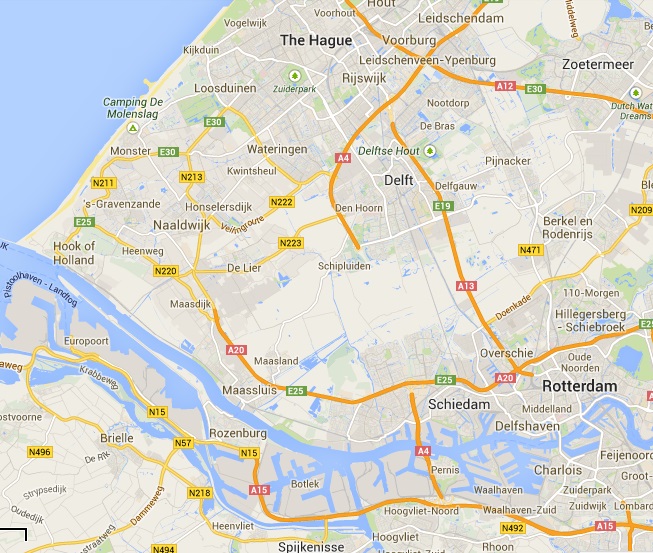
The wind again had presence. Following the LF1A we passed through Zandvoort’s southern neighbourhoods where the architecture at least was better. Less stark and modern. However, along the coastline, Zandervoort has many imitators. Katwijk aan Zee, for instance, the mouth of the original Rhine. The route between the two continues the dunes theme.
Sheveningen is the beach town of the country’s capital, Den Hag. Getting through also requires diligence as the cycle route meanders its way through residential and industrial streets. It is a working port. We had afternoon tea at a café in a 1960s shopping arcade in Kijkduin within earshot of a brass band playing for customers. I felt like I was in England.
And then finally to a campsite on the edge of a curiously named town, Monster. The campsite was great. Cheap, lots of room and a washing machine. We pitched the tent, showered and then went in search of food. Fortuitously, we headed to the beach first and found a restaurant on the beach. Unexpected. Monster is not the kind of place that suggests beach restaurants.
Although the menu was not veggie friendly, we were served with a dish that involved stuffing an apple (picture above right). It was surprisingly good. We were the last customers out of the door at closing time.
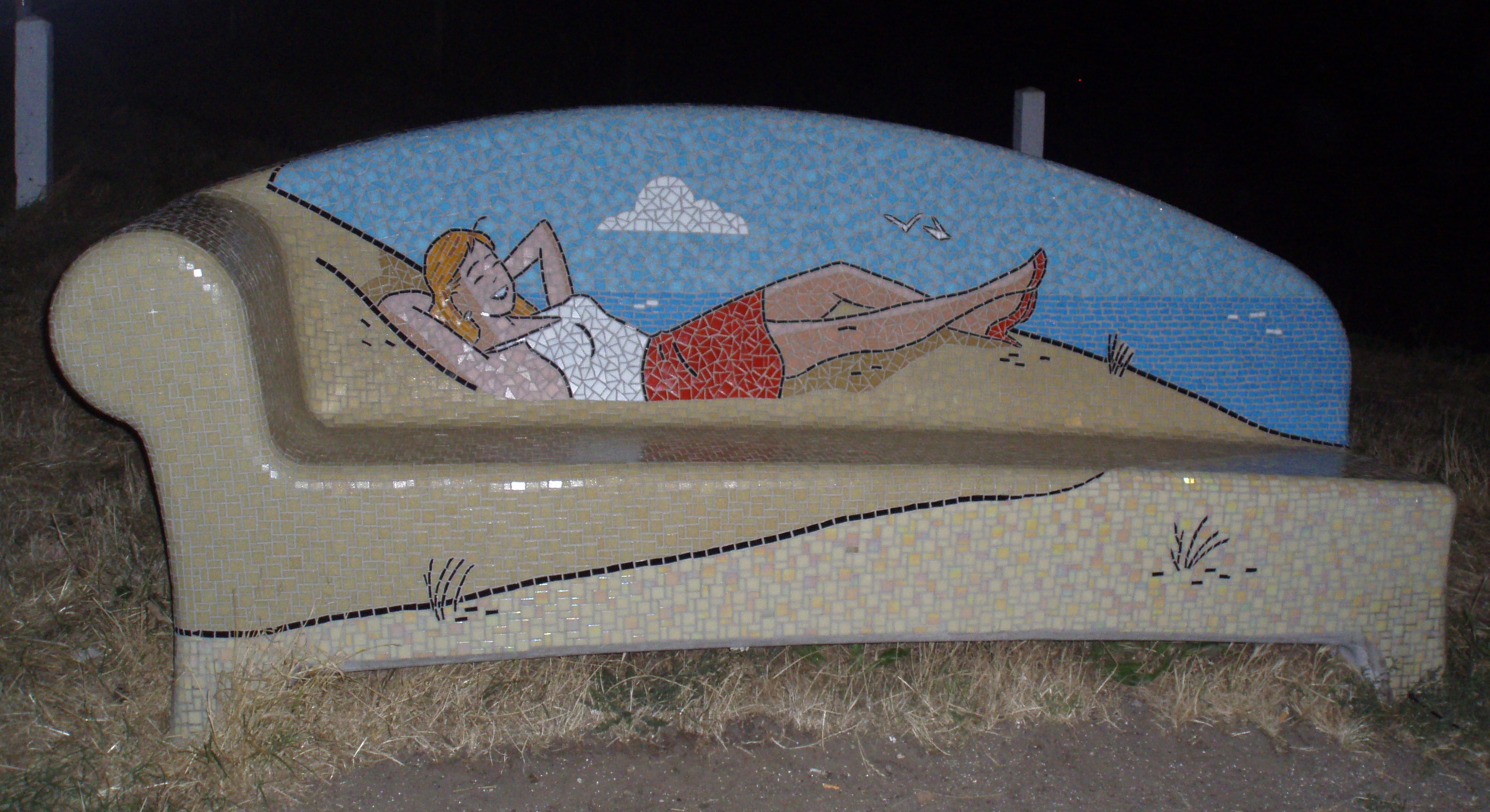 We then attempted to walk into Monster itself in the dark. We got so far before we gave up and went back to the campsite. The short distance that we did walk presented a well-preserved wind pump and some interesting street furniture like the specimen on the left.
And then on to our final day. Hoek van Holland and then round the channel crossing it at Rozenberg where we had a bizarre lunch experience in a bar. There was not much open in the town on a Monday. Not sure why. We anticipated tumbleweed blowing down the main street.
Europoort is then another ten kilometers of unmemorable dockland. And a queue to get on board the ferry. Fortunately it was not raining.
Tandem tour 2013: Gröte to IJmuiden and Zandvoort
 The adjacent beaches to Gröte are superb (see post 17 October). Journeying south takes one through some delightful and quiet forested areas (below right). By this time cyclists travelling south are following one of the country’s long-distance cycle routes, in this case, LF1A. This makes navigation easier as the network of paths and small roads is extensive and potentially confusing.
Bergen marks a southerly marker for this park area. Onward takes one through small indistinguishable towns such as Egmond aan den Hoef and Castricum. Parallel, one could negotiate Alkmaar and Uitgeest (further West). We stayed with the LF1A long distance route through Wijk aan Zee primarily because of our desire to make camp at Zandvoort, a resort 20 km south from IJmuiden. 
Arrival at IJmuiden on the LF1A demands a decision. There is a significant stretch of water to cross either by small bridges across locks (downstream – see map below) or a ferry (upstream). We opted for the ferry. The ride to the ferry seemed like a huge detour. We had to wait with the locals about 15 minutes for the ferry. Operated by Arriva – a company that seems to have all public transport contracts in the area: ferries, buses and trains – is at least free.

IJmuiden ferry crossing
Once across, the path goes through another national park, the Zuid Kennemerland National Park. It is gated, so being there late in the day is not a good idea. But it provides a pleasant and safe approach to Zandvoort.
Zandvoort is a reasonably large – but unattractive – resort. Summer weekends are busy. Very busy. Accommodation is not easy to find. We had planned to camp at Camping De Branding on the north side of the town. On inspection, we decided not to. It would have been very difficult to squeeze in and the loud party music had already started. Instead we rode back out of the town and checked in at the Kennemerduincampings (on the N200 just before it turns due south into the town). Essentially camping in the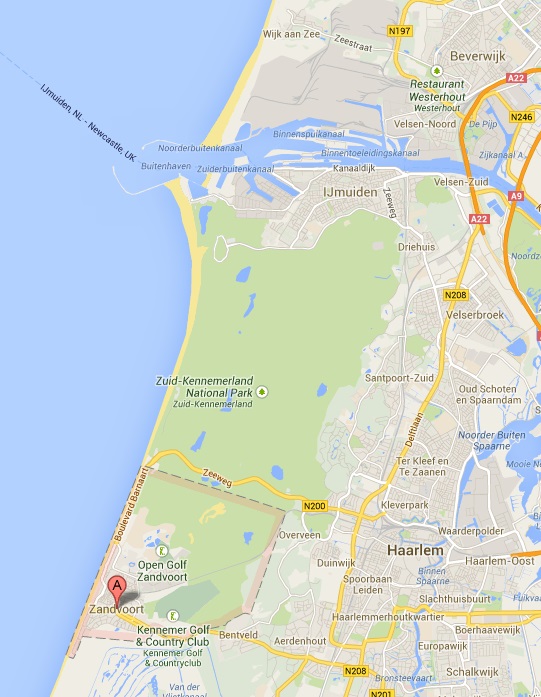 dunes. It is huge. Reception to day tent area was a 15 minute ride! And, ideally, one needs some extra long tent pegs as the dunes are soft. Pitching can be a challenge.
There was a restaurant, fortunately, as we were far to late to get into town.
Tandem tour 2013: Alfsluitdijk
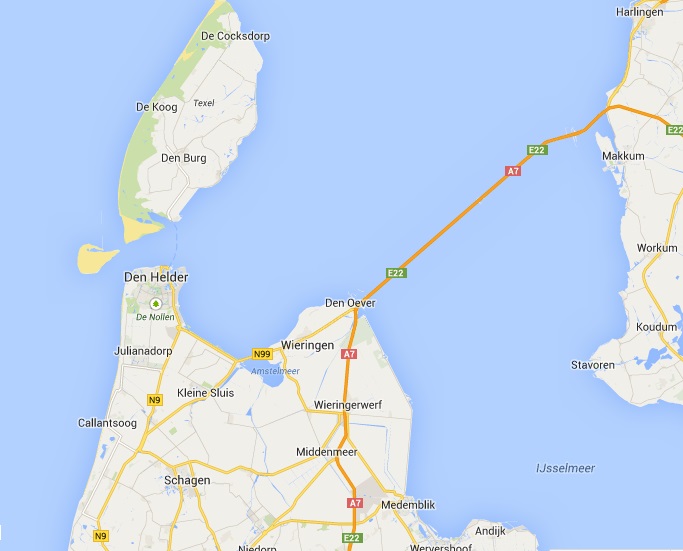 I’d seen it many times on maps and even looked at it on Google Streetview, but the reality was something else. Afsluitdijk itself dates from 1933 (it took a mere 6 years to build) and is the result of both political and engineering debates and challenges. These are commemorated at the Monument Refreshment Stop two-thirds of the way along the dyke from our northerly direction.
According to Wikipedia (17 October 2013), “work started at four points: on both sides of the mainland and on two specially made construction-islands (Kornwerderzand and Breezanddijk) along the line of the future dike.

Alfsluitdijk looking south from Monument
“From these points, the dike slowly grew by ships depositing till into the open sea in two parallel lines. Sand was then poured in between the two dikes and as it emerged above the surface was then covered by another layer of till. The nascent dike was then strengthened from land by basalt rocks and mats of willow switch at its base. The dike could then be finished off by raising it further with sand and finally clay for the surface of the dike, on which grass was planted.” Amazing.
It is a busy stretch of road, the cycle track particularly so. Swarms of speed cyclists use it for training as it has a very good surface and is, on the whole, straight and flat. Naturally it is windy. The sense of being in the middle of the ocean is incomparable, at least in Europe. It is quite a ride.
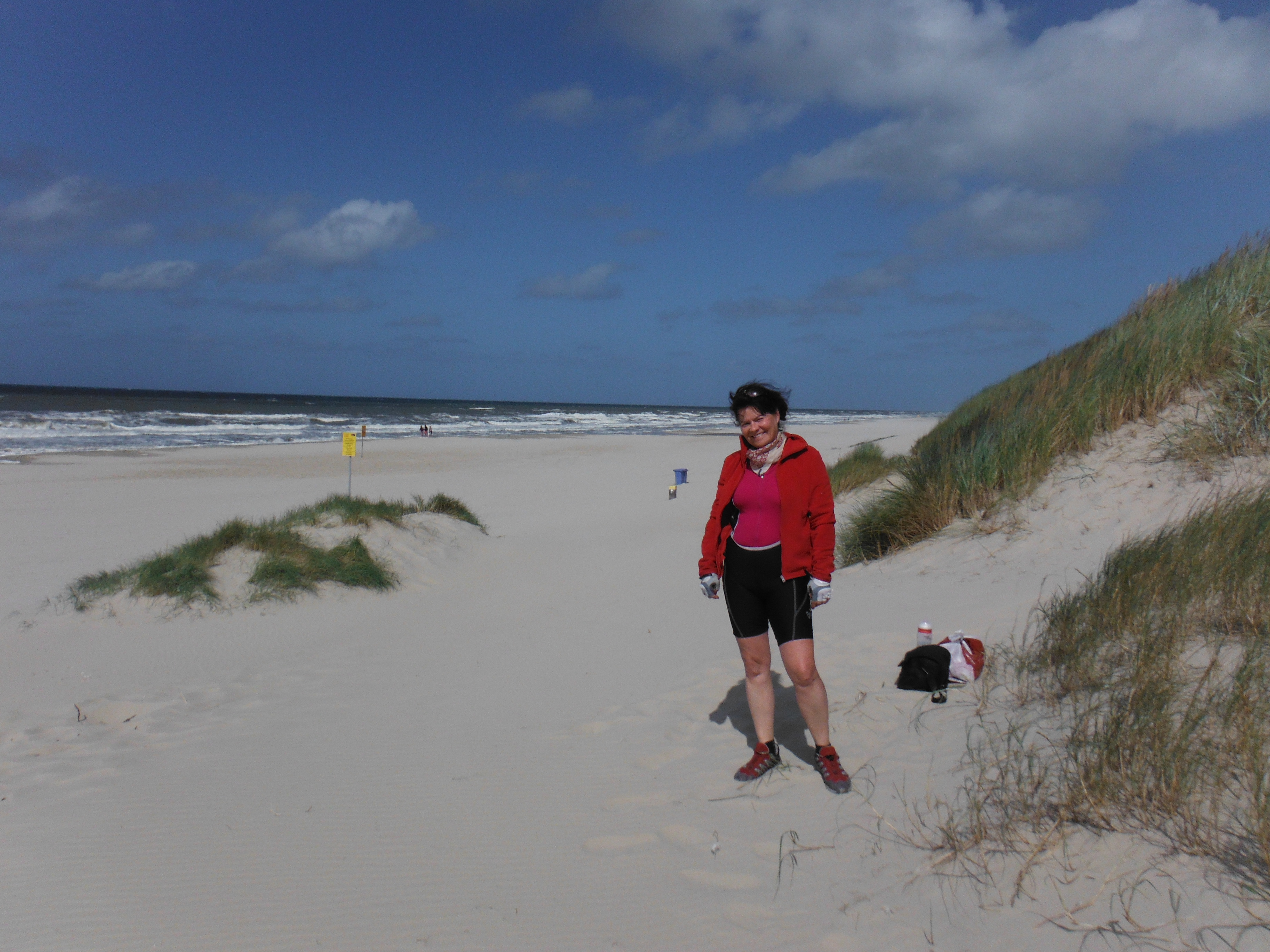 Once back on the mainland, it is back to cycle tracks and agriculture. But this section leads to some of the most unspoilt beaches – golden sand and dunes. A campsite at Groet provided a suitable place for quick access to the beach the following morning.
Tandem tour 2013: Hamburg to Groningen and Harlingen
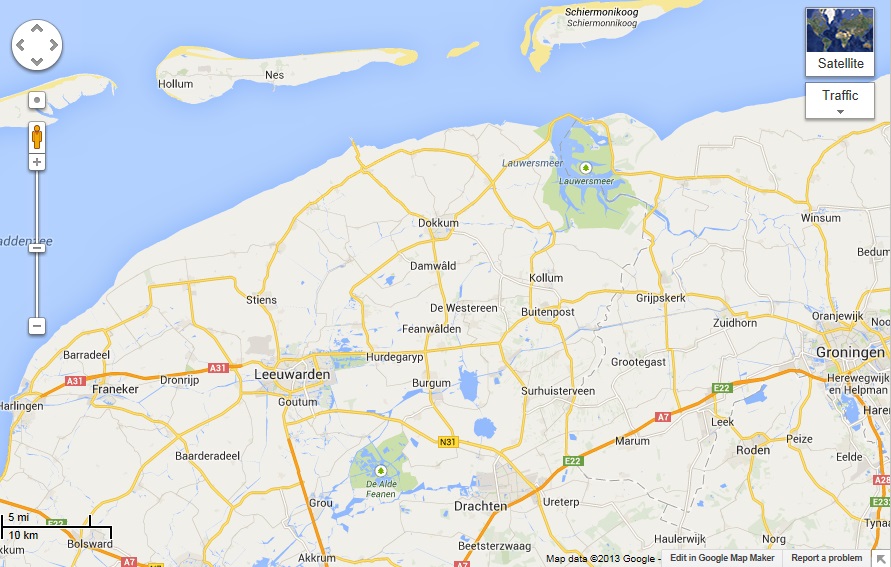 We took a series of trains between Hamburg and Groningen in the Netherlands en route to Rotterdam, where we would take the ferry to England. On the whole, the trains were easy, particularly in the week when competition for cycle space is much less. Our route was Hamburg to Bremen, Bremen to Leer and Leer to Groningen. All in all, it took about 5 hours.
Groningen (below right) is typical of many Dutch towns. Optimised for people and cyclists and full of people who speak languages other than their own. After eating a very relaxed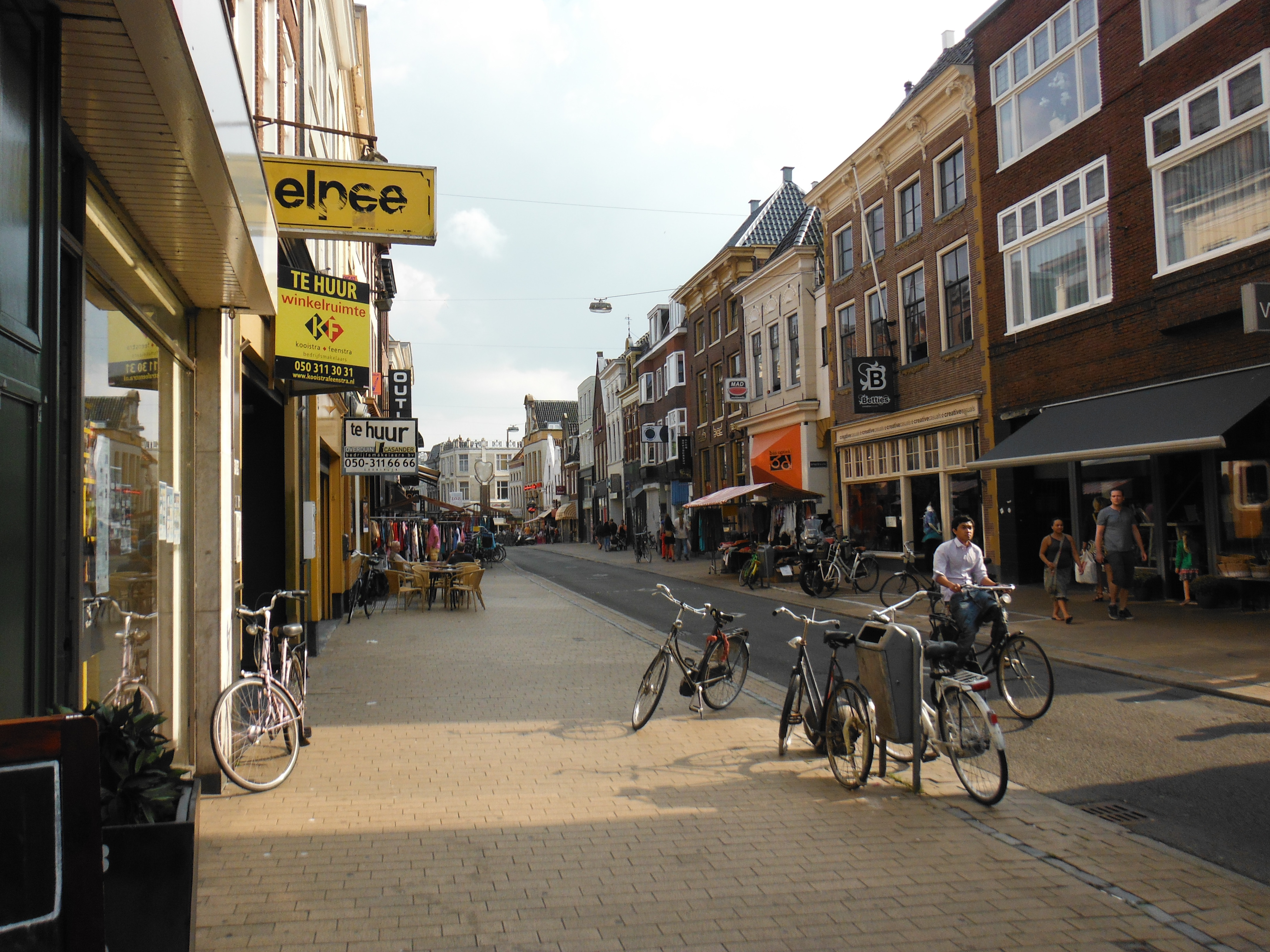 café-bar, we set out to find a campsite in a small place called Vierhuizen just on the edge of the Lauwersmeer national park on the north coast. Estimated to be about 25km, our unfortunate detours added about an hour to the journey despite the excellent signposting associated with Dutch cycle tracks (see post 14 September), it was very dark by the time we got there. But it was worth it.
The campsite had lots of room for tents. The owners run the restaurant, so arriving late was not a problem. They also sell a local beer which is really nice. We enjoyed breakfast there before experiencing the unexpected. 50 kms of sheep and sheep shit, cattle grids and wind punctuated by only one village with a café (Paesens) and a remarkable vendor of ice cream – a retired truck driver now with a rather lighter tuc-tuc with some stories to  tell. The terrain is uncompromising and frankly boring. Fortunately, Harlingen was an oasis amidst this – and it was having a party when we got there (a big funfair and live music). We gave up on the idea of camping and found a hotel (Zeezicht, pictured left). The manager was so enamoured of the tandem that it was stored in the Board Room for the night. Our room was not bad either.
Harlingen is a busy working port. There are ferries to the offshore islands of West-Terschelling, Hollum and the Duinen van Texel national park. With hindsight, the hotel probably had the most veggie-friendly food in the town. We should have eaten there and then gone out to explore.
Tandem Tour 2013: Wittenberge to Hamburg
 We left the Tollhouse and cycled through the Altstadt to the river. The north bank was quiet with a reasonably good surface on a bank giving unusually good access to the river. At Lenzen we took the ferry towards Vietze en route to Hitzacker.
Adjacent to the small hamlet of Kaltenhof is 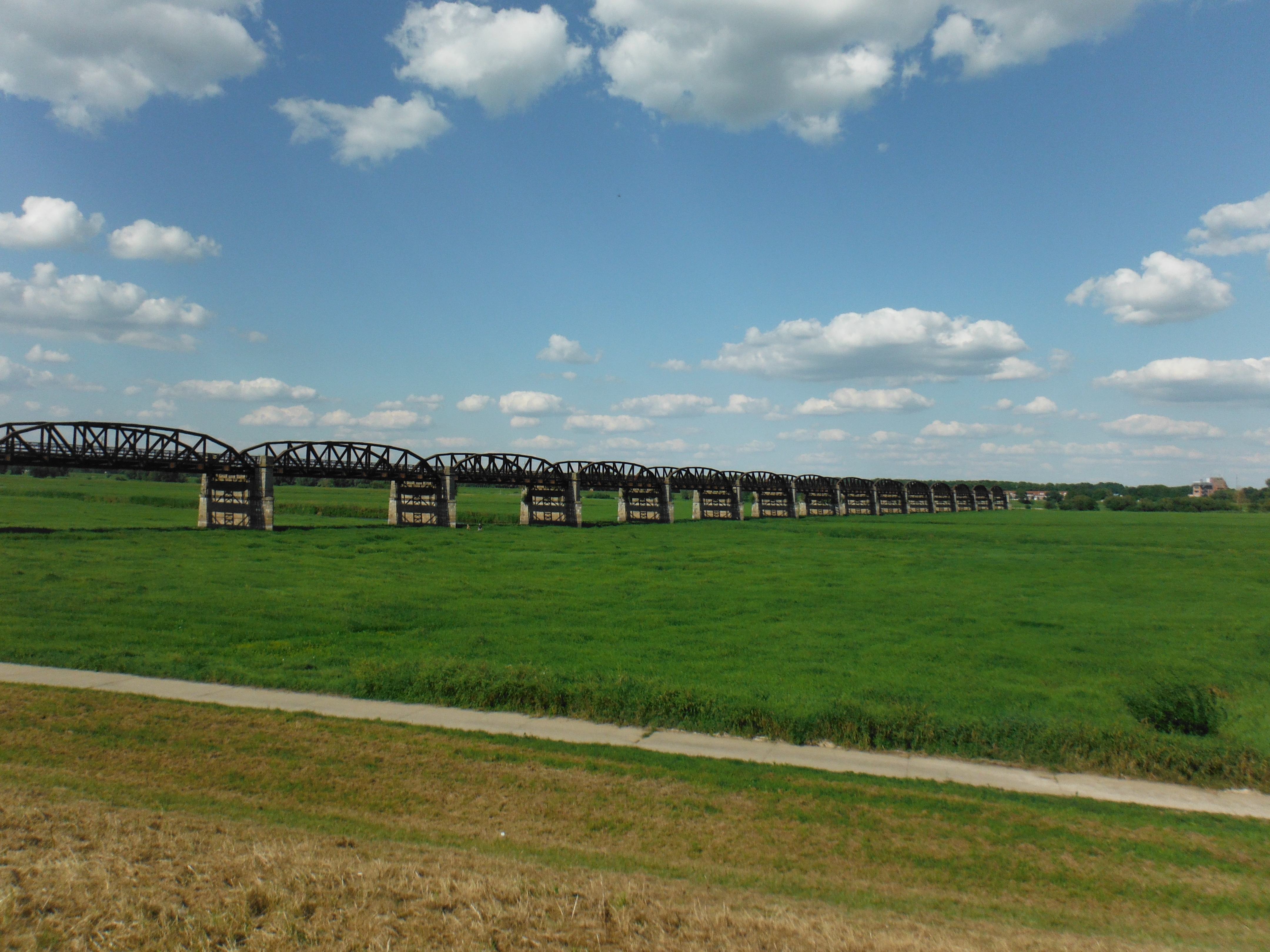 an abandoned railway bridge – die Dömitzer Eisenbahnbrücke (right). The bridge dates from 1873 and was destroyed by the allies in 1945. It was never reconstructed because it formed the border between East and West Germany. Seemingly what we see remaining is protected as a monument; but only the West German section remains as it was protected in law. In the East, it had greater scrap value.
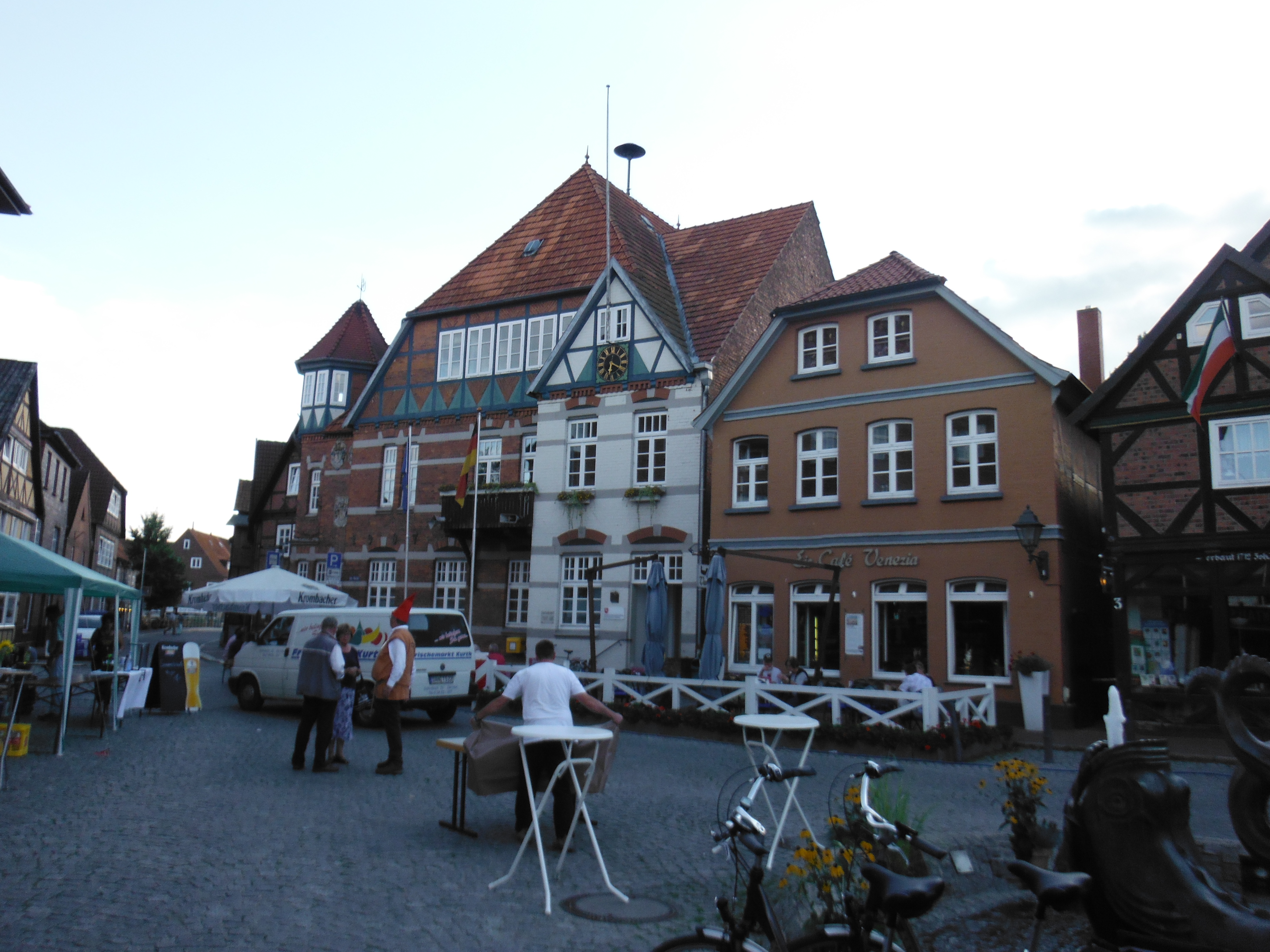 We arrived in Hitzacker in late afternoon on a Sunday. The main square was hosting a fayre with food, beer and children’s entertainment. Perfect for us to have an inexpensive outdoor feast of authentic Thai noodles, Apple tart and beer. We abstained from the bouncy castle. We were hungry and we were going to need the energy for the final section. The town itself competes with many similar hamlets in terms of historic buildings, ‘Fachwerk’. A really pretty town (new Rathaus, left).
Hitzacker also suffered in the late spring floods. We ignored a barrier on the path assuming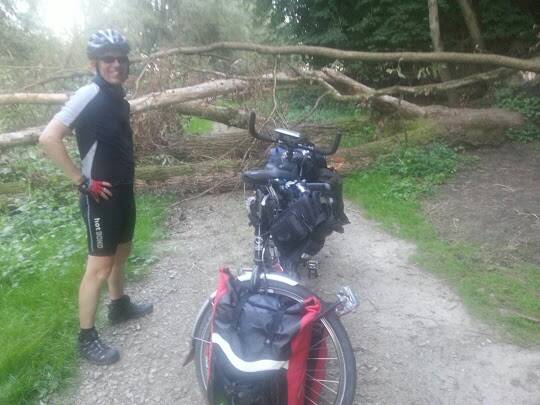 – rightly in many cases – that it would be passable. However, we had not anticipated 10 fallen trees along a short stretch of river on the south side heading to Neu Darchau. On ten occasions we had to unload the tandem and lift it over, or thread it under, a tree (right).
Beyond the obstacles the road ascends towards Drethem. By this time the light was fading. We opted for the campsite at nearby Walmsburg. It certainly was not very busy. The elderly proprietor answered the bell and took our money. She even sold us beer. What she did not tell us, however, was that most of the appliances on the campsite were powered by 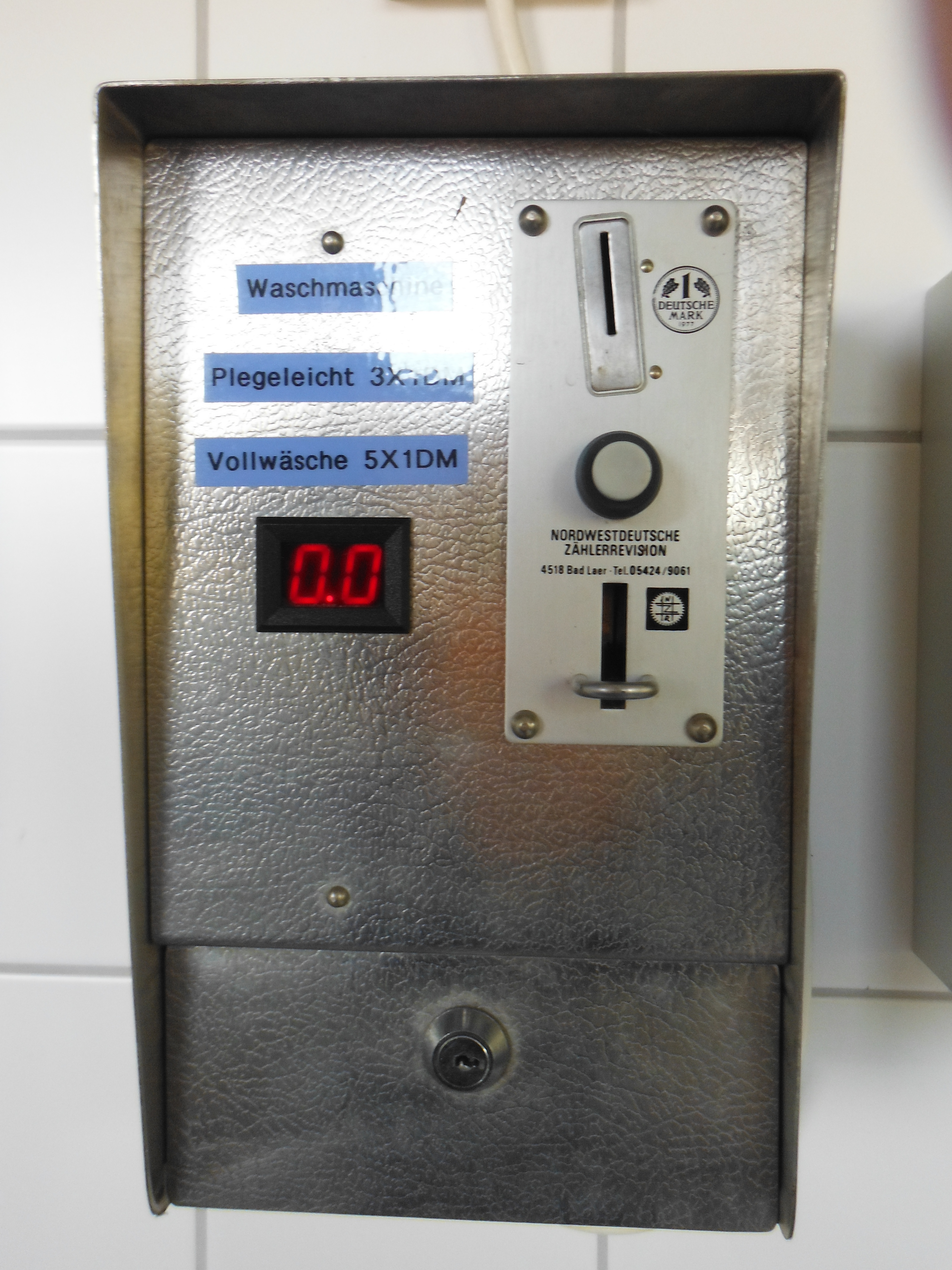 Deutschmarks rather than Euros or even tokens. A rather sweet phenomenon, but a bit frustrating when a functioning washing machine lays idle for want of the right defunct currency.
I did the laundry by hand and in cold water. I discovered another endearing aspect of this campsite, the plumbing. The taps all dispensed water tinged with rust. The clothes, whilst undoubtedly fresher, looked like they had been tie dyed. Bearing in mind there are alternative campsites within 10km, best avoid.
Onward through Bleckede and across the river by ferry. The surface changes to very uneven cobbles through the historic and extraordinary old town of Lauenburg. With hindsight, it would have been nice to have spent some time there, but we were focused on getting to the environs of Hamburg in daylight.
The section from Lauenberg to Tesperhude was extremely challenging. The path takes riders through dense woodland on a slippery surface with lots of ups and downs and bends (and steep drops). The river pokes through the tree canopy to remind riders that this is still the Elberadweg.
Then onwards to Geesthacht – a working port. After stopping for some food in the town itself, we embarked on our now obligatory evening ride.
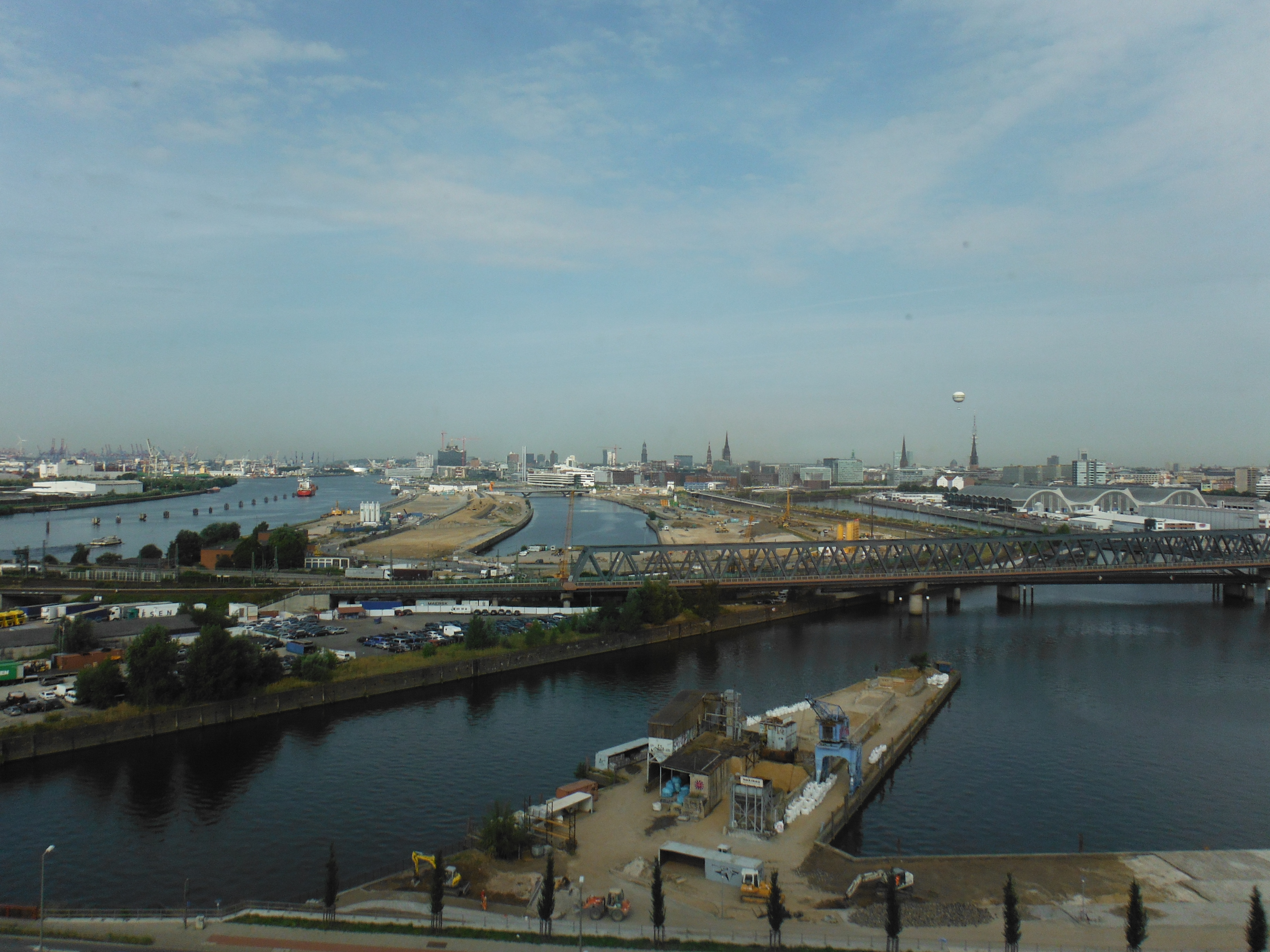
Hamburg from hotel
The plan was to camp at Fünfhausen with a view to using it as a base for our day out in Hamburg (there is an hourly bus service). It was not to be; the campsite is a private park with no day camping facilities. The town itself has no accommodation. Indeed, there is no accommodation on this section at all (we were, essentially, on the ‘wrong’ side of the river with no way of getting across). We eventually found a hotel in Hamburg at 2300, having discovered that the City was hosting some kind of festival leaving accommodation of any kind at a premium.
Tandem Tour 2013: Magdeburg to Wittenberge
 In the early summer, much of Germany suffered from floods. The Elbe region was one of those severely affected. Magdeburg in particular. Up to this point we had not really noticed, but much of the Elberadweg to the North of the city was no longer passable. The detour – Umleitung – was not well signposted, intuitive or attractive.
We were trying to get to the market town of Tangemünde having left Magdeburg at 1500. We fell 18km short and opted for the Family Camp Kellerwiehl just north the small town of Bittkau.
The campsite is idyllic. There is a large lake, lots of trees, and a rudimentary restaurant; and to top it all, a labour-saving washing machine for our cycling gear. We ate in the evening (2030 on arrival) some salad, omelette and chips. We also cheated on the camping by hiring a wooden hut for a very reasonable fee. Luxury (below right).
Breakfast in the sunshine and then off (with the key to the hut in my pocket). It  was only when I stopped to shake an apple tree to harvest some of the abundant free fruit along the way that we noticed. Fortunately, community functions sometimes. Although the post office was closed in Tangemünde (Saturday, late morning), a quick call to the campsite secured the return of the key. Moments later the owner retrieved it from the jewellers (a strangely complementary business for a post office) whilst we had coffee in the impressive town square with the
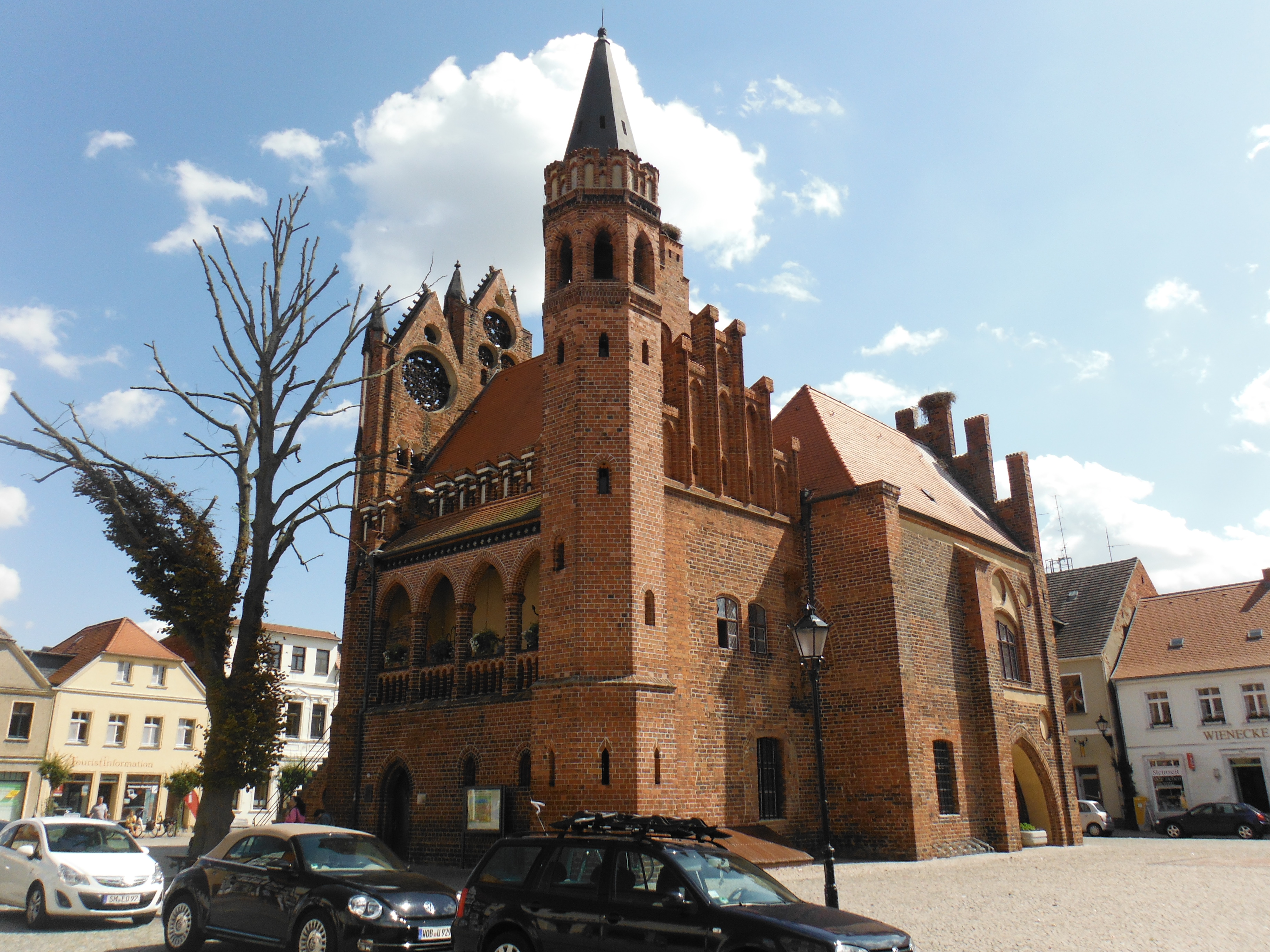 imposing town hall (below left) hosting a wedding. The town is an architectural delight with many wooden beamed ‘Fachwerk’ houses and buildings.
We set ourselves the target of reaching Wittenberge by the end of the day (100 or so kilometres), and picking up some fuel in one of the region’s ‘Hanse’ Stadts, in our case, Havelberg. En route, most of the villages and small towns were totally deserted. Arneburg, for example, with its impressive array of fachwerk, public art and an open Tourist Information Office, was reminiscent of southern European town in the middle of a siesta. But even then to use the toilet, one needed a key. Very clean though.
Crossing the river by ferry at Sandau, it is clear on arrival in Hansestatdt Havelberg that it was once a strategically important town. It is situated on the River Havel connected to the Elbe initially by a canal (upstream it voluntarily flows into its bigger neighbour). The rivers have served the town for trade, water and protection – indeed the safest place today would seem to be the campsite occupying an island accessed by a small bridge. From the middle ages, the economy was based on fishing, ship building, agriculture and cattle breading, apparently.
Again as the sun began to set, we approached our stopping place, Wittenberge. It was nothing like its southern Namesake. We sensed that we had entered a town that was not wealthy. It clearly lacked commercial heritage, and as we discovered later, young people. But in the midst of all of this is the hotel to match no other.
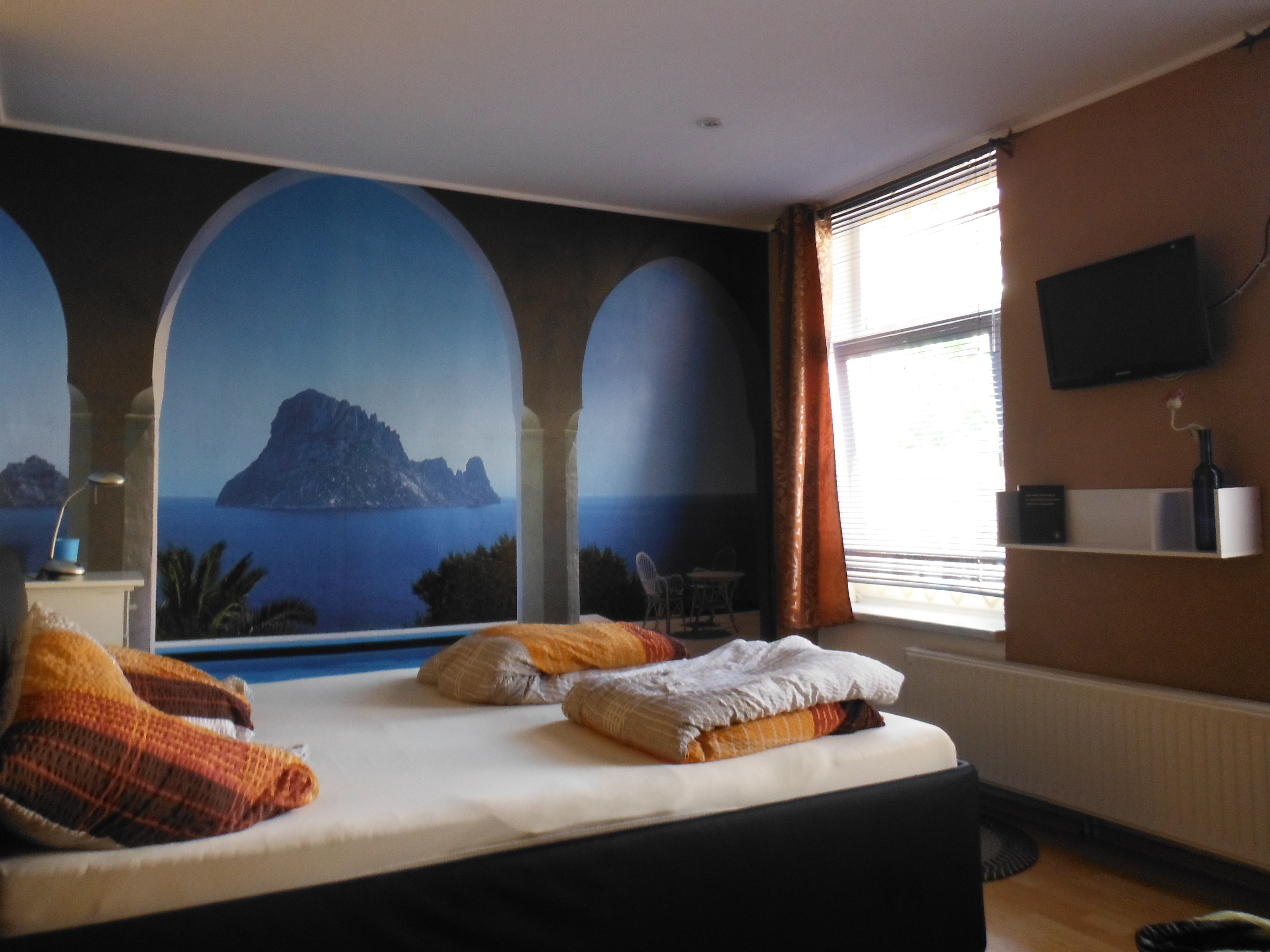 The Tollhouse Pension is what it says on the can. On arrival, check-in involves playing a couple of games, one resulting in the award of a sweet, the other the prospect of a glass of schnapps. Once in – perhaps 45 minutes after arrival – one encounters a room of some individual character. The owners, aware that Wittenberge is not the prettiest, provide a view (right). The bed was supremely comfortable, too.
As for the place, the old town and river front are pleasant and compact. The Mexican restaurant in the high street is ‘preiswert’ and brimming with choice. Wittenberge, then, is one of those places that one rarely chooses to visit but should.
Tandem Tour 2013 – Dessau to Magdeburg
Filed under: Cycling, Travel | Tags: Dessau, Elberadweg, Magdeburg
 Leave a comment
 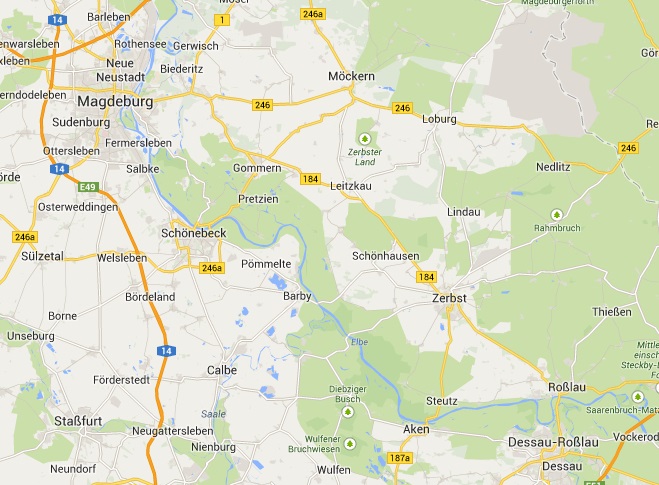 This is a very quiet stretch of river in every sense. From Dessau we took a bit of a short cut to Aken where we crossed the Elbe on one of the ubiquitous ferries. The larger villages and towns are on the opposite side such as Schönebeck. But it is very green and peaceful. There is also a campsite at Plötsky, an option we wanted to keep open. It also promises a quieter approach to Magdeburg through the Stadtpark Rotehorn.
We arrived in Magdeburg again quite late and in the dark. Finding a hotel was not so easy, though we headed towards the railway station and came across the Roncalli Haus with vacancies. Roncalli became Pope Johannes XXIII. The Haus is a hotel, conference/seminar/meeting space, restaurant, etc. My misgivings about the religious affiliation dissolved quite quickly. The people were friendly – they actually put themselves out to help us on more than one occasion during our short stay. The adjacent café served up some good vegetarian fayre. They cook to order; suffice to say, this is not a place to get through in a hurry.
Magdeburg itself seems to have come of age. The cathedral tells a different Lutheran story to that found in Wittenburg. Clearly Luther was not universally loved; indeed, the panels in the cathedral go out of their way to highlight some of his less-endearing characteristics.
 More secular is die Grüne Zitadelle (right), the final building by Austrian architect Friedensreich Hundertwasser (http://www.gruene-zitadelle.de/englisch/). Inside one finds over 100 dwellings, visitor accommodation, workspaces, shops and a theatre. Hundertwasser never saw it built, but his rejection of symmetry and straight lines is clear from the outside. Though we did not venture inside, there is plenty more unsymmetry if the photographs displayed in the foyer are anything to go by.
Tandem tour 2013 – Dresden to Dessau
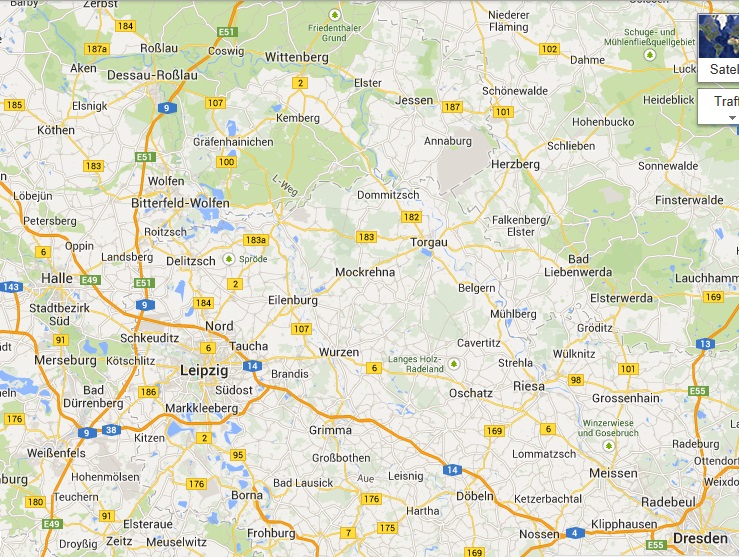 We arrived in Dresden 1530 on Sunday 18 August. We got off the train one stop short of Hauptbahnhof (Dresden Neustadt) in order to make way to a campsite situated to the North of the City marked on the Bikeline guide in Wilschdorf (and checked the night before online). It proved not to be there. We had to continue on to a site located to the south of Moritzburg (Bad Sonnenland). There we pitched, showered and ate at the onsite restaurant. Just in time (most campsite restaurants close by 2100). We also took breakfast on the site before our first real day of pedalling.
Monday 19 August was the only wet day that we had. Even then it was not too bad. We  sheltered away from the worst of it at a café in Meissen (having decided not to go back into Dresden). The castle and cathedral (right) huddle together for safety.
We camped for the second night at a site to the north of the small town of Strehla. It is a town of one restaurant, one hotel, a zoo and a massive outdoor swimming pool which also hosts the  campsite (left). The campsite is spacious – but the showers are not very private – there are no doors to the cubicles and one is also exposed to a seating area adjacent to the Sanitär. The restaurant was unexpectedly good, however.
A bit of overnight rain cleared and we got on our way following the Radweg to Lutherstadt Wittenberg through Belgern, Torgau, Dommitzsch (where we crossed by ferry) and Elster. Lutherstadt Wittenberg is where martin Luther had nailed his theses to the door of the church. After a very late arrival in the dark, we checked into a recommended small hotel (Am Alten Anker) and decided to have a day to explore the town and nearby Dessau, the second and final home of the Bauhaus.
Lutherstadt Wittenberg is a bit of a tourist trap and its proximity to the UNESCO World Heritage Site at nearby Dessau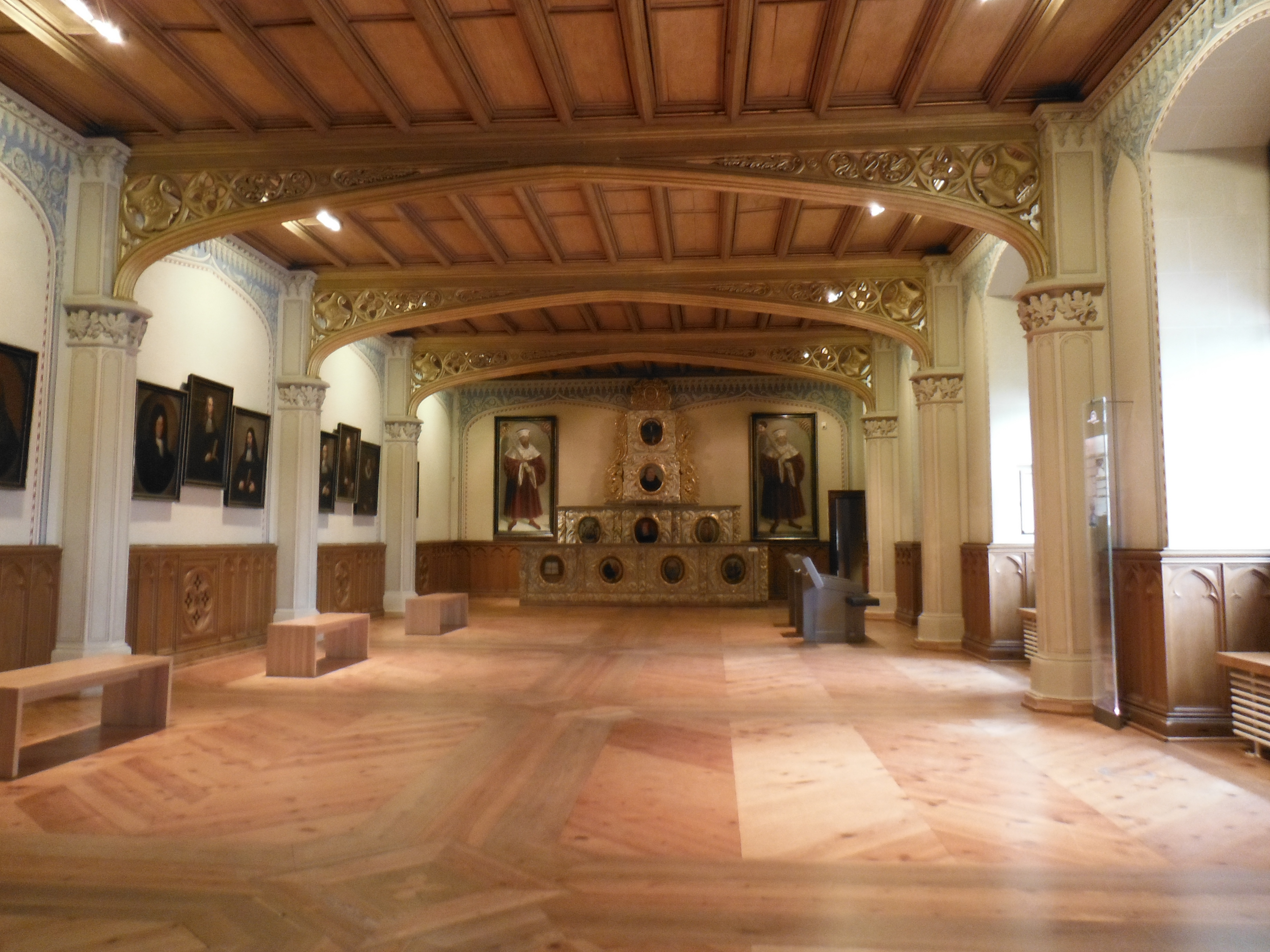 adds to this. We visited the Luther House where he lived with his wife, a notable business woman in her own right, for many years. The museum in the house is, as small provincial museums go, breathtaking. the artefacts are not many, but they are treasures. The life of the man and history that he made are documented in large panels in German and English.
The room (right) was one of my favourites – the altarpiece at the end has Luther as close to God as possible. The man had quite an ego as well as guts to go to Worms to face the wrath of the Pope.
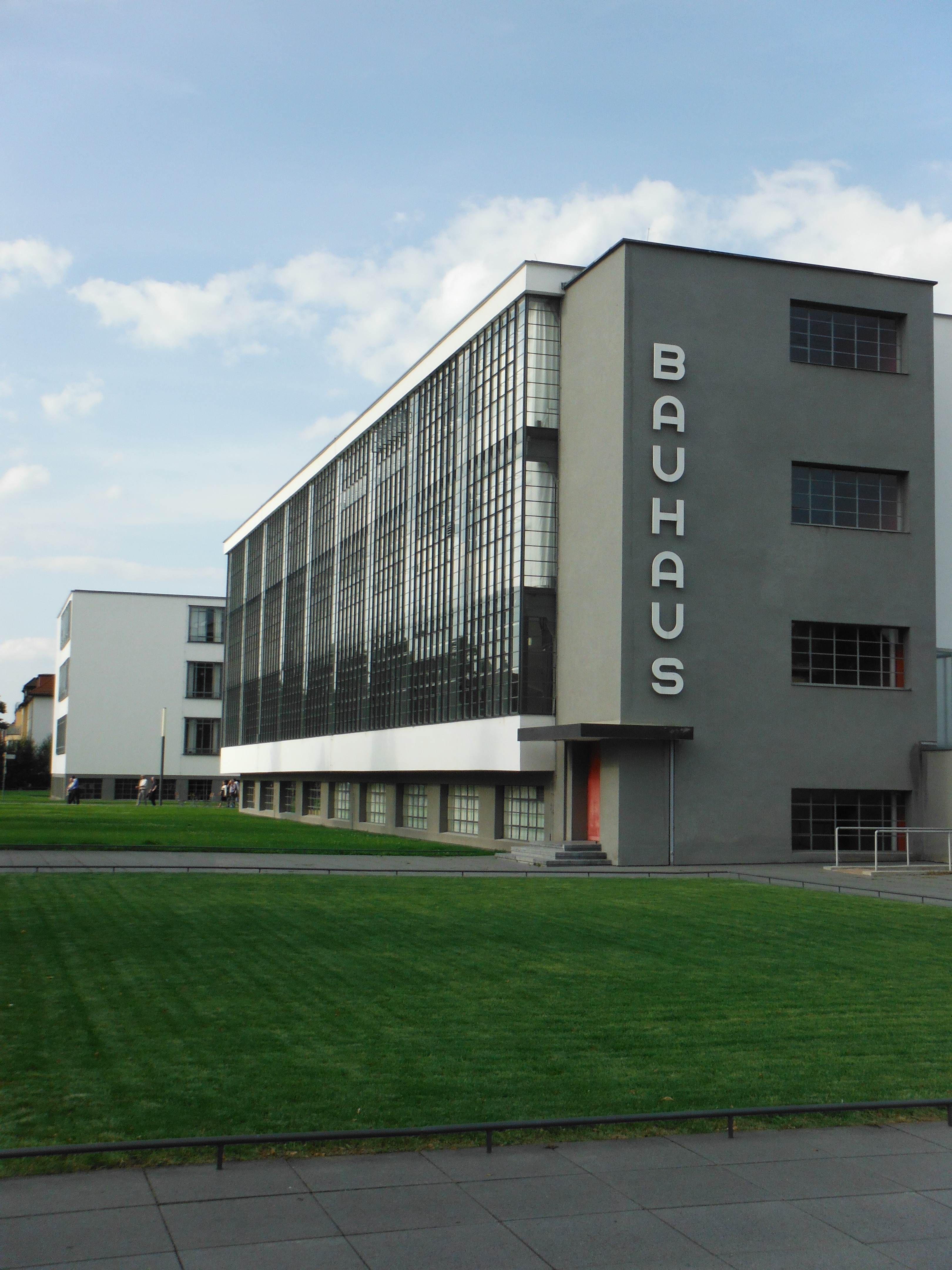 On the same day we took in Dessau. We took the train (35 minutes) and headed to the Bauhaus which is close to the station. The really iconic Bauhaus buildings are located in Dessau, now part of the university in the town.
The museum – constituting only two rooms – is in the basement. One room focuses on artefacts, the other on teaching and ‘philosophy’. The Bauhaus is one of the few institutions whose history is perhaps best told through the minds behind it (easy when it was so short-lived). Figures like Walter Gropius, Hannes Meyer, Ludwig Mies van der Rohe, Josef and Anni Albers, Wassily Kandinsky, Marcel Breuer, Marianne Brandt and Paul Klee, to name a few. There is in the second room a large biographical graphic that locates these figures in history from birth to death, from place of birth to places of career, etc. The Bauhaus was dissolved by the Nazis who regarded it as subversive and ‘un-German’. There is a chilling photograph of the Bauhaus buildings in ruins with some satisfied Nazis celebrating a job well done.
Tandem tour 2013: introduction
 This year’s tour was really two contrasting rides. The first section Dresden to Hamburg along the banks of the Elbe. For this tour we followed the Elberadweg (paths on both banks) guided by the publication from Bikeline (http://www.esterbauer.com/db_rtb_detail.php?buecher_code=ELBE1). We complemented this with our Garmin Navigation device (see entry: 14 June 2013 https://weiterzugehen.net/category/cycling/). We selected the banks on the basis of places to stay (campsites) and places of interest (Luterstadt Wittenberge, Dessau, etc.). There are not so many bridges across the river; though there are many ferries – some are for passengers and bicycles only, others carry cars and small commercial vehicles. Some use a sophisticated cabling system to cross the river, others use conventional diesel motors.
The second part of the tour involved a coastal tour along the north coast of Holland starting in Groningen and ending at Europoort. This took in  the amazing 30km-long Afsluitdijk separating the North Sea and the Ijsselmeer. This route was of our own making; but those readers who have cycled in the Netherlands will be aware that the Dutch make cycling and navigation particularly easy. The cycle tracks are superb (though one has to beware of mopeds) – and usually separated from the road. In addition, cycle signs make navigation relatively simple with a numbering system that is intuitive. We used a national cycle map purchased from the Tourist Information Centre in Groningen. The map comes as a spiral bound book which, on the whole, works; though some of the numbers do not come out at the edge of each page. The Garmin navigation device, however, helped overcome this as the numbers are incorporated into the maps.
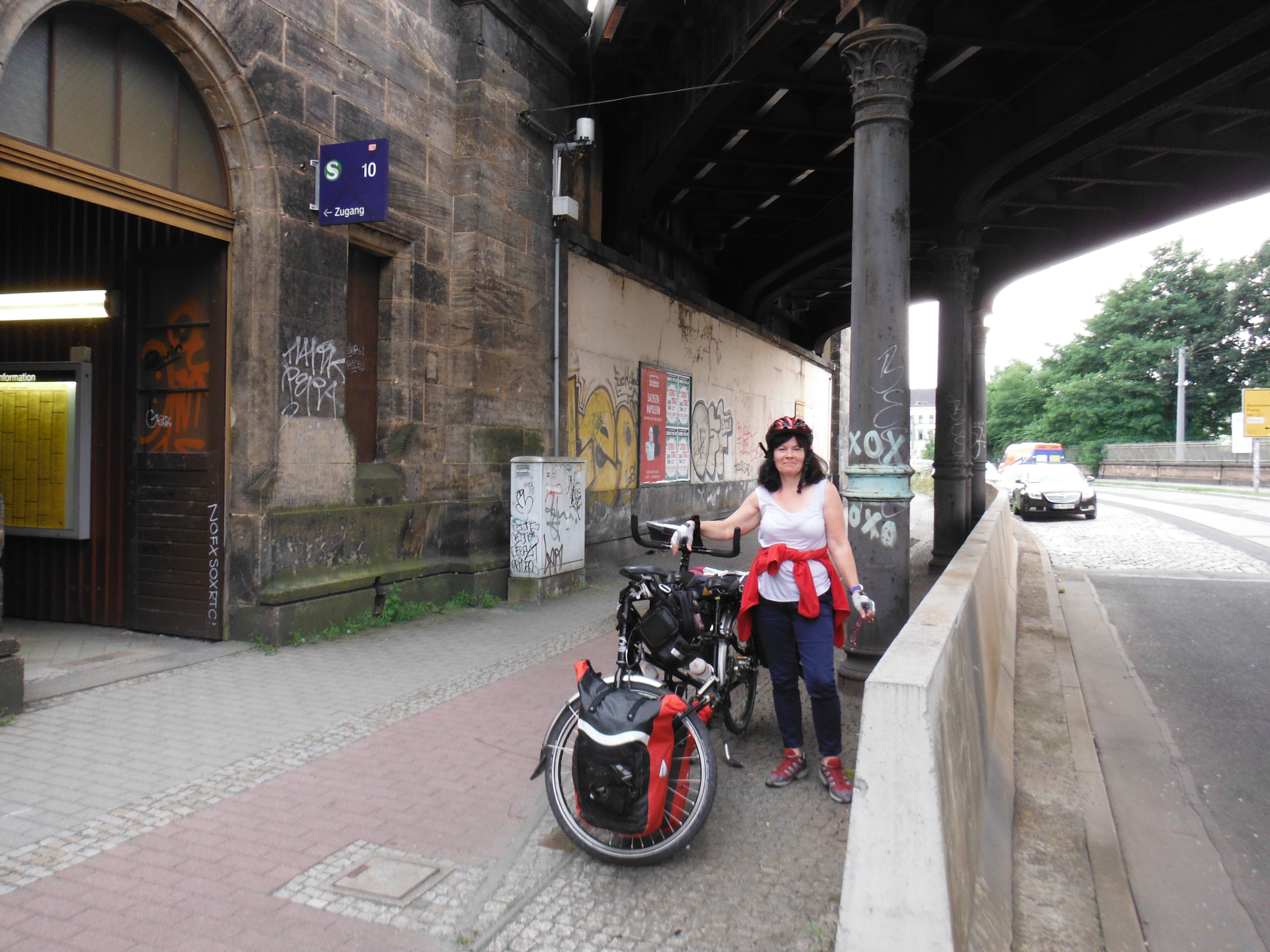 Tandems are quite difficult to get on and off trains. In Germany it is not possible to use the Intercity routes. One is restricted to Regional Services involving quite a few changes but are relatively inexpensive. We travelled from Munich to Dresden (arrival pictured left) with the tandem for under 50 Euros. The journey took over 7 hours: Munich to Nürnberg; Nürnberg to Saalfeld; Saalfeld to Leipzig; Leipzig to Dresden. We travelled on a Sunday. With hindsight, this was a mistake. The competition for bicycle spaces on regional services at the weekend is high. By contrast, travelling between Hamburg and Groningen on a Wednesday was uncomplicated (Hamburg to Bremen; Bremen to Leer: Leer to Groningen).
Railway stations are not optimised for bicycles, let alone tandems. Some, including Bremen, have no escalators. Changing platforms requires unloading bags and carrying the tandem down and up stairs. Some stations do have lifts, but these are too small to accommodate a tandem. Trains are also subject to platform change at late notice.
The Elberadweg is challenging. Riders encounter many surfaces. One of the least frien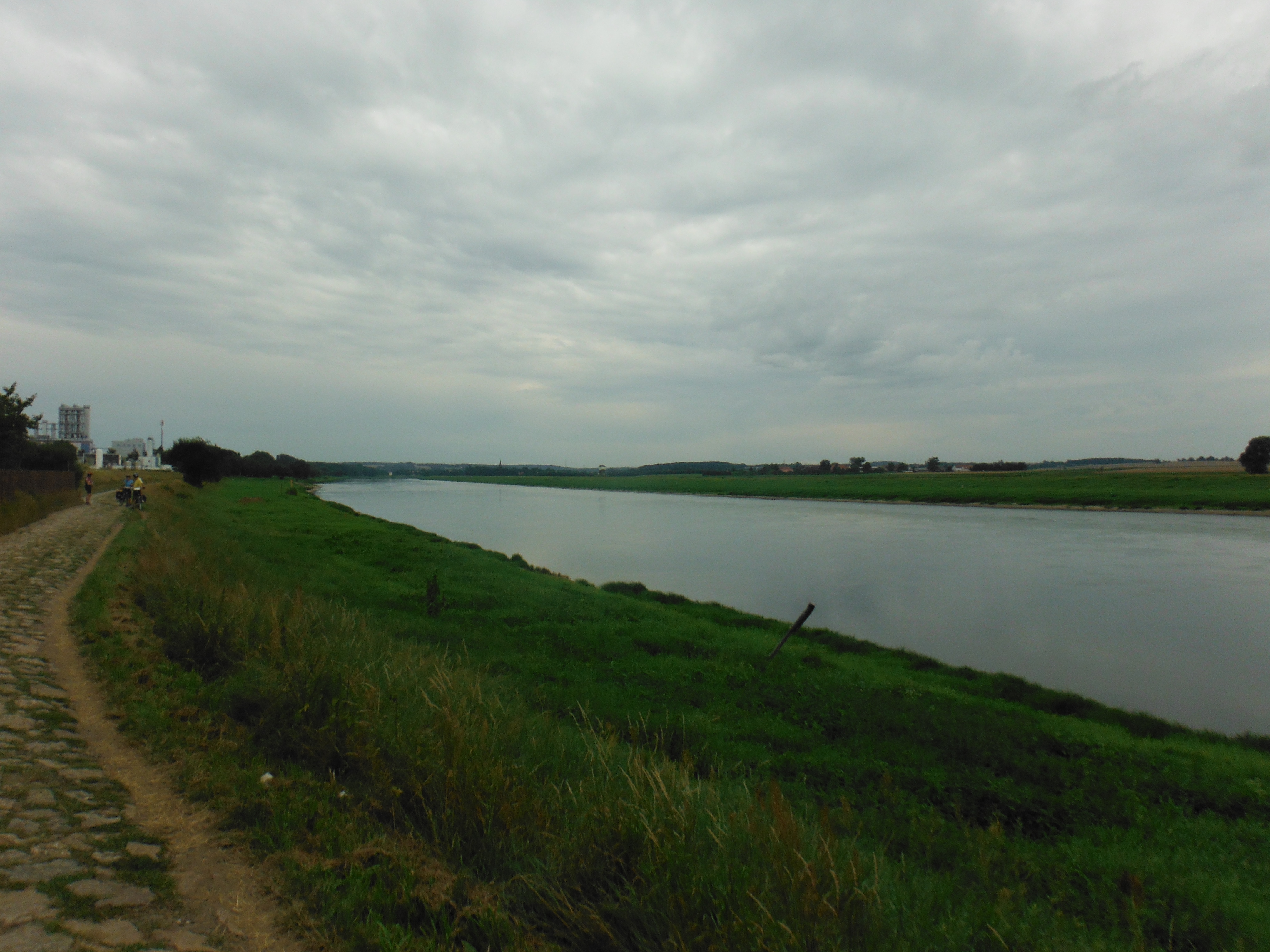 dly is cobblestone. In dry conditions cobblestones are manageable at slow speed (picture right). In the wet they will be very slippery.
Cobbles are encountered in most villages and towns through which one passes (for example, Lauenburg an der Elbe). Equally, in the countryside (pictured right) and in damp forested areas with gradients (the approach to Lauenburg an der Elbe on the north bank was particularly gruelling).
Other surfaces include asphalt, concrete and shingle (again, fine when dry but no so easy in the wet). Good puncture-proof tyres are advised.
The Elberadweg is peppered with campsites, small hotels, pensions and available rooms. We took with us a 25 year-old Vango 2-person tent, microlite sleeping bags, inflatable mats and pillows. We did not carry any means of heating or cooking food. We used either cafés onsite or in nearby villages. Bakery shops are also good sources of breakfasts. We did our best to eat a substantial meal in the mid-late afternoon. As vegetarians, we encountered some very interesting menus; but with some flexibility (especially where eggs are concerned), eating was not a problem.
 Be informed