Archive for the ‘International’ Category
Edward Snowden and Prism
 Leave a comment
 The treatment of Edward Snowden and those who might give him asylum, tells us as much as we need to know about in whose interests states act and where the current balance of power lays. In the name of anti-terrorism, we are all being monitored. They say that they are only collecting “meta data”; i.e. data about who ‘citizens’ contact rather the content of that contact. The usual guff comes from politicians – ‘if you have done nothing wrong, then there is nothing to fear’.
The vilification of Edward Snowden – the whistleblower – is clear. The US state brands him as a traitor, a fugitive from justice guilty of treason and much of the media is aligned with this position. The latest post from Medialens gives Snowden their usual treatment: http://www.medialens.org/index.php/alerts/alert-archive/alerts-2013/737-snowden-surveillance-and-the-secret-state.html
And then there is the Latin America situation. The denial of Evo Morales’s plane access to key parts of European airspace on 2 July is extraordinary. Morales, let us not forget, is President of Bolivia and was attending a legitimate energy conference in Moscow. Clearly pressure had been put on European states from the US. But it is interesting that ‘they’ – whoever they are – thought that Snowden was on the plane; he may well have been stupid with respect to whistleblowing and his own safety, but he is not, surely, going to do the obvious (as he demonstrated by not being on the plane to Cuba a couple of weeks earlier)?
Killing on the streets of Istanbul
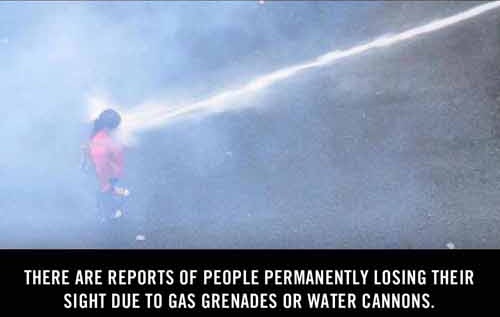
At face value, the violence surrounded a small park (Gezi) in the central district of the European side of the City. The park is being destroyed to make way for a shopping mall and a reconstructed ‘barracks’ that was once on the site. That does not explain the extreme violence meted out to the protesters.
The Prime Minister, Recep Tayyip Erdogan, is not known, seemingly, for tolerance and accepting criticism. Secularists in particular seem to be under pressure from the Government. There were violent clashes also on May Day. The Government has also instituted legislation against the consumption of alcohol raising fears of increasing desecularisation, something which has been defended since the establishment of the secular state by Mustafa Kemal Atatürk in 1923. He also seeks to establish an executive presidency by changing the constitution.
I’m struggling to download any pictures, but in the first instance please go to http://imgur.com/q3XfOFf from where I have extracted the following pictures and captions. There are many disturbing images.
 |
 |
 |
 |
Additional video footage can be found here: http://webtv.radikal.com.tr/Turkiye/3653/yorumsuz.aspx
The Guardian newspaper in the UK now has a photo strip of demonstrations in Istanbul and Ankara: http://www.guardian.co.uk/world/gallery/2013/jun/02/protests-istanbul-ankara-pictures?picture=409969309#/?picture=409969309&index=0
The Prime Minister seemingly now blames the opposition and ‘social media’ for the unrest.
I travel more than I could ever have thought possible in my youth. I recently visited Istanbul as a tourist. Events there yesterday are shocking in their own terms; the fact that I have been to the city and the locations of the police violence against citizens makes it particularly so. My ignorance about the politics of Turkey and Istanbul reflects the nature of tourism.
Cutting energy use
 Readers of this blog know that I fly quite a bit. My beloved lives in Munich and I live on the South Coast of England. That is about 500 miles/800 kms complicated by a stretch of water. Last week I did take the train all the way. It took 14 hours, though it was extremely civilised, particularly the first-class travel between Brussels and Cologne. In the short-term, I will continue to fly. But the effect on climate change makes it very difficult to reconcile. Energy use is unsustainable. So, here are some ideas for cutting energy use in the short-term. Low hanging fruit. Any additional suggestions welcome.
I do think about ‘unnecessary’ flying. Top of my list is sport. Tournaments are international these days and sports players – individuals and teams – fly all over the globe in pursuit of titles. Mostly unsuccessfully. One thinks about the Olympics last year. The amount of unnecessary carbon generated by moving sportspeople and their equipment really cannot be justified. Not to mention all of the building, electrical power, etc. Essentially, there needs to be less international and elite sport, not more. The Olympics should be every 5 or 10 years with intermediary events held regionally. Ditto for football’s world cup. Cricketers should play the Ashes between England and Australia less often (it pains me to say that as a cricket fan). Golf is already split into two ‘tours’ – the American and the European. This should be consolidated and playing in both tours should be frowned upon rather than celebrated. Playing in the Gulf should not be counternanced because of the energy required to maintain golf courses in deserts and the air miles needed to get the top golfers and their entourages there. The same is true of tennis.
And putting horses in aeroplanes so that they can compete in horse races across the planet is neither good for the planet nor fair for the animals concerned.
I appreciate that whole national economies are now based on exporting perishable produce to supermarkets. Particular culprits – asparagus from Peru (even when it is in season in the UK and Europe – note Tesco); sugar snaps, sweetcorn, fresh herbs, etc. Be careful as shoppers, just because it is there, does not mean that it should be bought. We need to be more creative with our cooking to render more locally-produced foods attractive and enjoyable. Some may say that Peru and Kenya, for example, enjoy comparative advantage in terms of climate and land. Be that as it may, but the transportation costs are just too high. At the very least these products can be tinned, jarred, dried, etc.
Here is another one. Turning off soft-drinks vending machines. In fact, all chilling cabinets for soft drinks and chocolate. Chocolate, indeed. We chill chocolate. The vending machine in the building I work in now serves at best 10 people. Nonsense. Soft drinks are unnecessary, chilled in December, particularly so.
Picture: (asparagus) Evan-Amos (wikipedia)
Climate change denial in school
 The ongoing cold weather reminds us that something is afoot in global climate change. The list of concerns is growing. The pictures of the sea ice cracking over the Beaufort Sea north of Alaska and Canada (left) may be extraordinary, but the causes and consequences remain distant for policy makers. Compare global climate change with efforts to save the Euro.
The UK Government now seeks to take climate change off the agenda in schools for under 15 year olds. It is not totally clear why. It may just be because of pressure on the curriculum, but it may be because policy makers do not think that this age group should be taught about climate change. But let us just reflect, in the words of John Ashton (Director of E3G and a fellow of the Grantham Institute for Climate Change at Imperial College) writing in the Guardian newspaper (19 March 2013), “[t]here are two paths now available: one leads towards a world in which by mid-century the basic needs of 9 billion people can be met by co-ordinating a successful response to climate change. The other looks increasingly like descent into competition, fragmentation and conflict, as the interconnected stresses of food, water, and energy insecurity become unmanageable.” The children who will inherit the legacy of previoius generations at least have the right to know what has been done to them.
Picture: taken from http://econnexus.org/; but originating from the European Space Agencies CryoSat-2 satelite and mission to examine the arctic ice caps.
Processed meat and health link – a red herring?
 Notwithstanding the intended pun, there is one aspect of this debate I had not thought about. So, last Thursday, we witnessed the publication of a Europe-wide survey highlighting the dangers of processed meat. In fact, we should not eat more than 20g per day, it seems. But Tim Lang, professor of food policy at City University London, noted on The Today Programme on Radio Four (7 March), that processed food is a direct consequence of the production of fresh meat, or at least the over production of beef, lamb, pork and indeed, chicken. The industry is so ‘efficient’ that it processes the less prime pieces to maximise the value of any animal carcass. The consequence of this, however, is the ubiquity of processed food, and its relative cheapness.
The debate on the Today Programme can be heard here: Lang on Today
For anyone interested in the work of Tim Lang, The Guardian newspaper offers the following: http://www.guardian.co.uk/lifeandstyle/2007/mar/25/foodanddrink.features5; his university profile can be found here: http://www.city.ac.uk/arts-social-sciences/academic-staff-profiles/professor-tim-lang
Horsemeat
 The discovery of horsemeat in ‘value’ burgers in UK supermarkets comes as no surprise. Whether the ‘mafia’ – as alleged by yesterday’s Guardian newspaper – is at the root of it, who knows? And any debate about whether the British have a problem with eating horses is a red-herring. The safety concerns are, of course, a factor. The content of manufactured food is supposed to be traceable. Clearly the inclusion of horse renders the contents far from traceable. Rather amusing really. Though the question is, what type of horse has been included. I do not mean the difference between a pony and a cart horse. I do mean the difference between one full of drugs or disease – or both – that should not be in the food chain and those that are not.
Rather, the issue is about price. Animal protein is expensive to produce. Using traceable meat particularly so, even if it is mechanically re-configured, or whatever they call it. The pressure on food producers is to cut costs in order to produce – for many people – affordable meat products. The pressure often comes from the supermarkets – and it is no surprise that it is the discounters and those offering ‘value’ level products particularly affected here. That said, there is no evidence so far that ‘premium’ products are not also contaminated.
Maybe this is just a critique of global capital. There are so many non-UK subcontractors in this story, one can see how messed up is the food industry. The eventual supply has been traced to Romania (via Cyprus and the Netherlands and France). Why Romania? Arguably, there are still many working horses there. Perhaps more importantly, the cuts in funding for trading standards departments in local authorities has reduced the detection capabilities.
I do not eat meat, but I do often cook from scratch – beans, vegetables and fruits. It takes time to prepare and cook, but I am pretty sure it is cheaper than cooking with meat.
Picture source: Wikipedia (Waugsberg)
Gerald Scarfe cartoon
So, Rupert Murdoch has apologised for the publication of an offensive cartoon in the Sunday Times. The topic is Israel’s relations with its neighbours and the wall it is building in order to keep them out. “Good fences make good neighbours” as the poet Robert Frost wrote.
The cartoon depicts Benjamin Netanyahu building the wall himself – the mortar is red and what looks like some Palestinians have been built into the wall. I am not going to post the cartoon – readers can see it for themselves here: http://fromthetopcom.blogspot.co.uk/2013/01/gerald-scarfe-cements-hate-on-holocaust.html
The Today programme on Radio 4 this morning pitted cartoonist Steve Bell of the Guardian against Stephen Pollard of the Jewish Chronicle debating – of sorts – the issue. Quite heated in places. Listen here.
The question is, are we talking about Jews – and hence being anti-semitic – or are we talking about Israel and the Israeli government? At the very least, when a country defines itself coterminous with a race, the depiction of a key player in the story – in this case Netanyahu – can be seen as an attack on the race more generally. On Holocaust Memorial Day, particularly so.
Update: 1 February 2013 – Media Lens has now evaluated this case. The assessment is at the following address. http://www.medialens.org/index.php/alerts/alert-archive/alerts-2013/717-cartoon-politics-rupert-murdoch-the-pro-israel-lobby-and-israel-s-crimes.html
David Cameron’s speech on Europe
 Long anticipated and it did not disappoint. It takes a lot to be criticised by former Prime Minister, Tony Blair, but Cameron has elicited a damning response.
“I think it’s a huge worry in circumstances where you put on the agenda the prospect of Britain leaving. Why would we do that? We don’t yet know what we are proposing, or what we can get negotiated. We don’t yet know what the rest of Europe is going to propose. This referendum will happen in four or five years time, if the Conservatives were re-elected. Why not wait and see what we actually get out of this, play our part in shaping the new Europe, but why be in the situation where now you are putting on the table the prospect, four or five years time, of Britain leaving so that we can no longer answer the question, when we are negotiating, is Britain going to stay a member of the European Union or not? We can’t answer that question any more.” (drawn from Andrew Sparrow’s Guardian blog).
Let us unpick that. We – and anyone who trades with us or invests in the country – no longer know if the UK will stay in the European Union. Should the Conservatives win the next election, that will represent at least 5 years or so of uncertainty. It will precipitate the end of the Union between England and Scotland, putting back on track the campaign north of the border to break free, even though an independent Scotland would need to reapply for membership to the EU (until now a disincentive to break free).
Why is David Cameron such a poor strategist? Even though many in his party – and many outside – loathe the EU, the EU remains the largest trading bloc for the UK. That is strategically significant.It is also the case, that a lot of what these people dislike are good things like the working time directive; 48 hours per day is long enough for anyone to work per week. There is a lot that is wrong, but Cameron has now dug in even deeper and diminished the UK’s influence over what is wrong. Not only will the UK not support efforts in Europe to support the Euro (see post: https://weiterzugehen.net/2011/12/10/26-to-1/), but now we are effectively leaving. On that basis, why negotiate with the UK? Moreover, as Blair said in his response, threaten to leave and someone will say “go on then”.
I had to laugh (though it was a painful speech to listen to) when he said that transport metaphors should be dispensed with – cast into some waste bin, only to serve up a platter full of them himself as he ‘progressed’. Astonishing.
You’ve been Trumped
 I’ve just watched this documentary in amazement. The corruption story is contemptible. Trump is building a golf resort on the East Coast of Scotland south of Aberdeen. Planning permission was originally rejected by the council – not least because the plan involved the destruction of a unique habitat with SSI (site of special scientific interest) status. The decision was called in by the Scottish Government, led by Alex Salmond, and overturned.
However, there are good people in Trump’s way. Local people whose houses, for Trump, are unwelcome features in the landscape. It is the story of how they have resisted and how the forces of the state have facilitated Trump against the locals. There is an extraordinary scene where the police manhandle the amiable journalist, handcuff him, and bundle him off to the police station in Aberdeen. But that is nothing against the despicable acts being perpetrated against the locals. Their water was cut off and not restored. There is footage of the electricity supply being cut by a digger; and the locals being billed for fences that they did not ask for or need.
Please watch.
The nonsense that is badger culling in England
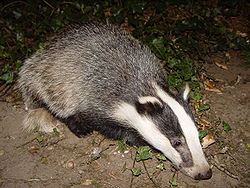
Source: BadgerHero, wikipedia
The long-fought for badger cull in England is about to start. The plan is to kill – systematically – 100,000 badgers; one third to the UK population. That, to reduce the infection of cattle by 15-20 per cent – not even to eradicate it.
Now the case against the cull has reached a new high with a number of eminent scientists at last speaking out. Lord John Krebs: “The scientific case is as clear as it can be: this cull is not the answer to TB in cattle. The government is cherry-picking bits of data to support its case.”; Lord Robert May, a former government chief scientist and president of the Royal Society, said: “I have no sympathy with the decision. They are transmuting evidence-based policy into policy-based evidence”; and the current government chief scientist, Professor Sir John Beddington, said: “I continue to engage with Defra [the Department for Environment, Food and Rural Affairs] on the evidence base concerning the development of bovine TB policy. I am content that the evidence base, including uncertainties and evidence gaps, has been communicated effectively to ministers.”
Not surprisingly, David Cameron, the UK Prime Minister, is quoted as saying: “I believe this is the right policy for healthy badgers as well as healthy cattle.” Even though, according to Professor Rosie Woodroffe of the Zoological Society of London “…all the evidence shows that culling badgers increases the proportion of badgers that have TB”. Dead badgers are always healthy.
So what is going on? Farmers and landowners have always had a penchant for destroying the countryside and anything else in it that offers a hint of competition to their activities. Foxes and birds of prey are persecuted incessantly on this basis. There is nothing like a land-owner’s whim – backed by the National Farmers’ Union – to base policy. Why do they never look at their own husbandry practices? Mad Cow disease, for example, was the farmers’ own doing. Though, we, the taxpayer, and the cattle, ended up paying for it.
http://www.guardian.co.uk/environment/2012/oct/13/badger-cull-mindless
 Be informed