Archive for the ‘Politics’ Category
On the plus side…a rant
 Leicester City today or next week will win the English Premier League. Good for them. The league does not lie and it is so refreshing to see a real team challenge and win. On the downside, my team, Hull City, trying to get back into the Premier League (having been dumped out of the league by Leicester’s failure to be relegated last year) cannot even beat an already relegated side in the run-off to the play-offs in the second league. For non-English readers, worry not, this is all irrelevant to life in general. However, it is clear that my team’s coach cannot motivate his squad of players like Claudio Ranieri can his. Lessons there.
Good also for the mis-named junior doctors striking in the UK. The amount of vile verbiage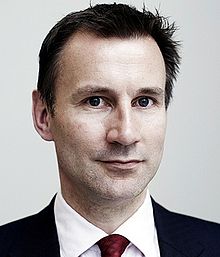 coming from the British Government at the moment against doctors is par for the course, but good on the doctors for standing up for principles – their’s and our’s. The British Government is dismantling the National Health Service and handing it over to private sector cherry-picking businesses. Jeremy Hunt (right), the egregious English health minister accused the doctors of making the strike political. If I am not mistaken, his government has outlawed political strikes, so by virtue of it happening at all it cannot be political. Equally if anyone has made it political it is Mr Hunt. This is turning out to be a battle of wills between right and wrong. Next thing we’ll find armed police trying to break through pickets just like Thatcher did in the 1980s against another class of workers fighting for their rights and livelihoods.
 Talking about strikes, last week those of us in the south of England had our journeys to work disrupted by a strike by conductors on the trains. A 24 hour strike straddling two days caused chaos and major inconvenience. Just like strikes are supposed to do. Good for the conductors trying to block attempts by the train company to change their terms and conditions and turn them into revenue protection officers rather than train managers – responsible for safety and customer service on board. As a season ticket holder on Southern, I favour the conductors absolutely. This is a company that treats its customers with utter contempt. By that measure, employees must be utterly despised.
There is a new phrase going around at the moment like a bad smell. I’ve heard it from my own employer and people involved in the junior doctors’ strike. To paraphrase: “This is a democratically elected government, so…”. To translate, this Government led by a bunch of thieving, self-seeking, lying white men, can do whatever they want because they secured 37 per cent of the national vote a year ago. Please, democracy is not just a vote every 5 years. Democracy is a process. A manifesto commitment is not law. We have two chambers of Parliament, scrutiny committees and courts to test the robustness and fit-for-purposeness of proposed laws. Bad law is untested law and comes from Parliamentarians who do not understand process or those who are self-serving. Or both. It is a duty to oppose poor law whether it was in a manifesto or not.
More on privatising schools by stealth
Filed under: education, Politics, Uncategorized | Tags: Nicky Morgan
 Leave a comment
  A few weeks ago I wrote a piece on the UK government’s assault on schools in forcibly converting them into Academies and then, by default, passing them, their assets and their curricula over to the private sector. Seemingly, there has been a lot of opposition to this, not least from local authorities whose schools they are. Nicky Morgan, the education secretary (left) for England told the UK Parliament on Monday that she is listening. So the new idea is to force schools to be academies, but for local authorities to manage chains of academies. Best of both worlds, it seems?
Hang on a minute. One of the objections was cost. Conversion costs money. So far, £32.5m has been spent on conversion. Another £100m is required to finish the job. So no. Second, conversion is the precursor to privatisation. Schools cannot easily be privatised without conversion because, presumably, ‘academisation’ is just converting the school into a bundle of assets and contracts. The kind of stuff that private companies understand. So, even if in the short-term, local authorities run academies, it is the conversion that is critical. We must ask ourselves why this is a suitable compromise for an ideological government. Because it is the academisation that they want. Eventually they will be sold/passed on to their friends to make risk-free money from.
Picture: Wikipedia
Privatising schools by stealth
 Here we go again. George Osborne (left), the UK Chancellor of the Exchequer – otherwise known as the finance minister – took it upon himself to announce in his budget last week that all Schools will be forced to become academies. This is to rid them of fiendish local bureaucracy and hand them over to private-sector “trusts” where no such bureaucracy can get in the way of delivering first class education to children across the country.
First of all, I was a little confused as to why the finance minister rather than the education minister would make the announcement. Even the Prime Minister is a more likely bearer of such policy news. Who is making policy here? Oh, and while we are at it, let us abolish the right of parents to be governors on school boards. They seem to be part of that unnecessary bureaucracy that gets in the way…
Let us look at the rationale. First, Osborne links local bureaucracy and poor global performance of schools (on very limited instrumental metrics). Simply not demonstrated. Not only are local authority-run schools high performers in some cases but academies also fail – take AET, as just one example. Second, centralisation is an attempt to micromanage education. The national curriculum does not hold in academies, but the testing regimes do. And less-than-exemplar exam companies such as EdExcel (a subsidiary of Pearson) run the show. A far cry from my own secondary education certificate from the Joint Matriculation Board, a lofty university accredited outfit.
The local authority monitoring – sorry, bureaucracy – will be replaced by a highly efficient and non-bureaucratic schools commission. Conveniently accountable to some oblique central authority, not locally-elected representatives or accountable local civil servants.
More pertinent, it seems, is money. There is money to be made for academies not possible under local authority control. So, Knight of the Realm Sir Greg Martin – boss of Durand academy chain, apparently notched up a tidy salary of £390k and management fees of £508k while also running a dating website, a health club and an accommodation business (as if running schools was a part-time business opportunity).
Then there is the land. Oh yes, now we are getting to the nub of the matter. Local authority schools occupy public land. Academy schools’ assets are handed over to a “trust” (if ever the word trust was misused it is here, surely?). Wait and see the terms of use of land held in “trust” change.
Then there are the children who have learning difficulties or behavioural problems. Academies have to be target driven and non-conforming children are removed and ultimately become the responsibility of local authorities, those democratically-controlled entities that bureaucratically hinder educational achievement.
And then there are the teachers. Academies are not bound by national terms and conditions. The current Education Secretary’s predecessor, Michael Gove, already freed up academies to employ non-qualified staff and to replace them with software programs. Really. Now there will be no national negotiations over pay. That is another attack on organised labour and another good reason for conversion.
Talking of which, The BBC reported recently that to date conversion has cost local taxpayers £32.5m. According to Michael Rosen writing in the Guardian, 2,075 out of 3,381 secondary schools and 2,440 out of 16,766 primary schools are academies. That is a lot of conversion money still to be found.
The rationale now makes sense!
Who wants to be Prime Minister of the divided Isle?
Filed under: Politics, Uncategorized | Tags: Boris Johnson, Brexit, Immigration
Leave a comment  Here in the UK at the moment, we are being fed a daily diet of EU in-or-out gruel. Two camps vying for our vote in the referendum on 23 June. Cannot wait. The out side are particularly interesting because for neither camp is it about values – the values of sharing the planet, trading to stop us fighting against one another and protecting human rights.
So, in the red corner are the fascists who believe that immigration is at the heart of the country’s problems and exit would first of all stop all of the Poles, Romanians, etc. coming and taking our jobs, houses, schools, etc., but also make it easier for the country to stop the middle-eastern refugees from entering because the borders can again be controlled. Having just crossed a border today at Gatwick Airport, I cannot see that the border could be better ‘protected’ from the latter category. Frankly.
In the blue corner we find the renegade Tory ministers who are interested in being big fish in a small pool (England) rather than small fish in a big pool (Europe). Apparently, we make better laws than other Europeans. We are better at negotiating trade deals than Europeans, something to do with our imperial history. We could negotiate the necessary trade deals with key markets in the time it takes to say Xi Jinping or Donald Trump. And of course, these countries need the British market because they sell more things to us than we do to them – as if that was a good thing.
Leading this intellectually cat-brained movement is Boris Johnson (right) , the selfless Mayor of London. Johnson claims, of course,
that he did a lot of soul searching before opting for Brexit. He did not really want to oppose his own prime minister. But he just had to. He is not doing it as a springboard to being prime minister when a wounded David Cameron gives up after being found to be on the wrong side. No.
Choices, choices.
Pic: Boris Johnson, Mayor of London twitter
Another attack on public housing
Pay to St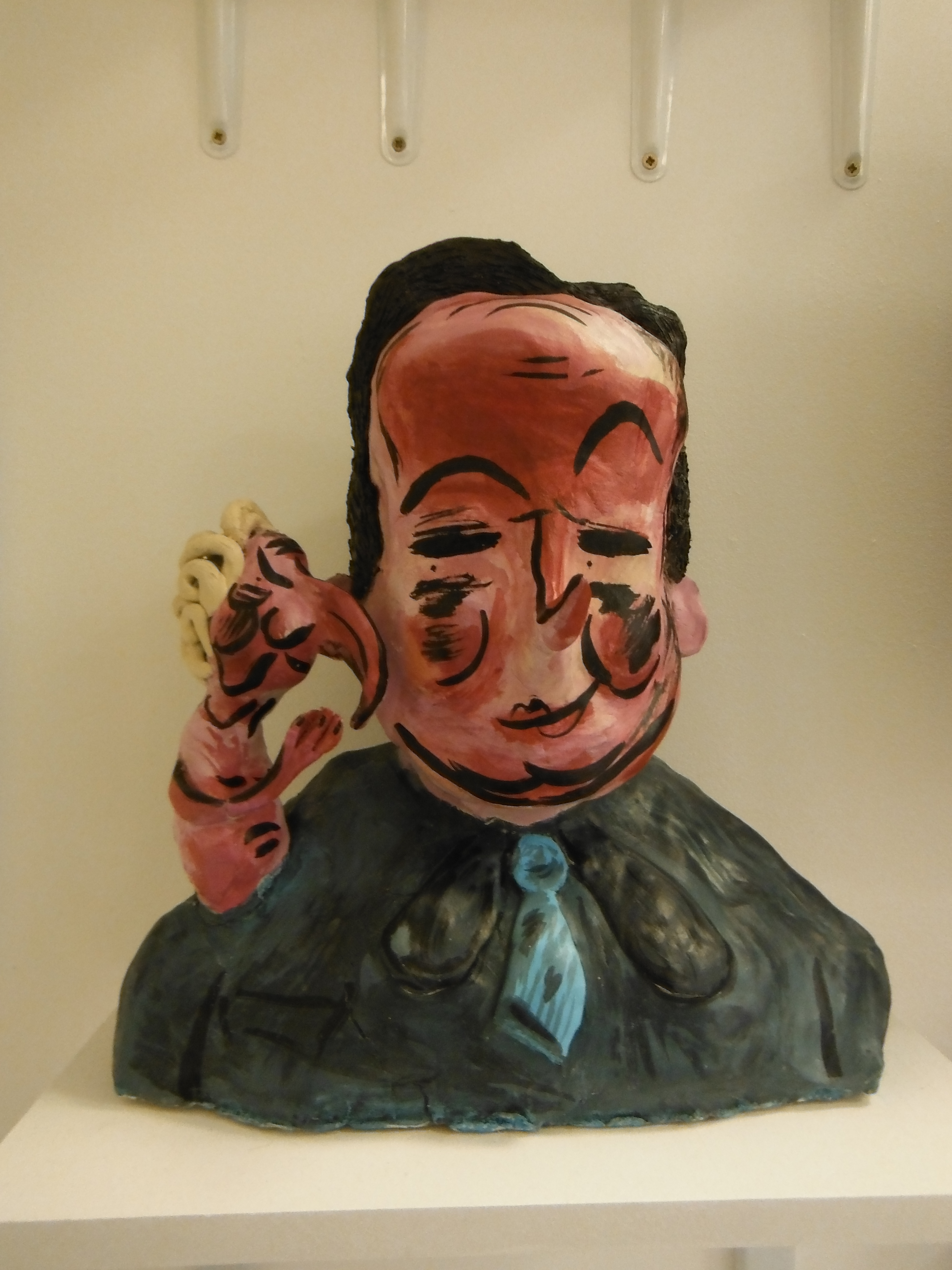 ay seems to be the latest attack on tenants of public housing in the UK. Proposals by David Cameron (left) and his Conservative Government to force tenants who earn more than £30K to pay market rents is the latest attack on ordinary people. The effect is thought to result in many more people being priced out of accommodation, particularly in London and other increasingly expensive urban centres. This comes on top of the forced sale of the most valuable council houses, right to buy against housing associations, and the end of permanent tenancies.
Let us unpick the argument. According to advocates of this proposal, people earning over £30K are being subsidised by the poorer tenants. The Department for Communities and Local Government has argued that in some cases these so-called high earners are being subsidised to the tune of £3,500 per year (the difference between what they pay in social housing vis-a-vis private-sector rents). Essentially those under the threshold have nothing to fear.
£30K can rarely be seen as high earning. For example, the sum may be a household aggregate. Two people may be working full-time to make the £30K. If they are additionally parents, I suspect, £30K does not go far. To have the ‘aspiration’ (a word we heard a lot of from David Cameron and his campaign guru, Lynton Crosby) during the election campaign) to earn more than £30K may be punished by homelessness. People paying different sums depending on their incomes is fairer, goes the Government argument. Fairer to the extent that these people will then end up subsidising Google.
Model of David Cameron: Holly MacDonald
A bit rich coming from Lynton Crosby
Filed under: Journalism and News Reportage, Politics, Uncategorized | Tags: Lynoton Crosby
Comments (1) 
So, according to Lynton Crosby, the architect of the Conservative’s 2015 election campaign, the Labour Party demonstrates an arrogance in the Beckett Report into the causes of the election defeat. Let us get this straight, Crosby said at a rare lecture for the Centre for Opposition Studies last week: “They [the voters] weren’t saying that Labour overspending caused the failure of the global financial system. What they were saying is that Labour overspending meant Britain wasn’t well equipped when the financial crisis hit.” In addition he said, “[t]he point is, the voters have spoken and they have made their judgment – not once but twice – and in a democracy their view is the most important”.
First of all, the Conservatives did not win the election in 2010. They governed in coalition with the Liberal Democrats. Second – and I am no apologist for a reprehensible Labour Government – when the financial crisis hit, the Labour Government bailed out a series of rotten banks that deposited a huge “debt” on the country’s balance sheet. It was the Labour Party that had the gumption to rescue these banks (and prob ably the British banking system more generally) from collapse. The head of the Government at that time was the long-serving former Chancellor, Gordon Brown, regarded even by Conservatives as competent. The Cancellor was Alistair Darling. That took quite a bit of courage and the state of the public finances before the crash which – let us be reminded, no one predicted – is seemingly irrelevant. Moreover, even if his statement is correct, it is a myth that the public finances are in such a parlous state. The debt is manageable, it does not in itself warrant wholesale budget slashing and the contraction of the state. That is the ideological response – an opportunity to privatise the public sector.
 Finally, the Labour Party does not need lessons from a man who mis-informed and lied his party to victory. Crosby’s character assassination of the Labour Leader, Ed Miliband, represented a new low in negative politics. Readers may recall, Michael Fallon, the Conservative Defence Secretary is quoted as saying 10 days before the election “Miliband stabbed his own brother in the back to become Labour leader. Now he is willing to stab the United Kingdom in the back to become prime minister.” That was Crosby at his mendacious worst. And maybe we may not see a Labour government in the foreseeable future because decent and honourable politicians do not stoop that low. Näive, I know.
Should I admire Jacob Rees-Mogg?
Filed under: Housing, Journalism and News Reportage, Politics, Privatisation, Railways, Transport | Tags: BBC, Channel 4, Jacob Rees-Mogg, Mhairi Black
Leave a comment  Last week I was driving to work listening to BBC Radio 4’s Woman’s Hour. Jenny Murray, the programme’s avuncular anchor, was interviewing the 21 year old Scottish MP, Mhairi Black (left). It was a general discussion about policy, life, MPing, etc. She made her maiden speech in parliament on 14 July 2015 and was roundly lauded for it, despite having broken the protocol that maiden speeches should be largely apolitical.
It transpires, however, that Ms Black is an admirer of Jacob Rees-Mogg, Conservative MP for North East Somerset. This is not someone that is at the top of one’s list for admiration. I find him extremely divisive and not a little annoying. But listening to the interview a seed of doubt was implanted in my brain. Ms Black said that although she fundamentally disagreed with him he was a) very polite to her and b) articulate such that he would always give a reason for his position (something which I would have thought was true of all MPs, but seemingly not).
Oh dear! Should I now reconsider my feelings towards Mr Rees-Mogg (below right)? Fortunately, to the rescue, came today’s edition of the Radio 4 Sunday morning magazine programme, Broadcasting House, for which he was a guest newspaper reviewer (along with former Business Secretary, Vince Cable and  Shelagh Fogerty, a radio presenter in London). They were discussing privatisation, and in particular the privatisation of Channel 4 Television. Cable argued that privatisation would undermine its public service ethos, particularly its flagship news programme, Channel 4 News.
And so Mr Rees-Mogg did what he does best, plausibly lie. First, he said that there are many private-sector news outlets that have high journalistic integrity. Hence Cable’s argument was not valid. He must have been thinking about Sky News and the integrity of Rupert Murdoch’s unimpeachable global news empire. He then went on to say that there should be a management buy-out; seemingly the best of both worlds, a privatised broadcaster with the existing management’s public service broadcasting ethos.
Now I have spent a good part of my life studying privatisation (UK bus and rail industry). In both of these cases, management buy-outs were seen as good options. Many of the former national bus company regional operators were transferred to the private sector by means of management buy-outs. The same is true of railway franchises. But where are they now? The bus and rail industries in the UK are dominated by large – increasingly international – conglomerates. One of the exemplar management buy-outs in the rail industry, Chiltern Railways (operating trains out of London’s Marylebone Station) held out for 6 years before finally succumbing to corporate ownership. It is currently owned by Deutsche Bahn, the German national railway operator. A few bus companies still hold out. In my home town of Hull, East Yorkshire Motor Services remains stubbornly independent. I cannot think of many more.
The point is Mr Rees-Mogg, management buy-outs are simply a means for corporations to access strategic assets at probably a little more than they were originally purchased by incumbent managements. The best way to protect strategic assets from corporations – if this is a desirable objective – is to keep them publicly owned. In this I include housing (wholesale transfer of public housing and right to buy). Mr Rees-Mogg is deliberately specious. He needed to be challenged on his plausibility. He was unfortunately deemed to be presenting a plausible argument. Speciousness is a deeply unadmirable trait.
Pics: Mhairi Black – SNP (through Wikipedia)
Jacob Rees-Mogg –
Pessimism: not my usual state of mind
Filed under: Politics | Tags: antibiotics, Hilary Benn, Lynton Crosby
Leave a comment  I’ve noted the names of all of the Labour MPs who voted to bomb Syria in the recent vote. Hilary Benn (left) in particular is a disgrace and clearly short of rhetorical intelligence. As Simon Jenkins, the Guardian columnist noted after the debate, those who invoke Hitler (as Benn did) to argue for war need to think through their nonsense. ISIS, notes Jenkins, is not a threat to UK sovereign territory, unlike the UK in 1939. Moreover, we are in “dodgy dossier” territory here. The dodgy dossier was used by Tony Blair to make the “case” for war in Iraq in 2003 claiming weapons of mass destruction.
Human folly knows no bounds. The discovery of Penicillin in 1928 by Alexander Fleming heralded the era of antibiotics and the ability to treat many serious diseases such as Tuberculosis and syphilis. This is humanity at its most creative. But their effectiveness always depended on their irregular use. Essentially, show the micro-organisms antibiotics too often and they will find a way to be resistant. Humans, however, cannot seem to use finite resources appropriately. Doctors seem to over-prescribe; patients seem not to take a necessary whole course of treatment. But most stupidly, they are given to animals not to protect them against disease; i.e. for their welfare, rather to enable intensive farming to be possible. Seemingly the antibiotic of last resort, Colistin, has now been found to be ineffective against Enterobacteriaceae, a nasty little microbe that causes pneumonia, amongst other things. This might be a high price to pay for cheap meat. The challenges are, however, even greater.
Some of the public figures I most admire are those that have eschewed gongs – honours bestowed upon subjects of the Queen for good work. Musician, David Bowie, playwright Alan Bennett, artist L.S. Lowry (won award for the most times rejected) and scientist Michael Farraday are notable declinees. But the list is impressive and honourable. This year’s list of gongees, as I might call them, include Lynton Crosby (right), the architect of the Conservative Party’s “victory” in the General Election in May 2015. Crosby’s campaign was an abomination. One in which blatant lies were used against the opposition and David Cameron’s refusal to debate head-to-head with David Miliband. These are not services worthy of a Knighthood, even if I believed in them.
Enough. Happy new year to my readers. Thank you.
Pics:
Hilary Benn – http://www.defra.gov.uk/corporate/website/copyright/
Lynton Crosby – Wikipedia
Bombing Syria
Filed under: Arab Spring, International, Politics | Tags: David Cameron, IS, Syria
Comments (1)  I was sickened by the attacks in Paris. As a regular attender at gigs, I can only imagine the terror of a gunman in a dark confined space, let alone two gunmen. Paris is special.
France’s President Hollande (left), however, is not. I sense that he is using this opportunity to reinvent himself as a statesman, he doing not so well on the being President gig. He seems now to strut around inspecting his troops and embracing photo-opportunities with the scenes of terror as a backdrop. Oh, and bombing Raqqa in Syria, the Capital of the Islamic State, the perpetrator of the atrocity.
Whilst Raqqa may be the Capital, it is also a city full of civilians, many living under occupation. Any attack will have civilian casualties. But for President Hollande it does seem now that they are dispensable in the pursuit of his statesmanship. For goodness sake, the perpetrators of the atrocities were French nationals living in Belgium! Arguably, the attacks should have been prevented as there seems to be plenty of evidence that the perpetrators were known to the authorities. Warnings had been issued. They were not acted upon. That is not to excuse them, but we spend a lot of money on the security services and have – and will continue to – voluntarily concede civil liberties in order for these individuals to be monitored.
IS is of our own making. The US/UK illegitimate invasion of Iraq is one component. Our continued support for Saudi Arabia, arguably the source of the IS-statehood – a variation of Wahabi-ism – where beheadings are legitimate forms of punishment and the subjugation of women institutionalised, is another.
And then there is the ally of the French across the Channel, the UK, with its very own statesman pretender, David Cameron. Now, it seems, it is time for him to push ahead with his much-heralded desire to bomb Syria. He argues that we, the British, are already bombing Iraq and the Syrian border at the moment is a bit nebulous (see chart, right). It is not really respected by IS and Assad is a bit holed up in Damascus to do much about any incursions. That is until the Turks blow out of the sky a Russian fighter and film the pilot being being shot at as he descends with a parachute. Spend 17 seconds over Turkey without an invitation and boom!
I can only hope that the UK Labour Party MPs do not accede to Cameron’s war mongering. I fear that they will. We seem not to learn the lessons of history – both near and far.
Picture of President Hollande: , Wikipedia
Graphic: Guardian newspaper: http://www.theguardian.com/politics/2015/nov/26/david-cameron-persuading-labour-mps-back-syria-airstrikes
Increasingly undemocratic
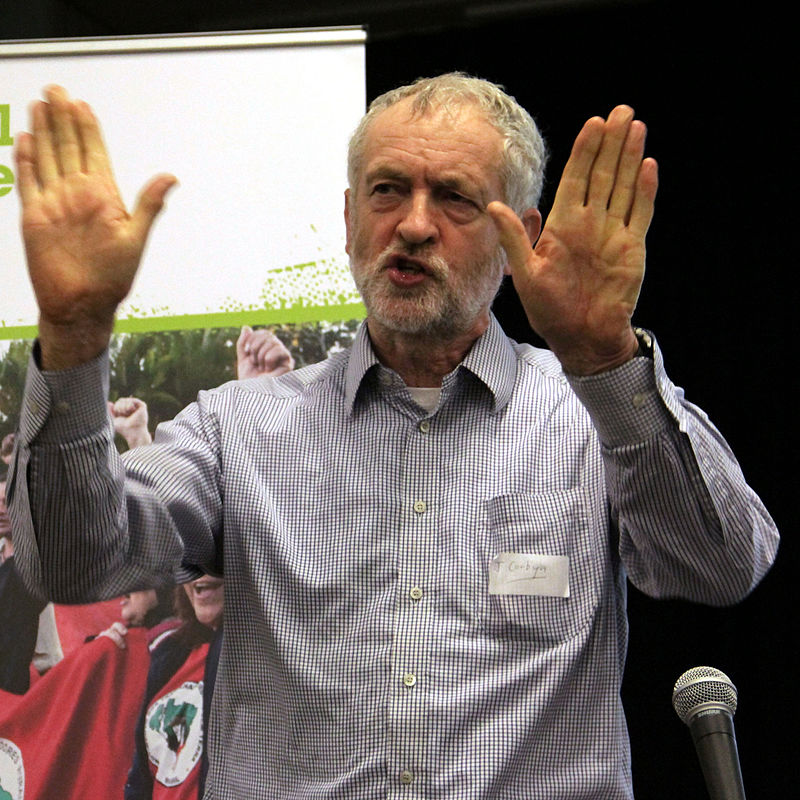 Some regular readers of this blog have expressed a disappointment over the lack of political content in recent months. To paraphrase, “I do not care about your tandem tour or cigarette advertising, but I do like to read what you think about…Jeremy Corbyn (left) or whoever/whatever”. Like a few of my peers, since the UK General Election in May, it has been quite difficult to muster much in the way of enthusiasm for writing about politics in the knowledge that a significant minority of the population voted for a bunch of lying, thieving and privileged men (largely) to run (down) the country, destroy the trade unions and the Labour Party and oppress working people.
What Cameron said about Jeremy Corbyn at the Tory Party conference earlier this month was outrageous slander. It is true that Corbyn was elected the leader of the Labour Party against all of the odds and in spite of the best efforts of the Tory-lite brigade within the party and their media friends. It is refreshing to hear a leading politician publicly renounce the use of nuclear weapons, expose the lie of the deficit, decline to sing the national anthem and bow before the queen.
Let’s just deal with the national anthem and patriotism. I regard myself as being fiercely patriotic without being nationalistic. I do not sing the national anthem, even at the Proms of which I am passionate. However, as a republican atheist, it is quite difficult to retain authenticity if one starts singing “God Save the Queen”. Surely? Corbyn was respectful at the Battle of Britain memorial service. He just did not sing the words. Moreover, if one listens to national anthems the world over, mostly they say something about the country, its people, the landscape, etc. The British National Anthem says nothing about these things. It is unsingable for any rational patriot.
Another thing that defines Corbyn is his commitment to democracy. OK, sometimes leadership is necessary, and merely listening might not be enough. The Conservative Government realise that their programme cannot be taken through the UK parliament and be ratified. There is simply not enough support for the programme in both houses. So what does the Government do? Find a way of not taking policy through normal channels, that’s what. For example, there is a law against new selective grammar schools in the UK. They are regressive and favour the already privileged children of middle- and upper-class parents. So instead of trying to get the legislation through parliament – which the Government knows is impossible – it sanctions the establishment of a new school as an annex of an existing school some 20km away, claiming that it is not a new school.
Then there is the issue about sale of social housing units – housing association properties to you and me. Notwithstanding the fact that attempts to sell off social housing stock at a discount is a bad idea as it transfers much needed affordable housing into the private sector funded by us, the taxpayer, to benefit private landlord (this is what happened with the sale of council houses in the 1980s). Additionally, Housing Associations are separate entities from the state and government. The houses are not the Government’s to sell. Yet. Again, knowing that it cannot get this measure through the Parliament, what has the Government done? Well, it has negotiated with the National Housing Federation an extra-parliamentary deal. According to the Guardian newspaper “Housing association leaders believe a voluntary deal will guarantee their independence as charities and private housing providers, and head off a full-scale battle with government, which has been critical in recent weeks of association performance and efficiency.” In other words, taking on the Government would undermine charitable status, a central plank of their identity and constitution. Essentially, they would then just become private companies, like any other. Or more likely public assets and available for sale. Fortunately, some Associations are resisting this bullying. Overwhelmingly.
Picture: Jeremy Corbyn by JMiall, Wikipedia
 Be informed