Archive for the ‘Politics’ Category
5 Years
The result of the UK General Election was deflating (to put it mildly). Managing the feeling of deflation is not easy and sometimes a distraction can help. Football often works for me. Distraction this time came from some cabaret at the Brighton Fringe Festival (Spiegeltent).
 So, we tried the show by Bourgeois and Maurice (left), a self-declared neo-cabaret act, whatever that is. They are flamboyant, camp, funny and entertaining. Clearly they did not have too much time to put this show together after the election, so naturally they incorporated material from their repertoire as well as new songs and sketches. They started with what seemed to be a new and funny song called ‘move to the right’ capturing the dynamic of the election – people who look to keep what they have ‘move to the right’ and those who swallow the anti-immigration bile ‘move to the right’. We were treated to their ‘depressing poem’. Oddly funny. It was just what was needed.
The conclusion of the show was genius. They did a rendition of David Bowie’s apocalyptic vision of the future, 5 Years. As we inappropriately say, never has a song seemed more appropriate.
The Government’s priorities say it all
The sense of deja vu associated with early reporting of the UK election results early on Friday morning was surreal. Back in 1992 when Labour under Neil Kinnock was expected to oust John Major’s Conservative government, assembled friends reeled as the results came in. Clear that it was not going to be a good night. Sleep does not come easily, either.
Major’s great contribution to human welfare was to privatise the railways; a legacy that stays with those of us who rely on the railway and know something about how it works. This new Tory Government will prioritise the abolition of the Human Rights Act and withdrawal from the European Convention on Human  Rights (ECHR). What kind of people abolish an act written, albeit imperfectly, to protect the interests of vulnerable citizens? And withdrawal from the ECHR has many implications, not least being in breach of one or more European treaties, the foundation of the UK’s very membership of the EU. It is also written into the Good Friday agreement with the Irish Government. Any change would need to be ratified by the Scottish Parliament. That might be challenging.
David Cameron announces that his party in government will be the true party of working people. So much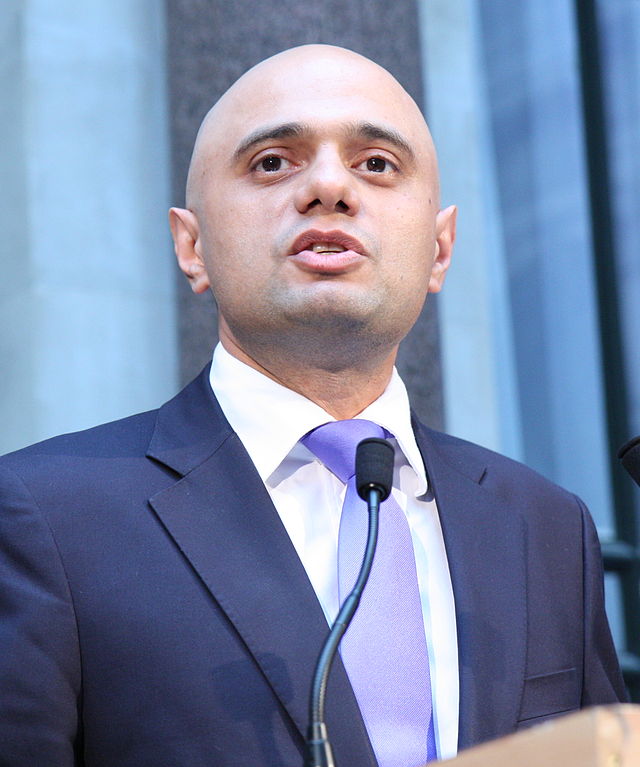 so that the new Business Secretary, Sajid Javid (right), will look to make it very difficult for employees to withdraw their labour by raising the threshold of participation in ballots. Therefore, for some classes of employees, for example, public sector workers, it is proposed that 50 per cent of members will have to participate for it to be valid. However reasonable that may seem, ballots already have to be postal and cannot be held in the workplace. Postal ballots are well known to have lower response rates than workplace ballots. Getting 50 per cent participation is unrealistic and constitutes an effective banning of strikes. The new party of working people seeks to give employers absolute power over employees.
Picture: European Court of Human Rights:
Picture: Sajid Javid through Wikipedia
The Economist would say that, wouldn’t it?
Filed under: Housing, Journalism and News Reportage, Politics | Tags: David Cameron, Ed Miliband, the Economist, UK General election 2015
 Comments (1)
 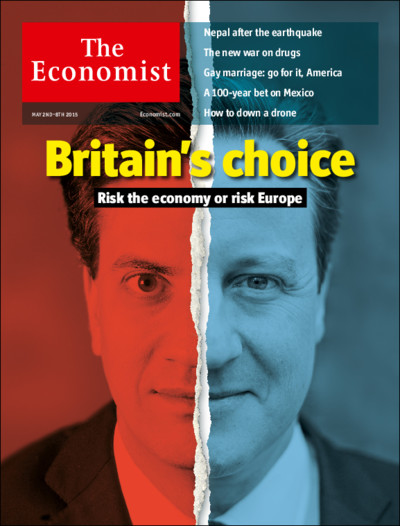 Regular readers will know that I recently ended my long-standing subscription to the New Statesman on the grounds of poor writing, bigotry (relating to transgender discrimination) and all-round listnessness and lack of progressiveness. I have maintained my subscription to the Economist on the grounds that one needs to know what the enemy is thinking. Its endorsement of David Cameron and the Conservatives for the election on Thursday 7 May (left) justifies this decision.
Here are some of the arguments presented in favour of a Conservative-led government after 7 May with some easy responses:
1. The Economist says: reducing the deficit is the priority. At 5 per cent of GDP that has to be reduced and public sector cuts are necessary in order to achieve it.
Strassenbahn13 says: the deficit is not the issue. It is a finance question, not an economics question. The economics question says, is the deficit manageable? What economic policies are necessary to ensure growth such that social utility can be maximised across all constituencies? If the deficit is the priority, economics goes out of the window. We have austerity for the sake of it, or to meet the neo-conservative objective of the limited state; that is limited public provision of services ranging from the NHS (ongoing privatisation) and housing (forcing housing associations to sell their assets) to public transport and street cleaning. The deficit does not make us poor. An under-productive, non-inclusive economy that does not make tangible and socially useful products makes us poor. That is the one the Conservatives are promoting.
2. The Economist says: the Conservative’s record in public services is good. People are more satisfied with services such as the NHS than they were before the cuts from the first term in government.
Strassenbahn13 says: essentially, the Conservatives argue that we can have cuts to services without quality being affected, or at least the sense that the quality is diminishing. This is nonsense. The good ratings have been achieved by proud and loyal public-service workers working harder. I am one. I see it every day. The tipping point will come. Just look at Accident and Emergency in hospitals.
3. The Economist says: the UK has a higher proportion of people in work than ‘ever before’.
Strassenbahn13 says: whatever is meant by ‘ever before’, the economy is dependent on low-paid immigrants, zero-hours and temporary employment contracts, insecurity and exploitation.
Here are the arguments against a Labour-led Government made by the Economist with some even easier responses:
1. The Economist says: It is harder to believe Labour will be successful with the deficit. The numbers are ‘vaguer’.
Strassenbahn13 says: As noted above, the deficit is a red-herring. But vaguer than the Tories £8bn savings from some undisclosed source proposed by the Conservatives?
2. The Economist says: tax the entrepreneurs and wealth creators and they will go somewhere else.
Strassenbahn13 says: is that the best argument there is? There is no evidence of this because people come to London in particular not because of the tax rates, rather it is a modern, liberal, tolerant, multi-cultural and global city. Some of them, I would very much welcome to leave. But often their threats are empty. I’m still waiting for that great entrepreneur Paul Daniels to leave after Blair claimed power.
3. The Economist says: Labour believes that living standards are being squeezed because markets are rigged and that the Government can fix them. Markets such as energy (dominated by six big oligopolistic players); zero-hour contracts and housing (private-sector landlords in the ownership of a basic of life and in limited supply).
Strassenbahn13 says: Miliband might just be right by this. Markets are rigged. They are imperfect. They work for some, but most of us are usually fleeced. Regulation is inadequate. And that deficit is caused by market failure, not public-sector workers. Where the Economist wants more markets – particularly in the NHS – most of us want fairness.
4. The Economist says: Labour would have to be in coalition with the Scottish Nationalist Party (SNP) ‘which leans strongly to the left’. This leads to ‘the certainty of economic damage’ arising from a Labour-led government.
Strassenbahn13 says: I would have thought the certainty was on a future Conservative-led government. Their economics are hugely damaging and the social unrest that these policies may unleash is real. And with less money for the police, that is going to be yet another management challenge (though, presumably, that is why Boris Johnson has bought the water cannon for London?). Actually, a coalition with the SNP seems like a very exciting and progressive option.
For all politicians and commentators – where is climate change?
There’s more, Cameron will push for the legalisation of fox hunting. If ever there was an indicator of a de-civilising policy, that is it. How we treat animals matters in itself. But to openly advocate cruelty to animals as an election promise is positively sickening, if not sick.
And let us not forget that the Conservatives are pathological liars. They have published two ‘independently written’ letters from business people endorsing the Conservatives to have been shown to be dishonest. And then Grant Shapps lying about his business interests and having an unusual relationship with his own Wikipedia page. What can one say about him, other than he is the Co-chair of the party?
Oh, and, the Conservatives cut the budget for helping refugees crossing the deadly Mediterranean Sea. They have this and other blood on their hands.
I could go on.
How to make the housing situation worse – basic finance
Filed under: Housing, Politics | Tags: Conservative Party, David Cameron, Ed Miliband, Labour Party, UK General election 2015
Leave a comment  On listening to Ed Miliband launch the Labour Party’s election manifesto on 13 April, I despaired. Like in the time of Blair in 1997, Miliband is committing the Party to an austerity programme that is false. It is a construct of the Conservative neo-liberals who want to roll back the state and are using the deficit as a justification.
So when it came to David Cameron, the following day, launching the his party’s manifesto, I had no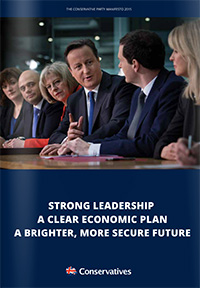 real expectations. But they were met, nonetheless. Back in the 1980s, Thatcher forced local authorities to sell their public housing at a discount to tenants under a programme called Right to Buy. Gradually, but surely, this policy reduced and denuded the public housing stock and made a lot of people wealthy. And they were not the people who bought them, necessarily.
We’ve since had help-to-buy, a dangerous incentive to people unable to buy because of the inflated price of property relative to incomes and the deposit levied by lenders. The Government will now subsidise the deposit for applicants. This further inflates house prices and subverts the whole point of deposit guarantees. And largely because of the Conservative Party’s policies and dogma associated with ownership.
And now what might we have? A Conservative Government would force Housing Associations, the privately-owned successors to local authorities charged with building and managing housing for eligible people largely disenfranchised from market housing provision, to sell, at a discount, these dwellings.
It seems that austerity does not apply when the Conservative Party is building its own constituency (or making war). Essentially the policy represents a money transfer to its own supporters (or anticipated supporters). Notwithstanding the immorality and legality of this, the policy is finance madness. Let me get this right, Housing Associations take out loans to build dwellings. Having built them, they sell/part sell a few and rent out the rest. They then go back to the banks and borrow more money with these dwellings as security. Take away this security and the banks will not lend, or certainly not cheaply. The whole model collapses. Genius.
These Conservatives are vile.
Culpability for the desperation of migrants crossing the Mediterranean
Filed under: International, Politics | Tags: Mediterranean Migrants, UK General election 2015
Leave a comment It has finally made it to the top of the political agenda; though the discussions amongst EU ‘leaders’ yesterday (including David Cameron) comes up with a sticking plaster rather than a solution. The suggestion that we should use bombs yet again, this time to destroy the vessels used by the human traffikers, is quite shocking in its stupidity. No doubt it suits arms manufacturers.
 This morning, the Labour Leader, Ed Miliband (left), effectively put his hands up and said that the Western Powers – particularly the UK and France – failed the people of Libya by having “inadequate postwar planning”. He noted that “In Libya, Labour supported military action to avoid the slaughter Gaddafi threatened in Benghazi. But since the action, the failure of post-conflict planning has become obvious. David Cameron was wrong to assume that Libya’s political culture and institutions could be left to evolve and transform on their own.”
I’m not sure that was the ultimate reason for bombing Libya. In response, David Cameron, the Conservative Leader, presented himself as a statesman (and great military strategist) and suggested that the electorate will decide what to make of such criticism in the face of so much death on the seas. Perhaps we need to remind Mr Cameron that it was his Government that withdrew the funding from the EU rescue mission on the grounds that it only made refugees more likely to attempt the crossing.
Okay, if it is post-(post)war planning that we are after, then these so-called leaders should be sat around a table working out how to facilitate the integration of migrants into Europe. Not finding ways of preventing them from coming (some hope on the part of politicians) or repatriating them after weeks or months in internment camps.
Oh, and Mr Farage, your advocacy of some sort of egalitarian Australian quotas approach needs some careful  consideration. There are plenty of refugees trying to enter Australia. They are held in camps run by our good friends Serco (and previously G4S). A number of these camps have witnessed serious human rights abuses, Amnesty International described the extremely offshore Nauru detention centre (right) as “a human rights catastrophe … a toxic mix of uncertainty, unlawful detention and inhumane conditions”. Meeting that challenge is a test for civilising politicians and a civilised society.
I fly a lot
I am a frequent flyer. Usually short-haul. Naturally, like many of my contemporaries, the news of the loss of the German Wings Airbus A320 over the Alps en route to Düsseldorf from Barcelona, was shocking. There was an horrendous loss of life on board, each with grieving families and friends.
 We now know that the crash was no accident. The First Officer, Andreas Lubitz, deliberately and consciously crashed the plane. We find that those doors that are always locked in order to protect us from the enemy without are no protection from the enemy within; namely those in the cockpit. Lubitz, it seems, was a privileged white man from a well-to-do family living in a quiet rural town conveniently connected to Frankfurt with a high-speed rail link. His father was a banker.
Lubitz perhaps saw his privilege slipping away. His poor mental health, seemingly, did not disqualify him from flying commercial aircraft. And the culpability of Lufthansa, the parent company of German Wings, is significant. People in Lufthansa knew that he was a risk.
Lubitz murdered 149 people.
Avoiding tax avoiders
 The UK Labour Party is under pressure, apparently, because big business is not endorsing tax policies. The most recent criticism has come from Stefano Pessina (left) the boss of Boots, the iconic British pharmacy-cum-drug store. Boots was founded in Nottingham, England, in 1849. It is now privately owned and has its headquarters is in Zug, Switzerland, to avoid UK corporation tax.
Now out of the woodwork are the fickle Simon Woodroffe, he of Yo! Sushi fame, who has funded both Labour and the Conservatives simultaneously just to hedge his bets, and Charles Dunstone, founder of Carphone Warehouse, now part of the Dixons empire. Both of these supported Labour under Blair. Arguably, Labour under Blair was conservative, and hence not a risk. Actually it would have been a risk not to support them in the run up to the 1997 election. Even Murdoch did that.
Labour under Miliband has targeted inequality as a key economic factor much to the chagrin of so-called ‘business leaders’ who took us in to recession and are unwilling to contribute to the state infrastructure that enables them to trade in the country safely and predictably.
Enter Price Waterhouse Coopers (PwC) the accountancy firm has been chastised by the UK Parliament’s Public Accounts Committee, Chaired by Margaret Hodge, for its speciality in advising firms on tax avoidance strategies on an ‘industrial scale’. Denied, of course.
Which other firms offend? We know well about Starbucks, Facebook, Top Shop, Amazon, Google, Apple and Virgin. That said, it is ok for Richard Branson because he is a philanthropist. Maybe we can define a philanthropist as someone who gives away part of their fortune to rectify the ills caused by their own business practices?
Other tax avoiding firms include: Dyson and Wolseley UK, owners of Plumb, Pipe, etc, Centers.
Celebrities have always moaned about tax. Michael Caine went off to the US, albeit when tax rates were somewhat higher than they are today (but even then, the high rate was a marginal rate). Unfortunately, Paul Daniels did not go when he threatened to back in the 1990s, let us hope that the likes of Griff Rhys Jones and Ray Winstone do leave as they threaten. Gary Barlow, Anne Robinson, the Arctic Monkeys, Katie Melula, George Michael and comedian, Jimmy Carr (I could go on) have all been exposed as intentional tax avoiders.
Picture: Stefano Pessina – Alliance Boots, available through Wikipedia
Syriza and the Greek response to austerity
Filed under: Finance and Economics, International, Politics |
Leave a comment Increasingly, it is clear that globalisation has globalised wealth in the hands of a number of elites – from  oligarchs in Russia, bankers in the UK and land speculators in Bombay. When the crash came in 2008, the perpetrators – the financial services elites – ‘hoovered’ up the public money pumped into the system to obviate a capitalist meltdown. No one went to jail; but Europe’s people were handed down a dose of austerity in return for their support. What is perplexing is how any sane policy-maker can sustain an argument that austerity helps declining economies. In Greece, for example, something in the order of 70 per cent of the country’s under 25s are unemployed. They are neither economically active nor productive. In the UK, unemployment goes down not because the economy is growing and the demand for labour is increasing; rather because people are taking zero-hour jobs or, indeed, taking jobs for an hour through ‘freelancer’ websites. Or, most disturbingly, if unskilled – at the unconnected end of the labour market – ads in supermarkets and shop windows.
Syriza’s victory in the Greek general election last week represents something positive. It is populist, but from the left rather than the right. The rhetoric is one of alternative, fairness and equality. It is a David and Goliath story in the making. The new Greek Prime minister, Alexis Tsipras (left), takes his secular oath, appoints radicals to his government (such as Yanis Varoufakis as Finance Minister), halts privatisations, reappoints the cleaners who were sacked from their jobs in the finance ministry, initiates tax reform and targets corruption. They have even put up all of the ministerial BMWs up for sale.
https://twitter.com/Oireachtas_RX/status/561578575057666048
We learn that the first port of call is not the IMF, the European Commission or even the German government in Berlin, rather opposition parties in Italy and Spain – next up on Europe’s election merry-go-round. I wait and see what happens, but there is optimism about Europe’s prospects and the rightness of Syriza’s approach to the crippling debt that they have inherited. I trust the elites do not share my optimism.
Flag: Fry1989, Wikipedia
Photo:
Apple’s cash mountain
 I am not an Apple fan. I do not like the design. I do not even like the font they use on their iOS interface. I hate the hype. But the results announced last week suggest I am in a minority. Apple reported profits of $18bn for the third quarter of 2014 generated by selling 34,000 iPhones per hour for the whole of that quarter. Mind boggling.
Apple now sits on a $180bn cash pile, a good amount of it is stashed in a bank account in Ireland selected so as to avoid paying tax on it in the United States of America. Good citizenship if ever I saw it.
So how does Apple reward its shareholders – ultimately the owners of the company? Well, apparently, according to the BBC’s Ian Jack (his explanation can be heard below), Apple is borrowing money in order to buy back its own shares so that shareholders pay a lower tax rate – capital gains tax rather than income tax.
It has been pointed out by the likes of Mariana Mazzucato in her book The Entrepreneurial State that, notwithstanding the immorality of avoiding paying tax, buying back shares also diverts money away from investment in new products, processes and technologies. Essentially, these companies not only avoid paying tax in the countries where they trade and/or are based, but they also get subsidised by the public sector through universities that make up the shortfall in basic research that should be done by the firms that utilise that research for new products and services. A double injustice.
Here’s the next challenge to our liberties
Filed under: Environment, International, Politics, Privatisation |
Leave a comment 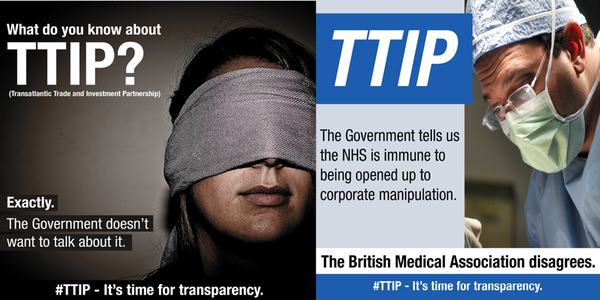 So here is the next outrage – the inappropriately named Transatlantic Trade and Investment Policy, coming to a court not near you very soon. It is inappropriate because it is not really a trade and investment policy. Such a policy would, on the whole, be benign. This one, by my understanding, gives large corporations the opportunity to challenge nation states/governments on issues that they view as restrictions on trade. So, a nationalised health service is conceivably a restriction on trade of US healthcare providers. Under this argument, US corporations would be able to make the case that they should be able to compete for contracts in the NHS – the whole of the NHS, not just the bit that the UK Conservatives have so far transferred to their private sector firms. Equally, all environmental policy could be viewed in this way. Restricting carbon emissions, for example, imposes costs on firms, that is a restriction on trade. Surely corporations should be able to pollute as much as they like?
 Be informed