Archive for the ‘Politics’ Category
Privacy and the Internet
 The new boss of GCHQ, Robert Hannigan, this week wrote a much-reported article in the Financial Times arguing that in order to stay safe we must give up our [right to] privacy. We must accept blanket surveillance of our online communications. He is frustrated that the large US tech firms that dominate the social media world are uncooperative. Consequently they are the ‘command and control networks of choice’ of international terrorists and paedophiles.
Well, he would say that, wouldn’t he? Here is a man whose job it is to do communication surveillance. In recent years – and certainly since Snowden – its legitimacy has been questioned. We may have asked, ‘in whose interests is this surveillance’? And if it is for us – citizens – then how would we know? We are never given the data that would tell us how effective it is in preventing attacks or the abuse of children.
Now, Mr Hannigan (right) has asserted that all of CGHQ’s surveillance is undertaken to protect us against attack from whomever or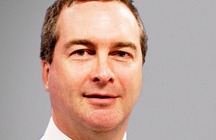 whatever. Again, there is no evidence that surveillance protects us, but the security services remain powerful arms of the state. The more surveillance they do, the more money they get. The more they convince us that only more surveillance can protect us – and we believe it – the more resources they will command and the less free we will be. And bearing in mind they tell us that surveillance is needed to keep us free, one wonders what kind of freedom they have in mind.
Naturally, the ‘if you have nothing to hide you have nothing to fear’ argument still resonates. But as Martha Lane Fox – one time government-appointed Tsar for digital inclusion and founder of lastminute.com – and anything but a crazy libertarian – said through a number of new and old media yesterday, “I would not want GCHQ to come and rummage in my front room and that is how I feel about whatever device I am using”. Moreover, the security services already have significant powers to investigate communication, not least through DRIP which a subservient UK Parliament rushed into law before the summer recess in 2014. Again, at the behest of the security services.
But what these people really dislike is the idea that ordinary people can encrypt their own communication. On the whole, our communication is unencrypted. The devices that we use are easily accessible to outside forces (with a few exceptions, notably Blackberry handsets). When we download an app we invariable sign away privacy in order to use it. But I do feel that I – and others – have a right to privacy and that the security services have enough power already to investigate any wrongdoing on my part. But they do need, first, to have sufficient evidence to get the warrant to invade my privacy. They are not the rights holders. We are.
Picture: GCHQ – MoD; Robert Hannigan – gov.uk
Rochester by-election – UKIP and neo fascists, Britain First, stand together
Filed under: Politics, Race | Tags: Britain First, Rochester and Strood, UKIP
 Leave a comment
  The Rochester and Strood by-election was caused by the resignation of the incumbent Conservative, Mark Reckless, as a result of his defection to UKIP. The by-election is an opportunity for any number of disgruntled people to stand for election. By-elections – particularly towards the end of a parliamentary period – often throw up surprises. Probably not enough to elect Britain First’s candidate, Jayda Fransen. Never mind, she seems quite friendly with UKIPers if this happy photo is anything to go by. Might they have much in common?
Picture: Britain First website
UKIP and health tourists
Filed under: Politics, Race | Tags: Malala Yousafzai, Nigel Farrage, UKIP
Leave a comment Nigel Farage, the leader of the United Kingdom Independence Party said, in the aftermath of his party’s victory in the Clacton bi-election (remind me not to go there), that we should prevent people with HIV (as a proxy for all people with an illness) from coming to the country. Clearly they will make a huge call on the NHS and we should exclude them.
I find these opinions reprehensible. However, I found it ironic that on the very same day (10 October 2014), the Nobel Peace Prize was  awarded to Malala Yousafzai, the young woman who was shot by the Taliban in Pakistan for standing up for her right to an education. After her condition stabilised she came to the UK for specialist treatment in Birmingham (and where eventually she continued her education). Now I do not know if she had private health insurance…
Picture: /Wikipedia
Post holiday blues in record time – European Convention on Human Rights
Filed under: International, Politics | Tags: Chris Grayling, European Convention on Human Rights, Theresa May
Leave a comment It does not take long for an awful reality to reassert itself after the summer tandem riding holiday, even if it was un-summerly and not everyone’s idea of a holiday. For example, what on earth happened in Scotland? Why did the Scots vote to stay dependent on the English elite establishment, fronted by David Cameron. One wonders whether the result would have been different had the Tory Party conference occurred before the vote rather than after it.
 It was, of course, at that conference that Chris Grayling, the UK (in)Justice Secretary, announced that should the Tories win outright the next UK election, they will knowingly take us out of the European Convention on Human Rights so as to free the country from those pesky European judges who so often tell us to do things that we do not want to do, such as give votes to prisoners, allow foreign criminals into the country, prevent the extradition of undesirables (especially those with hooks as substitutes for hands) and a ban whole-life sentences for grave crimes. It does, of course, none of these things; the Strasbourg Court merely highlights incompatibilities between UK law and the Convention. See: http://www.tinyurl.com/pszhdky
But instead, we will have a UK Bill of Rights, subject to the whim of the Tory elite to decide whether any citizen’s claims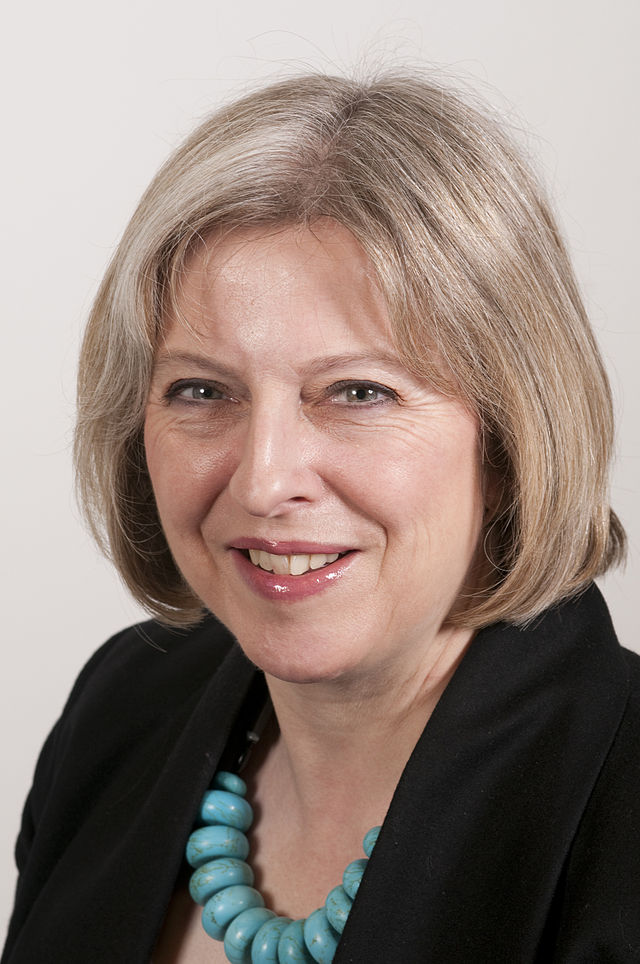 of a breach of human rights is valid or not. Not independent judges, but the likes of Grayling himself. Moreover, this elite used their conference to inform us that we have to allow ourselves to be subjugated, monitored and pacified to maintain security against the threat of terrorists that the elite has created for us through innumerable foreign wars, murder, incarceration and expropriation. The Home Secretary, Theresa May (right), told the conference that the ‘snoopers’ charter’ will be reintroduced to Parliament and passed when there is a Tory majority; but of course one has nothing to fear if one has nothing to hide.
The European Convention is not an EU institution, however. The Convention was scripted by European human rights lawyers, many of them British, in the early 1950s in the aftermath of WWII. To withdraw is to align ourselves with some of the least liberal states in the world; for example, Belarus.
 Such a move will precipitate a response from the Council of Europe – which is an EU institution. Ultimately, adherence to the Convention is a reasonable condition for membership of the European Union, if not the United Nations. Of course, getting out of the EU is precisely what Tories want and these arguments play well with their illiberal supporters. It is always gratifying to hear that the Prime Minister is generously giving our European partners one more chance to see sense and allow the UK to contravene the founding treaties that enshrine the concept of the free movement of people across European borders. A right that millions of UK citizens have exploited over the years.
Pictures:
Theresa May: ,Wikipedia
European Court Strasbourg: CherryX, Wikipedia
Wasted time
Filed under: International, Journalism and News Reportage, Uncategorized |
Comments (1) I regret the time that I have wasted in my life. Time that I could have used productively. But did not. Sitting on the train yesterday, as I often do, heading to my workplace (one hour), I glanced around and saw maybe two-thirds of the people on the train engaged in no activity other than looking around or out of the window. Immediately opposite me was a boy about 12 years’ old, I presumed with his mother. Both were, how I would describe, under-stimulated. I remember being that boy.
 Each Class 171 train has 124 seats. The train was full for the whole journey. For sections of the journey, there were people standing. So let us say there were 150 people on the train. If two-thirds were under-stimulated, that means 100 people. That is 6000 minutes going spare, 100 hours.
What could I do with 100 hours? I know that they are not mine to claim. I also realise that it is not for me to tell people what is good for them. However, I wonder whether this issue is not what is good for the individual, but rather society. Not using time productively, arguably, is anti-social?
The obvious activity for this sort of available time is reading. The boy in front of me had no visible reading material with him. He sat there patiently, commenting periodically to his mother about something that he had seen out of the window. I remember being that boy.
When I talk about society benefitting from those lost hours, I do so against the backdrop of what seems to be an almost global breakdown in human reason. The situation in Gaza, for example. It troubles me not least because the mis-information is so completely assimilated by our news organisations. It takes a bit of decoding when one is aware of it, let alone when reporting seems ‘balanced’. We are many of us under-informed (I include myself very much in this). Rectifying that would strike me as a good use for those 100 hours.
Picture of Class171: Mackensen
Gaza situation
 Today there is a 12 hour ceasefire in Gaza. It is safe, briefly, to enter outside, survey the damage to the infrastructure, reclaim a few possessions, whilst the Israel Offence Force watches over.
The scene on the left is the devastation meted out to the Gazan neighbourhood of Shijaiyah (picture sourced from Media Lens) in the name of ‘right of self-defence’. Proportionate? By contrast, the image, right (from the Israel Defence Force). This was the damage to an apartment block in the Israeli town of Ashkelon from a Palestinian rocket. Proportionate? Proportionality is a bit of a red herring. The issue is the siege of Gaza and Israeli settlements.
It is time for Obama to get on his plane and tell Netanyahu that he is on his way to the to the ICC in the Hague.
It is also time that the media get their reporting proportionate. Too much sourcing from  official Israeli authorities. Too many platforms given to the likes of Mark Regev (http://t.co/mNkP57gpKf). Too easy. Lazy. If you do have the mis-fortune to sit through Israeli propaganda, decode with this guide: http://www.independent.co.uk/voices/comment/israelgaza-conflict-the-secret-report-that-helps-israelis-to-hide-facts-9630765.html
Data Retention and Investigatory Powers Act (DRIP)
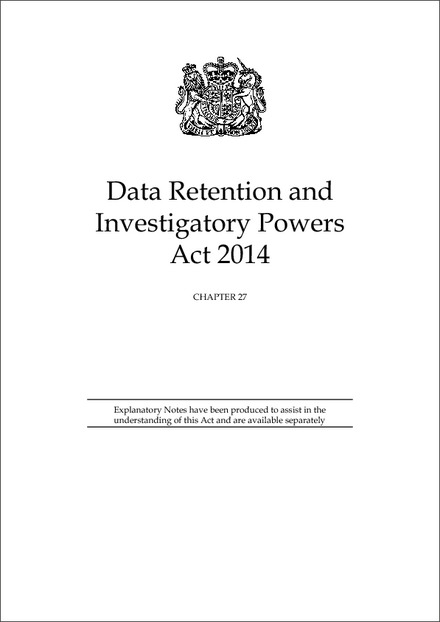 This piece of legislation, pushed through the UK Parliament in 3 days, is wrong in so many respects. Enacted to protect innocent people against terrorists and paedophiles (nice juxtaposition) and supported unconditionally by all three main parties in the Parliament, including the Labour Party, unforgivably.
In this country the police can now demand from suppliers of internet services and mobile phone network operators details of all of my transactions. The police will legally be able to access details of my searches, sites visited and my emails – and all those with whom I engage. They have access to the duration of my visits, conversations, times of those conversations and my location.
So often, one is confronted by the trite response from politicians that if one has nothing to hide, one has nothing to fear. One has everything to fear. I am no libertarian, but the state has no right to enter my private space, and that includes my email inbox. I know now that if I, or any others, seek to become a whistleblower against corrupt public or private organisations, including the police, they will be able to find us.
The Open Rights Group is challenging the legislation. They say: “The European Convention of Human Rights, the European Charter of Fundamental Rights and our own Human Rights Act – all exist to defend are rights and are where we will be able to challenge DRIP.” They intend to challenge the legality of the legislation in the European Court of Justice. The UK remains a signatory to the European Convention of Human Rights for the time being. The Conservative Government is currently composing legislation to undermine its authority over UK legislation – a move that is thought to precipitate the UK’s withdrawal. In Europe, the only non-members are Ukraine and Russia.
Cameron the (un)consummate politician
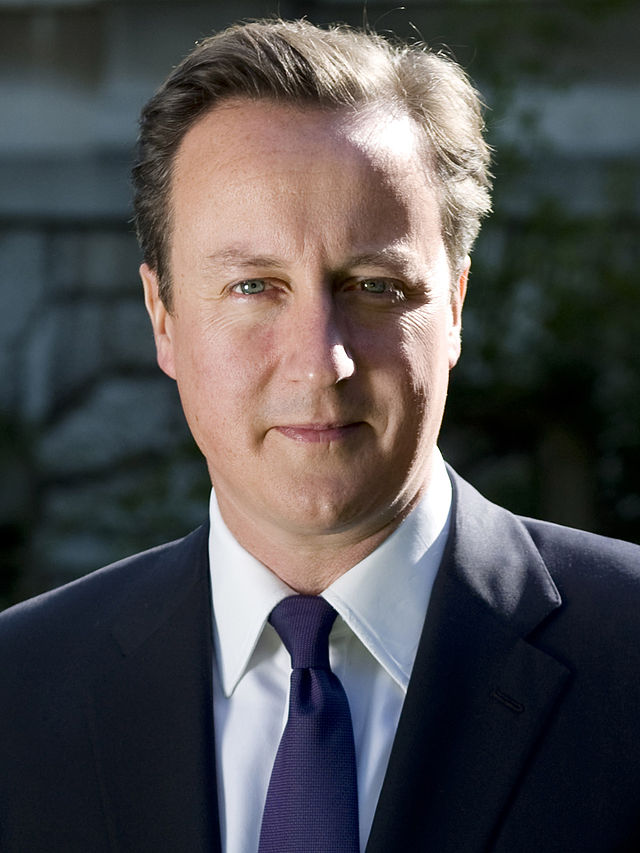 What does David Cameron not get about politics, particularly the politics of Europe? The messy battle over the appointment of Jean-Claude Juncker as President of the European Commission against his agreement leaves the UK further isolated in the continent.
Politics – as I studied it at university – is about power, influence and networks. Cameron lacks all three in Europe. They are of his own making:
First, in 2009 he left the main conservative grouping in the European Parliament (the European Peoples Party, EPP) when he was elected Prime Minister in the UK, much to the chagrin of German Kanzlerin, Angela Merkel. It was inside the EPP where the mechanism for taking the decision away from heads of government in favour of the European Parliament was conceived. There is a causal link between being outside this grouping and influence in the appointment of the Commission President;
Second, when the Euro was in trouble, he walked away with a ‘not my problem’ approach (see my own reflections on the German media’s reporting of this here: https://weiterzugehen.net/2011/12/10/26-to-1/). It was here where the 2-tier Europe occurred with the UK in the second tier. Cameron even tried to prevent the Euro countries from using the EU infrastructure for meetings. That was ally-forming for sure;
Third, whilst he is well aware of his own domestic pressures, not least with his own backbenchers and UKIP, he seems not to understand that other European leaders have similar issues, Merkel included. For Merkel, the Juncker appointment was more of a stop Martin Schulz campaign, her ‘socialist’ nemesis. Schulz became the Parliament’s candidate until the EPP woke up and used its majority in the Parliament to elevate Juncker. Merkel’s hands were tied by her own MEPs. Hence marginalising Cameron.
We are where we are now. Cameron is not going to be able to renegotiate the terms of UK membership before the referendum in 2017, should he be re-elected in 2015 as UK Prime Minister. British membership is not that important to the other members. Being marginalised inside the Union is not that great, being outside and trying to negotiate access to European markets is likely to be difficult. I hope that we do not get anywhere near that referendum.
European election results
 There is an uncanny resemblance between this graphic and opinions that I have been listening to on the radio this morning after the release of the European Election results in the UK.
Unemployment – get out of Europe. Housing – get out of Europe. Stop immigration. Recession – get out of Europe. Stop immigration. Etc.
Europe as an entity and a ‘project’ is a mess, for sure. It is expensive. There is a lot of free riding. It is dangerously expansionist, as the crisis in the Ukraine demonstrates. And it does fuel some of the economic excesses of globalisation. However, the opinions that I have been listening to are bigoted, ill-informed and dangerous.
Some basic knowledge about economics might help. And a look at the expenditures made by the Swiss and Norwegians in complying with European legislation in order to trade in the EU, indicate that leaving the EU is not an answer. Most of our trade is with Europe. I trust that in the event of a vote to leave the EU, the hundreds of thousands of ex-pats living and working in Europe will be asked to return to the Isle?
Moreover, as ex-commodities trader, Nigel Farage, leader of the UK Independence Party, ought to know the recession is not the fault of the people, it is his class that caused it. And the mainstream ‘professional’ politicians that allowed them to do it. So, I can understand the need for change and some honest talking over a beer. But surely the future should come from the left, not the fascist right?
Picture: http://www.hopenothate.org.uk/blog/nick/archive/1/2014
The entrepreneurial state
 Professor Mariana Mazzucato’s book, the Entrepreneurial State, contains some interesting observations about the role of the state in fostering innovation and hence creating wealth. It is evident that the private sector relies on public sector investment in research for its ideas, frameworks and technologies. The internet is a good example. Many drugs have their origins in publicly-funded laboratories (recent discussions around AstraZeneca and Pfizer have been caught up in this). Google is built on it. And even if the ideas, prototypes, patents do not originate in public research/educational establishments, the minds behind them do. The problem is, it seems, the private sector’s ability to appropriate these public goods for itself.
Professor Mazzucato’s recent lecture on this topic can be seen here: http://www.sussex.ac.uk/newsandevents/sussexlectures/2014?lecture=116&fmt=youtube; it was one of the best professorial lectures I have witnessed in recent years (notwithstanding Jonathan Chapman’s at the University of Brighton on Sustainable Design, 22 January 2014: http://www.youtube.com/watch?v=iBECx-L55Fg). Mazzucato demonstrates a number of indicators of disingenuousness on the part of knowledge-rich firms. One of the most startling and worrying is buy-backs. Large firms that spend their cash on buying back their own shares rather than investing in research are painted as villains. In the past, the exemplars were Xerox and Bell with their investment programmes that brought us spinouts such as Adobe, 3-Com and Lucent amongst many others in technology.
Buy backs take out investment from the economy. They put the burden on the public sector to do the risky stuff. Firms have become increasingly ‘financialised’. Pfizer, she argues, is just one example. There are many more spanning hi-tech industries across the globe. She explains this around 24 minutes into her lecture.
And so to remedies. Professor Mazzucato argues that states should be able to claw back some of the benefits accruing to firms when they win on the basis of public funding. Professor Mazzucato’s recommendations include: “golden shares of IPR and a national innovation fund”, “income-contingent loans and equity” and “development banks”. Stian Westlake of NESTA, the UK innovation investment fund, by way of critique, notes the following:
- Essentially, they all involve the government retaining a financial interest in companies that develop innovations based on public funding, with the idea that this money can be recycled to back more radical innovations. As far as I can see there are three problems with this idea: It would be nightmarish to administer It imposes costs on exactly the wrong businesses, creating both a presentational and a practical problem It’s worse than an already existing option – funding innovation from general taxation.
The full debate can be accessed here: http://www.nesta.org.uk/blog/how-not-create-entrepreneurial-state#sthash.eJoHD7wz.dpuf
 Be informed