Archive for the ‘Privatisation’ Category
Increasingly undemocratic
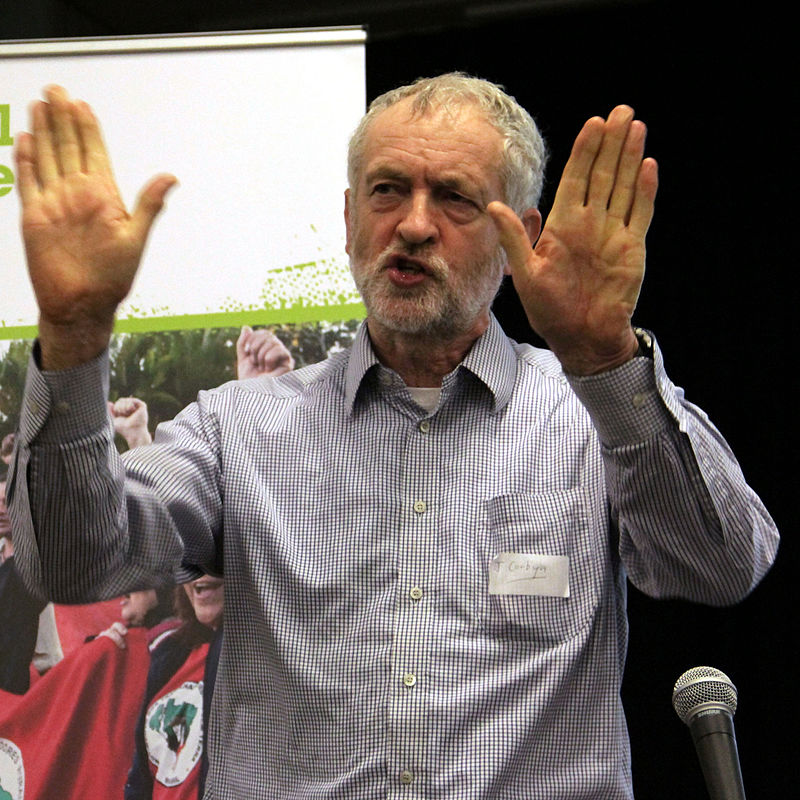 Some regular readers of this blog have expressed a disappointment over the lack of political content in recent months. To paraphrase, “I do not care about your tandem tour or cigarette advertising, but I do like to read what you think about…Jeremy Corbyn (left) or whoever/whatever”. Like a few of my peers, since the UK General Election in May, it has been quite difficult to muster much in the way of enthusiasm for writing about politics in the knowledge that a significant minority of the population voted for a bunch of lying, thieving and privileged men (largely) to run (down) the country, destroy the trade unions and the Labour Party and oppress working people.
What Cameron said about Jeremy Corbyn at the Tory Party conference earlier this month was outrageous slander. It is true that Corbyn was elected the leader of the Labour Party against all of the odds and in spite of the best efforts of the Tory-lite brigade within the party and their media friends. It is refreshing to hear a leading politician publicly renounce the use of nuclear weapons, expose the lie of the deficit, decline to sing the national anthem and bow before the queen.
Let’s just deal with the national anthem and patriotism. I regard myself as being fiercely patriotic without being nationalistic. I do not sing the national anthem, even at the Proms of which I am passionate. However, as a republican atheist, it is quite difficult to retain authenticity if one starts singing “God Save the Queen”. Surely? Corbyn was respectful at the Battle of Britain memorial service. He just did not sing the words. Moreover, if one listens to national anthems the world over, mostly they say something about the country, its people, the landscape, etc. The British National Anthem says nothing about these things. It is unsingable for any rational patriot.
Another thing that defines Corbyn is his commitment to democracy. OK, sometimes leadership is necessary, and merely listening might not be enough. The Conservative Government realise that their programme cannot be taken through the UK parliament and be ratified. There is simply not enough support for the programme in both houses. So what does the Government do? Find a way of not taking policy through normal channels, that’s what. For example, there is a law against new selective grammar schools in the UK. They are regressive and favour the already privileged children of middle- and upper-class parents. So instead of trying to get the legislation through parliament – which the Government knows is impossible – it sanctions the establishment of a new school as an annex of an existing school some 20km away, claiming that it is not a new school.
Then there is the issue about sale of social housing units – housing association properties to you and me. Notwithstanding the fact that attempts to sell off social housing stock at a discount is a bad idea as it transfers much needed affordable housing into the private sector funded by us, the taxpayer, to benefit private landlord (this is what happened with the sale of council houses in the 1980s). Additionally, Housing Associations are separate entities from the state and government. The houses are not the Government’s to sell. Yet. Again, knowing that it cannot get this measure through the Parliament, what has the Government done? Well, it has negotiated with the National Housing Federation an extra-parliamentary deal. According to the Guardian newspaper “Housing association leaders believe a voluntary deal will guarantee their independence as charities and private housing providers, and head off a full-scale battle with government, which has been critical in recent weeks of association performance and efficiency.” In other words, taking on the Government would undermine charitable status, a central plank of their identity and constitution. Essentially, they would then just become private companies, like any other. Or more likely public assets and available for sale. Fortunately, some Associations are resisting this bullying. Overwhelmingly.
Picture: Jeremy Corbyn by JMiall, Wikipedia
Fracking as a metaphor
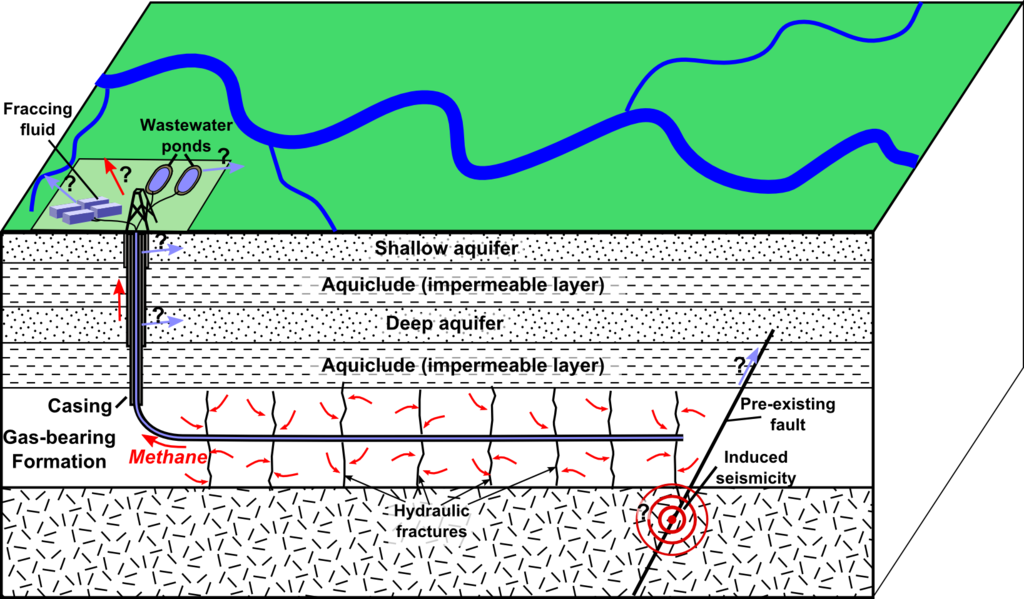 I was reading in the Guardian newspaper an article by comedy screenwriter Ian Martin (In the Thick of It) about how we are all being fracked as corporations find new ways of extracting more and more from us in pursuit of profit. Fracking, for those unfamiliar with the process, is the extraction of gas from rocks by using high pressure jets underground to break them up to the release the gas. Firms that are seeking licences to do this on a commercial scale are experiencing serious opposition from local people, not least because of the likelihood of toxic chemicals contaminating water courses and hence threatening human health (see graphic above left).
Moreover, the Murdoch newspapers take the position that that fracking is some sort of panacea – cheap, plentiful energy, produced locally and not subject to the whim of international diplomacy. Russia, for example.
I had not really thought of a metaphor of blasting rocks with high pressure jets. Fracketeering, as Martin calls it. So how are we being fracked? Here are a couple of examples from the article:
- estate agents’ “client progression fees”, where the buyer has to pay the estate agent to make the offer to the seller, even though the seller has already paid for this “service”;
- admin fees paid on online transactions – such as concert tickets – where the marginal cost is near to zero and where we, the customer, have already spent 20 minutes of our valuable time getting to the screen that tells us that we will have to pay for the privilege of paying (for our tickets).
Here are some that I am subject to, seemingly.
- In order to get online with my internet provider, I have to have a phone line that I do not need or want. The phone line costs the same as the broadband. No phone, no Broadband.
- paying to upload to this blog pictures of an illuminated Eiffel Tower that I took with my own camera;
- not being able to roll over digital credit from one month to the next on my dongle. Have I bought my 3Gb or not? Why can I not pay again when I have used it?
Graphic: “HydroFrac” by Mikenorton – Own work. Licensed under CC BY-SA 3.0 via Wikimedia Commons – https://commons.wikimedia.org/wiki/File:HydroFrac.png#/media/File:HydroFrac.png
Those pesky railway workers
Filed under: Politics, Privatisation, Railways | Tags: National Express, privatisation, Southern Railway
 Leave a comment
  The strike by UK rail infrastructure workers scheduled for next week has been called off, but the train operators (private companies using the rail infrastructure) had their plans for dealing with the lack of infrastructure. Obviously, not run trains. But it was worse than that. This was going to be a 24 hour strike straddling two days. Never helpful, but this is industrial action, it is supposed to be disruptive. Starting at 1700 on Monday and finishing 1700 Tuesday. Presumably then, trains will run on or near to 1700 on Tuesday? Er…no. Not worth it, it seems. Trains would have restarted the next full day.
 Maybe someone can correct me on this, but it seems on the face of it that the costs associated with restarting train services at 1700 are too high and the key passengers – season ticket holders – were unlikely to have travelled in to London or other principal cities in the UK earlier in the day and would, therefore, be unlikely to need the train home. So the rest of us who might want to use a train for non-work travel can go stuff ourselves.
It is easy to say that pre-privatisation (1994) it would have been inconceivable that the trains would not recommence after the ending of strike action. This really does seem to be a case of profit coming first.
Incidentally, I will arrive at Gatwick Airport at 1800 on Tuesday with a view to getting back home on the South Coast. I checked nearby hotels and airport parking. Extortionate. £140 pounds to park at Gatwick. These organisations seem to have had a service bypass!
The one unexpected good business was National Express which planned to put on extra coaches to cater for the stranded passengers at not-inflated prices from what I could see. Top marks. I’ll remember that.
Avoiding tax avoiders
 The UK Labour Party is under pressure, apparently, because big business is not endorsing tax policies. The most recent criticism has come from Stefano Pessina (left) the boss of Boots, the iconic British pharmacy-cum-drug store. Boots was founded in Nottingham, England, in 1849. It is now privately owned and has its headquarters is in Zug, Switzerland, to avoid UK corporation tax.
Now out of the woodwork are the fickle Simon Woodroffe, he of Yo! Sushi fame, who has funded both Labour and the Conservatives simultaneously just to hedge his bets, and Charles Dunstone, founder of Carphone Warehouse, now part of the Dixons empire. Both of these supported Labour under Blair. Arguably, Labour under Blair was conservative, and hence not a risk. Actually it would have been a risk not to support them in the run up to the 1997 election. Even Murdoch did that.
Labour under Miliband has targeted inequality as a key economic factor much to the chagrin of so-called ‘business leaders’ who took us in to recession and are unwilling to contribute to the state infrastructure that enables them to trade in the country safely and predictably.
Enter Price Waterhouse Coopers (PwC) the accountancy firm has been chastised by the UK Parliament’s Public Accounts Committee, Chaired by Margaret Hodge, for its speciality in advising firms on tax avoidance strategies on an ‘industrial scale’. Denied, of course.
Which other firms offend? We know well about Starbucks, Facebook, Top Shop, Amazon, Google, Apple and Virgin. That said, it is ok for Richard Branson because he is a philanthropist. Maybe we can define a philanthropist as someone who gives away part of their fortune to rectify the ills caused by their own business practices?
Other tax avoiding firms include: Dyson and Wolseley UK, owners of Plumb, Pipe, etc, Centers.
Celebrities have always moaned about tax. Michael Caine went off to the US, albeit when tax rates were somewhat higher than they are today (but even then, the high rate was a marginal rate). Unfortunately, Paul Daniels did not go when he threatened to back in the 1990s, let us hope that the likes of Griff Rhys Jones and Ray Winstone do leave as they threaten. Gary Barlow, Anne Robinson, the Arctic Monkeys, Katie Melula, George Michael and comedian, Jimmy Carr (I could go on) have all been exposed as intentional tax avoiders.
Picture: Stefano Pessina – Alliance Boots, available through Wikipedia
Here’s the next challenge to our liberties
Filed under: Environment, International, Politics, Privatisation |
Leave a comment 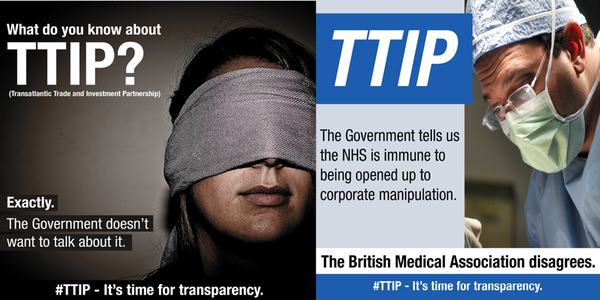 So here is the next outrage – the inappropriately named Transatlantic Trade and Investment Policy, coming to a court not near you very soon. It is inappropriate because it is not really a trade and investment policy. Such a policy would, on the whole, be benign. This one, by my understanding, gives large corporations the opportunity to challenge nation states/governments on issues that they view as restrictions on trade. So, a nationalised health service is conceivably a restriction on trade of US healthcare providers. Under this argument, US corporations would be able to make the case that they should be able to compete for contracts in the NHS – the whole of the NHS, not just the bit that the UK Conservatives have so far transferred to their private sector firms. Equally, all environmental policy could be viewed in this way. Restricting carbon emissions, for example, imposes costs on firms, that is a restriction on trade. Surely corporations should be able to pollute as much as they like?
Why calls to keep the East Coast rail franchise in the public sector are folly
 The East Coast rail franchise has been successfully run by the UK state organisation, Publicly Operated Railways (POR), since it was abandoned by National Express in 2009 when it failed to meet its financial targets.
East Coast will return to the private sector in April 2015 after a protracted bidding process was finally won by the joint Stagecoach/Virgin venture (90/10 shares respectively). The Department of Transport somehow avoided awarding the franchise to the French state railway bid (Keolis and Eurostar joint venture).
The anti-privatisation debate has been championed by the Labour party and is logical. DoR has made healthy returns to the Treasury, why hand these to a private company when the public sector has done so well? At the very least, why could DoR not bid to run the franchise?
The Conservative government’s response, essentially, is that anything that the public sector can do, the private sector can do better. Notwithstanding the fact that often they cannot as two of the franchisees for this route – GNER and National Express – have failed. However, the Stagecoach/Virgin alliance has worked on the West Coast route and Stagecoach has been running the London commuter franchise, South West Trains since privatisation in 1996. But ultimately, the Conservative government has an ideological fixation with the private sector. Many of its members have positions in private sector firms that benefit from government contracts.
For me, however, keeping individual franchises in the public sector is a red herring. These are companies that have no assets. Whilst they are the main channel for passengers to access railway services, they are far from being the railway. The assets of the railway are arguably where the value is. Now, fortunately, the key assets – the permanent way, signalling, stations, etc. – are public sector assets after the demise of Railtrack in 2002. But these assets do not generate surpluses. Quite the contrary. Despite announcing a pre-tax profit for 2014 of £1.035bn, the cumulative debt amounts to £20bn.
 By contrast, the owners of the rolling stock make a killing out of leasing trains to franchisees. There are three major players whose profit margins after tax seem to be around 10 per cent, according to a Channel 4 News investigation. Whilst there may well be some shrewd investment and management involved, ownership of these firms lacks transparency (two have registrations in Jersey and Luxembourg). Moreover, these businesses were sold at privatisation for a song. Porterbrook Leasing, for example, was sold in November 1995 for £527m. It was resold in July 1996 to Stagecoach for £825m. In essence, it costs a lot of money to lease trains to generate high profits for the leasing companies.
My argument, then, is this. The railway is only meaningful when it is an integrated whole in terms of its ownership and operation. Keeping franchises in the public sector when the real money is made by those with whom they must contract in order to provide train services; namely, rolling stock leasing companies, is to miss the point. It gets the Labour Party off the hook. But it is not public provision of public services.
Picture: Class 171 Mackensen
Public housing
 I was very pleased to hear Councillor Bill Randall being invited on to Radio 4’s Today programme yesterday to discuss current inequities regarding housing in the context of the acute shortage experienced in Brighton and Hove where he is a senior figure and a distinguished housing expert. This being the BBC, he was pitted against Adam Memon (right) of the Centre for Policy Studies an apologist for
 continued expropriation of public housing by private landlords and provision of public subsidy for this through high housing benefit allowances. Seemingly in Brighton and Hove, 6000 council dwellings have been sold since Thatcher’s flagship ‘right to buy’ policy of the early 1980s; one thousand of these have passed into the private rented sector. Another tranche have been resold to private sector buyers from outside the town – Brighton, in particular, is extremely expensive and ex-council houses are sought-after properties. A cursory glance in the window of an estate agent shows a three-bedroom example for sale at £275,000. The exchange has been captured here:
Picture: Bill Randall: brightonandhovegreens.org; Adam Memon: CPS
The entrepreneurial state
 Professor Mariana Mazzucato’s book, the Entrepreneurial State, contains some interesting observations about the role of the state in fostering innovation and hence creating wealth. It is evident that the private sector relies on public sector investment in research for its ideas, frameworks and technologies. The internet is a good example. Many drugs have their origins in publicly-funded laboratories (recent discussions around AstraZeneca and Pfizer have been caught up in this). Google is built on it. And even if the ideas, prototypes, patents do not originate in public research/educational establishments, the minds behind them do. The problem is, it seems, the private sector’s ability to appropriate these public goods for itself.
Professor Mazzucato’s recent lecture on this topic can be seen here: http://www.sussex.ac.uk/newsandevents/sussexlectures/2014?lecture=116&fmt=youtube; it was one of the best professorial lectures I have witnessed in recent years (notwithstanding Jonathan Chapman’s at the University of Brighton on Sustainable Design, 22 January 2014: http://www.youtube.com/watch?v=iBECx-L55Fg). Mazzucato demonstrates a number of indicators of disingenuousness on the part of knowledge-rich firms. One of the most startling and worrying is buy-backs. Large firms that spend their cash on buying back their own shares rather than investing in research are painted as villains. In the past, the exemplars were Xerox and Bell with their investment programmes that brought us spinouts such as Adobe, 3-Com and Lucent amongst many others in technology.
Buy backs take out investment from the economy. They put the burden on the public sector to do the risky stuff. Firms have become increasingly ‘financialised’. Pfizer, she argues, is just one example. There are many more spanning hi-tech industries across the globe. She explains this around 24 minutes into her lecture.
And so to remedies. Professor Mazzucato argues that states should be able to claw back some of the benefits accruing to firms when they win on the basis of public funding. Professor Mazzucato’s recommendations include: “golden shares of IPR and a national innovation fund”, “income-contingent loans and equity” and “development banks”. Stian Westlake of NESTA, the UK innovation investment fund, by way of critique, notes the following:
- Essentially, they all involve the government retaining a financial interest in companies that develop innovations based on public funding, with the idea that this money can be recycled to back more radical innovations. As far as I can see there are three problems with this idea: It would be nightmarish to administer It imposes costs on exactly the wrong businesses, creating both a presentational and a practical problem It’s worse than an already existing option – funding innovation from general taxation.
The full debate can be accessed here: http://www.nesta.org.uk/blog/how-not-create-entrepreneurial-state#sthash.eJoHD7wz.dpuf
Privatisation watch: the lingua franca (2)
Filed under: Politics, Privatisation | Tags: child protection privatisation
Leave a comment  Plans to privatise child protection services in the UK have been revealed. The proposal in a leaked document is for the Department for Education to allow local authorities – councils – to outsource children’s services. These powers include making decision to remove children from their families.
Private providers, reports the Guardian newspaper this morning, “will allow authorities to ‘harness third-party expertise’ and ‘stimulate new approaches to securing improvements’ for safeguarding services outside ‘traditional hierarchies’…”. Ah yes, there is that ‘expertise’ again. Along with securing…improvements and replacing ‘traditional hierarchies’ with presumably non-traditional private hierarchies.
On an interview on Radio 4 earlier, the word ‘innovation’ was used by a defender of the proposal. Again, only the private sector can innovate. G4S, one of the innovation-led private sector companies thought to be lobbying for this market to be opened up, has innovated in not providing security for the Olympics and overcharging for its offender tagging services. Actually making up some tagged offenders. Another company, Serco, innovated in manipulating figures showing it had met targets in outsourcing family doctor services. Let’s also talk about Atos which in March this year pulled out of its £500m capability assessment contract after evidence of widespread incorrect ‘judgements’ on claimants’ fitness-for-work, leaving many without benefits.
Picture: politicalscrapbook.net
Privatisation watch: the lingua franca
 For what is it worth, here are the phrases that justify the privatisation of public assets. Fill the gaps with the name of the organisation/agency earmarked for treatment:
The objective is to: “protect and enhance its [***] scientific capabilities in the long term” – Owen Patterson, UK Environment Minister on the proposed sale of the Food and Environment Research Agency.
It always seems to be the case that public agencies lack expertise, such that “[p]rocuring the right external partner, with the necessary commercial expertise and experience will help [***] to maximise its market potential and grow its non-government revenue”.
Let’s not forget the career prospects for the employees, should critics ask: “I am also confident that a joint venture would offer new opportunities to [***] staff.” That is reassuring from Owen Patterson.
And of course, according to Vince Cable, the Business Secretary talking of the privatisation of the Royal Mail last year, share ownership “energise[s] everyone … allowing employers and employees to share in the company’s future success”. My post is usually delivered by a man who looks newly energised. I’m sure he is also energised by the fact that 6 ‘priority’ investors made £750m out of the sale of shares on the first day of trading. But as Mr Cable told a select committee of the UK Parliament, “that is the market”.
Politicians and increasingly civil servants always tell us not to worry because: “[we] would only take forward specific measures where there was a clear public benefit and subject to suitable safeguards.” (official statement from UK Revenue and Customs regarding the sale of ‘anonymised’ tax data).
More to follow.
 Be informed
