Archive for the ‘Travel’ Category
Florence – the Grand Tour, November 2025
Filed under: Art, Hotels, Museums, Travel | Tags: Florence, Florence Dome, Galileo Museum, Uffizi Museum
 Leave a comment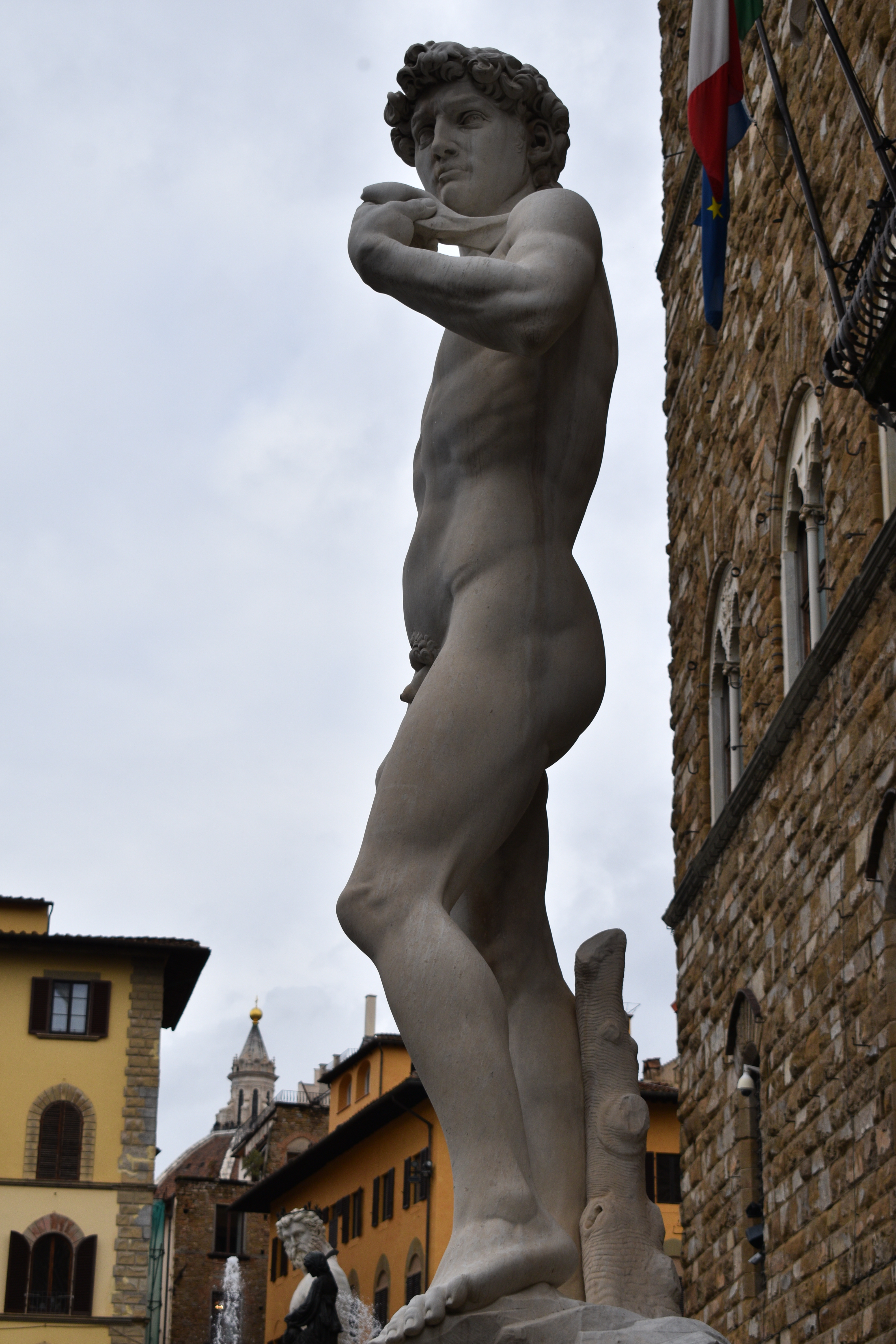
It is clearly about time. Florence. The Renaissance. History. So, we did it. Monday by train from Munich. Saturday back. We stayed at the Novotel near the airport (see below).
Day 1 – wandering around. Florence is one of those places that if you do wander around you are likely to see everything that is free. Including the reproduction of Michelangelo’s David, left. The original is in the Glleria Dell’Accademia di Firenze and has an entry fee.
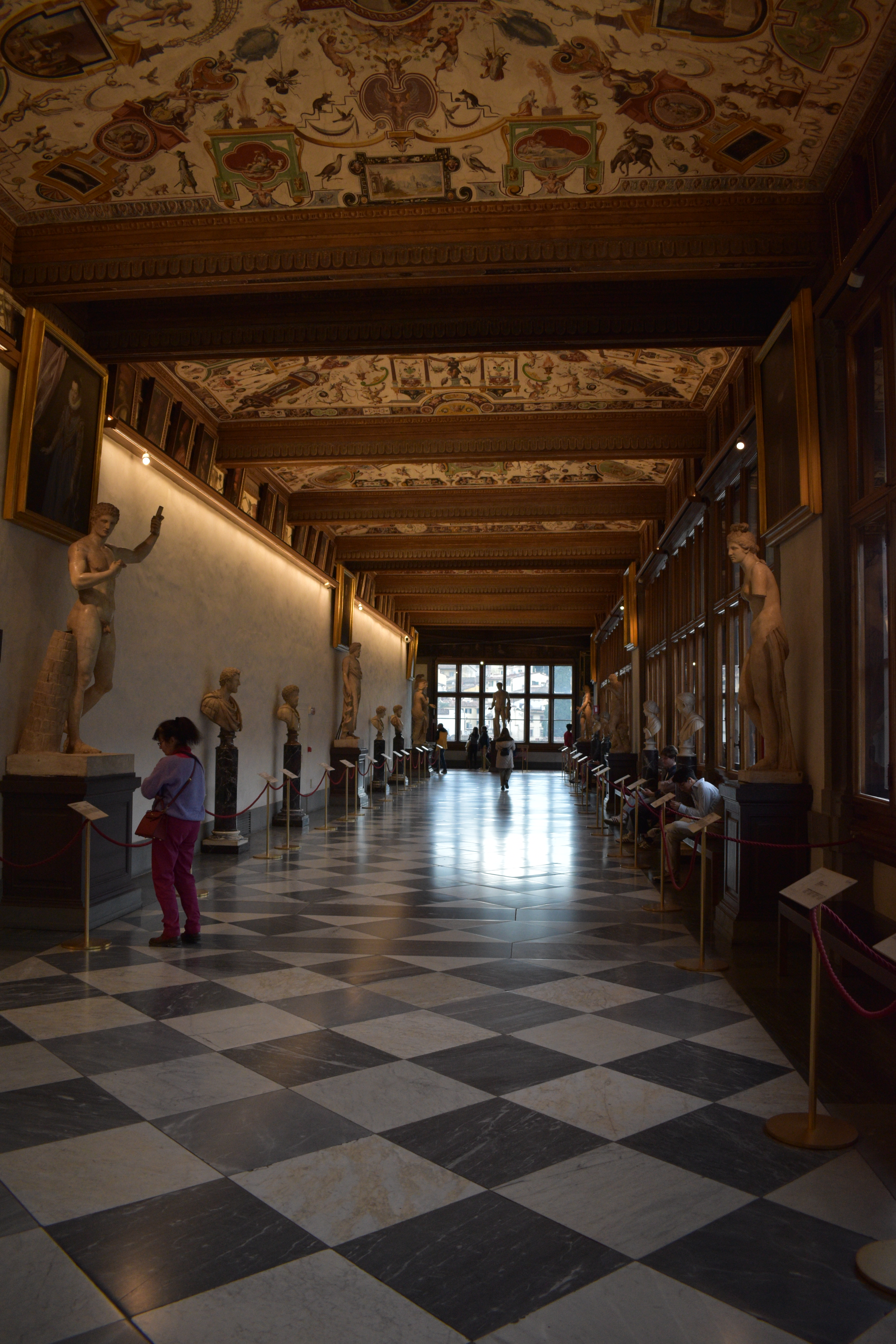
Day 2 – the Uffizi gallery. We must go and see Venus at the very least. And the Botticelli pictures more generally. It is a strange gallery. Note that it has ultra-strict security since the bomb attack in 1993. But basically, it is a rectangular building with small galleries off a corridor (right). The building itself dates from 1581. The upper floor is the gallery that comprises a corridor adorned with sculptures and frescoes. It is actually quite difficult to see all of this art without laying on one’s back. And so one wanders around taking in what the senses can appropriate.
There are unexpected surprises such as a smattering of Mannerisms, for example, Portrait of Gabrielle d’Estrées with one of her sisters, Bathing. This image is mischievous but also representative of a mannerist depiction of feminine beauty and fertility. Just oddly included in the collection.
Florence is not complete without the arrival of Caravaggio and his followers with some gruesome depiction of decapitation or similar. The Uffizi does not disappoint offering a themed gallery with my favourite being the Judith Beheading Holofernes by Artemisia Gentileschi. I suppose these pictures very much reflect Renaissance Florence, certainly somewhere violent enough for one’s head to be removed from one’s shoulders without too much effort. Though interestingly conducted by women.
Is the Uffizi a great gallery? It does have a remarkable collection. But I have to admit, I got a bit bored. It would benefit from an edit (I know that it is carefully curated, but…) largely because of the period. There is a lot of replication. Arguably the visitor could do their own edit ahead of time. Though let me put it this way, it is not the Louvre.
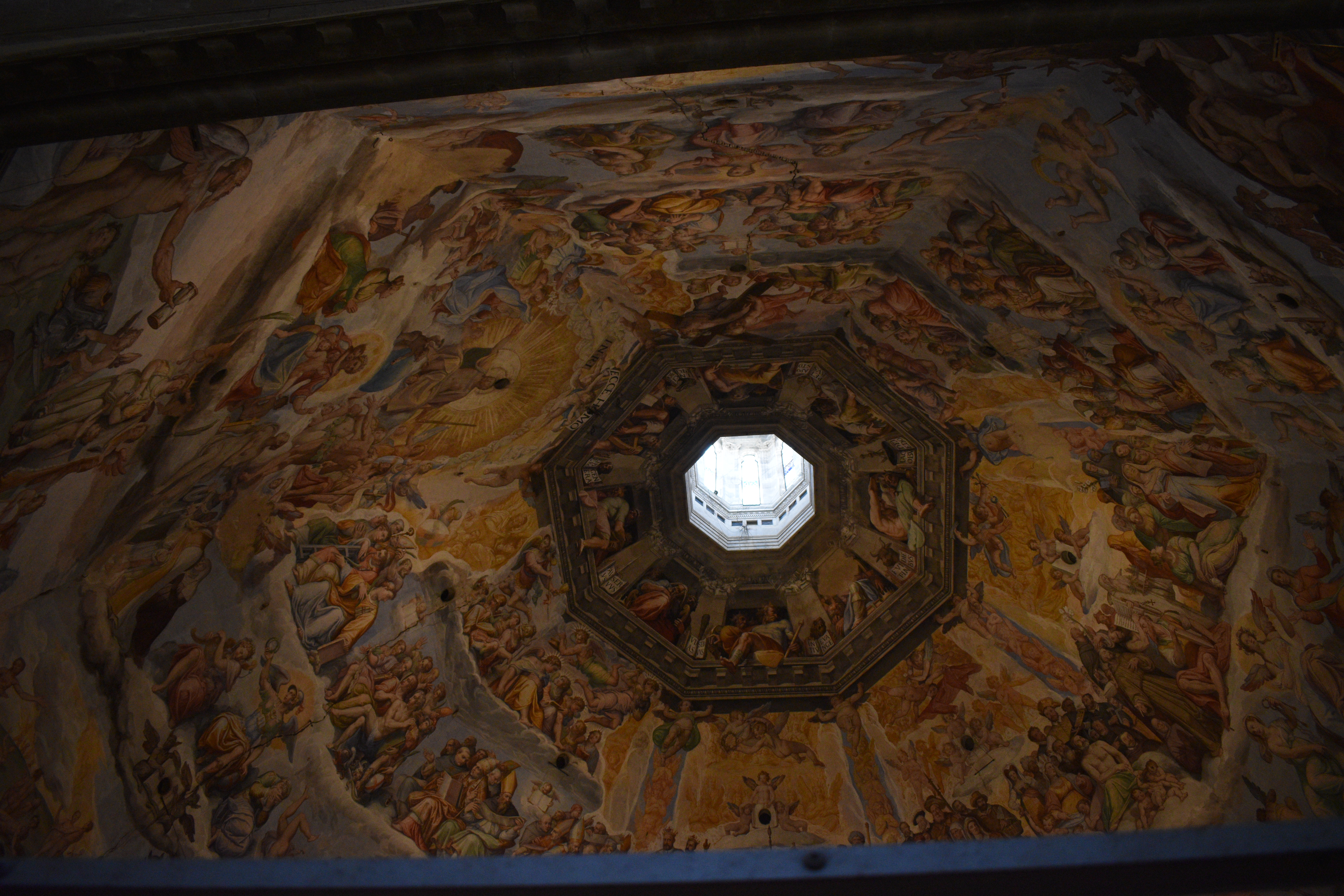
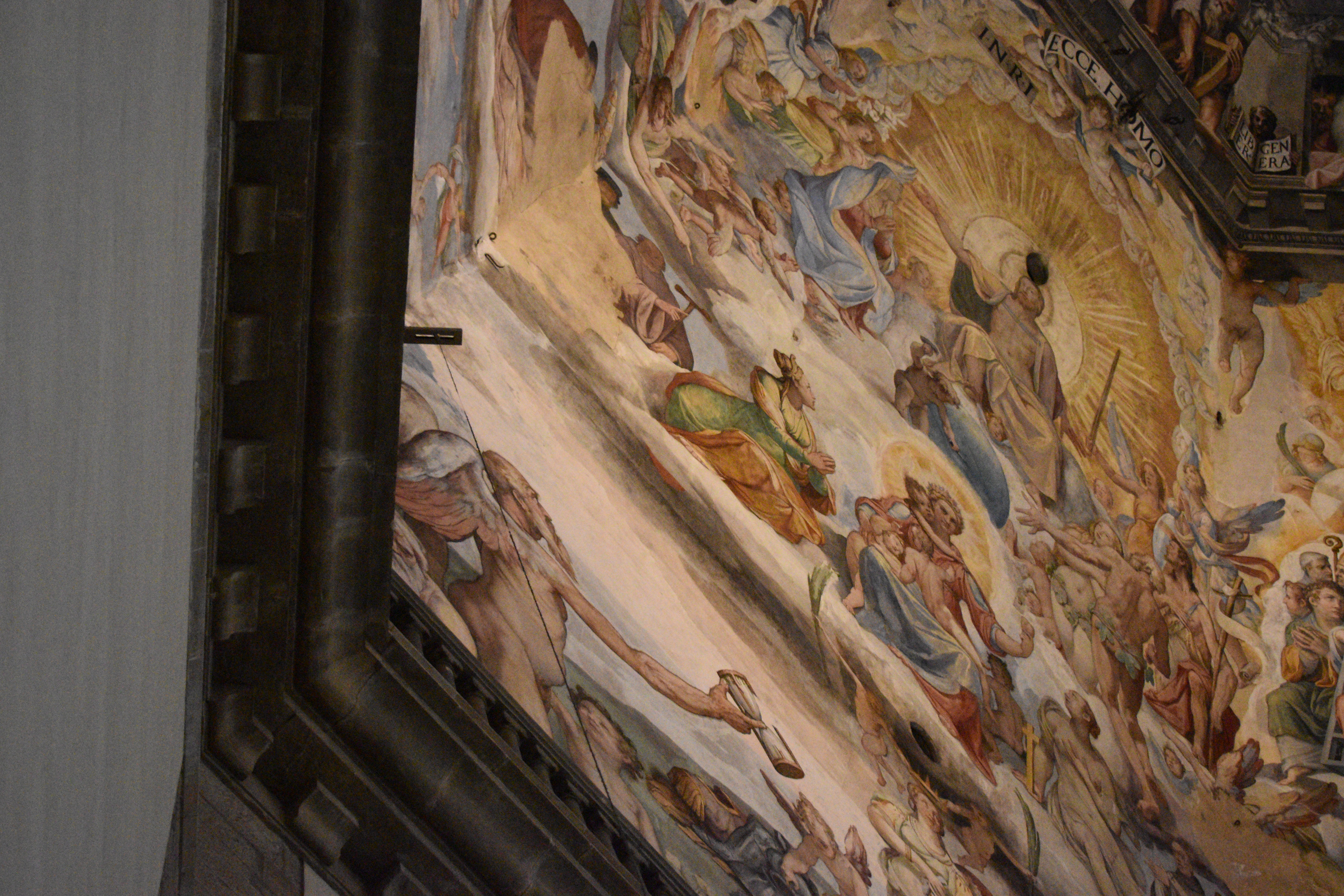
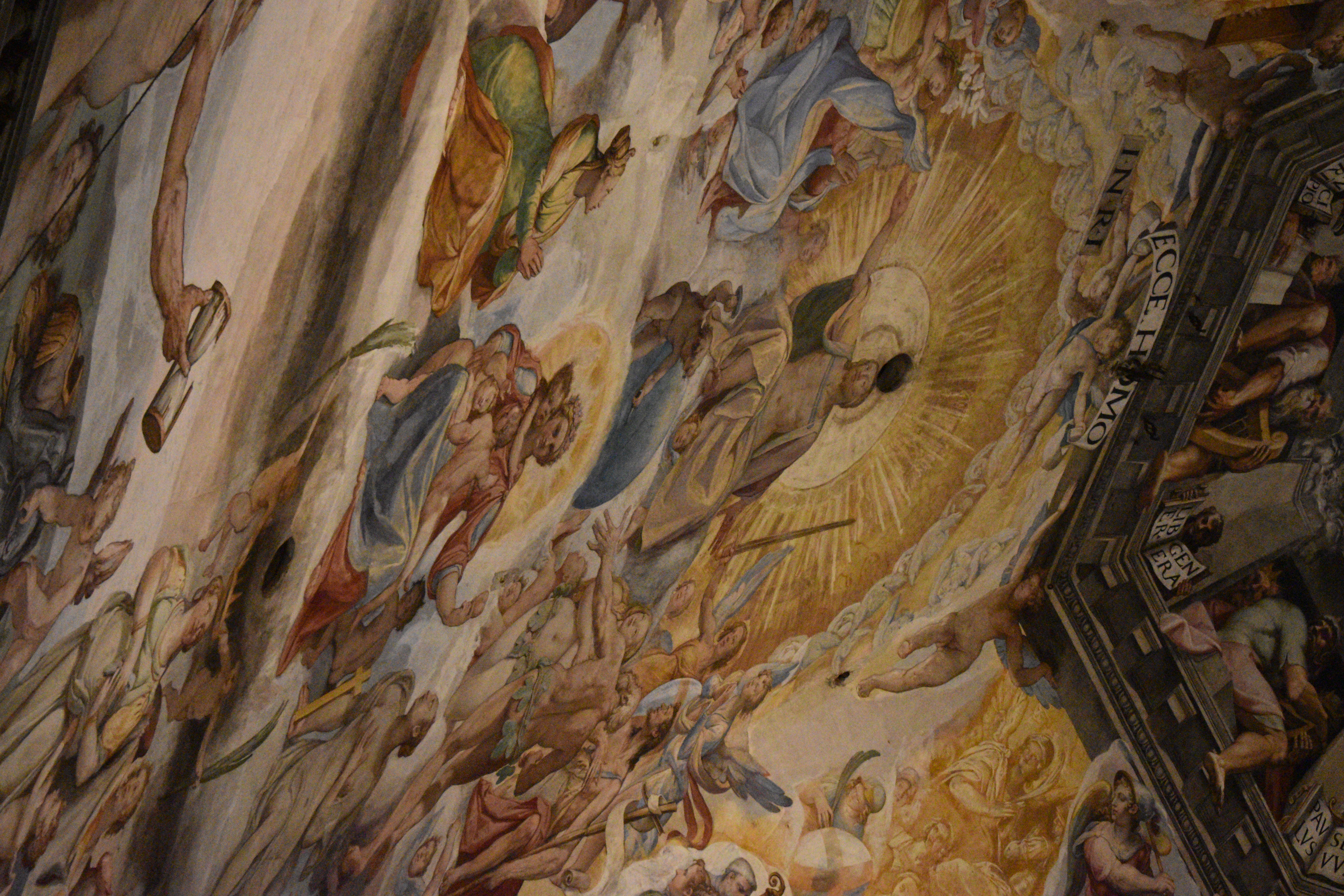
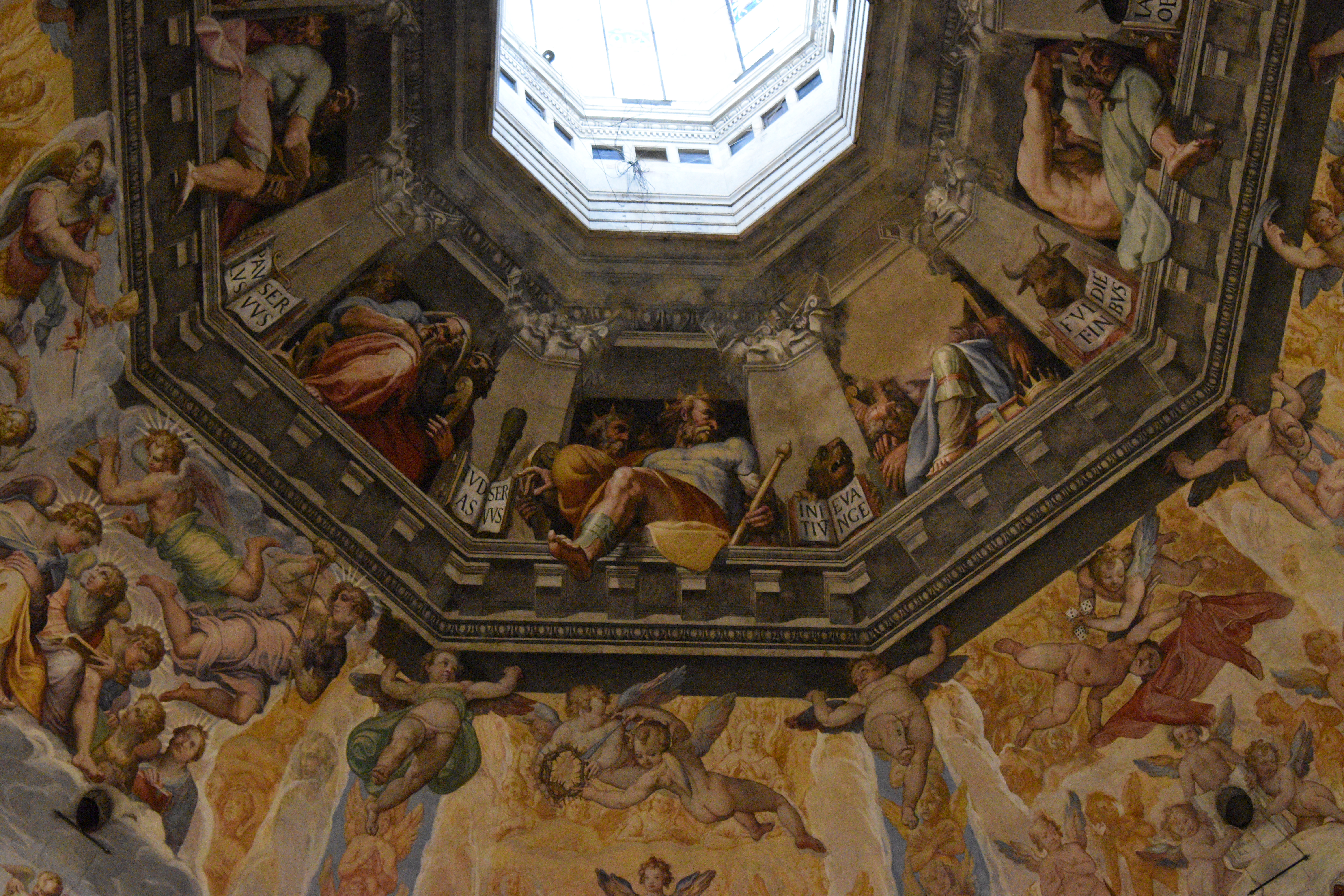
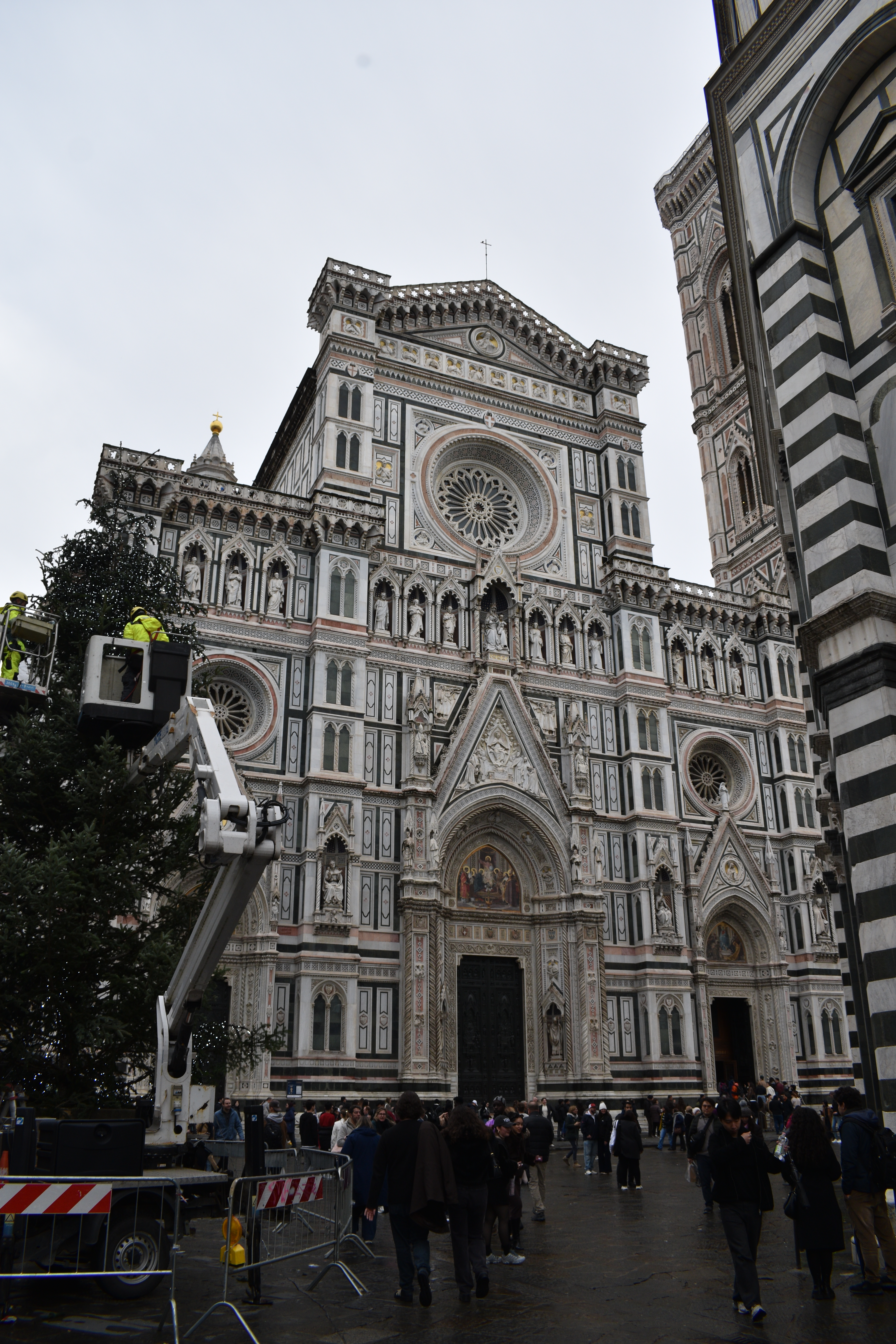
Day 3 – we must go to the cathedral (Cathedral of Saint Mary of the Flower) and climb to the top of the famous and unique dome. There are three compelling reasons to do this. First, the roof frescoes cannot be appreciated fully from the ground. Part of the way up the climb to the summit, one gets to walk around the base of the inside of the dome and almost touch them (see gallery below).
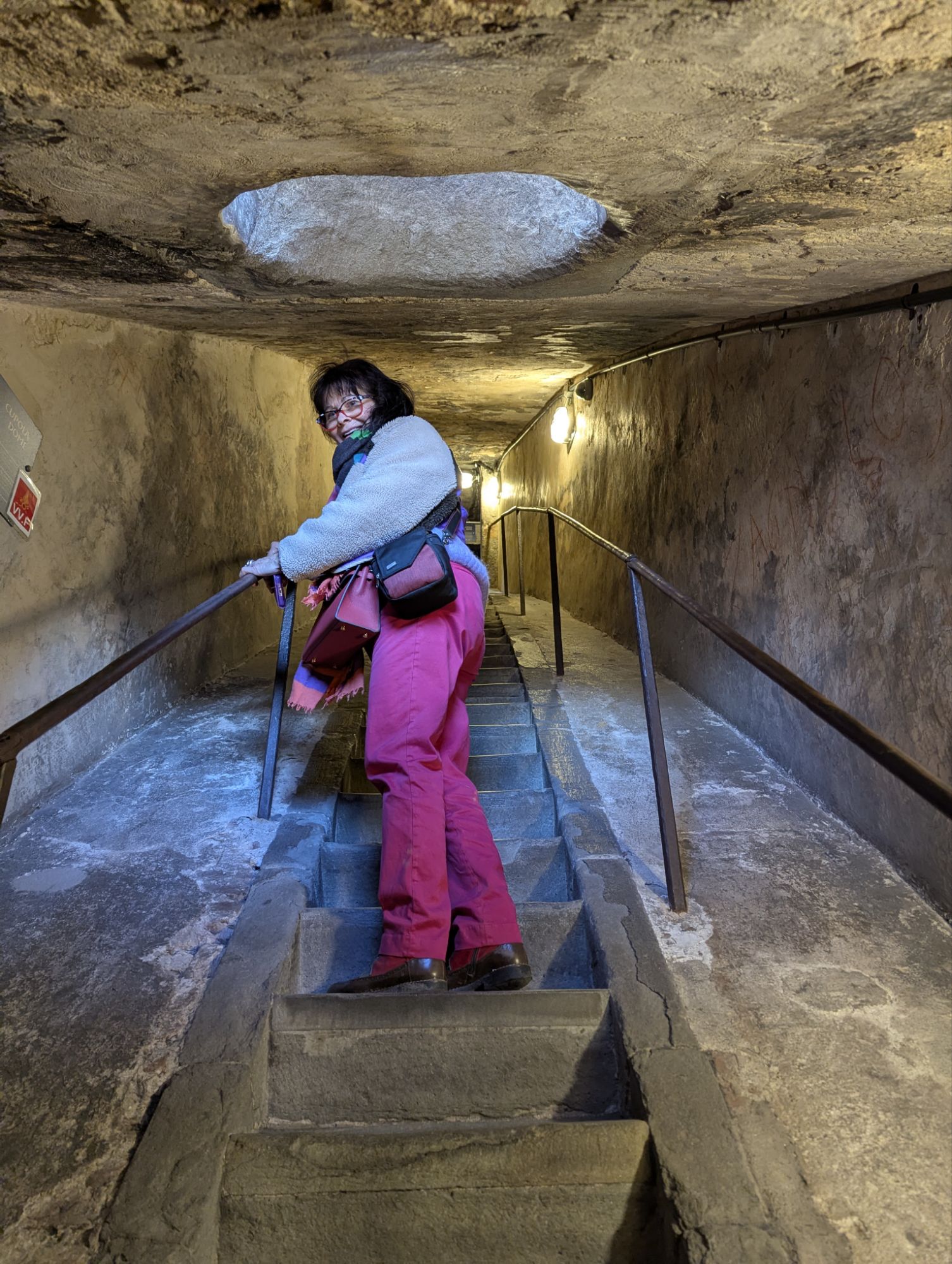
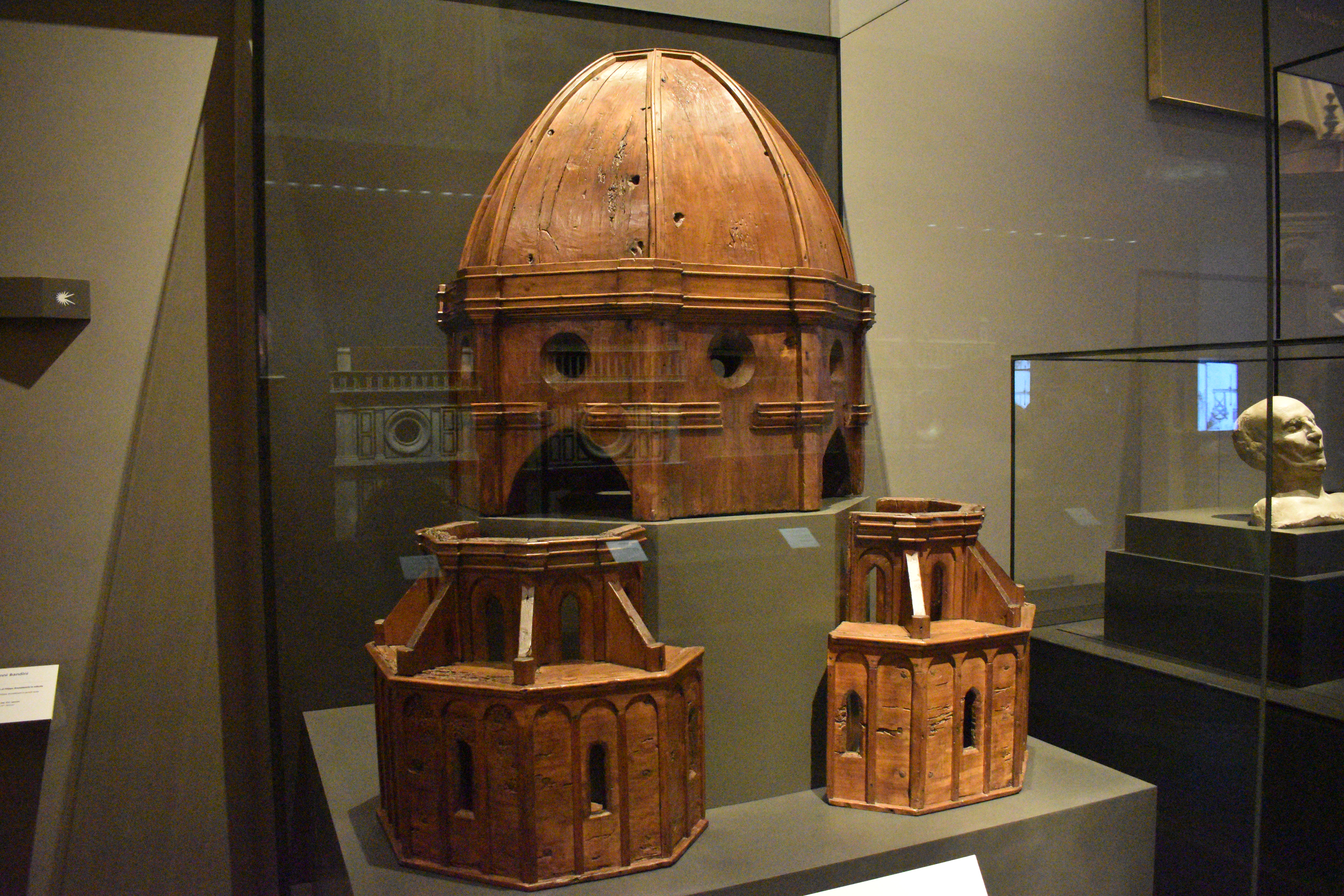
Second, your get to walk in between the two structures that make up the dome. The amazing thing about the dome is that prior to its construction there was little understanding about how to make such a structure. The architect Filippo Brunelleschi, such that he was, sort of made it up. He created a secret formula that involves a dome inside a dome. And the staircase to the top walks you between the two structures (left). The precise physics are explained and illustrated with models in the cathedral museum which is also well worth a visit (see gallery below).
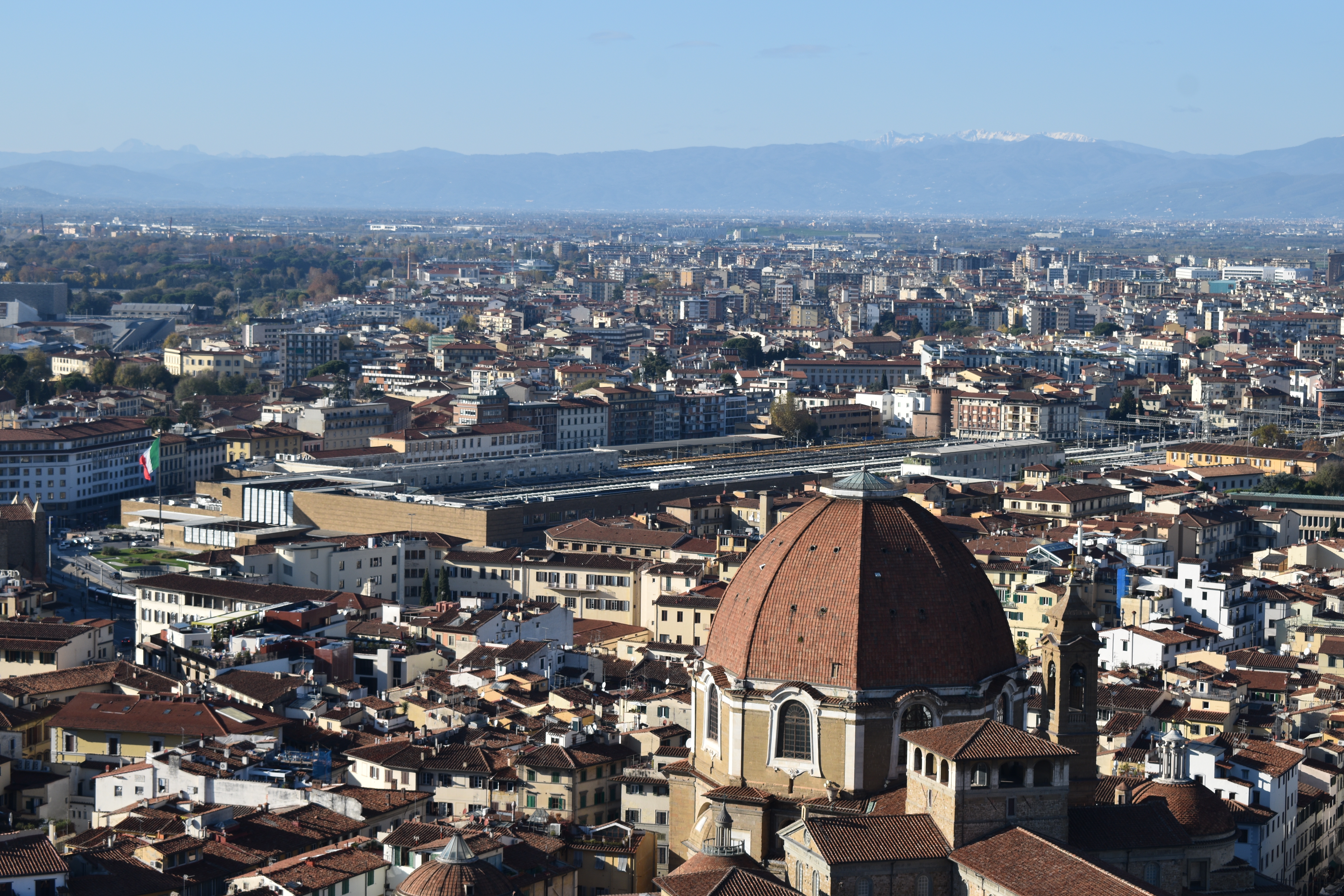
Third, on a clear day, there is a spectacular view from the top. I have to say, I was pleased to be able to see the railway station (right). Of all landmarks in a city, the railway station is the one that most captures modernity. In this case, location, bearing in mind the historical roots of the city predating the arrival of the railway, to have it so central speaks loudly. Florence is a city that was embracing and inventing technologies as much as it was doing art (see Galileo Museum below).
Book in advance. Space at the top is limited and it is popular, even in November.
Day 4 – the Galileo Museum.
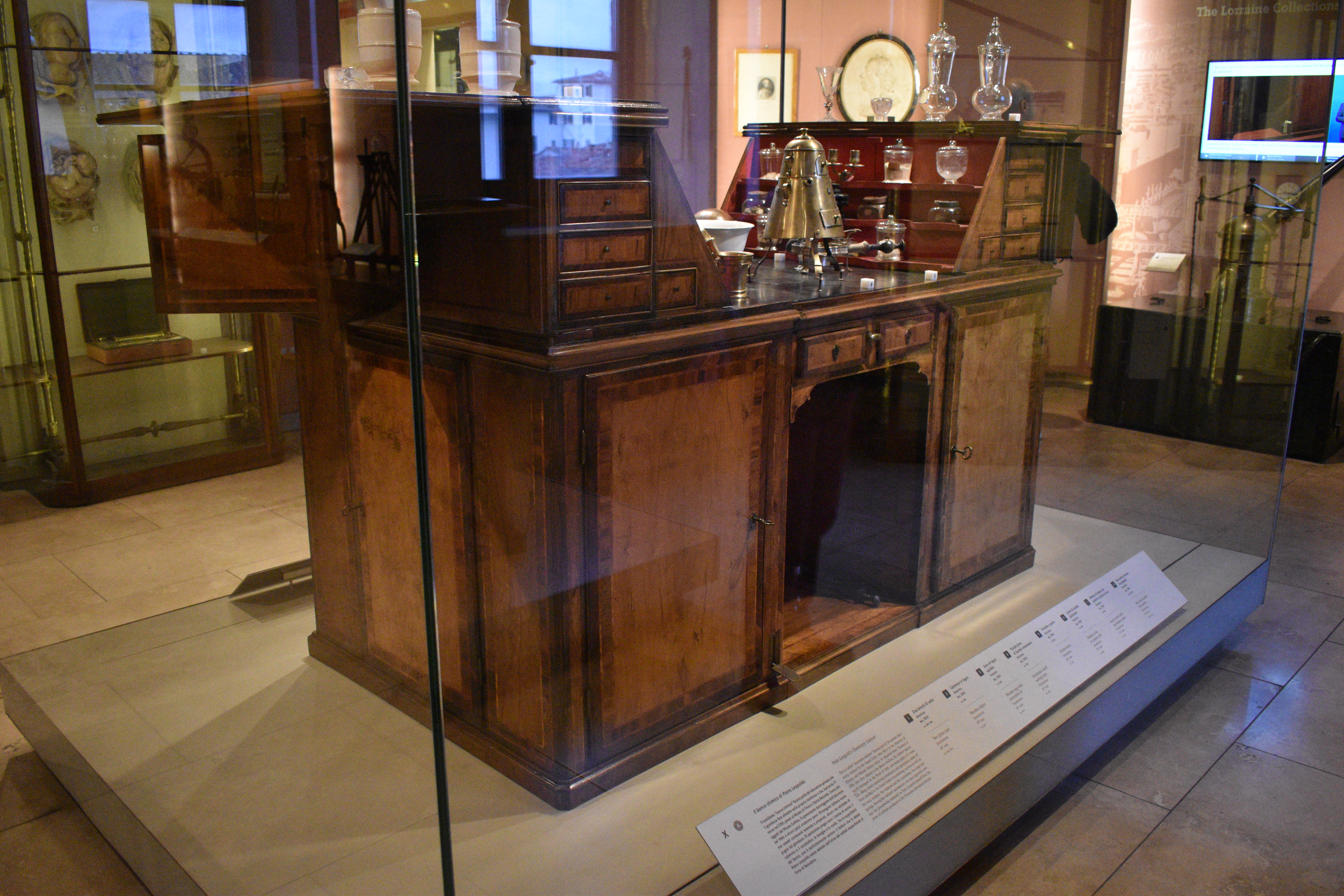
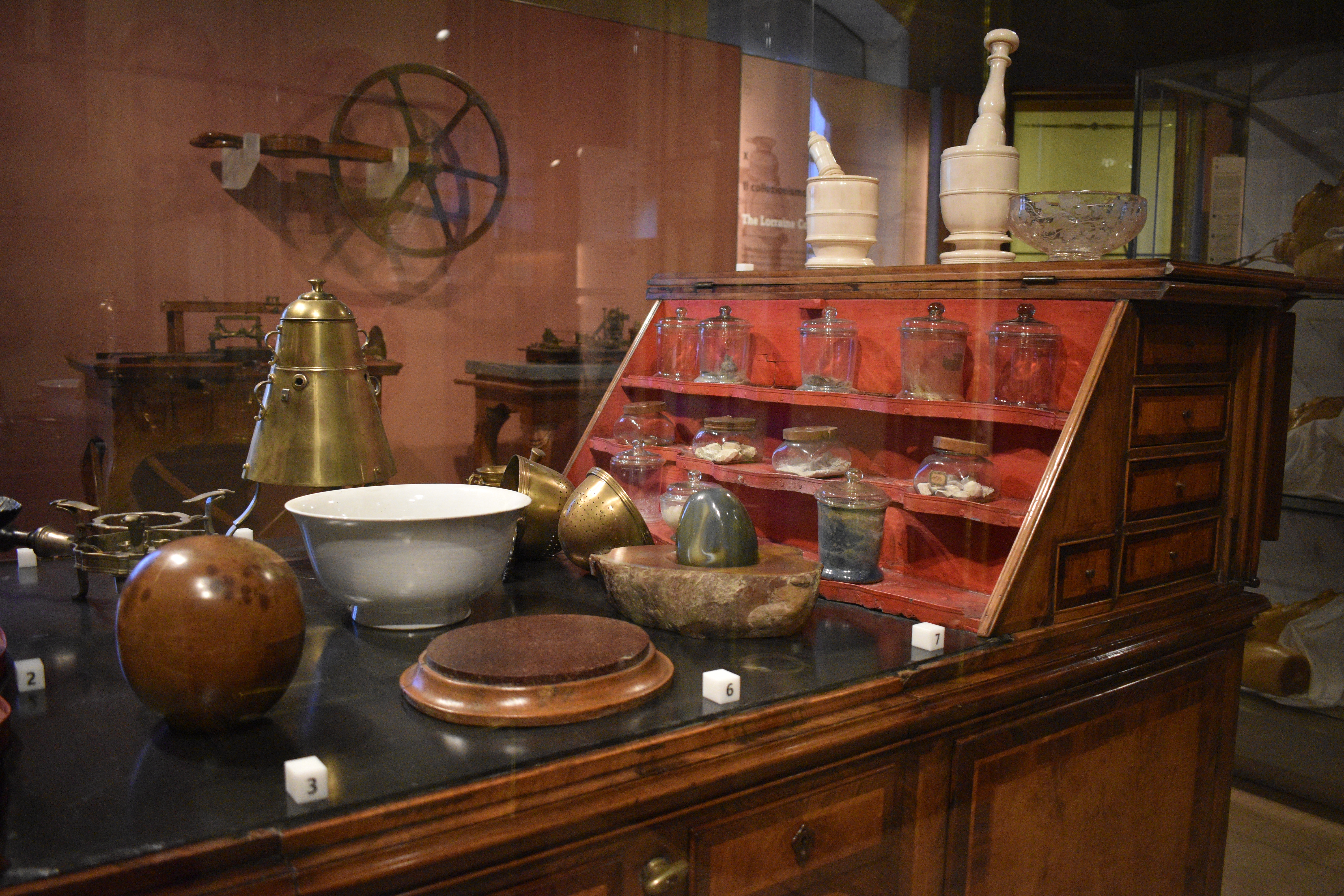
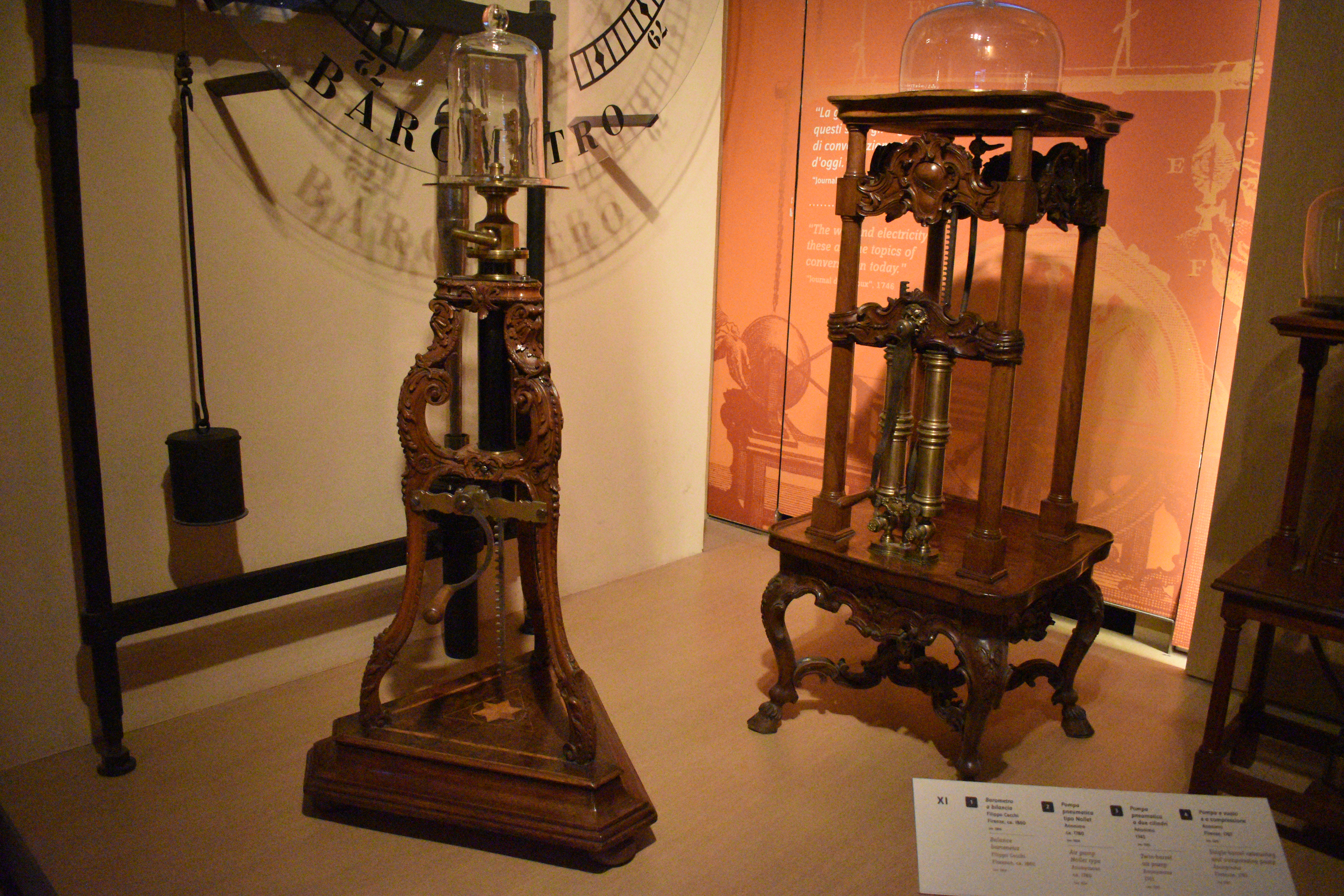
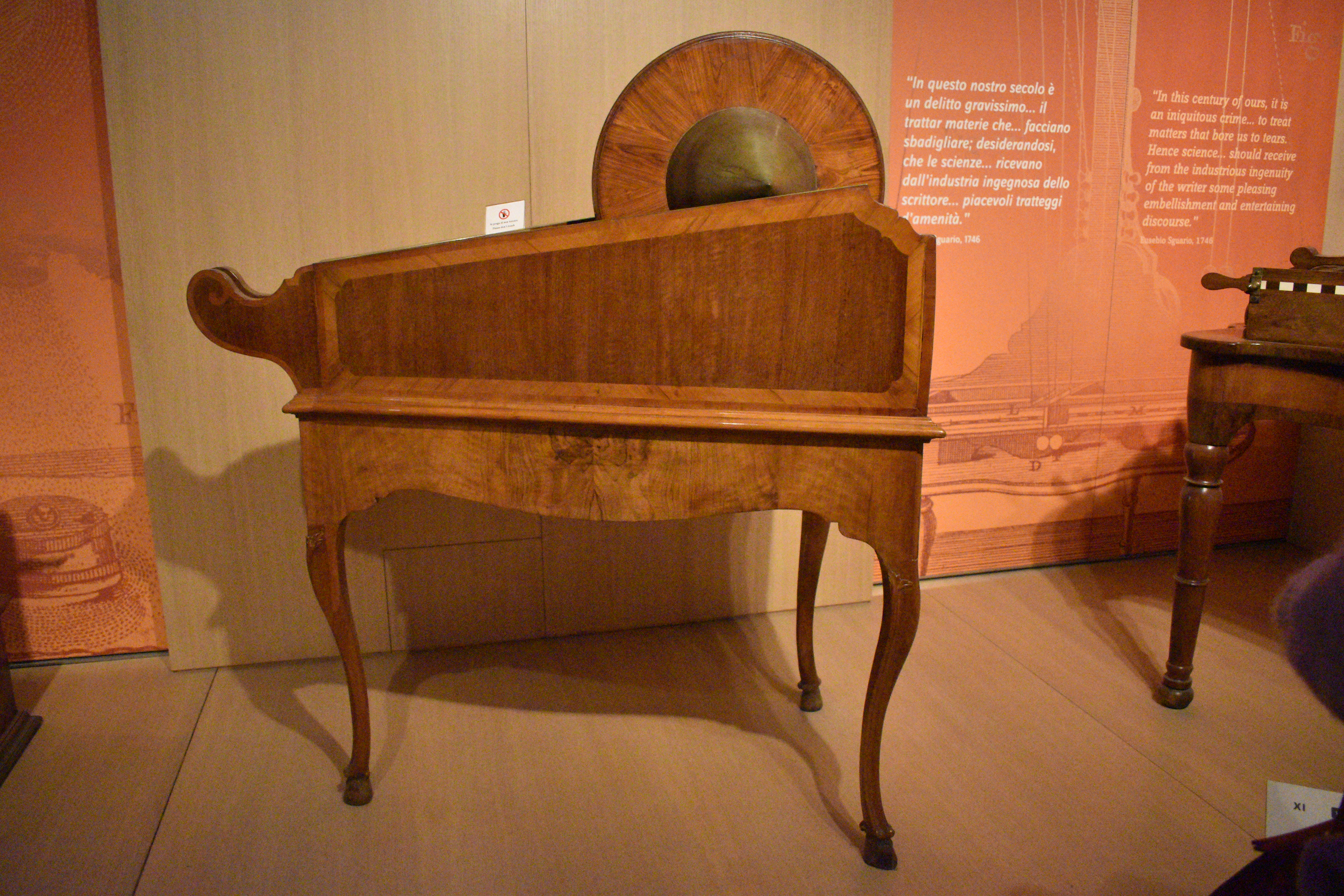
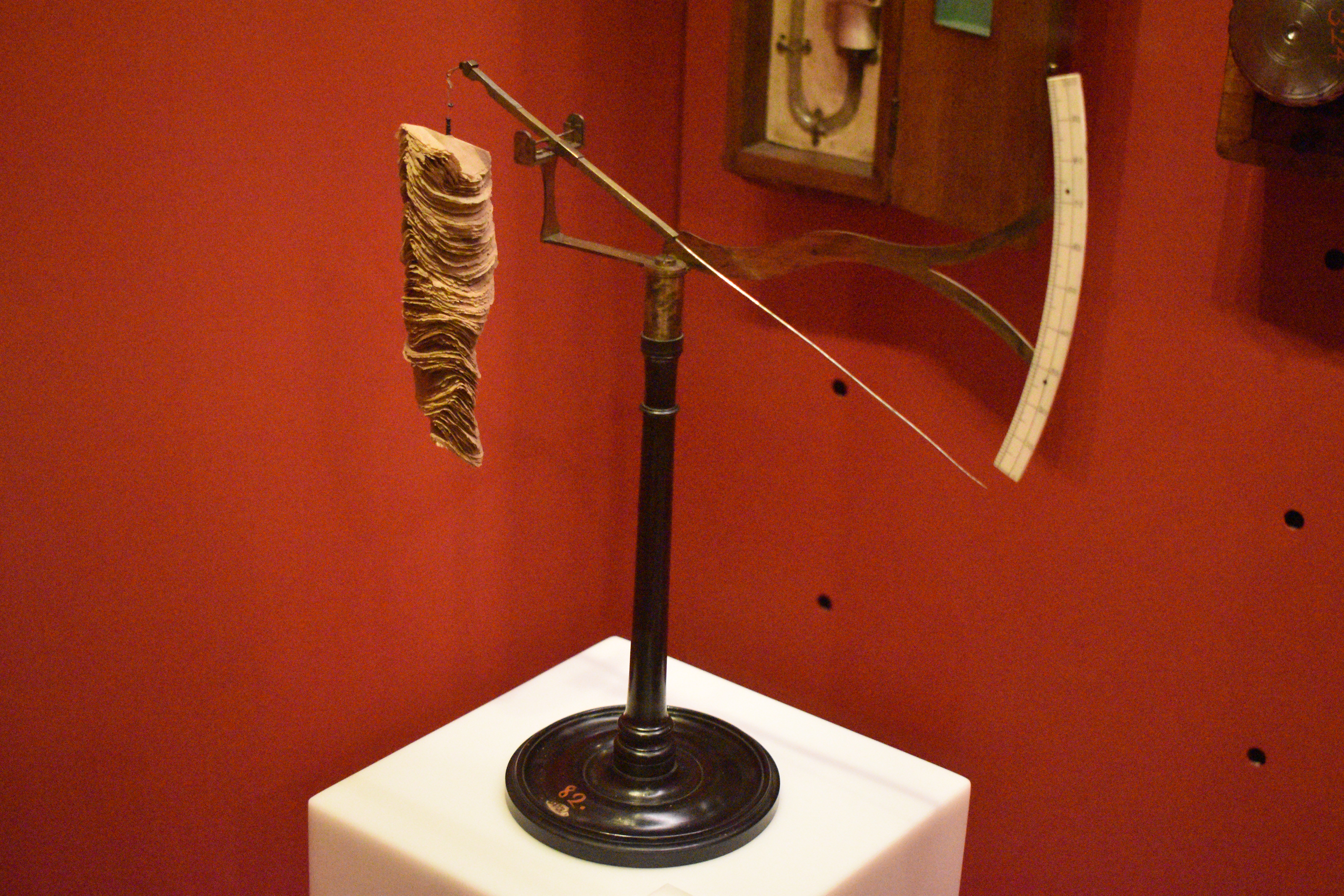
I have to say, that if visitors to Florence do not patronise this museum, then they are missing out. Plus, it is relatively quiet (though, clearly, it should be really busy). This is a museum packed with analogue scientific instrumentation as art. Functional, yes, but that was never enough for the pioneers – professional and amateur – it had to be beautifully made, whether it be a chemistry cabinet (left) or a timepiece. This museum is packed with artefacts that came out of the Renaissance and beyond that eventually led to humanity’s greatest discoveries facilitating developments that laid the foundation for 20th Century civilisation.
Getting around
It should be easier than it is. Some pitfalls. Buses are unreliable. And in the evening, less frequent. If a bus does not turn up in the evening, it can be a long and uncertain wait for the next one not to turn up. The two tramlines are more reliable, but they too fail. If you have a train or plane to catch, be ready with a taxi number. Probably better to stay centrally (for the train) or at the airport (if flying). Though check that the hotel is in fact at the airport and not just close to it.
Here are some more pictures.
Dome Frescoes
Dome Museum
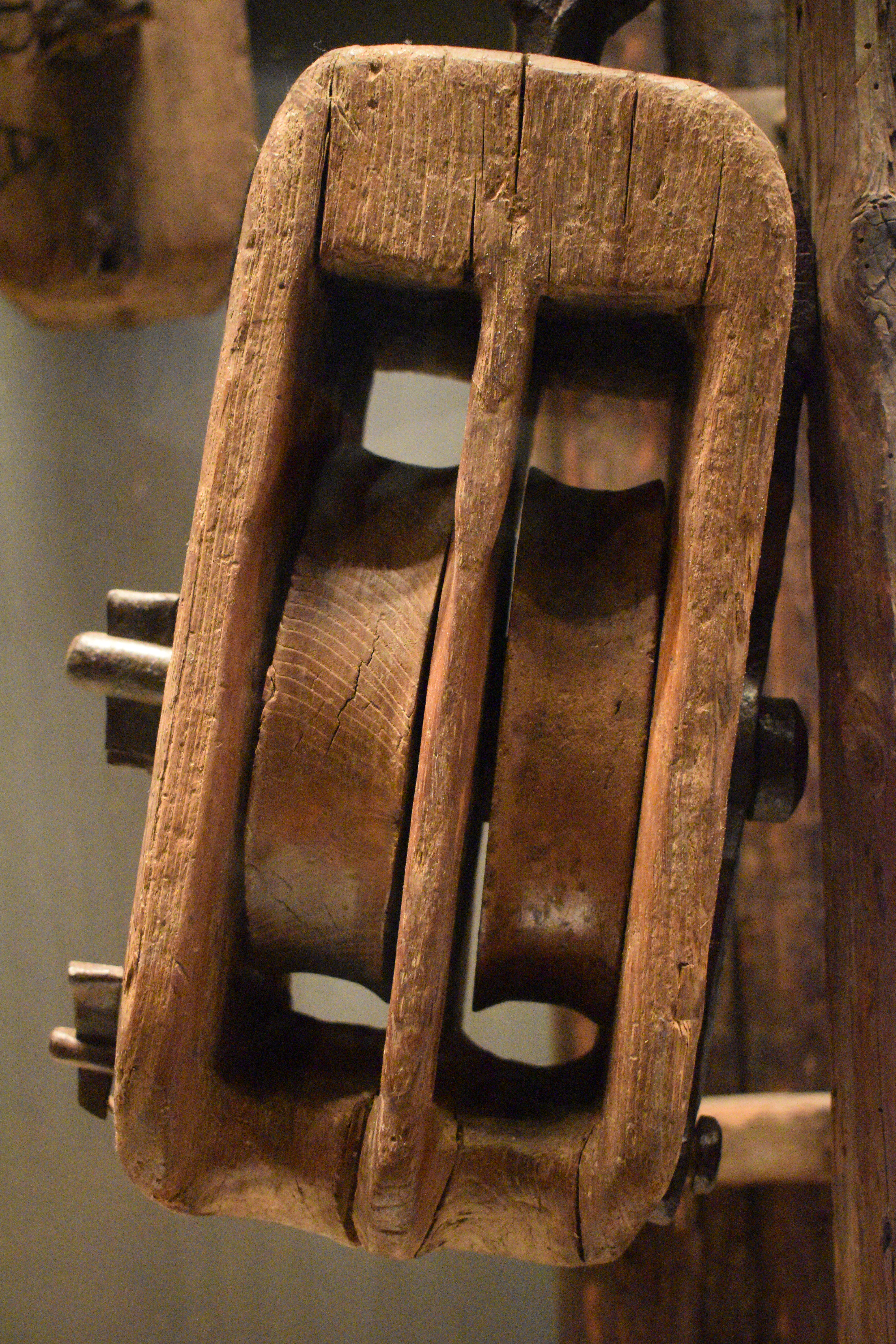
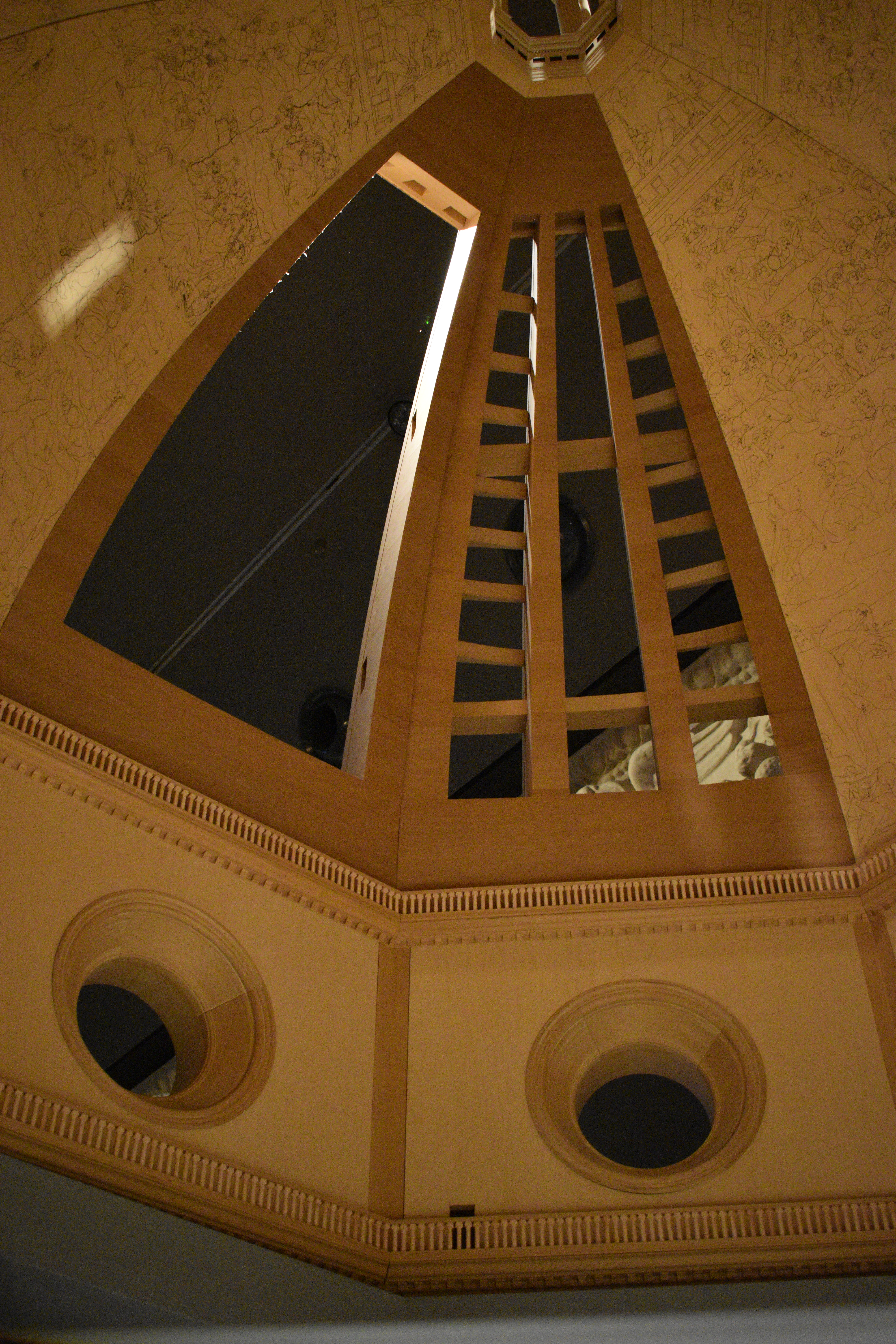
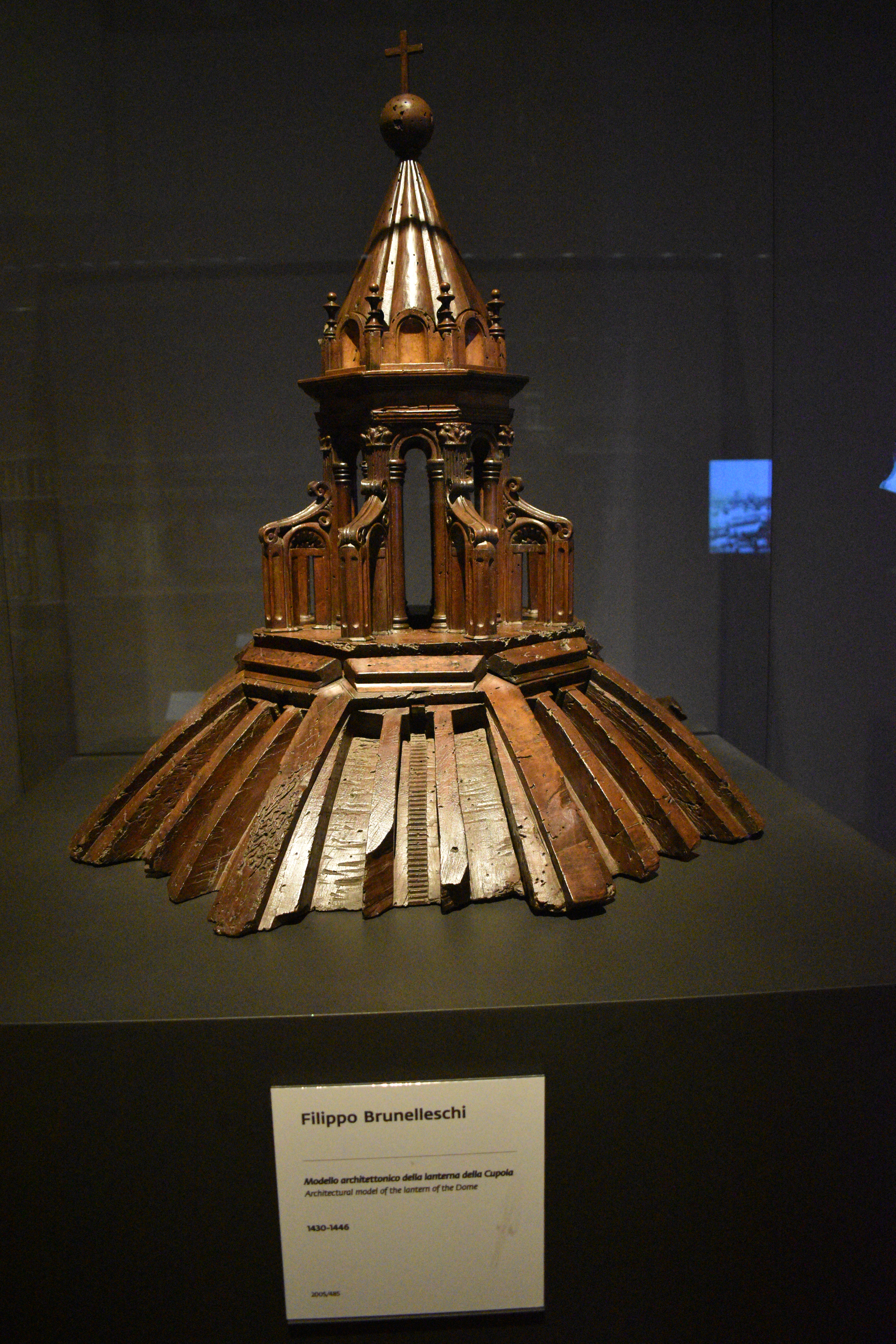
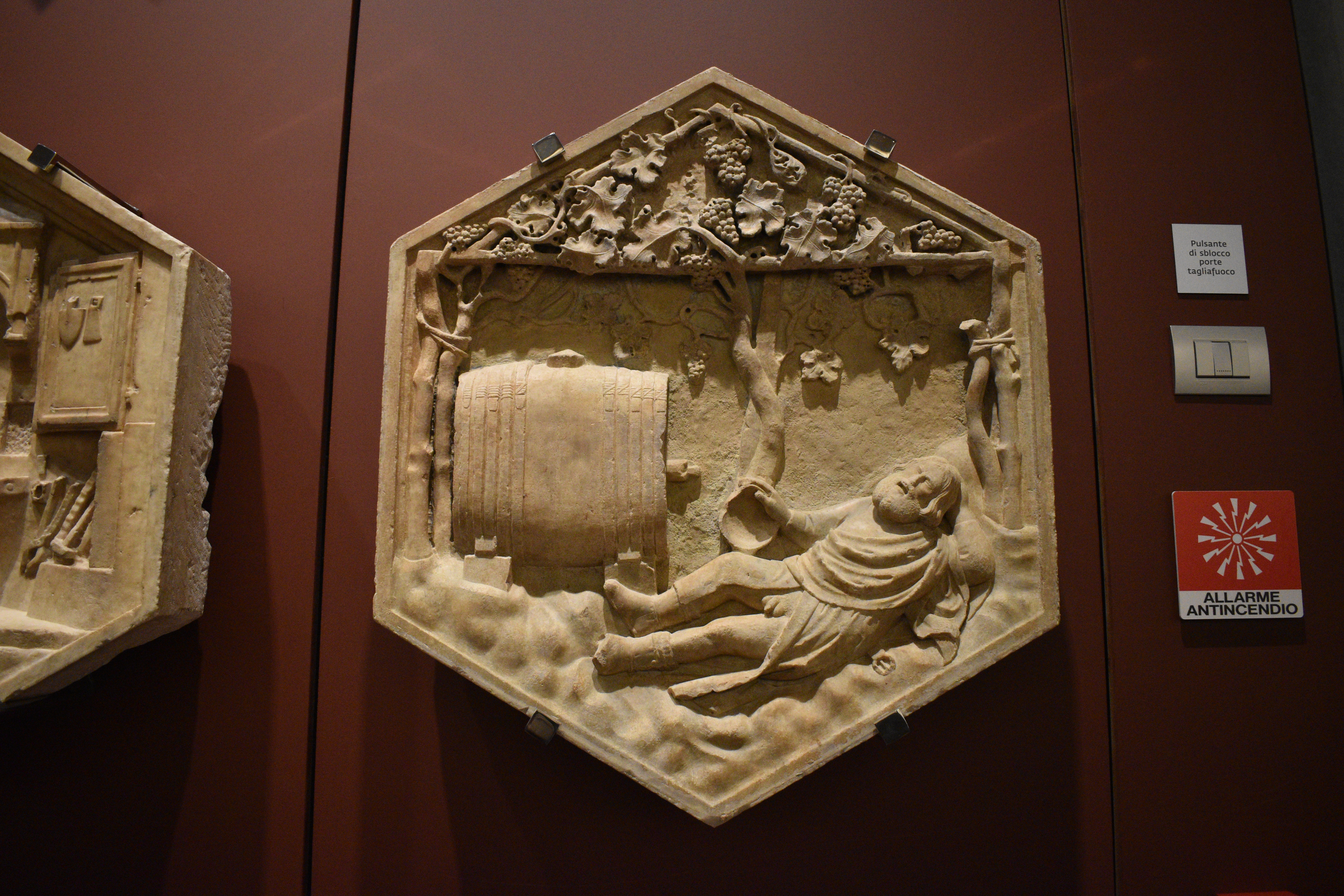
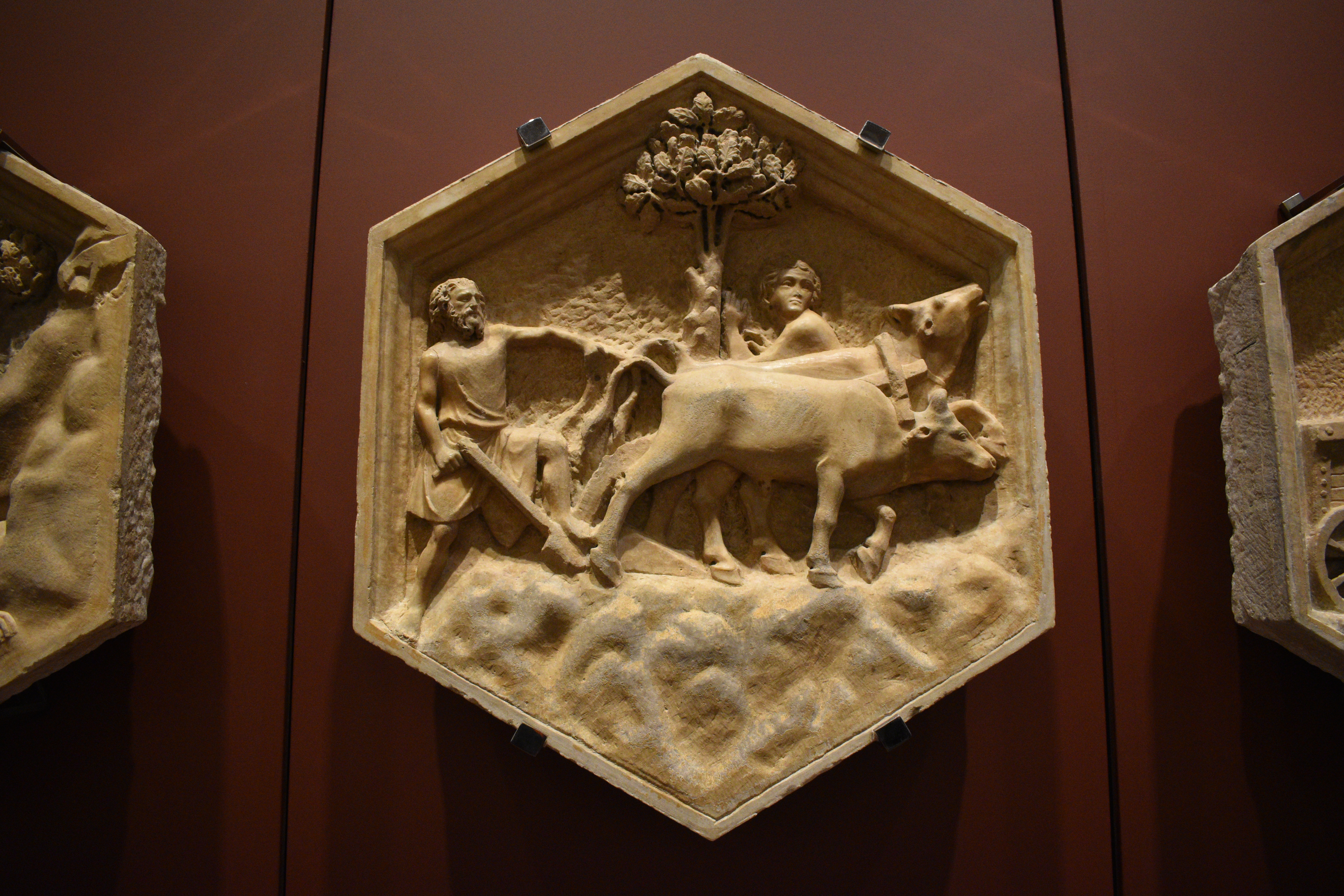
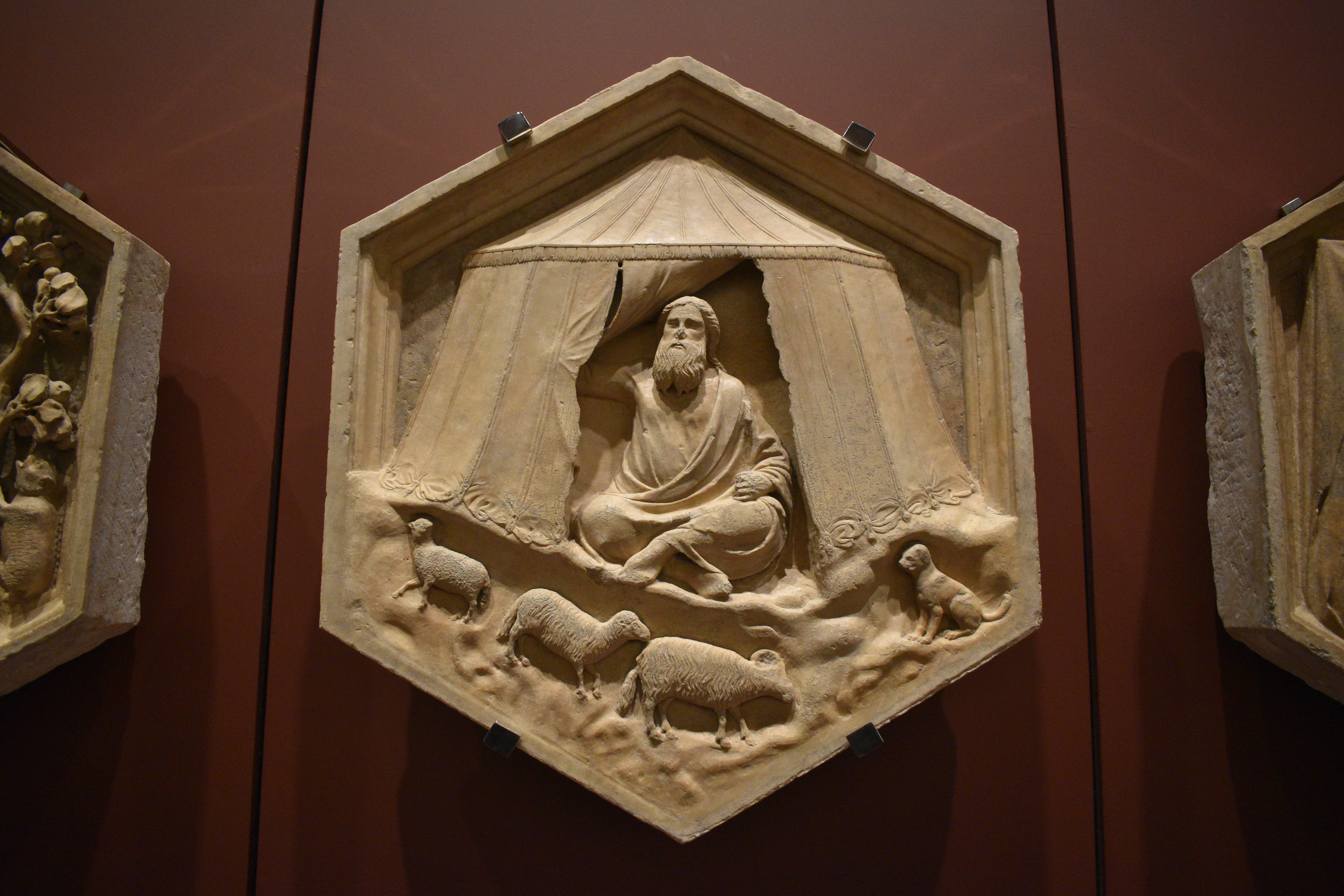
Galileo Museum

David Hockney, Paris, August 2025
Filed under: Art, Museums, Travel | Tags: Art, David Hockney, exhibition, exhibitions, Luis Vuitton Fondation, painting, Paris
Comments (1) 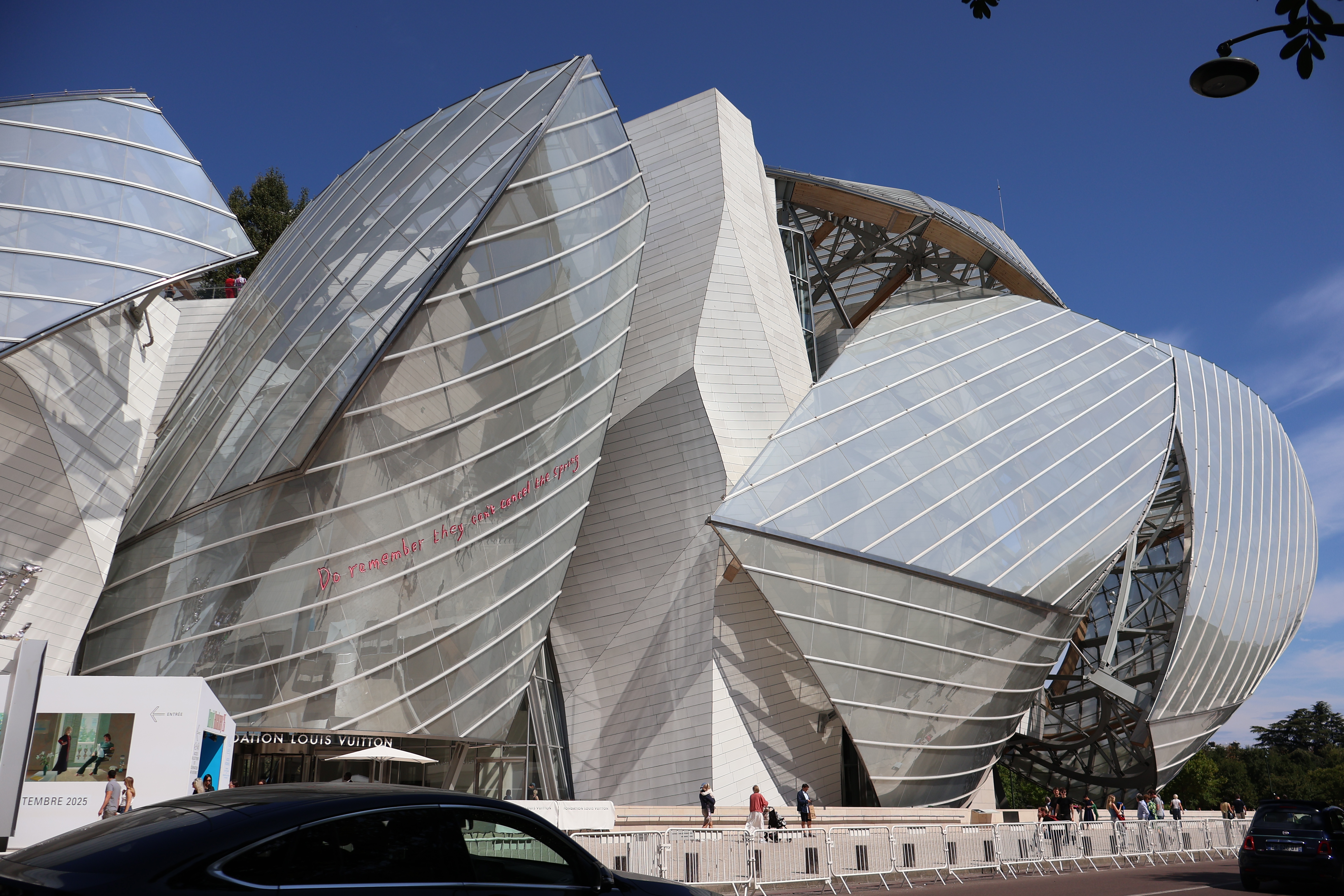
Eurostar from London, dinner, nearby hotel, sleep and then work out how to get to the Fondation Louis Vuitton building that, due to my lack of preparation, turns out to be a Frank Gehry building (left). It sits in a bizarre park that is home to a retro amusement park, amongst other things. Over breakfast we decided to walk – Google maps advised nearly 2 hours, but such is Paris, walking is a delight. By chance we ended up meeting up with an electric bus shuttle from Arc de Triumph to the building – further than we thought. Anyway, the marketing for the exhibition is here.

Once into the building we did as we were told and started in the first gallery. It was an exhibition that was organised chronologically by date. So Hockney’s earliest works can be found in that gallery, including the portrait of his father, life in what is now Greater Manchester (right) and series of abstract paintings exploring his early understanding of his sexuality. Then in 1964 he heads off to California. This period delivered some of his most famous images, for example, the Bigger Splash and a series of other poolside paintings that are now beyond my price bracket. But I have to say, I found this rather boring, egotistical, even narcissistic.
Portraits

I like to think that artists have something to say (about the world) beyond themselves. Maybe the next gallery of portraits might reveal something, after all, the sitters were others, often pairs of others. There were lots of admirers of these portraits, but I felt that most lacked emotion. In fact, the only picture (actually a set of four) that showed emotion were a man towards his dog. All others seemed inert. I found one image that summed up this whole gallery (below right).

East Yorkshire
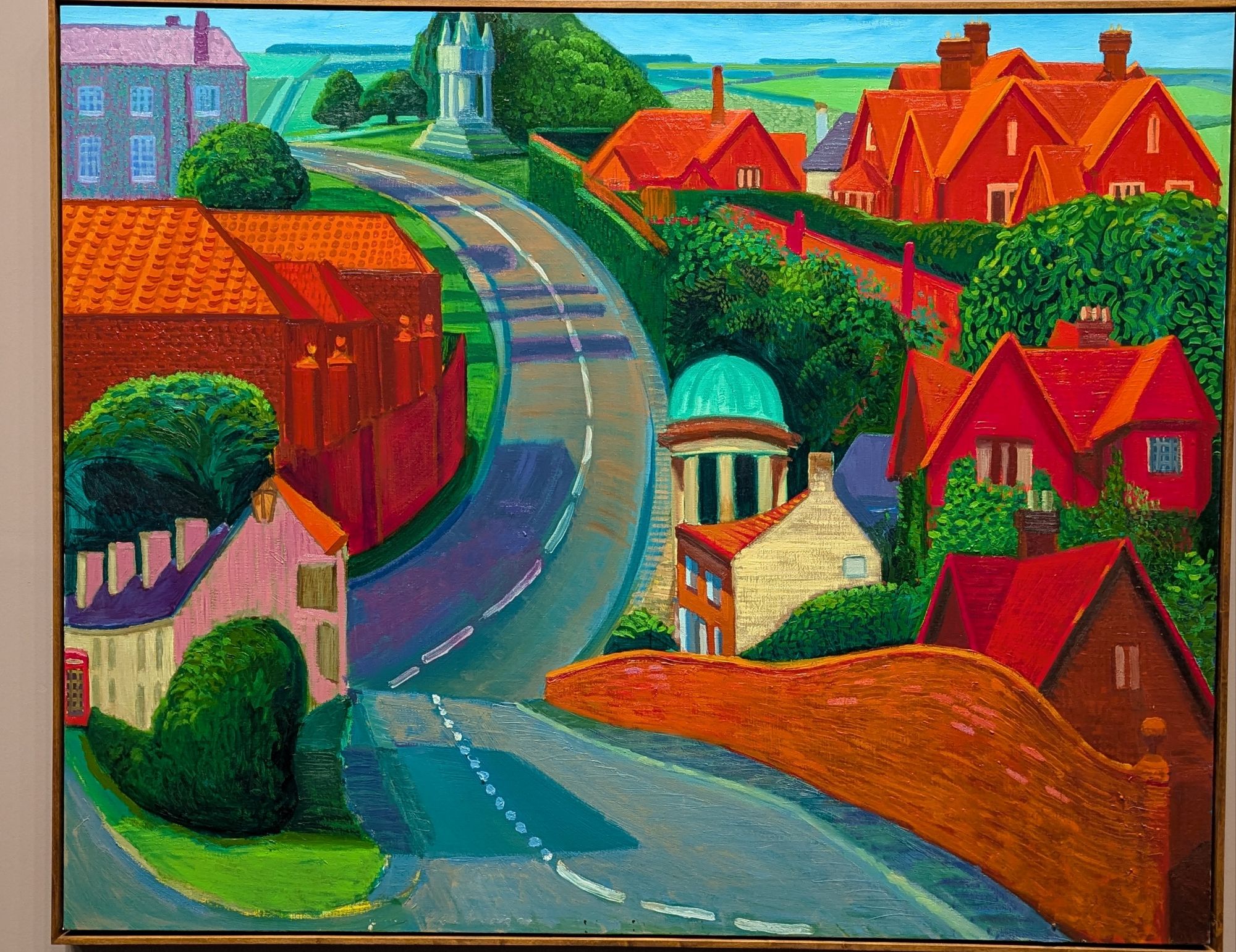
Onwards – Hockney came back to the UK and moved into his deceased grandmother’s house in Bridlington, Yorkshire. In this period he produced a significant number of landscapes depicting changing seasons; for example, a spot on a farm track. Man, easel, paints, brushes. Some of the pictures are huge, made up of 40 or so panels that oddly do not quite match or line up with one another. And they all seem to be without people or, indeed, animals. I can cope without people in the countryside. But not an absence of animals.
That was enough, time for coffee. We left the building in order to find refreshments – the gallery itself has an expensive restaurant but no coffee shop from what we could see. The park has a number of delightful outlets, so no problem.
The full artist

We were back within the hour to a gallery on the second floor which, frankly, we should have started in. This gallery showed what a consummate artist Hockney is and what he could have been had he wanted to be – but that is me being arrogant. I say this because Hockney himself writes on the entry panels that we might think that he has limited styles on which he can draw for his “periods” – all long-lived artists have those, I have come to realise. In this gallery were examples of Hockney aping the styles of other famous artists. There is always a nod to van Gogh, but we did not realise he was a fine cubist artist in the style of Picasso. I particularly enjoyed his take on Hogarth and the illusions generated in his picture, Kerby (After Hogarth) Useful Knowledge, 1975 (above left).
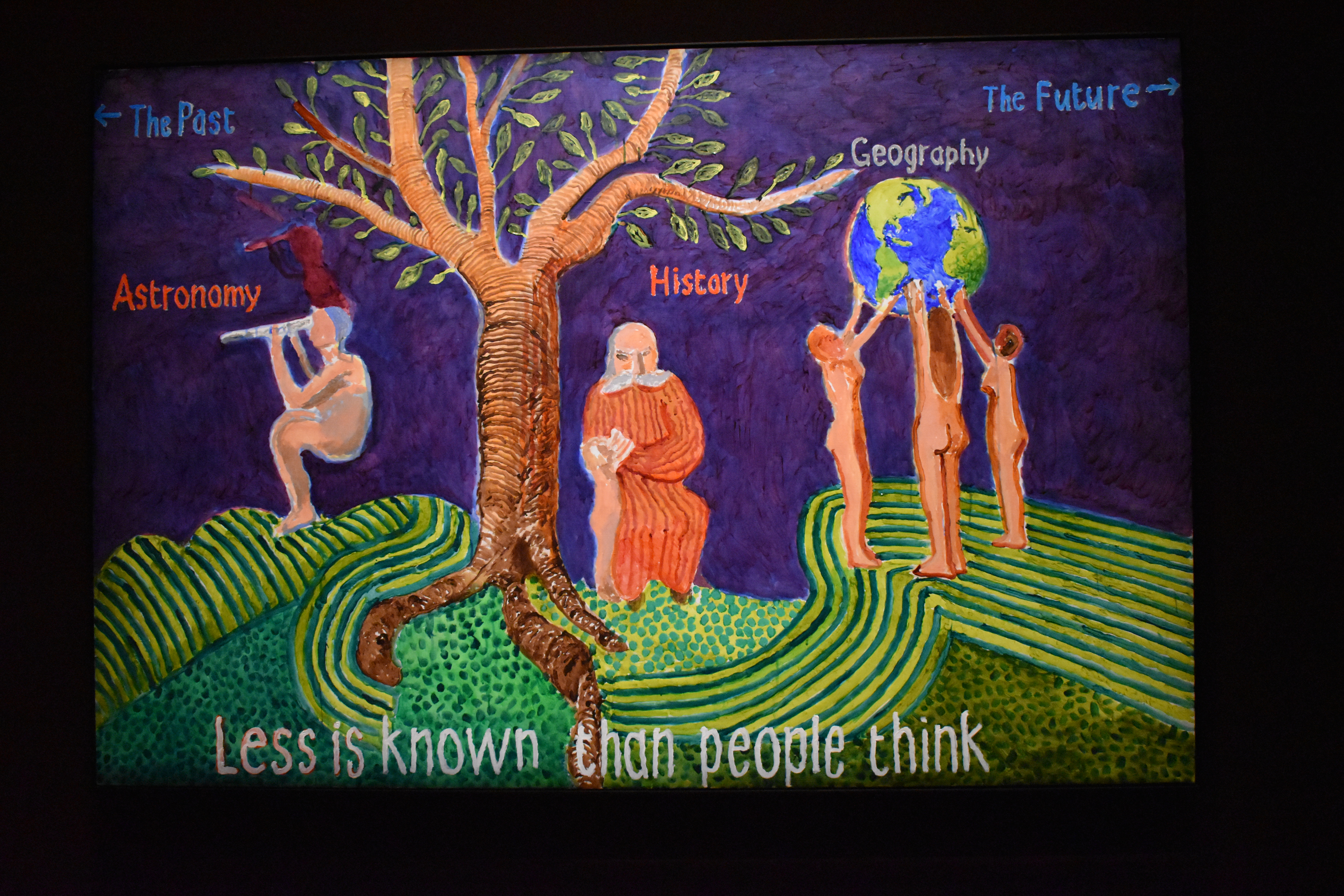
Then on to Munch and Blake (After Blake: Less is Known than People Think, 2023, left). This is the only image that alludes in any way to the welfare of the natural environment (the landscape gallery does not address any of our environmental challenges, indeed reproduces them with straightforward depictions of modern lowland farming). Blake’s painting was a representation of Dante’s Divine Comedy which, admittedly, I have never read. But here we have a holistic view of our human world – a dependence on the natural environment, the awe and fear of the galaxy and universe beyond, human history and a vulnerability (unclothed women holding up the globe) to the planetary system more generally. As we know, we have moved from the Holocene to the Anthropocene – our fate is in our hands, and we ignore the signals at our peril (increasingly decreasing temporality).
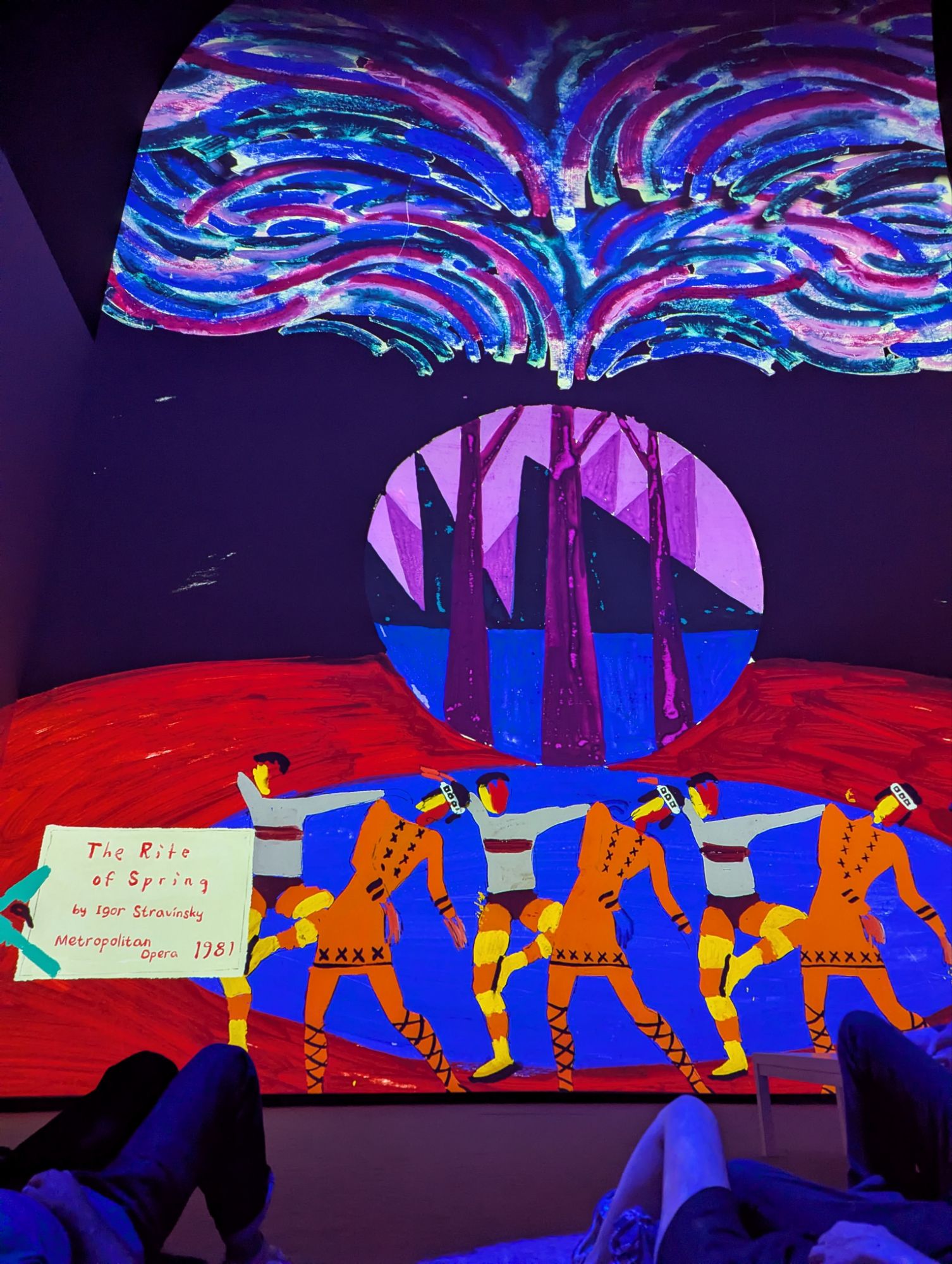
Theatre set drawing
And then there is the theatre work. Hockney was a great fan of opera and throughout his career he has been painting backdrops for some of the great opera houses worldwide. For this exhibition his work is immersive. One enters a large gallery to observe the paintings projected onto walls, with some being animated and involving motion. They are terrific. Another important aspect is Hockney’s experimentation. For example, he has created intriguing electronic pictures that track his method for drawing and painting, particularly landscapes. All credit to him for this. I spent quite a bit of time over these images.
Photo drawing

More recently Hockney has explored “photo drawing” (right – one of a series depicting the same “event from different angles). Equally in this almost recursiveness is his image of himself looking at his own pictures with subtle references to his own brilliance, such as the edition of “die Welt” underneath the small table (below left). And these, for me, sum it all up. Whilst I concede that Hockney is a versatile artist, able to work in most styles and genres and has a body of work that can fill the Fondation Louis Vuitton building in Paris. He is also just a shade too narcissistic for me really to embrace.
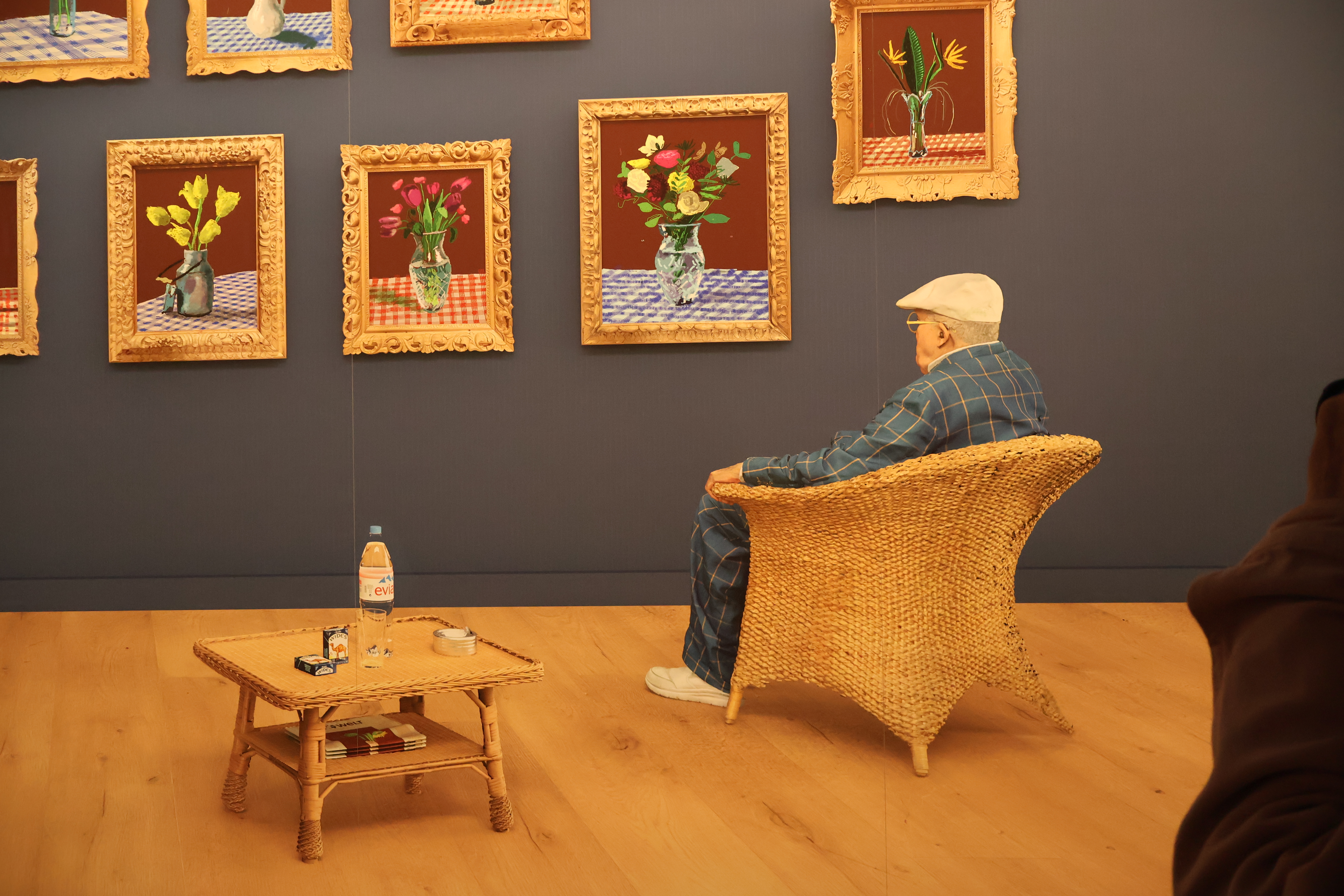
Exhibition ran from 9 April – 1 September 2025
Sustainable Aviation Fuel (SAF) and airport expansion
Filed under: Environment, Transport, Travel, UK | Tags: Airbus, Airport Expansion, aviation, Hydrogen aeroplanes, Logan Air, SAF, sustainability, Sustainable Aviation Fuel
Leave a comment 
Decarbonising aviation is very difficult. It is a good example of why oil-based fuels have been so important in the development of modern society. Nothing quite matches the energy intensity of oil, with the exception of nuclear. Sustainable Aviation Fuels (SAF) are trumpeted as the solution to aviation’s sustainability problem.
I am grateful here to Ben Purvis, Research Associate, Sustainability Assessment, University of Sheffield, for his contribution to the The Conversation for the content here. Purvis notes that there are so-called pathways for creating sustainable aviation fuel. These are:
- Oils or fats, including used cooking oil or tallow.
- Municipal solid waste, agricultural residues and sewage
- Hydrogen and captured carbon using renewable electricity.
It might seem that used cooking oil processing into aviation fuel is a win-win. But with the best will in the world, there is just not enough to go round. At the moment it is around 2 per cent of all aviation fuel. There is a UK mandate to increase this to 7 per cent by 2030 and 22 per cent by 2040. That is still only 1/5 or there about. To meet the current demand the UK imports 92 per cent of its used cooking oil from China and Malaysia (with its own carbon footprint). Currently the UK has one facility converting used-cooking oil to aviation fuel. That is the Phillips 66 Humber Refinery.
A recent report from the Royal Society notes that the 12.3 million tonnes of jet fuel per year needs 42.4 million tonnes of rapeseed biomass per year. In land terms, that is 68% of the UK’s agricultural land or 6.2 to 10.3 million hectares (see Innovate UK). The aviation industry’s own sustainability roadmap, CORSIA, precludes use of agricultural land for “fuel” crops.
The UK Chancellor of the Exchequer said on the 30 January 2025 (BBC radio 4, Today, c0815) that SAF could reduce aviation’s GHG emissions by 70 per cent. “Engines have become much more efficient. And, just at the beginning of this year, this government introduced the mandate for sustainable aviation fuel, which can reduce carbon emissions from flying by 70%. And of course, there’s going to be much more progress on that in the years to come.” (Quotes taken from the Guardian)
Equally there is global competition from both the EU and the USA (the latter now depends on the airlines rather than the state as burning fossil fuels now seems to be a US citizen imperative). Whilst it is clear that production could be increased with more investment, there is little confidence that it would be profitable; moreover, there is the small problem of cost – whichever pathway is taken, SAF costs more to manufacture than does aviation fuel (kerosene). That is £s on each ticket.
Surely there is enough municipal solid waste and sewage to go round? Well maybe, but the technology is in its infancy or not yet approved (see below) and no commercial facilities are producing it as yet. As for hydrogen, first it is packed with carbon if fossil fuels are the source of energy for the electrolysis necessary to produce it. Electrolysis by electricity from renewables remains distant. There is a long way to go before the UK grid is totally decarbonised. And now the British Government has added data centers to the mix, which means electricity supplies more generally are under pressure. Hence the Government’s latest endorsement of nuclear power and another un-tested technology, Small Modular Reactors (SMRs).

Not only manufacturing is a challenge, but the infrastructure to store hydrogen at airports or other facilities is just not in place. Hydrogen is also explosive and there are examples of denial of licences for users to store it, for example bus companies. It would require a major change to planning laws for widespread storage.
One UK company is undeterred: Logan Air. Logan Air has announced (12 February 2025) a plan to launch the world’s first hydrogen-fuelled commercial service by 2030. The company does not reveal the identity of the manufacturer of the aircraft that they will use for their point-to-point service (also as yet not stated). This against the backdrop of Airports Council International backtracking on its hydrogen ambitions in favour of scaling SAF, better air traffic management and improving aircraft engine efficiency.

There remains, therefore, the central question of actual aeroplanes. There was some succour in that Airbus was developing hydrogen planes (the A380 Airframer). This aeroplane was going to be a 100-seat 1850km range aircraft (right). But as recent as 6 February 2025 the Force Ouvriere trade union was informed that the launch date has been put off by between 5 and 10 years with an additional budget cut of 25 per cent. The company has identified the lack of available green hydrogen as one of the reasons for the delay. Another, less explicit but particularly troubling reason, is the company’s intention to replace its popular A320neo with a newer and more efficient conventionally-fuelled aircraft. The end of fossil-fuelled aircraft is nowhere in sight. The only option then, for sustainable aviation, is SAF from vegetable oils, tallow or waste.

There is a need, therefore, to clarify whether SAF is actually sustainable. In theory, because the things that it is made of already exist or are grown, burning it does not add to overall CO₂ levels. (Hydrogen, even more so, because it is derived from water and the emissions are just water.) So, aeroplanes still emit CO₂ when we really need to be capturing it and locking it into plants such as trees to generate negative emissions. Equally, it assumes that the crops and the waste had it not been for SAF would have degraded and decomposed releasing greenhouse gases in any case. The reality is that the area being used to cultivate crops to be turned into SAF would in actual fact be used either for food consumption or some form of rewilding. Essentially growing crops to fly planes (at least part of the way to their destinations) would displace food production. This would be a major distortion of land use.
The reason that SAF is so topical is because the British Government seeks to make the case that not only can we continue to fly at current levels, but that airport expansion is possible because the emission reductions from SAF rollout will offset increased flights (all in the name of growth). The above argument challenges that proposition. The calculation also needs to factor in the carbon emissions generated by constructing new runways. It is not trivial.
Warhol and Haring together at the Brandhorst Museum, Munich, December 2024
Filed under: Art, Museums, Travel | Tags: Andy Wahol, Art, Brandhorst Museum, graffiti, Keith Haring, Munich, street-art
Leave a comment I had not realised it earlier – or not paid attention – that Keith Haring and Andy Warhol were artistic compatriots. There is a generational difference, for sure. Stylistically, too. But this superbly well curated exhibition (on until the end of January 2025) brings the two artists together – their lives, loves and work.

Haring is this curious subway graffiti artist (Haring would prefer me to drop the graffiti adjective) who became the artist he wanted to be, commercially and critically successful. In 1986 he opened Pop Shop in New York (292 Lafayette Street) to sell his designs on all sorts of artefacts – from textiles to skateboards (left).
For both of these artists I found plenty of contradictions. Haring, particularly so. Whilst both were so-called pop artists, that did not mean they were not looking to be commercially successful. Neither were bohemian in that sense. Whilst Warhol famously bought a factory in which to live, work and socialise, that came at a (financial) price. Haring wanted his work to be as accessible to as many people as possible which explains to some extent the subway art. He was often arrested for this, but seemingly his whiteness protected him from serious prosecution. Many of the works were removed (stolen evening – though whether graffiti can be stolen, I am not sure) and sold at auction as he became increasingly marketable. He moved on to free work for charities and hospitals where, presumably, his work would be a little more protected. His work was also printed onto dresses worn by Grace Jones and Madonna both of whom he met through Warhol.

But the affection the two men had for one another was the focus of my approach to the exhibition. I am not sure for myself if a friend caricatured me as Mikey Mouse (right) that I would be too chuffed. But Warhol was delighted with Haring’s effort which captured the essence of the man (for sure it is Warhol), one of his styles (repetition) and critique (Disney and dollars).

Warhol died in 1987 after some disastrous surgery. Haring was devastated and did what most artists would do, remember them through art whether it be visual, aural, written, whatever. Haring went for a curious depiction that takes some explanation. Warhol is naked. (Warhol had taken naked photographs of Haring in the past.) Warhol is sucking a banana which was a common Warhol motif. He is holding an apple that is somewhat sorf and juicy. This perhaps has a number of meanings – by this time Haring himself was ill with Aids and had a prescribed diet which included a lot of fruit. Equally, it could mean something else entirely.

Both Haring and Wahol were social activists as well. Haring’s social commentary ranged from Aids awareness to anti-apartheid statements (right). There is also an endorsement of the German Green Party.
In the true spirit of Haring’s accessibility, we visited on a Sunday when the entry fee is just 1 Euro. We had dinner in a nearby Vietnamese diner. The front-of-house was dominated by a woman who had an amazing ability to take multiple orders without writing anything down and then remembering who ordered what. Very Warhol.
Gran Canaria: museums, galleries and colonialism
Filed under: History, Museums, Travel | Tags: Art, CAAM - Centro Atlántico de Arte Moderno, canary-islands, Casa-Museo de Colón, Gran Canaria Museums, Museo Canario, Travel
Leave a comment Museums and galleries
Las Palmas – the capital of Gran Canaria – is home to at least four museums, three of which we visited.

Naturally there is a Columbus Museum (Casa-Museo de Colón – https://www.casadecolon.com/) that chronicles the significance of the islands for Columbus’s so-called discoveries. What we learned from the museum was how strategic the islands were for transatlantic crossings, particularly to the Caribbean. Columbus made four such crossings as captain and for each, the Canary Islands provided resources – food, water and labour. For example, for his first tour he needed, essentially, to refit his ships and fix a rudder.

The museum basically presents maps and artefacts in a reproduction of ship environments; for example, the Captain’s quarters showing a bed, desk (right). There is lots to learn about cartography – the evolution of maps is part of the story, of course. Visitors trace through the centuries how humanity moved from a flat earth to a globe and eventually got the shape of the continents right. I suppose cartography is the discovery that we can celebrate if not the conquering aspect of the voyages.
I give them credit for being focused and not getting distracted – Columbus is a big story. It is a lovely small but informative museum close to the cathedral in the historic centre of the city.

The top floor of the museum is an art gallery with time-limited exhibitions. At the time of our visit (29 November 2024) was a celebration of the work of a Canarian artist, Juan de Miranda. There is, as one might expect for a painter of his era, a lot of religion and aristocracy. But also some quirks. For example, I was intrigued by the portrait of St Lucia dated from around 1785. St Lucia is often depicted with eyes on plate. The meaning is not entirely clear but it is thought to reflect her lack of desire to marry. To be blind and eyeless – or to have one’s eyes literally disembodied – may well help her to avoid what she did not want!
CAAM – Centro Atlántico de Arte Moderno
As one might expect, this is gallery of modern art (free entry). Over three floors there are three exhibitions dedicated to particular artists and themes. On our visit (4 December 2024) the artists were: British artist, Zak Ové; Canarian artist, Juan Hidalgo Codorniú and Teresa Arozena. Arozona’s work featured large prints of photographs showing the impact of tourism on the natural environment of the islands of the archipelagos (largely negative). Whilst they are recognisable for anyone who opens their eyes as they wander around the tourist spots (and possibly beyond), they are not particularly standout or framed in an interesting way. For example, shots of the dunes of Maspalomas fail to capture their scale (always difficult with photographs) and show engagingly the threat posed to it. I sense that we as tourists may have some better shots to take home with us.

Juan Hidalgo Codorniú had a lot to say about himself. A long career (he died in 2018) as a conceptual artist presented some interesting artefacts. Like for all conceptual artists, there are good, interesting and not-so-interesting pieces. Bizarrely in one of the galleries is a large area of simple pornography, and another a series of pictures of the artist with nude models. Let me put it this way, they are of their time (the latter the 70s), but unworthy of the exhibition more generally. One piece stood out, though. The depiction of the Earth in a condom (right) resonated. Though I suspect his meaning was different to mine – rather more sexual. It gave me a sense of the earth being emasculated/suffocated, particularly by men. But all we need is a little tear!

Finally, Zak Ové, whose collection here was streets ahead and eclectic. Ové’s father was also an artist and this work seemed like an extension across generations. Both men had a deep commitment to black rights. Seemingly the family lived adjacent to Michael X (aka Michael de Freitas) – there are some atmospheric photographs of him – one particular in Paddington Station, London. (He was eventually convicted of murder and executed in Port of Spain in 1975.) Images of the Notting Hill Carnival in the 60s also feature. Striking images include Evil is White (left) – though for me it could also include the adjective, male.
Ové is also a big user of re-used materials. One gallery demonstrates the fun and creativity associated with his approach. For example, for Fish (2009) he used brass instruments, rubber gloves and dolls. There is a series of masks made from old leather jackets dating form a 2024 collection.


Ultimately, this is a fascinating exhibition in an unlikely location. All the better for it.
Museo Canario
This museum is charming. It is made up of a private collection that was donated along with the building that charts the pre-history of the indigenous people of the island up to the point they were conquered by the Spanish. So it does not deal with the conquest. I bought a book to take up that story – it is complex, see later.

Charm comes in many forms – the building (left, the gift shop is housed in the collector’s library); the collection is disproportionately comprised of lots of bones and skulls; the staff (guaranteed not to leave without having visited the gift shop and bought something) and a curious but welcome adoption of technology (QR codes enable visitors to have an audio guide for each gallery in a selection of languages).

The story is one of arrival (by boat with a few animals and seeds); shelter (in caves and huts); clothing (tanning animal skins and weaving); food (agriculture, preparation/grinding of grains particularly barley); pottery (technology and types) and death (causes and funerals). There are representations of life dotted around the galleries. For example, pottery making (right).
The are other museums and galleries on the island. In Las Palmas, for example, there is El Museo Néstor, dedicated the work of the Gran Canarian artist Néstor Martín-Fernández de la Torre. Moreover, Gran Canaria is more than Las Palmas. There are important other towns in the north of the island such as Galdar.
Colonialism
The colonial history of the islands seems to be something few museums want to address. The conquest of of the islands is not told in any depth. I had to do my own research and, so far, have relied on a single source, Carlos Alvarez’s book, Chronicle of the Conquest of the Canary Islands (left).
Alverez notes that there are a number of different accounts of this period (17th Century), none of which, of course, take account of the indigenous populations’ experiences. Alvarez has done a lot heavy lifting for us in checking the facts; for example, when false dates are presented, he make it explicit to us that it is false and why (if possible). In reading the book I conclude a number of things.

- The islands were not homogenous – geology, culture, natural resources. I sense this is still the case today.
- Colonialisation requires the cooperation of an indigenous population – on Lanzarote, the population surrendered rather quickly realising that they could not defeat the invaders. They agreed to be converted to Christianity as confirmation of their surrender.
- Of all of the islands, Gran Canaria was the most difficult to conquer (eventually in 1478). The final conquest was brutal – but conquistadors suffered high losses until Captain Don Juan Rejón arrived armed and prepared for his success attempt at conquest.
- The islands became property of the Spanish nobility (though the Portuguese had a go at wresting control by miliary force). They were traded between Spanish nobles. The owners and nobles were paranoid (fearful of losing their claims) and vindictive. This actually led to the “accidental” death of Captain Rejón an (unwelcome) unscheduled landing on La Gomera en route to La Palma (yet to be conquered). Consequently, the story of the conquest is told in the voice of the nobles – and their squabbles – rather than the voices of the indigenous people.
Being on the Island of Gran Canaria
Filed under: Travel | Tags: canary-islands, Gran Canaria, Gran Canaria buses, Maspalomas, nature, Travel
Leave a comment Architecture
I think this is the first time that I have stayed at a place that is one big resort. And I was not quite prepared for what constitutes mass tourism based around sand, sea, eating and drinking. We are not staying in one of the resort hotels, we have a small apartment that we are renting from friends. So, we can cook our own food and observe.
The architecture of the island is split into two very distinct groups – tourism and colonialism.
The tourism architecture is, I presume, functional, but does not even have the merits of brutalist architecture that some of the post-war buildings in the UK herald (or suffered, as some see it). Here are a couple of examples from Maspalomas:


The building on the right really does emulate so many examples of telecom exchange buildings in England. It is breath-taking in its lack of sympathy. That on the left is a gap in the generic shops in one of the town’s shopping centers. I could go on with this, but will not. It is a cheap shot at functional architecture that serves its purpose and makes available tens of thousands of beds that simply are the local economy of the south of the island.

Good examples of the colonial architecture can be found in the capital, Las Palmas. I’m not impressed with my phone camera shot here, but this fine example is now a posh restaurant. Make of it what you will regarding style and period.
Public transport
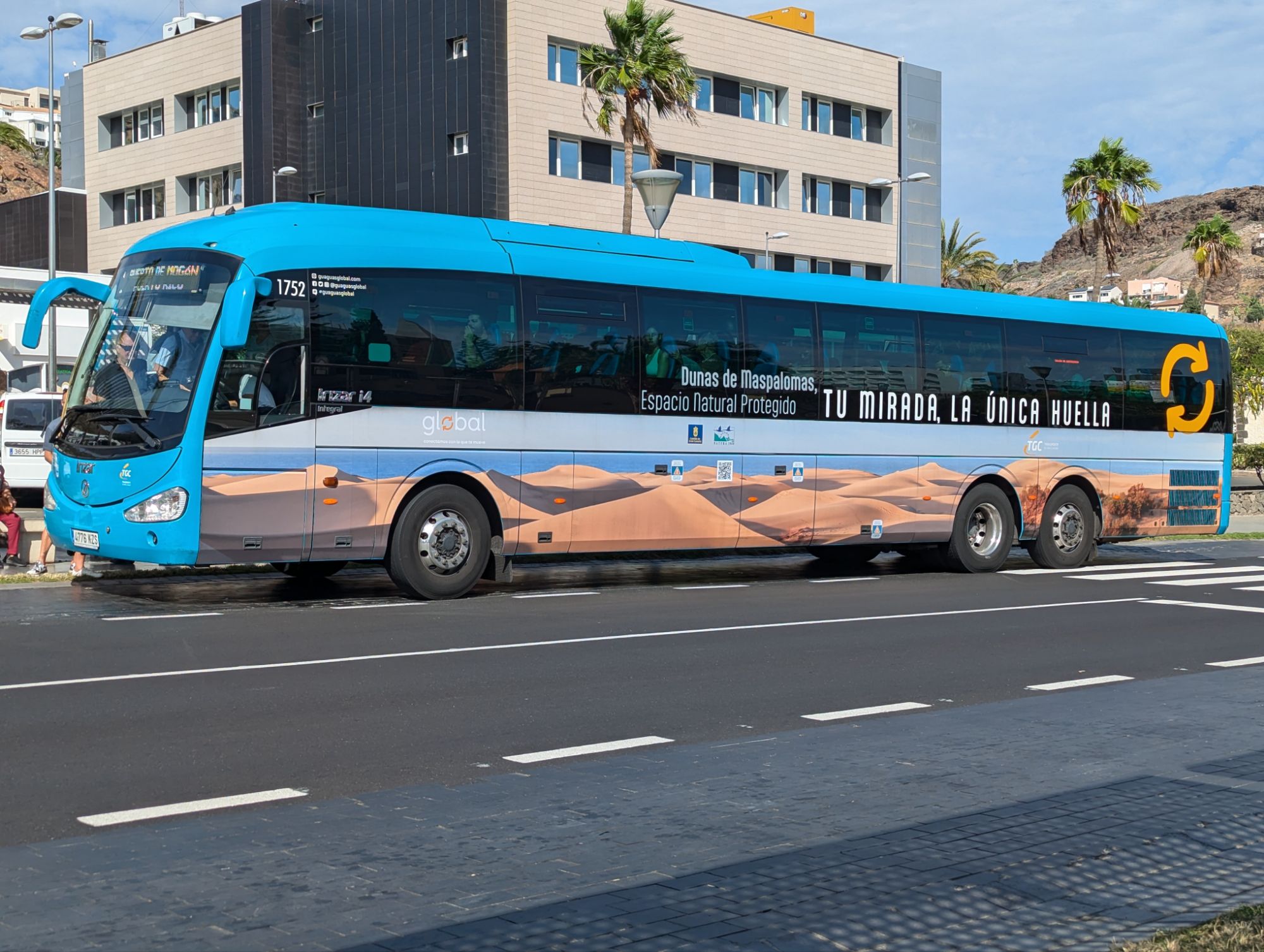
Of course there are no trains on Gran Canaria. There seemingly once was a plan to build a tramway south along the coast from Las Palmas to Maspalomas (reminiscent of the tramway in Belgium between De Panne and Ostend), but there is insufficient money to invest. That said, the island boasts an extraordinary bus service. Las Palmas has its own yellow bus network, the rest of the island has the benefit of Globalbus services. The buses are largely single deck, 3 axel vehicles, a combination of Volvo, MAN, IVECO and Scania chassis (right). Their frequency is excellent – though the real-time information at bus shelters leaves a lot to be desired. Buses can be 5 minutes away for 15 minutes, never actually getting any closer. I’m not sure if I am confident about the published timetable either. From where we stayed in St Augustin east and west, there were plenty of buses during the day. Fewer in the evening (the last bus back from Las Palmas is currently 2115, which is a bit early if we had wanted to attend an evening football match or a concert). Plus, if one arrived at 2115 it would already have departed. Pretty sure about this by experience.
Each bus shelter has a list of destinations, the buses that serve that destination and the price. These range from €1.40 to €5.60 to various locations on the coastal routes. The drivers are amazing. They take no prisoners, for sure. Some of the routes are a bit like the Amalfi coast route in Italy – a bit, the architecture doesn’t compare – and the drivers work the roads with great skill.

We have also used the bus to get inland – into the interior mountains. These buses are fewer, of course, with last buses making it necessary to travel early. For example, to get to Tedeja, one really needs to be on the 0800 from Maspalomas to have enough time in the town and be able to return on the last bus at 1700. Once on, it is perfectly reasonable to regret it. The drivers know the roads and drive the hairpin bends like F1 drivers.
Public works
The roads along the coast are pretty good. I have seen a few rougher streets in the tourist areas, but the motorway along the coast – GC-1 is excellent. Though just like British roads, there are countless roundabouts (traffic lights are few). Inland, whilst the quality is good, they are narrow, bendy and cut into the side of the mountain (GC-550, above right).

I am always on the lookout for how the daily stuff is done. So, along the coast are very large rubbish bins. The are the same colour as the sand which is odd, because for people with eyesight like mine, I could do with them to be fluorescent pink rather than brown. I did wonder how they were emptied. And then I found out (left).
The trees are largely palms. I did just think they got on with it, but no, they are managed by the local authority (right).

Wildlife
The coastal area is pretty much bereft of wildlife.
Birds: I have seen a few small waders on the beach (Sanderlings and possibly Common Sandpipers), but nothing like the numbers I would encounter on a similar beach on the south coast of England. There are a few egrets on the island. Alien parakeets are everywhere, as well as collared doves. I’ve seen what I think my poor identification skills might claim to be Whimbrel. Gulls are not present in numbers. I trust I have seen a few black-backed gulls. On the lagoon near to the dunes of Maspalomas, there were three what appeared to be Glossy Ibises (they were rather dark-feathered, though). It has been a delight to see Common Hoopoes. Birders have classified the birds that one can expect to find here.
Reptiles: Of course, there are reptiles on the island. Again, on the southern coastal area, there are a few geckoes clinging to walls and scurrying into crevices. I was not expecting to find giant lizards in the tourist areas and I am sure that at night or early morning the dunes are busy with reptilian life (the rocks do retain their heat). I may need to revisit the hinterland and be patient.

And then there are crabs. Red-rock crabs to be precise (Red Rock Crab, Grapsus adscensionis).
. They are found on the rocks, particularly those inaccessible rocky areas where humans rarely go (it is quite dangerous). They are distinctive, mobile, potentially aggressive with one another, but a delight to watch if one cares to look. And I think that kind of sums up the island generally. It is not the most beautiful, but there is beauty if visitors want to find it, even in the architecture.
Gran Canaria – over land and sea, November 2024
Filed under: Easyjet, Environment, Transport, Travel | Tags: Cadiz, europe, European ferries, Eurostar, ferry, Gran Canaria, low-carbon travel, Madrid, Paris, Refre, SNCF, spain, Travel
Leave a comment OK, here we go. Low carbon travel. Train and ferry. Some facts.

Cost
Journey starts Saturday 17 November 2024. To fly from Gatwick Airport on that day would have come in at £45.00 (no luggage) – probably double that with the luggage I have taken that would need to go in the hold. Such pricing in the age of a climate emergency is obscene. By train:
London-Paris – £69.00 (standard class – average of return fare in November/December, considerably more in the summer or ahead of public holidays)
Hotel Paris – I was too late booking this for a Saturday evening. Overall cost £135. Hotel was Ibis Styles, Bercy. Breakfast included, and it was not bad. The room was tight but comfortable.
Paris – Madrid – £175.00 (standard class) – TGV to Barcelona and then Renfe to Madrid. The double-decker TGV is not particularly generous in terms of space, but not uncomfortable. The single-deck Renfe train was much more spacious but with no table (drop down rests were adequate for a laptop). We could not use the wifi because we could not see our ticket number (needed to register).
Hotel Madrid (Ibis Ventas) – £96.33 (incl. breakfast)
Madrid – Cádiz – £80 (standard class)
Hotel Cadiz (Soho Boutique Cadiz) £80 (incl. breakfast)
Cádiz – Gran Canaria – £91.10 (ferry – no cabin)
Taxi – Las Palmas de Gran Canaria – San Augustin – (£75.71) – Why taxi you ask? See below
Being in my sixties, I am not up for hostels, although I know that some budget travellers do so. Good for them, but I think I have reached a milestone. That said, in not selecting a cabin for the journey, we effectively slummed it, but the cost so far have been significant.
There are two of us so we need to double transport costs and share the hotel costs.
First leg
I’m pretty familiar with Eurostar. I travelled standard class on 16 November 2024 on the 1758 (retimed from 1801). I was able to work (the new drop down rests for stuff are now a bit wider). There are power sockets – UK and European. I have my own modem/internet for security reasons. The signal was pretty good throughout, including in the tunnel. In the past when I have connected to the Eurostar wifi, it has been pretty unreliable.

It cost me €2.15 to use the Paris Metro/RER to get from Gare du Nord to Gare de Lyon/Bercy. One can buy a card to load and reuse. Ticket machines take cash and cards.
Second leg
The next day (17 November 2024) we walked for 10 minutes from the hotel to Gare de Lyon and went to Hall 2 from where the trains depart. The QR codes on our phones or paper did not read. There was someone at the barrier to scan using their own reading machine. All good. We had two seats on the upper deck with a collapsible table usable only for the people sat closest to the window. There is a socket and wifi (below left).

The route taken by the train is pretty much rural France, but on reaching the Mediterranean, the scenery changes to on of salt marsh as it precariously meanders through the Parc Naturel Regional de la Narbonnaise (below right). The train is probably the best vantage point for seeing it as the train runs over what seems to be a causeway.
Warning, however, whilst writing this blog entry my case located by the entrance to the carriage was stolen. My advice is either to chain it to the bars or locate your case inside the carriage – there are some internal luggage racks.

The RENFE train to Madrid was directly opposite the arrival platform of the incoming TGV. It was that simple. Though there are a few challenges. We bought our tickets on RailEurope.com. The pdf that is made available on the app is unreadable by anyone with less-than x-ray sight. The train manager had a record of the ticket, so we were fine. It seems also possible to print tickets from ticket machines providing one has a PNR number that was clearly stated on the itinerary confirmation.
We then looked to buy tickets for the next leg, Madrid – Cádiz. We tried the machines – ticket buying by non-Spanish citizens is not so easy. Each traveller needs to insert their passport number. We got so far in the process (give yourself 10 minutes) before we were thrown out of the system whilst trying to pay. We did then find the staffed Renfe ticket office on the first floor and bought them in the traditional way, but passports are still needed. And the ticket office sales person found the system equally cumbersome. Our passport details had to be put in twice!
Then on to the Metro. Two lines, first 1 (blue) to Sol and then 2 (red) to Ventas. Buying tickets is easy, but you have to buy a card and load it with as many journeys as you need. In our case one centre ticket. Each centre area ticket cost €2.50 with the card. For the first charge, I think the card costs €2 (extra). On the way back to the station the following day, 18 November, we just loaded the cards. Note the machines are cashless. We ate in a nearby Lebanese restaurant. Portions were huge – salad, falafel, spicey patata and vegetal mousaka.

The hotel is next to the bull ring (left) – a constant reminder that there are some residual bloodthirsty passions in Europe. (The British as much as the Spanish – though not in such grand areas.)
Third leg
Monday 18 November is another train journey – about 4 1/2 hours to Cádiz. There is a fast and direct service roughly every 3 hours. It think it can also be done in two legs if needed: one to Seville and then Seville – Cádiz. The trains are spacious (standard class). Each seat has a socket (though mine did not work). There is room for a laptop to be opened and used. The wifi on the train is not working. Though my modem is fine. Similar to Paris, Madrid has distinct boarding gates. Passengers are advised to get there 30 minutes before departure – all baggage is scanned (unlike Paris). It takes about 10 minutes to pass through.
Incidentally, I bought a new case at the station, a t-shirt, shirt, a pair of socks and a sweater to keep me going. I discovered that I did have some underwear in my rucksack.
For a change we arrived at our destination in daylight. We checked into our hotel – probably one of the best we have ever enjoyed – the Soho Boutique Hotel. We had a suite. It was sensational. The breakfast was additional, but worth it. The spread was varied ranging from breads, pastries, cereals, cheeses, meats and fruit.
We bought a few more items in the town:
- food to take onboard – correctly assuming that the onboard catering might be a little unapetising
- Some eye protection (my prescription sunglasses were in the stolen case)
- some trousers and a gilet from a male clothing retailer and shorts, leggings, t-shirts and underwear at an unexpected-to-find branch of Decathlon.
We ate in a Latin-inspired restaurant in the town. The restaurant – Más Que La Cresta – is not exclusively vegan, but the options are good. We took a selection of starters as tapas; though the vegan burgers were certainly enticing, burgers are not quite our thing.
Fourth leg
The ferry terminal is about a 15 minute walk from the entrance to the port. Foot passenger enter the office through which they pass security control and then enter a taxi to drive to- and then in-to the ferry. We did not take a cabin – trying to keep down the costs somewhere – so slept in the reclining seat area on deck 7. For the first part of the journey we sat on the deck in the sunshine. The ferry crosses the shipping route from the Mediterranean west. I trust they have some communication and understanding that ferries operate against the dominant shipping route. It is a reminder that the seas are equally colonised by humans. And on the deck, the exhaust from the ferry reminds us that there are still greenhouse gases being expelled into the environment.
The ferry has a small shop that sells the basics – cigarettes and soap. There is a bar/café and then the self- service restaurant. Not much more. It is unlike the ferry to Rotterdam from Hull which has cinemas and a casino (not that a casino is of much interest to us).

Sleeping – without a cabin, there are rows (2-3-2) of reclinable seats on decks 5 and 7 (right). Deck 7 is the quiet level. What we have realised is that this ferry carries some very seasoned travellers, many of them young, who bring mattresses, airbeds, sleeping bags and food to microwave (the restaurant has a public microwave for use). There is no washing up area, though. So the seasoned travellers often sleep horizontally on any available floor (there are signs all around forbidding this, of course). It is, I think, also the case that this is not a party ship. People are here to sleep, not to party (that is probably saved for the islands).
Did I sleep…yes. It was quiet. People slept. Though in the summer it might get more chaotic with so many floor sleeepers. The reclinables are least comfortable, I found, when reclined (they do not recline too much). I reverted to normal position. A pillow of some kind is needed. That doesn’t mean that I am not looking forward to a bed on arrival.

For the day, I was on deck for much of the time (left). The sun was warm and I had a book. Working is not so easy as the ship is really not geared up for business. The sockets are few – and in demand for mobile recharging. There is a small cordoned-off area in the restaurant that could act as a business space. It does have sockets, but I only counted four, and they were not well spaced around the room either. In the end I went to work in the restaurant in-between sittings (breakfast, lunch and dinner). Talking of which, we did take breakfast. It was not bad actually. And not expensive. For €12.50 we had cereal, bread, egg, yoghurt, tortilla and coffee. We are not sure whether it was accurately calculated. But hey.

We were scheduled to dock at midnight…in the end it was 0130 GMT. We were out by about 0200. But what then? Cadiz is easy, the port is adjacent to the town and walkable. Las Palmas de Gran Canaria port is quite large, not walkable and relatively deserted at 0200. There was no shuttle bus, no taxi rank. My beloved was armed with a taxi phone number but more than once – without perfect Spanish – they just put the phone down on us. I walked back to the ferry to ask one of the personnel if they could speak for us. We had a volunteer whose intervention magically summoned a taxi that arrived after about 10 minutes. Uber is on the island – download the app before you travel. Anyway, the drive was approximately 45 minutes – fast because there was little on the roads (which are superior to anything in the UK – not a pothole to be seen). The fare was €90 to San Augustin – 55km. Journey end.
Reflections
I wanted to test the feasibility of getting to the island by land and sea and be productive in the process. Whilst I may be on holiday, I still want to engage in some academic work – I am an academic after all. All travel raises questions that warrant answers. I have never regarded travel time as a waste. I do think my efforts here were thwarted by the transport operators – notwithstanding the theft of a bag. Here are the key challenges:
- Cost – it is significantly more expensive to travel overland than by air. The journey cost overall was £802.14. That is at least eight times what it would cost to fly. We could cut out the hotels – do Paris to Cadiz in a single day starting very early in the morning. That is a tough day and all the connections need to work.
- Time – I wanted to be productive and connected. It was ideal for reading books and academic papers, not so good for writing. Observations:
- I could not connect to the internet on Renfe between Barcelona and Madrid because users need their ticket number. This was unreadable on my ticket from RailEurope. That said, for security, I use my own dongle with European roaming, which worked fine. I did use about 21/2 Gb.
- The (un)complementary internet on the ferry was very poor. And because we were sailing, there was no mobile signal (I feared, too, that if there was, it would be Moroccan, and therefore elicit extra roaming costs). I could have bought a better internet package from the operator, though. I did not because I had lost my credit card in the bag theft.
- As noted, there is no dedicated workspace onboard.
- Foot passengers on ferries are poorly served. The situation at the port of Las Palmas de Gran Canaria was a problem. There was absolutely no provision for us at the port. And being so late, it leaves stranded passengers vulnerable. This is not universal. Other ferry journeys that we have taken have been better served. Hoek van Holland has its own railway station! Europoort had coaches to take passengers to Rotterdam (or used to).
What needs to be done
- Sort out ticketing…
- Buying European train tickets is way too complicated, especially across borders. We used Rail Europe, but the tickets issued were unreadable by station and train staff.
- Adding to that, buying tickets in Spain either by machine or at a staffed ticket office is slow and cumbersome. Passports are needed for non-Spanish travellers and it can take an inordinate amount of time to get issued with a ticket. On the machines, we twice got ejected and had to start again.
- Wifi…
- I am happy to use my dongle for security reasons, but the ferry wifi was poor by any standard. Even basic searching was difficult or impossible. The wifi would shut off in any case after 30 minutes or so and it was necessary to log in again, including reading the terms and conditions.
- Make provision for work – dedicated space, sockets, reliable wifi. I know the argument – there is no demand. But there is no demand because there is no provision, arguably. Equally, the ferry would be an ideal place for a conference, workshop, briefings, etc.
- Treat foot passengers with respect. Ensure that they can embark and disembark safely. And do not leave them stranded at a port in the middle of the night. That is truly shocking.
Getting back
We flew back! It was not the original intention, for sure. I made the decision when we got on the ferry from Cádiz. I am not advocating flying – my overland and sea days are not over, far from it. Indeed, the flight was long, cramped, hot and involved airports. However, three key things swung it for me (a further two factors made me feel slightly more sanguine).
- The timings of ferries back relative to my need to be at my desk on 9 December meant that the time on the island would be much shorter. In order safely to get back by 9 December, I would need to leave the island on 1 December 2024. That ferry is scheduled to be 43 hours. Having taken 5 days to get to the island, to leave after just over a week seemed rather punitive (bearing in mind I am working throughout the period January to August inclusive and this is my summer holiday).
- The experience getting here was not the best – from having my bag stolen to the facilities on the ferry and the restaurant menus.
- Cost – I had to spend quite a bit of money replacing some of the things I had lost particularly my clothes.
- Carbon – I am trying to be a good citizen, but I am not perfect. Though I am reminded by some pioneers of low carbon working of studies relating to carbon generated by flying, in particular the contrast between short haul and long haul. That is not to say that I am going suddenly to start flying again as I had done prior to Covid (i.e. every week). Here is a quote based on work by Frédéric Dobruszkes, Giulo Mattioli and Enzo Gozzoli “flights of less than 500km account for 26.7% of flights, but only 5.2% of fuel burnt; while flights of 4000km or more account for just 5.1% of flights, but 39% of fuel burnt. This tallies with AEF’s (The Aviation Environment Federation) findings that shows that in terms of carbon emitted from flights from the UK to destinations around the world, the worst offenders are indeed long-haul – in top place is the US with 23.6% of the UK’s international flight emissions (10.6Mt), and Dubai with 6.7%.” You can read the summary article, “The Elephant in the Middle Aisle” here.
- Finally, I picked up an injury in the final week on the island (see later entry) that would have made overland very difficult, painful and dangerous. On that basis, too, I can safely say that disabled travellers are much better served by airlines (though there are some horror stories) than overland across borders and modes.
Rome December 2023 – those painted ceilings
Filed under: Art, Travel | Tags: Andrea Pozzo, baroque, Chiesa di Sant'Ignatzio di Loyola, Rome
Leave a comment This post belongs with others published earlier including Bernini and Borromini and Mussolini’s Rome architecture and district.

As part of the the Baroque tradition, ceilings became as much of a canvas as walls and chapels. They were a lot harder to do, for sure. Not only are they high and inaccessible, but for them to have an impact, they need to be more than just 2D. So in commissioning the art, the artist has got to deliver. There was, it seems, no better deliverer than Jesuit Monk, Andrea Pozzo. He was given a task in the Chiesa di Sant’Ignatzio di Loyola (c1650) to paint the illusion of a dome (because there was not enough money for a real one). This he did with aplomb – the ceiling then became his (he started the major work in 1685).

When one walks into the church one joins a queue – but it is not clear why. The end of the queue is a mirror and a money box. The box has to be fed with coins to illuminate the ceiling. Most people seem to take pictures from their mobiles. But really the best option is to piggyback on those willing souls who feed the box and look at the four continents and marvel. America (above left), Wait for the light and discreetly make oneself horizontal.
Cigarette advertising – it has been a long time
Filed under: Cigarette advertising | Tags: Cigarette advertising, This Plus Cigarettes
Leave a comment 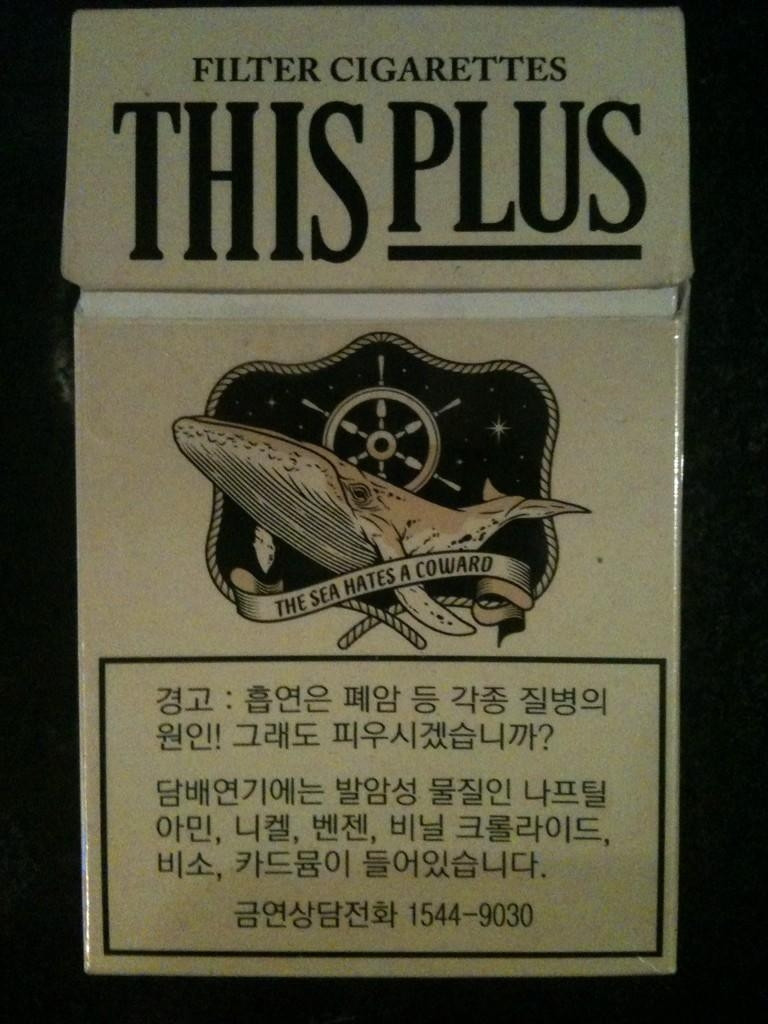
I have not posted on cigarette advertising recently because…there isn’t any. All advertising in Germany concentrates on e-cigarettes, few of which are in any way as creative as those produced by the tobacco industry.
Anyway, just scrolling down in Bluesky, I came across this posted by Garth Mahrengi’s Catbus (@catbus.bsky.social). It is quite special and, well, wrong? The sea cannot like or dislike. Though it is true that those who do not treat the sea with respect, may find themselves in trouble. The fact there is a whale in the graphic suggests that these cigarettes were for men who hunted them, or fishers more generally?
Decarbonisation milestone
Filed under: Environment, Transport, Travel, Vehicles | Tags: decarbonisation, diesel van, Mercedes Vito
Leave a comment It has taken three years to get there, but I have reached a decarbonisation milestone. It started with six photovoltaic cells on my roof and 6kW of battery storage. I then invested in an induction hob. Then, the big one, the heat pump. Which is now doing an amazing job at keeping the house warm and supplying hot water. It is a different experience to my gas boiler and super hot radiators. The radiators stay ambient.

Anyway, finally, today I said goodbye to my diesel van (why did I have a diesel van in the first place you might ask?). I have sold it, so it will still be burning fossil fuels and emitting greenhouse gases. But I felt that in selling it I may be tempering demand for new vehicles. Even this old van has embedded carbon from its manufacture.
Where to next? What more can I do? Well, there remains plenty of scope. First, I need to do a full audit of my life and then create for myself a carbon reduction plan! I will report further here in due course.
 Be informed