Archive for the ‘art and climate’ Tag
Banksy’s artworks
Filed under: Art, Environment, Politics | Tags: art and climate, Banksy, Islington
 Leave a comment
 Gio Iozzi asks, why does it take an artist to expose the assault on our urban trees? This in light of Banksy’s latest addition to his portfolio recently found in Finsbury Park, London. It is an interesting work, and slightly different from his usual work, as it requires a significant prop. A tree. The tree is special because it has been “pollarded” – severely pruned in normal parlance. It has been pollarded because, according to the Council (the owners of the land on which the tree stands) it was diseased. It is a cherry tree, and they do not, it seems, respond well to radical pruning. There is also a question of whether diseased trees need to be pruned or felled. Many of us are a little diseased, but we do not lob off all of our limbs to deal with it. Or at least not as the first option.
It seems that Banksy, whoever he is, saw the opportunity to provide this sad tree with leaves by painting them – or spray painting them – onto an adjacent side wall. Viewed from one angle, the tree looks healthy and with full plumage. And like all Banksy artwork, there’s a message.
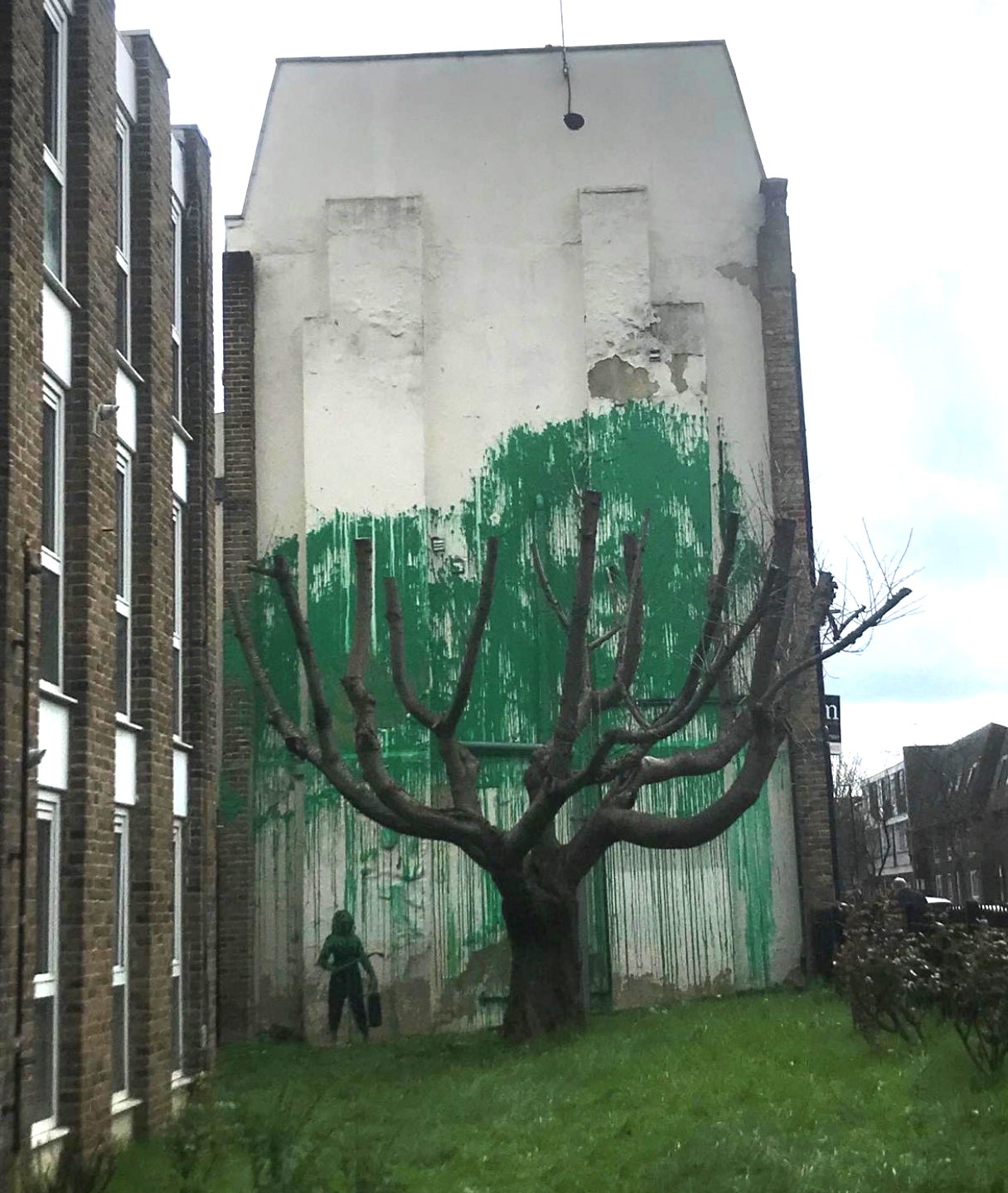
Art is there for the receiver to interpret, even if the artist provides the artwork with their own meaning. So we take liberties – rightly – with interpretations. So let us interpret this widely. This is a dual statement about the state of our urban trees and about climate change. Urban trees are under threat, just at a the time when we need them most. Our cities are getting hotter. Trees provide shade, for sure. But they also cool the air. Even diseased ones. So much urban landscape is devoid of trees. Devoid of ways of cooling and, increasingly, draining.
More broadly the onslaught against the planet’s forest ecosystems is relentless. The cutting and burning of the Amazon has slowed, but not stopped. Forests elsewhere in Indonesia and Africa are also in retreat. In Brazil particularly to provide land and feed for cattle. So not only do we lose carbon-capturing trees, we also increase our emissions through bovines, notorious methane producers. All because we want to eat large quantities of beef.
In response to Iozzi’s opening question about artists, I respond simply by saying, it is what artists do. It is why they are an essential part of the democratic process. Throughout history artists (not all, for sure) have made statements about society, power and morals. Degenerate art in Nazi Germany was degenerate for a reason. Artists have been subtle sometimes in their representations. Messages that eluded the censors because they were unable adequately to understand what they were actually looking at. Even Picasso, not known for his political statements, produced his masterpiece, Guernica, to say something to the perpetrators of the destruction of the Spanish town in 1937. Famously when asked by a Nazi Officer at his Paris studio whether he had “done” this painting, his reply was “no, you did this”.
To add value to the picture and to the metaphor, Islington Council put a protective fence around the work, but within 48 hours it had been defaced. I am pretty sure that Banksky was smiling. I rest my case.
Original picture source: https://twitter.com/IslingtonBC/status/1769722470355828821/photo/1
Summer 2022: the €9 ticket holiday – 2
Filed under: Environment, International, Museums, Race, Railways, Travel | Tags: art and climate, Berlin, Dresden, Elblᶏg
Leave a comment Art
Holidays often feature art – why would they not? In this journey we’ve been to Berlin, Elblᶏg and Dresden. The latter two are provincial cities with their own take on what should be shown and what not. And how.
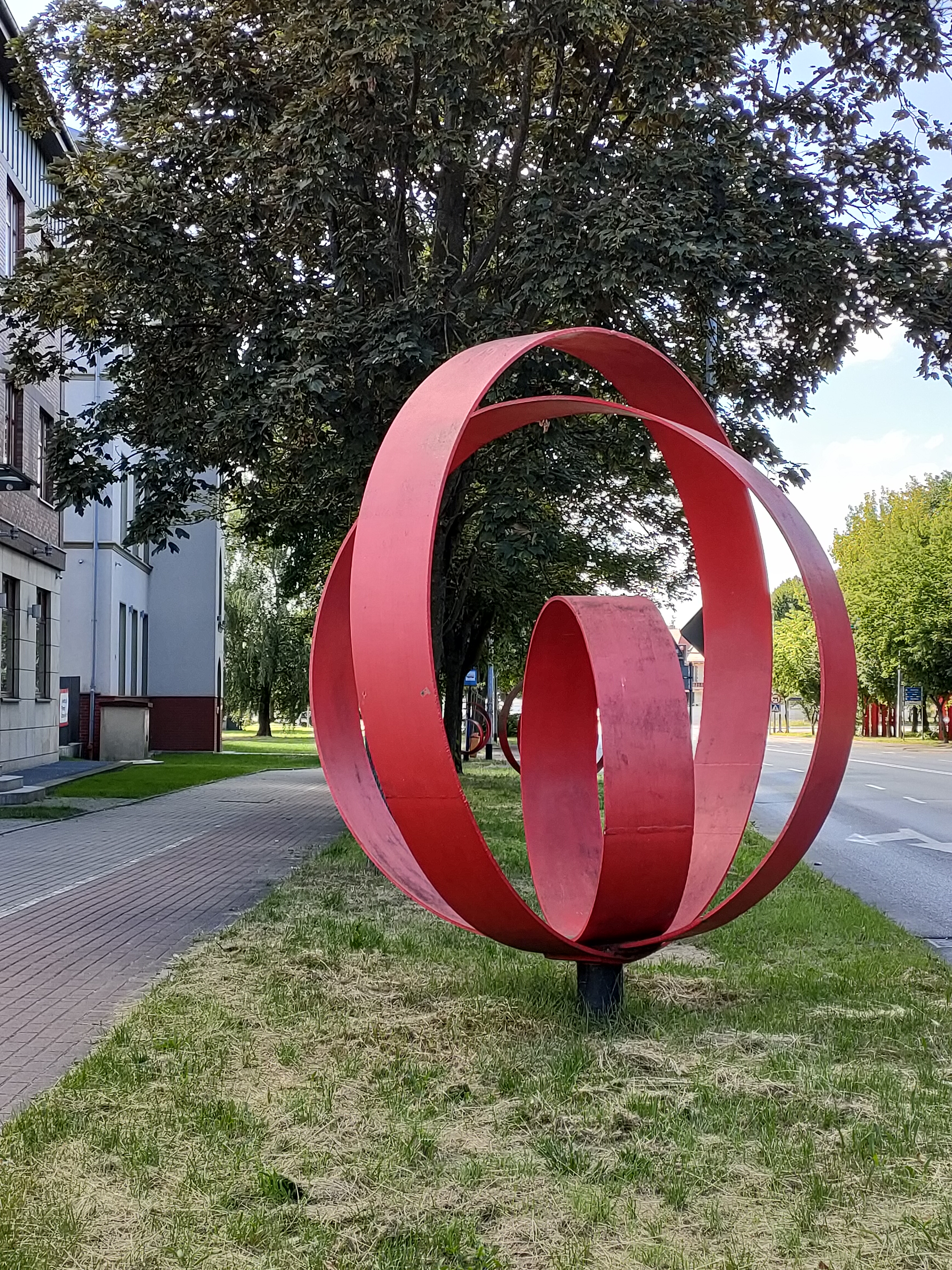
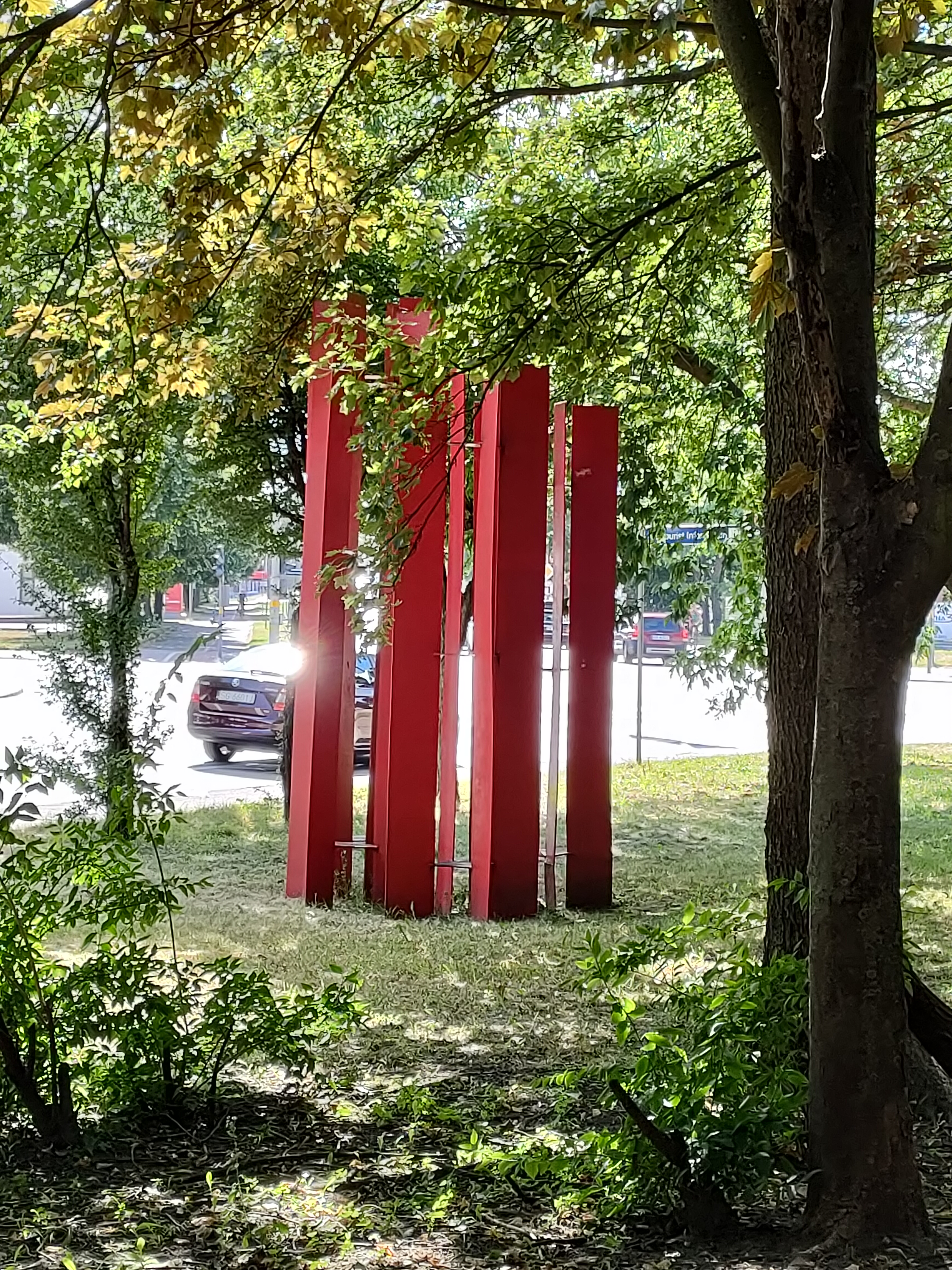
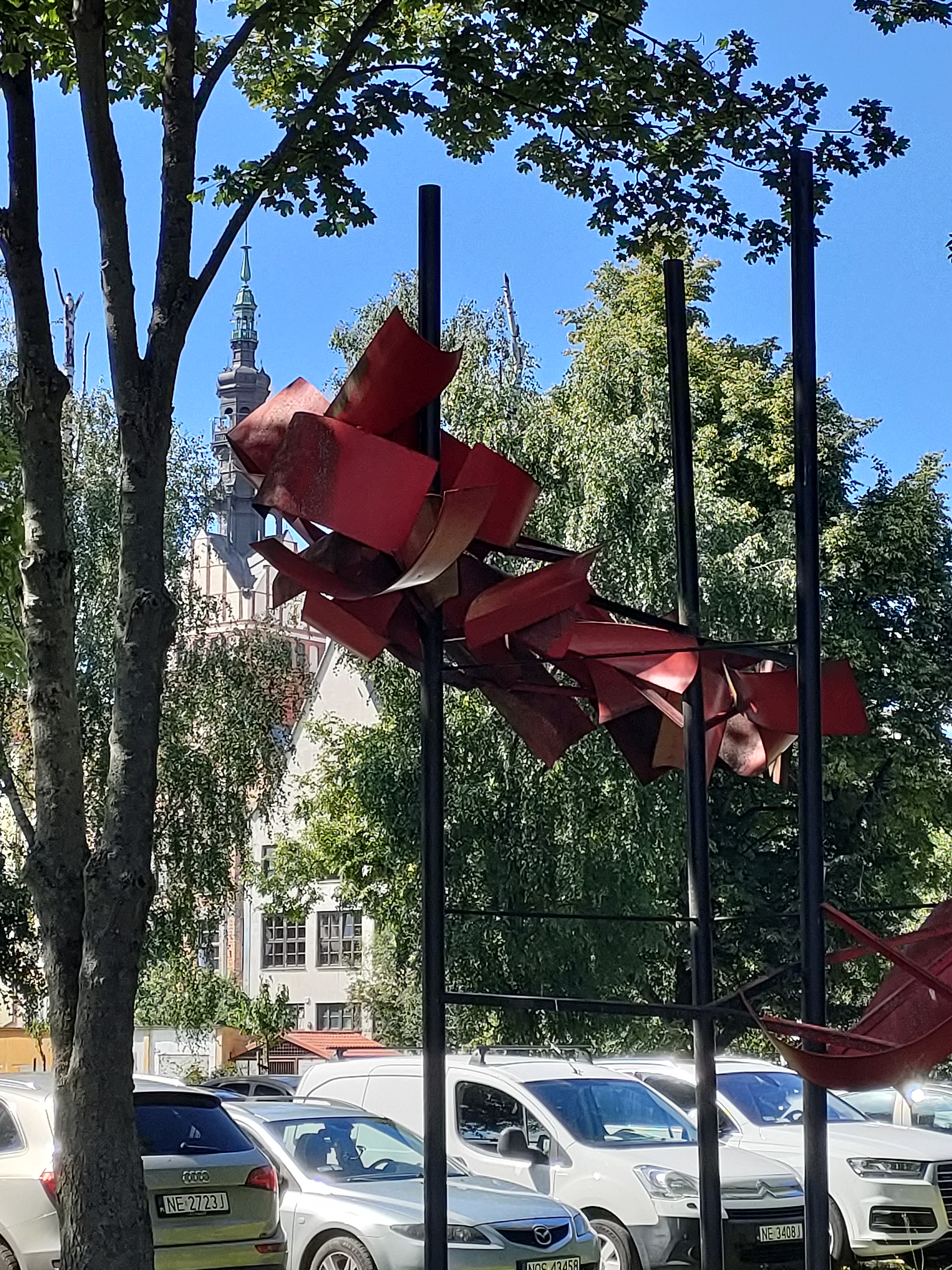
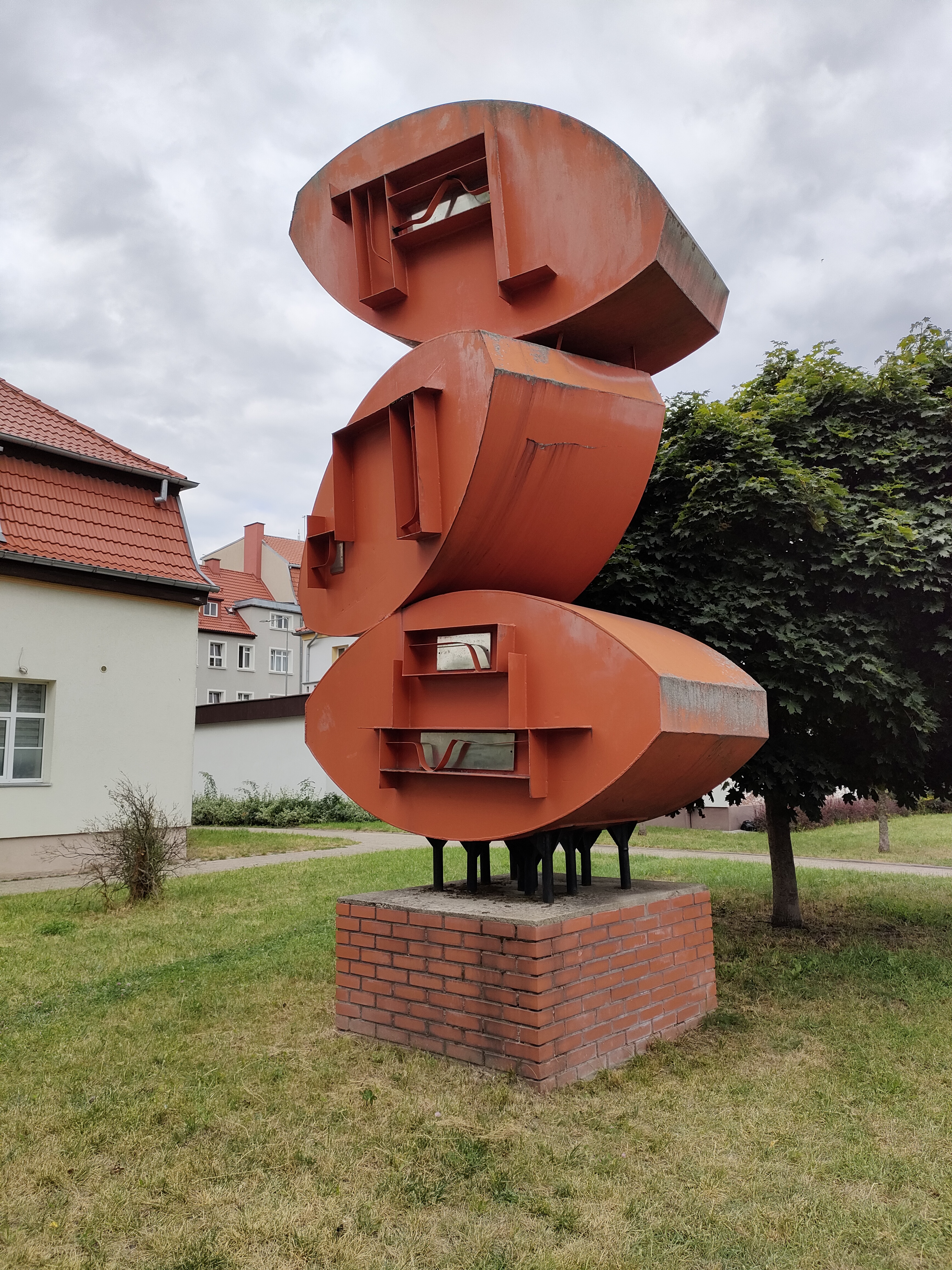
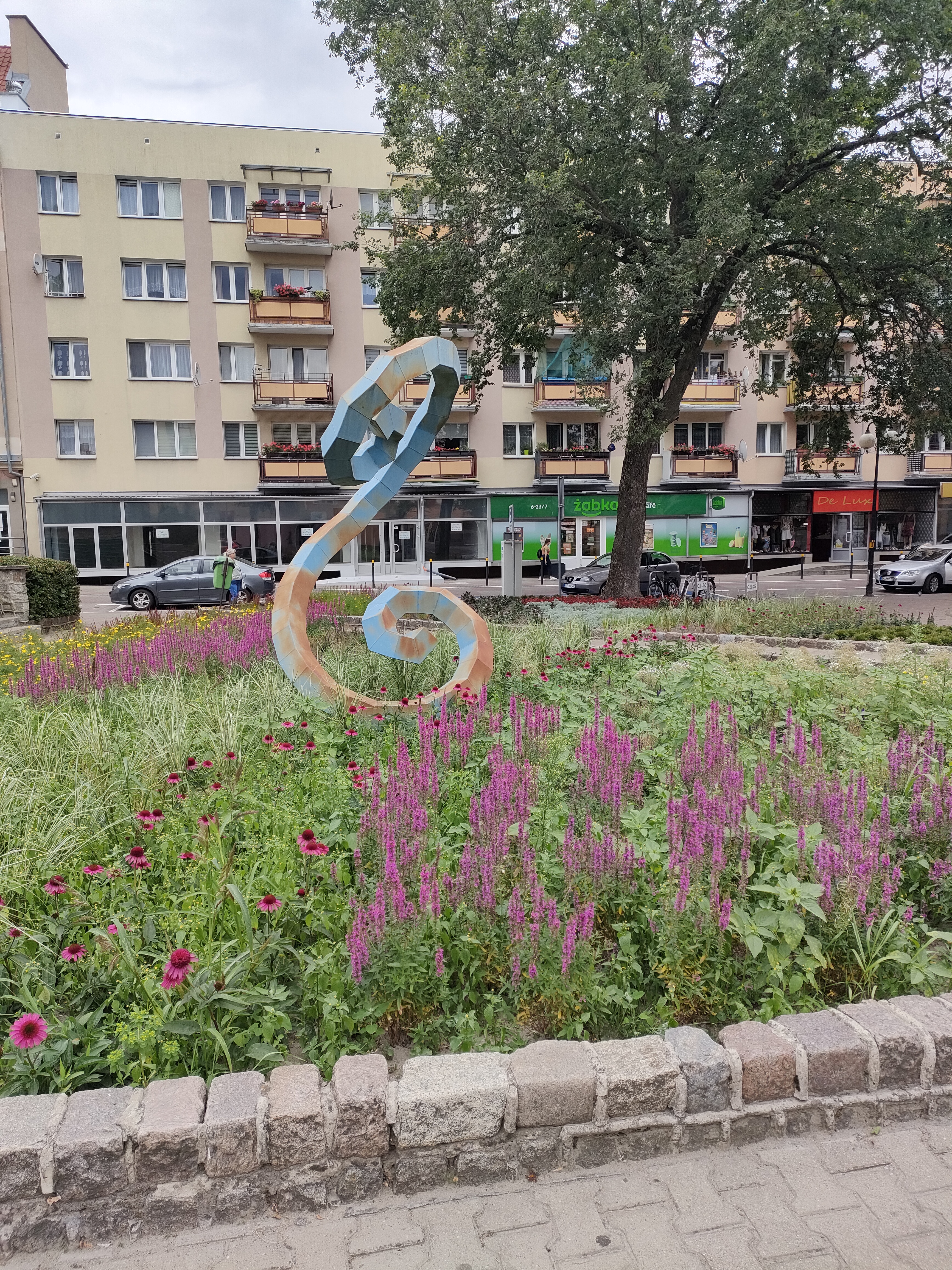
Elblᶏg surprised me. The art is everywhere in the public realm. Seemingly in 1965 a number of artists were commissioned to make art and place it just about everywhere in the city. Examples of the work are below, but what it does to a place is interesting. In some cities the art would be defaced, damaged or vandalised. I saw none of this. 1965 – that’s 57 years! I assume that the art reflects the town and its people. Most of the artwork is made of steel, yet compelling. Maybe no one notices it, but it is there.




In Dresden, art has a very different role. Dresden celebrates its kings or “electors” The Residenz – effectively the palace of the elector August the Strong (apocryphally he can snap a horse shoe by his brute strength). He was strong, but probably not in this sense. His art collection – or treasures – illustrate just what constituted his ego. There is no question that most of the objects in the galleries are exquisite. I simply cannot imagine how most of them were decorated. Some of them were linked to what was probably 17th Century high technology such as clocks. The example on the left is a roll-ball clock. The ball is rock crystal and it rolls down the tower. It takes exactly one minute. Inside, seemingly, another ball is raised “emporgehoben” (whatever that is supposed to mean in reality) which moves on the minute hand. Saturn then strikes a bell, and twice a day the musicians raised their wind instruments and an organ played a melody. It is an extraordinary piece; but somehow I prefer time keeping to be a little simpler, at least in its reporting.

The jewels are one thing, the ivory is quite another. I have to say I’ve never seen so much carved ivory in one place. It is quite sickening. The carving is amazing, however. Take this frigate (right). I do not know how many elephants died for this piece, but everything apart from one feature is obscene. It dates from 1620 and bears the signature of Jacob Zeller. Of course the frigate is supported by the carved figure of Neptune. The sails are not ivory, nor the strings. But there 50 or so small human figures climbing those ropes. They are extraordinary.
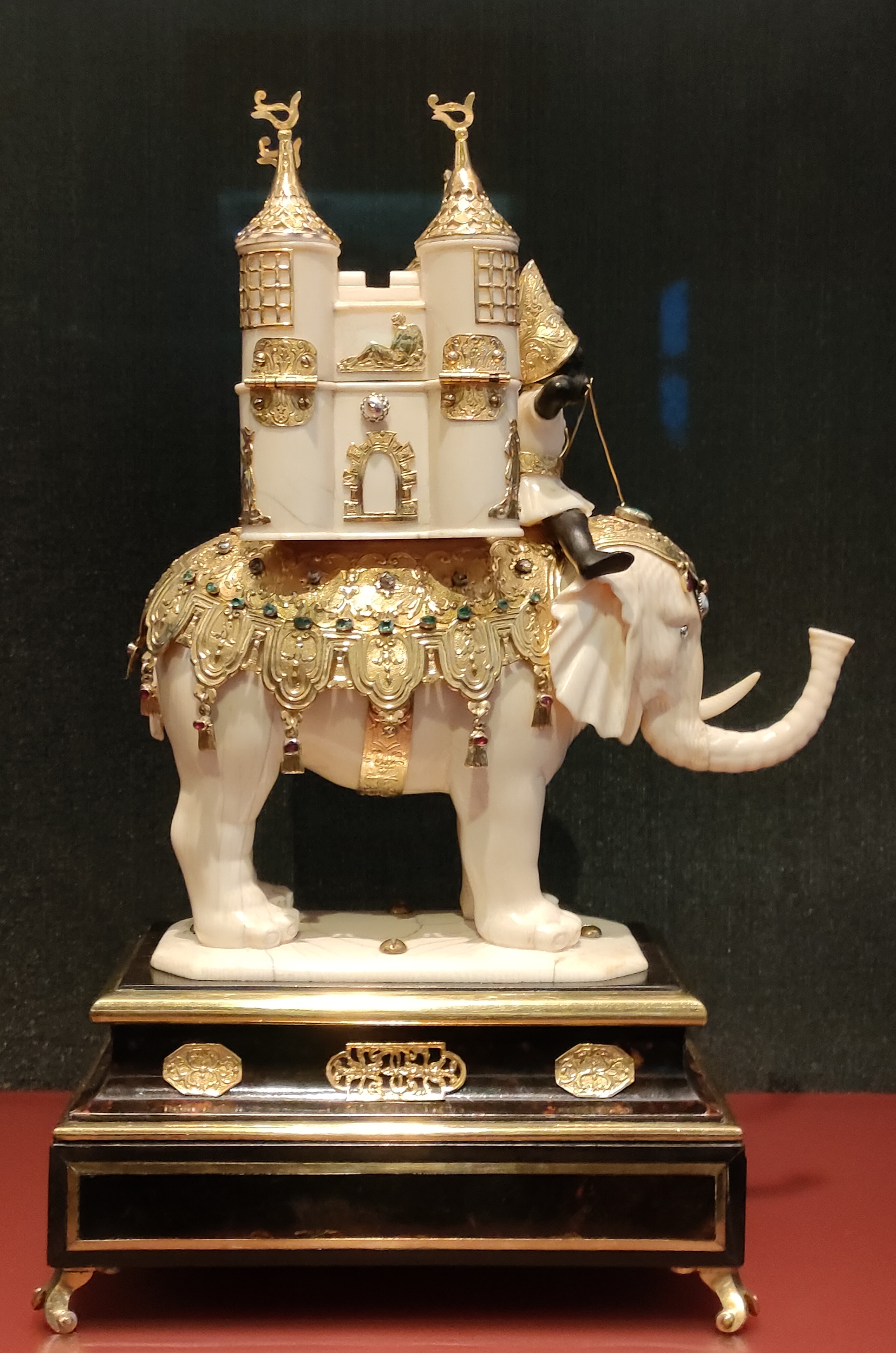
There is an ivory clock to rival the jewelled example above. But quite the most sickening is to carve an elephant from ivory (left). There’s a receipt for its purchase in 1731. It is actually four perfume bottles hidden the castle turrets. What gets me particularly is the failure of the gallery to say anything about the exploitation of nature. These are simply curated as exquisite objects of great value.

It was not only elephants from the natural world that were exploited. Here is something I absolutely did not know, coral was a material for artists and treasures in this period. The bizarre figure on the right is seemingly a drinking vessel in the shape of the nymph Daphne who metamorphosised into a tree (coral) to escape Apollo’s “harassment”. It is not just one piece, there’s lots of it in this gallery. Not a word about how the coral was gathered and where from.
But there’s more. There are some deeply troubling figures of black people. I am not going to upload the photos of a sedan chair occupied by an ivory Venus and carried by “Hottentots”. Venus is attributed to court sculptor Balthasar Permoser (1738 or so) and the figures to court jeweller Gottfried Döring.
I left this gallery feeling troubled and dissatisfied with the curation. They must do better.
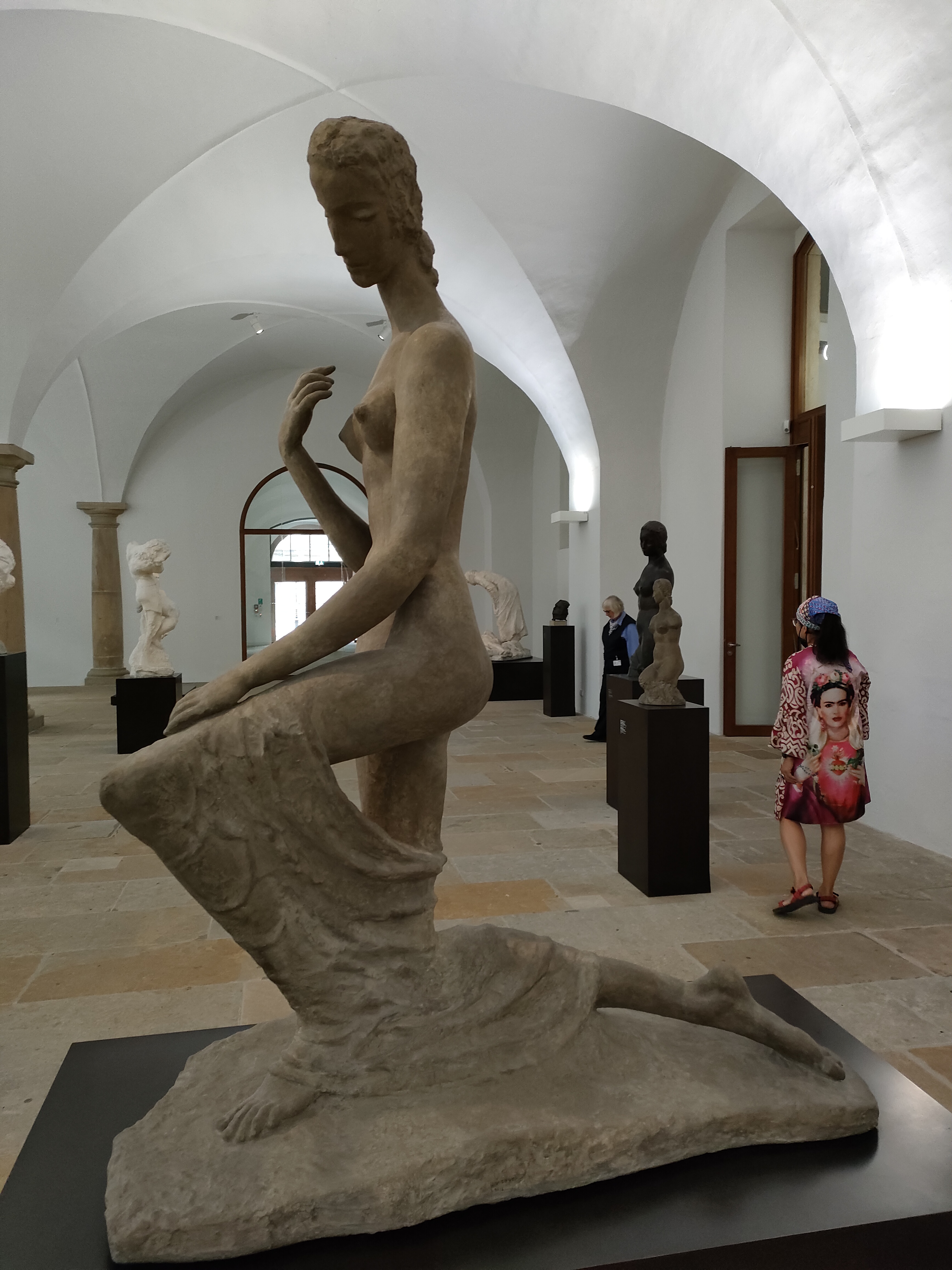
The Albertinum is another gallery in the historic centre of Dresden. There is some interesting stuff here. Sculpture is not usually my thing, but it has a number of examples of art that was deemed by the Nazis as “degenerate”. For example, Wilhelm Lehmbruck’s “Kneeling Woman” (1911, left) which is quite extraordinary, but obviously too extraordinary for the Nazis. Then oddly there is a piece by Barbara Hepworth, Ascending form Gloria, 1958). Odder still is a decorated wooden crate ascribed to Jean-Michel Basquiat (I am probably wrongly describing it). There are a couple of contrasting pieces by Tony Cragg – a wooden abstract sculpture and a cube made up of compressed rectangular objects ranging from lever-arch files to old VHS video players.
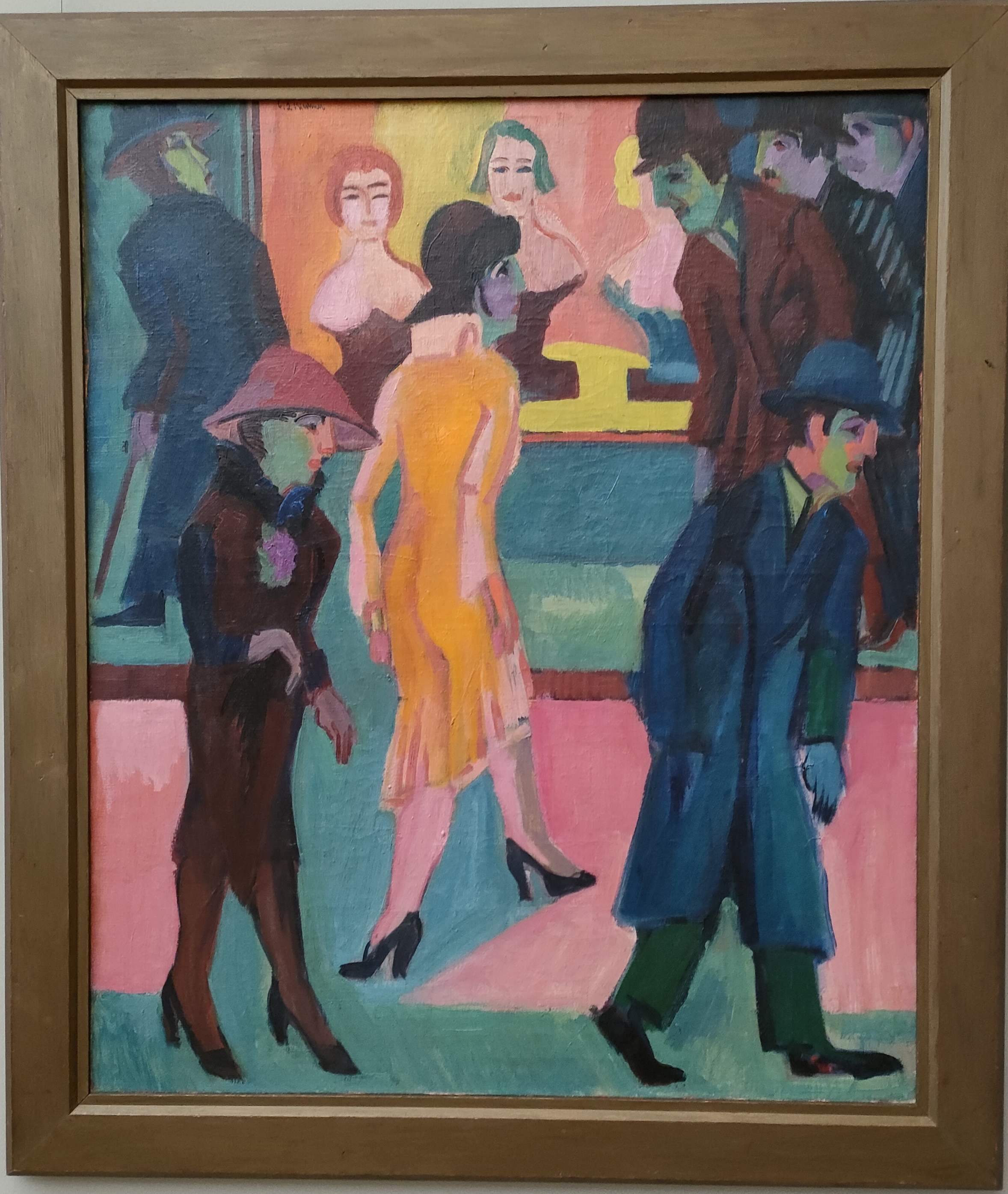
The upper floors are full of fine art. Again, keeping to the theme of degeneracy, climate and perhaps art that captures some of the potential consequences of unchecked warming, I start with Ernst Ludwig Kirschner’s Street Scene with Hairdresser Salon (Straβenbild vor dem Friseurladen, 1926). Kirschner was part of a group of artists known as the Brücke Group. Like many art movements the members were all against “old establishment forces” and following artistic rules. The bright colouring is an example. So shocking were the paintings that they could not be purchased by the City. Eventually, they became accepted and acceptable, only to find them labelled as degenerate in 1937.

What was not degenerate was Hermann Carmiencke’s Holsteiner Mühe (1836, Holstein Mill). I choose this because water was a natural source of sustainable motive power. The steam engine was arguably introduced to break the collective power of labour and because the water resource ultimately could not be shared by the direct owners of capital.
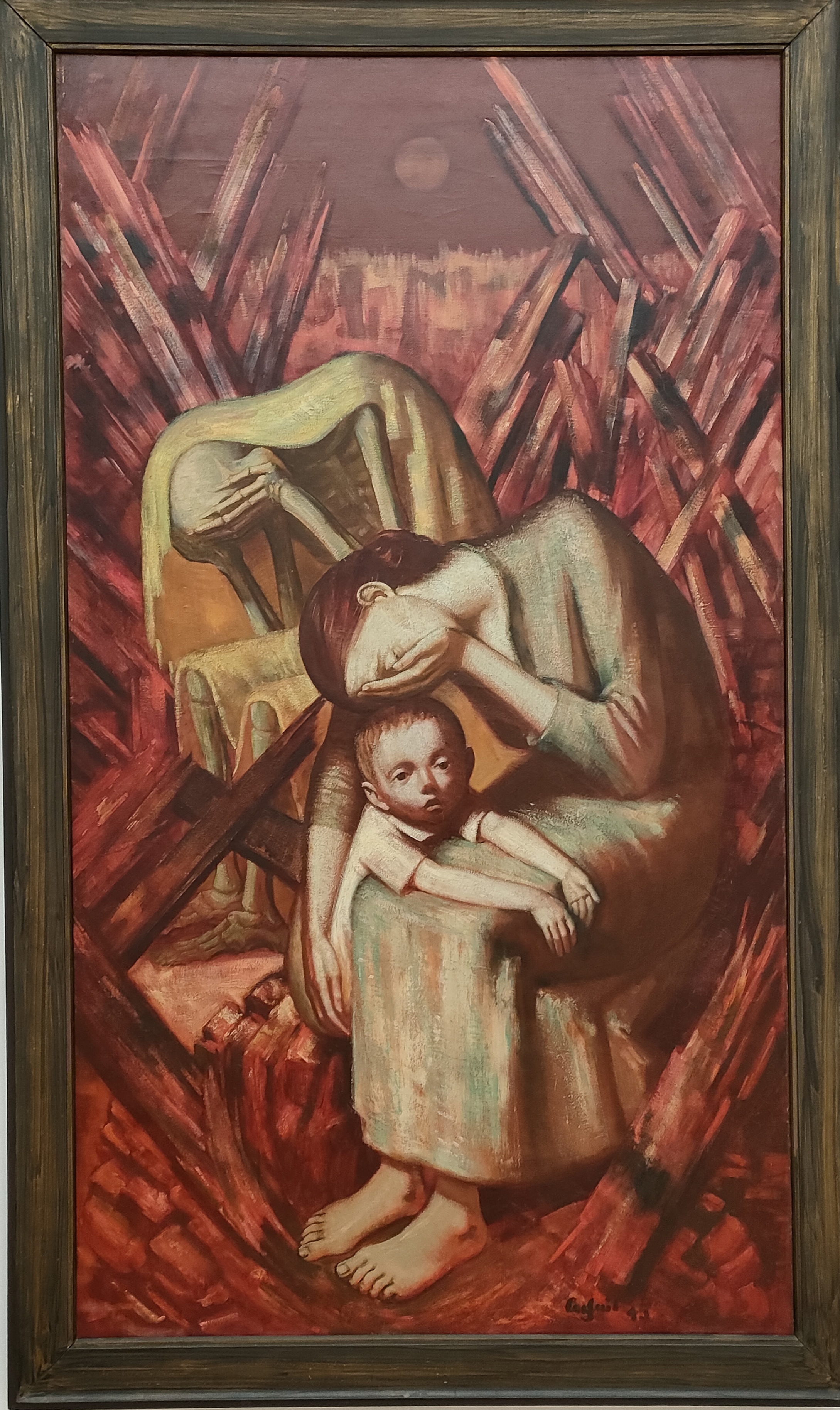
Finally from the Albertinum I selected Wilhelm Lachnit’s Der Tod von Dresden (1945, The Death of Dresden). It is, of course, a reflection on the human suffering arising from the second-world war. The climate crisis will bring its own deprivations and a fight for resources. We will see these times again, I fear.

A quick word on Dresden. The historic centre was essentially rebuilt from 1985. Many of the historic buildings were left as shells and rebuilt using plans and authentic materials. It was an exceptional achievement and good on the eye; the Semper Opera House, for example (above left). But this is not a city preparing for rising temperatures. Whilst there are green spaces, this central area is totally devoid of natural shade. The new centre around the railway station is largely concrete-based retail. Could be anywhere.

Meanwhile in Berlin, we visited the Nationalgalerie. I was taken by the work of Adolph Menzel. He obviously earned his money painting portraits of rich men, but he also had much to say about contemporary issues of the time – the mid 19th century. He is, by definition, a contemporary of Turner. And Menzel’s picture Die Berlin-Potsdamer Eisenbahn (1847) has some similarity to Turner’s Rain Steam and Speed which dates from 1844.
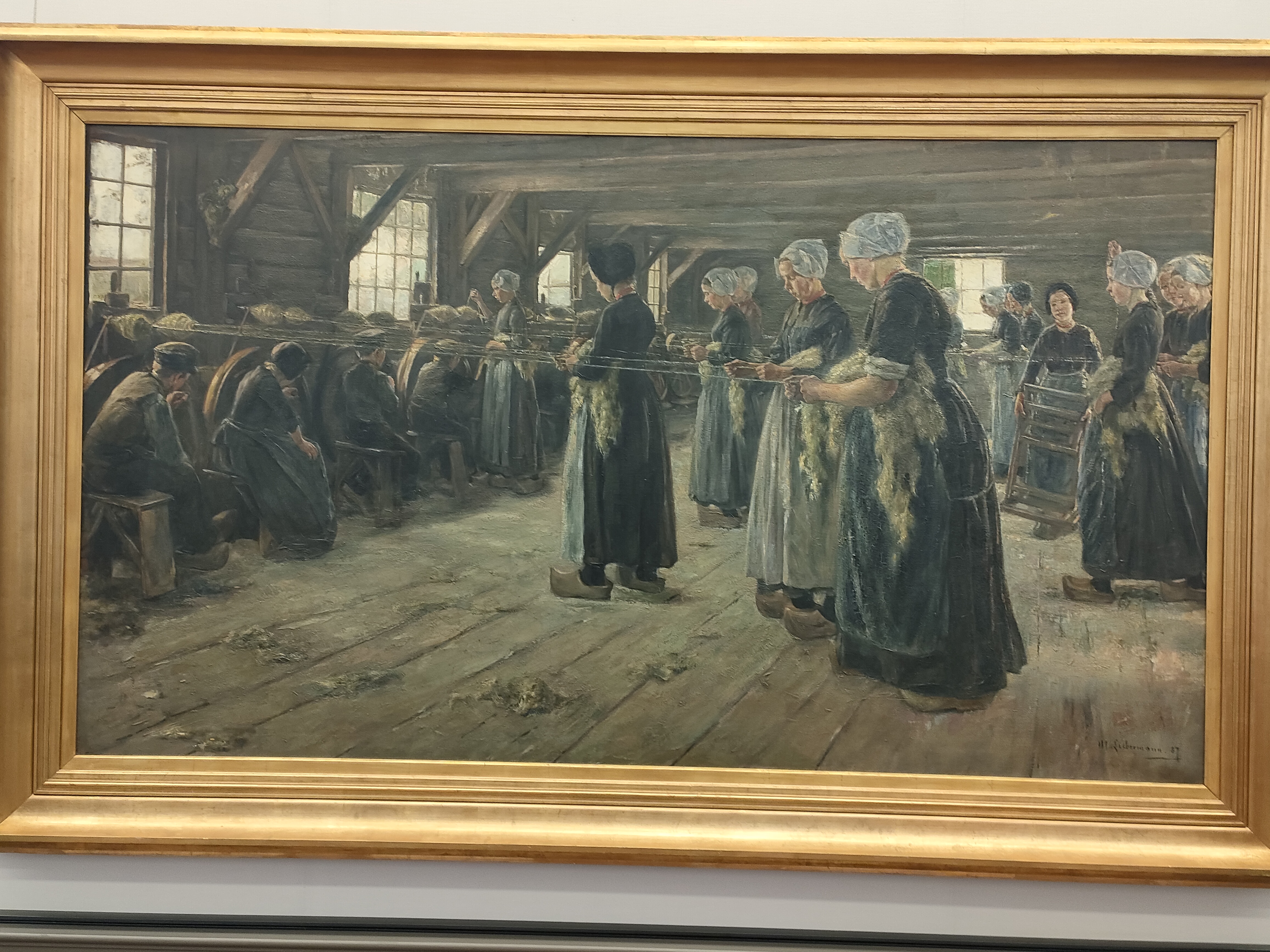
Menzel also painted a number of factory scenes – Flax Spinners, dangerous women’s work. The only safety equipment is clogs on their feet.

Contrast this image with that of his painting Flötenkonzert Friedrichs des Groβen in Sanssouci (1850-52). This depicts Frederick the Great playing the flute with a small ensemble and aristocratic audience. It takes place in a grand setting. At night with candles galore as illumination (expensive, if nothing else). It is incongruous. Those flax spinners will not be consuming high art at this hour, for sure.

The industrial revolution and the ruling (plutocratic) elite play their distinct roles in the journey to the current climate crisis. Images of trees being cut down are visual reminders of how the natural environment is the source of all exploitable resources. Constant Troyon’s painting Holzfäller (1865, Woodcutter) is a great illustration of this. Though I am sure this is not the actual meaning of the painting. Trees were, of course, felled well before the arrival of the industrial revolution for shelter, housing and agriculture. What is significant is how the deployment of technology turned it into a truly industrial process. Watch how trees are harvested in modern times as though they are bowling pins, to understand how the pace of destruction has increased.
There is one other theme here, to share. And that is “otherness”. Mihály Munkácsy’s 1873 painting Zigeunerlager (Gypsy Camp, right) expresses it well and nicely contrasts with Menzel’s Woodcutter (I note and am aware that both Zigeuner and Gypsy are pejorative terms. The Nazis, we remember, committed genocide against this group. Hence the word Zigeunerlager is particularly troubling. The correct term is Der Roma). That very same landscape lost to the axe is potentially a place of refuge for nomadic people. These are people who are seen as being rootless (and stateless), where in actual fact probably the opposite is true.
 Be informed