Archive for the ‘baroque’ Tag
Rome December 2023 – those painted ceilings
Filed under: Art, Travel | Tags: Andrea Pozzo, baroque, Chiesa di Sant'Ignatzio di Loyola, Rome
 Leave a comment
 This post belongs with others published earlier including Bernini and Borromini and Mussolini’s Rome architecture and district.

As part of the the Baroque tradition, ceilings became as much of a canvas as walls and chapels. They were a lot harder to do, for sure. Not only are they high and inaccessible, but for them to have an impact, they need to be more than just 2D. So in commissioning the art, the artist has got to deliver. There was, it seems, no better deliverer than Jesuit Monk, Andrea Pozzo. He was given a task in the Chiesa di Sant’Ignatzio di Loyola (c1650) to paint the illusion of a dome (because there was not enough money for a real one). This he did with aplomb – the ceiling then became his (he started the major work in 1685).

When one walks into the church one joins a queue – but it is not clear why. The end of the queue is a mirror and a money box. The box has to be fed with coins to illuminate the ceiling. Most people seem to take pictures from their mobiles. But really the best option is to piggyback on those willing souls who feed the box and look at the four continents and marvel. America (above left), Wait for the light and discreetly make oneself horizontal.
Rome, December 2023 – Bernini and Borromini
Filed under: Uncategorized | Tags: Art, baroque, bernini, borromeni, graham-dixon, italy, Rome, schama, sculpture
Comments (1) We are struggling a little bit this holiday. Both of us are under the weather, but doing our best, safely, to enjoy the city. Yesterday’s theme emerged as women – or the absence of them in the recorded history of the city. Of course, when they are depicted, it is not in the best light. The mother of Romulus and Remus left her children to the fate of a wolf – and that did not end well history tells us.
In previous cultural adventures we have piggybacked on art critics. We do so again. Andrew Graham-Dixon with his cook Giorgio Locatelli, did a series “Rome Unpacked” for the BBC. Likewise Waldamar Januszczak’s Baroque series (both of which can be viewed on Youtube, at the time of writing). Much of what we are witnessing is on their recommendation, as it were.
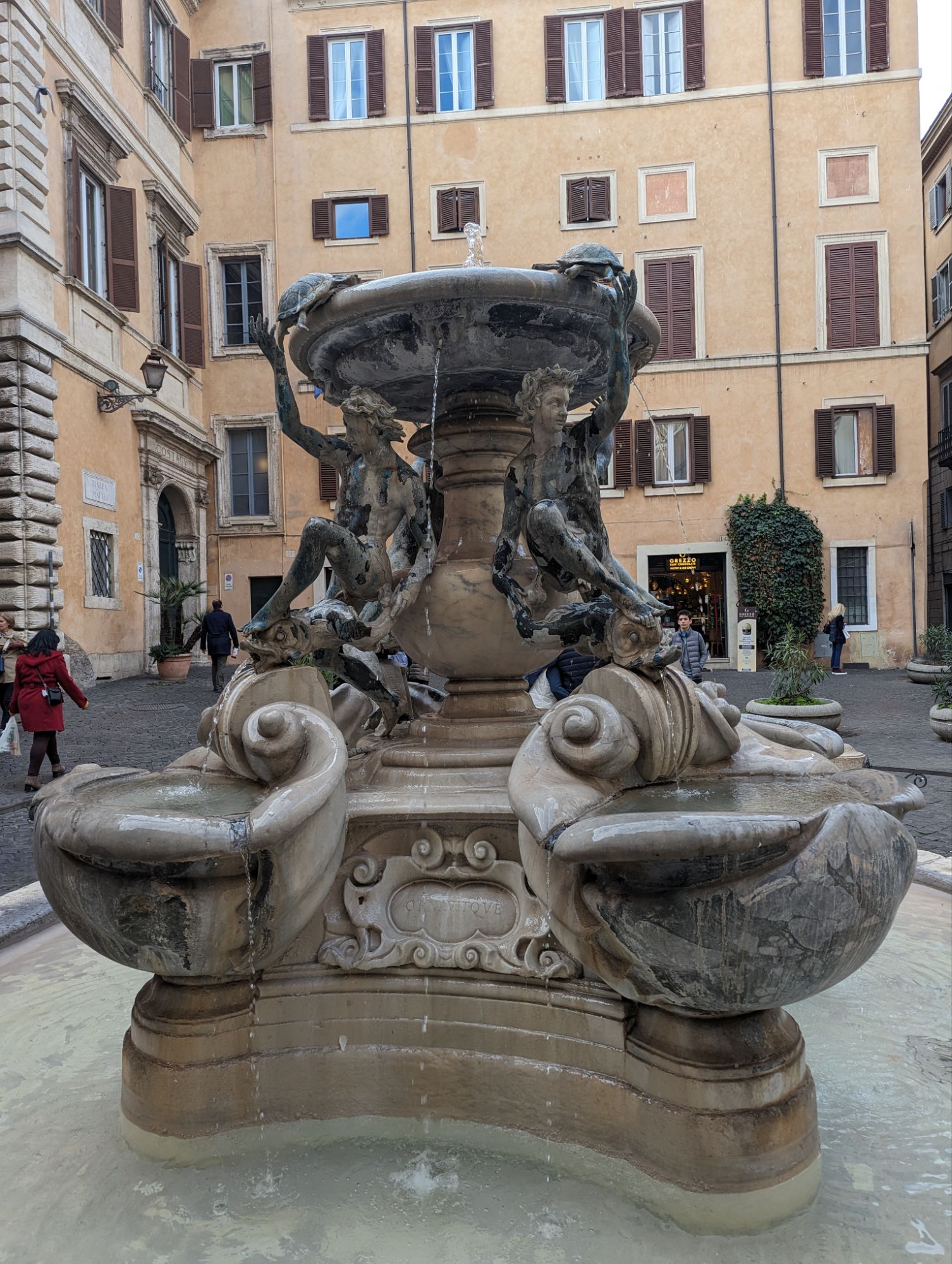
Rome boasts hundreds of fountains. Every square has church and fountain. The fountains are very much part of building civilisation – fresh water, effectively. The example (right) is found close to the entrance to the (former) Jewish Ghetto. It is called Fontana delle Tartarughe – fountain of turtles, I think. If you look carefully, they scale the upper rim! It is renaissance bronze.
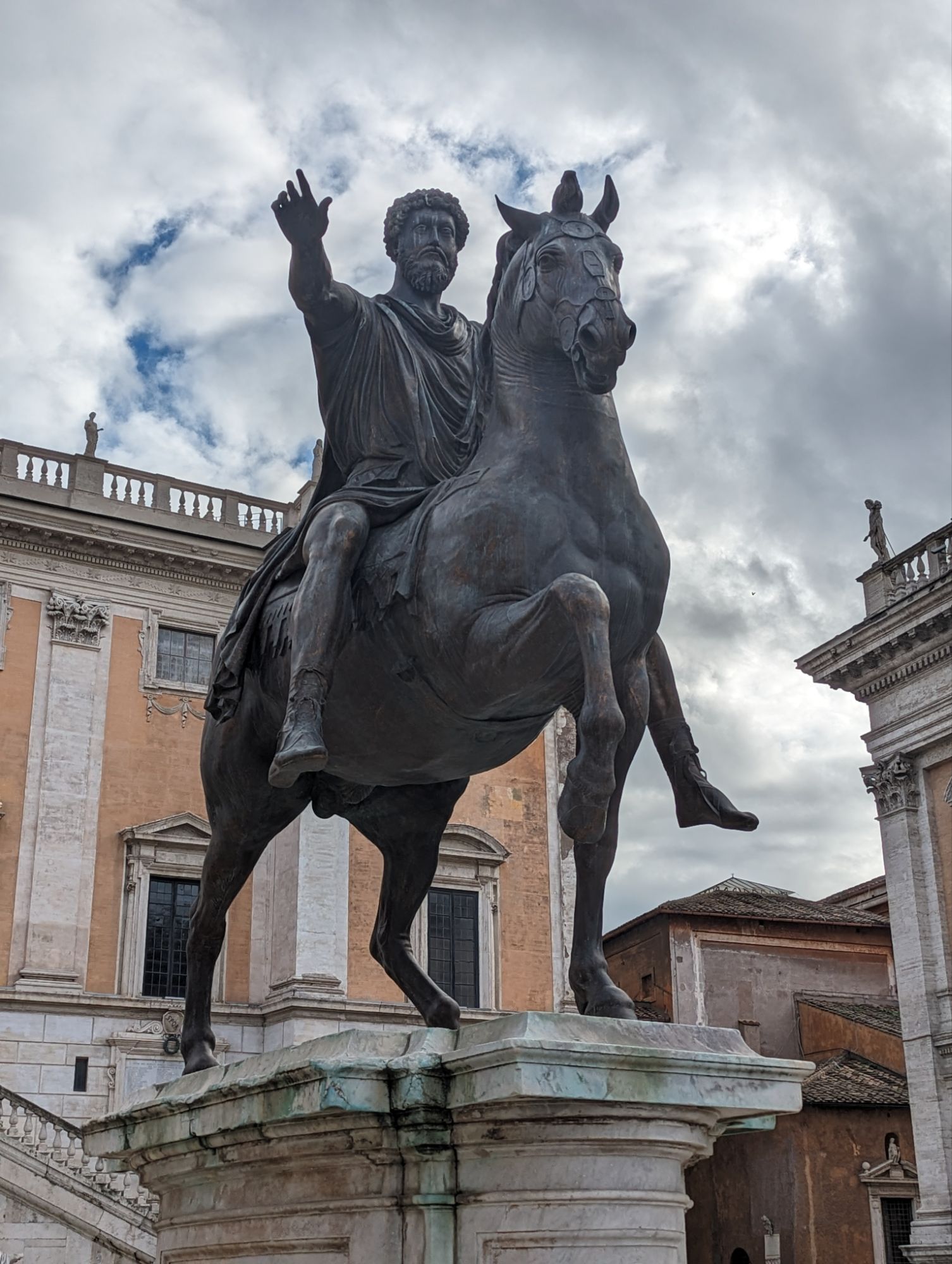
Talking of bronze, the equestrian statue of Marcus Aurelius Michelangelo at the centre of the Capitaloni Square and in front of the Palazzo Senatorio (seat of government) is as bold as they come. It was sculpted in 175AD. It apes the imagery of bestriding – and all conquering – leaders; though his gestures are those of peace rather than vanquish. There are no weapons on display. It is apparently still there by accident (the original is in a nearby museum – this example was erected in 1981). Graham-Dixon suggests that the Pope seemingly thought it was of a more godly leader and hence it survived a great meltdown (of precious bronze).
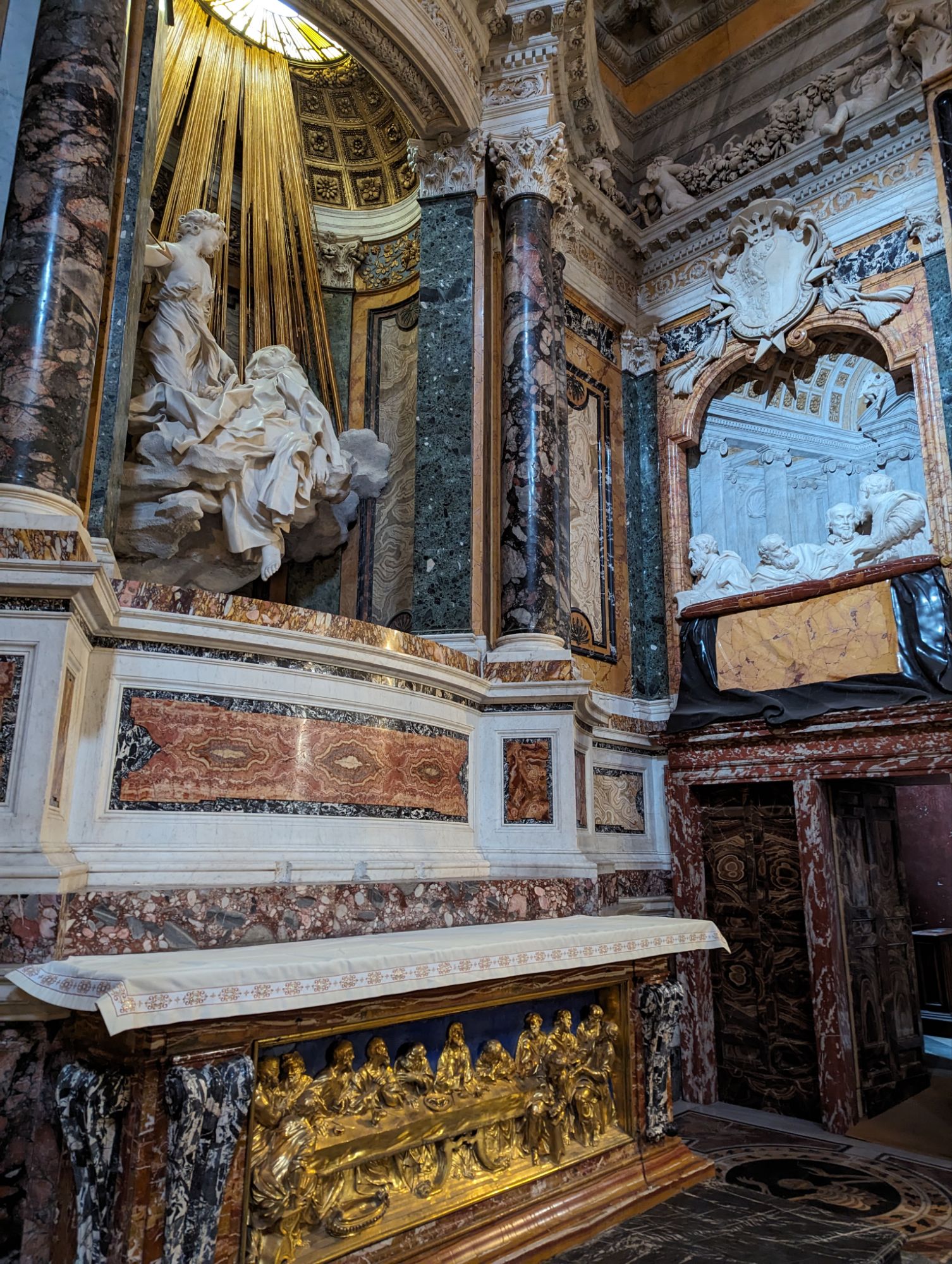
The history of Rome’s art and architecture is so often determined by rivalries. Caravaggio famously killed a rival and fled the city, but Bernini and Borromini were particular rivals – the latter committed suicide on his sense of worthlessness, the former had a confidence and arrogance to see him through and leave his mark through ubiquitous examples architectural and sculptorial talent. Though his ill-advised – and subsequently demolished – south Tower of St Peter’s Basilica nearly destroyed him until the commission for the sculpture in the Chiesa di Santa Maria della Vittoria. A nun experiencing ecstasy is not a good look. But, as Januszczak argues, how are we supposed to depict devout ecstasy? What if it is the same as a sexual ecstasy? The nun was no ordinary nun, she was St. Teresa and no stranger to controversy. Indeed Bernini’s sculpture is a marble representation of her own words! Just a word of note, she is impossibly young in the sculpture. And Bernini – like so many artists – is even more subversive than we might think. The drapery around her, explains Simon Sharma, is particularly revealing. Whilst we might think of it providing her with some cover at a time of extreme exposure and intimacy (with an angel and a spear), the opposite is true. It depicts the human sensation of ecstasy. If Schama is right, that is even more impressive. That’s the baroque for you.
Note also that the scene is being observed as if it were a theatre experience. I am presuming the four men in a theatre box paid for the sculpture (I think they were from the Cornaro family whose chapel the sculpture sits)? And below the whole scene is a depiction of the Last Supper. Almost incidental!
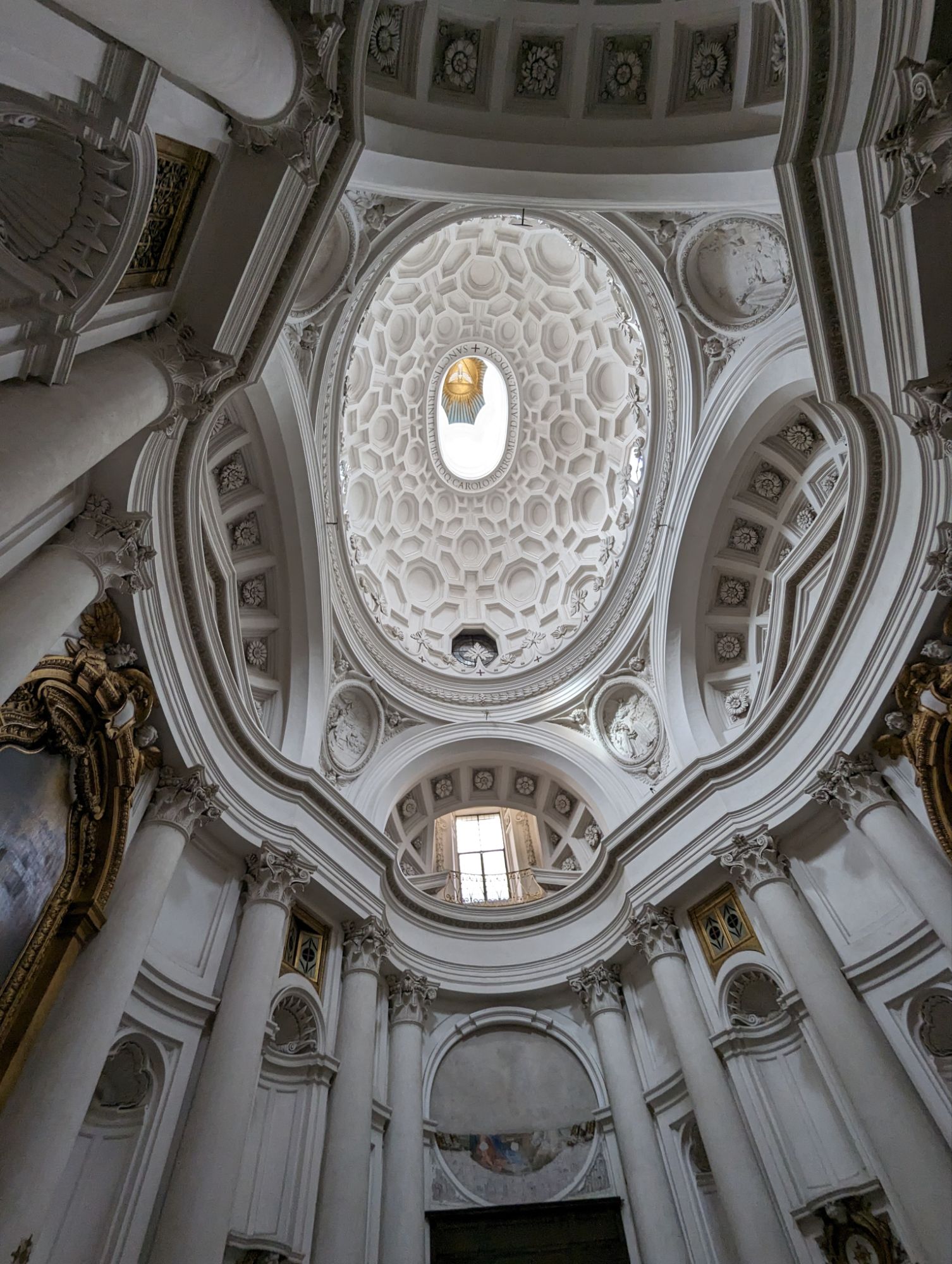
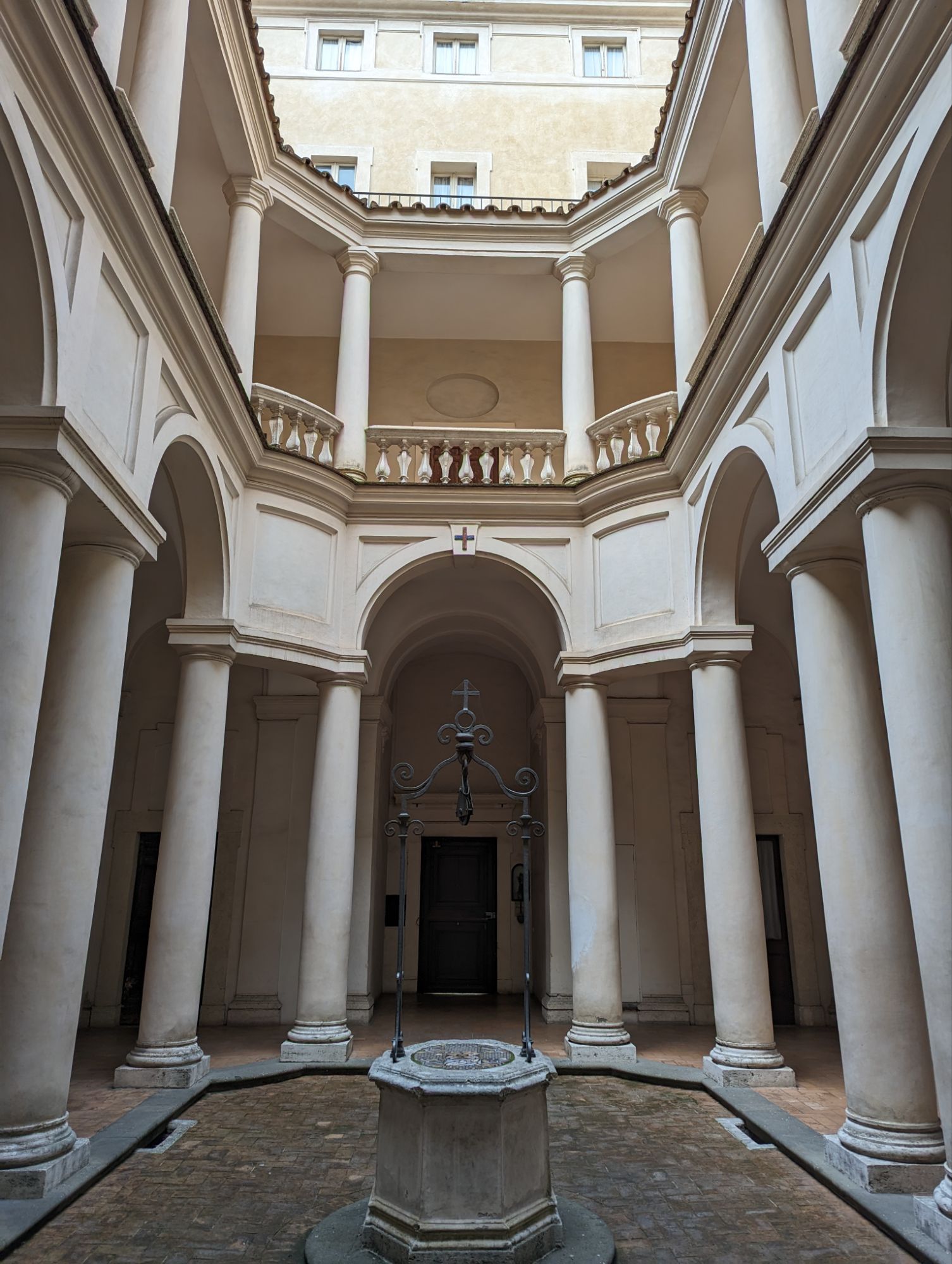
Bernini had rich sponsors, Borromeni did not. And so his seeming Masterpiece – Chiesea di San Carlino alle Quattro Fontane (1638-41) is modest by comparison, but architecturally clever in its use of space and geometry. The ceiling is oval but not, and the light penetrating from the dome adds to the effect. The commission was from an order of Trinitarian monks that did not have much money – or space for that matter. Real skill comes in being able to deliver innovative designs to make the most of what is available. To that end, Borromeni also created a small cloister for the monks. Also modest, also baroque. The balustrade on the gallery is inventive with the pillars arranged in a way that no renaissance architect could countenance.
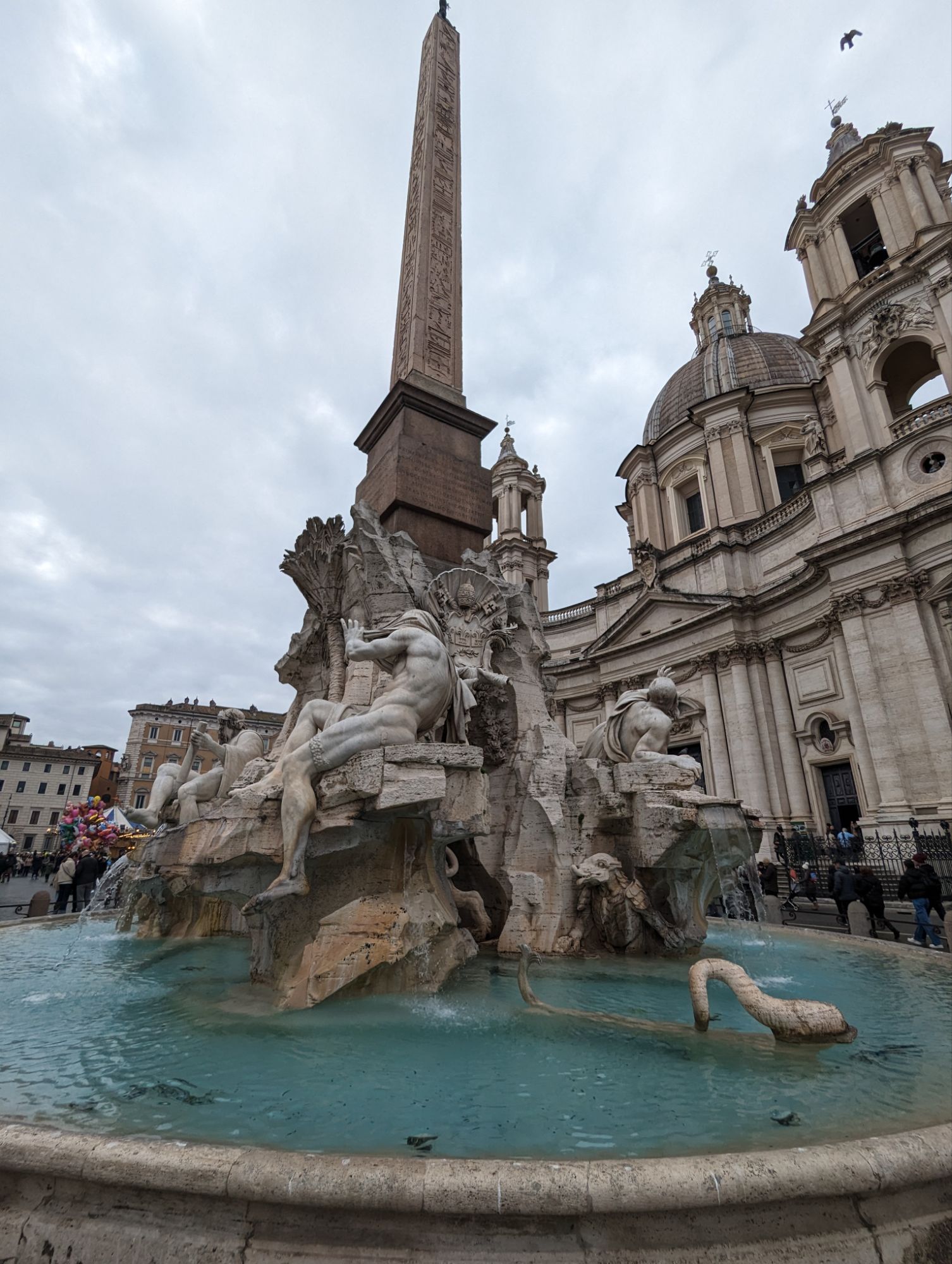
Bernini also did fountains. His masterpiece is Fontana dei Fiumi (1651, Piazza Navona) with its curious mix of representations of continental peoples and animals found – or thought to be found – along four rivers over which Papal authority had been extended – Nile, Danube, Ganges and Rio de la Plata. All of this sat on an obelisk. The crocodile-type creature (right) is seemingly to be found in the Ganges (though maybe the Nile would have been more appropriate).
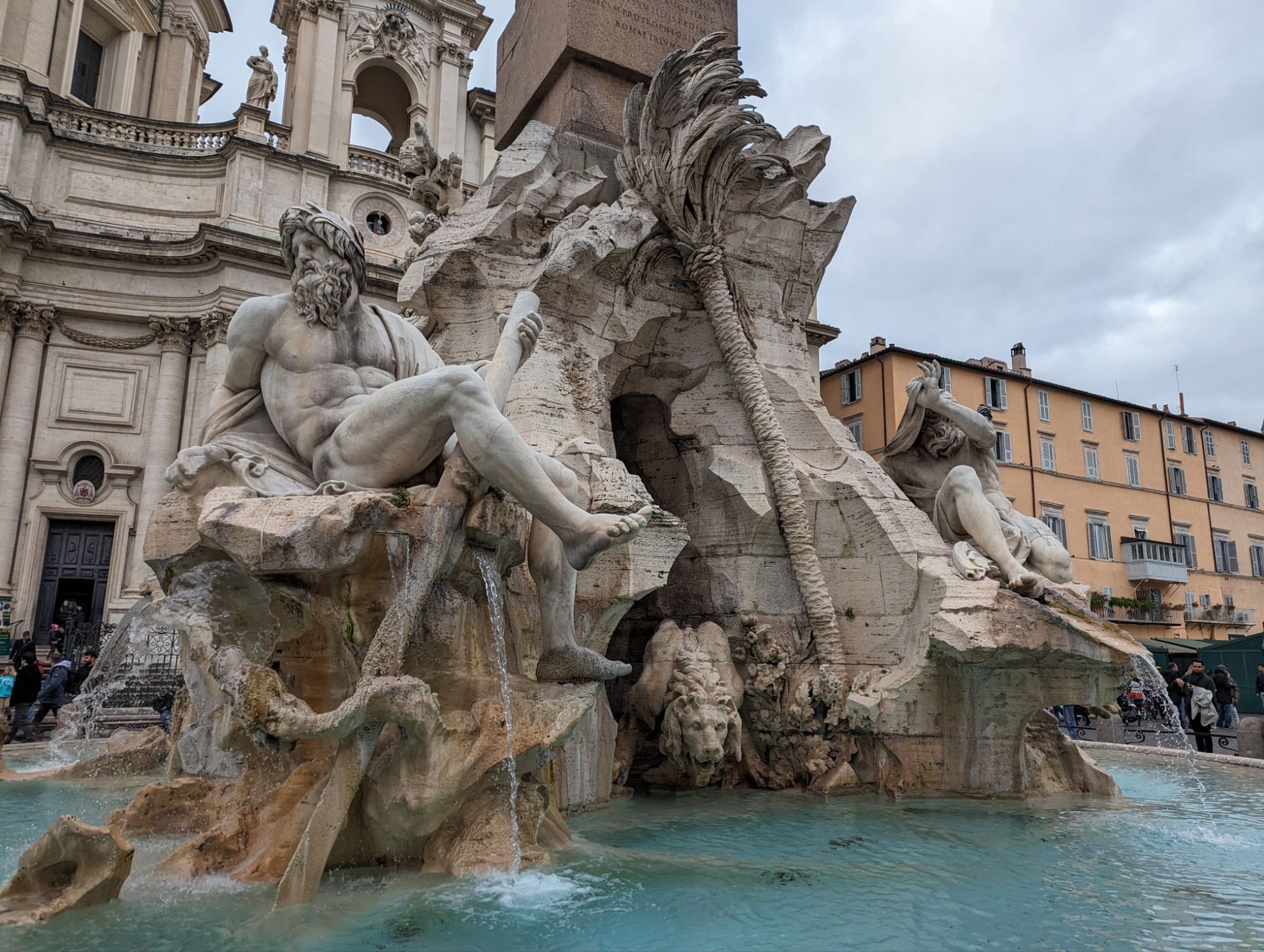
But there are clues as to Bernini’s thinking. The Nile is draped with cloth because no-one at the time knew where its source was; the Danube has the Pope’s coat of arms on it (he knows where the river flows); Rio de la Plata has money around it – riches to be plundered and the Nile has a long oar that someone will have to use to navigate it and spread the word.
Just another note, if anyone is visiting and needs to understand how the city was planned, here is a good source:
 Be informed