Archive for the ‘David Attenborough’ Tag
Ocean – David Attenborough
Filed under: Business, Environment | Tags: biodiversity, climate change, conservation, David Attenborough, environment, nature, Oceans, Oceans movie
 Leave a comment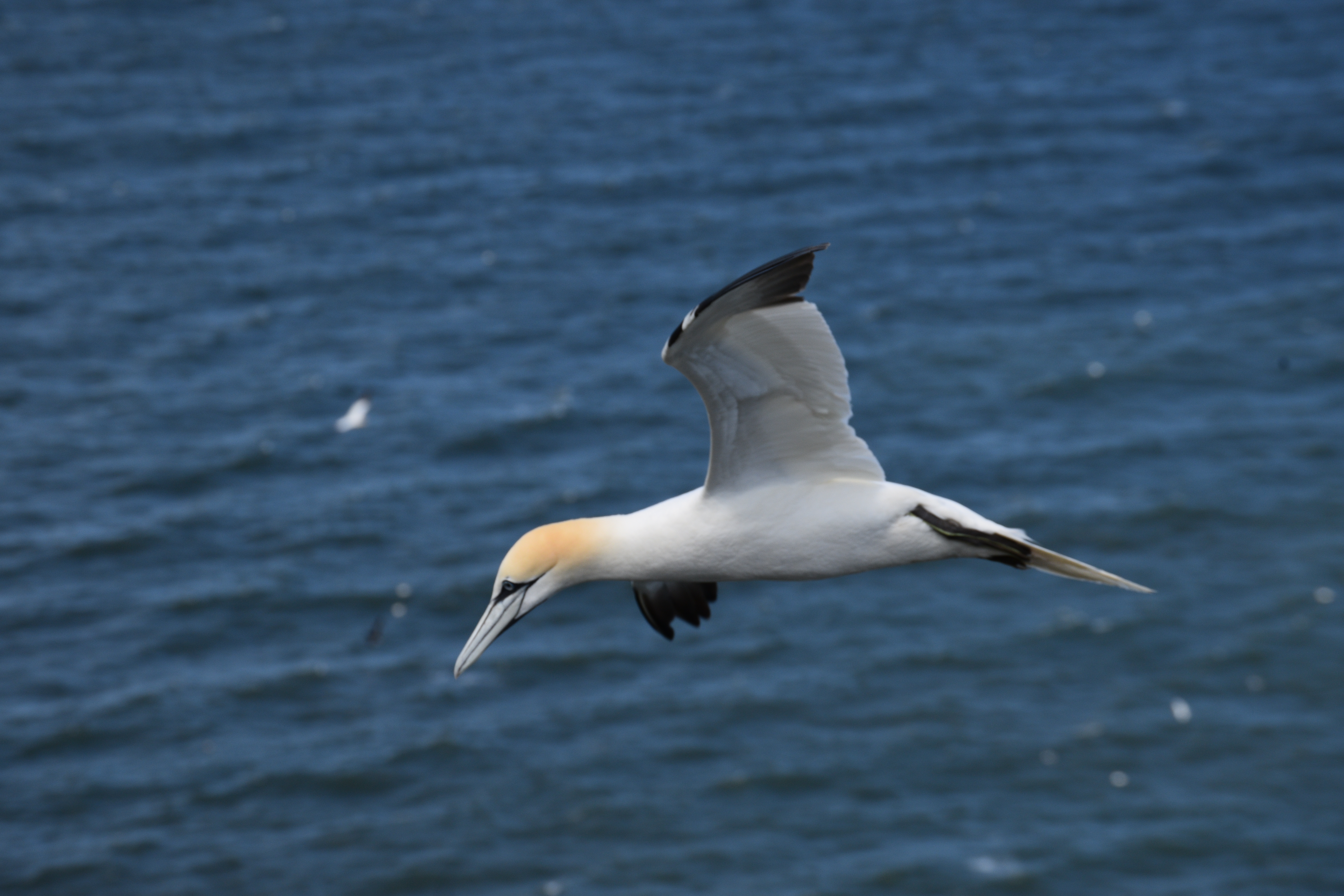
Thee weeks ago, along with my beloved and my sister I visited Bempton Cliffs in East Yorkshire. It is a colony of seabirds clinging to steep chalk cliffs. I took the photograph (left) of gannets, one of my favourite birds for their sheer seabird-iness! Many of the other people there were trying to see, quite rightly, some early-arrived puffins who normally breed at the top of the cliff in burrows.
In recent years, the colony has been deeply affected by bird flu. I was concerned that so devastated they may have been that the colony would not recover; but alas, they were there and as amazing as ever. Gliding, diving, hollering.
About the same time, we were trying to find a cinema that was showing Ocean featuring David Attenborough. You can count on one hand the number of people in the UK that have known a world without David Attenborough. It is also true that there is no-one alive who has not been witness – whether consciously or not – to the wholesale destruction of the world’s oceans. It is not about over-fishing. It is about the wanton destruction of marine eco-systems. Largely invisible marine eco-systems.
David Attenborough has come a long way. He started with a show that traced the capture of animals for incarceration in zoos, Zoo Quest, between 1954 and 1963. Of course he later fronted some of the most memorable natural history documentaries of the 20th Century. He worked with teams that constantly innovated film technique, sometimes encountering real risk in order to do so. However, in most of those films he did not – or was not allowed to – juxtapose the wonder with the destruction that was happening in parallel. In some cases they filmed simply metres away from organised and illegal logging in rain forests, and the destruction of many other habitats through pollution and resource exploitation.
This one-sided storytelling became increasingly intolerable for Attenborough. Habitat and species loss seeped into the films; but they were never central. It has taken a collaboration with National Geographic for him to tell the story that was not told in Blue Planet. And it is devastating.
My family has its origins in the fishing industry in my home town of Hull. They were trawlers – dragging a net along the ocean floor to pick up cod and haddock, fish that fed on the ocean floor. But that trawling literally destroyed everything in its wake. And 3/4 of the “catch” was discarded. Over and over again, these trawl nets destroyed eco-systems and emptied the seas. I – along with everyone else, probably – have never actually seen a trawl in action. Now you can in graphic detail. You can see the devastation. And you can understand why the oceans are dead or dying. Oh, and the process of trawling releases huge volumes of carbon dioxide locked into the seabed.
There is not an ocean anywhere not now being exploited by factory ships. In Antarctica, the ships have come for krill, a small crustacean that feeds penguins and whales amongst other to be processed into fish food (for all of that harmful salmon fish farming) and, wait for it, pet food. These are international waters being exploited by a select few corporations.

The film is in three parts. We start with the wonder of the oceans – in particular the bits we know the best (though seemingly only recently have we bothered to look), kelp forests and coral reefs in particular. Then the grim bit – probably 30 minutes of hell on Earth. And finally, the hope. There is hope. Kelp forests regenerate super quickly if left; so too, the fish species, even those thought to be lost. Coral can recover as some fish species remove the algae that effectively suffocate the coral and prevent regrowth. It is particularly salient at the minute because the film was released to coincide with the UN Ocean Conference (Nice, 9-13 June 2025). At that conference, the future of the oceans were being decided. You can read the communique here. on 15 June 2025, the Guardian newspaper published a summary. We need to protect 1/3 of the oceans the regenerate the rest. That is an amazing thought – just one-third can result in the rest of the Earth’s oceans recovering to once again provide a living for shore fisher communities globally. These communities have been subject to an ocean colonialism (Attenborough’s words).
Or we can turn the oceans into chronic deserts.
 Be informed