Archive for the ‘Cycling’ Category
Tandem, Summer 2013
 Leave a comment
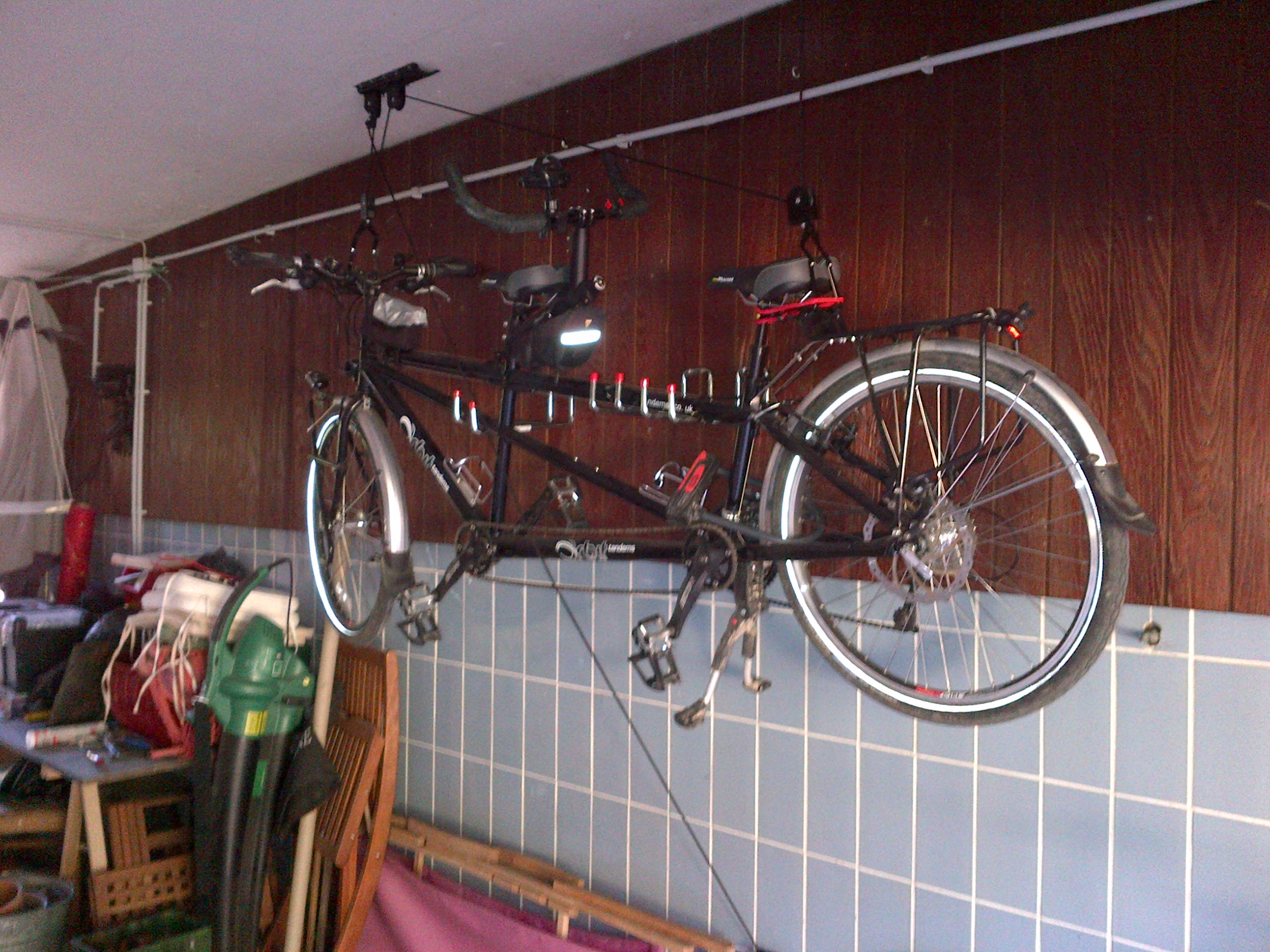 It is nearly tandem-riding time. Having just got it suspended from the ceiling in the garage, it will soon be lowered to take us from Dresden to Rotterdam via Hamburg.
Details to follow. So far the ferry to England from Rotterdam is booked. Dresden to Hamburg will be along the Elbe, paths permitting after the recent flooding which is still affecting this region. Then we take a train from Hamburg to Leer, just on the German side of the border with the Netherlands. From Leer we follow the coastline to Rotterdam.
This year we have a navigation system. I have bought a Garmin 800 and have downloaded the necessary maps from an extraordinary website: http://garmin.openstreetmap.nl
Instructions can be found here: http://www.dcrainmaker.com/2013/05/download-garmin-705800810.html
Back on the Tandem
 Long winter. The weather is starting to improve in Munich where the tandem is currently located. The plan is to cycle it back to the UK in the summer, possibly via Dresden. We will see how those plans proceed.
In the meantime, there are options for cycling here in Bavaria and yesterday we took the opportunity to cycle to Starnberger See and then two-thirds of the way around the lake from Starnberg to Tutzing via Seeshaupt. Sections of the path divert from the lake, but the western stretch between Starnberg and Seeshaupt is remarkably un-developed. The road hugs the shoreline. And by late afternoon the route was very quiet.
Picture: through Seeshaupt with snowy Alps in the background
The Rhine Route by tandem – the experience (5)
 Worms is one of Germany’s most historic towns. It claims to be the country’s oldest city. But it is mostly associated with Martin Luther’s hereticism through the Edict of Worms. BBC Radio 4 had Worms as the topic of In Our Time in 2006. The podcast is still available http://www.bbc.co.uk/programmes/p0038x8z
The Cathedral dates from the 12th Century. It has four round towers (see left) and is dark inside due to the red sandstone. It has to compete, however, with both Koeln and nearby Speyer (right) over grandeur.
The ride by this time was becoming a little harder. We had had no rest days; though Worms provided us with our first hotel of the tour – and a bed. We decided that we would have a day off and visit Strasbourg. A campsite 20 km north of the city was our target. Gambsheim in France had a large municipal campsite with a railway station convenient for getting into Strasbourg. So we thought. In total the day was 100 km. The ride is not the prettiest at this point as the river is significantly banked and the cycle track is behind the bank. Hence there is no view.
We stopped at a small restaurant nestling in a wood 100m or so from the cycle track. The owners had no german or english, but we did negotiate some food and beer suitable for supplying the energy for the final 20 or so kilometers to Gambsheim. A bit spooky, and goodness knows what the business model is, but welcome nonetheless.
Arriving at Gambsheim in the twilight was not the best. The campsite reception was well and truly closed and all facilities locked, but there was an event going on involving some French-German goodwill with games and music. And beer. Albeit 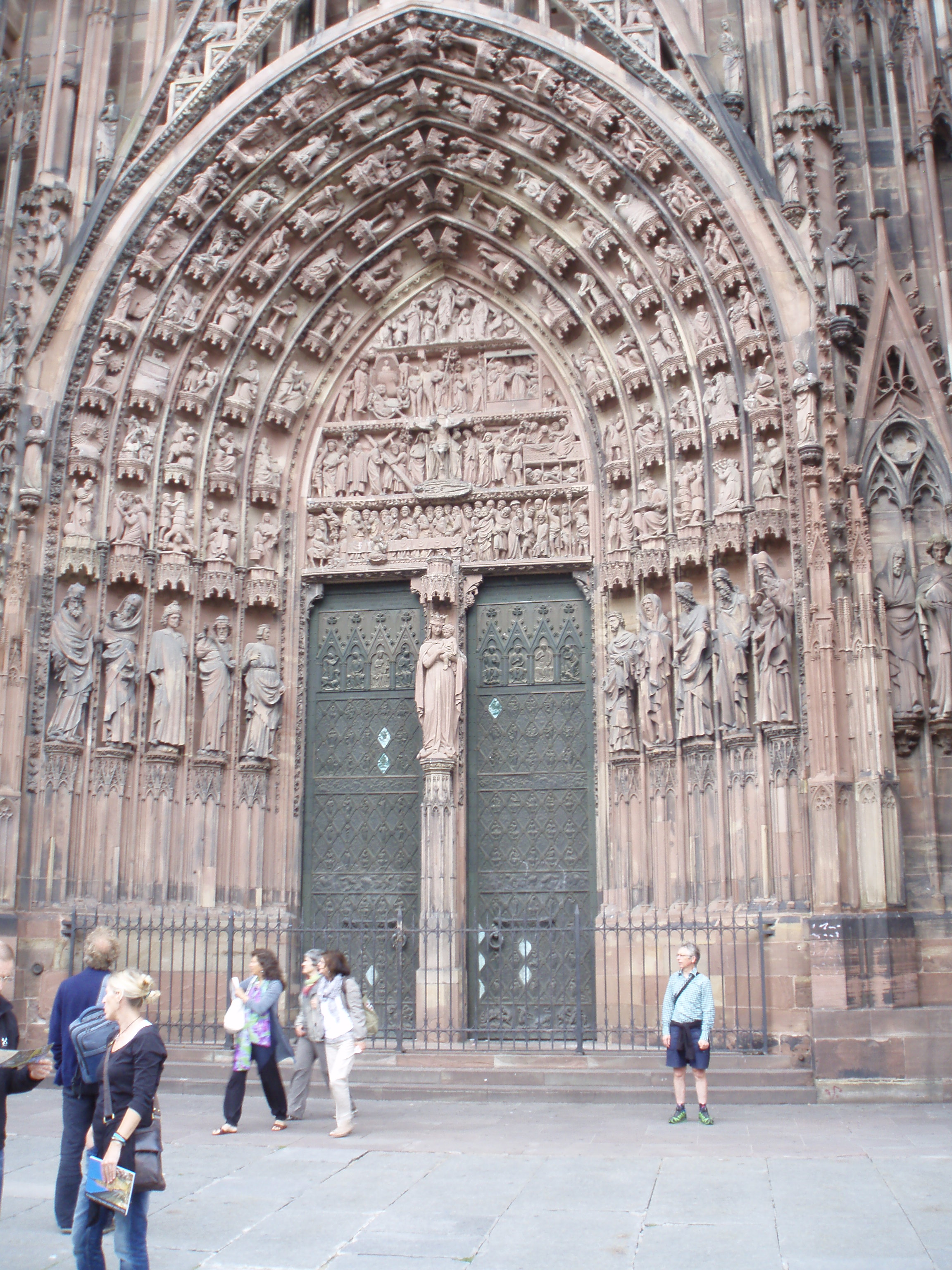 sweet. The night presented a most spectacular lightening storm that was to introduce much wetter and cooler weather for the final push to Basel. The tent held out.
Trains to Strasbourg were roughly hourly, but sometimes buses. The French – even when they are located so close to the border – do not concede to other languages, particularly English. The ticket machine needed some knowledge of French in order to negotiate its system; and one needs to be able to anticipate the bus rather than the train. Suffice to say, we missed the bus necessistating another 70-minute wait.
Strasbourg’s cathedral is most impressive – the door (above, left) is representative. Inside there are many treasures and some anomolies. For example, an atomic clock that would be more suited to a museum. The hourly performance does keep people hanging around in anticipation. 
Strasbourg is more than its cathedral, however. It is a fine city in which just to wander and explore. The architecture is stunning. The small streets are a treat. We treated ourselves to one museum – the Tomi Ungerer museum. Ungerer is a famous – infamous even – illustrator of children’s books and advertising materials as well as a satirist.
The Rhine Route by tandem – the experience (4)
 Remagen in the direction of Koblenz travelling south is one of those notorious places – the bridge across the Rhine was destroyed in the war and never replaced. The pillars remain with the flags of theUSA, Germany and the European Union. It is a chilling place.
It is also an excellent part of the route – the surface is concrete and flat. It is shared with pedestrians and can be a shade busy at the weekend. But good progress can be made. And so it was that we made it to Koblenz for an overnight stay. The junction of the Mosel and the Rhine is busy with shipping and a shade restricting (no accessible bridges). The statue at the Deutsches Eck is that of Emperor Wilhelm I dating from 1897. It is  imposing and celebrates the (re)unification of Germany after three wars. The picture (right, sourced from the US Library of Congress through Wikipedia) dates back to 1900. Though it was destroyed in 1945, it has always represented a desire and a will for unification. After the fall of the Berlin Wall the names of the Laender making up the federal republic were again inscribed.
 Onward south we headed to Loreley (Sankt Goar), a picturesque section of the river. And uniquely dangerous for shipping due to its limited width and currents. There is an inscrutable traffic light system allowing only one way movement. According to myth, Loreley used to sing hauntingly from the rock bewitching sailors to their deaths.
The weather had changed since Koeln, the day before. No longer did we have to contend with heat and sun. Summer rain forces the compromise between waterproofs (getting too hot and by definition wet from the inside) and just getting wet and letting the cycling clothes do their ‘wicking’ duties. It is as it is – imperfect. It is partly why we do the outdoors.
We took another ferry across the river from Bingen to Rhuedesheim am Rhein largely to be on the correct side of the river for the campsite in Wiesbaden. But these are two places that seem to face off to one another. From a tourist’s perspective, they both do the same thing – provide food, drink, hotels and promenades. There is a lot of facing off on this river. Castles do the same along this stretch. Where there is one castle, you can be sure that there is another. Each with their dynastic and family histories.
The river is very tempting for a swim. There are many secluded spots with beaches – particularly in the section Mainz to Worms. Care is needed, however. This river claims many lives each year. The currents are serious. There is one further hazard. Whilst one may feel in a secluded spot viewed from the bank, that may not be the case from the river. Barges are one thing, but very large cruisers are quite another especially when one has travelled without a swimming costume.
The Rhine Route by tandem – the experience (3)
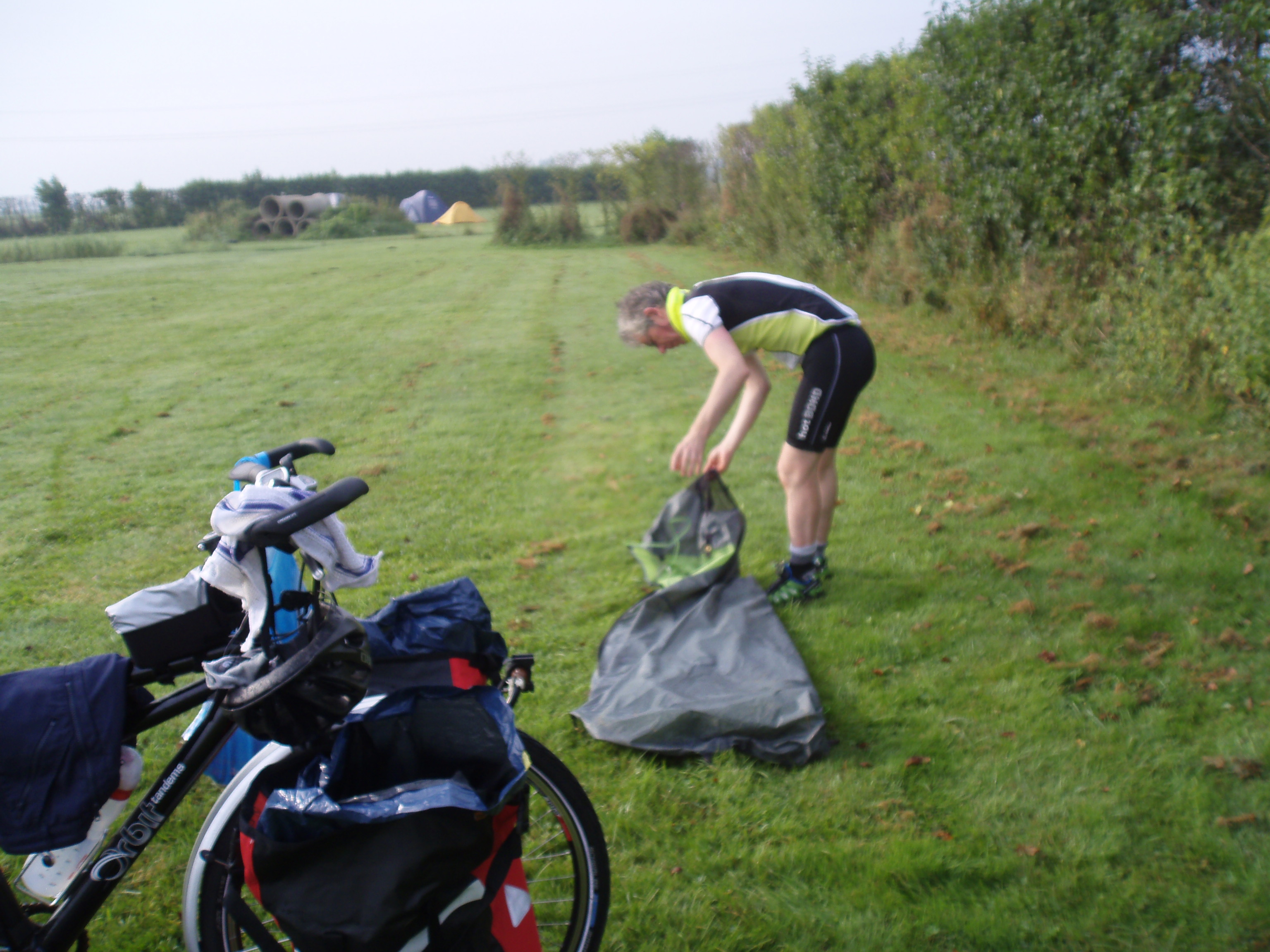 Through Utrecht, the landscape becomes a shade lonely. We stopped at Bunnik, a small town to the east of Utrecht; the campsite (left) was a good metaphor for the area. Getting to the campsite involved scaling a daunting bridge over the railway with the loaded tandem (see below right). Although there is a ridge for the bicycle’s wheels, the weight and length of the tandem made it a challenge.
A very pleasant 20 kilometers further one encounters Rhenen where the river becomes more familiar – it is navigable and the barges ply their trade. We bought some food at a nearby deli and took it to the river to eat – it was also an opportunity to dry the tent (which can be seen in the foreground of the picture, left).  The Rhine path, however, remains sporadic, with frequent detours that, in some cases, take cyclists some distance away from the banks.
The Rhine features are sometimes other-worldly, or at least other timely (see below right). The features that facilitate the management of the river, its flows and direction, are many and interesting subjects. The feature below right is to the west of Arnhem approached here on the south bank  which we selected in order to avoid the centre of Arnhem at peak time (a bit of learning from our experience in Utrecht – albeit with the consequence of not seeing the city itself). It is a lonely approach and is the precursor to a lot of loneliness punctuated by many seemingly lost villages.
The Rhine Route by tandem – the experience (2)
The Dutch cycle paths are exceptional. Always asphalt, always sign-posted and always busy. One has to beware of scooter and moped riders as they legally use them, too. On the coast, on a hot day, there is not a cycle parking space to be found; a day by the seaside seems to be by bicycle (or tram, where possible). The LF4a long-distance cycle route, however, is fantastic. It takes in some of the country’s national parks. In our case, we experienced the limited Utrechste Heuvelrug park. It is quite forested and quiet. As a route back to the Rhine at Rhenen, sublime.
Our Utrecht navigation rendered us a little cautious when it came to Arnhem. We stayed on the south bank of the river effectively avoiding the city’s early evening rush. We headed for Panerden to the Southeast of Arnhem close to the German border. Panerden is a typical small town with a few shops and a couple of multi-purpose bars. In the evening the cafes serve as drinking houses. In the morning the coffee and apple pie are a good energy source. Do not be put off by the apparent black hole that is the bar. It is the way it has to be for the proprieters to make a living. The nearby campsite is exceptional (see post 4 September, 2012).
Magnus Manske: wikipedia
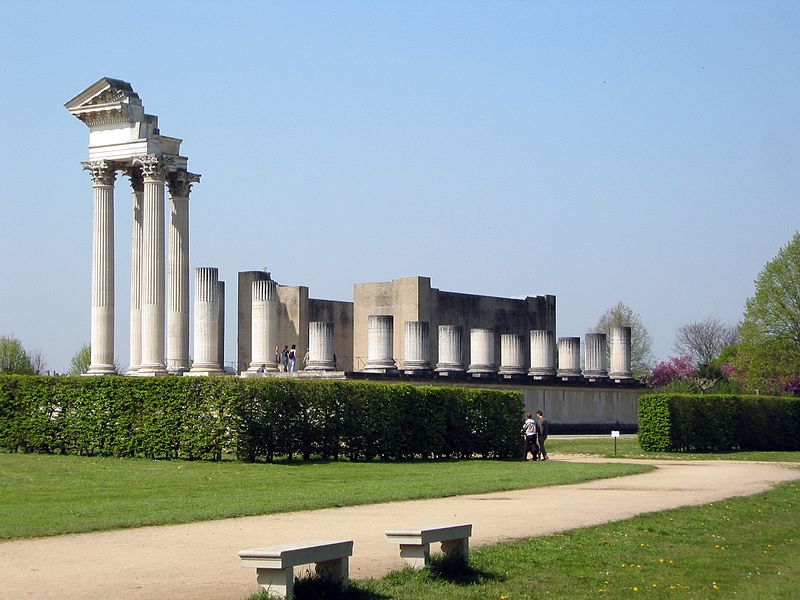
And then to the border. First stop Emmerich – a typical border town, though very german. We were advised to go to Kalkar for lunch, some 15 or so kms away. We ate at the distictive windmill, before heading off to Xanten, a historic city with a curious archaelogy park filled with Roman artefacts: from the road an incongruous area filled with ‘crumbling’ pillars and arches.
The Rhine Route by tandem – the experience (1)
On from The Hague, we followed LF4a – a long distance cycle track to Enschede. We took it as t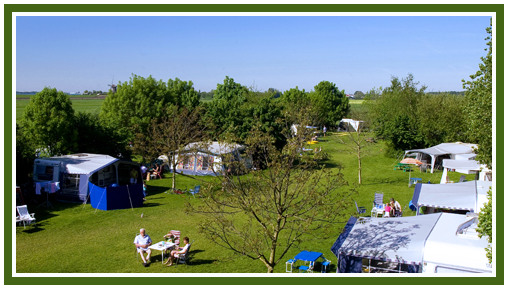 he route includes Arnhem, which seemed like a good place to join the Rhine after not being able to follow it from the official ‘starting point’ at Katwijk. However, the LF4a is not endowed with campsites (actually, there are not too many in the whole of the Netherlands), so we had to make some deviations. That is how we fortunately ended up at the campsite at Leimuiden. I say fortunately because it was a delightful space, but it was also where we discovered just how friendly the Dutch are relative to what I had read (more on that later). Within minutes of arrival we had been offered 4 cans of Hoegaarden beer by a woman who was captivated by the tandem but could not stay.

Me, tandem and tent at Straathof
At breakfast time, another woman offered us coffee whilst she waited for her children to rise. Extraordinary generosity that was replicated many times as we progressed.
Rhine Route by tandem – tales from the journey
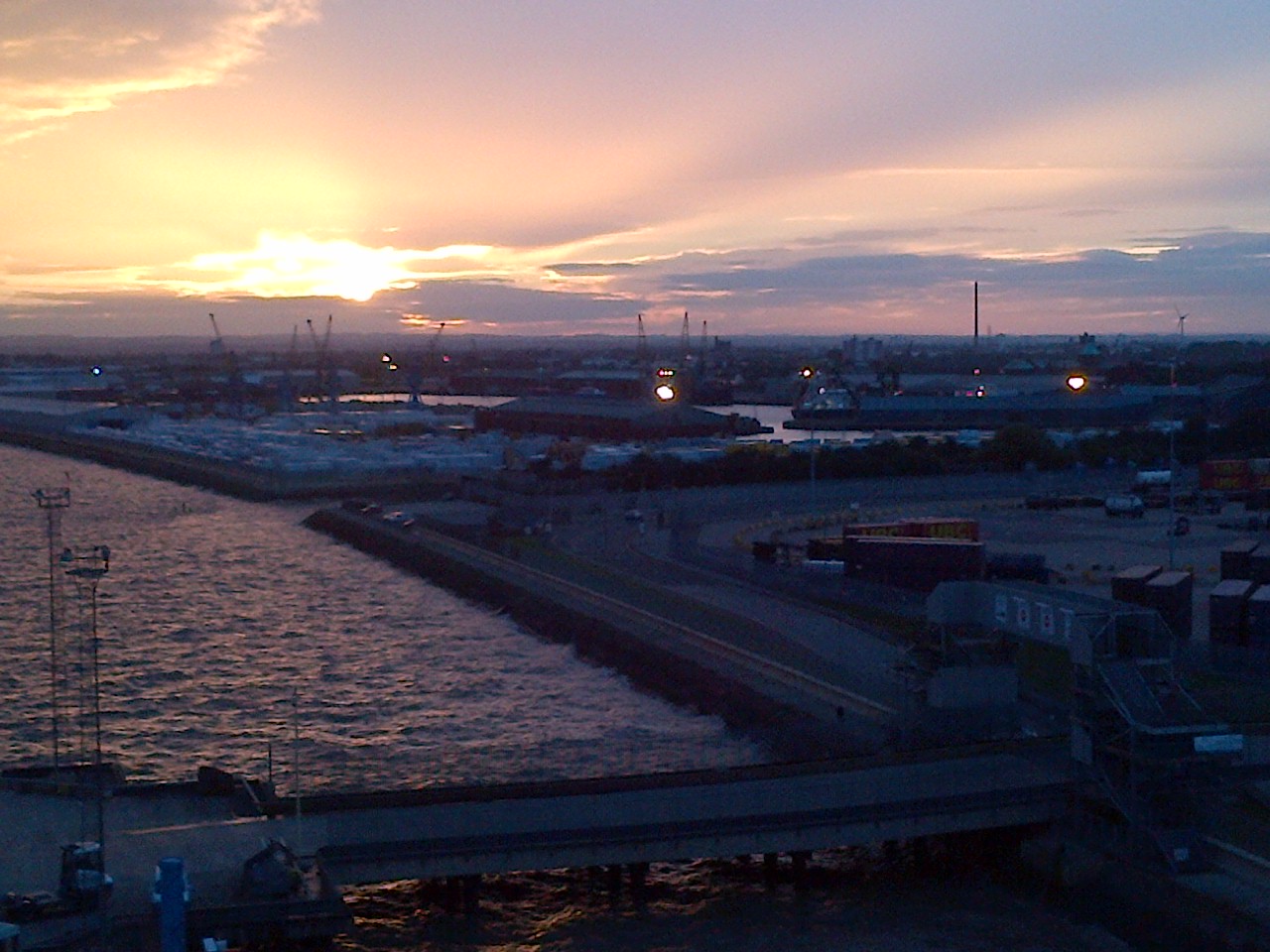
Hull from the deck of the Pride of Rotterdam
I lived for 23 consecutive years in Hull – born and bred. But never did I take the ferry to Rotterdam or Zebrugge. Many times I watched them leave. So, on on Friday 17 August 2012 we boarded the ferry to Rotterdam to make good that failure. This is the view of the City from the Ferry (left). And here we are on the deck at departure time (right).
What is to be said about this experience? It is a tad expensive, particularly at peak time. The cabins are excellent – showers and toilet en suite. We did not have window, but come the morning a global announcement is made that breakfast is served and you will soon be required to leave. So get it while you can. Very civilised.
Disembarkation is straightforward and the cycle route towards Rotterdam discrete and well signposted. We were, however, going to join the old Rhine as per Powell route, which necessitated us to head up the coast towards Katwijk. To get onto the coast one has to do about 15km towards Rotterdam and then double back on the right side of the river using the ferry between Rozenberg and Maassluis. Then on to Hoek Van Holland before following the coast up to Scheveningen, which is the coastal town adjacent to The Hague.
It was a very hot day and utterly chaotic. The beaches are excellently sandy, and as a result everyone seemed to be there on their bicycles. At Scheveningen, fortunately, we were intercepted by a woman who offered us room in her garden in The Hague to pitch the tent. In fact, the garden was a shared affair within the confines of a large school house that had become a cooperative. It was a fantastic space, with much of the interior preserved – with members living in classrooms. It was big an echoey. We were shown around The Hague that evening by a friend of our host, and then in the morning we were taken by another member to the start of Route LF4a, one of the Netherlands’ long distance cycle routes. We are grateful to the members of Grote Pyr for their hospitality and kindness. http://www.grotepyr.nl/grotepyr/Home2/Home2.html
The Rhine Route by tandem – notes on hotels and guesthouses
We stayed in 4 hotels or guesthouses. This was either because there were no suitable campsites (as in Germersheim where the campsites shown on the map were not public amenities) or in Basel where it was raining and we felt that we had earned a bed).
Here is a summary of the places we stayed:
| Hotel | Comment |
| Worms, DE | Here we stayed at Hotel Hüttl as advertised in the Bikeline guide. Excellent little hotel. Secure garage for the bicycle. Central. Excellent little breakfast. Decent sized room. Well recommended. |
| Gamersheim, DE |  Hotel Post. A step back in time but excellent. We were welcomed by a mature woman who was very helpful in terms of recommendations as to where to get some food. Excellent breakfast. Large room. Cycle parking in the secure courtyard. Hotel Post. A step back in time but excellent. We were welcomed by a mature woman who was very helpful in terms of recommendations as to where to get some food. Excellent breakfast. Large room. Cycle parking in the secure courtyard. |
| Rheinhausen, DE | We tried at Hotel Hirsch but it was full. They recommended a nearby Gästhaus run by a retired couple. Excellent value. Breakfast included. http://www.gaestehaus-faisst.de
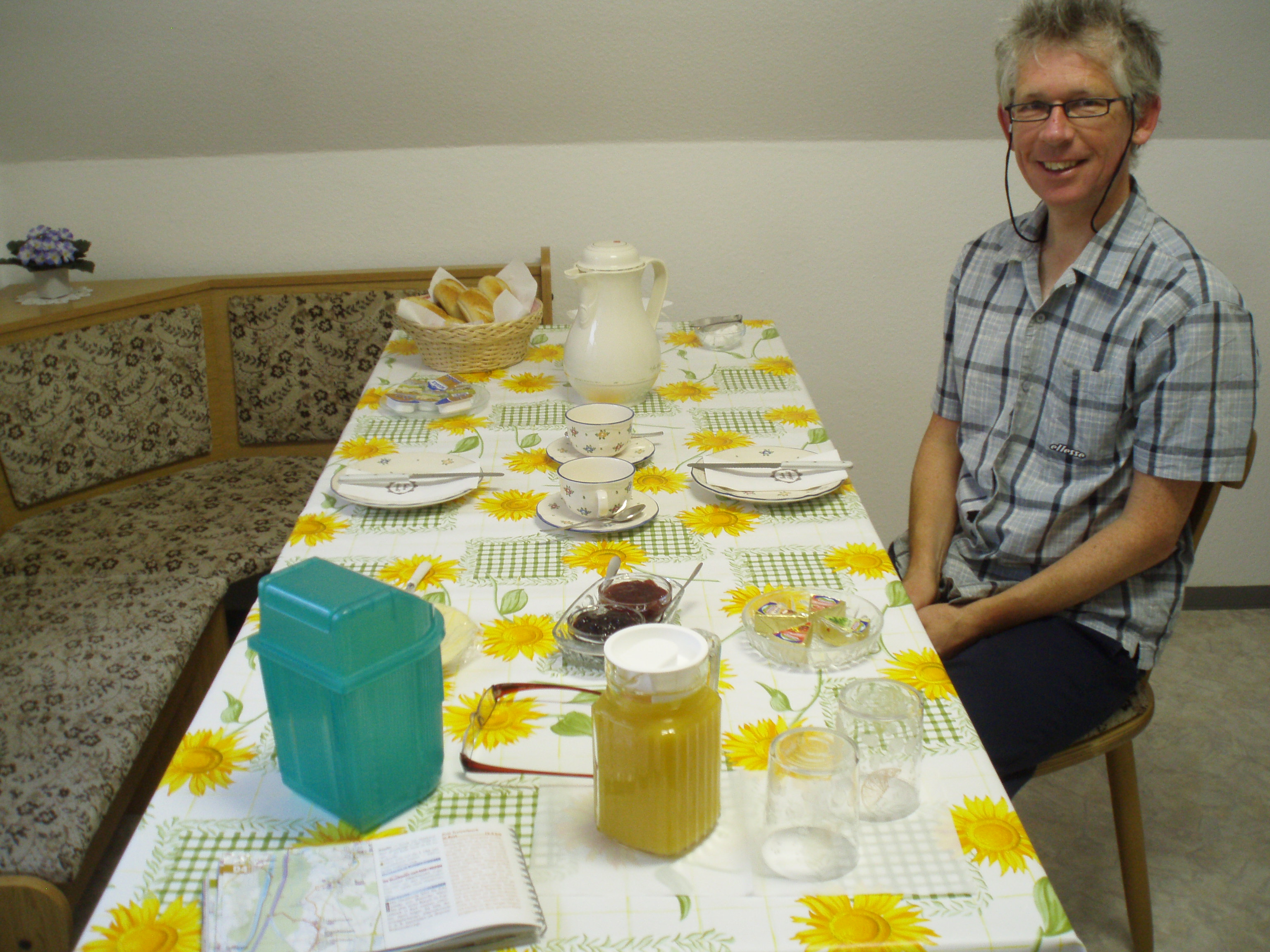 Breakfast in Rheinhausen |
| Basel, CH | Dasbreitehotel is a little expensive, but an interesting experience nonetheless. The rooms are very modern and comfortable. There is wifi in the foyer. Breakfast is exceptional. Underground garage for storing the bicycle. You get a free public transport ticket for the duration of your stay (normal for Basel). The tram outside the hotel runs into central Basel every ten minutes until very late. Well recommended as a final or intermediate stop.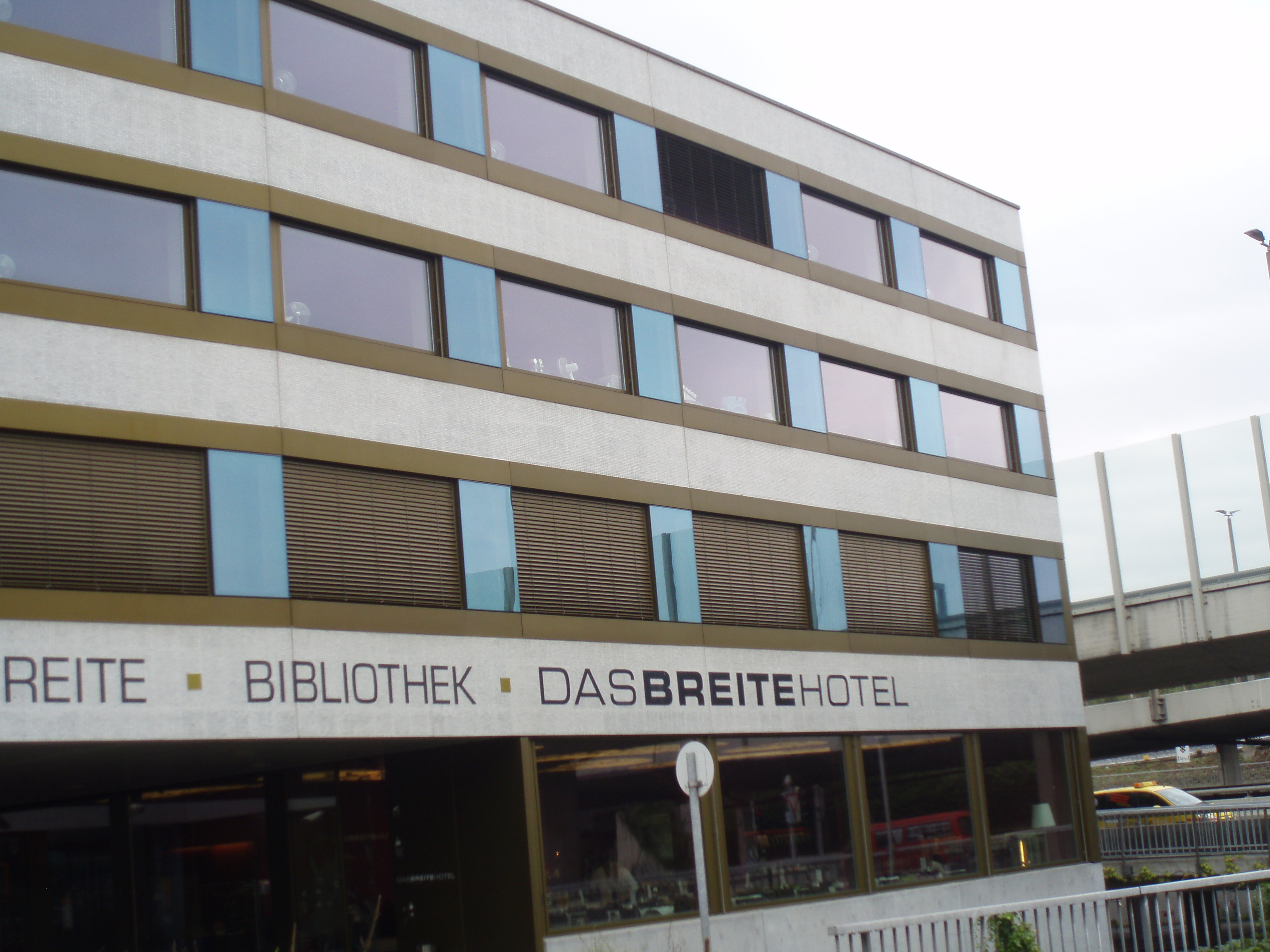 |
The Rhine Route by tandem – notes on camping

Campsite, Mainz
Of our 15 nights out, we spent 11 under canvas. We took with us a Coleman Rigel X2. Weighing in at 980g, it was potentially ideal. However, there are two significant compromises that come with the low weight. First, It has only a single lining, which means that it is prone to condensation, especially if there are two people in it – for which it is realistically not suitable; it is just too small (the second compromise). So despite it being watertight (we survived a lively thunderstorm on one night), by the morning the inside of the tent was very wet indeed.
As for campsites, here is a summary of the places we stayed:
| Campsite | Comment |
| Leimuiden, NL | The campsite is 2km south of Leimuiden. It is a working dairy farm. Delightful, though basic. Everyone was very friendly, including the owner who waved at us from his tractor whilst we were drinking some generously donated beer before taking a modest 10 Euros from us. The cheapest campsite we visited. It is close to Schipol Airport, however, so there is a bit of noise. Other than that, a must if you are in the area. |
| Bunnik, NL | East of Utrecht. Very large site with a mix of semi-permanent and travelling pitches. Very big field for campers. Facilities are good. We walked into Bunnik for some food and found a pub. A bit impersonal, but functional. |
|
Aerdt, Pannerden, NL |
3 km east of Pannerden, near Arnhem. Small campsite for cyclists run by the Jakobs. Excellent value and really welcoming. The reception is open until 2200. No washing machine, but it has a spinner. Thoroughly recommended. |
| Xanten, DE | There are three campsites to the west of Xanten on Urseler Straβe. The first is a field attached to a pub. The second “Wild Camping” is a combination of semi permanent caravans and shacks and camping. We arrived late to find the reception closed. We pitched, but were unable to shower because the showers required tokens. That said, we missed the after-hours intercom. There is also a Gaststätte there which is not recommended. It is a shade unfriendly. They turned the lights off on us twice whilst we drank a bier. |
| Düselldorf, DE | This is an eccentric campsite run by a no-nonsense man and his wife. It is a bit close to the airport, but very convenient for the city and on the Rhine path (as it skirts Lörick to the east). The wife of the partnership did us a service wash. A bit expensive, but everything was clean for the following morning. Recommended. |
| Köln, DE | We opted for under the bridge which carries the A4 motorway (3km south of the centre of the City). This was our most expensive site at 19 Euros, but it had everything that was needed. The showers were an extra 50 Cent. There is a washing machine and a dryer. Friendly proprietor. The motorway is a little noisy, but still well recommended. |
| Koblenz, DE | Campsite opposite the Deutsches Eck at the junction of the Rhine and Mosel. Well signposted. Excellent facilities with restaurant where breakfast is also served. Has a washing machine and dryer. Well recommended. |
| Mainz/Wiesbaden, DE | A sizeable site that is a little soulless. Though we arrived in the dark, which did not help. Facilities good, though. Including washing machine and dryer. A walk into Mainz took about 30 minutes. The paths are a shade on the dark side, so we did take a taxi back, which cost around 15 Euros. There is no easy road access to the site. |
| Gambsheim, F | This is a large municipal campsite. We arrived at 2030, too late for the reception. We pitched in any case, but the toilet and shower blocks require a key. We borrowed one from a very helpful fellow camper and checked in the following day (we intended to stay for two nights so that we could have a day off in nearby Strasbourg). Very cheap – 20 Euros for the two nights. No washing machine, but showers hot and functional. Plenty of room. Recommended – but arrive before the reception closes to avoid ablution dilemmas. |
 Be informed