Archive for the ‘Music’ Category
BBC Proms – the Sibelius symphonies and more
Filed under: Music | Tags: BBC Proms, Julian Rachlin, Sibelius
 Leave a comment
  The BBC Proms is an extraordinary annual classical music festival. For two-and-a-half months, each night some amazing orchestra (and sometimes more than one) takes to the stage in the Royal Albert Hall in London and plays some amazing music. For visitors, it is possible to see this spectacle for 5 Pounds (the standing space in the arena). If that does not appeal, it is possible to have a seat ranging from the Circle at what seems to be close to the moon (and hence cheap), or the stalls just around the arena (a shade more expensive). Relative to most ticket prices for Orchestra performances, it is the best deal in town over the summer.
We mix and match, sometimes in the circle, others in small boxes (otherwise known as the second tier). We often dress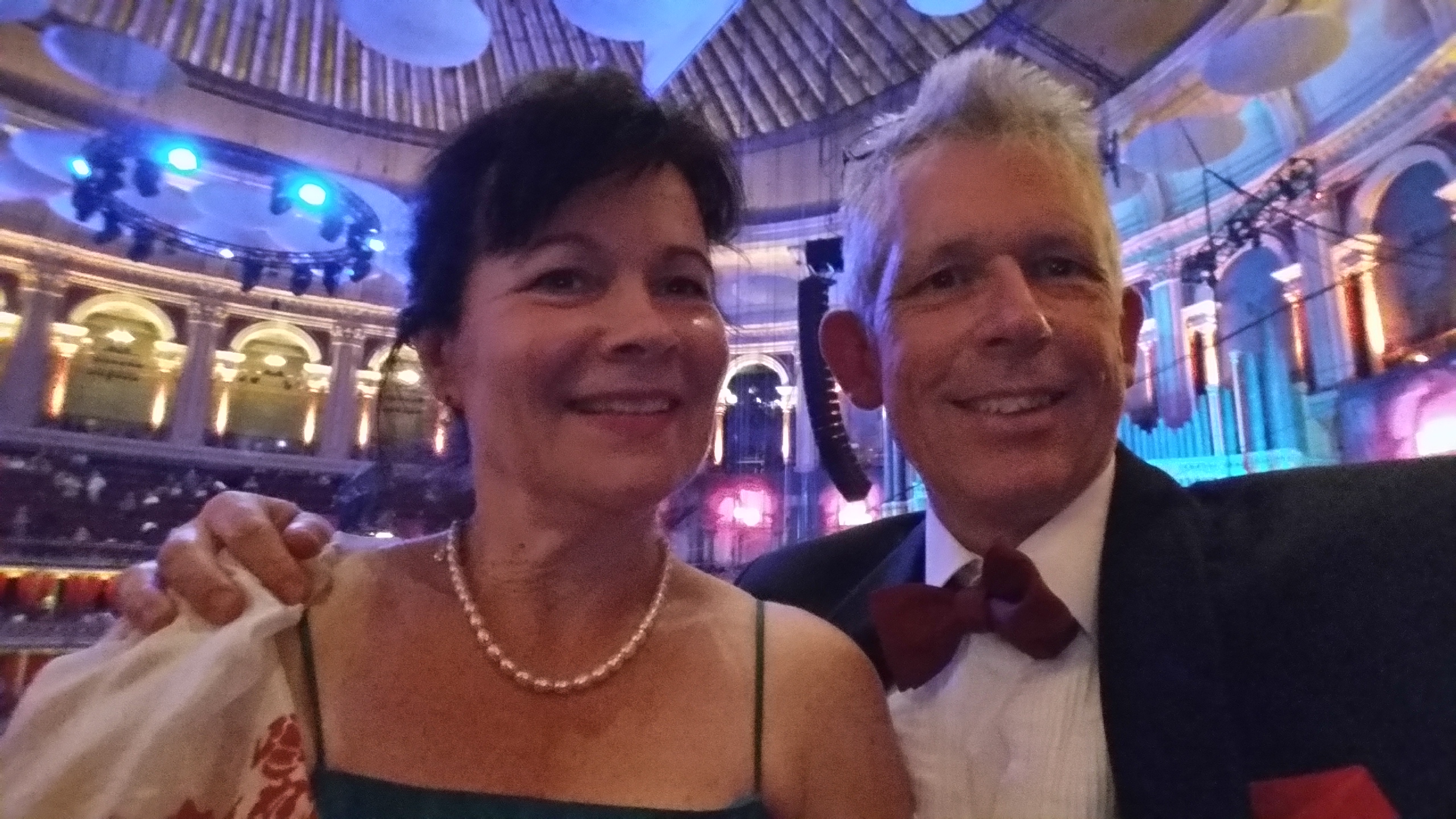 up for the occasion (right). This year we have been quite strategic in our choice. It is the 150th anniversary of the birth of Sibelius and to mark it all of his symphonies are being performed over three nights (that is 7 in all). Moreover, the BBC being what it is, does not just play the music, but it tries to give context and develop listeners’ understanding of music in general and specific pieces in particular. It is fair to say that we knew very little of Sibelius other than he being Finnish. We learn that at the time that Sibelius was writing at the turn of the 19th Century, Finland was a place with little history and national identity. Sibelius became a cheerleader for Finnish nationalism and independence (first from Sweden and then Russia – finally getting independence in 1963, six years after his death).
 One of his most famous pieces, Finlandia, dating from 1899, is an eight-minute call to national self-determination. It seems to me, it is a piece to Sibelius what Bohemian Rhapsody is to Queen in more modern times. It was a great way to start. But then come the symphonies – some against the backdrop of tumultuous change, others against his own alcoholism (his wife would go searching local bars to drag him home). His fourth symphony is a paen to landscape. The programme notes for this symphony make reference to conductor Herbert Blomstedt, who described it as ‘an essay in trying to be happy which fails.’ That works for me.
They are a mixed bag. Again, my ignorance takes over. Sibelius’ symphonies were not written for huge orchestras. Strings do much of the work (there is a lot of string plucking going on which doubles as percussion; there is not much of a percussion section). Woodwind and brass also feature. There are a lot of key changes. They are not the most accessible or indeed friendly. In his later years, he was a recluse, retreating to a country residence, Ainola, touchingly named after his wife, Aino. Though he did compose an eighth symphony, the score for which he destroyed.
We were treated, however, to Sibelius’ violin concerto. The soloist was Julian Rachlin (right). Seemingly, this is not an easy piece for violin. The expectations for finger and bow coordination are considerable. Rachlin, however, is a virtuoso – a child prodigy – and handled it with aplomb – and provided an encore (a little frowned upon at the Proms). The concerto demonstrates the brilliance of the composer who, it seems, always doubted his ability.
And maybe that accounts for – what seems to me to be – the inconsistency between the symphonies. His influences may also be a factor. In his early work inevitably Tchaikovsky is evident, as well as Brahms. Later he seemed to be in some kind of battle with Schoenberg, certainly in terms of pushing the boundaries of what actually is a symphony. For example, the Seventh Symphony which is about a river is composed in a single movement (normally one would expect three or four). That said, if one really listens closely, the separate movements are there. Maybe he was just trying not to give an opportunity for the audience to shuffle and cough inbetween movements (a very Proms thing to do)? His efforts at creating his own identity may well have done the opposite. I’m not sure how easy it would be for us to immediately identify a Sibelius piece, say for example against Mozart or Beethoven. One feature, perhaps, is Sibelius’ curious way of ending movements and symphonies. The end can often come by surprise for the uninitiated. I think further listening is needed.
Pictures:
Sibelius (BBC Proms website)
Julian Rachlin: (Wikipedia)
5 Years
The result of the UK General Election was deflating (to put it mildly). Managing the feeling of deflation is not easy and sometimes a distraction can help. Football often works for me. Distraction this time came from some cabaret at the Brighton Fringe Festival (Spiegeltent).
 So, we tried the show by Bourgeois and Maurice (left), a self-declared neo-cabaret act, whatever that is. They are flamboyant, camp, funny and entertaining. Clearly they did not have too much time to put this show together after the election, so naturally they incorporated material from their repertoire as well as new songs and sketches. They started with what seemed to be a new and funny song called ‘move to the right’ capturing the dynamic of the election – people who look to keep what they have ‘move to the right’ and those who swallow the anti-immigration bile ‘move to the right’. We were treated to their ‘depressing poem’. Oddly funny. It was just what was needed.
The conclusion of the show was genius. They did a rendition of David Bowie’s apocalyptic vision of the future, 5 Years. As we inappropriately say, never has a song seemed more appropriate.
Three albums to muse over
One of the delights of driving – and I have to say there are not many – is using the time to introduce myself to new albums. My drive to work takes at worst 80 minutes. That is probably an album and a half. Additionally, I listen to BBC Radio 6 Music. Particularly influential is Mark Riley, one time band member of The Fall. It was through him that I first picked up on Pond, an Australian ‘collective’, located firmly in a modern psychedelia shorn of flower-power nonsense.  On hearing the track Zond, I investigated further and watched the accompanying video. I have not looked back.
When the CD, Man it Feels Like Space Again, arrived in the post (the local HMV music store did not have it), I positively trembled in anticipation. The first track, Waiting Around for Grace, had all of the driving ingredients. It is loud with guitars, fantastic percussion and keyboard. A couple of verses and an extended instrumental ending, not dissimilar to Zond. At the other end of the album is the title track. It is a mini opera spanning 8 minutes with a guitar riff and melody stitching it all together. The keys change as the mood of the song dives into what must be despair of some sort. I’ve read and watched a number of reviews of the album. Common amongst them is criticism that Pond are not great song writers and the slower tracks do not work as well as the full-on sound assaults – which accounts for most of the tracks. The fact is, one cannot hear the lyrics, certainly not while driving and the CD does not have a lyric sheet. I suspect I did not buy a psychedelia album for its meaningful lyrics. What I would say is, despite frequent key changes, this is one of the most feel-good albums now in my collection.
The same could not be said of Bjork’s Vulnicura. Again, much has been written about this album as it  records the months before and after her split with her long-time artist partner, Matthew Barney. I inexplicably have all of Bjork’s studio albums and am one of the few people suggesting that Lars von Trier’s film, Dancer in the Dark (2000), in which Bjork starred, is a masterpiece (Bjork is an appalling actor). I have also seen her twice, including her Biophilia show in Manchester in 2013. So, again sat in my van heading to work, this album at 58 minutes fills much more of the time. It needs to be listened to carefully (there is a lyric sheet). The lyrics are painful, though wrapped around what seems to me at least to be seductive melody interspersed with techno percussion. A number of tracks, including the opener, Stonemilker, have string arrangements that are just sumptuous. Stonemilker, to some extent summarises the mood. Taken literally, and 9 months before the split, she likens her efforts to getting milk out of a stone. Her partner becomes more and more unresponsive. It is extraordinarily personal. One feels a bit like a compulsive voyeur. The mood picks up a shade towards the end. Bjork invites Antony Hegarty to sort-of duet with her on one of the more non-linear tracks, Atom Dance. Hegarty’s voice always seems to have a peculiar mix of uncertainty and freedom in it. It works well on this album. The final track, Quicksand, has lyrics including, “if she sinks I’m going down with her”. That’s as optimistic as it gets. Goodness knows what the subject of this album, Matthew Barney, thinks about it.
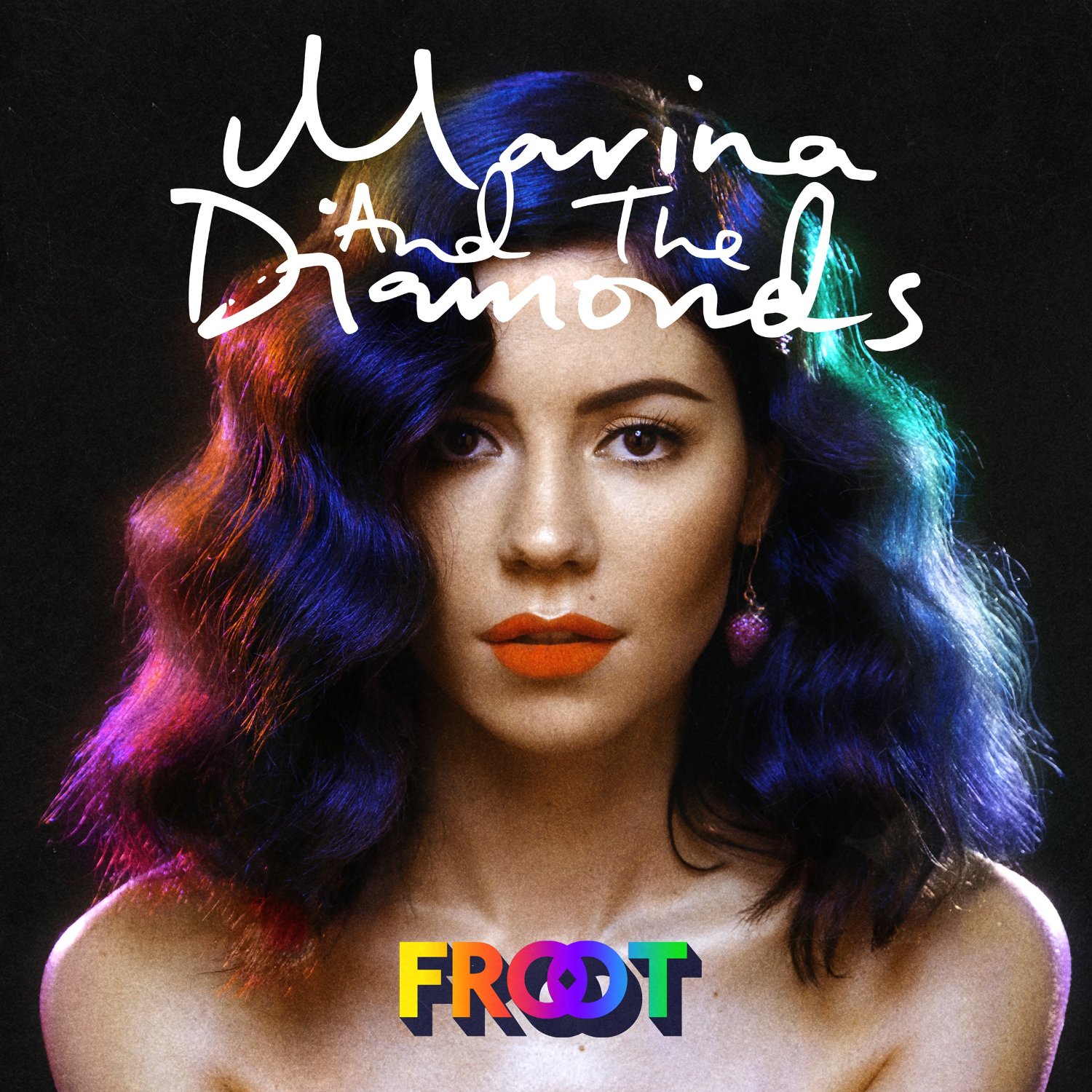 And then finally, the ever incipient Marina Diamandis, trading as Marina and the Diamonds. The new album is Froot. It is the follow up to the techno Elecktra Heart which works well in the van. A kind of guilty secret. I should not like it, but I do. I was originally taken by her track Hollywood but soon found myself perplexed by her excrutiatingly unique voice. What the voice really needed, I thought, was good songs. Unfortunately, they continue to elude her; though that is not to say that this album is bad. But put to the van test, it lost my attention as it progressed. Though Savages towards the end has much to recommend it. The lyric “Underneath it all we’re all just savages; Hidden behind the shirts, ties and marriages; How can we expect anything at all?; We’re just animals still learning how to crawl” raises an eyebrow. Ultimately. Diamandis’s lyrics need a few more years’ life experience. The voice remains distinctive, but maybe it does not suit pure pop? Bjork is not a bad role model in that respect.
Hop Farm Music Festival, 2014
Filed under: Music | Tags: 10cc, Baba Jack, Brian Wilson, Daptone Soul Review, Hop Farm 2014, Jukebox the Ghost, Marc Almond, Paul Heaton
Leave a comment Hop farm is close to Tunbridge Wells in Kent, England. The festival comes one week after Glastonbury, but its scale is modest in comparison. What a festival it was this year. Normally when I am at festivals, I stand there just a shade underwhelmed. That said, Kraftwerk 3D last year at Latitude (see post July 24, 2013) were extraordinary. And not underwhelming. Quite the contrary. Now, since last year’s Latitude Festival, either I have changed, or this festival was particularly good. Maybe a bit of both.
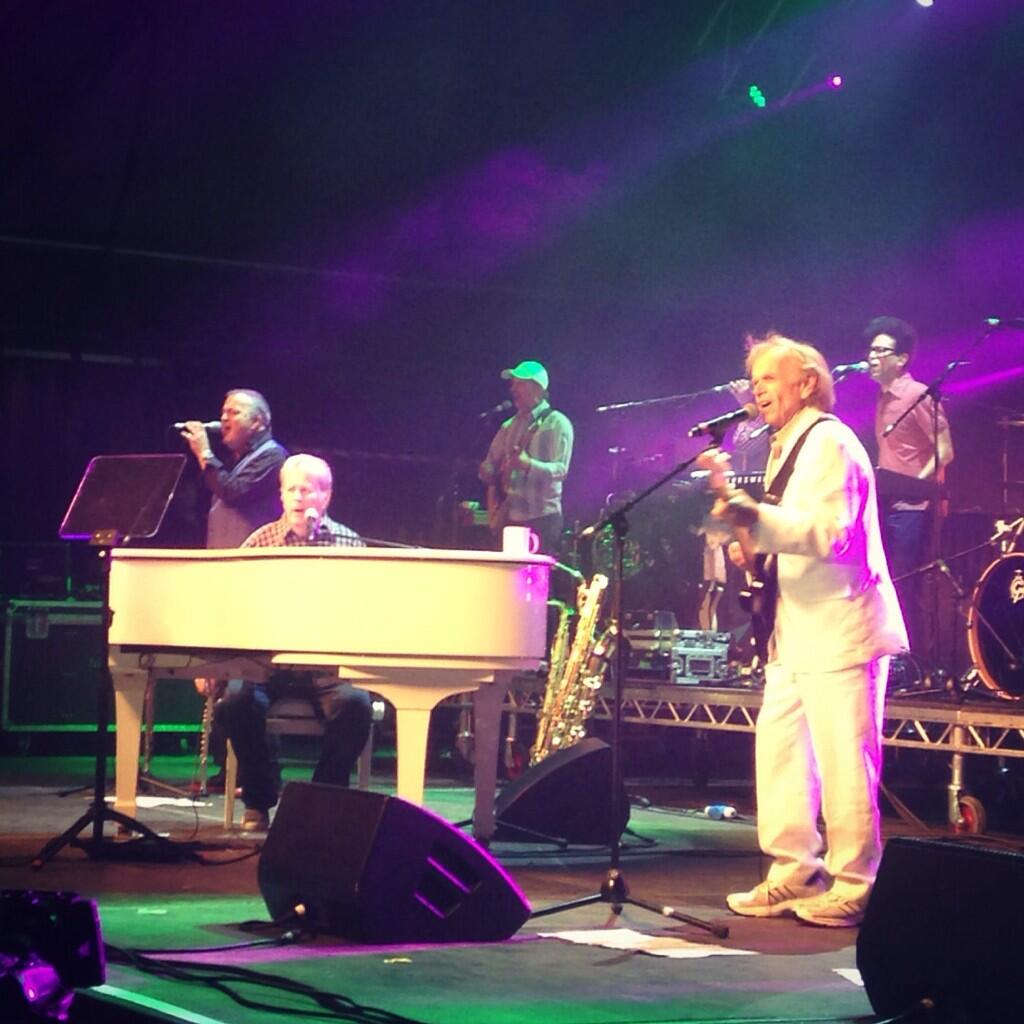 I anticipated Brian Wilson (left) to be alone at his piano for an hour or so. Indeed he was, but not only did he have some friends (including Al Jardine) with him, but those friends were handpicked to recreate that 60s Beach Boys sound. It was pure sublime celebration. And an object lesson for younger musicians.
Brian Wilson was not quite my generation, but Squeeze – or at least Difford and Tilbrook – were (right). 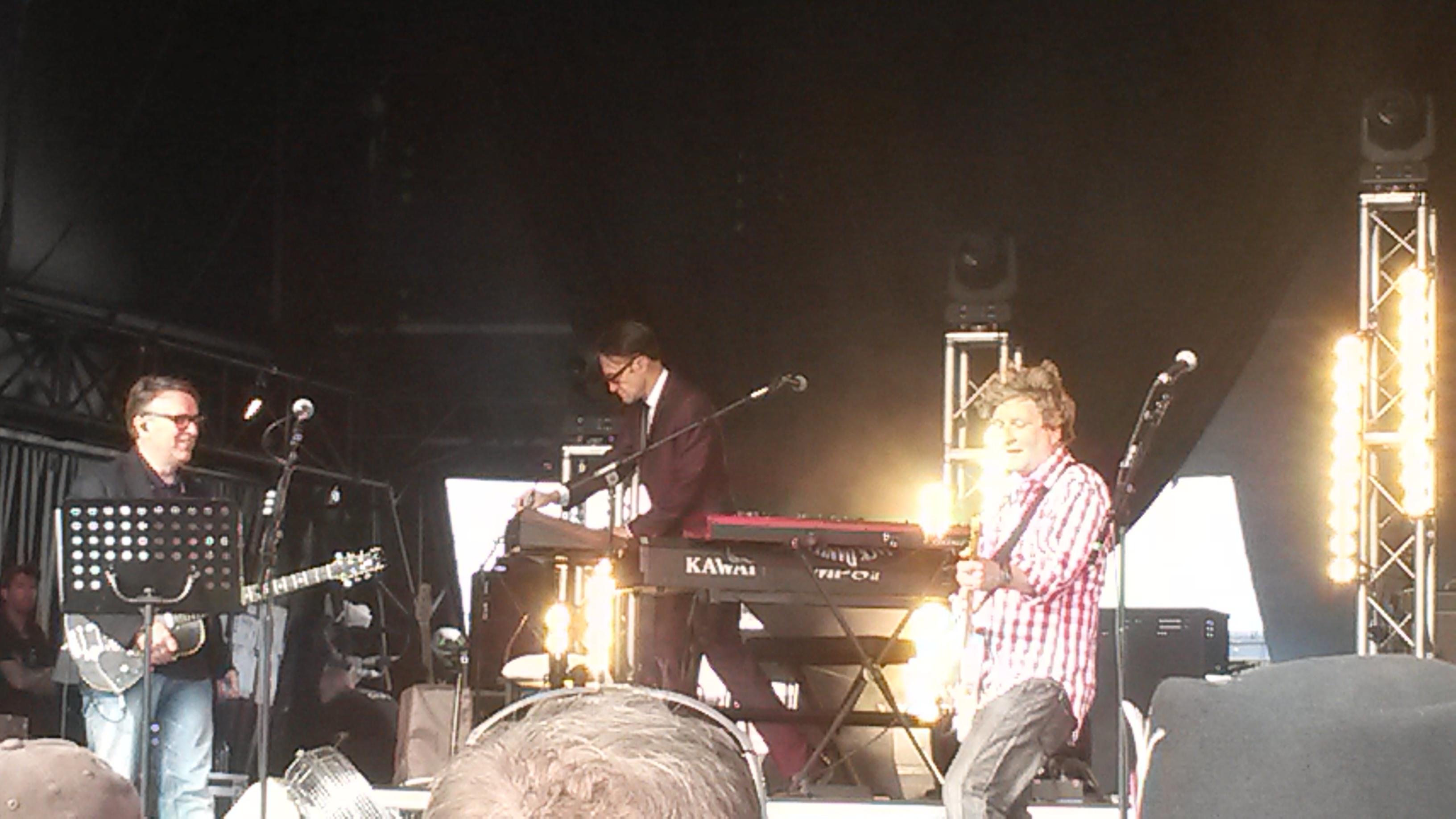 The sense of rapprochement after years of estrangement between the two was palpable.
I did not expect to get too much from 10cc. But Graham Gouldman assembled a band capable of doing justice to a repertoire that owes much to the original band members not there.
 Marc Almond was a crowd pleaser. Paul Heaton – my one time next door neighbour in Hull – has the best banter of any musician. Always has. With Jacqui Abbot, he served up some of pop’s most feel-good songs, many tinged with melancholy. If one digs deep enough.
The Lightening Seeds, ‘Pure and Simple’. So much for dangerous nostalgia.
Maximo Park – never heard any of their stuff previously, despite being around for 10 years. They were spellbinding (right). They made a link for me to the Damned, without the Gothness. And serendipity always has a function at these events. Three of the most wonderful discoveries were made. First, Jukebox the Ghost – a three piece from New York (below left). The keyboardist, Ben Thornewill, has a bit bit of Billy Joel about him. Their set was intelligent.
Then Baba Jack, a four piece blues/rock outfit from somewhere in the midlands. The ‘powerhouse’ of the band, Trevor Steger, makes his own guitars out of wooden wine boxes (below right). They are square, but the noise he generates from them is delightful. And loud. The lead singer, Becky Tate, writes love songs. But not as we know them.
 The standout performance, however, goes to the Daptone Soul Revue (an indie record label out of New York). I’ve never seen so many musicians not in an orchestra making so much music. And utterly enjoying it. Charles Bradley’s tortured vocals envelope anyone who cares to be so enveloped (and maybe this time I did). Sharon Jones, who gave the finale (the set was over 2 hours), was just sensational. One just wanted either to take her home or bottle her.
Headline Sunday night was Grace Jones. I would have really liked to enjoy her set, but the bass was too high. Shame really. Not needed.

Joan as Policewoman, Norwich Arts Centre, 15 March 2014
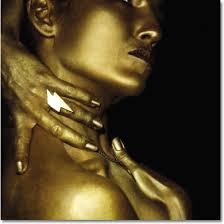 Joan Wasser’s fourth album, The Classic, formed the core of this exceptional sell-out gig. Accompanied by her stalwart band featuring Parker Kindred on drums and Tyler Wood on keyboards and sax, she was spellbinding. I’d heard the album only once prior to the gig, but Joan justified its soul-oriented theme, something that seemed unconvincing on first listen.
Joan herself is a multi-instrumentalist. Adorned in her trademark leathers and Stella McCartney wedge shoes, she introduced us to her spangly violin augmenting her regular keyboards and guitar.
The show started with ‘What would you do’, from the new album, with its punishing drums, wailing keyboards and punctuating saxophone. Joan never underestimates herself in her song writing. ‘Magic’ from ‘The Deep Field’ was one of only three old songs featured bearing the classic line, ‘I am divine’, which reflected her good sense of her self worth after a couple of darker albums riddled with tragedy in her personal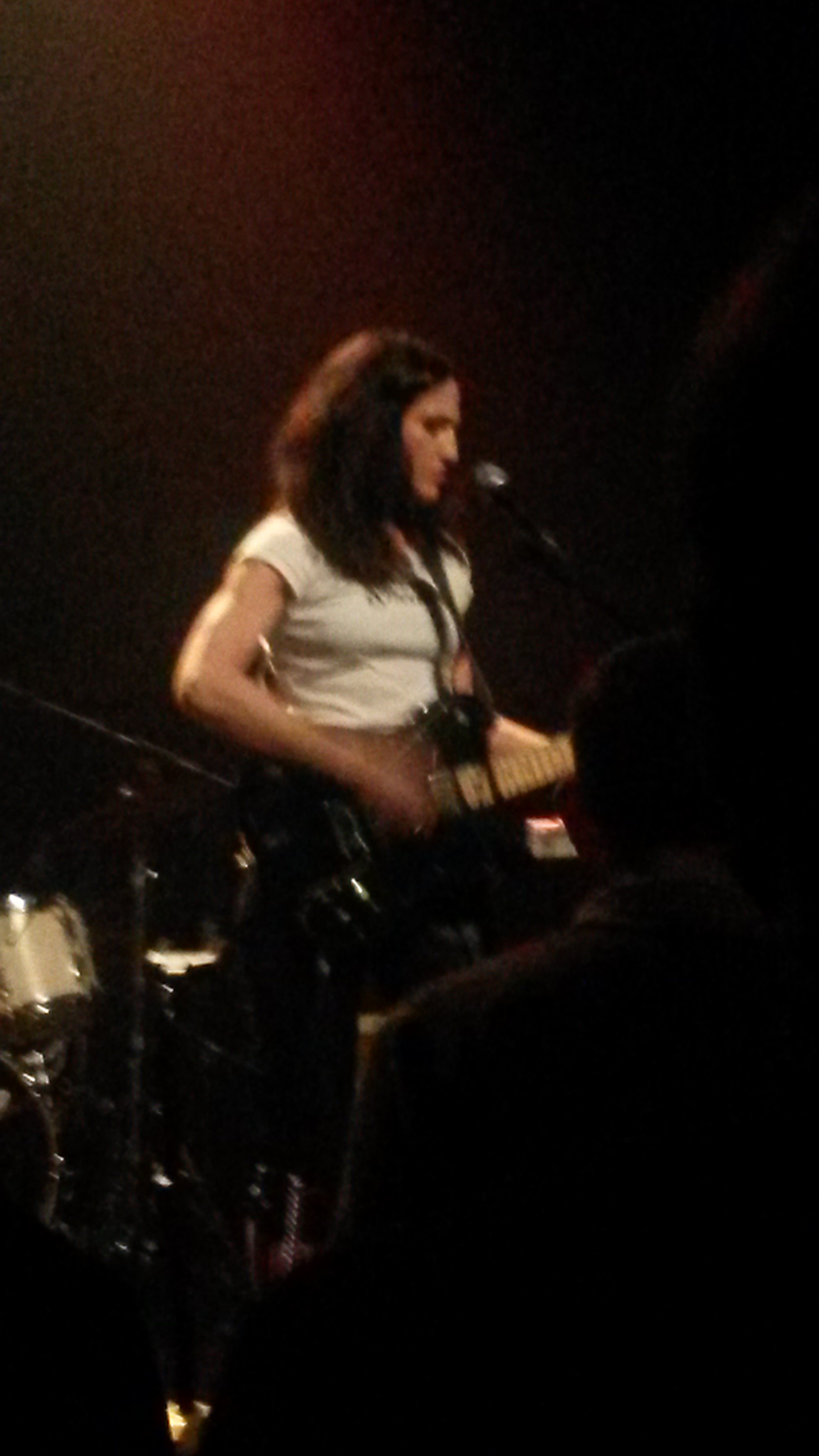 life. ‘Good Together’ is in that tradition. A tale of not settling for less. the first time “it wasn’t so special” topped off with, “Don’t wanna be nostalgic…for something that never was”. Say it Joan!
That said, the new album is full of yearning. ‘Get Direct’ is a seductive invitation to a new love. “Don’t take the tangle from my past, I left that ruin long ago” she sings. “it’s elementary, if you would be mine, we could be happy…” With her intonation, one knows it is true.
There is even room for concept. ‘New year’s day’ is epic in duration, instrumentally repetitive, lyrically oblique and rambling. And compelling. ‘You won’t find me here this new year’s day’. Time for a change in life.
The encore was promised before the set was even half way through. There was never any doubt that the band would be called back to play the acapella single, The Classic (http://www.youtube.com/watch?v=ldYODNL8GtY). It worked well.
Have I undersold the show?
Planningtorock – Brighton, 12 December 2013
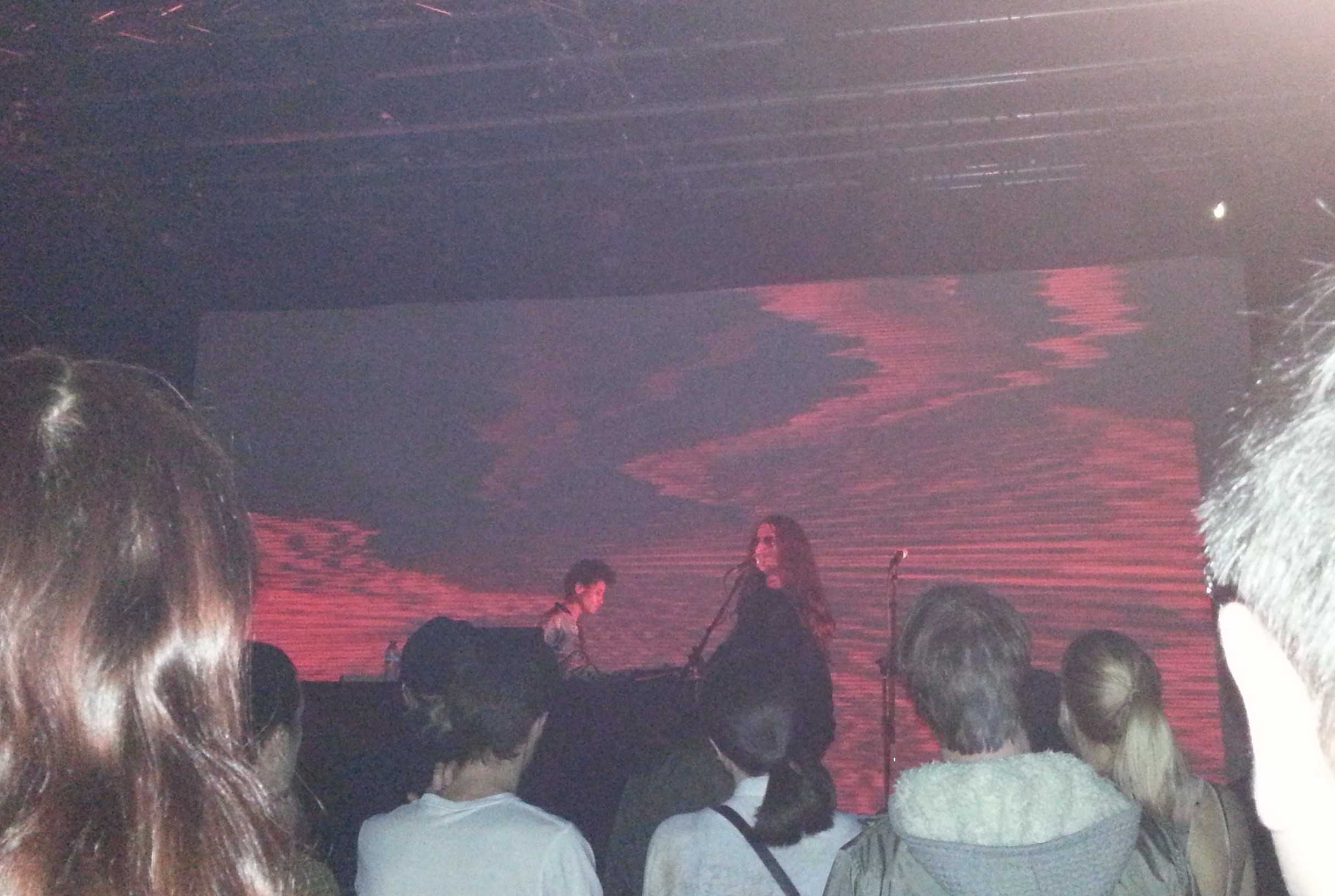 Planningtorock is the stage name of Jam Rostron, Bolton born and Berlin-based. This set was largely based on her 2012 album, ‘W’, and peppered with some new songs that will debut on the forthcoming album (see below).
Rostron was supported on stage with an unnamed musician commanding the Apple computer and electronic drum kit. Rostron herself was mostly in shadow against a backdrop of video images from what I assume were earlier sets typically featuring her prosthetic nose (now gone), maybe to facilitate the comfortable wearing of her sunglasses. Or rather to presage a new musical period.
And what a noise. Much of PtoR material is experimental and often hard to listen to. For a Thursday evening, the audience was invited to dance and share the most accessible tunes in the repertoire and a number of others promised on the tracklisting of the new album, ‘All Love’s Legal’, due in 2014. She concluded the relatively short set with ‘Living it Out’, a clear favourite with the audience, a number of whom took to the stage to demonstrate their pleasure. Rostron was also overwhelmed when one of the stage dancers kissed her.
We also enjoyed the eponymous ‘Janine’, ‘Doorway’ and ‘The One’. All great tracks dispatched with energy, passion and some emotion. The new album and February tour will be events in their own right.
Another reviewer (link below) clearly has more knowledge than I do about PtoR. Worth a read.
http://www.the-monitors.com/2013/12/13/planningtorock-all-loves-equal-in-this-human-drama/
Duckworth Lewis Method Brighton review, 20 September 2013
 As Thomas Walsh said part way through under the crucifix at St Georges church, the unlikely venue for this 90 minute musical cricket fest, ‘two albums about cricket, how fucking crazy is that?’
The first Duckworth Lewis Method album dates from 2009 and co-incided with the momentous and nervous Ashes tour of that year. For readers unfamiliar with the Ashes, it is the trophy fought for between England and Australia in the five-day version of the game, also known as test matches. Despite their Irish origins, Neil Hannon – whose other musical project is The Divine Comedy – and Walsh of Pugwash, their love of the game and for England has culminated in enough songs to justify a paying audience, hence this short tour of intimate venues.
Duckworth Lewes Method fans – and there are many going by the size of this audience – know the songs only too well. Tellingly, the two requests from the audience were for songs from the first album. ‘Jiggery Pokery’ about the extraordinary phenomenon that was Shane Warne, Australia’s most celebrated and effective leg spinner of all time, is one of the cleverest and vocally trickiest songs in the repertoire but always handled with aplomb by Hannon. Mr Miandad, the second of the requests, chronicling the journey to Pakistan by Hannon and Walsh in a VW camper van to meet with Javed Miandad, one of the Pakistan’s greats, is just a feel-good song.
The show’s final few overs included a song that should have come earlier bearing in mind its subject matter; namely, ‘The Coin Toss’ and a really mischievous rendition of ‘Nudging and Nurdling’, a song that is as inexplicable as is the game of cricket itself. The finale was as fitting as it could be ‘Test Match Special’, a celebration of the BBC’s ball-by-ball cricket commentary so bemusing to many.
By this time the audience had got to its feet leaving Hannon and Walsh with the sense of a winning draw if not victory. Great night.
Latitude 2013 – music
Latitude is a music, comedy and arts festival held over three days in parkland in rural Suffolk, England. There are a number of stages located very much in earshot of one another generating a cacophony of sound. The main stage is called The Obelisk Arena. The stage is flanked by two large screens; a further one sits behind the production platform. On Saturday night, the Obelisk Arena was stunned by Kraftwerk. Tracy Thorn, formally of Everything but the Girl, appearing in the Literature tent, described Kraftwerk to author and DJ Stuart Maconie as “four old blokes with laptops”. In a literal sense she is correct. But she misses the point.  The pioneers of electronic music pioneer on; whist the music is unchanged – partly because of its timelessness – its presentation is awe inspiring. The Robots – a fabulous track in its own right – is accompanied by four pixelated erstwhile ‘Man Machine’ Kraftwerkers rotating in front of the current incarnation (only Ralph Hütter of the original line-up remains). By contrast, ‘The Model’ and ‘Tour de France’ played to archive footage of models and racing cyclists respectively. Trans-Europe Express featured a geometric train. And then Autobahn played to imagery of an idealised Autobahn hosting iconic German vehicles, VW Beetles, campers and classic Mercedes from an unspecifiable period in the past. For the time being, this is unmatchable music presentation.
Many of the bands performing this year owe much to Kraftwerk. So much so, in the case of Hot Chip who preceded Kraftwerk in the Obelisk Arena, that singer Alex Taylor adorned his Kraftwerk Autobahn t-shirt for their performance. And what a belter it was. Largely featuring tracks from the most recent album, In Our Heads, the band flitted from one instrument to another as if playing musical chairs. Their website features their effortless performance of ‘Are you ready for the floor’ (at the time of writing the visuals are not working well). http://www.hotchip.co.uk/2013/07/test/
  The other band that we saw with a Kraftwerk debt are Austra (left). Appearing on the BBC 6 Music Stage, they performed tracks from their new album, Olympia. This album is disappointing relative to their debut, ‘Feel it Break’. But played live, one can jettison the bemusing melancholy of the lyrics that weigh down the album, and enjoy the extraordinariness of lead singer, Kate Selmanis’ voice.
Also on the BBC 6 Music stage was the Laura Mvula with her band featuring a cello, violin, double bass, harp, drums and 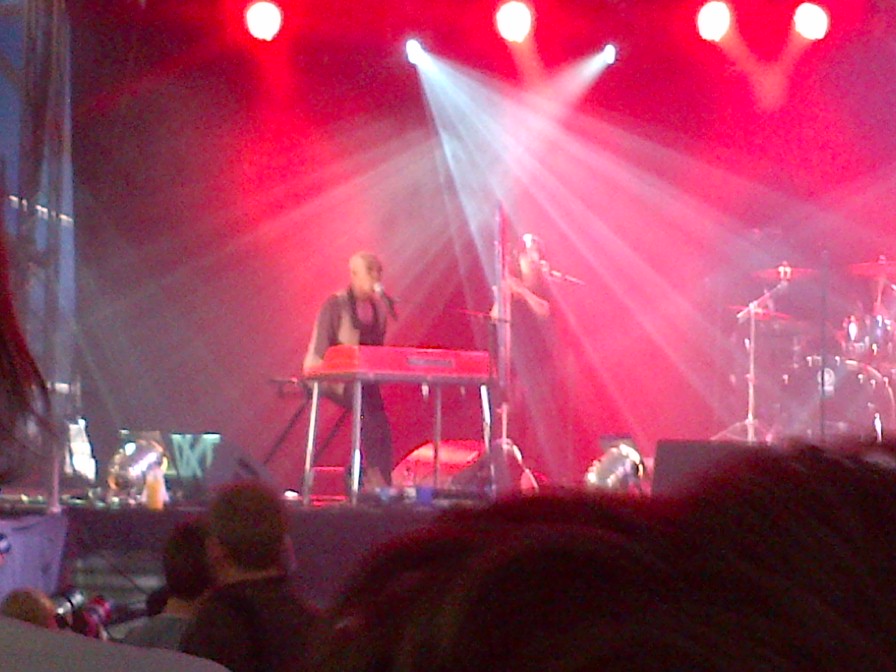 keyboards. Their set was irritatingly short as many are in the middle of the day at festivals. She told us that her husband doesn’t really like her songs, but he approves of ‘She’, so we got to hear that. ‘Sing to the Moon’, the title track from the album renders one mortal and also the upbeat ‘Is there anyone out there’ played, partly on her own admission, because recent gigs had been a bit quiet. A large appreciative audience at Latitude certainly made her feel wanted.
Our first musical encounter on Friday afternoon was the enigmatic I am Kloot. I am not sure what to make of them. Their own profile has it that they are “an oddball pop trio based in Manchester, England, that consists of vocalist/guitarist John Bramwell, drummer Andy Hargreaves, and guitarist/bassist Pete Jobson.” The music is rocky, melodious melancholy. A bit grizzled. Songs about too much alcohol; reflection and mortality.
Friday was also an opportunity to hear Texas – never a fan – but the rocky show had a feel-good sense to it with lead singer, Sharleen Spiteri, seemingly overwhelmed by the reception. Bizarre shirt, though. They were the only band allowed an encore.
We also saw the Yeah Yeah Yeahs. Karen O’s shrill voice didn’t quite penetrate the guitars. She seemed to get more and more angry as the set went on. And thoroughly unhappy with being ‘managed’ off the stage. Or so it seemed.
We dipped into Grizzly Bear, but actually found them a bit uninspiring. We stumbled across The D.O.T. ignominiously in the cinema tent. A duo, Mike Skinner (formally The Streets) and Rob Harvey (formerly The Music), with some great little urban songs. A version of ‘how we all Lie’ that we heard live can be found on Youtube http://www.youtube.com/watch?v=JqrliWEYIko.
Why the release of a music track is not an event
Filed under: Journalism and News Reportage, Music | Tags: Bowie, online music marketing
Comments (1)  I woke up yesterday morning to the Today programme on Radio 4 as usual to the ‘news’ that David Bowie would be releasing a new single at 0715 and that I would be one of the first to hear it if I stayed tuned. David Bowie is one of the formative characters in my life. I was listening to him and buying both singles and albums from the age of 12. Though I have never seen him play live (coming from Hull, that is not surprising). The release of a new single (and video viewable on youtube) is of interest, especially as I am informed that the song has references to Berlin and hence his most creative period in the 1970s.
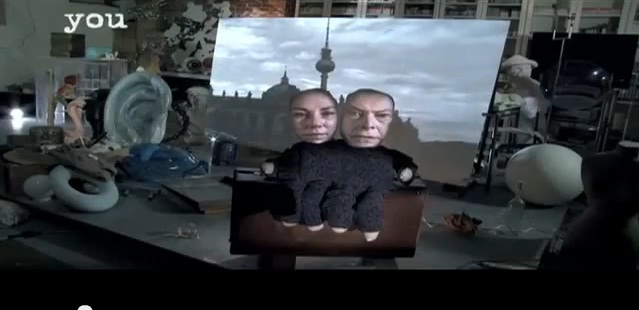 It worked a dream – the newspapers are full of it; Radio 4 had another go this morning with a couple of eminent fans eulogising Bowie much to the incredulity of the presenter, Sarah Montague (the story became more her incredulity than their eulogising). Again, whilst it is great to have some new music, it is not an event. It is not as though he made an appearance on the programme. It does not warrant the time given to it on a flagship news programme. It is again lazy journalism; manipulation marketing.
Radio 4 did not even play the song.
Picture of David Bowie by Photobra|Adam Bielawski, sourced from Wikipedia; screengrab from Youtube from music video
John Cooper Clarke plays Brighton Dome, Review
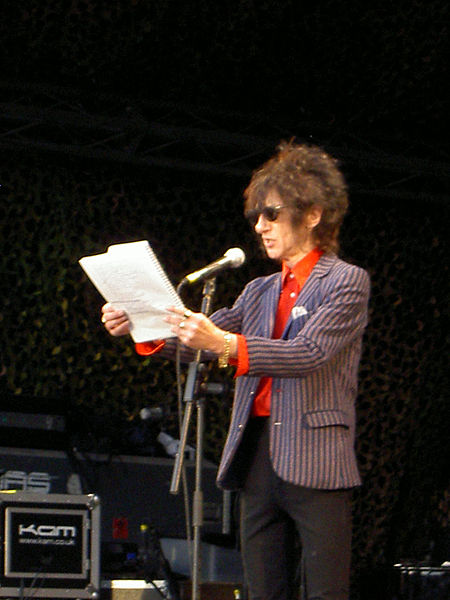
 Thursday 1 November, 2012, some 34 years since my first exposure to the Bard of Salford through his album Disguise in Love, there he was in front of me. The Dome really is not the place to see him, but my countless previous attempts at seeing him at smaller venues always ended in disappointment. I was never quick enough to get tickets.
If you want to hear his poems, this is not the tour for that. The poems support a programme of observation on modern life, politics, sex and, particularly, mortality. His reflections on Alzheimer’s Disease are acute. There are at least two good things about it. First, suffers just keep on meeting new people. Second, they forget what comes next. His apparent dislike of Terry Pratchett – or at least position on assisted suicide – pervades the whole show. “I did a gig recently in Switzerland but made sure I had a return ticket”. Terry Pratchett wants to be able to die before he becomes a “bumbling vegetable”, apparently. For JCC, that is the present state, far too premature.
We had ten minutes on why he endorsed Domino’s Pizzas (normally he only endorses products that he can get right behind like yacht makers). Skillfully he linked the concept of pizza to the another disease, Swine Flu. “It’s the only nourishing meal that can be slipped under the door”.
Source: flickr_newbie, Wikipedia
Another ten minutes were devoted to the rebranding of venereal disease (as it used to be). He told how VD was rebranded as sexually transmitted disease after a jolly by stakeholders in a sunny climate only to realise when they got home and had replaced all of the stationery that it is the ‘D’ that is the problem. Disease. Another jolly was organised, this time on the Isle of Man (no man in an island, goes the quote, but the Isle of Man shows this to be untrue), to come up with STIs – sexually transmitted infections.
So which poems did we get? Beasley Street, of course, with its 30 year revision, Beasley Boulevard. Also from the back catalogue his favourite poem – though it is so only because it is connected to his swear box which is the source of his pension – Evidently Chickentown. He made a poem out of an imaginery guest list. We got I fell in Love with my Wife as an encore – one of those wonderfully romantic pieces that never fail to warm.
JCC is a consummate performer. So engaging. He gives the impression that he is chaotic – shambolic even – but this is a slick programme. Certainly he could have gone on beyond the 90 minutes that he was allocated. He had to deal effectively with a lone heckler.
Just brilliant.
 Be informed