Archive for the ‘Travel’ Category
Cigarette industry – grim prospects?
For a number of years this blog has reported, as irreverently as possible, cigarette advertising in Germany. Germany is one of the few places in Europe where it is still possible to advertise cigarettes. The contrasting campaigns are a source of endless fascination as the brands pit themselves against one another.
However, cigarette advertising is one thing, the continuation of the industry more generally is now in some doubt. I say this after reading an article in the Economist magazine (link below). Apparently, it is fifty years since the US Surgeon General declared smoking to be a ‘health hazard’ requiring appropriate ‘remedial action’. This remedial action led to a decrease in cigarette consumption from 43 to 18 per cent in the American adult population. Still, 20 million Americans have died from smoking-related diseases since then. The current Surgeon General has declared smoking deadlier than previously thought and has promised ‘end game strategies’.
 What does this mean for the tobacco companies? Traditionally, they have found new markets, particularly in Asia. But here, also, the regulatory environment is becoming hostile. Arguably, too, the firms have not seen the e-Cigarette phenomenon coming – dominated at the moment by new firms, a selection of which are represented on the panel (left). Perhaps they have failed to understand fully what is their business? The customer craves nicotine, not tar: e-cigarettes seem to be efficient deliverers of nicotine, and less riskily. Though this may well be scrutinised closer in coming months and years.
Another approach seems to be cigarettes that do not actually burn the tobacco. Rather they heat it to deliver their nicotine payload.
Picture: http://www.eciguserguide.com/promising-e-cigarette-brands-2014/
Making trains
 Finally, some good news for UK manufacturing. Bombardier, the Canadian engineering firm, which owns the former British Rail train factory in Derby, has won the competition to supply 66 units to Crossrail opening in 2017 (impression, below right). They beat off competition from Siemens and Hitachi. The former recently won the contract to make the Thameslink trains. Hitachi trains can be seen running on HS1 between St Pancras and Dover.
Whilst I understand that competition is necessary when placing orders for expensive long-lived kit to ensure some  degree of value-for-money and quality (British Rail supplied to itself a lot of over-priced un-tested stock in the 1950s that very quickly found itself decommissioned), I despair at the ease with which much of the UK’s supply comes from abroad. The train building capacity and capability in the UK has been lost.
I despair even more, however, at the madness that the structure of the railway industry in the UK. This week, we learned who were the preferred bidders for the re-privatisation of the East Coast Mainline ‘franchise’ between London, the North of England and Scotland. The current operator, 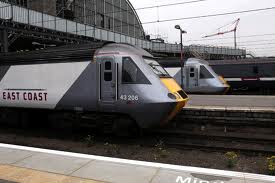 Directly Operated Railways (DOR), has been running the route successfully and profitably since National Express handed back the keys, so-to-speak, in 2009 after they failed to deliver the returns to the UK Treasury pledged in the contract (DOR has returned some £600m to the Treasury so far). National Express replicated the error made by its predecessor operator, GNER, that equally over-stretched itself and delivered those very same keys back to Department for Transport a couple of years earlier.
Three private-sector charlatans will slug it out in a race to the bottom. Here they are:
East Coast Trains Ltd/FirstGroup the very same that submitted an unsustainable bid for the West Coast route leading to a collapse in the bidding and its re-run at our expense (see post, 15 August 2012) .
Keolis/Eurostar East Coast Limited (Keolis (UK) Limited and Eurostar International Limited) – a nice little pairing of the soon-to-be-sold off British bit of Eurostar – the remainder is SNCF oddly publicly owned but allowed to run trains in the UK – and Keolis, a global French-owned public transport operators that ‘thinks like a passenger’. Apparently. They have a stake in the Southern Franchise that I use. If that is thinking like a passenger, this route is destined for exemplary bad service.
Inter City Railways Limited (Stagecoach Transport Holdings Limited and Virgin Holdings Limited) – ah yes, Richard Branson who is currently carving up a nice slice of the UK National Health Service for his ‘health’ business as well as good at picking up cheap banks that once were mutual (now Virgin Money). A favourite of a succession of UK  governments. And the brother and sister partnership of Brian Souter and Anne Gloag (right), the Perth-based tycoons who peeled off (allowed by the UK Government) much of the UK bus industry when it – or rather the land that housed depots, workshops and bus stations – was given away in the 1980s. It’s not their fault, we invited them to do it. But should they win, they will control all services to north of Border as they already command the rails on the parallel West Coast, at least for the time being.
Readers interested in DOR’s performance can get a summary here
Pictures: Bombardier Trains: www.crossrail.co.uk; East Coast trains: www.rail.co.uk; Souter/Gloag: This is money: http://www.thisismoney.co.uk/money/article-1201254/Stagecoach-pair-18m-court-battle-disappearing-fortune.html
What is this about?
 In my search for cigarette advertising today in Munich, I had the mis-fortune to come across this explicit piece of advertising for a local radio station. Just in case any readers are wondering what it is, it is a naked woman with her breast covered by the hand of some disembodied man. The strapline, I think, translates as ‘close-up on the hearing’.
I do not know this radio station. A quick visit to the website suggests it is a subsidiary of a group of stations with the same name in various cities pumping out pop music – old and new – and news. This photo was taken at a busy transport interchange in Munich! It is difficult to explain to adults what this is about. I’d be hard pressed to say much to a child who might notice it.
Spring campaigns
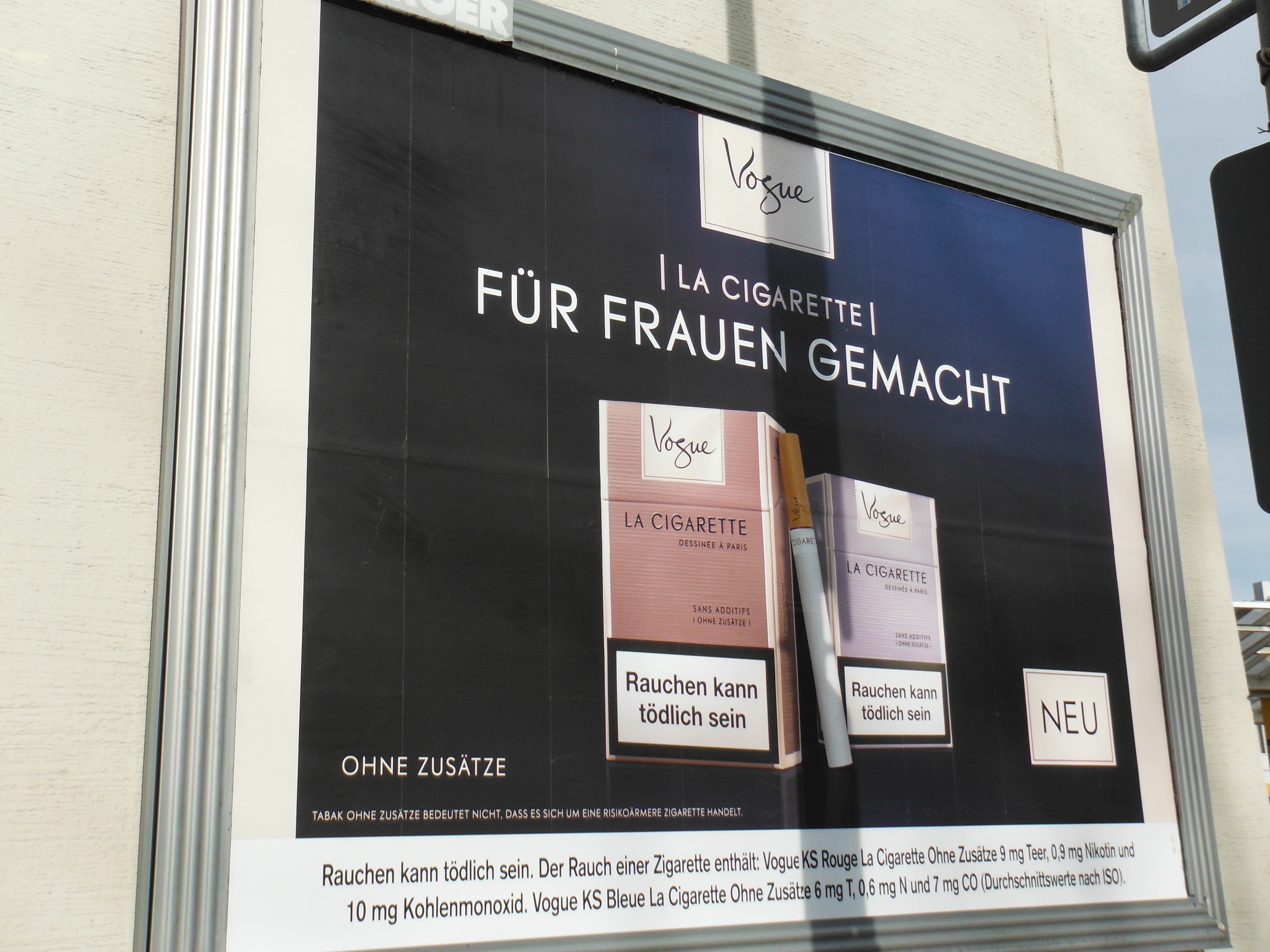 The winning spring cigarette advertising campaigns in Germany are Vogue ‘made for women’ (pictured left – see also post 7 December 2013) and new to the competition, Camel, with their curious descent into primary colour packaging (below right). The recent Lucky Strike campaign is clearly having an interregnum.
Camel’s slogan translates literally, I think, as ‘now becoming colour’; though it may better translate into ‘now colourful’ with red, orange, yellow and green packets. Unfortunately, I’m not sure what the colours represent – they could be random colours or relate to a blend (I think it is the former). I suggest, however, that the packaging relates to how quickly or nastily the content will kill the consumer – with red being acute and green giving the smoker more time alive, though enjoying chronic ill-health?
The Christmas getaway
![20131224_195446[1]](https://weiterzugehen.net/wp-content/uploads/2013/12/20131224_1954461.jpg) It is not often that I judge travel options well. But I think this year I got something right. I write this sat on ICE611 heading to Munich (picture left) having escaped on the 0858 Eurostar London to Brussels this morning and then joining a slightly delayed Thalys from Brussels to Köln. I took the decision on Sunday evening to abandon my plan to travel to London on the 0620 Victoria bound train this morning and book myself into a Travelodge hotel close to St. Pancras station in London. On waking up this morning I discovered that all trains into London from the South Coast are subject to cancellation arising from a landslip near East Croydon, amongst other obstructions caused by a major storm that crossed the UK during Monday and into Tuesday with considerable force.
It is not often that I judge travel options well. But I think this year I got something right. I write this sat on ICE611 heading to Munich (picture left) having escaped on the 0858 Eurostar London to Brussels this morning and then joining a slightly delayed Thalys from Brussels to Köln. I took the decision on Sunday evening to abandon my plan to travel to London on the 0620 Victoria bound train this morning and book myself into a Travelodge hotel close to St. Pancras station in London. On waking up this morning I discovered that all trains into London from the South Coast are subject to cancellation arising from a landslip near East Croydon, amongst other obstructions caused by a major storm that crossed the UK during Monday and into Tuesday with considerable force.
I’d like to thank those people who helped me get away yesterday evening. As a regular flyer to Munich, I can sympathise with those people stuck at Gatwick Airport suffering from severe delays and cancellations due to a weather-related power failure. This is the second year that I have taken the train to Munich for my Christmas visit having suffered previously from delays and cancellations caused mainly by fog. And airlines.
Fröhe Weihnachten.
Cigarette advertising: the Autumn 2013 campaign
Filed under: Cigarette advertising | Tags: JPS Gold, Vogue Cigarettes
 Leave a comment
  There’s been a lull over the summer regarding cigarette advertising in Germany. Arriving in Munich last night I spotted a couple of new campaigns: Vogue and John Player.
Vogue (pictured left) is a BAT brand targeted at women and is new to this blog. La Cigarette denotes a singularity with the definitive article; followed by – literally – tasteful pleasure.
Going head to head with Vogue is John Player Special Gold. The tagline (right) is not that different to Vogue: 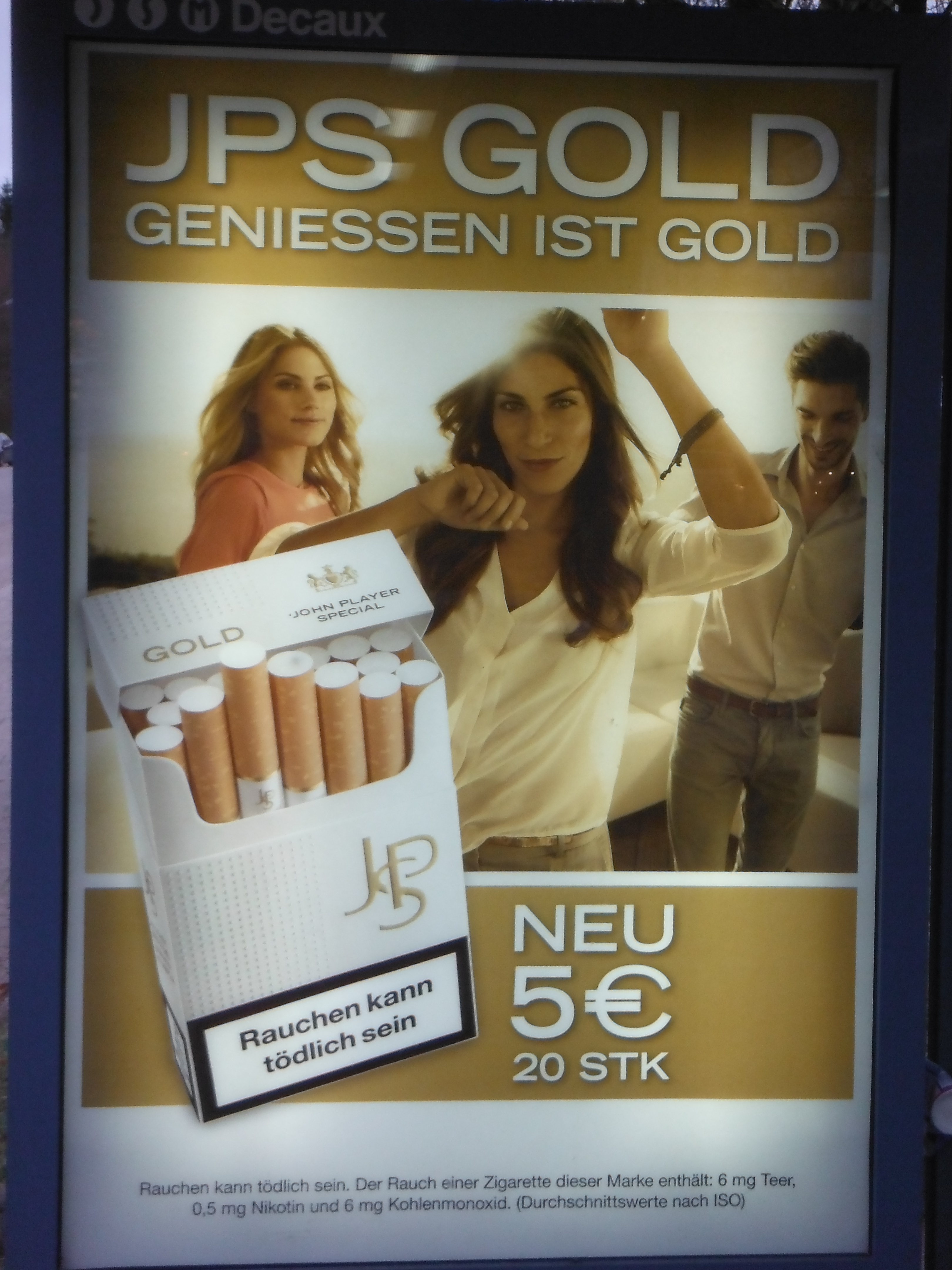 Enjoyment is Gold. How to read this one, I’m not sure, but if I am not mistaken, exposing one’s inner arm to another – or a camera – denotes availability, submission even. Submission in the first instance to the addictive drug and perhaps second, before she dies, to the bloke in the background? No idea what the other woman is doing there.
Worst UK hotels – in defence of Travelodge
Filed under: Hotels | Tags: Travelodge, Which? hotels report
Leave a comment  Which? – the UK consumer watchdog – recently published its findings from research into the best and worst hotels in the UK. To view the whole report, one has to be a subscriber to Which?, but the newspapers happily reported the findings.
So, the best are: Q hotels 78%; Radisson Blu Edwardian 77%; Premier Inn 76%; Sofitel 74%; DoubleTree by Hilton 71%; Park Plaza 71%.
The worst are: Britannia Hotels 36%; Travelodge 50%; Ramada 51%; PH Hotels 51%; De Vere Village 51%; Shearings Hotels 52%
Two chains that I use the most are last and next-to-last consecutively. Let me have a go at defence. First, Britannia. I’ve stayed in two, one in Manchester and one in Canary Wharf in London. Both have been on a weekend deal and hence cheap relative to their grading and location. I would recommend both. They were clean, well equipped and quirky (a bit illogical and frayed around the edges). Corporate, but not so.
My experience of Travelodge is broader. I’ve stayed in more Travelodge hotels than I can count. I’ve had mixed experiences, too. One evening there was a ram-raid on a nearby cash machine. We all cowered behind the safety of the Travelodge door. On another, a drugs raid. On one occasion there has been some residual hair in the bath. I’ve been moved at short notice from one hotel to another. And to query the enforced transfer, one has to call a premium telephone number! But equally I have had some of the happiest times with my partner in Travelodge hotel rooms after being reunited in nearby airport arrival halls.
Here are some reasons why I persist with Travelodge.
-
They are consistently inexpensive. They are the cost leaders in the hotel world. They have only just – reluctantly – provided soap in rooms. And not very good soap at that. But if what you want is a bed – a good one in fact – a shower that invariably works in a fashion, then it is extraordinary value for money.
-
They are ubiquitous. I prefer the roadside hotels to the city ones, but I’ve stayed in both. Airports are also Travelodge natural habitat.
-
The staff are invariably friendly, if not particularly competent. I’ve had some rewarding conversations with Travelodge staff over the years.
-
They have 24 hour reception. I usually come very late, but I am reassured that I can get into the hotel and to my room.
-
And on the few occasions when there is no room – double-booked, water leak, police raid, or whatever – they will get you in somewhere else. That may be a 5-Star hotel down the road.
-
One can use the room as a comfortable campsite, which we recently did in Ipswich instead of pitching a tent at the Latitude music festival. We even moved in some of our own furniture to compensate for the annoying policy of one chair per double room. But that is cost-leadership for you.
And yes, where breakfast is provided, it is awful. So do as we do, bring your own.
At the other end of the scale is Premier Inn, another budget chain. The debates I have seen engage in facile comparison. If Premier Inn can do it, then so should Travelodge. Actually, Premier Inn is one of my least favourite hotel chains. And why? I’ve thought about this. Actually, notwithstanding that Premier Inn is not as cheap as Travelodge, it markets itself as a budget hotel trying not to one. I find it disingenuous. Equally, I do not think that Britannia Hotels try to be luxury.
Travelodge is an easy target. Travelodge has done for the hotel business what the low-cost airlines did for travel at 11,000 metres. Travelodge has democratised domestic hotel use. Most people can afford to stay. And as long as one does not expect more than is offered, the experience will not be a let down.
Tandem tour 2013: Zandvoort to Europoort
 Zandervoort aspires to be Nice (in France). The beach is occupied by rows of sunbeds and associated bars and cafés. We selected one of these cafés for breakfast. We were served a curious concoction. Surprisingly lacking in cereals, toast and jam. Breakfast, but not as we know it.
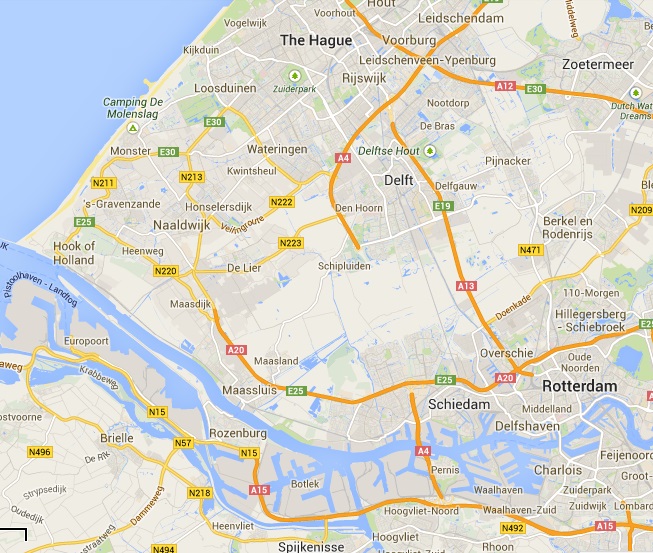
The wind again had presence. Following the LF1A we passed through Zandvoort’s southern neighbourhoods where the architecture at least was better. Less stark and modern. However, along the coastline, Zandervoort has many imitators. Katwijk aan Zee, for instance, the mouth of the original Rhine. The route between the two continues the dunes theme.
Sheveningen is the beach town of the country’s capital, Den Hag. Getting through also requires diligence as the cycle route meanders its way through residential and industrial streets. It is a working port. We had afternoon tea at a café in a 1960s shopping arcade in Kijkduin within earshot of a brass band playing for customers. I felt like I was in England.
And then finally to a campsite on the edge of a curiously named town, Monster. The campsite was great. Cheap, lots of room and a washing machine. We pitched the tent, showered and then went in search of food. Fortuitously, we headed to the beach first and found a restaurant on the beach. Unexpected. Monster is not the kind of place that suggests beach restaurants.
Although the menu was not veggie friendly, we were served with a dish that involved stuffing an apple (picture above right). It was surprisingly good. We were the last customers out of the door at closing time.
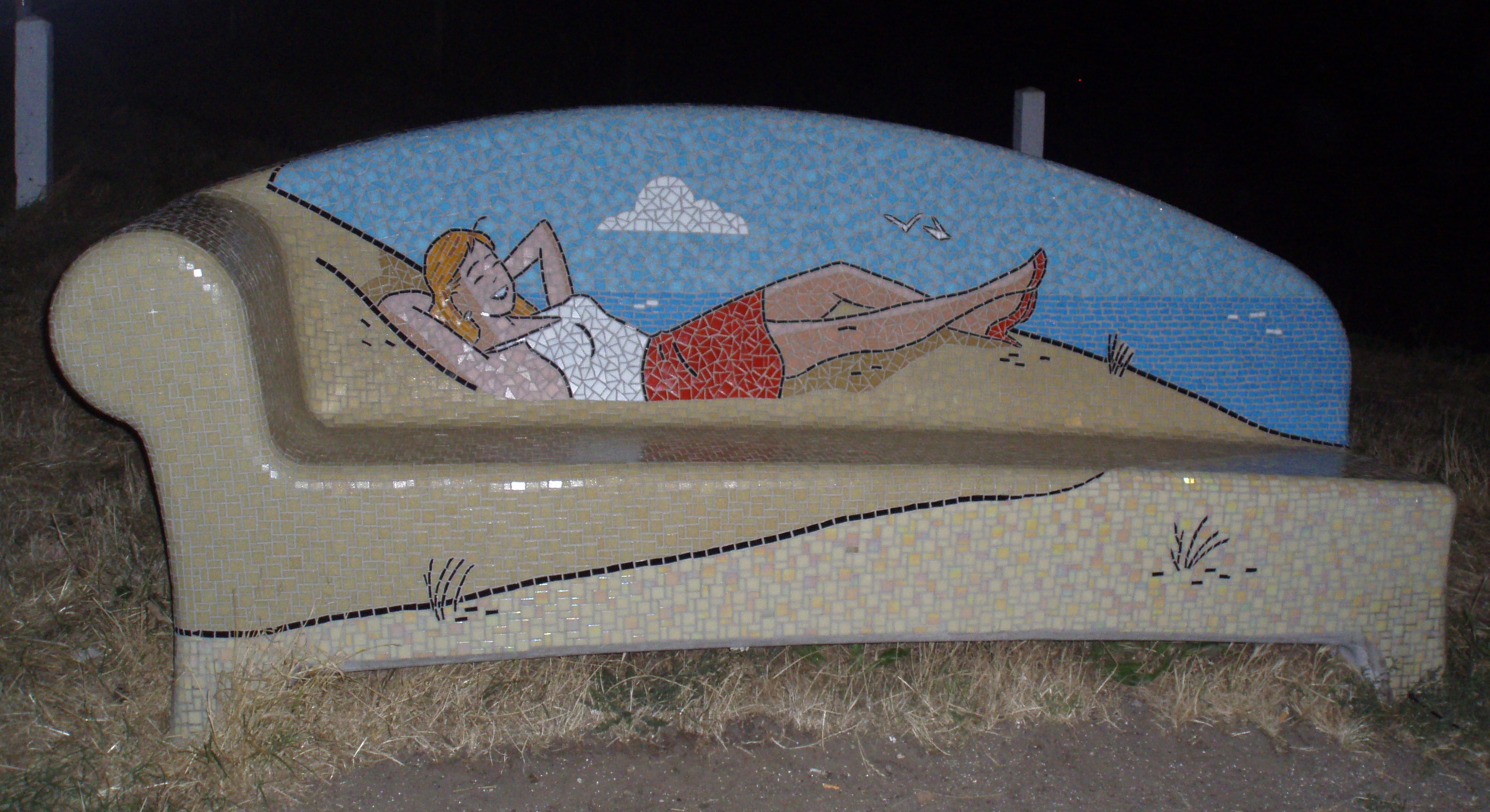 We then attempted to walk into Monster itself in the dark. We got so far before we gave up and went back to the campsite. The short distance that we did walk presented a well-preserved wind pump and some interesting street furniture like the specimen on the left.
And then on to our final day. Hoek van Holland and then round the channel crossing it at Rozenberg where we had a bizarre lunch experience in a bar. There was not much open in the town on a Monday. Not sure why. We anticipated tumbleweed blowing down the main street.
Europoort is then another ten kilometers of unmemorable dockland. And a queue to get on board the ferry. Fortunately it was not raining.
Tandem tour 2013: Gröte to IJmuiden and Zandvoort
 The adjacent beaches to Gröte are superb (see post 17 October). Journeying south takes one through some delightful and quiet forested areas (below right). By this time cyclists travelling south are following one of the country’s long-distance cycle routes, in this case, LF1A. This makes navigation easier as the network of paths and small roads is extensive and potentially confusing.
Bergen marks a southerly marker for this park area. Onward takes one through small indistinguishable towns such as Egmond aan den Hoef and Castricum. Parallel, one could negotiate Alkmaar and Uitgeest (further West). We stayed with the LF1A long distance route through Wijk aan Zee primarily because of our desire to make camp at Zandvoort, a resort 20 km south from IJmuiden. 
Arrival at IJmuiden on the LF1A demands a decision. There is a significant stretch of water to cross either by small bridges across locks (downstream – see map below) or a ferry (upstream). We opted for the ferry. The ride to the ferry seemed like a huge detour. We had to wait with the locals about 15 minutes for the ferry. Operated by Arriva – a company that seems to have all public transport contracts in the area: ferries, buses and trains – is at least free.

IJmuiden ferry crossing
Once across, the path goes through another national park, the Zuid Kennemerland National Park. It is gated, so being there late in the day is not a good idea. But it provides a pleasant and safe approach to Zandvoort.
Zandvoort is a reasonably large – but unattractive – resort. Summer weekends are busy. Very busy. Accommodation is not easy to find. We had planned to camp at Camping De Branding on the north side of the town. On inspection, we decided not to. It would have been very difficult to squeeze in and the loud party music had already started. Instead we rode back out of the town and checked in at the Kennemerduincampings (on the N200 just before it turns due south into the town). Essentially camping in the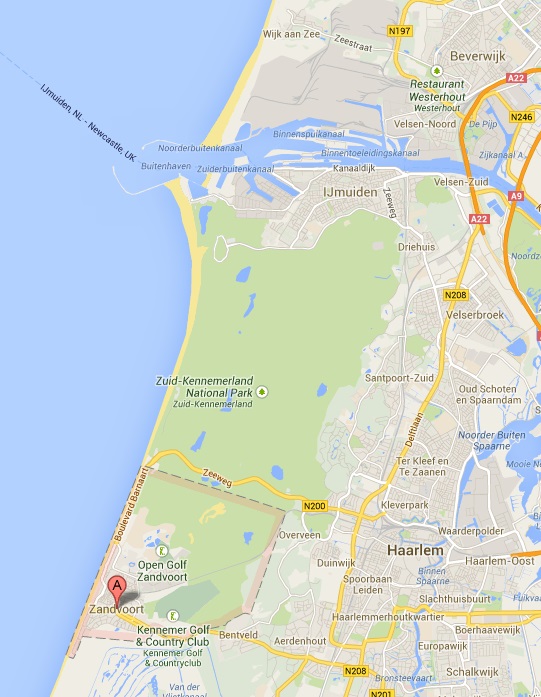 dunes. It is huge. Reception to day tent area was a 15 minute ride! And, ideally, one needs some extra long tent pegs as the dunes are soft. Pitching can be a challenge.
There was a restaurant, fortunately, as we were far to late to get into town.
Tandem Tour 2013: Magdeburg to Wittenberge
 In the early summer, much of Germany suffered from floods. The Elbe region was one of those severely affected. Magdeburg in particular. Up to this point we had not really noticed, but much of the Elberadweg to the North of the city was no longer passable. The detour – Umleitung – was not well signposted, intuitive or attractive.
We were trying to get to the market town of Tangemünde having left Magdeburg at 1500. We fell 18km short and opted for the Family Camp Kellerwiehl just north the small town of Bittkau.
The campsite is idyllic. There is a large lake, lots of trees, and a rudimentary restaurant; and to top it all, a labour-saving washing machine for our cycling gear. We ate in the evening (2030 on arrival) some salad, omelette and chips. We also cheated on the camping by hiring a wooden hut for a very reasonable fee. Luxury (below right).
Breakfast in the sunshine and then off (with the key to the hut in my pocket). It  was only when I stopped to shake an apple tree to harvest some of the abundant free fruit along the way that we noticed. Fortunately, community functions sometimes. Although the post office was closed in Tangemünde (Saturday, late morning), a quick call to the campsite secured the return of the key. Moments later the owner retrieved it from the jewellers (a strangely complementary business for a post office) whilst we had coffee in the impressive town square with the
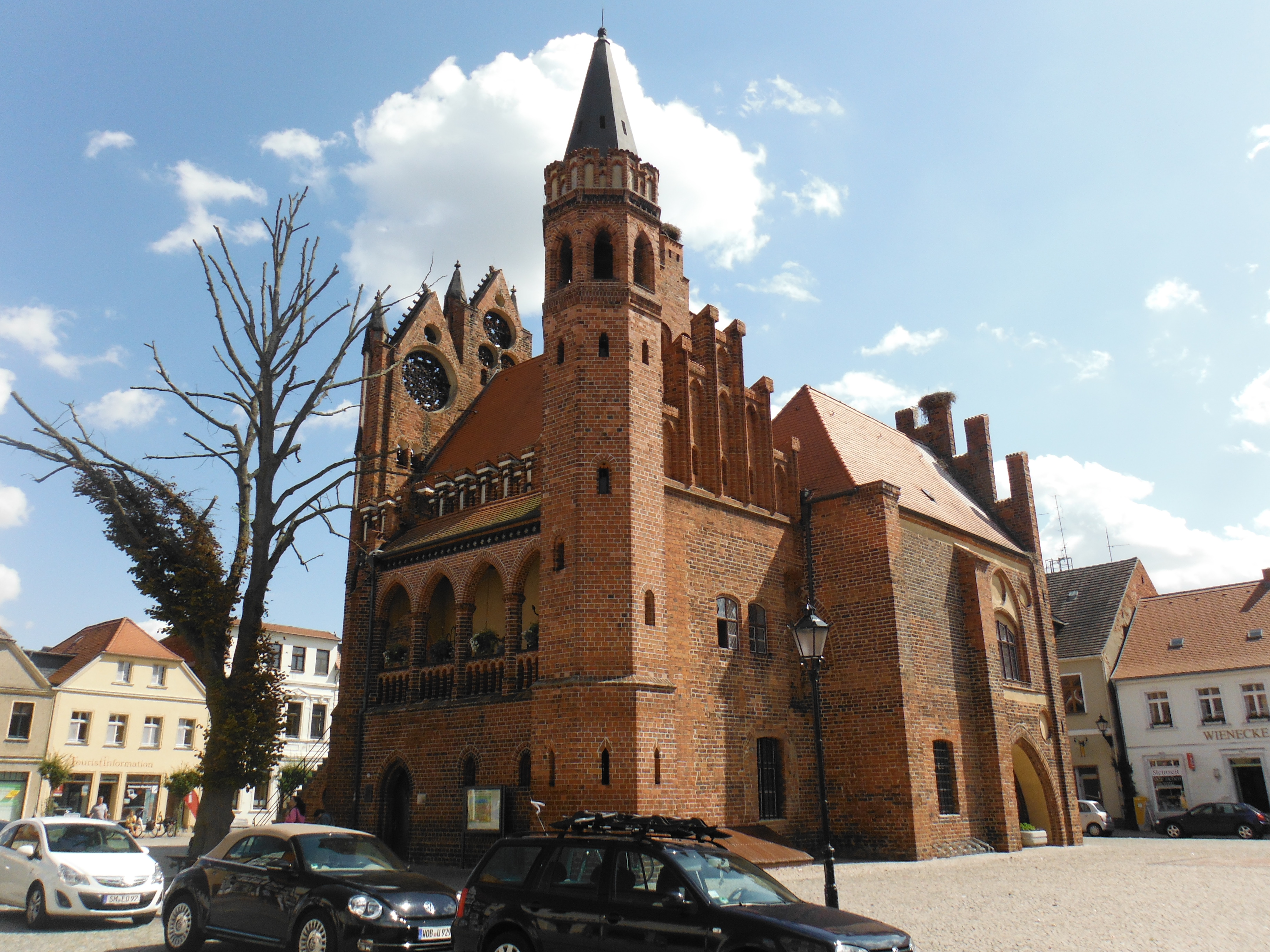 imposing town hall (below left) hosting a wedding. The town is an architectural delight with many wooden beamed ‘Fachwerk’ houses and buildings.
We set ourselves the target of reaching Wittenberge by the end of the day (100 or so kilometres), and picking up some fuel in one of the region’s ‘Hanse’ Stadts, in our case, Havelberg. En route, most of the villages and small towns were totally deserted. Arneburg, for example, with its impressive array of fachwerk, public art and an open Tourist Information Office, was reminiscent of southern European town in the middle of a siesta. But even then to use the toilet, one needed a key. Very clean though.
Crossing the river by ferry at Sandau, it is clear on arrival in Hansestatdt Havelberg that it was once a strategically important town. It is situated on the River Havel connected to the Elbe initially by a canal (upstream it voluntarily flows into its bigger neighbour). The rivers have served the town for trade, water and protection – indeed the safest place today would seem to be the campsite occupying an island accessed by a small bridge. From the middle ages, the economy was based on fishing, ship building, agriculture and cattle breading, apparently.
Again as the sun began to set, we approached our stopping place, Wittenberge. It was nothing like its southern Namesake. We sensed that we had entered a town that was not wealthy. It clearly lacked commercial heritage, and as we discovered later, young people. But in the midst of all of this is the hotel to match no other.
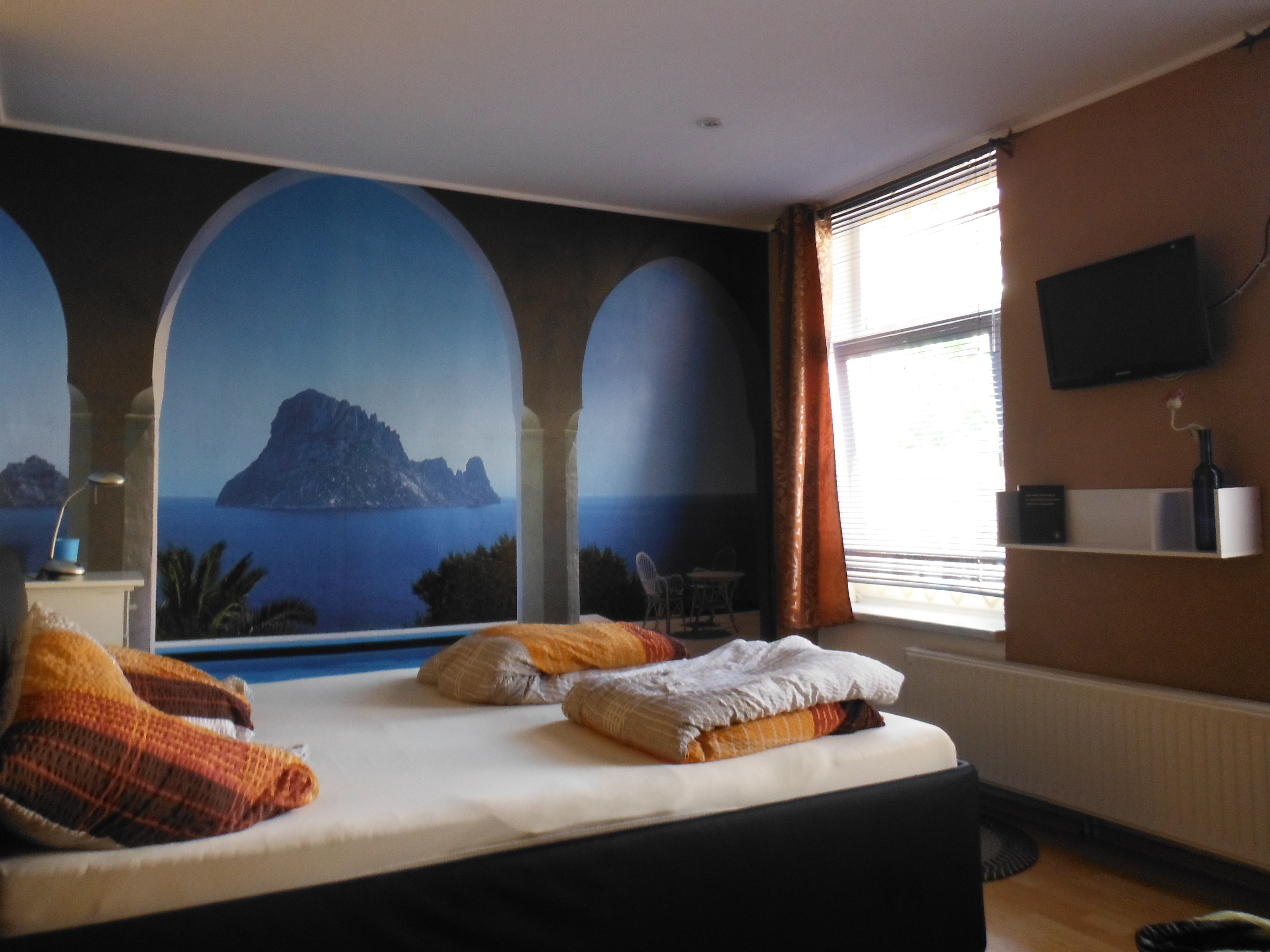 The Tollhouse Pension is what it says on the can. On arrival, check-in involves playing a couple of games, one resulting in the award of a sweet, the other the prospect of a glass of schnapps. Once in – perhaps 45 minutes after arrival – one encounters a room of some individual character. The owners, aware that Wittenberge is not the prettiest, provide a view (right). The bed was supremely comfortable, too.
As for the place, the old town and river front are pleasant and compact. The Mexican restaurant in the high street is ‘preiswert’ and brimming with choice. Wittenberge, then, is one of those places that one rarely chooses to visit but should.
 Be informed