Has it been a good week for women?
 Leave a Comment
The news regarding one of the UK’s most loved celebrities, Jimmy Savile, has not been good. It is not so much what he did – bad though that seems to have been – more that it was allowed to go on even though many people were aware of it. The fact that a BBC Newsnight report seems to have been ‘supressed’ in favour of a Savile eulogy adds to the sense of cover up. It took ITV to run with it.
The consequences have been monumental. Existing female presenters on the BBC have now come out and told of their own experiences with other male ‘colleagues’; for example, Liz Kershaw, formally of Radio 1 – Savile’s former station, told how she was groped whilst on air in the late 1980s and being accused of lesbianism when she complained. Sandy Toksvig made similar claims live on television. Finally, it seems, it is safe to tell the truth.
Talking of which, Julia Gillard, the Australian Prime Minister, had the House of Representatives utterly dumbfounded by
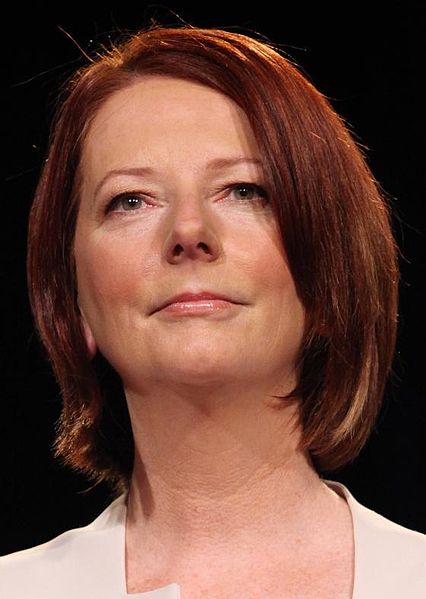
Julia Gillard (source: MystifyMe Concert Photography (Troy), Wikipedia
her 15 minute ‘home truths’ session in a debate on misogyny. Her speech opened with the following: “The Leader of the Opposition says that people who hold sexist views and who are misogynists are not appropriate for high office. Well I hope the Leader of the Opposition has got a piece of paper and he is writing out his resignation. Because if he wants to know what misogyny looks like in modern Australia, he doesn’t need a motion in the House of Representatives, he needs a mirror.”
The Savile abuse revelations can never add up to a good week for women; though having it out in the open and engendering some unease amongst the still-living abusers in the BBC and elsewhere is inherently good. Julia Gillard’s contribution, on the other hand, is empowering. It may have been entertaining at one level, but her ability to demonstrate to so-called colleagues that their behaviour towards her is at the very least bullying was striking. She has stood up to them on her terms. I cannot recall any similar events or instances.
I think we should invite her to do the same in the UK – starting with David Cameron and his “calm down, dear” put down to Angela Eagle MP in April 2011. One of the reasons that the Conservative Party is so nasty is because of its inherent mysogyny.
Full transcript of Gillard’s speech can be found here: http://www.smh.com.au/opinion/political-news/transcript-of-julia-gillards-speech-20121010-27c36.html#ixzz29H8MJ4Hl
The nonsense that is badger culling in England
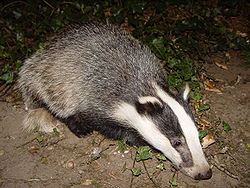
Source: BadgerHero, wikipedia
The long-fought for badger cull in England is about to start. The plan is to kill – systematically – 100,000 badgers; one third to the UK population. That, to reduce the infection of cattle by 15-20 per cent – not even to eradicate it.
Now the case against the cull has reached a new high with a number of eminent scientists at last speaking out. Lord John Krebs: “The scientific case is as clear as it can be: this cull is not the answer to TB in cattle. The government is cherry-picking bits of data to support its case.”; Lord Robert May, a former government chief scientist and president of the Royal Society, said: “I have no sympathy with the decision. They are transmuting evidence-based policy into policy-based evidence”; and the current government chief scientist, Professor Sir John Beddington, said: “I continue to engage with Defra [the Department for Environment, Food and Rural Affairs] on the evidence base concerning the development of bovine TB policy. I am content that the evidence base, including uncertainties and evidence gaps, has been communicated effectively to ministers.”
Not surprisingly, David Cameron, the UK Prime Minister, is quoted as saying: “I believe this is the right policy for healthy badgers as well as healthy cattle.” Even though, according to Professor Rosie Woodroffe of the Zoological Society of London “…all the evidence shows that culling badgers increases the proportion of badgers that have TB”. Dead badgers are always healthy.
So what is going on? Farmers and landowners have always had a penchant for destroying the countryside and anything else in it that offers a hint of competition to their activities. Foxes and birds of prey are persecuted incessantly on this basis. There is nothing like a land-owner’s whim – backed by the National Farmers’ Union – to base policy. Why do they never look at their own husbandry practices? Mad Cow disease, for example, was the farmers’ own doing. Though, we, the taxpayer, and the cattle, ended up paying for it.
http://www.guardian.co.uk/environment/2012/oct/13/badger-cull-mindless
Recipes in an era of high food prices
Food has always been important for me. Very early on I went vegetarian and against my best interests it was an essential criterion for any girlfriend. Intimate eating with a meat eater suits me not at all.
I learned to cook by my first landlord, Patrick. Even though I only lived with him for three months, he taught me the basics of vegetarian cooking.
I have a number of staples that I will share in the future, but I am always on the look out for new dishes, especially those that seem counter-intuitive with respect ingredients. Yesterday, I cooked one of those dishes with surprisingly good results. I extracted it from the Guardian life and style section. It is the creation of Angela Hartnett (actually, her head chef, Diego) who is chef patron at Murano restaurant in London. The dish is called aubergine gratin. The counter-intuitive bit is cooking with balsamico vinegar. But it works.
Serves 2
Ingredients:
1 large aubergine; 50ml olive oil; salt and pepper; 25ml good-quality balsamic vinegar; 250g buffalo mozzarella; 4 large tomatoes, halved; 1 tbsp chopped basil; 20g chopped black olives
Peel the aubergine, discard the skin and dice into large cubes.
Toss the diced flesh with olive oil and season with salt and pepper.
Roast in an oven preheated to 200C for 10 minutes (I gave it 15 minutes).
 Remove from the oven and toss with the balsamic vinegar before mixing with the tomatoes, olives, mozzarella and basil. Check the seasoning to taste, and return to the oven at 200C for another 5 minutes (for me it needed a bit more time, another 10 minutes, even).
Rising food prices
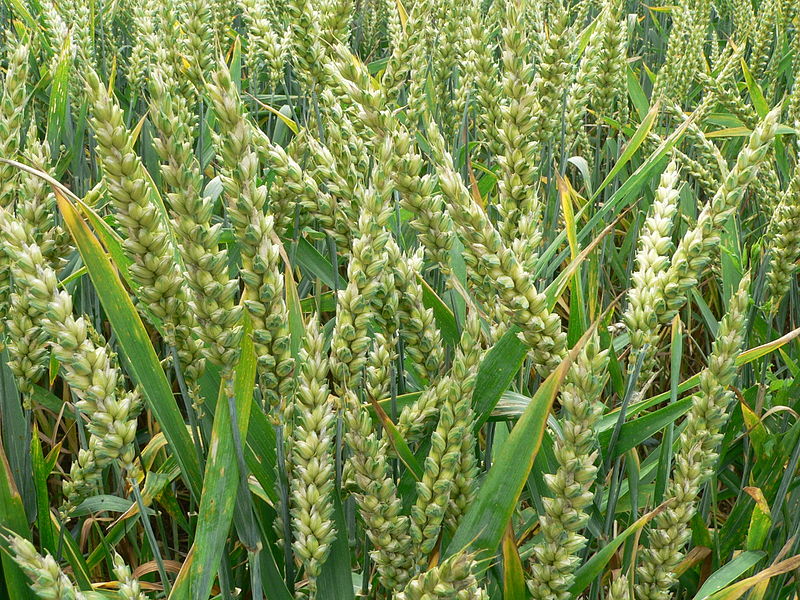
Source: David Monniaux, Wikipedia
I woke up this morning to the not unexpected news that food prices are rising. Particularly wheat. In the UK we are talking about yields being 15 per cent down. The dry spring and wet summer are the key factors for the UK. Drought in the prairies in the US and Russia have just compounded the situation.
Speculators are, clearly, going to do well out of this. It strikes me that a monkey could have speculated on this when the seeds were originally sown. I’m told that it will be hard for poultry and pig farmers as half of the grain crop goes to feeding these secondary sources of protein. I do feel that it is about time that the price of chicken and pork reflected the real world a little better. Maybe more of us can cut down or even eradicate meat from our diets. It is not going to get any better.
However, rising food prices do hit the poor disproportionately. The Guardian quotes Tim Lang, professor of food policy at London’s City University speaking on the Today progamme on the BBC. “Lang said the poorest 10% of households in the UK had seen a drop in food affordability of 20% in the last eight years and that this was also a “disaster for public health” as the price of healthier produce such as fruit had risen by 34% in the last five years. Lang, who coined the phrase “food miles”, said: “Most analysts think the long drop in food prices, of affordability, is over. We are now in a new world, a world of new fundamentals, not just bad weather this year but a long-term squeeze.””
http://www.guardian.co.uk/environment/2012/oct/10/food-prices-rise-wettest-summer
The great rail debacle
I’ve been a little busy recently. This blog has had to take a back seat, as it were. But this morning’s announcent by the Transport Secretary that the franchising process is flawed, is quite the most extraordinary admission and begs some comment. We do not know – other than what Richard Branson claimed (see post 15 August 2012) – exactly what these flaws are, but the implications are signficant.
First Group this morning found its share price down 20 per cent even though – as the Transport Secretary said this morning on the Today programme – the firm is blameless. Three officials from the Department for Transport find themselves suspended. The whole franchising process which currently has a number of franchise bids in progress is now disfunctional. And the taxpayer will have to foot the bill for the costs incurred by those who bid in the West Coast franchise amounting to at least £40m.
It is not coincidental that this admission comes now as Branson’s case was due to be heard in court. It was clearly going to be even more embarrassing to have the court reveal the shortcomings.
And let us not forget the nonsense that is rail franchising in and of itself.
Arctic sea ice

Source: NASA
My most recent blog entries have been a shade indulgent. I write about my holiday; actually, a rare occasion when I do not add an awful lot of CO2 into the environment. That said, the tandem’s manufacture probably added considerably to my carbon footprint. The holiday was made by the beauty of the natural environment fed by a powerful river (the Rhine).
It has been a long time since I have been a serious environmentalist. I cut my campaigning teeth with Friends of the Earth in the early 1980s; and I bought the Guardian newspaper specifically to read the environment stories. Today I am reminded – as a somewhat older man – that the issues have not only not gone away, but rather they have worsened. Our knowledge about what is happening has increased, but the denial across the developed world is not retreating.
What has actually reminded me? The Guardian newspaper has published a short article quoting Professor Peter Wadhams of Cambridge University. This year has been catastrophic in terms of arctic ice melt. It is now down to a mere 3.5m sq km down from the previous lowest recorded in 2007 of 4.17m sq km. He predicts this will have retreated fully by 2015/16. “As the sea ice retreats in summer the ocean warms up (to 7C in 2011) and this warms the seabed too. The continental shelves of the Arctic are composed of offshore permafrost, frozen sediment left over from the last ice age. As the water warms the permafrost melts and releases huge quantities of trapped methane, a very powerful greenhouse gas so this will give a big boost to global warming.”
http://www.guardian.co.uk/environment/2012/sep/17/arctic-collapse-sea-ice?INTCMP=SRCH
The Rhine Route by tandem – the experience (2)
The Dutch cycle paths are exceptional. Always asphalt, always sign-posted and always busy. One has to beware of scooter and moped riders as they legally use them, too. On the coast, on a hot day, there is not a cycle parking space to be found; a day by the seaside seems to be by bicycle (or tram, where possible). The LF4a long-distance cycle route, however, is fantastic. It takes in some of the country’s national parks. In our case, we experienced the limited Utrechste Heuvelrug park. It is quite forested and quiet. As a route back to the Rhine at Rhenen, sublime.
Our Utrecht navigation rendered us a little cautious when it came to Arnhem. We stayed on the south bank of the river effectively avoiding the city’s early evening rush. We headed for Panerden to the Southeast of Arnhem close to the German border. Panerden is a typical small town with a few shops and a couple of multi-purpose bars. In the evening the cafes serve as drinking houses. In the morning the coffee and apple pie are a good energy source. Do not be put off by the apparent black hole that is the bar. It is the way it has to be for the proprieters to make a living. The nearby campsite is exceptional (see post 4 September, 2012).
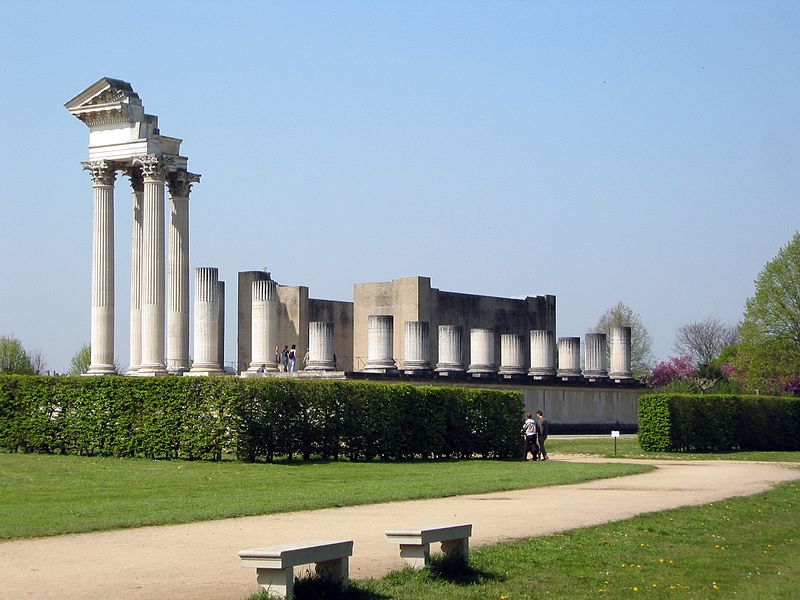
Magnus Manske: wikipedia
And then to the border. First stop Emmerich – a typical border town, though very german. We were advised to go to Kalkar for lunch, some 15 or so kms away. We ate at the distictive windmill, before heading off to Xanten, a historic city with a curious archaelogy park filled with Roman artefacts: from the road an incongruous area filled with ‘crumbling’ pillars and arches.
The Rhine Route by tandem – the experience (1)
On from The Hague, we followed LF4a – a long distance cycle track to Enschede. We took it as t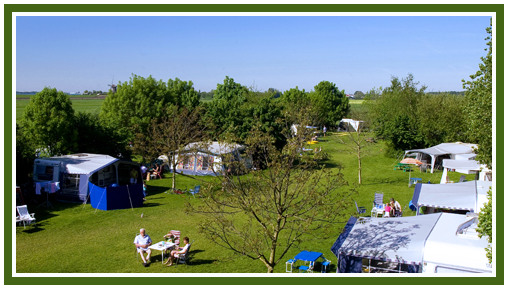 he route includes Arnhem, which seemed like a good place to join the Rhine after not being able to follow it from the official ‘starting point’ at Katwijk. However, the LF4a is not endowed with campsites (actually, there are not too many in the whole of the Netherlands), so we had to make some deviations. That is how we fortunately ended up at the campsite at Leimuiden. I say fortunately because it was a delightful space, but it was also where we discovered just how friendly the Dutch are relative to what I had read (more on that later). Within minutes of arrival we had been offered 4 cans of Hoegaarden beer by a woman who was captivated by the tandem but could not stay.

Me, tandem and tent at Straathof
At breakfast time, another woman offered us coffee whilst she waited for her children to rise. Extraordinary generosity that was replicated many times as we progressed.
Pall Mall summer

Pall Mall summer campaign
The cycle continues for Pall Mall cigarette advertising. It is our carefree bunch of 20 somethings enjoying life and now the summer to the full, including smoking. I almost feel that I know these characters now.
Rhine Route by tandem – tales from the journey
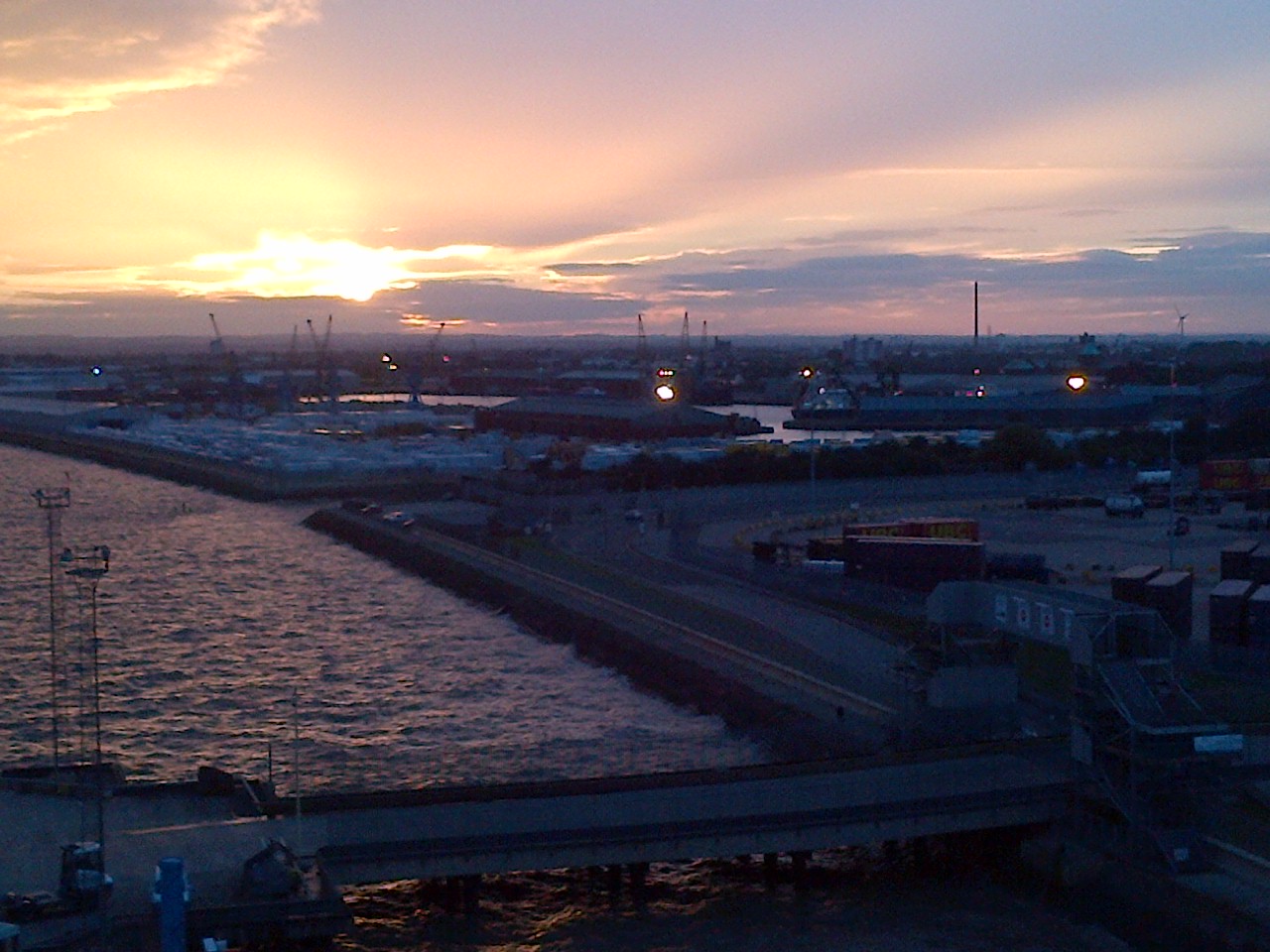
Hull from the deck of the Pride of Rotterdam
I lived for 23 consecutive years in Hull – born and bred. But never did I take the ferry to Rotterdam or Zebrugge. Many times I watched them leave. So, on on Friday 17 August 2012 we boarded the ferry to Rotterdam to make good that failure. This is the view of the City from the Ferry (left). And here we are on the deck at departure time (right).
What is to be said about this experience? It is a tad expensive, particularly at peak time. The cabins are excellent – showers and toilet en suite. We did not have window, but come the morning a global announcement is made that breakfast is served and you will soon be required to leave. So get it while you can. Very civilised.
Disembarkation is straightforward and the cycle route towards Rotterdam discrete and well signposted. We were, however, going to join the old Rhine as per Powell route, which necessitated us to head up the coast towards Katwijk. To get onto the coast one has to do about 15km towards Rotterdam and then double back on the right side of the river using the ferry between Rozenberg and Maassluis. Then on to Hoek Van Holland before following the coast up to Scheveningen, which is the coastal town adjacent to The Hague.
It was a very hot day and utterly chaotic. The beaches are excellently sandy, and as a result everyone seemed to be there on their bicycles. At Scheveningen, fortunately, we were intercepted by a woman who offered us room in her garden in The Hague to pitch the tent. In fact, the garden was a shared affair within the confines of a large school house that had become a cooperative. It was a fantastic space, with much of the interior preserved – with members living in classrooms. It was big an echoey. We were shown around The Hague that evening by a friend of our host, and then in the morning we were taken by another member to the start of Route LF4a, one of the Netherlands’ long distance cycle routes. We are grateful to the members of Grote Pyr for their hospitality and kindness. http://www.grotepyr.nl/grotepyr/Home2/Home2.html
 Be informed