Author Archive
My Blackberry
Filed under: Uncategorized | Tags: Blackberry, Samsung Galaxy S4 Mini
 Leave a comment
 My two years were up in August. Time to ‘ugrade’ my mobile. Even on the morning of my visit to the Carphone Warehouse, I really really wanted to stay with Blackberry. But the bad news about the state of Blackberry and the intelligence from app writers that there is little to be gained for writing for the platform, coupled with Nokia’s acquisition by Microsoft, indicated that a migration to another platform was reluctantly needed. Most converting Blackberry users, it seems, have over the past months migrated either to iPhone or alternatively to Samsung/Android. Whilst getting locked in to Google does not really appeal, getting locked out of Blackberry is even less attractive.
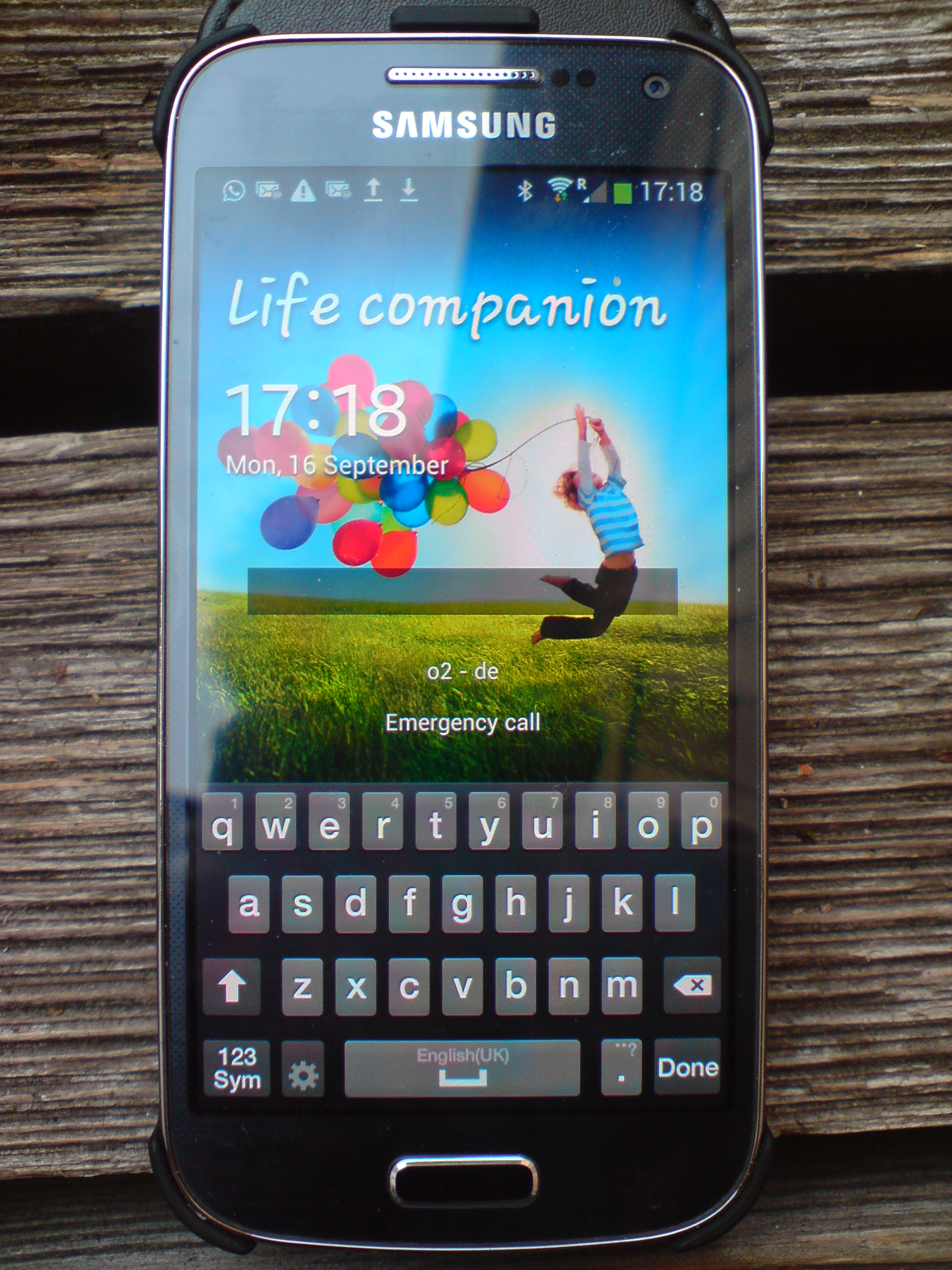 My new mobile is a Samsung Galaxy S4 Mini (left). I have not had it long enough to comment on its functionality. That comes later. In the meantime, any readers with whom I was connected on Blackberry Messenger, please be reassured that I did not deliberately break the link. Within 20 minutes of my visit to the shop, I had been transferred (they said it would take 24 hours).
Rotterdam, museums
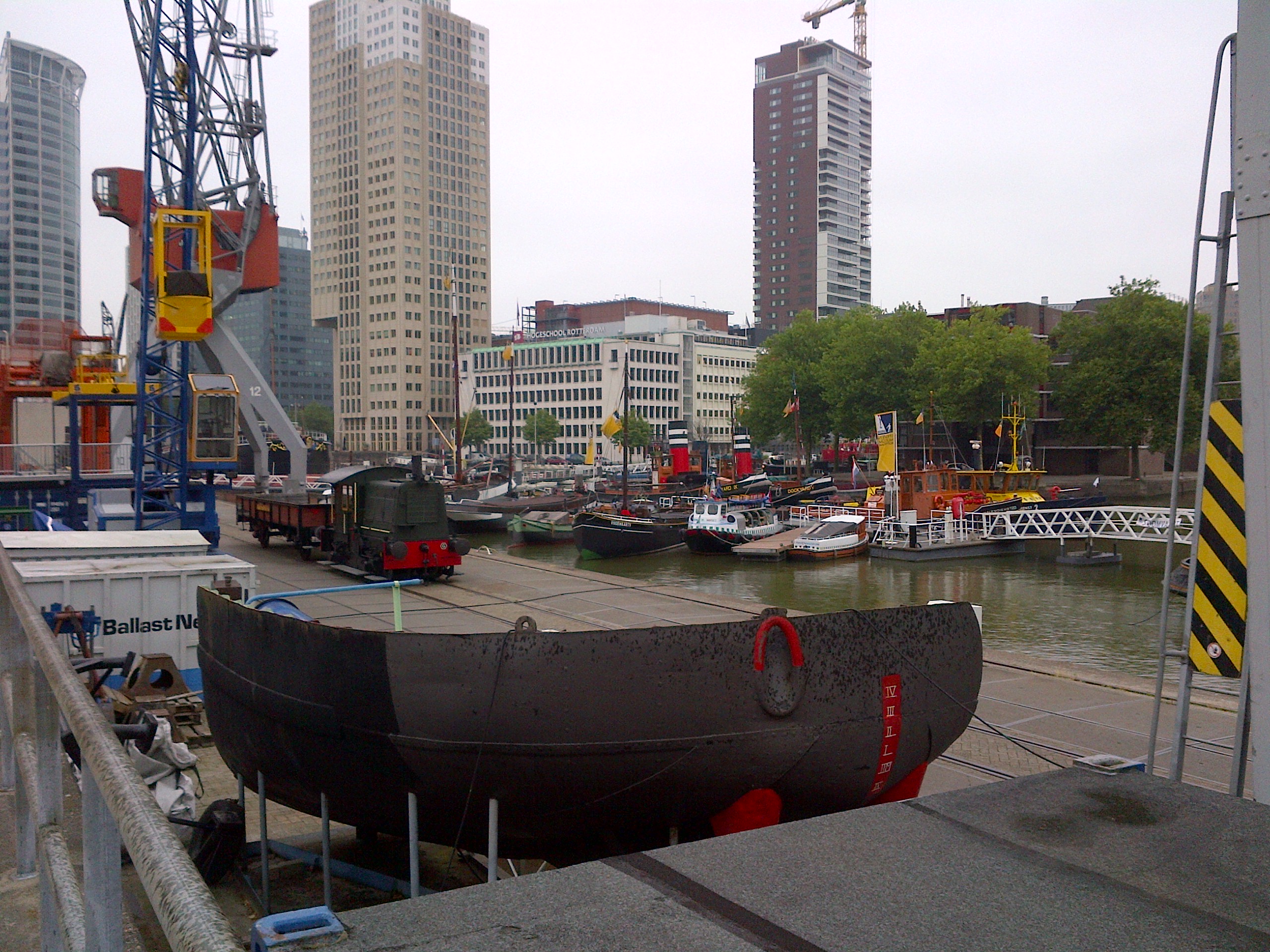 Rotterdam, at first sight, seems not to have any recognisable iconic buildings that so differentiate other European cities. However, Rotterdam makes up for this in museums and food. Spoilt for choice, just wandering around ensures that one encounters objects – cranes, boats, steam engines – from the maritime museum (left) with bi-lingual history plates.
The Museum Boijmans Van Beuningen is the City’s primary art gallery, home to an eclectic mix  of pictures, sculpture and furniture. Some of the pictures are very special. Paintings by René Magritte always seem like old friends, unless one has not met them before as in the case of La jeunesse illustree,1937 (right) with its path occupied by some familiar – and not so familiar – Magrittian objects against a blue sky and deep green grass. There are examples from a number of notable surrealists including Man Ray and Salvador Dali. Cubism in the guise of Picasso is also well represented.
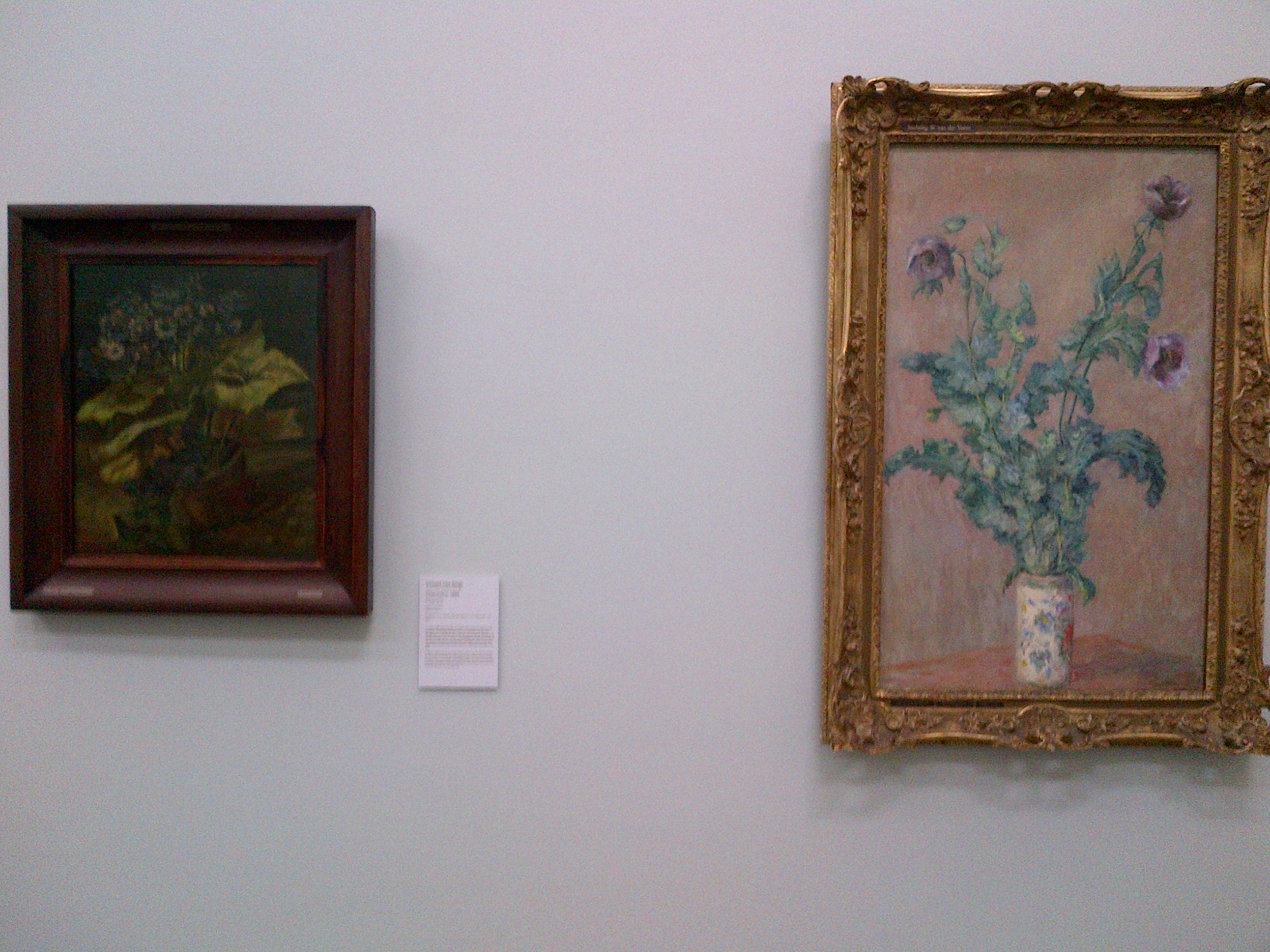 There is work by Van Gogh; for example, Cineraria’s from 1885. Still life is celebrated more widely, with Claude Monet’s Poppies in a Vase from 1883 (both left).
The curators of this museum have much humour integrated into the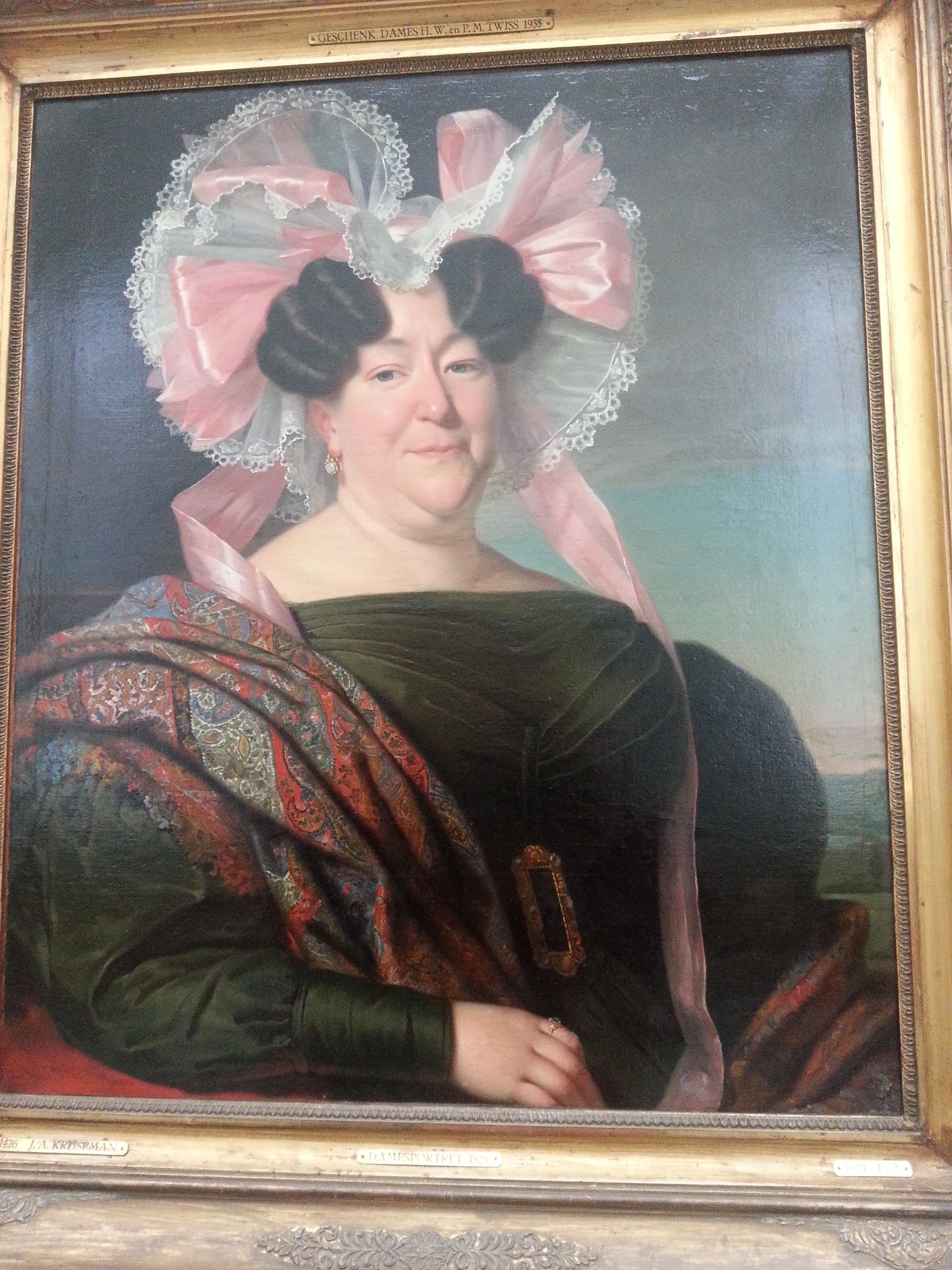 plates. For example, Jan Adam Kruseman’s Damesportret from 1829 (pictured right) is, according to the curators, apparently a lesson in timelessness. The unnamed sitter is dressed in all her finery, which, at the time, may have been the height of fashion, but now looks a little overdone and reflects badly on the judgement of the painter rather than the sitter. Lovely smile, though.
Equally, the plate accompanying van Gogh’s Cineraria’s (above), informs us that this painting was supposed to be lighter and more commercial to help sales. However, the plate concludes with the statement, “it is still not very colourful”. Contrasted with Monet, certainly.
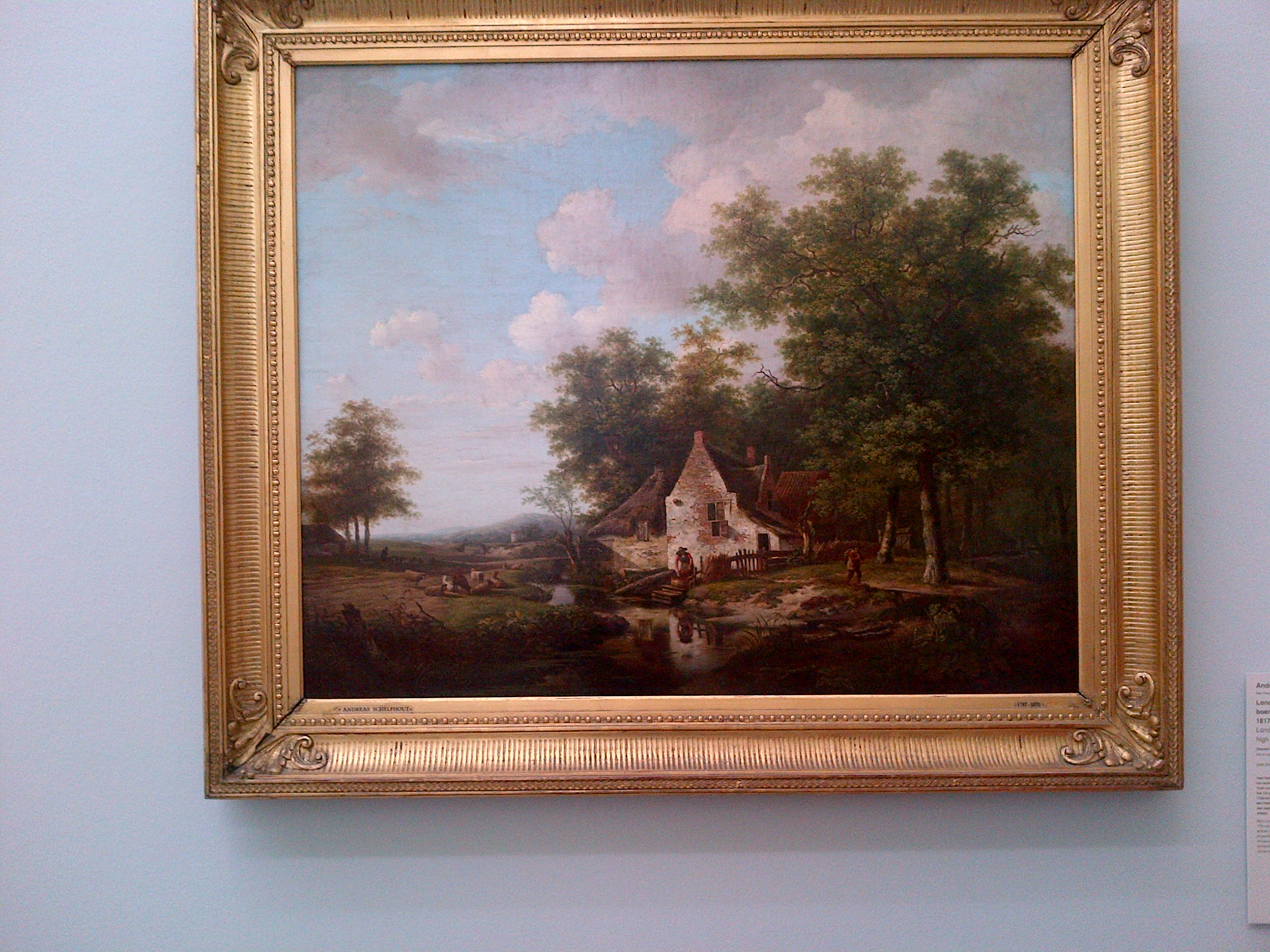
There are also examples of the legitimisation of the flat landscape as a subject. Paul Gabriël’s 1898 work, Landschap bij Overschie (Polder with mills near Overschie) is a notable example (bottom left). Earlier one finds the more traditional approach to landscape painting such as Andreas Schelfhout’s Landschap met rechts een boerderij tussen hoge bomen (Landscape with farm between high trees) from 1817 (below right).
|
|
 |

The museum also houses a collection of modern design artefacts. This collection is not really systematic nor specifically Dutch. There are collections of desk lamps, chairs, even door handles all tracing design innovations and materials. There are also plenty of metal and ceramic artefacts.
Left luggage facilities – Rotterdam Centraal
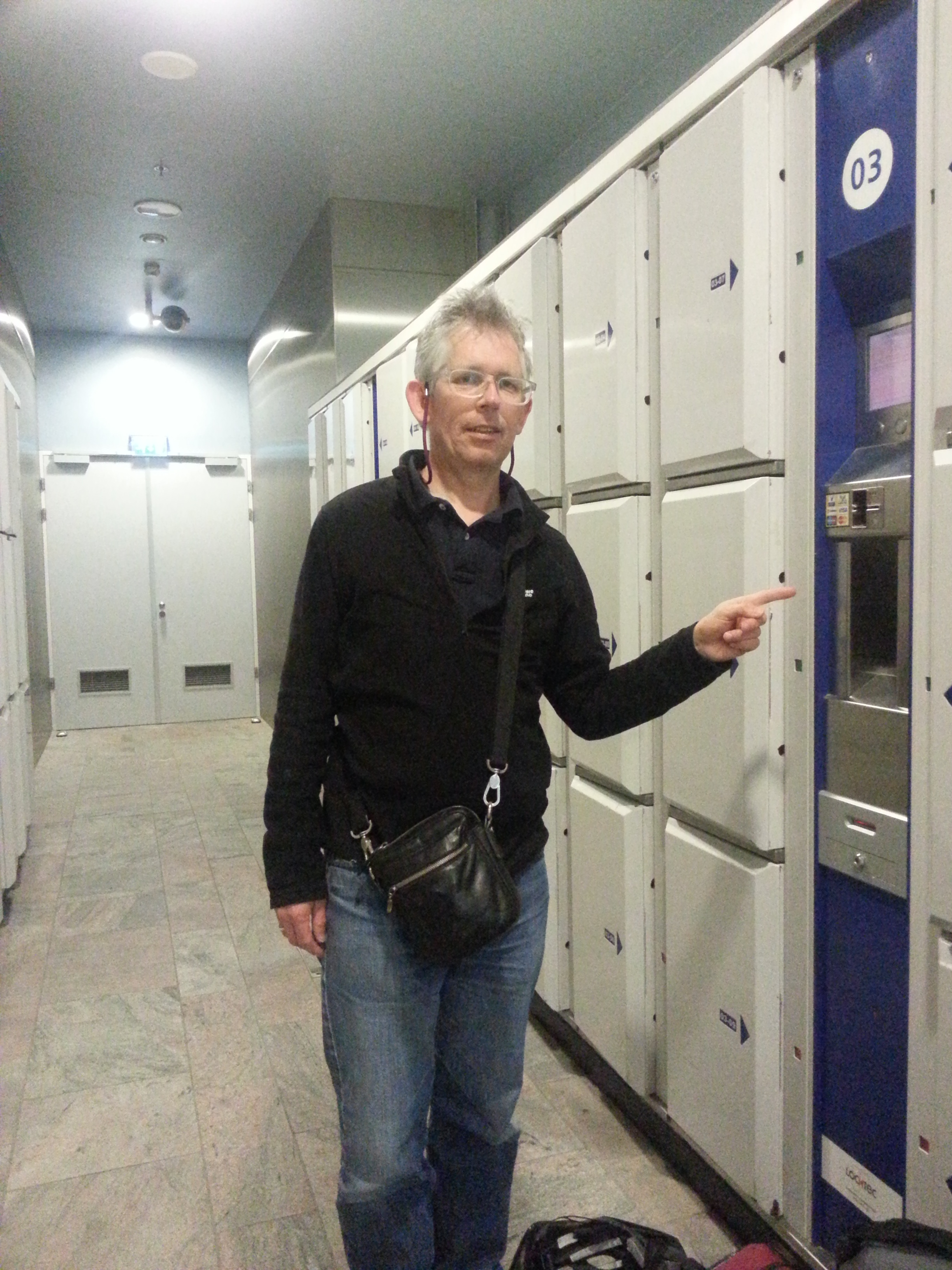 Rotterdam Centraal Station is huge and new. It was very much a building site when we arrived (15 August 2013). The left luggage lockers (left) are located near to platform 17, come in two sizes (5-8 Euros for 24 hours) and require a credit or debit card – no cash. The key is a flimsy card a shade bigger than a credit card. The lockers open when it is inserted. Once open it cannot be relocked without payment.
Wretched terms and conditions
 There is a lot of talk at the moment in the UK media about Zero Hours contracts for employees. Seemingly – and to the surprise for some of the UK’s lawmakers – many high profile firms offer these contracts as standard. For example, MacDonald’s and Burger King Hamburgers, Mike Ashley’s Sports Direct clothing retailer (Ashley also owns Newcastle United football club), Domino’s Pizzas. Less high profile is how certain private firms that provide public services such as home helps for the elderly and handicapped use Zero Hours contracts for their ’employees’ who are paid only for their contact time with ‘clients’ and not for travel time, fuel, etc; nor are they afforded national insurance contributions. Moreover, Zero Hours workers do not know how many hours they may be working from week-to-week. This builds in immense uncertainty and affects negatively things such as credit ratings. There are over 1 million British workers on these contracts according to a recent poll by the Chartered Institute of Personnel Development.
Oddly, Mike Ashley seems to be able to pay his footballers well and on long contracts. I assume footballers are well represented by agents who earn for themselves a nice percentage of any footballer’s transfer fee – a good case for organised labour if ever I heard it.
Now here is my link. I have been for many years a satisfied customer of Charles Tyrwhitt menswear. Until now. My last online order – few sale items including some shorts it being summer – was confirmed with the message that my order will be delivered by Hermes Couriers.
Hermes is a German company, part of the Otto group (German readers will know about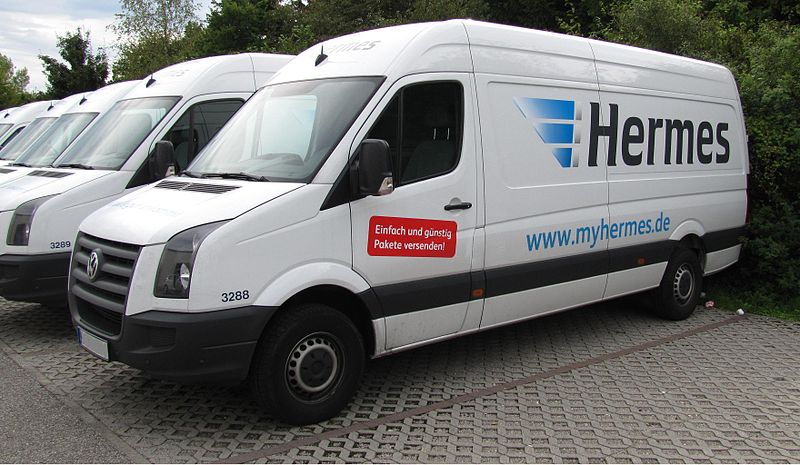 Otto), that came to the UK in 2000 in what seems to have been a joint-venture with Speedlink. Its business model is based on sub-contracting the delivery to ‘self-employed’ drivers. My attention was brought to this company by chance watching a TV documentary made by Germany’s national broadcaster ARD. (http://programm.ard.de/TV/daserste/ard-exclusiv–das-hermes-prinzip/eid_281066630812527)
This sub-contracting was found to involve sub-sub contractors all earning progressively less as the parcels moved down the food chain. The sub-contractors are effectively paid piece rates, often having to work very long hours to deliver the requisite number of parcels to cover costs. When the man or woman from Hermes arrives at 2100 it is not because it is convenient, but rather that the sub-contractor needs the delivery to make a living.
 Here is the package (left) that arrived from Hermes a couple of days ago. Fortunately in this box is a shirt, tie and a pair of shorts. On the whole not fragile. One must ask, however, what kind of operation is it that does this to a humble box of clothes? Actually, we do not need too much imagination.
So, what I thought was a reputable retailer – Charles Tyrwhitt – uses a disreputable courier to squeeze out profit. Oh, and while we are at it, those very same lawmakers who are so surprised at Zero Hours contracts want to privatise the Royal Mail – a state-owned parcel service that has organised workers who earn a living wage.
Credits:
Hermes van: Musikmichi1407
Make the call
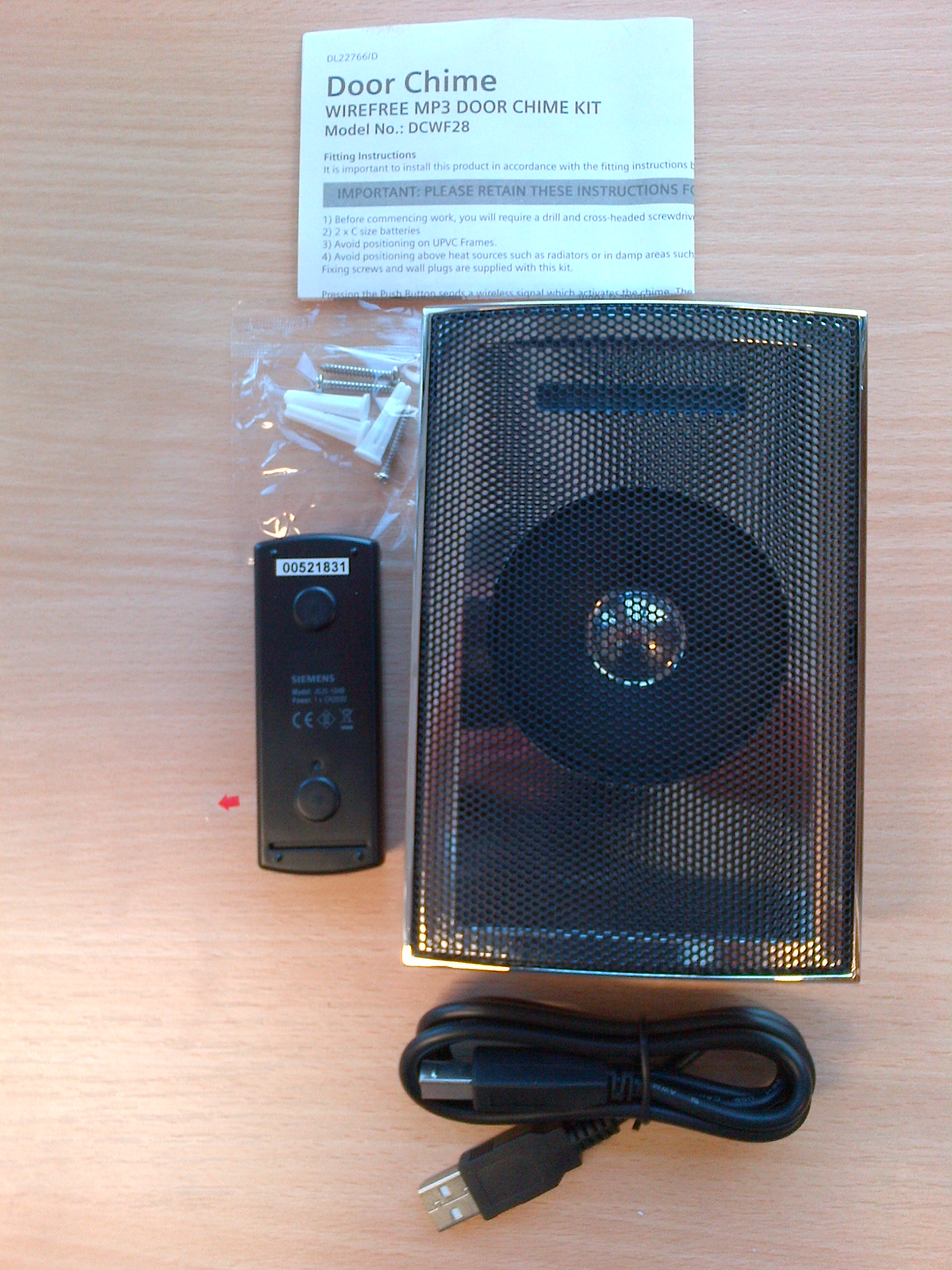 Ok, this is my latest purchase. A wirefree doorbell. With a loud chime.
In my bid to source from as near to home as possible, I was expecting a difficult task in finding a Europe-made doorbell. This one is made by Electrium Sales, a Siemens subsidiary. I thought that I was in with a fighting chance, having not been aware previously that Siemens had made doorbells.
No country of origin on the box. I then opened the box and looked on the instructions. No guide to where it was made. Then on the device itself. No.
I then opted to phone them, they having conveniently given their number on the instructions. A model number and two minutes later we had tracked down the device to its manufacture in Withernshaw, near Manchester. Thanking the woman who engaged me in this investigation, I asked why such information was not on the box…
Worth the call.
Bad customer service – Sussex Computer Centre, Hove
 I apologise about the parochial nature of this post. But bad customer service gets me angry. I try to shop locally – to support local traders against the onslaught of the superstores and the internet. Not 100m from where I sit now is long-established small business, Sussex Computer Centre, where one can get computer repairs, peripherals, software, etc. When I bought my Blackberry Playbook, I thought that I would augment it with a portable mini Bluetooth keyboard. I visited Sussex Computer Centre on 7 July and purchased the keyboard pictured bottom right. It cost me £29.50
On the top right is – or was – a little button that acts as a mouse. Neat idea, but seemingly not fit-for-purpose. When I extracted the keyboard from my bag, I discovered that had broken off. I retrieved the remnants of the mouse from the bag and presented them yesterday morning to the owner of Sussex Computer Centre.
I do not think that any shop owner relishes a customer trying to return items that either do not work or are damaged. But bearing in mind this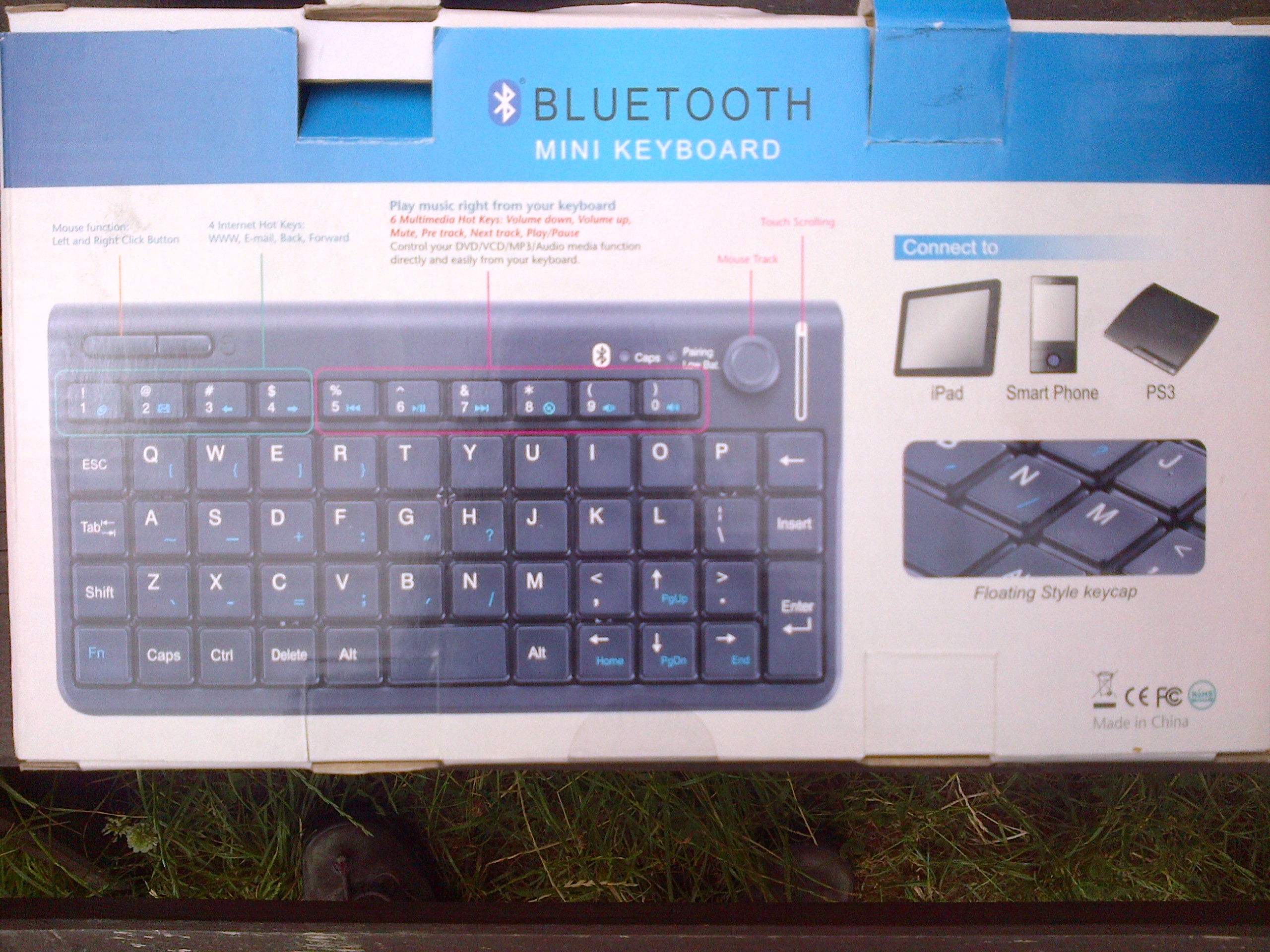 business has been running for over ten years, I would have thought the owner might have developed some customer service skills in preparation. Seemingly not.
Essentially, it was my fault. Indeed, he asked me whether I had dropped it. Or put another way, I dropped it and therefore it is a ‘customer problem’. The fact that he may have sold me something that is not actually fit-for-purpose does not come into it. He will not be selling me anything in future.
Latitude 2013 – music
Latitude is a music, comedy and arts festival held over three days in parkland in rural Suffolk, England. There are a number of stages located very much in earshot of one another generating a cacophony of sound. The main stage is called The Obelisk Arena. The stage is flanked by two large screens; a further one sits behind the production platform. On Saturday night, the Obelisk Arena was stunned by Kraftwerk. Tracy Thorn, formally of Everything but the Girl, appearing in the Literature tent, described Kraftwerk to author and DJ Stuart Maconie as “four old blokes with laptops”. In a literal sense she is correct. But she misses the point.  The pioneers of electronic music pioneer on; whist the music is unchanged – partly because of its timelessness – its presentation is awe inspiring. The Robots – a fabulous track in its own right – is accompanied by four pixelated erstwhile ‘Man Machine’ Kraftwerkers rotating in front of the current incarnation (only Ralph Hütter of the original line-up remains). By contrast, ‘The Model’ and ‘Tour de France’ played to archive footage of models and racing cyclists respectively. Trans-Europe Express featured a geometric train. And then Autobahn played to imagery of an idealised Autobahn hosting iconic German vehicles, VW Beetles, campers and classic Mercedes from an unspecifiable period in the past. For the time being, this is unmatchable music presentation.
Many of the bands performing this year owe much to Kraftwerk. So much so, in the case of Hot Chip who preceded Kraftwerk in the Obelisk Arena, that singer Alex Taylor adorned his Kraftwerk Autobahn t-shirt for their performance. And what a belter it was. Largely featuring tracks from the most recent album, In Our Heads, the band flitted from one instrument to another as if playing musical chairs. Their website features their effortless performance of ‘Are you ready for the floor’ (at the time of writing the visuals are not working well). http://www.hotchip.co.uk/2013/07/test/
  The other band that we saw with a Kraftwerk debt are Austra (left). Appearing on the BBC 6 Music Stage, they performed tracks from their new album, Olympia. This album is disappointing relative to their debut, ‘Feel it Break’. But played live, one can jettison the bemusing melancholy of the lyrics that weigh down the album, and enjoy the extraordinariness of lead singer, Kate Selmanis’ voice.
Also on the BBC 6 Music stage was the Laura Mvula with her band featuring a cello, violin, double bass, harp, drums and 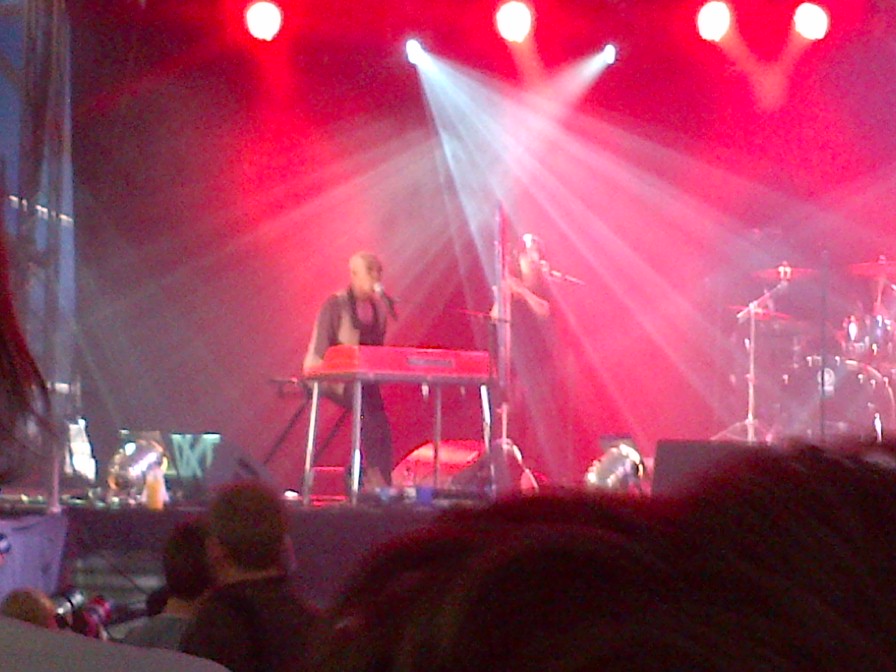 keyboards. Their set was irritatingly short as many are in the middle of the day at festivals. She told us that her husband doesn’t really like her songs, but he approves of ‘She’, so we got to hear that. ‘Sing to the Moon’, the title track from the album renders one mortal and also the upbeat ‘Is there anyone out there’ played, partly on her own admission, because recent gigs had been a bit quiet. A large appreciative audience at Latitude certainly made her feel wanted.
Our first musical encounter on Friday afternoon was the enigmatic I am Kloot. I am not sure what to make of them. Their own profile has it that they are “an oddball pop trio based in Manchester, England, that consists of vocalist/guitarist John Bramwell, drummer Andy Hargreaves, and guitarist/bassist Pete Jobson.” The music is rocky, melodious melancholy. A bit grizzled. Songs about too much alcohol; reflection and mortality.
Friday was also an opportunity to hear Texas – never a fan – but the rocky show had a feel-good sense to it with lead singer, Sharleen Spiteri, seemingly overwhelmed by the reception. Bizarre shirt, though. They were the only band allowed an encore.
We also saw the Yeah Yeah Yeahs. Karen O’s shrill voice didn’t quite penetrate the guitars. She seemed to get more and more angry as the set went on. And thoroughly unhappy with being ‘managed’ off the stage. Or so it seemed.
We dipped into Grizzly Bear, but actually found them a bit uninspiring. We stumbled across The D.O.T. ignominiously in the cinema tent. A duo, Mike Skinner (formally The Streets) and Rob Harvey (formerly The Music), with some great little urban songs. A version of ‘how we all Lie’ that we heard live can be found on Youtube http://www.youtube.com/watch?v=JqrliWEYIko.
Speechless over Zimmerman
 This picture is scanned from the Südeutsche Zeitung (Monday, 15 July 2013). It is copyrighted RTR, but it one of the most chilling pictures I’ve seen in recent times. On the right is George Zimmerman, acquitted of murder in a Florida court on Saturday. The smiles demonstrate the ‘success’ of the defence in evading justice. Knowingly. Even if it is a job well done – which it is not – the smiles seem to demonstrate some perverted sense of ‘citizenship’. Zimmerman shot and killed an unarmed 17 year old black man, Trayvon Martin, in what can only been seen as vigilante justice defending a gated ‘community’ against the threat of robbery. ‘Stand your ground’ laws permit lethal force in Florida and other states. Using such force against an unarmed teenager brandishing sweets from a local shop has been demonstrated in a court to be legitimate. It is also seen to be a cause for celebration. Shameful.
There are many who are more eloquent and informed than I am on this case and the implications. The Südeutsche Zeitung (below right), for example, pulls no punches. There is no attempt to ‘explain’ the Jury’s decision, only to describe what happened (black man shot) as a mixed race white man ‘feared’ for his life after having stalked the young man and been told by the police to stop following him. Zimmerman’s 911 call can be heard here
Gary Younge’s first paragraph in the Guardian newspaper on 15 July says enough: “Let it be noted that on this day, Saturday 13 July 2013, it was still deemed legal in the US to chase and then shoot dead an unarmed young black man on his way home from the store because you didn’t like the look of him.” http://www.guardian.co.uk/commentisfree/2013/jul/14/open-season-black-boys-verdict
The President – increasingly becoming illiberal and reactionary – could only say: “The death of Trayvon Martin was a tragedy. Not just for his family, or for any one community, but for America. I know this case has elicited strong passions. And in the wake of the verdict, I know those passions may be running even higher.”
“But we are a nation of laws, and a jury has spoken. I now ask every American to respect the call for calm reflection from two parents who lost their young son.”
“And as we do, we should ask ourselves if we’re doing all we can to widen the circle of compassion and understanding in our own communities. We should ask ourselves if we’re doing all we can to stem the tide of gun violence that claims too many lives across this country on a daily basis. We should ask ourselves, as individuals and as a society, how we can prevent future tragedies like this.”
The short answer surely is, convict racist killers. Guns, compassion, understanding and the other apparent platitudes are red herrings.
Abu Qatada
 Every picture tells a story. This one more than most. It is credited to the RAF (Royal Air Force), MoD (Ministry of Defence) and the Press Association. Though it is presented as though it was taken secretly by a photographer keen to alert the world to an important event. In the event, it was stage managed.
Abu Qatada is now in Jordan having for eleven years fought extradition from the UK where he faces no charges. In Jordan he was wanted in connection with a “terrorist bombing conspiracy”.
The British Government has spent a lot of time and money trying to deport him. But attempts to deport him have been consistently adjudged to be in contravention of Article 6 of the European Convention on Human Rights. This Article relates to the prospect of a free and fair trial, something which the European Court and the UK Supreme Court both concur is not possible in Jordan for this case.
The solution is threefold. Leave the jurisdiction of the European Court in order to deport people to places where they may be tortured or ‘evidence’ arising from confessions of others under torture is admissible; change the law and agree a Mutual Assistance Treaty with said country; or both.
Edward Snowden and Prism
 The treatment of Edward Snowden and those who might give him asylum, tells us as much as we need to know about in whose interests states act and where the current balance of power lays. In the name of anti-terrorism, we are all being monitored. They say that they are only collecting “meta data”; i.e. data about who ‘citizens’ contact rather the content of that contact. The usual guff comes from politicians – ‘if you have done nothing wrong, then there is nothing to fear’.
The vilification of Edward Snowden – the whistleblower – is clear. The US state brands him as a traitor, a fugitive from justice guilty of treason and much of the media is aligned with this position. The latest post from Medialens gives Snowden their usual treatment: http://www.medialens.org/index.php/alerts/alert-archive/alerts-2013/737-snowden-surveillance-and-the-secret-state.html
And then there is the Latin America situation. The denial of Evo Morales’s plane access to key parts of European airspace on 2 July is extraordinary. Morales, let us not forget, is President of Bolivia and was attending a legitimate energy conference in Moscow. Clearly pressure had been put on European states from the US. But it is interesting that ‘they’ – whoever they are – thought that Snowden was on the plane; he may well have been stupid with respect to whistleblowing and his own safety, but he is not, surely, going to do the obvious (as he demonstrated by not being on the plane to Cuba a couple of weeks earlier)?
 Be informed