Left luggage facilities, Amsterdam Centraal
The perennial for independent travellers is where to store luggage when passing through cities. And how does it work?
 Amsterdam Centraal Station does it by locker. There are about 1000 of them located near to platform
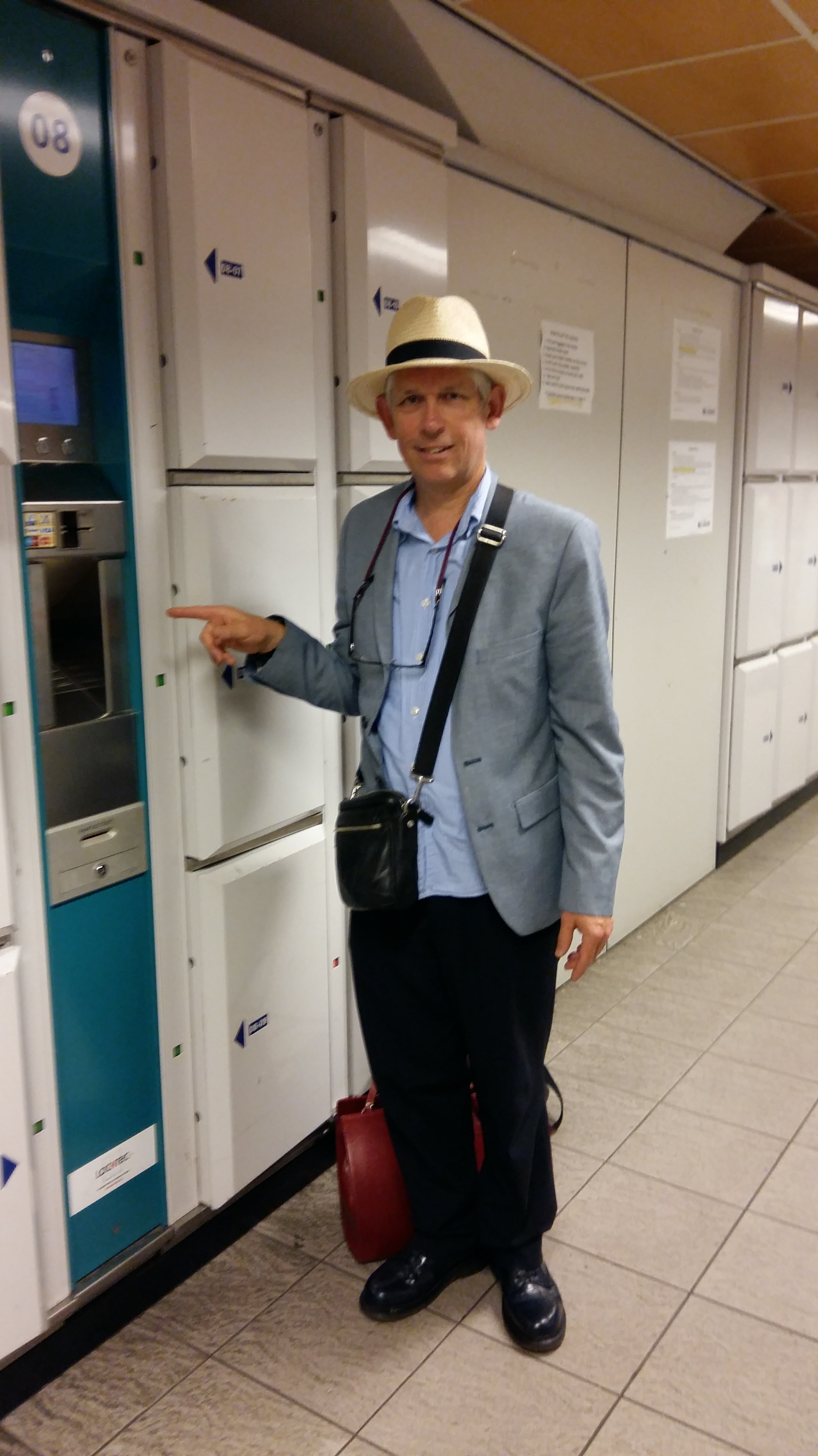 2. Essentially, go to the main concourse, face the departure board and then turn right.
Cash is not welcome. You have to pay by card. There are two sizes. The large locker is big enough for two medium-sized cases and costs 10 Euros (right). The smaller costs 7 Euros. Put your luggage in. Close the door. Insert your card, follow instructions and wait for a paper key to be dispensed (left). The maximum storage time is 72 hours.
Camel libertarianism
Most readers of this blog come to view my musings over cigarette advertising in Germany. My political musings are not so well read. They have, however, seemed more important in the weeks since the Brexit referendum. However, with the onset of Trumpism in the USA, I’m getting prematurely scared. Cigarettes, though lethal, are not lethal in the mass sense, unlike the finger of a mad man on the nuclear button. Now I wonder whether the American owners of the Camel brand have realised that armageddon is around the corner, so before it happens (he will not take office until January 2017 – as if 2016 hasn’t been bad enough), so smokers and non-smokers alike have 6 months or so to “do your thing”!
 First up then is the short-haired bespectacled woman doing her thing. This looks like smoking in a public place and challenging anyone to say something to her. In fact, if I could lip-read, I am sure she has just said “Trump”. TRUMP. In response to a question like “could you please smoke 8m away from my window, please?”
Now Trump also claims to be not from the (political) elite. But he clearly likes money garnered from the policies of the elites over the last 30 or 40 years or so. Low taxation, screwing the poor (and in Trump’s case, anyone living near one of his golf courses in Scotland), etc. So, Camel has an advertisement to sum this up (right). Here we have some sort of sharp-suited Bloefeld character sat in a leather armchair with a brunette woman in the background. So often cigarette advertisements are about sex, but here, it is about power, apparent wealth and sophistication. All seems a bit humourless to me, but what do I know?
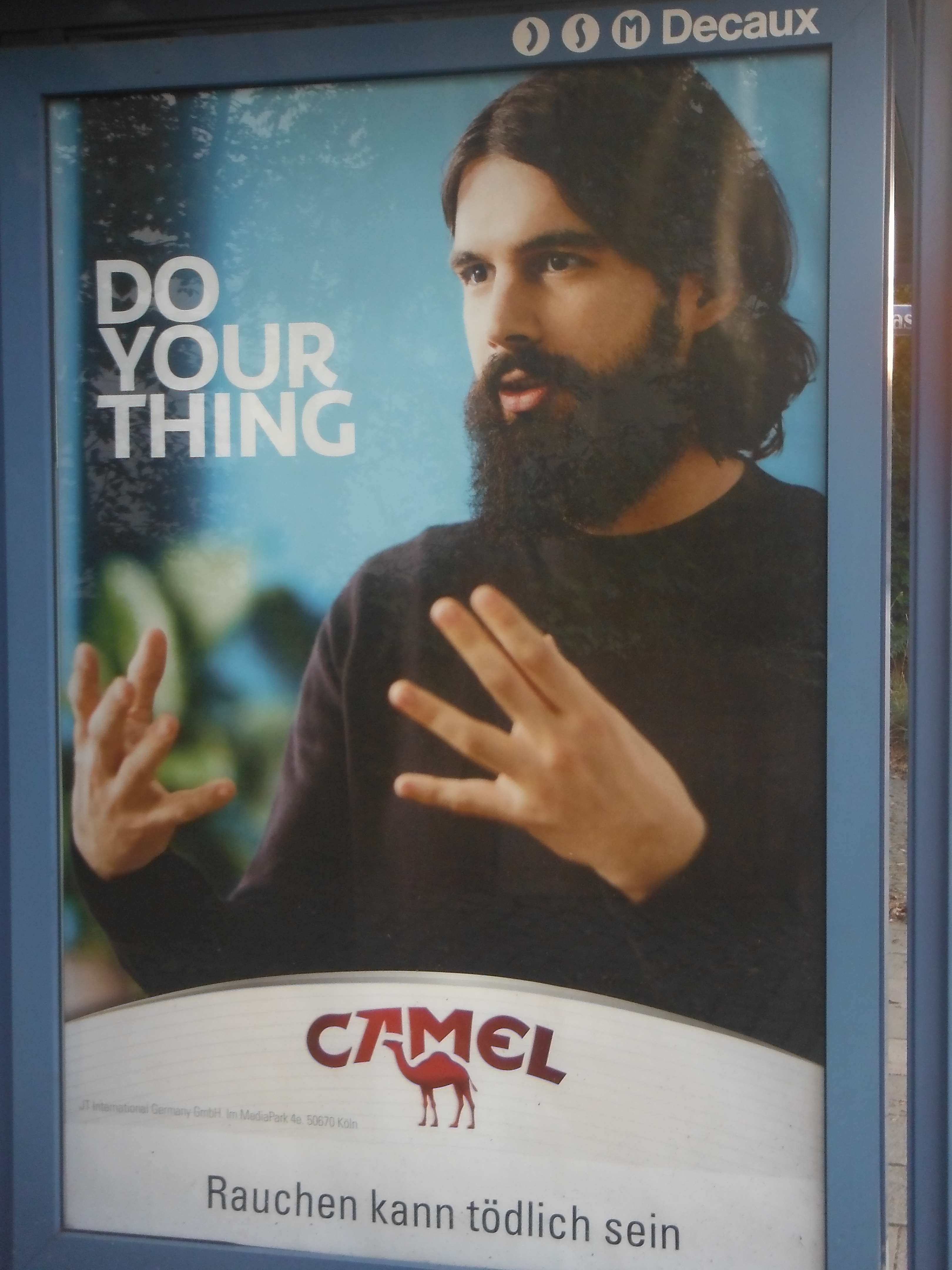 By contrast, hipsters (left) seem to do their own thing as well. Now this man is virility incarnate. Full beard and follickled pate. No cigarettes. He is doing a sort of Mr Spock with his fingers. Preaching Vulcanism, perhaps? Do your thing but don’t vote Trump? Creepy.
Finally – and the only full-sized avertisement from this campaign that I have so far found,  features 3 people – one smoking bloke and two women. They seem to be walking arm in arm, with the woman in the foreground seemingly concerned about the one in the middle. The bloke, by contrast in just doing his own thing. I think. This one is the odd one out of the four, I think. Maybe over time it will become clearer.
Brexit watch – w/c 18 July 2016
Filed under: Brexit, Politics | Tags: ARM Holdings, David Davis, Liam Fox, Theresa May
 Leave a Comment
  Well, the Brexit Minister, David Davis (left) has been on overdrive this weekend. Whilst most of us have been overwhelmed by events in Turkey and Nice, Mr Davis has been busy making trade deals. Or at least feeding the Daily Express – that paragon of truth – some guff about the irrelevance of the EU single market.
I am also reassured that Mr Davis is the right man for the job. Having spent many years and much effort trying to get out of the EU, it is curious how little he understands about negotiating trade deals. He seemingly is of the opinion that it is possible to negotiate individual trade deals with EU members. He does really need to be briefed better before he starts negotiating.
What’s more, it is not even clear if it is his job. He’s minister for Brexit, that is not the same as Minister for Trade (and presumably agreements). That job goes to Liam Fox as Secretary of State for International Trade.
Oh, and then there is ARM, described correctly by ITV’s political correspondent Robert Peston, as Britain’s ONLY world-leading electronic company (sic). Mrs. May, in her Birmingham launch speech on 12 July, said that she would protect firms in strategic industries from foreign takeover. It did not take long for that pledge to be converted into Treasury orthodoxy; namely, that all firms have a price, strategic or otherwise.
The Founder does not think it is such a good thing!
https://twitter.com/GuyRWhitehead/status/755021858659966976
And looking at this graphic above, it really is not good for the UK.
A very German approach to advertising
Filed under: Business, Cigarette advertising, Travel | Tags: Munich
Leave a Comment  I love wandering around cities. In my younger days and earlier travels, I did it because it was always cheap and, largely, did not require communication. I have got myself into a bit of bother doing this. One can find oneself alone on an uncomfortable street with the sun going down. Athens springs to mind.
In Munich, where I spend quite a bit of my time, I have a “favourite” street. Actually it is a busy thoroughfare – a four-lane highway to-and-from the centre. What I like about it is that it seems to sum up the real city. I come from a wholly unattractive city, so I am used to finding beauty in things that are not generally regarded as beautiful. It is not an attractive street – it has more petrol stations on it than you can shake a stick at. It is dotted with mid-range hotels. There are more pharmacies on it than in the whole of the UK. And it has advertising hoardings in abundance. When I want to check out the latest cigarette advertising (one of the main draws to this blog, I have to say), this is the place to go.
In recent weeks, the cigarette companies have been keeping a low profile. They have been rolling out posters from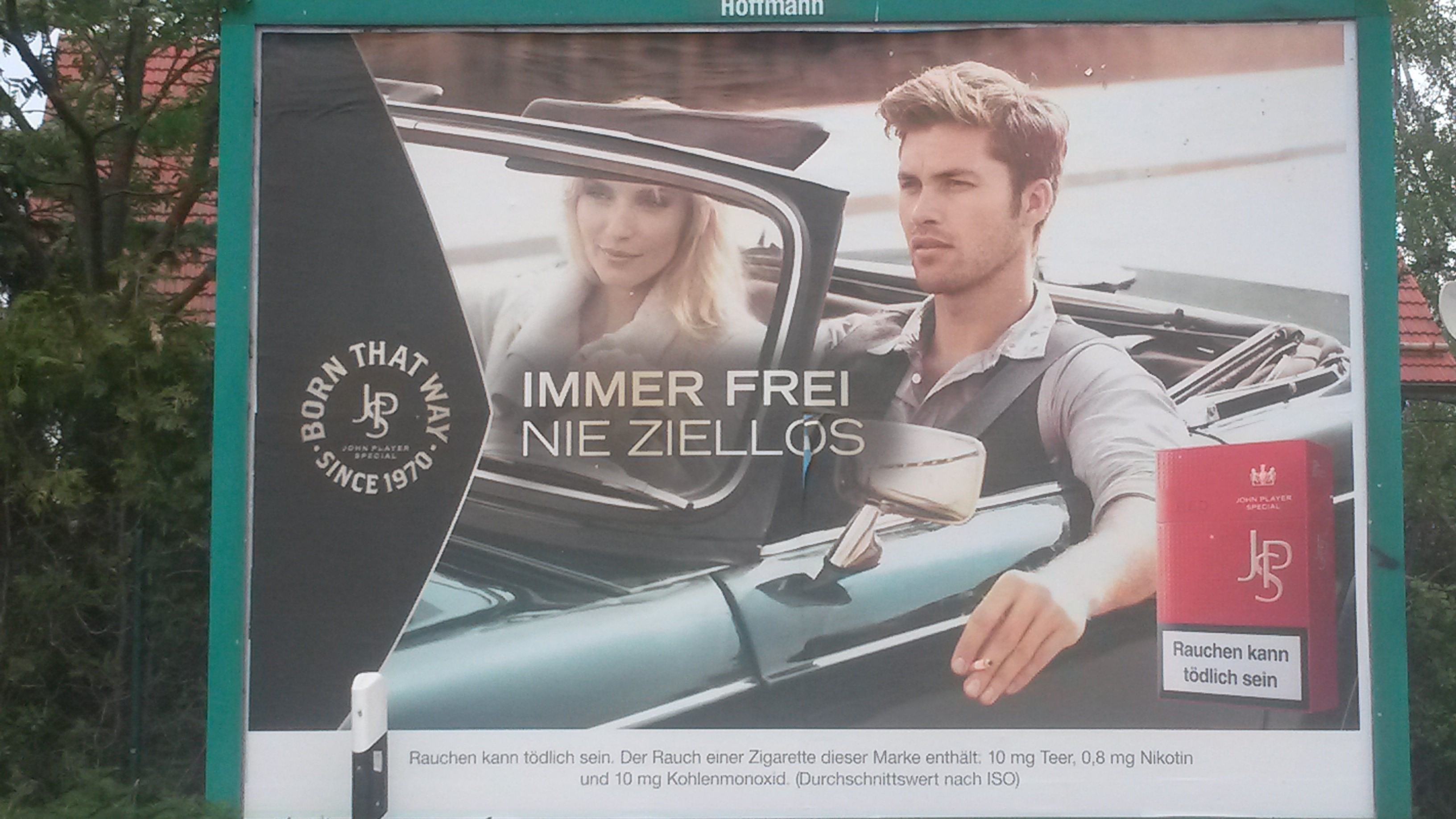 earlier campaigns; for example, JSP (right). Yesterday, we were walking along this street to a supermarket, something which we do often. I was keeping my eyes peeled for cigarette advertisements, but saw nothing. However, I did see the poster for…a sex toy (above left). My partner was oblivious. But it just hit me in the face. It is a clever one, too. It draws on football – the concept of “extra time” or “Nachspielzeit”. 15 per cent discount as well. Extraordinary.
Brexit watch
 The BBC is currently running a series of short talks by leading thinkers – real thinkers – on Brexit. I listened to two this morning as I traveled in to work. The Philosopher and Reith lecturer, Onora O’Neill (left), talks about the responsibility of media in a democracy and how the referendum debate was poorly served by the media. This was followed by John Gray (right), political philosopher, on the nature of opportunity arising from Brexit (however distant that may seem) and the legacy
 of the European project. This one almost made me feel human for the first time since the referendum result. Worth a listen (click on name below).
Since writing this initial entry, three more speakers have made a point. Least tenable, as expected, was Roger Scruton; I have a lot of time for the constitution scholar, Peter Hennessy (I’ve had the pleasure of meeting him a few times); and the excellent Cambridge classicist, Mary Beard, who summarises the whole episode so well. If only we had listened to these experts, Mr Gove!
Pictures: BBC
Benjamin Clementine, Somerset House, 9 July 2016
Filed under: Music | Tags: Benjamin Clementine, Somerset House summer series
Leave a Comment It was a quiet Friday evening. BBC Four was hosting the announcement of the Mercury Prize, a music prize for a best – non-mainstream – album. We watched. The shortlist was long – something like 12 acts. The countdown profiled all of the shortlisted acts; some of the music was also performed live. It turned out to be a good way to relax on a Friday evening.
 The unanimous winner was Benjamin Clementine (left). And with good reason. His debut album, At Least for Now, showcases his talent. His live performances demonstrate mastery of his art, genre and the stage. He’s 28. Away from his songs he seems very shy – though he interacts gracefully with an appreciative audience. He has a range in his voice unmatched amongst his peers (he is apparently a spinto tenor). His songs are asymmetrical, autobiographical and even angelic (in his song Adios he tells of angels singing to him which he the mimics for our benefit, just in case we do not know how angels sound).
He arrived on stage on time at 2100 (Somerset House imposes a 2230 curfew). He is preceded on stage by the Heritage Orchestra (a bit of it, at least) and his enigmatic French percussionist, Alexis Bossard (below right). He arrives enveloped in his trademark overcoat, surveys the stage as though it is his first time and is surprised to see an orchestra. He then perches on his stool at some peculiar angle for piano playing. Then he plays.
The set draws heavily on his album. Some of the songs are arranged for strings, others not. Condolence is one of the stringed songs. It is a curious song dichotomising forgetting and remembering, nothingness and something: “And then out of nothing, out of absolutely nothing, I, Benjamin, I was born, so that when I become someone one day, I will always remember that I came from nothing.” The condolence builds into a crescendo. Marvellous.
Clementine came from a middle-class south London musical family with lots of time spent listening to classical music – apparently after he got bored with pop music. He started playing the piano at 11 years and is self-taught (difficult to believe, but this man is exceptional). A family breakdown resulted in him moving to Paris where he busked, slept in hostels and was eventually discovered by an impresario (this has Edith Piaf’s biography all over it). His time in Paris is celebrated, presumably, in his ditty St Clementine-on-tea- and-Croissants. London beckons a return, however: “London is calling you, what are you waiting for, what are you searching for?”
 Nemesis tells us to “Treat others the way you want to be treated. Remember your days are fully numbered”, whilst Cornerstone pricks us about loneliness amongst others and even lovers. And Gone reminds us how fleeting the present is “oh brother, when did you get married?”.
I counted two new songs, one of which, Clementine reassured the musicians was not on the playlist. He had clearly been thinking about Brexit and composed a song that, in the first instance, maintained a balance between leaving and staying (in a metaphorical sense), but journeyed towards the realisation that we may have given way to a “little In-ger-land” located somewhere in the middle of a disinterested USA. Maybe that is the European in him? From my own experience, it is what the Germans think.
Pictures: from Somerset (work of someone close).
b/w image, Clementine’s own work c2011, Paris.
Brexit watch
 Ok, there is a lot happening at the moment. Today has been quite significant in terms of economic impacts of Brexit.
The Governor of the Bank of England, who seems to be our de facto Prime Minister running the country in the absence of anyone else, has reported that the economy has started to respond to Brexit.
The low value of the Pound Sterling – the UK currency – makes imports expensive. Prices will go up and hence inflation. Inflation coupled with low growth = stagflation. Not good.
Whilst the FTSE 100 index has increased in value, this can be explained by the fact that most of these firms are international and trade globally. The more pertinent 250 index, which tracks the value of more domestic-focused firms, is much less healthy.
Three property funds have suspended trading on UK property – basically, too many investors wanting to redeeem investments in anticipation of a property crash (see above link).
Brexit
I apologise to my readers for not posting too much in recent days. My country is currently in political and economic meldown and it is very difficult to make sense of events. Being able to articulate what is happening to a wider – often international – readership is almost beyond my skills.
In a nutshell: the people of the UK have voted, by a narrow margin, to leave the European Union. However, no one had a plan on how to do it. The Prime Minister resigned. Those who advocated leaving have all been found to be lying, self-seeking sociopaths (I am being generous with this description) and have largely absented themselves from responsibility. The next Prime Minister is being chosen by a small cabal of neo-liberal members of Parliament and around 150K grassroots members of the Conservative Party. The economy is in freefall and xenophobia/hate crime is on the rise.
I found the linked Buzzfeed take on events to be enlightening
If readers are interested in the legal dimensions around Article 50, the bit of the Lisbon Treaty that describes the leaving process, can be seen here. And here.
Here is a Twitter thread that details, in a straightforward way, the complications and consequences of Brexit.
https://twitter.com/sjcoltrane/status/748785365658443776
I’m also impressed by Frankie Boyle, a terse Scottish comedian, who writes often incisive stuff on politics.
Brexit
This is my letter of 26 June 2016 to my Member of Parliament, Amber Rudd.
26 June 2016
Dear Ms Rudd,
My reading of the referendum result is that the country is now experiencing a constitutional crisis. It is clear that there was no contingency on either side of the debate – though I dispute that it was ever binary – as to what would happen afterwards. Indeed, it was remiss of me not ask this question of anyone prior to the vote. Maybe that reflects our collective complacency regarding the result.
We are told this is the will of the people. First of all, it is an advisory referendum. The people have spoken, for sure, but it is evidently clear that they have not spoken about the EU, rather the liberal elite’s many years of neglect. It is not surprising when, given a “meaningful” vote, it is used to give that very same elite a kicking. I can understand that.
Second, this was all about party management, not British interests. It should never have been called. And it should never have been decided on a simple majority. On this I want to know how this was ever allowed. For example, what was the input from the civil service and state lawyers? Why was it a only a simple majority? What is the Monarch’s role in this? What risk assessment was done? And is the sovereign Parliament going to talk about this before the nuclear button is pressed? Are there any lessons from Democrats in the USA trying to get gun control debated?
Third, there is a vacuum now at a time when leadership is required. Just looking at the newspapers this morning the issues do not seem to be about what we are going to do. Rather Conservative and Labour Party politics. So, who will succeed Mr Cameron (we cannot wait until October!)? And Mr Benn’s challenge to Mr Corbyn. These are side shows.
Please tell me who the “states-people” are. Is there anyone I can trust in the political class? Who are the people who are going to lead us? What are the Parliamentary options? Which street should I protest on?
Most disturbingly, the campaign has legitimised racism, xenophobia and no doubt other phobias – gender, sexuality, etc. History tells us that this is dangerous for the country and the continent. This is no longer a party matter. How can I help you stop this madness?
Kind regards,
Dr Andrew Grantham
University of Brighton Graduate Show, 2016: Part 1, paintings and graphic art
This year’s show is an absolute cracker. Well done to all. Here are my observations and personal highlights under the following themes: anger, self, beauty, environment and miscellaneous.
Anger
 I was listening earlier to the veteran American documentary maker, Michael Moore, discussing the current political situation in his own country and also in Europe. He echoed what I have been saying to my students in recent times. He said that he’s surprised that younger people are not more angry with their parents when it comes to the state of things. There is a lot to be angry about. I felt this in this year’s show. There are a few exceptions such as the work of Sadie Leigh Hudson – Frustrations of an Art Student (left), but even then, maybe just a little easy to brush aside? I like the sentiment, however.
Somewhat more effective in the angry theme was Omelle Palmer’s piece Right Move. Palmer’s anger is focused on homelessness in Brighton. Cleverly, Palmer has imaged the spaces occupied by rough sleepers as houses for sale in the window of estate agents. It’s effective and takes a welcome swipe at estate agents and the concept of ownership and privilege. It made me feel uncomfortable.
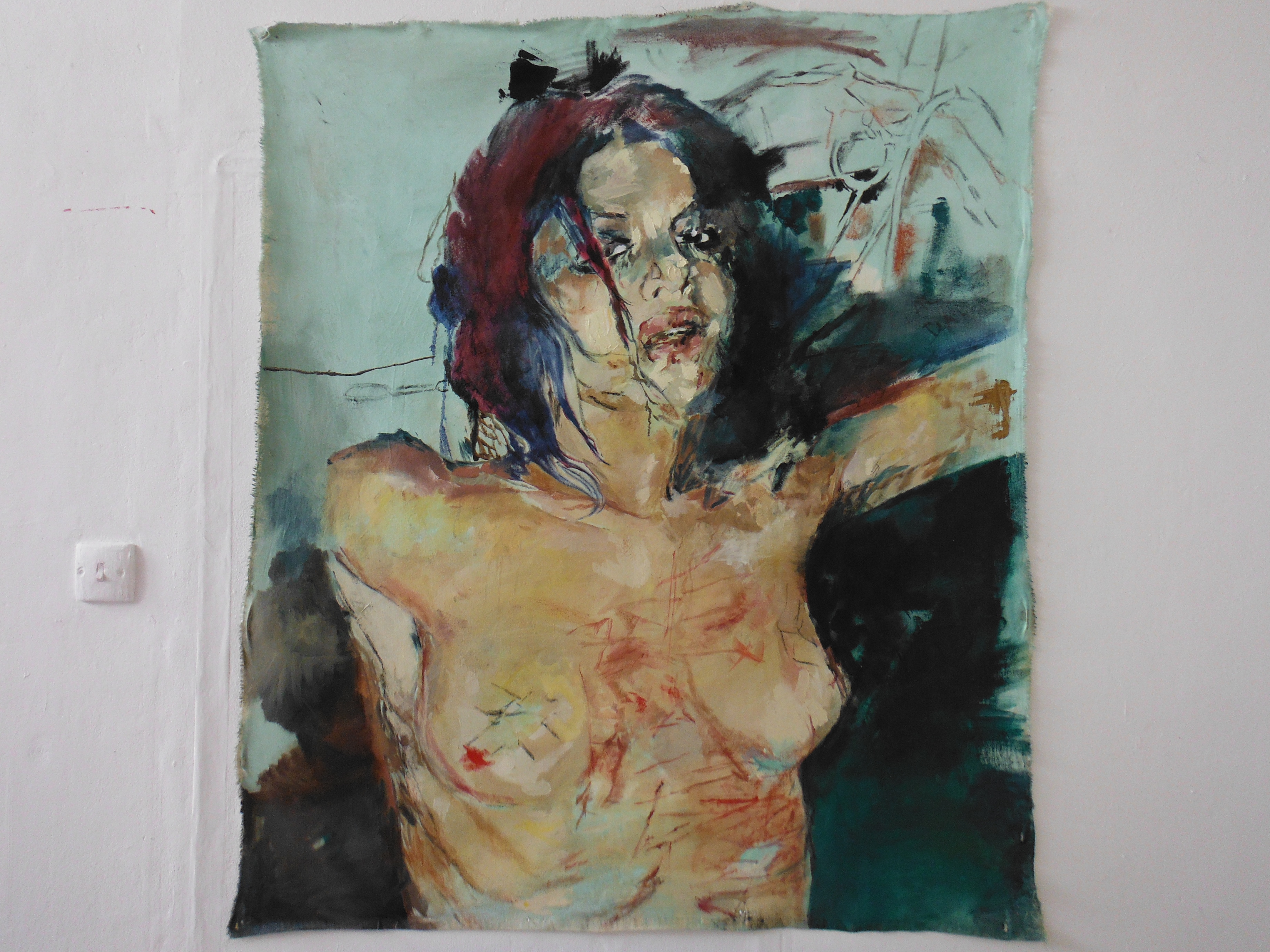 Next on my angry list is the work of Izdehar Afyouni (left). The portfolio is mixed paintings and sculpture – all with that menace that comes with the depiction of the mess that humans can sometimes make. The accompanying statement by Afyouni is presented as an angry letter (to James) whose failure to understand and respect ‘others’ leads to exclusion, discrimination and repression. Angry it is!
Self
Choosing a subject for a portfolio is never easy. I struggle sometimes with this blog to decide what to write and when.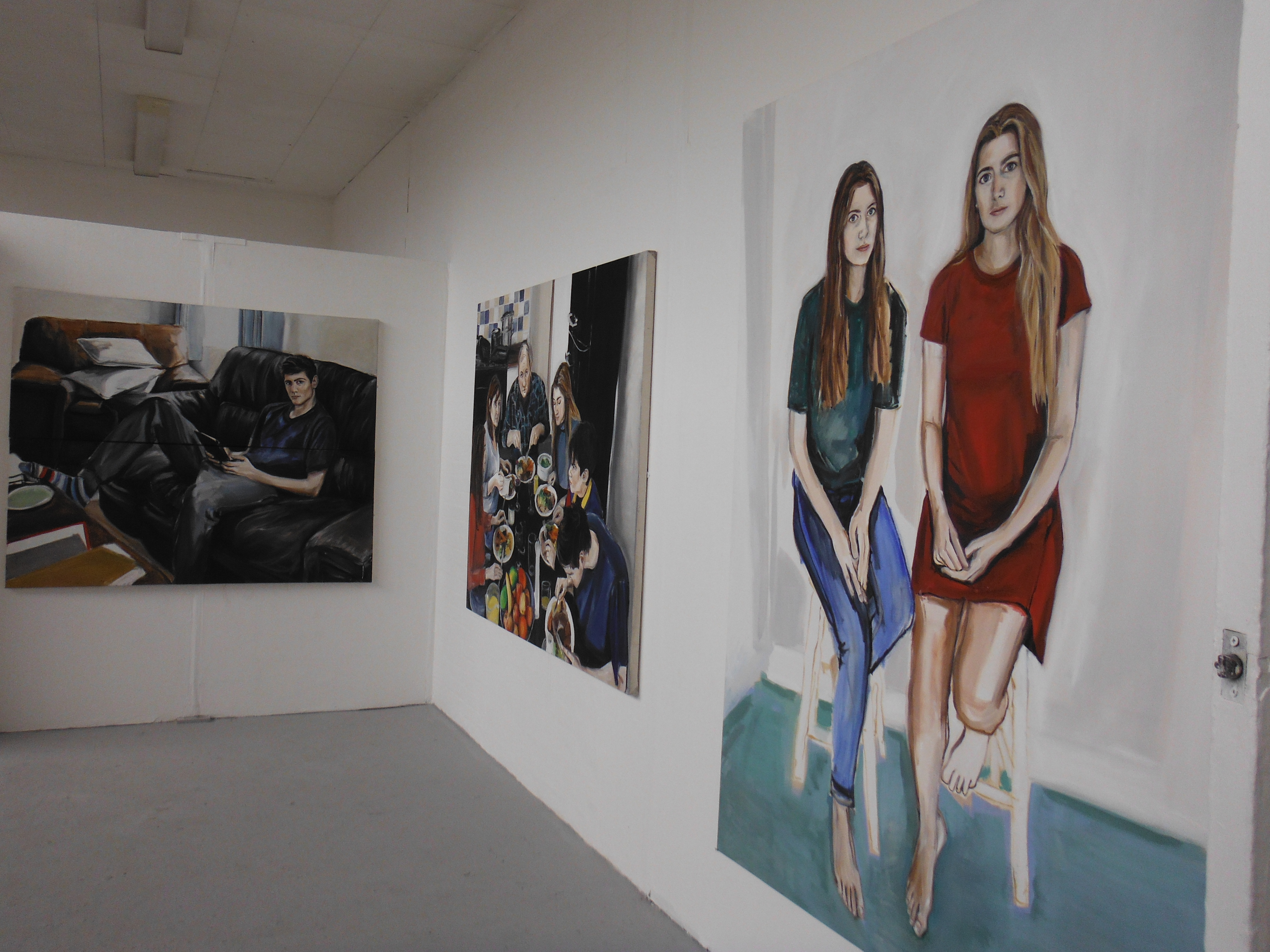 So artists are forgiven for resting on the familiar; namely, family. There are two exceptional examples of family in this year’s show. First, the work of Sophie Williams (right). Sisters, a nonchalant brother, Matthew (with better things to do) and a meal make up her striking troika painted over a single weekend.
 Second, is a reflection on childhood and home in Cyprus by Eleni Papageorgiou. This series of paintings reproduced from photographs represents what is familiar to all whose childhoods were protected and nurturing. Papageourgiou here presents an affectionate portrait of her father washing the dishes. Ah yes; food, home and sunshine. Compelling.
Another fabulous set of autobiographical images are presented by Michaela Yearwood-Dan (right)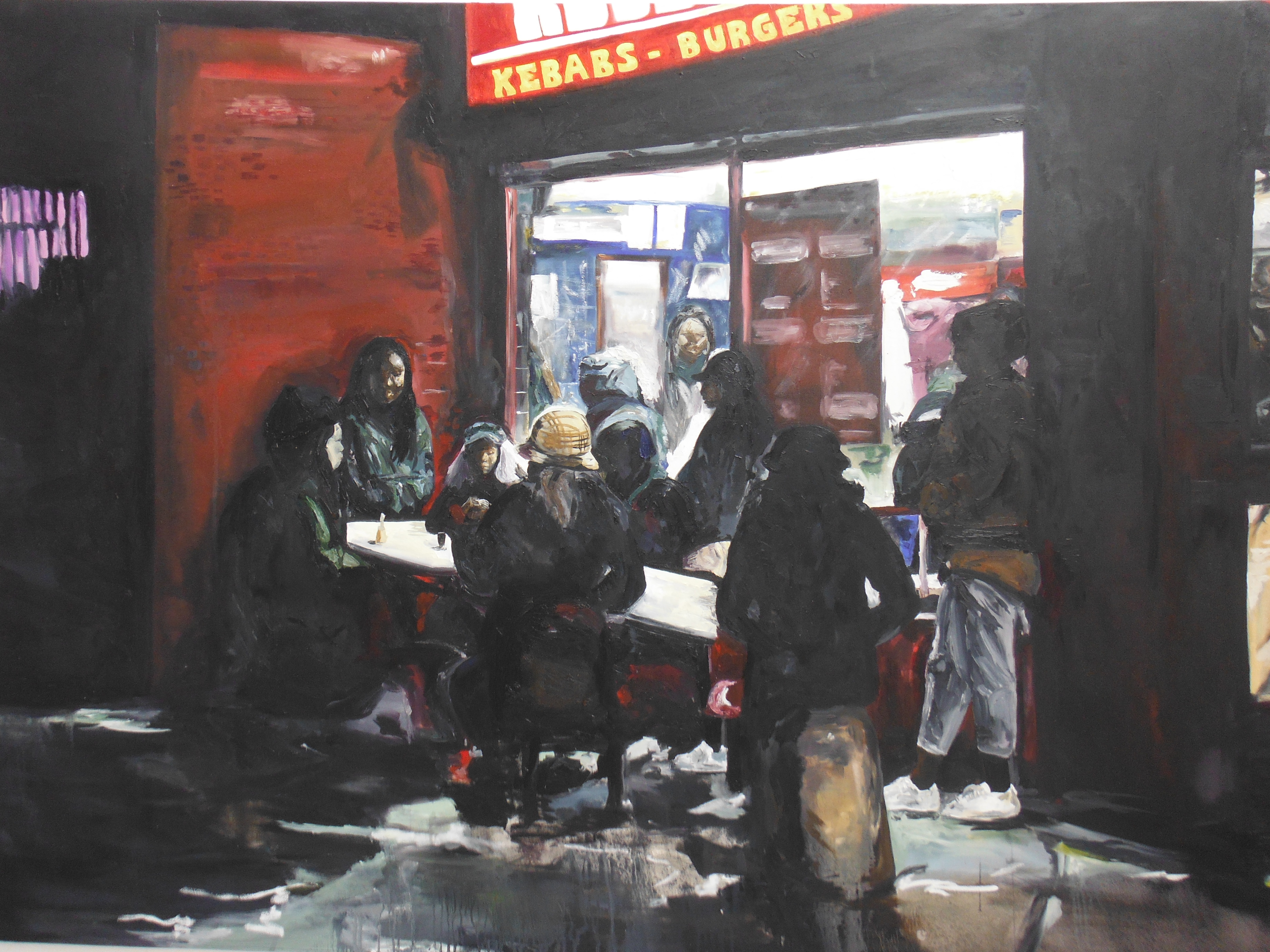 . Set in South London against the backdrop of parental immigration from the West Indies, the sense of community huddled into a kebab shop is familiar and wonderfully reassuring. A far cry from tropical Barbados, but humanity frequently congregates, temperate urban or otherwise.
By way of contrast, the work of self-described millennial, Sam Creasy, depicts what for my generation may appear  rather dystopian, bright, garish, kitsch “waste imagery assembled from internet content”. Creasy cites as influences SciFi novels (in particular Phillip K Dick), films (Ex Machina and District 9) as well as current science (cybernetics, information technologies) and hints at a breakdown of social order.
Beauty
Very much in the eye of the beholder, here. First, Megan Martin’s work (right) seems to have bee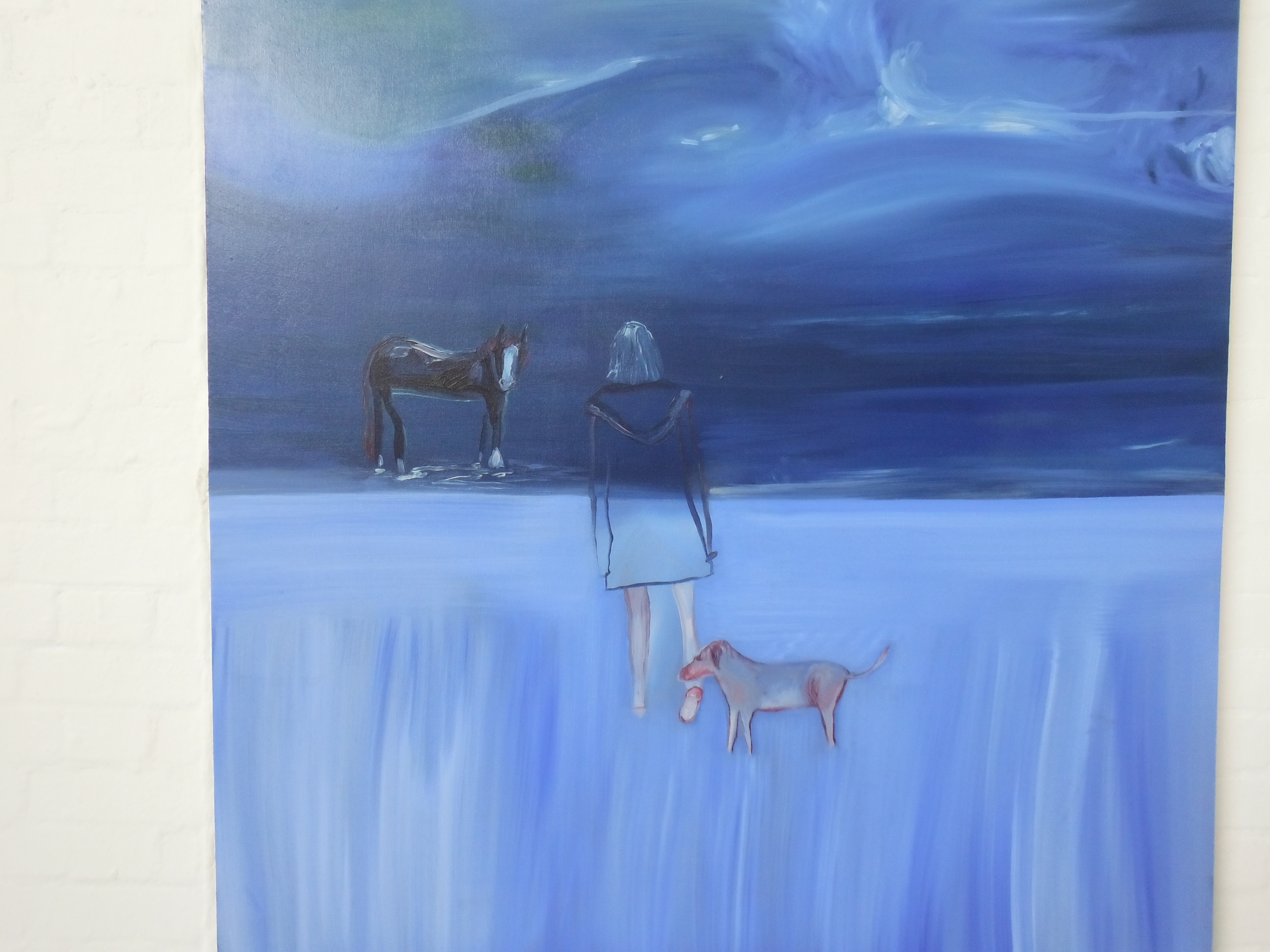 n a conscious attempt to avoid the danger of missing the point of painting if one reproduces from photographs (something that is common this year). Martin’s work has that lovely touch of unreality whilst capturing a the partial reality of our own engagement with otherness, in this case a dog and wonderfully shaped horse. The translucent nature of the human figure makes this picture for me. Martin’s key influence, Sidney Nolan, is on my list of further investigation.
 A number of years ago I discovered the work of Paul Nash in the process of my absorbing the work of European surrealists. Nash was never officially part of the group but his work, influenced by his WW1 experience, led to some memorable pieces, a copy of one of them, Landscape from a dream still sits over my bed (the original is in the Tate for others to see). Not surprisingly when seeing the picture on the left, Sea Foam, I thought of Paul Nash. The palette has a similar washed-out appearance. The birds seem to be a hybrid of organic and non-organic flying objects. And, for me at least, there is an uncertainty between land and sea.
Nature also is at the heart of two more contrasting beautiful pictures.  Ellen Balcomb fuses nature and landscape with eastern traditions of painting and representation and the National Geographic. Balcomb states that her work is aesthetically driven in pursuit of beauty. In those terms, the job is done; which brings me on to the work of Jake Grewal.
Environment
Jake Grewal has starkly imagined a dystopian future. On a trip to Borneo, he writes, he has seen the ancient forest and its inhabitants being absorbed by the modern mega city with its technology, culture and ideology. He discovered that the jungle dwellers are not like the indigenous people of 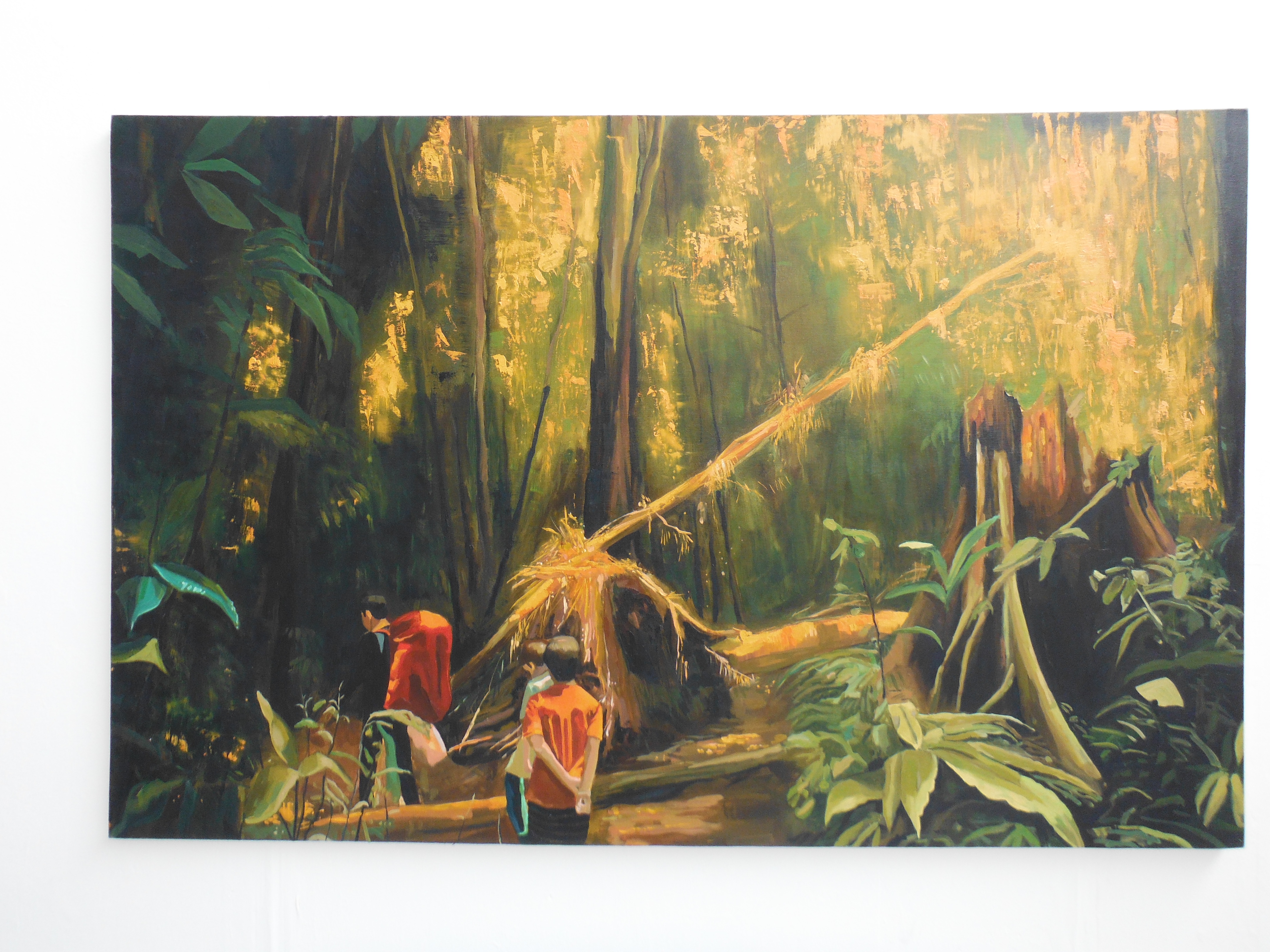 the past. These people wear western clothes, have mobile phones, burn plastic waste. Much of this seems to be possible by their complicity in the palm oil industry (we western consumers drive the demand for palm oil) – clearing the forests to enable mono-culture rather than exploit nature’s diverse bounty in some sort of harmony. Grewal’s canvasses are large, bright and disconcerting (for example, left). They have a lot to say, and they stay in the memory.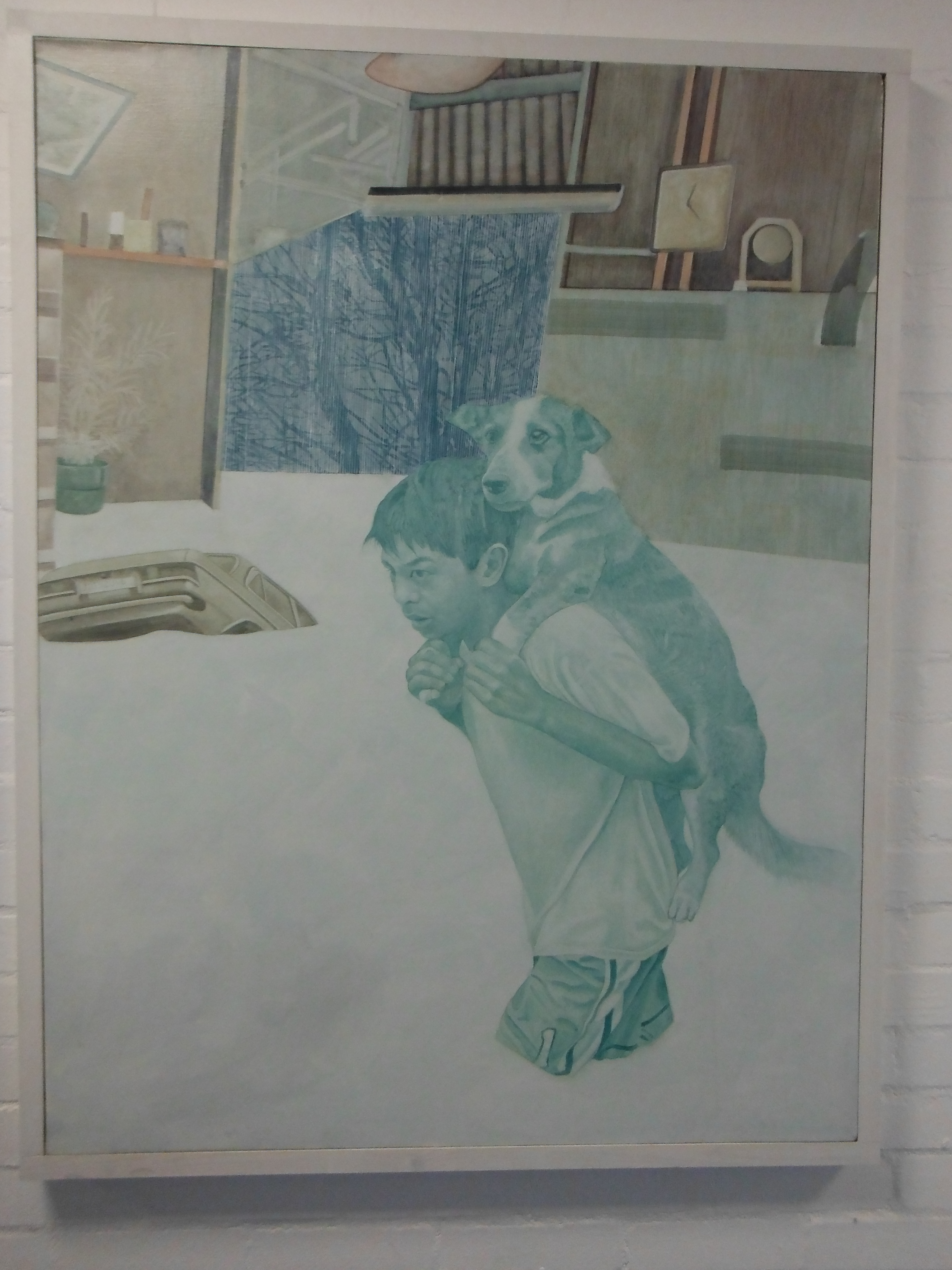
The picture with the most interesting and telling title is Alice Trull’s piece, Jake the Dog and Finn the Human (right). This is fantastic at a number of levels. The dog does take centre stage. His look is one of gratitude to Finn. They clearly are fond of one another as the escape some sort of flood. The monocrome amongst some peripheral colour is wonderfully juxtaposed.
Miscellaneous
 I am not quite sure what to make of Terese Jönsson’s work (left). There is an element of surrealism – familiar environments and situations (in this case the office) – with disconcerting components (animal sculls rather than human heads). Now these are stock images – we are probably familiar with many of them used on Powerpoint presentations or in newspapers. Here is the originality. And it is effective.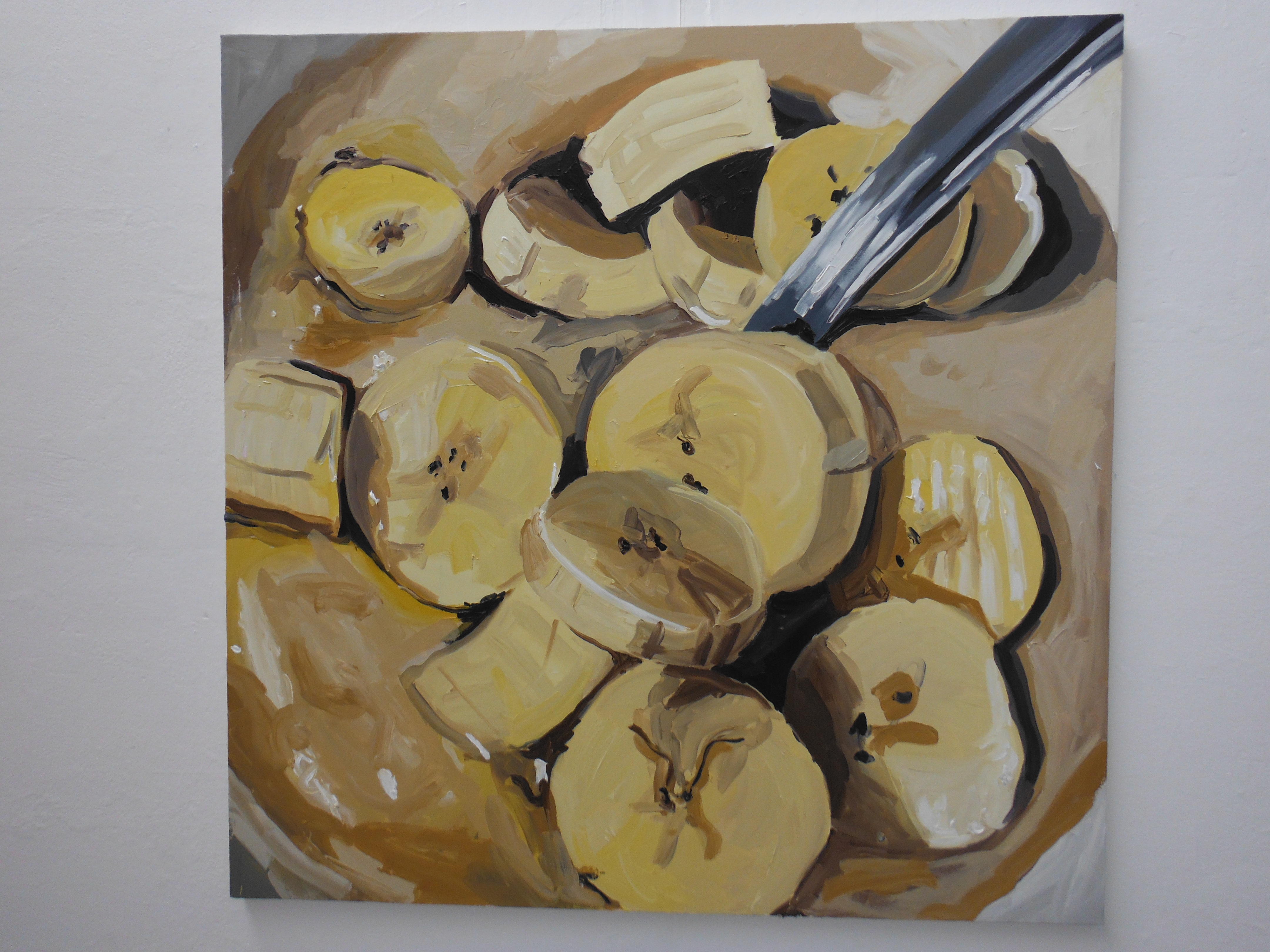
Jessica Forest’s piece (right), Breakfast, is eminently edible. This could have gone into my self category, above. There is nothing more self than one’s food. This is a massive canvass for a banana!
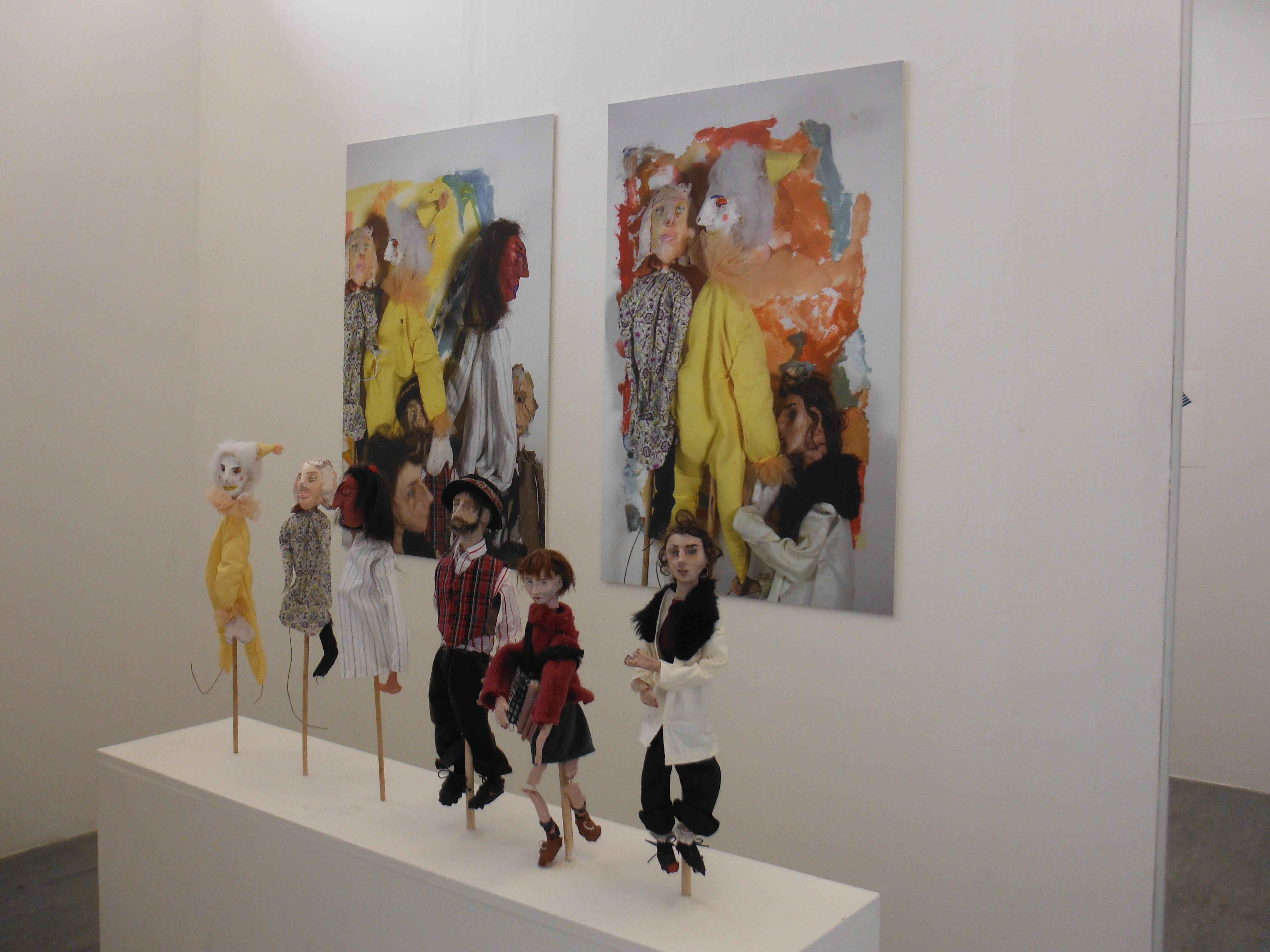 And finally, Liorah Tchiprout. The puppets as figures and then represented on a canvass is curious. The puppets are both beautiful and ugly. They are equally creepy and faithful to the human form and fashion. This is where we started at the top of the building. I think it is a fitting summary to my review of this year’s art show.
Part 2, however, will review crafts. Please come back soon.
Any errors to names, etc. please let me know. I am not intending to mis-represent any artists.
 Be informed