The Divine Comedy, Folkestone Quarterhouse, 21 October 2016
Filed under: Music | Tags: Divine Comedy, Foreverland, Neil Hannon
 Leave a Comment
 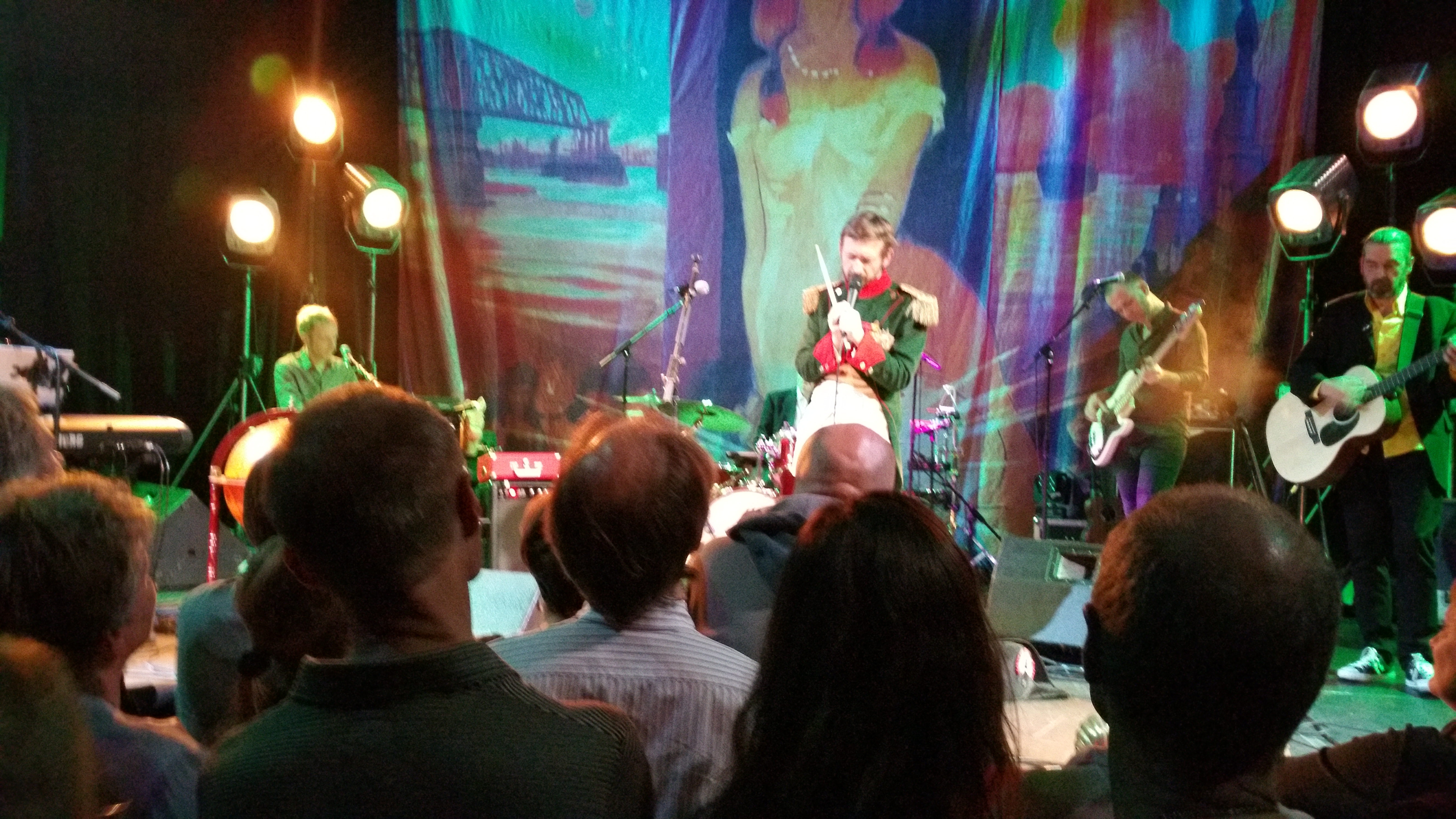 The Divine Comedy is a self-confessed vehicle for Neil Hannon to embrace a passion for history, conventional and unconventional romance, surreal humour and outlandish orchestrations. Hannon is a fine musician, curious lyricist and showman – “I may act” he warned. This show was our fourth experience of the Divine Comedy, but only the second with a full band (previously we had seen Hannon perform alone with a piano and guitar at Somerset House and later in Cambridge). We have also seen him do Duckworth Lewis Method with Thomas Walsh in September 2013.
The first time we saw the Divine Comedy at a damp music festival in Inveraray, Hannon was clearly (and probably understandably) unhappy such that beer was thrown at the audience. Tonight, wine was actually offered to the audience in a glass (albeit to one lucky recipient in the front row). How things change.
Two observations. First, Hannon unusually did not play piano, only guitar. Second, I have never seen Hannon so relaxed despite a few technical sound issues that inexplicably accompanied the songs. One indicator of this was his dressing up routines. Staples in the repertoire, quite rightly, are the Complete Banker and Bang Goes the Knighthood. Both are propped with a bowler hat and an umbrella (the latter being particularly useful). Songs from the current album, Foreverland, benefit, it seems, from Hannon dressing up as Napoleon – two actually: the uncomfortably revelatory How can You Leave me on my Own? and To the Rescue (the latter gets a guest appearance from Billy Cooper and his trumpet). This is a little odd because the song about Napoleon, Napoleon Complex, did not get on to the running order, likewise the title track. Whilst I feared too much emphasis on the new album, it being the Foreverl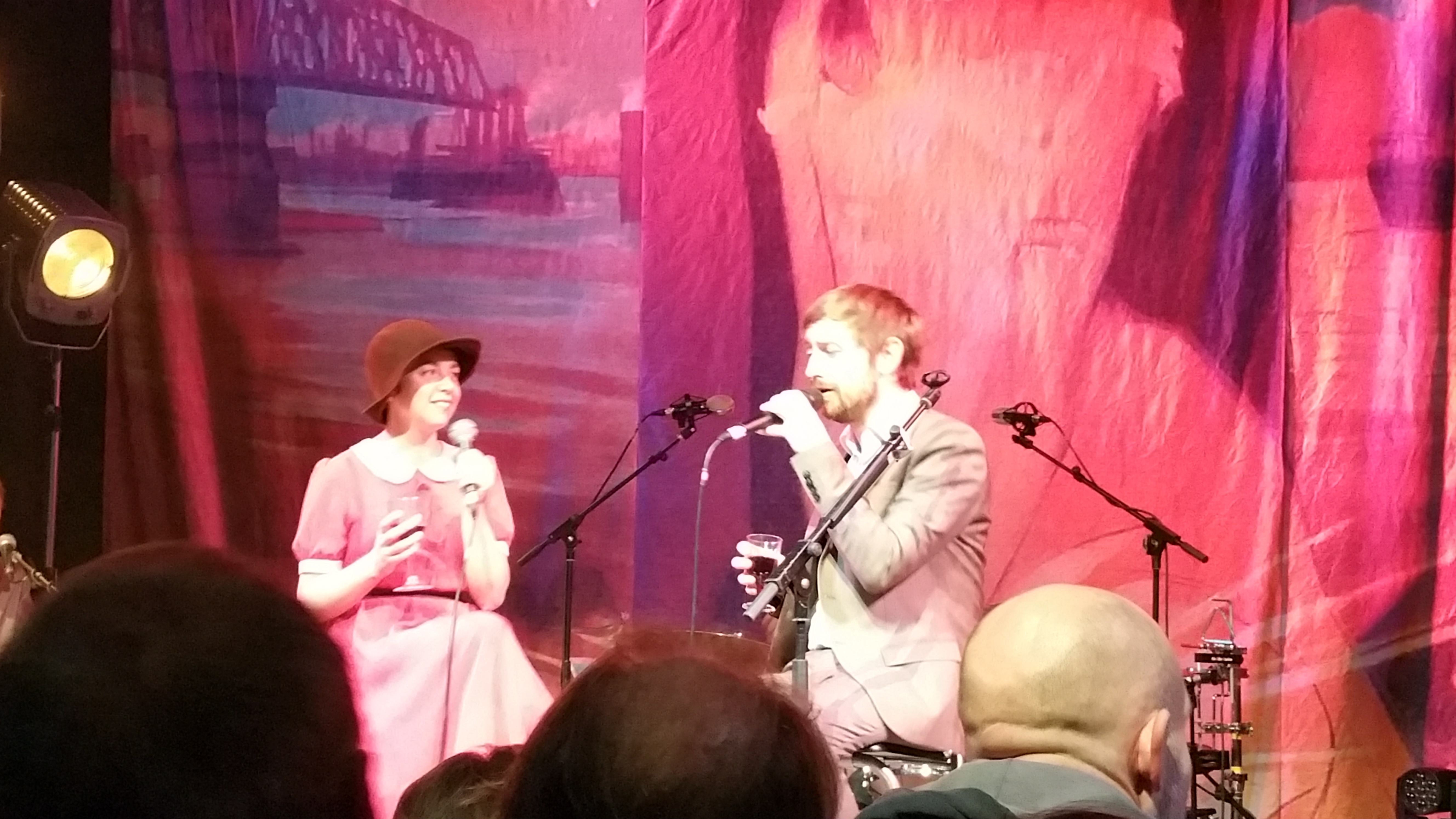 and tour, Hannon perhaps under-represented it. A Desperate Man, I feel, would have gone down a storm. But it was nice to duet Funny Peculiar with the enigmatic, charming and funny Lisa O’Neill, left, his support act (for some reason this reminds me of Dean Friedman and Denise Marsa’s Lucky Stars).
I find Hannon really frustrating at times. He writes great songs – Our Mutual Friend is epic and rendered so in this show. Sweden is a colossus. Though I do not know why (the Napoleon garb here seemed appropriate). Song of Love – does what it does better than any other. National Express takes us back to simpler times (albeit being a shade impolite to hostesses). Indie Disco is a clever temporal list of tunes that defined a generation. Tonight we Fly, flies 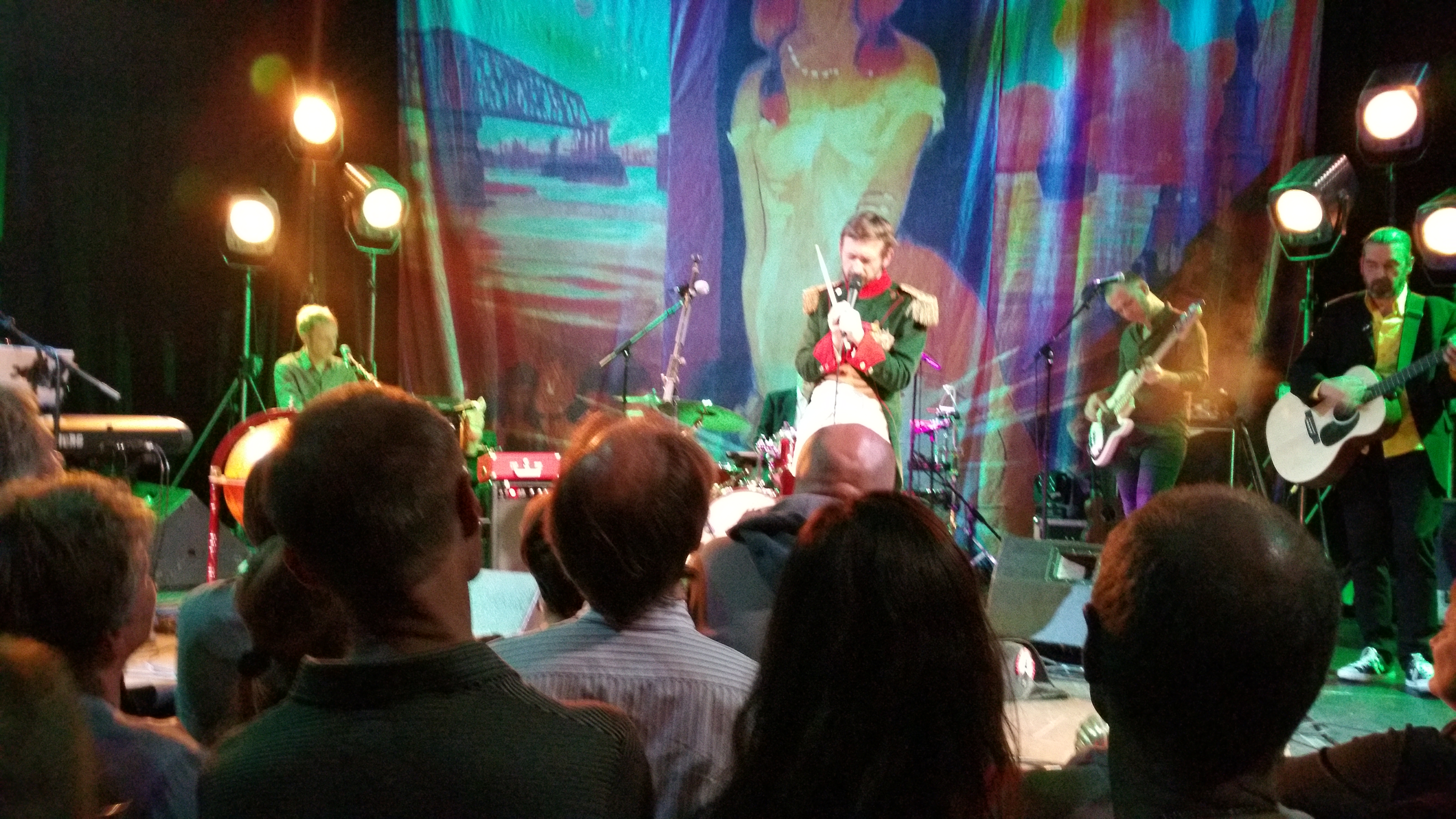 absolutely as an encore. But why Hannon persists with the Frog Princess and Something for the Weekend, I do not understand. It is maybe something to do with imagination, fantasy, storytelling – all legitimate elements of the Hannon way. Count Grassi’s Passage Over Piedmont, one of Hannon’s own favourites, features the romance of travel (a recurring theme), with just a little too much cheese (songwriting surrealism)? That said, I cannot say that I did not enjoy them. Only that Hannon has better songs.
Playing with Hannon was his long-time collaborator, Andrew Skeets on keyboards (for me as much a part of the Divine Comedy as Hannon himself). Tim Weller was the drummer (his charming son sold me a couple of posters), Simon Little, Bass; Ian Watson accordian and keyboards and the guitarist who, embarrassingly, is nameless (if anyone can help with naming, let me know). A cool unruffled bunch.
This 50-date tour gives us the opportunity to go twice. It straddles 2016 and 2017. We are off to Hamburg in February. Really looking forward to it.
Tilman Riemenschneider
Filed under: Art, Design, Travel | Tags: Großlangheim, Rothenburg ob der Tauber, Tilman Riemenschneider, Würzburg
Comments (1) 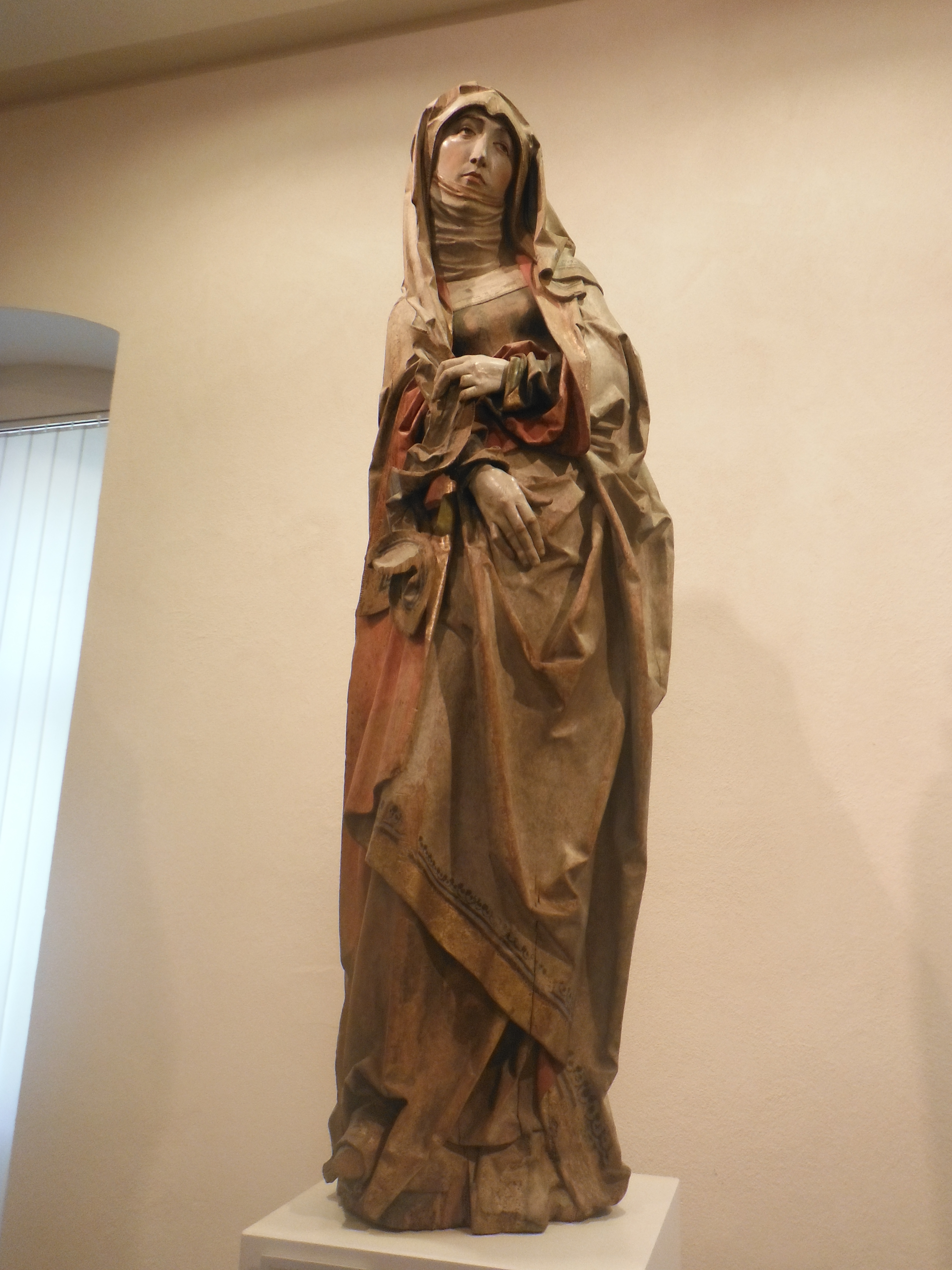 We were introduced to Tilman Riemenschneider by one of our favourite art historians (AGD) on his BBC series, “Art of Germany“. Riemenschneider was a very fine carver and sculptor working in the 15/16 Century, largely in the Franconian region of northern Bavaria. Würzburg is the region’s capital; it was there that Riemenschneider had his studio (a prolific producer of largely religious icons, popular at the time with the wealthy Bavarians and staffed by a series of journeyman carvers). He utilised property that came his way through (four) marriages to set up the study (at least three of his wives died – he was not a mass murder as was my original concern). He was also a political figure in the region, holding a number of official posts, including Bürgermeister in 1520. However, when in 1525 the peasants revolt reached Würzburg, he found himself on the wrong side of the victorious Prince Bishop. He was briefly imprisoned. He died in 1531 and was quickly forgotten. It was not until his tombstone was found in 1822 that his work was re-evaluated by Carl Gottfried Scharold, a significant local historian.
He worked using regional materials, in particular lime wood and sandstone. It is for that reason that it is amazing that so many pieces have survived these years. Take, for example, the “Sad Mary” (above left) who can be found amongst the largest single collection of his work in the Mainfrankisches Museum in Würzburg. Dating from 1510, she belonged to a f amily in Ochsenfurt, a significant town on the Main river. She hung from a hook around shoulder level; but seemingly she was not well loved. In fact, she was feared. She was also rather black having some sort of fire damage (she was stored in the attic near to the chimney). Her maker was recognised by Johann Valentin Markert as part of Riemenschneider’s rehabilitation. Her robes are just exquisite. The representation of folds, creases, seams, hands etc. are carved out of a tree and are trademark Riemenschneider. The carver’s faces are distinct, something that helps scholars and amateurs alike identify his own work from that of the journeymen in his studio.
St. Antonius Kapelle and St Jakobus, Großlangheim
The carving of “Holy Nickolas” dates also from 1510. This piece came from the “Chapel of Marriage” in Würzburg. Nickolas’s face carries the features of a sage; however, one assumes that most senior clergy at that time were sages? This look with oval eyes, ageing lines and long noses is repeated endlessly.
AGD told us that some of the best pieces are to be found in small churches dotted around the Bavarian countryside. In particular he said that there were a couple of seemingly forlorn pieces in a small chapel (St.-Antonius-Kapelle) in Großlangheim. To enter one needed to get the key from Frau Sterk, the owner of the nearby liquor store. Actually, the chapel was open when we investigated (Frau Sterk still looks after it, though). Moreover, there were four pieces in the Chapel, not the two featured in the documentary. St. Antonius, depicted above left, is signature Riemenscheider. We were directed in particular to the belt around his waist! The light in the chapel was not really conducive to photography, unfortunately.
AGD did not tell us, however, that Großlangheim had two places of worship, both of which boast Riemenscheider sculptures. The Catholic church, St. Jakobus, is brimming with Riemenschneiders. For example, the sculpture of St. Anna with child and Mary (Selbstdritte) is beguiling, full of colour and symbolism. 
Another common subject is Mary and the dead Jesus (left). The Virgin’s clothes contrast absolutely with the dead Christ’s grey skin. A reminder, presumably, of the horror of the crucifixion and mortality, at least for the body.
There are professional reasons for this approach to colour. At that time such many works were
church commissions. If the commission was given to a painter, naturally any sculpture subcontracted as part of the commission would be painted. Carvers were not allowed to paint their own sculptures (or not). Where altarpieces were involved, there were also cabinet makers who could actually earn more than the carver for creating a hinged box (see St Jakob, Rothenburg, below).
Maria im Weingarten, Volkach
AGD had advised us to visit the Riemenschneider sculpture hanging in the Church, Maria im Weingarten, in Volkach. In his TV documentary he spent quite a bit of time discussing this carving dating from 1522  (right). It is certainly impressive, hanging as it does from the ceiling of the church. It depicts Mary standing on a crescent moon with the child, Jesus. The five roundels depict events in her life (the Annunciation, Visitation, Nativity, Adoration and Death). The child is enthroned on the virgin’s left hip. It was stolen in 1962 and returned only after the payment of a ransom. But there is some doubt about how much of it was carved by Riemenschneider himself, rather than one of his journeyman carvers. Like many carvings and sculptures that are likely to be difficult for people to inspect closely, fine detail is not required.
Altarpiece of the Holy, the parish church of St Jakob in Rothenburg ob der Tauber dating from 1505.
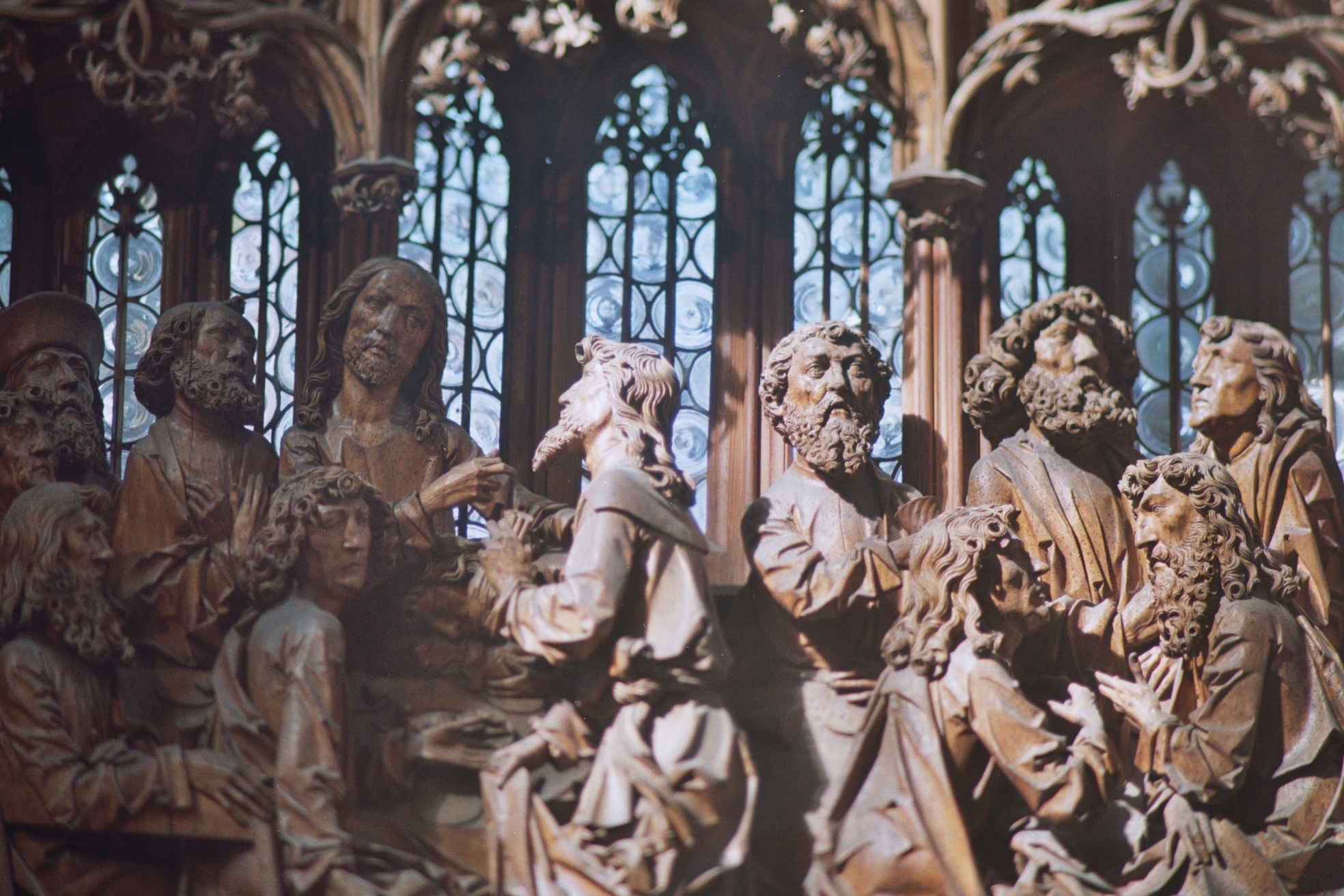 The centrepiece of this fine altar (pictured left) depicts the Last Supper. In the centre is Jesus and next to him to the right is Judas (bearded and about to receive bread, a symbol of sin, from Jesus) being exposed as a traitor. Pilgrims enter the space in the west
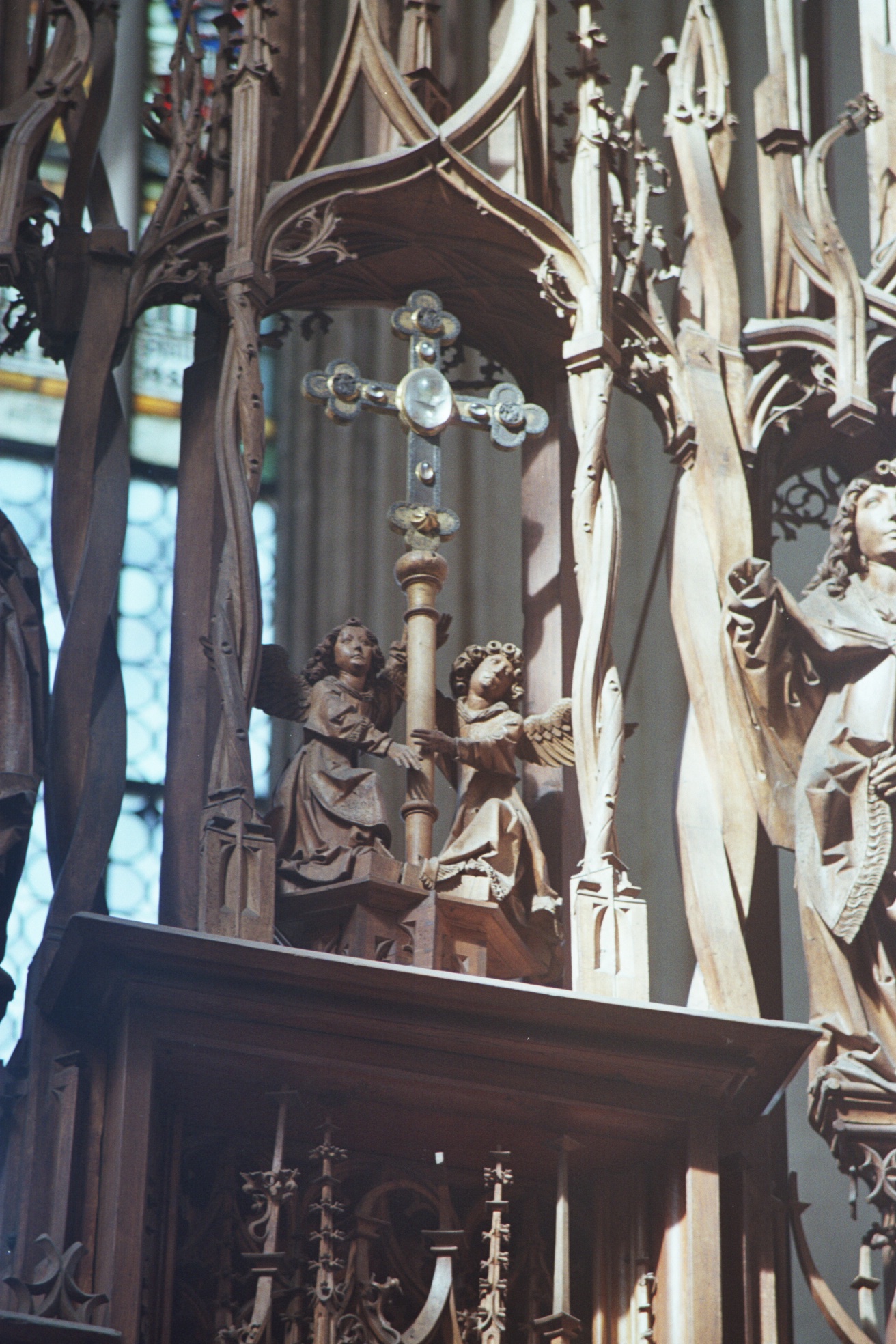 choir of the church from the right, just like Judas, the sinner. Forgiveness is possible for pilgrims. St. Philip (left of Judas) points to the alter base where sinners should kneel and confess sins to receive redemption. One has to step back to see the real point of the altar – the relic of the holy blood encased in a glass cross (right).
It seems that this wonderful piece – we spent at least an hour with it – had to be done relatively cheaply. The master, concentrated his attention on the cluster of figures aroun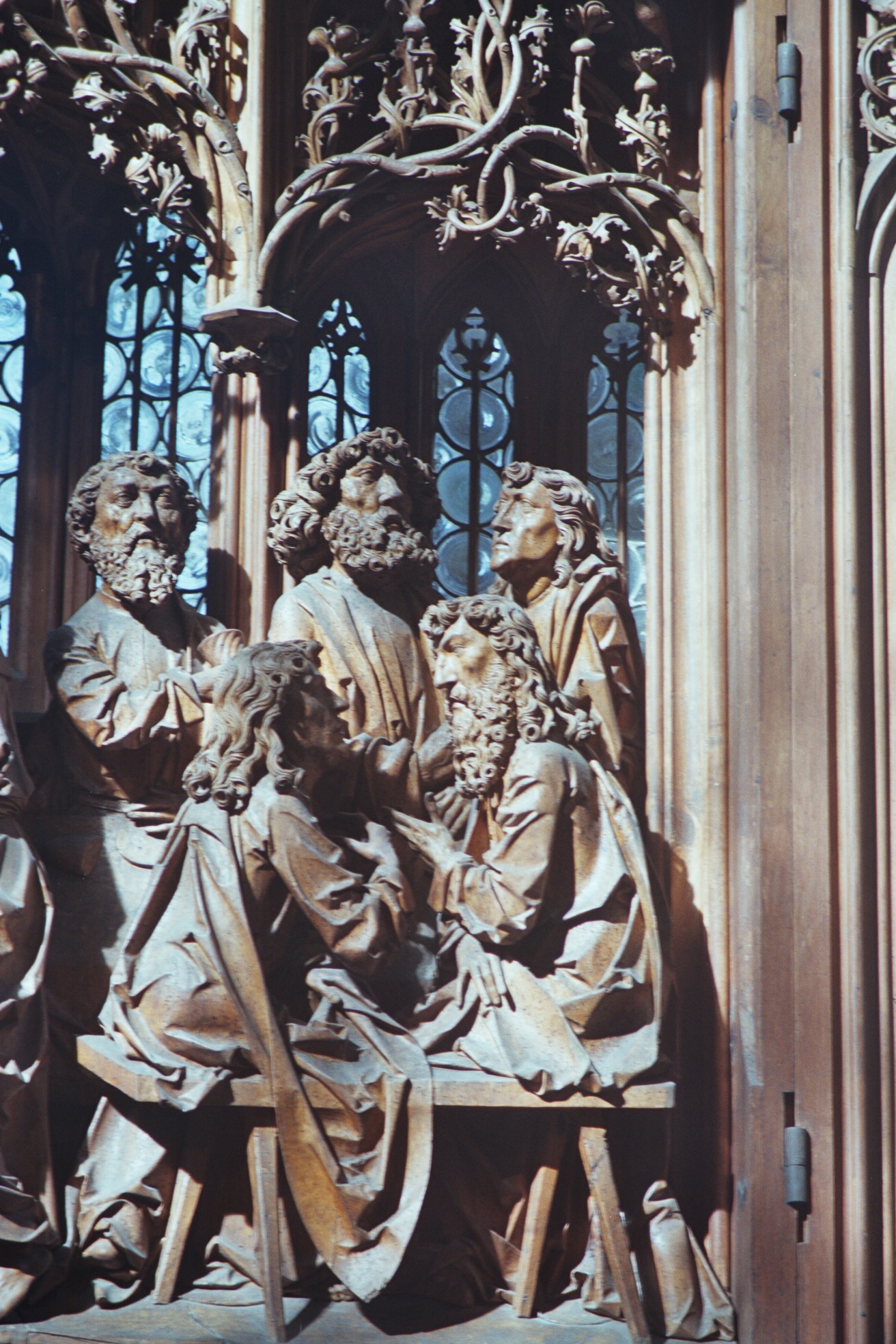 d Jesus, whilst his journeyman worked on the five apostles to the right of Judas (pictured left) seemingly trying to work out who the traitor was. The relief on the left of the central shrine of the altarpiece depicting Christ’s entry into Jerusalem does not seem to be Riemenscheider. In particular, the figure of Christ himself is insufficiently proportioned and the faces of the figures are stylistically different.
Altarpiece of Parish Church of St Peter and St Paul, Detwang – 1505-8
By way of contrast, this altarpiece (right) is thought to be wholly by Riemenschneider, although it was not originally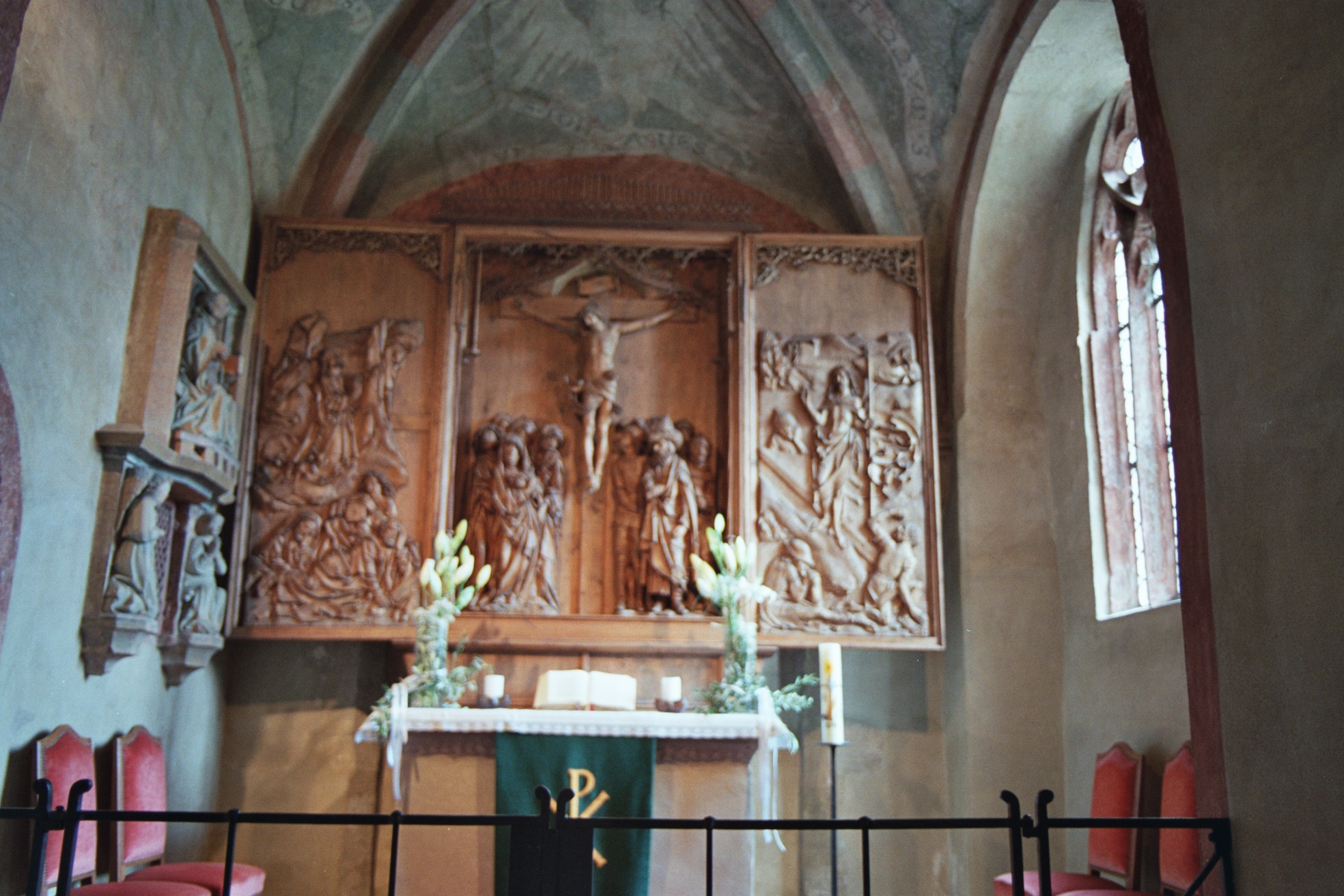 designed for this church (it had to be narrowed fit in the space). The central section is a classic crucifixion scene with mourning women and St John to the left and the soldiers around Caiaphas to the right. The panel on the left depicts the agony in the garden, the one on the right, the resurrection. All are deemed to be stylistically coherent apart from some of the bodies in the resurrection scene.
Würzburg Cathedral
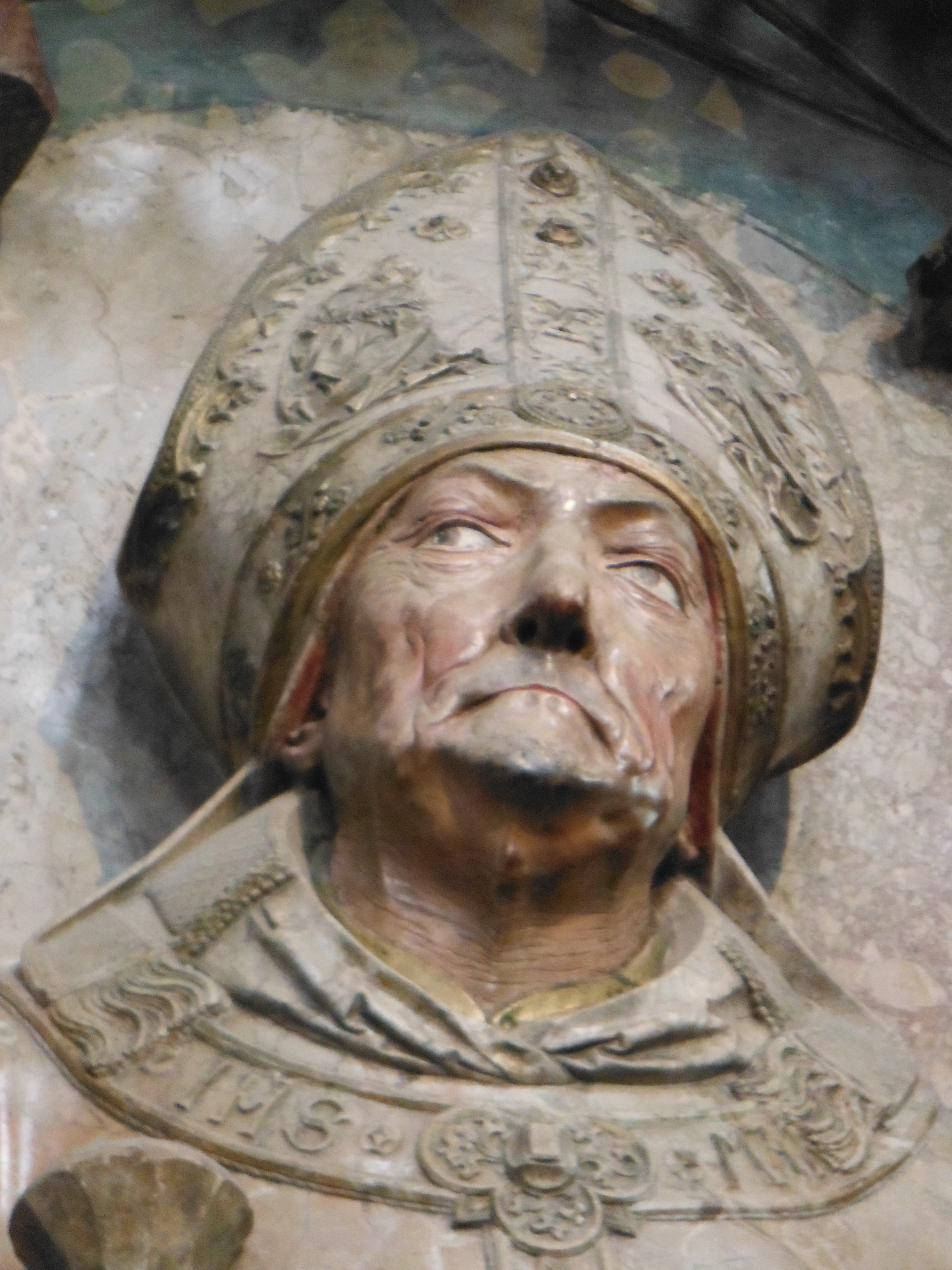 Würzburg Cathedral is a wonderful space in the centre of the city. Riemenschneider was commissioned to carve a couple of tombs for former bishops. The founding bishop, Rudolf von Scherenberg, is celebrated in the stone carving (left) which is a masterwork in ageing human form. The Bishop gets the old-man treatment – though the contract specifies precisely how he was to be presented, with artefacts (swords, etc.), coats of arms and attire.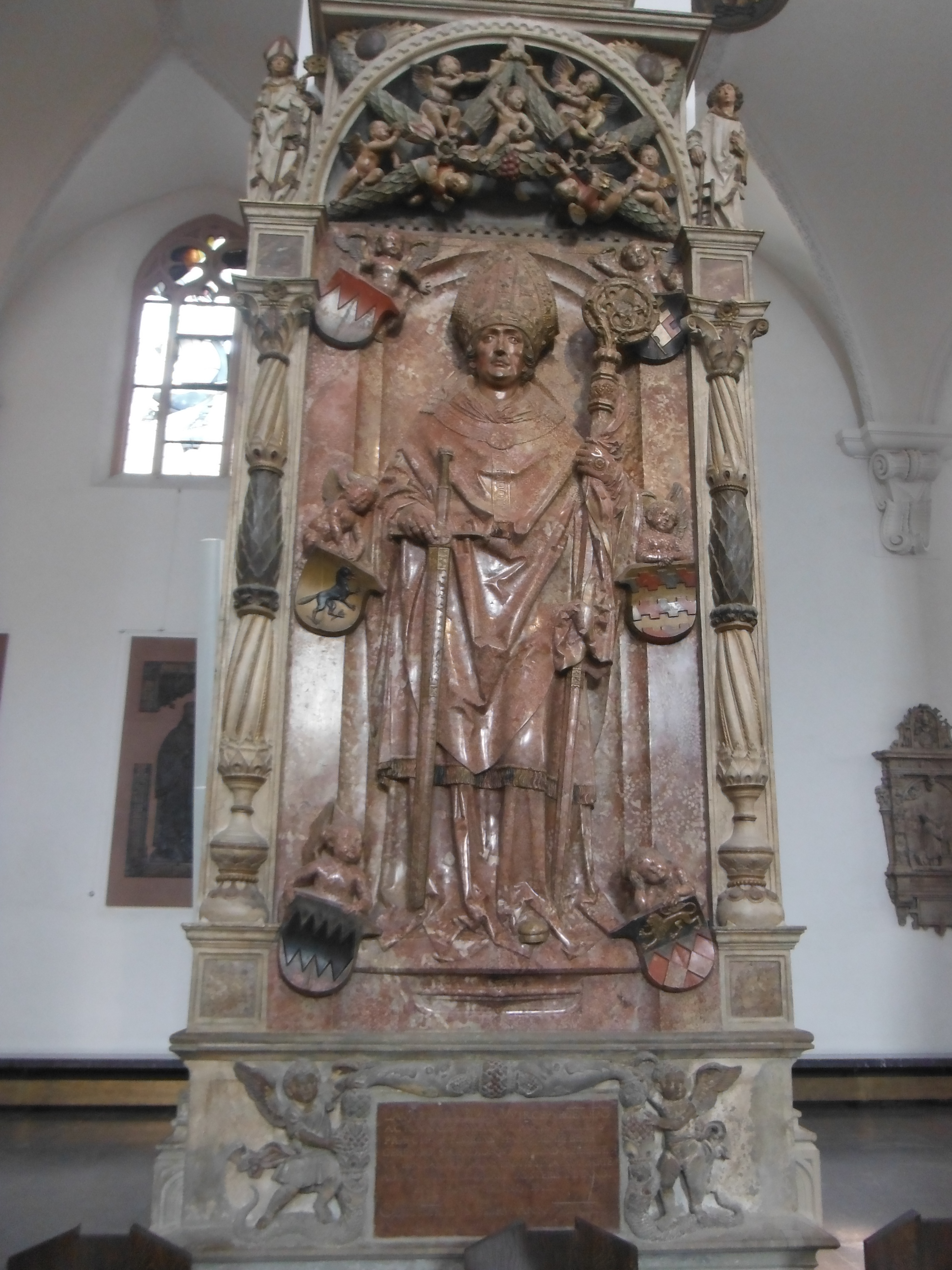
Later, Riemenschneider did the same for Bishop Lorenz von Bibra (right). This depicts a younger, age-indeterminate man, but is a mis-mash of styles. Riemenschneider is credited with the figure, puttis (something that he liked doing, seemingly) and the lion vanquishing the dragon (at the base).

Walk down the knave and one comes across yet another Mary and child (left). Again, she stands on a crescent moon. The child is cradled on her right side (in contrast to the depiction in Volkach, above) and her leg protrudes forward. She stands on a plinth ahead of the altar.
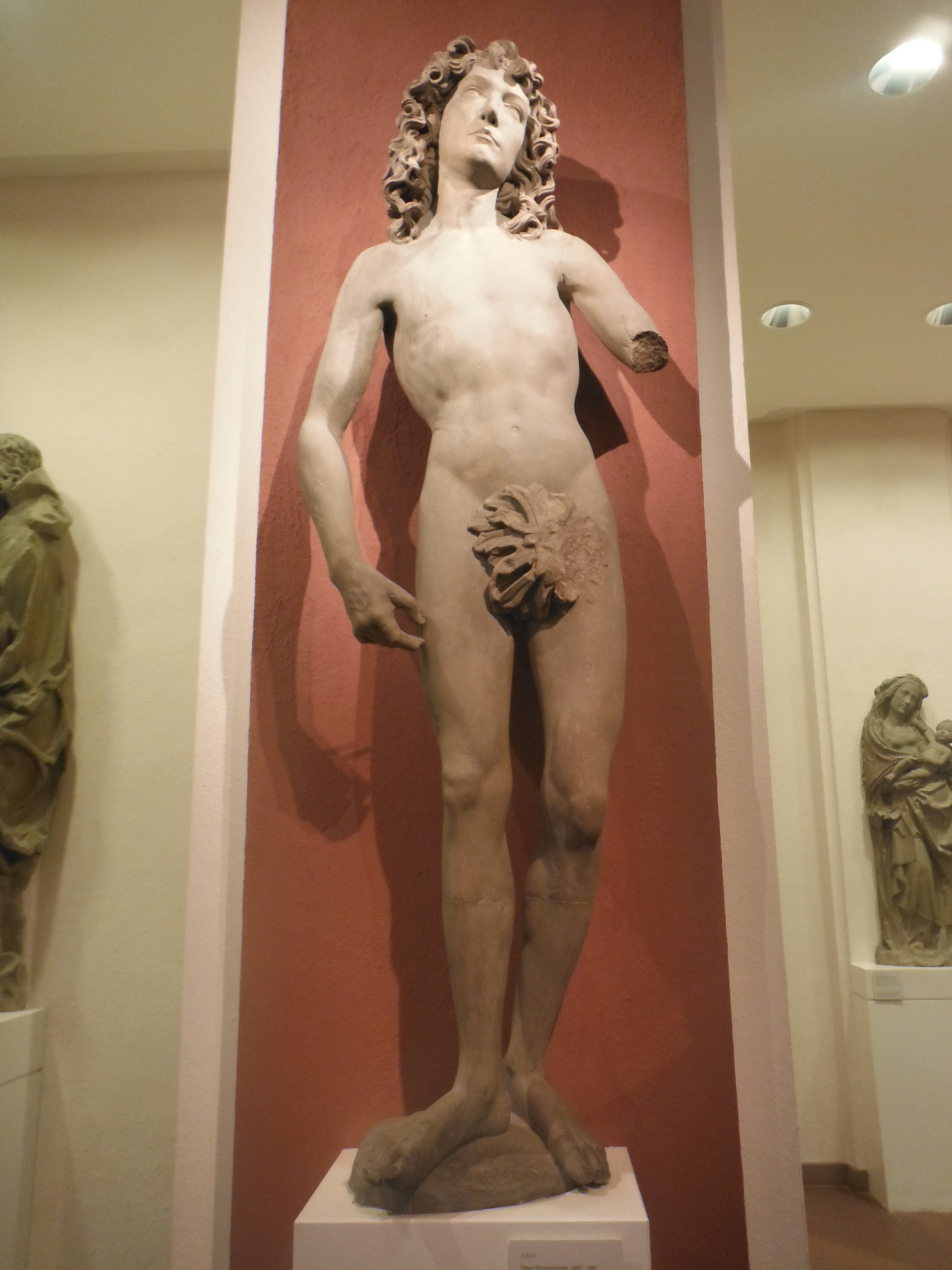
The cathedral used, also, to be the home of Riemenschneider’s stone Adam and Eve sculptures (1493). Go there now and replicas flank the south portal of the Lady Chapel. The originals are now in the Mainfrankisches Museum in Würzburg (see above). They ended up there because the provost of the cathedral in 1894 was offended by the nudity and had them removed. The replicas were installed in 1975.
Bot h have missing arms. Eve is depicted as round and earthy in a renaissance style. She has the apple in her remaining hand and a serpent at her feet. Her hair confidently drapes her back. Art historians, however, have been a shade confused about the figure of Adam. Traditionally he is depicted as being mature and, naturally, bearded. This one is youthful, innocent – and a victim of female wiles. He’s late gothic in depiction; hence he is not particularly endowed with muscles (renaissance Adams often have six-packs). Adam’s face and hair are similar to Riemeschneider’s St Johns in altarpieces (for example, Münnerstadt, not discussed here).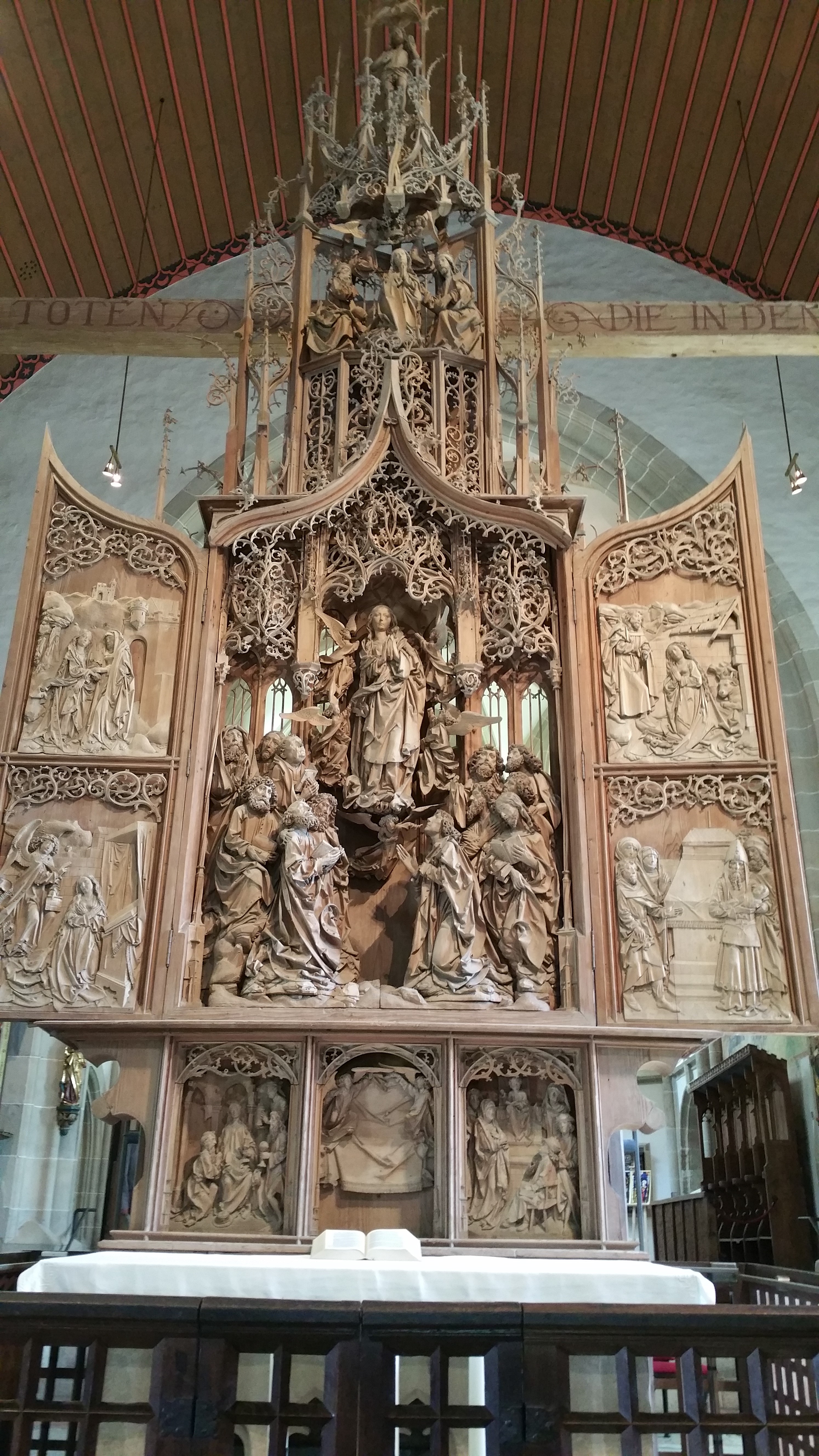
Our tour was not complete. Münnerstadt, for example. But equally, the masterpiece at Creglingen 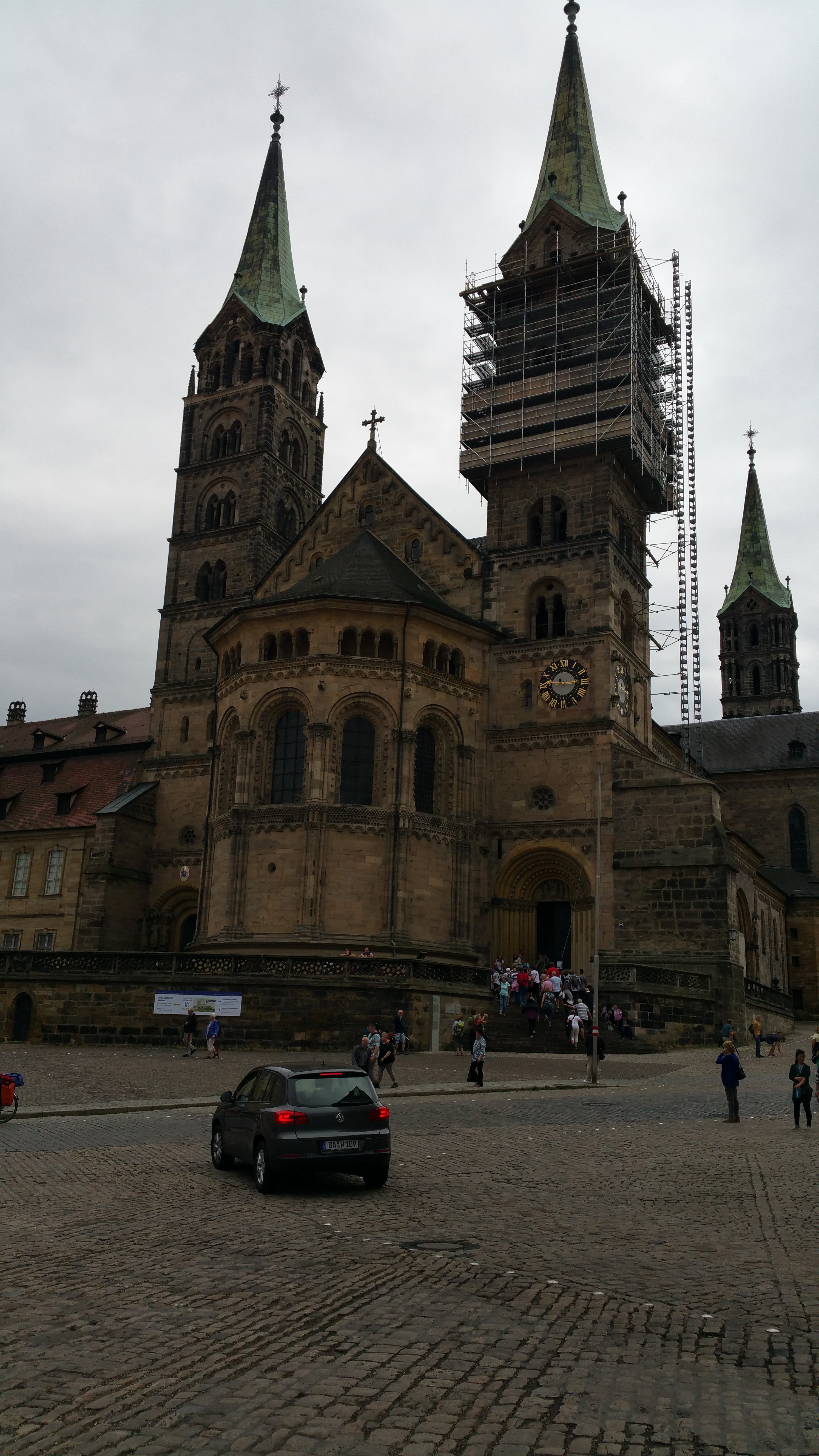 Herrgottskirche (right) and Bamberg cathedral (left). Unfortunately, there is a lot of geography involved and not enough time.
What I have tried to do is give a flavour of the life and work of Riemenschneider. Not only was he a fine carver, but also a politician -clearly with some morals – a husband – though accrued much property by this means – and a businessman. He worked to specification and gave, usually, what was asked at the requisite quality. For tourists, focusing on a single artist can be an exciting and meaningful way of exploring a region. And if you have access to the language, there are lots of people to fill in the gaps for you. We are indebted to the attendant in the Mainfrankisches Museum for extra info about artefacts, and the woman in Großlangheim who told us about both churches and their treasures.
Additional source for text: Kalden-Rosenfeld, Iris (2004) Tilman Riemenschneider: The Sculptor and his Workshop. Translation by Heide Grieve. Karl Robert Langewiesche Nachfolger Hans Köster Veerlagsbuchhandlung KG . Konigstein im Taunus.
Three killers together
Filed under: Cigarette advertising | Tags: Chesterfield, L&M, marlboro
Leave a Comment 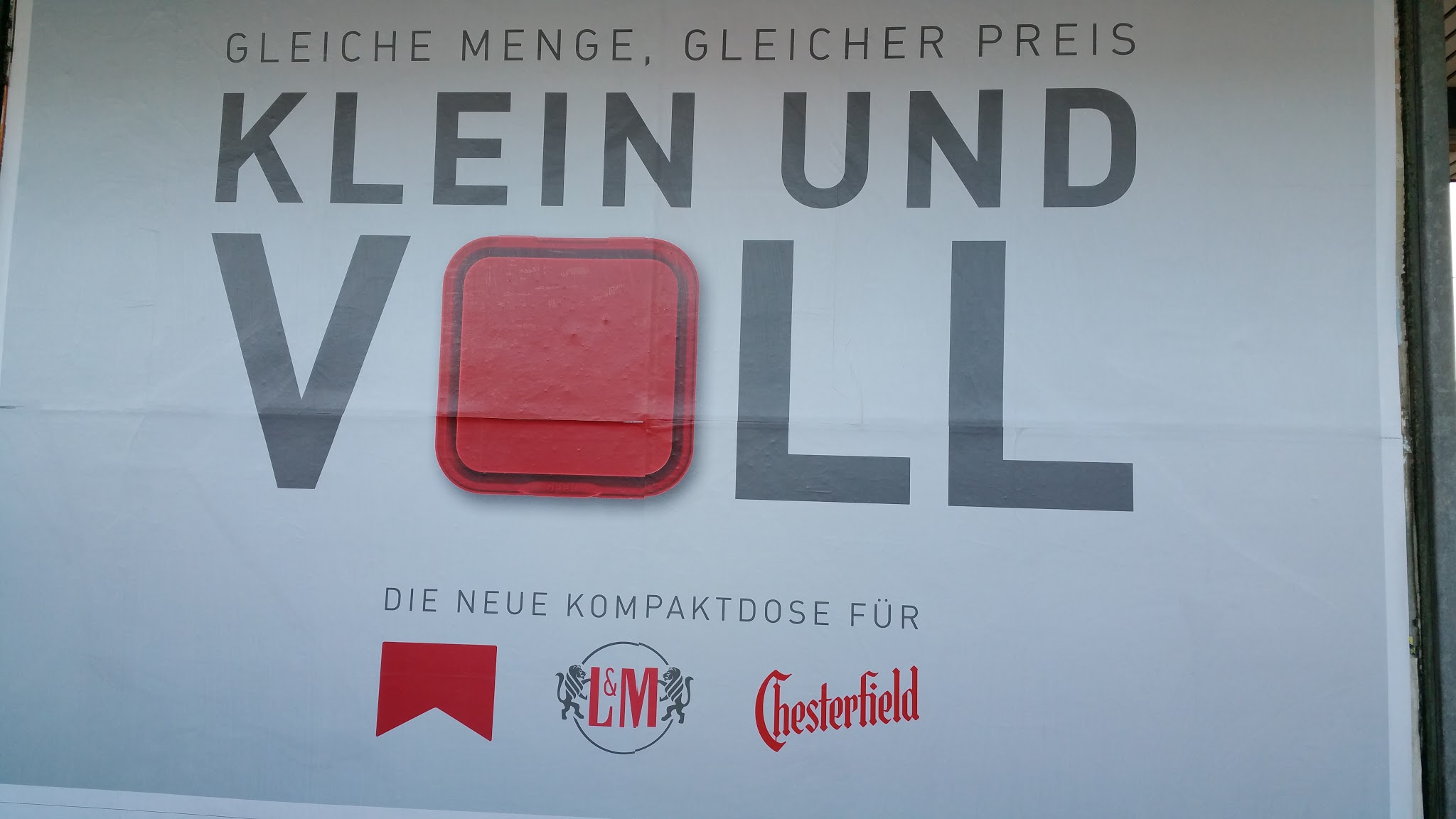 The three killer brands appear on the same billboard – Marlboro, L&M and Chesterfield. To what end?
Seemingly, they will now have the same box but with similar numbers of sticks. I assume this is something to do with European packaging regulations where two-thirds of the pack have to show the lethal side of the product rather than the brand. I need to check the packets in the shop.
Camel pushes on with its “do your thing” campaign
 Germany is currently being blanketed with striking posters for Camel cigarettes. Quite a few feature women smoking in public places. Here (left) we see the blonde-haired woman again with, what appears to be, a “don’t care what some of us think” expression. She’s young, confident, and, for the time being, healthy. She also has a friend (bottom left).
 What is interesting about this campaign – and something that it shares with the Marlboro parallel “You Decide” campaign – is how unsubtle some of the images are. For example, the woman (right) who is in the process of lighting up. (Apologies for the poor pictures, many of them are behind plastic and on sunny days the reflections are unavoidable.) I have recorded many advertising images over the years where cigarettes do not feature at all. A
  mere association is regarded as sufficient to promote a smoking lifestyle. Camel itself has moved a long way from its subtle brand-based “Untamed” campaign. I’m not entirely sure what this means. But as the increasingly small warning at the bottom of each poster says, “smoking is deadly”. If you are lucky.
Rijks Museum, Amsterdam
 One of our favourite art historians recently made a programme for the BBC about the refurbishment of this national museum in Amsterdam. It was – and still is – home to the Dutch nation’s treasures, including its Rembrandt paintings, most especially The Night Watch (left) which is itself watched over by two museum bouncers, just in case.
The museum was first opened in 1885. It was apparently a controversial building. The architect, Pierre Cuypers, a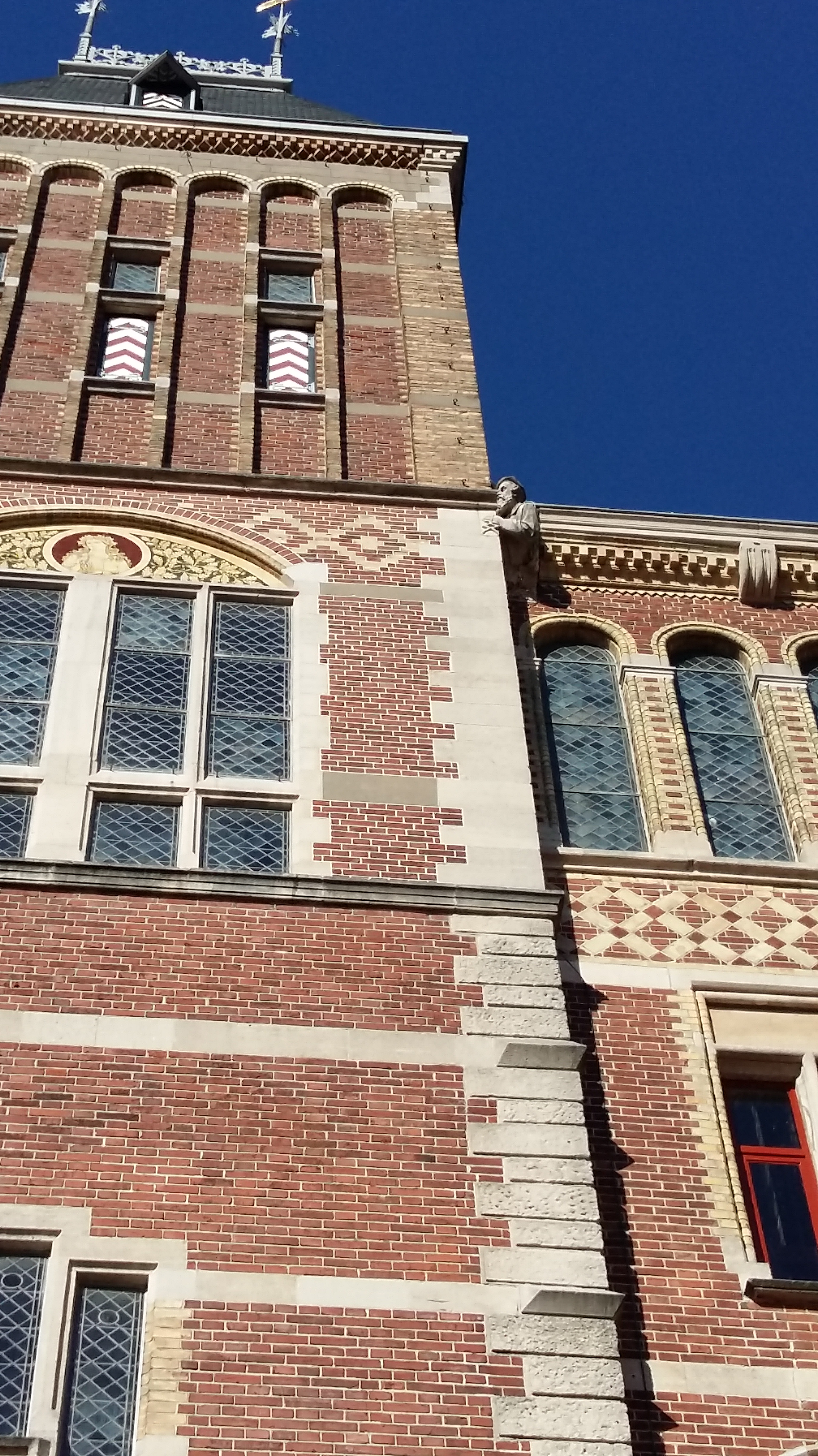 catholic, created a very catholic building for a staunchly protestant city. And Cuypers knew this. So much so that he sculptured himself into the building looking very sheepish, as well he might (right).
The museum’s transformation from staid national museum (seemingly stuffed animals and dull artefacts), to compelling home of the nation’s treasures took much longer than anticipated. If I understand the story correct, the architects plans (Spanish practice Cruz and Ortiz) involved closing off the cycle route literally through the centre of museum. This did not go down very well; reconfiguring the designs in order to retain the cycle route took some time. That said, there was also a small matter of asbestos that extended the task from 3 to 10 years.
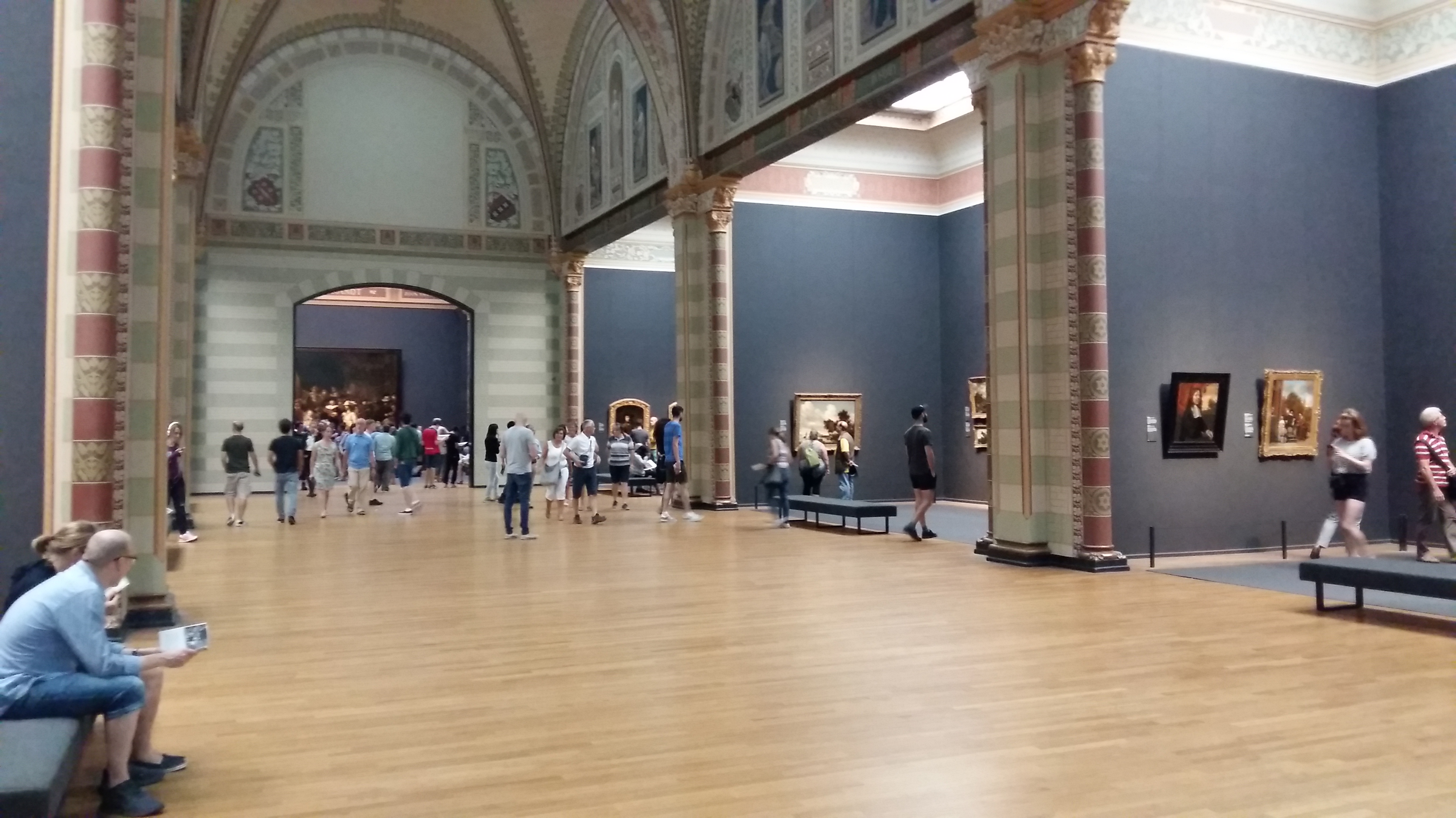 Now it is expensive, at least for tourists – €17.50. It is easy to gain a day in there. There are 80 rooms and just under a million artefacts (clearly, not all are being exhibited at the same time). The galleries are now organised chronologically (rather than by type – paintings, ceramics, textiles etc.). This means one gets a mix, adding important context to one anoth
 er in the process. However, some galleries are exclusively art such as those where one finds Rembrandt, Vermeer, etc. (above left)
We started on the 3rd floor with the 20th Century. These floors celebrate Dutch water engineering (the Dutch made a lot of contemporaneous films of the building of their phenomenal water projects); innovative architecture such as Rietveld’s model orphanage housing project in Bergeijk Le Courbusier’s 1958 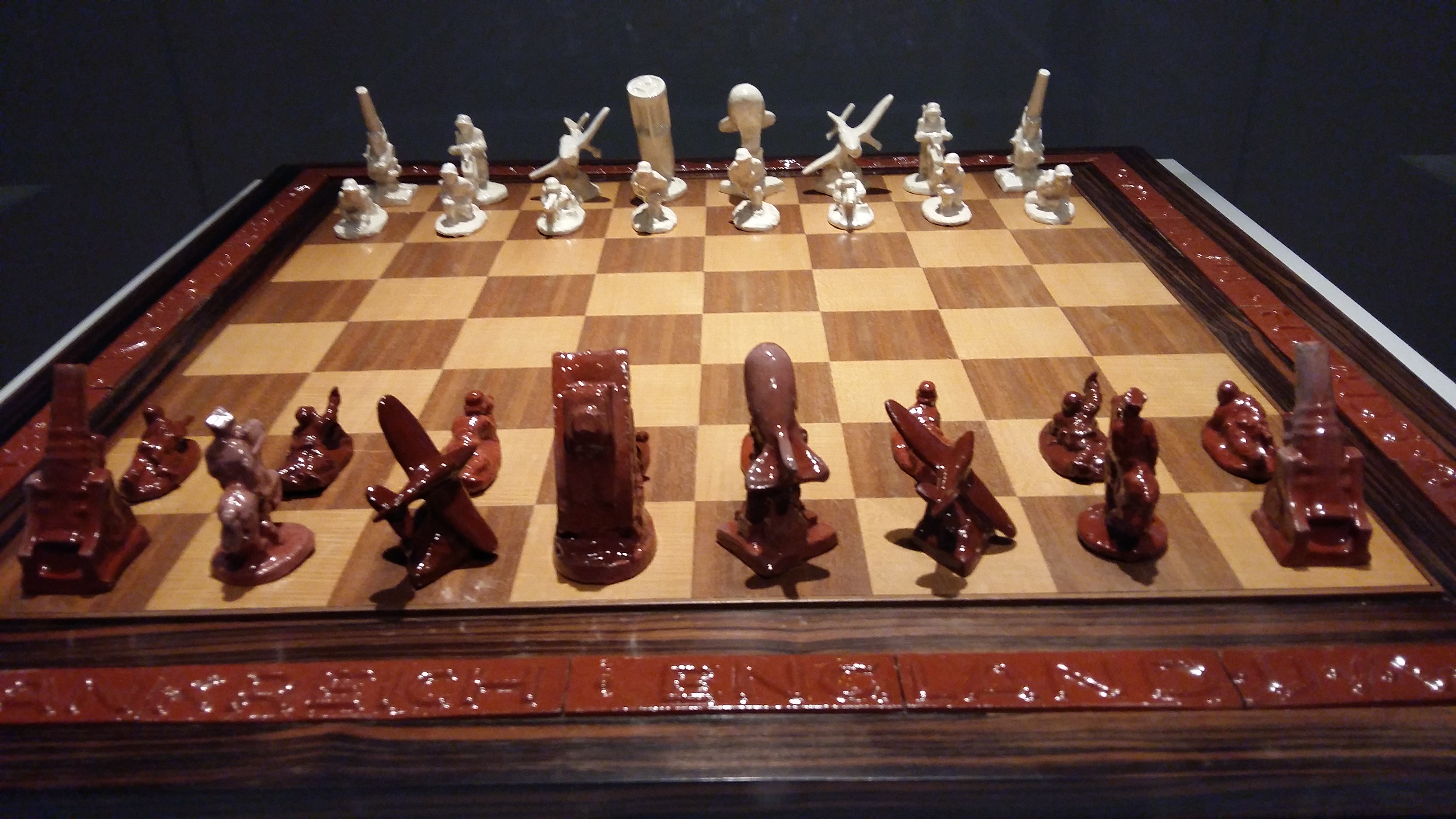 Philips World Fair Pavilion (model of); mischievous art in Ferdi’s Wombtomb; design such as the fusion of Mondrian’s geometric art with Yves Saint Laurent’s couture (right); and most sinister of all, a Nazi chess set (the Nazis were white, naturally. Their weapons were bigger and more up-to-date).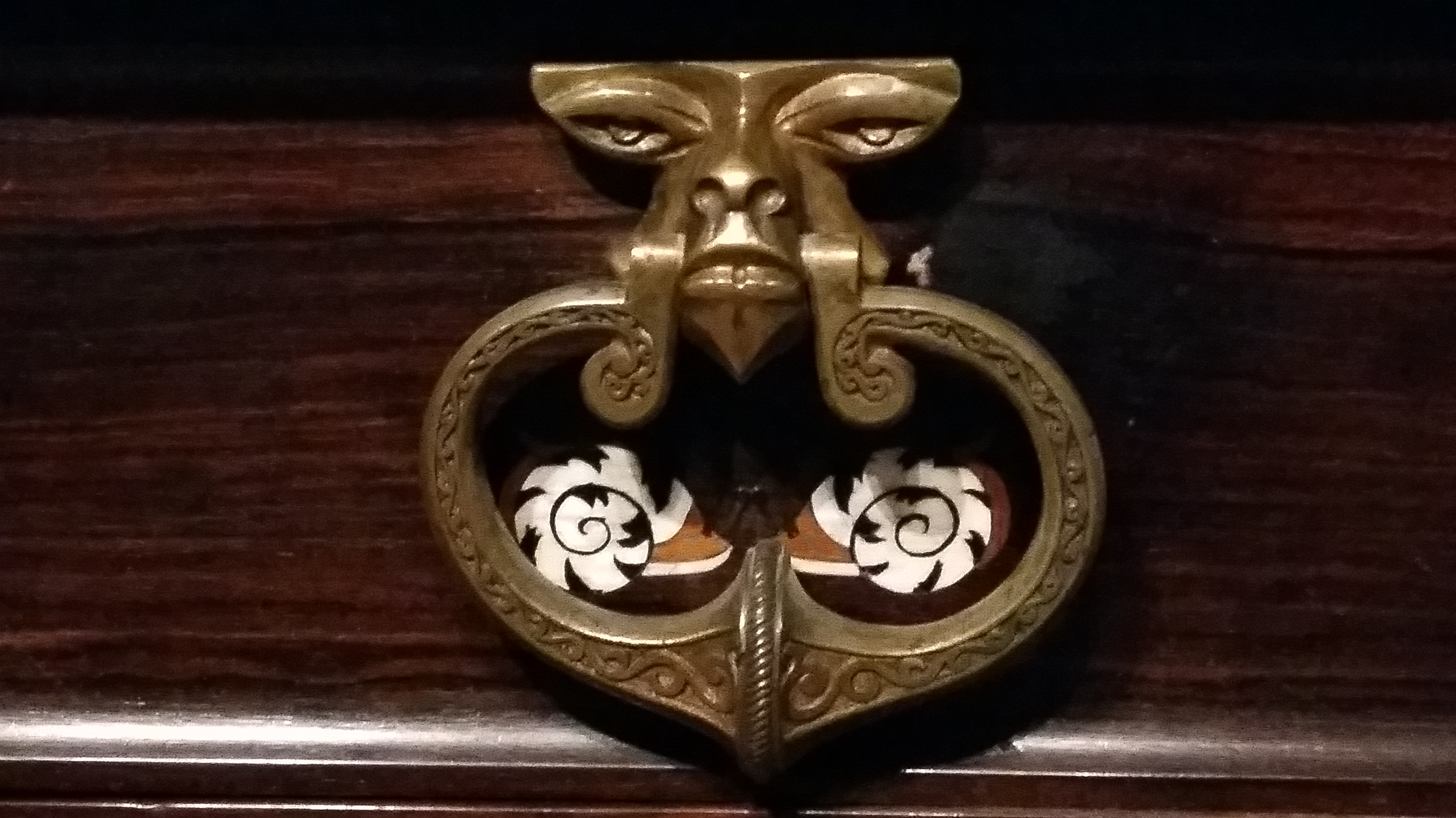
Other wonderful artefacts include Lion Cachet’s substantial 1902 sideboard with handles suspended from monkey heads (right); Petronella Dunois‘ intricate dolls houses c1676; Sam Schellink‘s finely-decorated porcelain c1900; and spectacularly, Frits  Koolhoven’s FK23 Bantam fighter from 1918 (left).
In terms of art, the museum tracks both the careers of Dutch masters and the significance of their work in telling the story of the country. For example, in much of Europe in the 17th Century, artists were employed by the Church or wealthy families (think Medici in Florence). The Netherlands is a relatively new country reclaimed from the sea. It is also a maritime country built on heroic trade (Rudolf Bakhuysen’s Warships in Heavy Storm, right, is not untypical). The wealth was in the hands of a merchant class who, not surprisingly, enjoyed their images being reproduced on canvas.
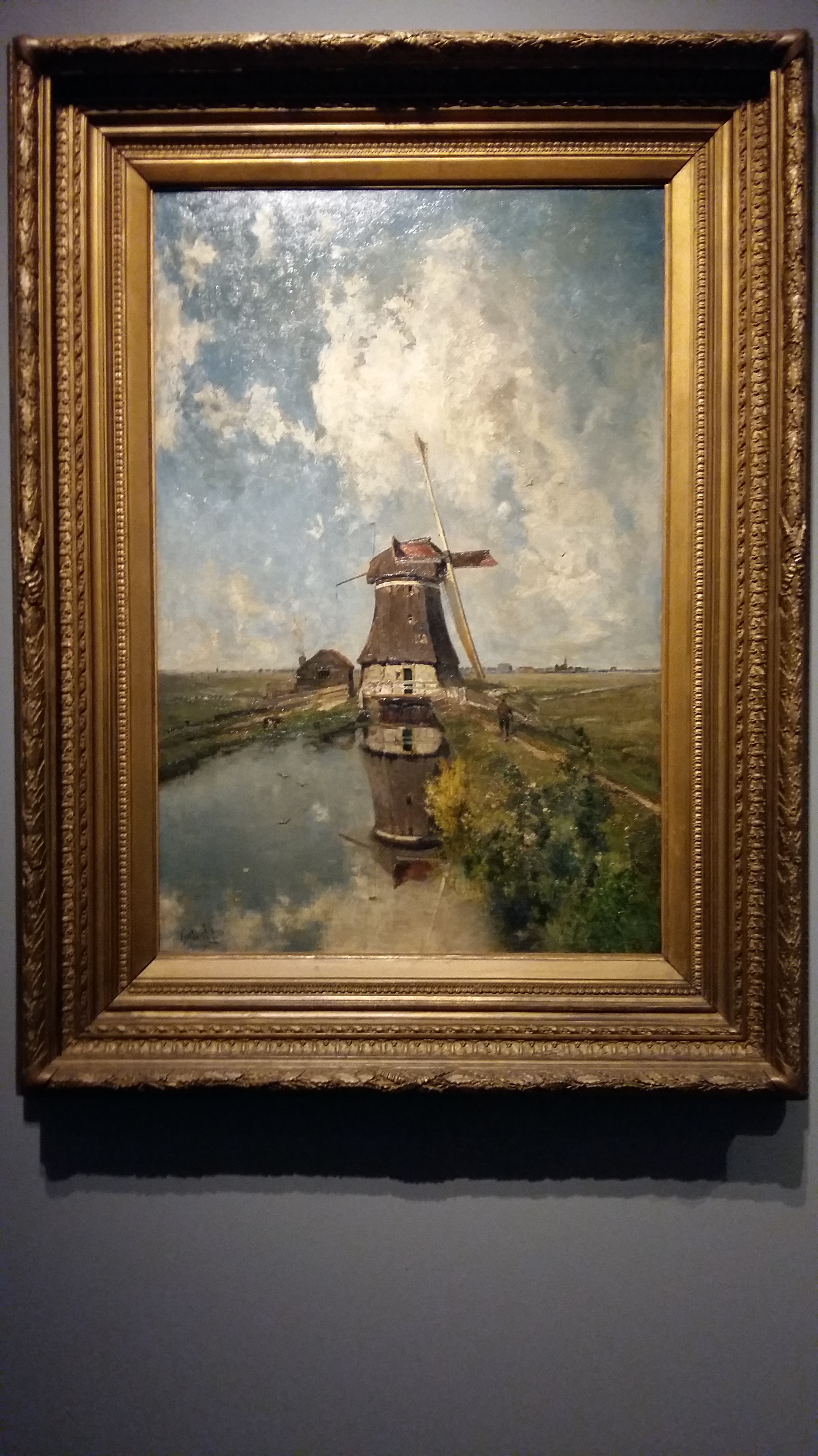 The landscape features, too. Joseph Constantin Gabriël’s, The Month of July (left), is illustrative of the genre. We were also delighted to find Thérèse Schwartze’s Portrait of Lizzy Ansigh, a fellow painter in the female group of artists known as the Amesterdamse Joffers. This is at least a recognition that females were active in this period without in any way over-representing their work.
Finally there is recognition of particular schools of painters – the Hague School (1840s), with its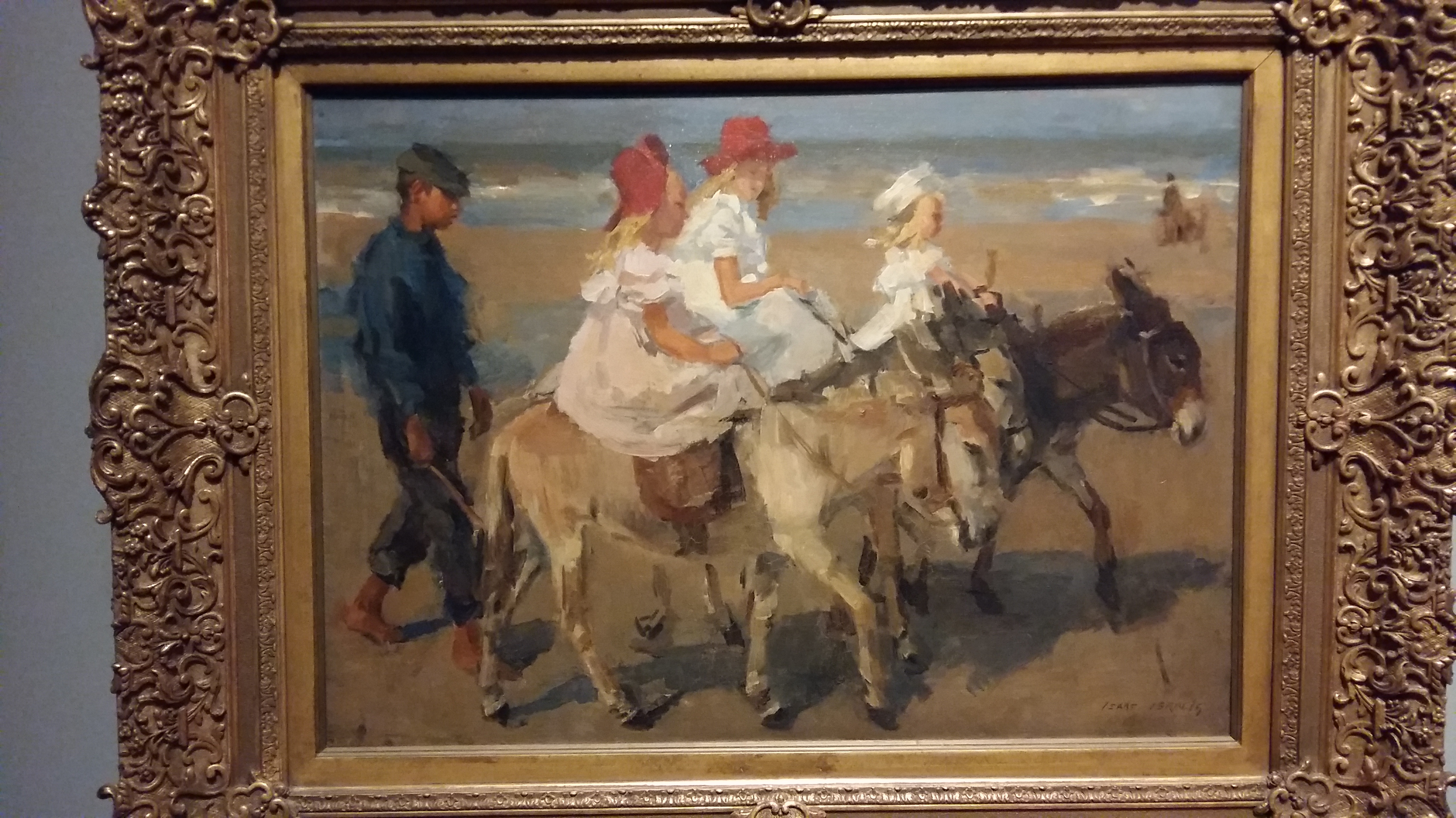 emphasis on the lives of ordinary folk and the Amsterdam impressionists of which Isaac Israel’s Donkey riding on the Beach (right) is a fine example.
Van Gogh is there, but if readers want to see his work, the adjacent Van Gogh museum is the place to go. It too is a special place, but much much busier.
Along with the reconfiguring of the physical museum, the curators also produced an excellent app for iPhone and Android. It saves hiring an audio guide; and if your mobile runs out of fuel, there are free fuelling stations.
Left luggage facilities, Amsterdam Centraal
The perennial for independent travellers is where to store luggage when passing through cities. And how does it work?
 Amsterdam Centraal Station does it by locker. There are about 1000 of them located near to platform
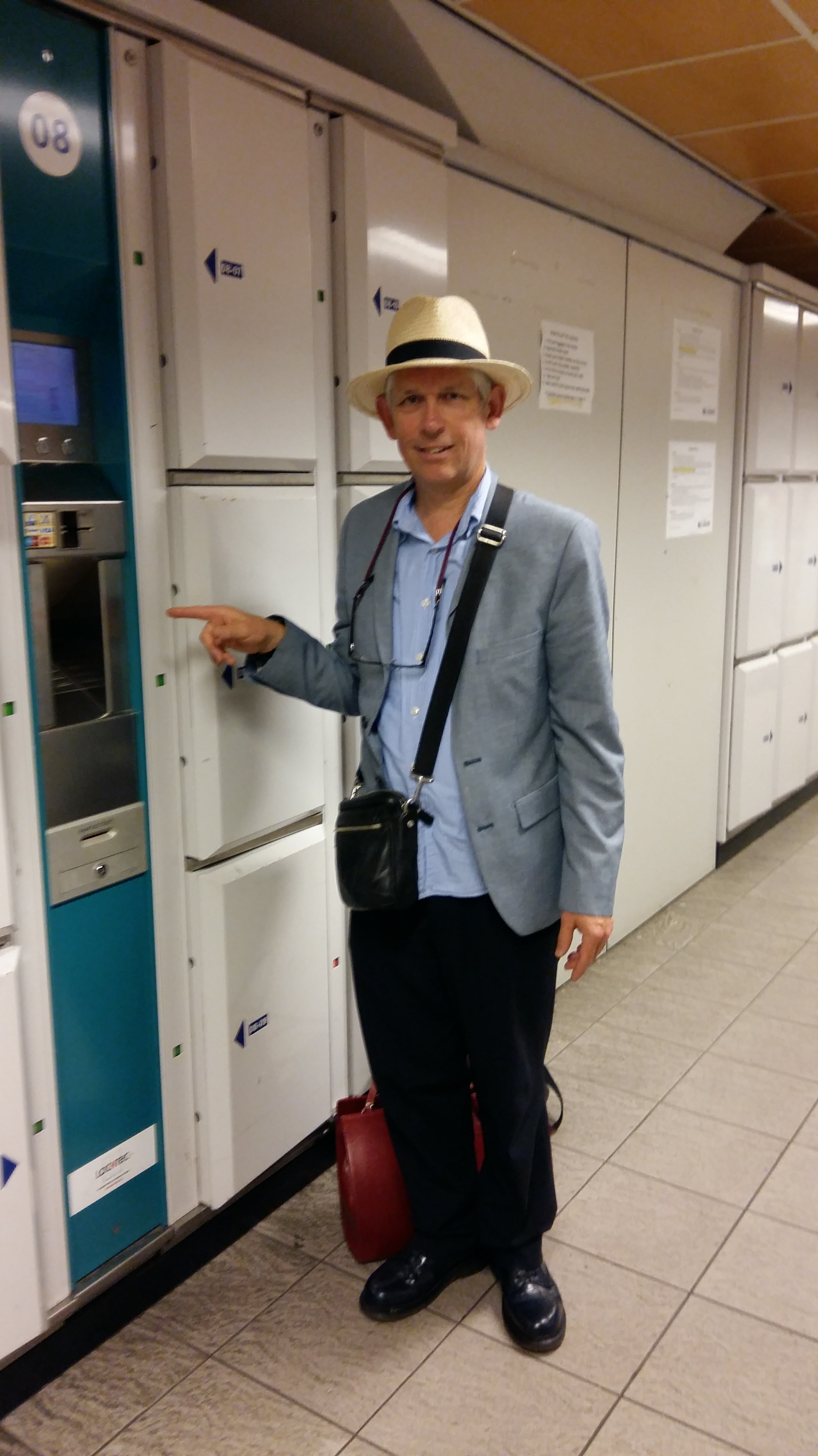 2. Essentially, go to the main concourse, face the departure board and then turn right.
Cash is not welcome. You have to pay by card. There are two sizes. The large locker is big enough for two medium-sized cases and costs 10 Euros (right). The smaller costs 7 Euros. Put your luggage in. Close the door. Insert your card, follow instructions and wait for a paper key to be dispensed (left). The maximum storage time is 72 hours.
Camel libertarianism
Most readers of this blog come to view my musings over cigarette advertising in Germany. My political musings are not so well read. They have, however, seemed more important in the weeks since the Brexit referendum. However, with the onset of Trumpism in the USA, I’m getting prematurely scared. Cigarettes, though lethal, are not lethal in the mass sense, unlike the finger of a mad man on the nuclear button. Now I wonder whether the American owners of the Camel brand have realised that armageddon is around the corner, so before it happens (he will not take office until January 2017 – as if 2016 hasn’t been bad enough), so smokers and non-smokers alike have 6 months or so to “do your thing”!
 First up then is the short-haired bespectacled woman doing her thing. This looks like smoking in a public place and challenging anyone to say something to her. In fact, if I could lip-read, I am sure she has just said “Trump”. TRUMP. In response to a question like “could you please smoke 8m away from my window, please?”
Now Trump also claims to be not from the (political) elite. But he clearly likes money garnered from the policies of the elites over the last 30 or 40 years or so. Low taxation, screwing the poor (and in Trump’s case, anyone living near one of his golf courses in Scotland), etc. So, Camel has an advertisement to sum this up (right). Here we have some sort of sharp-suited Bloefeld character sat in a leather armchair with a brunette woman in the background. So often cigarette advertisements are about sex, but here, it is about power, apparent wealth and sophistication. All seems a bit humourless to me, but what do I know?
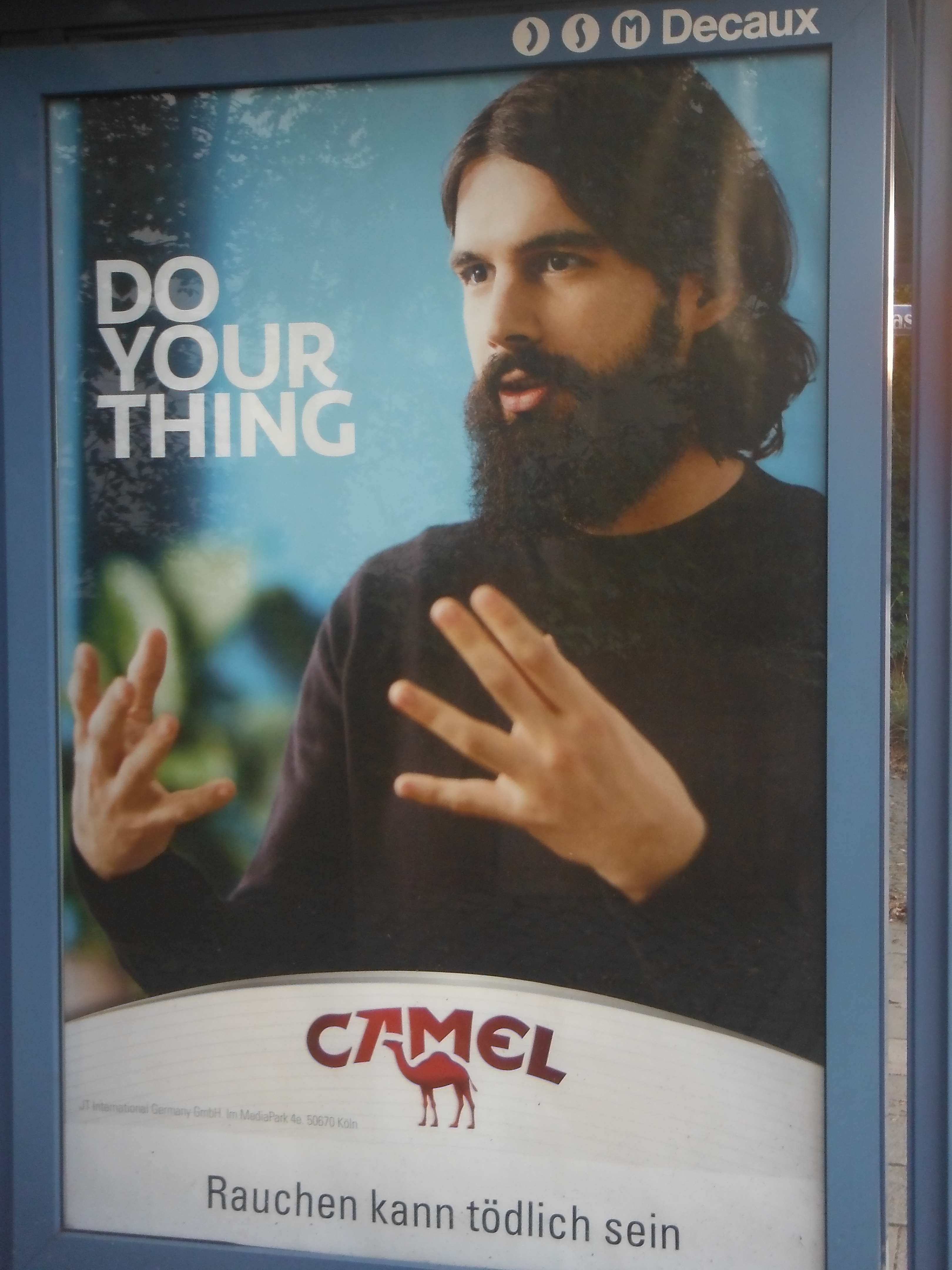 By contrast, hipsters (left) seem to do their own thing as well. Now this man is virility incarnate. Full beard and follickled pate. No cigarettes. He is doing a sort of Mr Spock with his fingers. Preaching Vulcanism, perhaps? Do your thing but don’t vote Trump? Creepy.
Finally – and the only full-sized avertisement from this campaign that I have so far found, 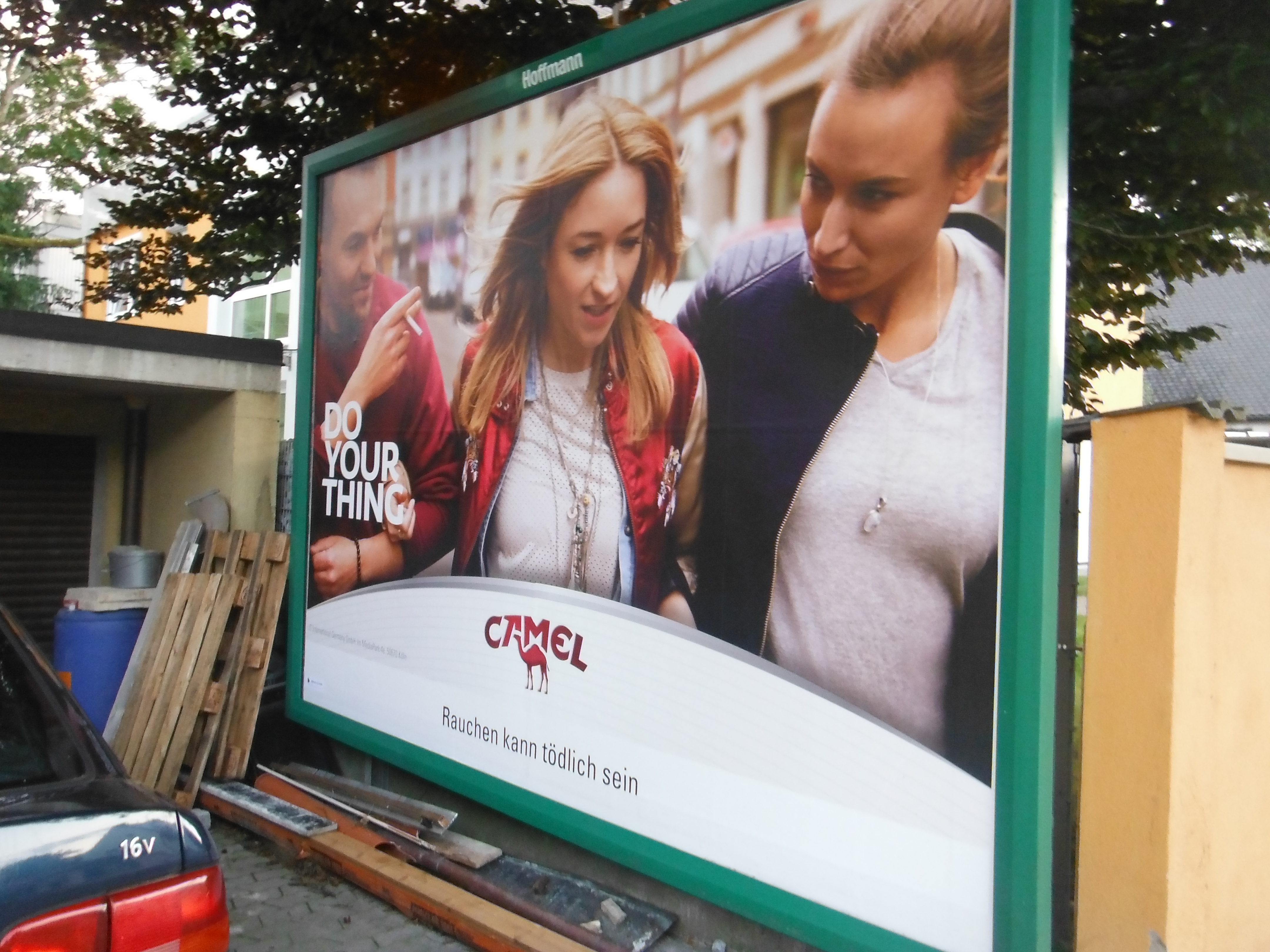 features 3 people – one smoking bloke and two women. They seem to be walking arm in arm, with the woman in the foreground seemingly concerned about the one in the middle. The bloke, by contrast in just doing his own thing. I think. This one is the odd one out of the four, I think. Maybe over time it will become clearer.
Brexit watch – w/c 18 July 2016
Filed under: Brexit, Politics | Tags: ARM Holdings, David Davis, Liam Fox, Theresa May
Leave a Comment  Well, the Brexit Minister, David Davis (left) has been on overdrive this weekend. Whilst most of us have been overwhelmed by events in Turkey and Nice, Mr Davis has been busy making trade deals. Or at least feeding the Daily Express – that paragon of truth – some guff about the irrelevance of the EU single market.
I am also reassured that Mr Davis is the right man for the job. Having spent many years and much effort trying to get out of the EU, it is curious how little he understands about negotiating trade deals. He seemingly is of the opinion that it is possible to negotiate individual trade deals with EU members. He does really need to be briefed better before he starts negotiating.
What’s more, it is not even clear if it is his job. He’s minister for Brexit, that is not the same as Minister for Trade (and presumably agreements). That job goes to Liam Fox as Secretary of State for International Trade.
Oh, and then there is ARM, described correctly by ITV’s political correspondent Robert Peston, as Britain’s ONLY world-leading electronic company (sic). Mrs. May, in her Birmingham launch speech on 12 July, said that she would protect firms in strategic industries from foreign takeover. It did not take long for that pledge to be converted into Treasury orthodoxy; namely, that all firms have a price, strategic or otherwise.
The Founder does not think it is such a good thing!
https://twitter.com/GuyRWhitehead/status/755021858659966976
And looking at this graphic above, it really is not good for the UK.
A very German approach to advertising
Filed under: Business, Cigarette advertising, Travel | Tags: Munich
Leave a Comment 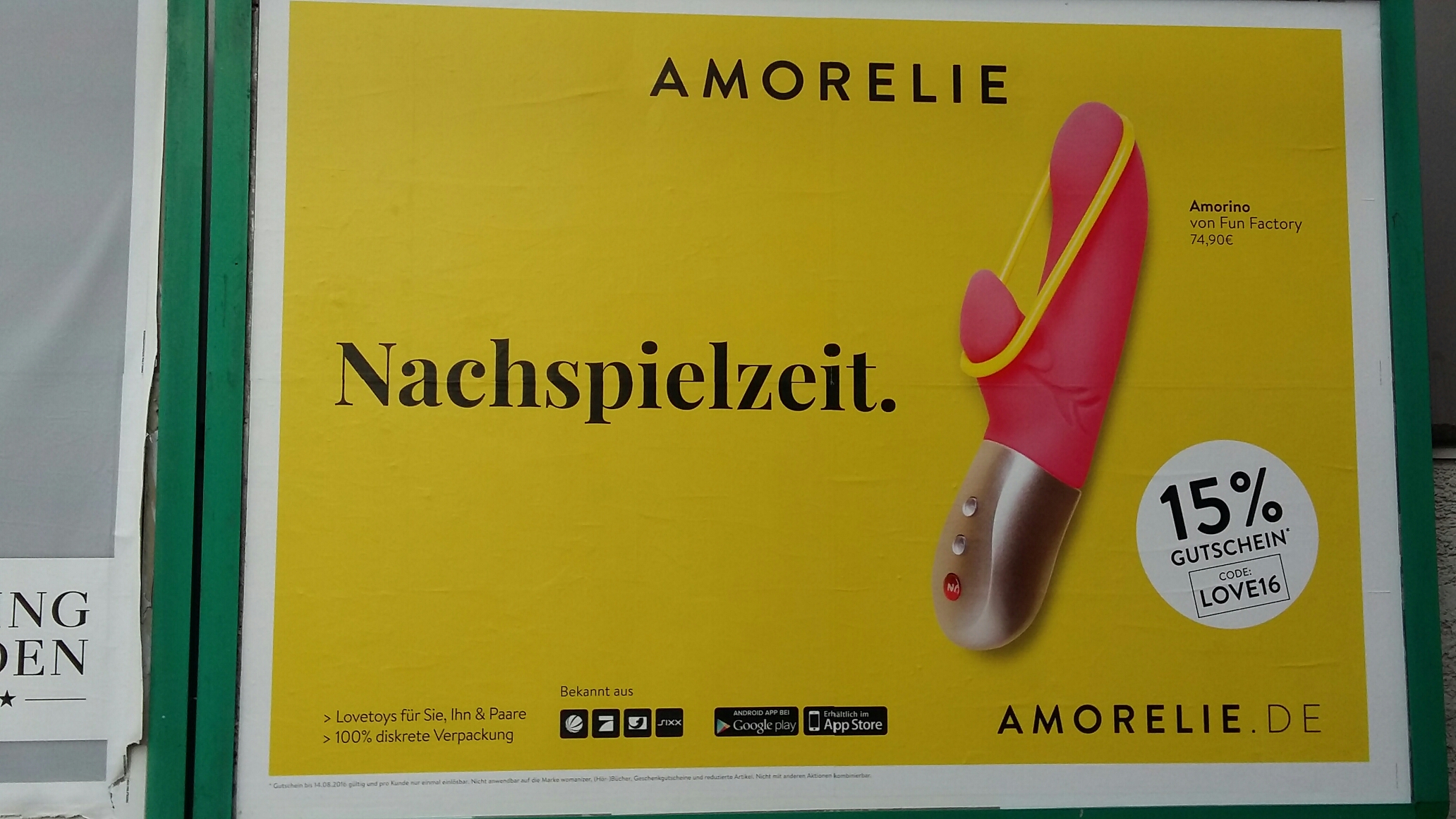 I love wandering around cities. In my younger days and earlier travels, I did it because it was always cheap and, largely, did not require communication. I have got myself into a bit of bother doing this. One can find oneself alone on an uncomfortable street with the sun going down. Athens springs to mind.
In Munich, where I spend quite a bit of my time, I have a “favourite” street. Actually it is a busy thoroughfare – a four-lane highway to-and-from the centre. What I like about it is that it seems to sum up the real city. I come from a wholly unattractive city, so I am used to finding beauty in things that are not generally regarded as beautiful. It is not an attractive street – it has more petrol stations on it than you can shake a stick at. It is dotted with mid-range hotels. There are more pharmacies on it than in the whole of the UK. And it has advertising hoardings in abundance. When I want to check out the latest cigarette advertising (one of the main draws to this blog, I have to say), this is the place to go.
In recent weeks, the cigarette companies have been keeping a low profile. They have been rolling out posters from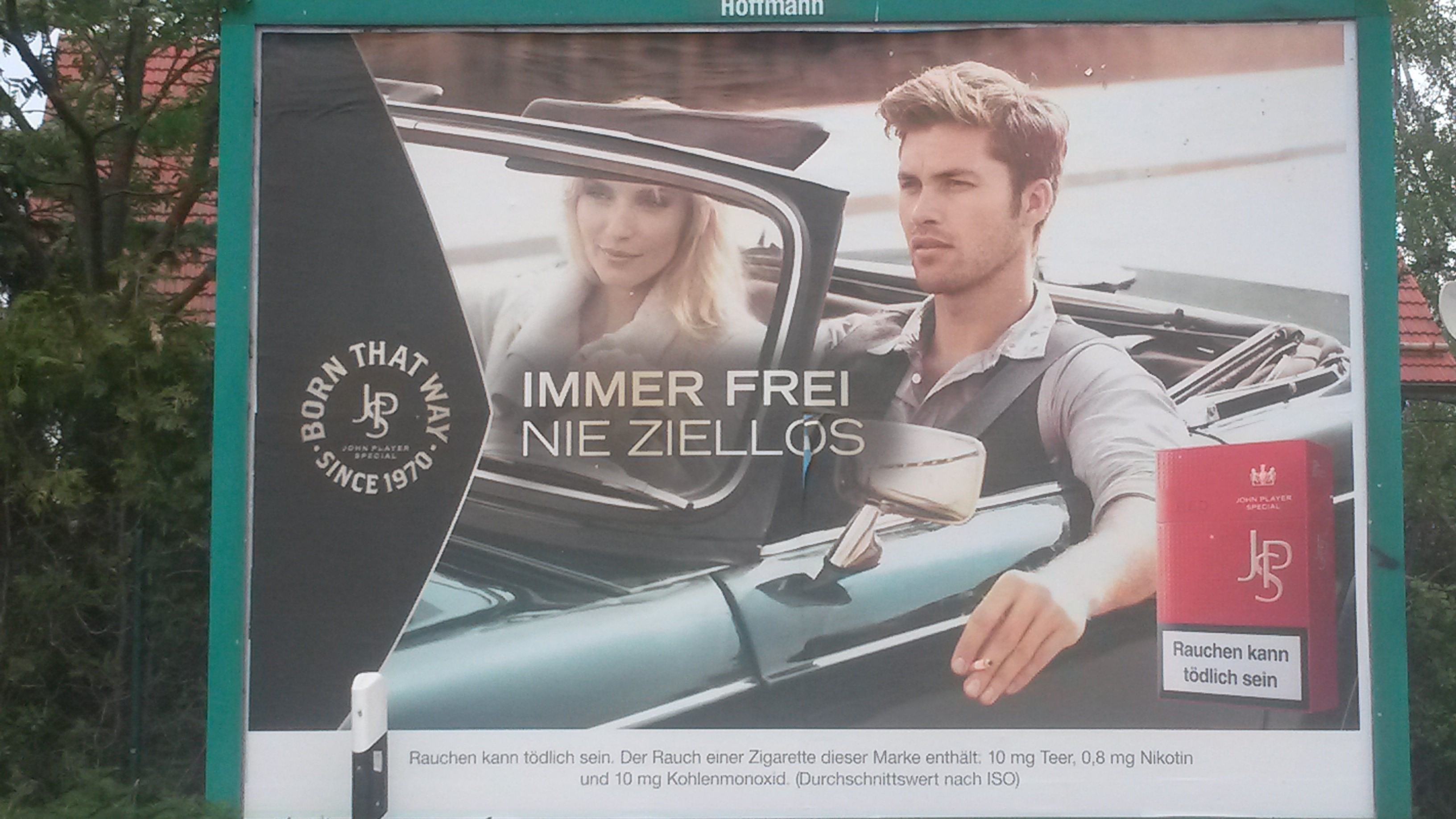 earlier campaigns; for example, JSP (right). Yesterday, we were walking along this street to a supermarket, something which we do often. I was keeping my eyes peeled for cigarette advertisements, but saw nothing. However, I did see the poster for…a sex toy (above left). My partner was oblivious. But it just hit me in the face. It is a clever one, too. It draws on football – the concept of “extra time” or “Nachspielzeit”. 15 per cent discount as well. Extraordinary.
Brexit watch
 The BBC is currently running a series of short talks by leading thinkers – real thinkers – on Brexit. I listened to two this morning as I traveled in to work. The Philosopher and Reith lecturer, Onora O’Neill (left), talks about the responsibility of media in a democracy and how the referendum debate was poorly served by the media. This was followed by John Gray (right), political philosopher, on the nature of opportunity arising from Brexit (however distant that may seem) and the legacy
 of the European project. This one almost made me feel human for the first time since the referendum result. Worth a listen (click on name below).
Since writing this initial entry, three more speakers have made a point. Least tenable, as expected, was Roger Scruton; I have a lot of time for the constitution scholar, Peter Hennessy (I’ve had the pleasure of meeting him a few times); and the excellent Cambridge classicist, Mary Beard, who summarises the whole episode so well. If only we had listened to these experts, Mr Gove!
Pictures: BBC


