Cigarette advertising – Springtime in Munich
 Leave a Comment
 I have not been in the City for a few weeks, but the cigarette advertisers are turning to thoughts of spring. The cigarette billboards are popping up like spring flowers, unfortunately, not so fleeting.
So, here is the update: perhaps temporarily, Marlboro has adapted its “Maybe”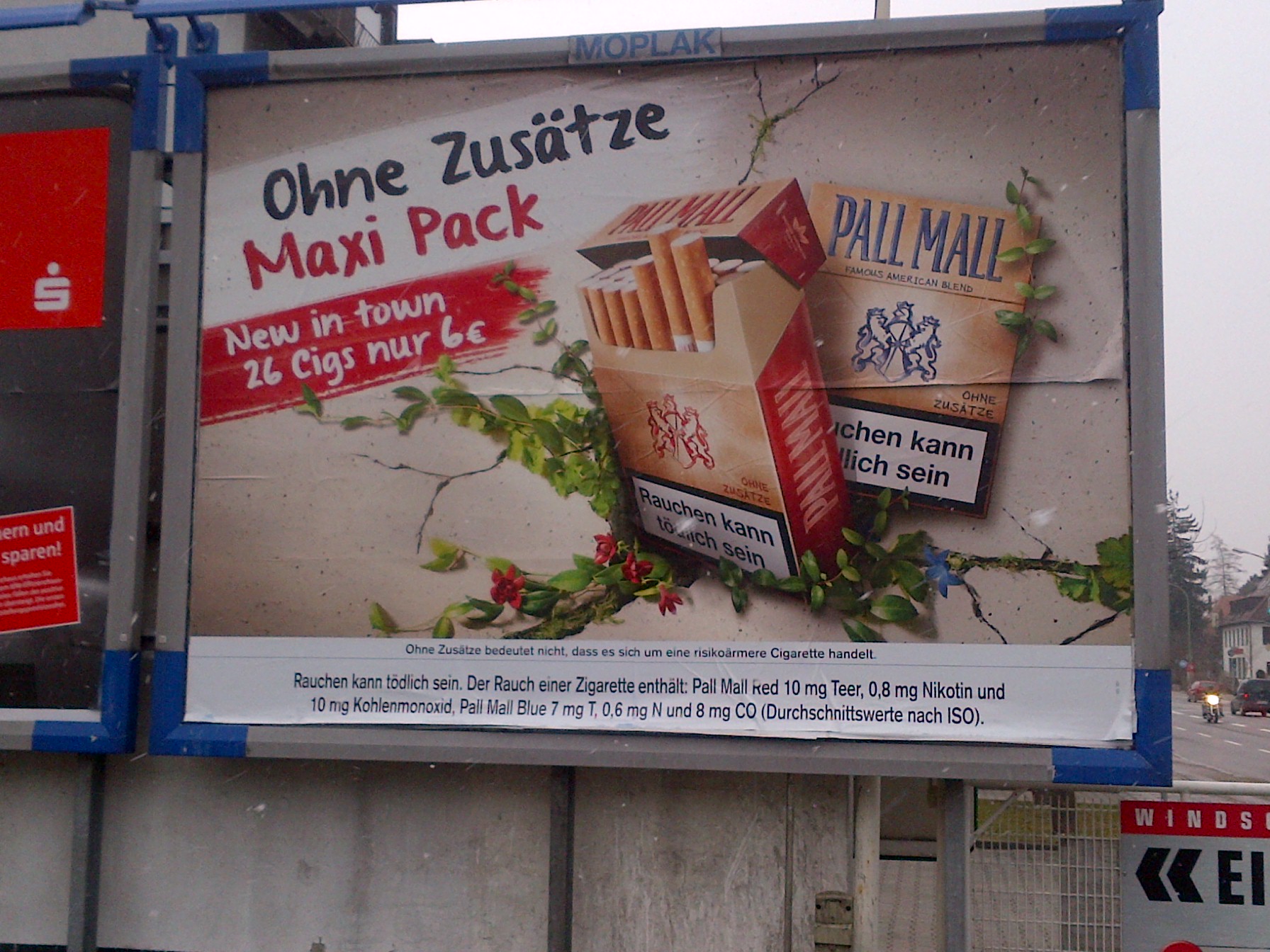
campaign to incorporate the “no additives” approach of Pall Mall and others. So gone are the young people; now we have pictures of packaging and green leaves.
Pall Mall, meanwhile, continues with happy young people and greenery.
 JSP has launched a new campaign called ‘Just Free’. I need to look into this, but the three protagonists in the poster (left) seem instrumental. They are doing something with intent; presumably their intent is not simply a desperate visit to the tobacconist to buy a packet of cigarettes?
New Pope
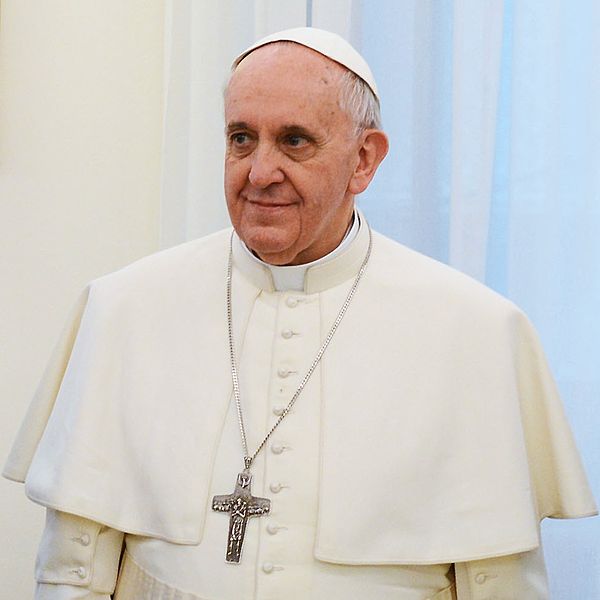 Now the dust has settled, time to reflect. First, the BBC. I was listening on Radio 5 Live whose coverage was baleful. There was a time when the election of the Pope was reported as that and the pantomime around it – the Conclave, etc. – was largely ignored. Now it is an event in its own right.
BBC Radio 5 Live had the fawning Shelagh Fogarty in St Peter’s Square talking to some “academic” theologan who clearly believed that the Holy Spirit had the casting vote in the “election”. Mingling with the faithful was Dominic Laurie, 5-Live’s business and economics correspondent (though a freelancer), asking inane questions and getting obvious answers. What was he doing there? Well, seemingly in his youth he taught English in Rome for a year prior to becoming a journalist. Suitably qualified.
Of course the funniest moment – despite the briefings and so-called expertise on hand – was the failure of both the radio and the TV to identify exactly which cardinal had been elected. The TV and radio correspondents had different thoughts until the confusion was sorted after an AP wire. Such ineptness.
Then there is the nonsense about the Church more generally. Why does the BBC pay such homage to a corrupt and abusive institution? For the same reason it pays homage to the British Monarchy? It defeats me. The manipulation of the media by the Vatican is not subtle. The spinning going on is quite extraordinary. Here we have a new pope who is a simple man, who lived in a flat alone and cooked his own food. Goodness me, he also used public transport. And he wears a wooden cross (though not in the above photograph). Now we learn that he called his own newsagent in Buenes Aires to cancel his daily newspaper as, seemingly, he will not be going back. These are fripperies. He heads up the Catholic Church – a vile corporation – with a mission to exploit, misuse resources, lie/cover-up, subjugate women, etc. The BBC – of all news gathers – should not legitimise it.
The fact that the Church was ever able to afford to build and maintain the Vatican and is the home of those great works of art; for example, the Sistine Chapel (right), says it all.
Now I know there are some good people in the Church. The monks who have persistently put their own lives at risk in Brazil hiding those who oppose the land grabs of the loggers, are a case in point. Equally, many hospitals and schools in South America and Africa are run by the Catholic Church to compensate for the failure of states to provide basic services. I commend the people behind these enterprises. But Iwould argue that education and health services in the 21st Century are the responsbilility and preserve of states, not churches.
Pictures: Pope Francis presidencia.gov.ar
Sistine Chapel: Sailko (Wikipedia)
Lazy BBC journalism or some agenda to undermine local authorities and public bodies?
 The BBC is running a story about UK local authorities and other public bodies using private detectives in surveillance work. The report claims that “more than £3.9 million has been spent by public bodies in the last two years on paying private investigators, according to Big Brother Watch.” (http://www.bbc.co.uk/news/uk-21815638). It would be reasonable reading this story to be outraged, but if one investigates further, all is not what it seems. Public bodies are using private investigators to gather evidence on a range of issues around fraud, anti-social behaviour and child protection. Some of the money also goes to Fishery Patrol flights. All of these seem laudible; though if public bodies are, as Big Brother Watch claim, using private investigators to get round the provisions of the Regulation of Investigatory Powers Act, there is an issue of concern.
So who are Big Brother Watch? It does not take much to find out (all the profiles below are taken from the website at http://www.bigbrotherwatch.org.uk/). It’s founder, Matthew Elliott, is a political lobbyist and founder of the right-wing Taxpayer’s Alliance. His own profile on the website states: “In 2010 Matthew was described by the BBC as “one of the most effective lobbyists at Westminster” and he was ranked by Total Politics as one of the top 25 political influencers in the UK. Matthew led the successful NO to AV campaign in May 2011, achieving an emphatic victory. Matthew has written four books on public spending and is a Fellow of the RSA.”
His director is Nick Pickles – no relation to the Conservative minister Eric Pickles, but his affiliation to the Conservative Party stretches to having been a candidate in 2010 for the Normanton, Pontefract and Castleford constituency, currently held by Yvette Cooper, partner of Ed Balls (Labour’s shadow chancellor). The deputy director, Emma Carr, also has a Conservative Party affiliation, having been a regional chairman for Conservative Future at the time of the General Election. Finally, but not least, Dominique Lazanski, a veteran of Silicon Valley and now doing “freelance consulting to private industry and [working] at the TaxPayers’ Alliance on digital policy issues. She has a long held interest in public policy and participatory government. She has written and spoken on digital issues over the years from a free market and entrepreneurial perspective.”
The profiles suggest that public bodies are antithetical to their own interests and agenda. In and of itself I do not have a problem with that. I do have a problem with the BBC running the story – at public expense – without making clear the affiliation or even naming the journalist behind the BBC story.
Processed meat and health link – a red herring?
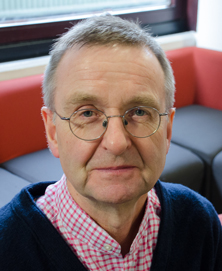 Notwithstanding the intended pun, there is one aspect of this debate I had not thought about. So, last Thursday, we witnessed the publication of a Europe-wide survey highlighting the dangers of processed meat. In fact, we should not eat more than 20g per day, it seems. But Tim Lang, professor of food policy at City University London, noted on The Today Programme on Radio Four (7 March), that processed food is a direct consequence of the production of fresh meat, or at least the over production of beef, lamb, pork and indeed, chicken. The industry is so ‘efficient’ that it processes the less prime pieces to maximise the value of any animal carcass. The consequence of this, however, is the ubiquity of processed food, and its relative cheapness.
The debate on the Today Programme can be heard here: Lang on Today
For anyone interested in the work of Tim Lang, The Guardian newspaper offers the following: http://www.guardian.co.uk/lifeandstyle/2007/mar/25/foodanddrink.features5; his university profile can be found here: http://www.city.ac.uk/arts-social-sciences/academic-staff-profiles/professor-tim-lang
Beyoglu, Galata Bridge and Süleymaniye Mosque
 Time to venture into the new city across the Golden Horn. We took the tram and then the furnicular to Taksim Square. From there we walked down Istiklal Caddesi – the shopping street that one sees in every large city. Though this one has a vintage tram line down the centre (see left).
Essentially at the end of Istiklal Caddesi one finds the key landmark for this part of the city (short of 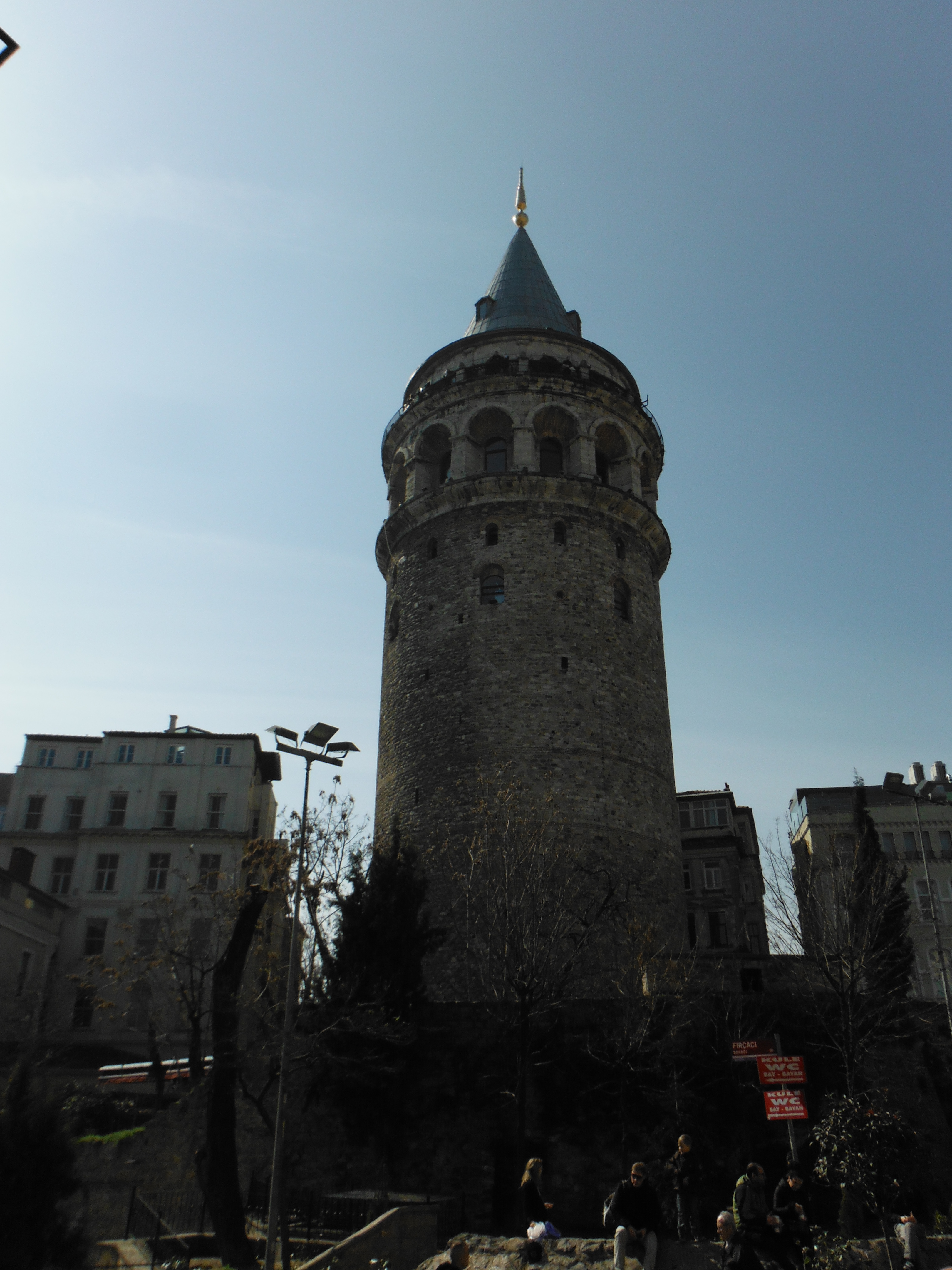 mosques as it is); namely, the Galata Tower. It dominates the skyline and offers a decent view of the city. My guide says that the entry fee is extortionate.
The area has many side roads with antique shops of the unkempt variety. There are also so examples of wooden houses, many in a state of disrepair, though some are receiving some 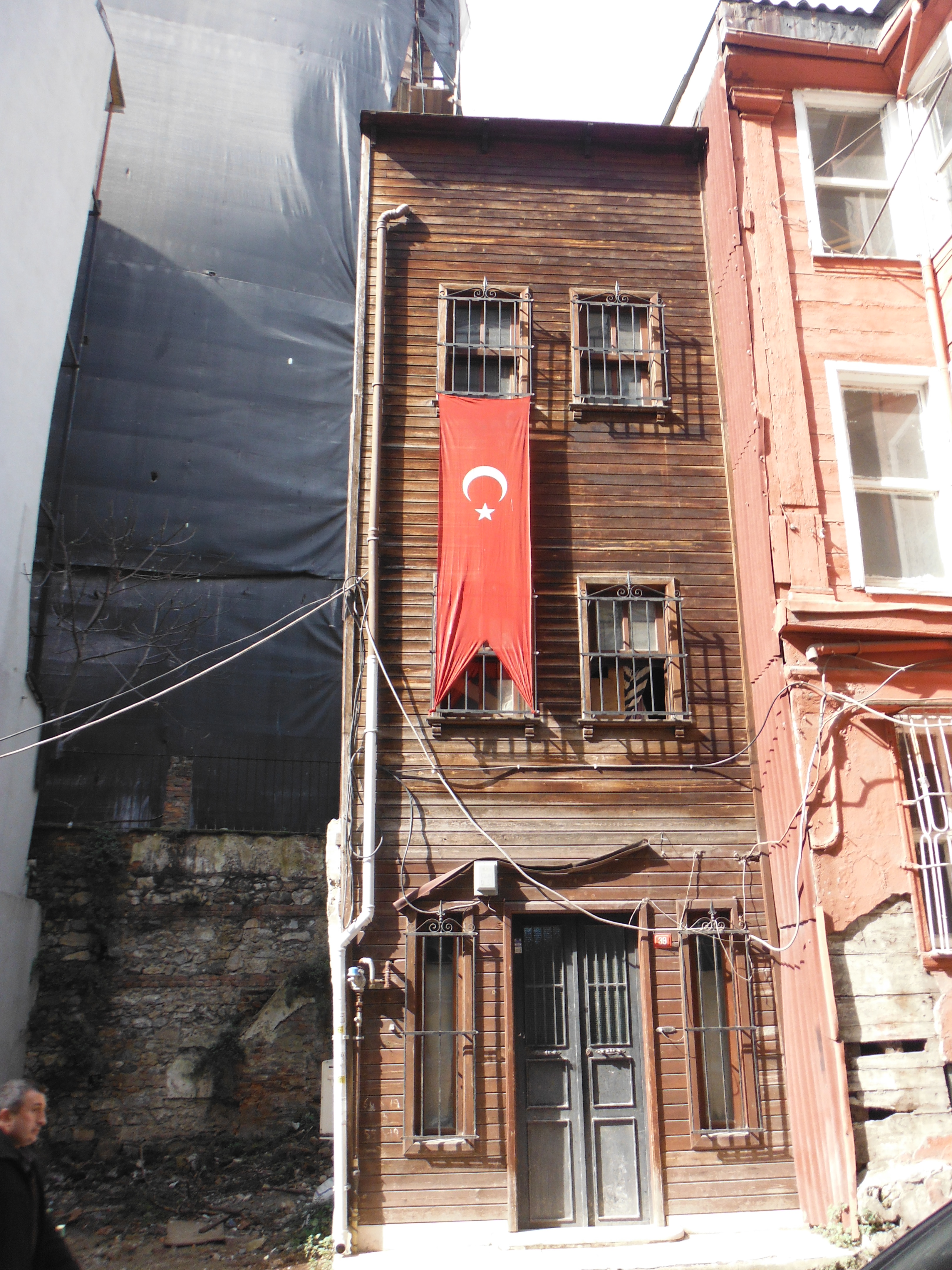 attention as in this fine example on the left.
We then walked back into the old city across the Galata Bridge which takes the metro and the road. There are some cafes built into the structure; we were hungry so risked one of them. Not really recommended. At the road level, men fish off the bridge.
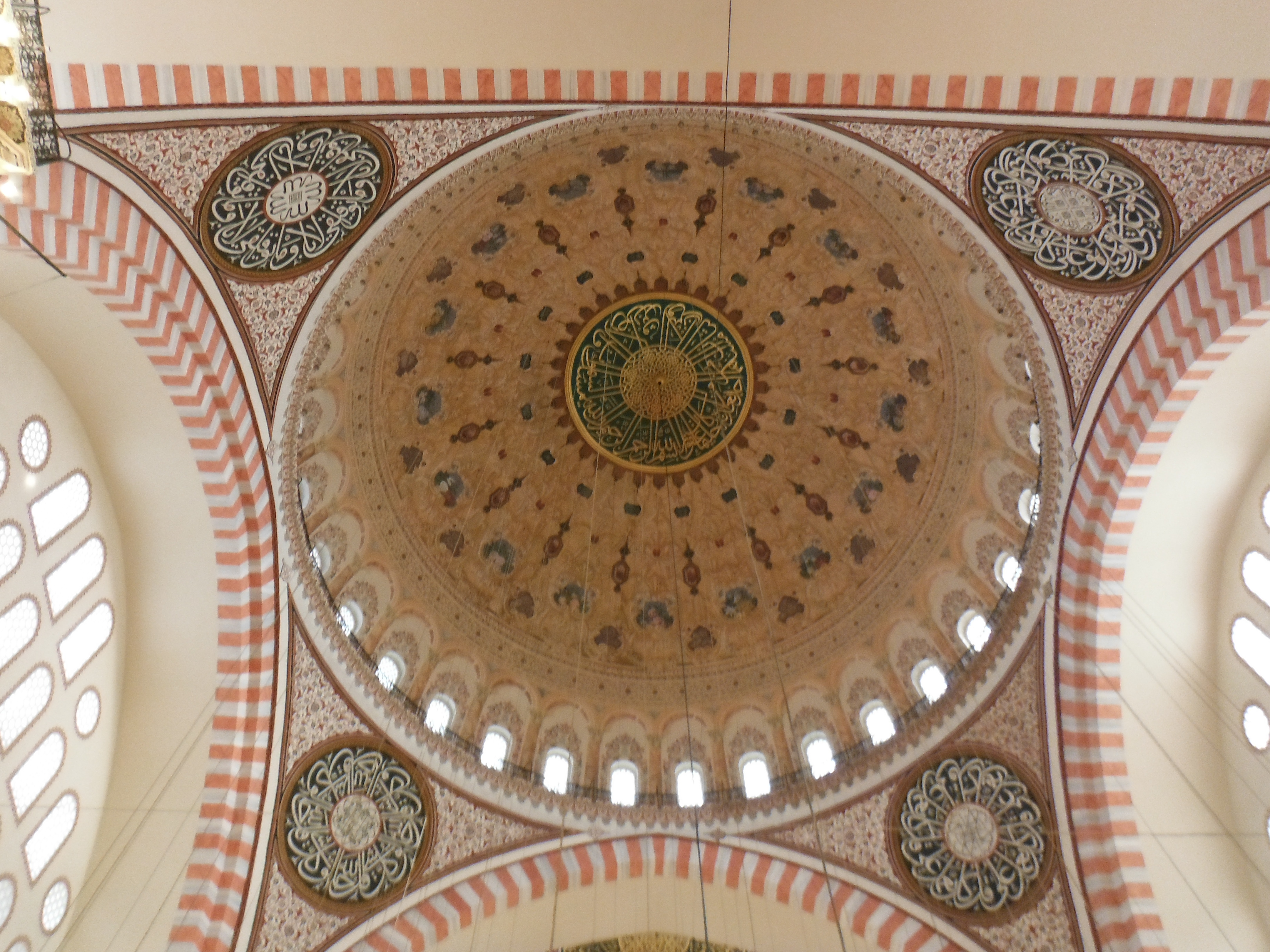 Once across we found ourselves once again passing through a bazaar of sorts. Literally hundreds of small shops, largely doing textiles and homewares. Astonishing. The up to the Süleymaniye Mosque. Clearly a lot of work has been done on this building. It is stunning both inside and out. It was another feat of engineering comissioned to challenge the magnificence of the Hagia Sofia. I offer a couple of pictures to illustrate the grandeur, but it needs a better snapper of photos than me to capture the true magnificence of the interior particularly.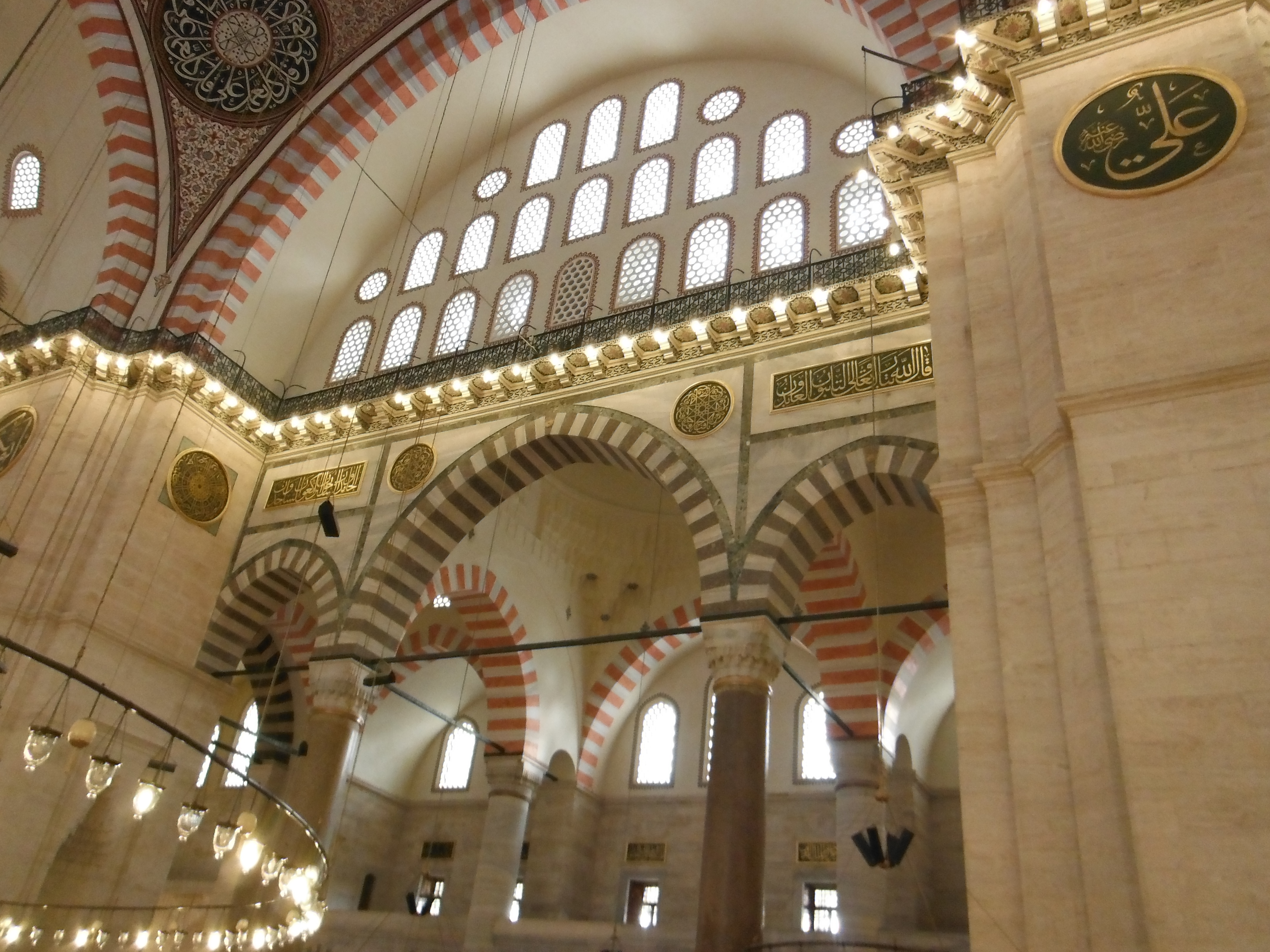
Istanbul – The Bosphorus and Spice Market
 The sun came out today prompting us to think that a boat ride along a part of the Bosphorus was a good idea. We walked to Eminoenue where a good number of ferries arrive and depart to and from Harem across on the east side. There we were sold a 90 minute boat ride up the Bosphorus for 20 Lira. The boat turned out not to be quite what we were shown and the timings were interesting to say the least. And it was very very cold, but the views were stunning in the sunshine.
 We advise, take some food with you onboard and expect some waiting around and no commentary.
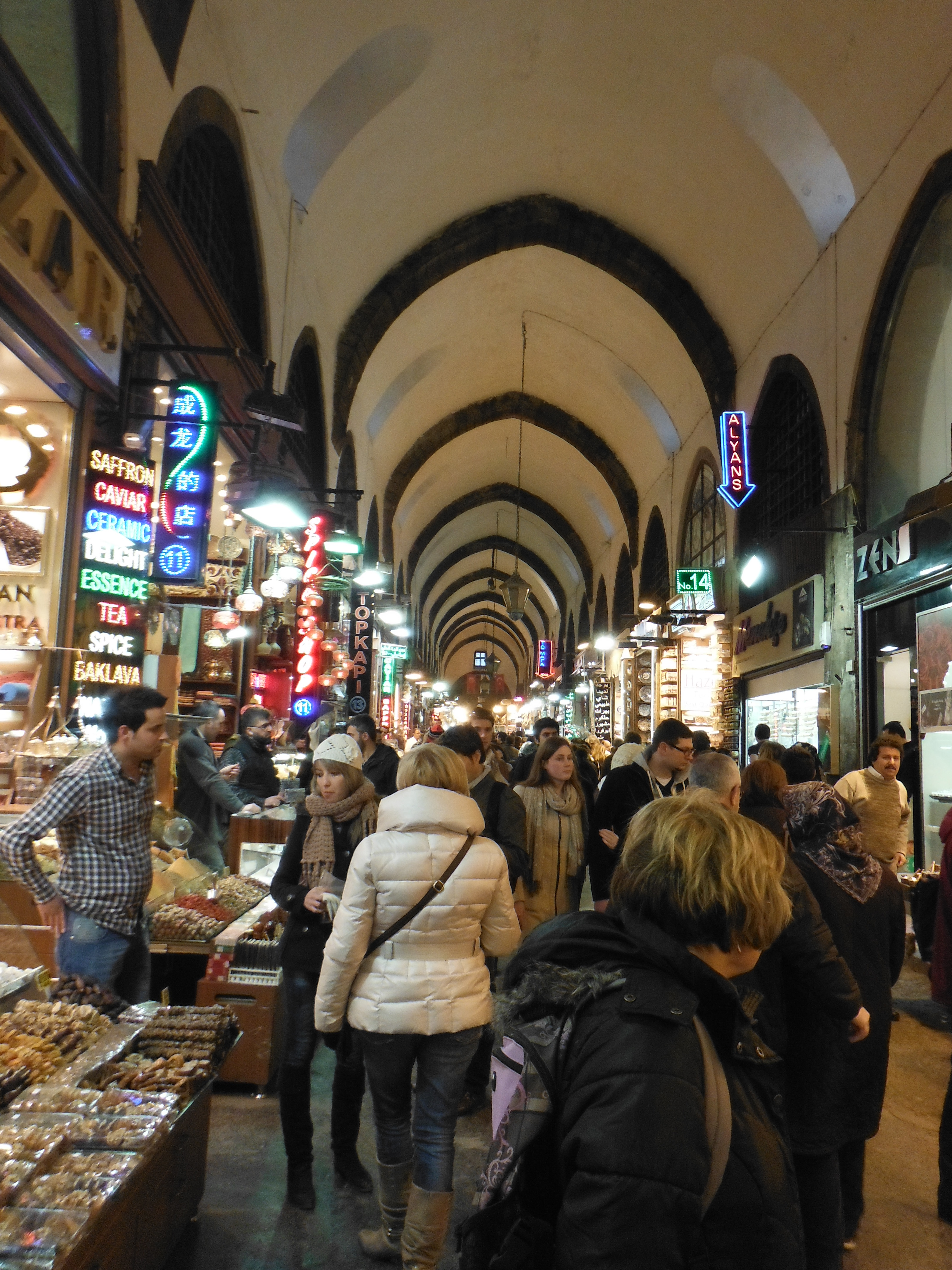
By late afternoon we alighted and headed into the spice market. The spice market is colourful, aromatic and non-threatening. We found a cafe where we could get a hot wrap and some tea and then later another service variation on rice pudding. Heavy. We then took the metro back to Sultanahmet to finish thawing out in the hotel after the river experience.
 There is a splendid fountain separating the Blue Mosque and the Hagia Sophia. At night it is illuminated green, blue and red. A perfect backdrop for a photograph.
As we walked to a cluster of restaurants we observed a frisky dog visiting a kebab shop, tail wagging, asking for food. The kindly man directed the animal outside where it waited patiently in anticipation. A few pieces were cut from the kebab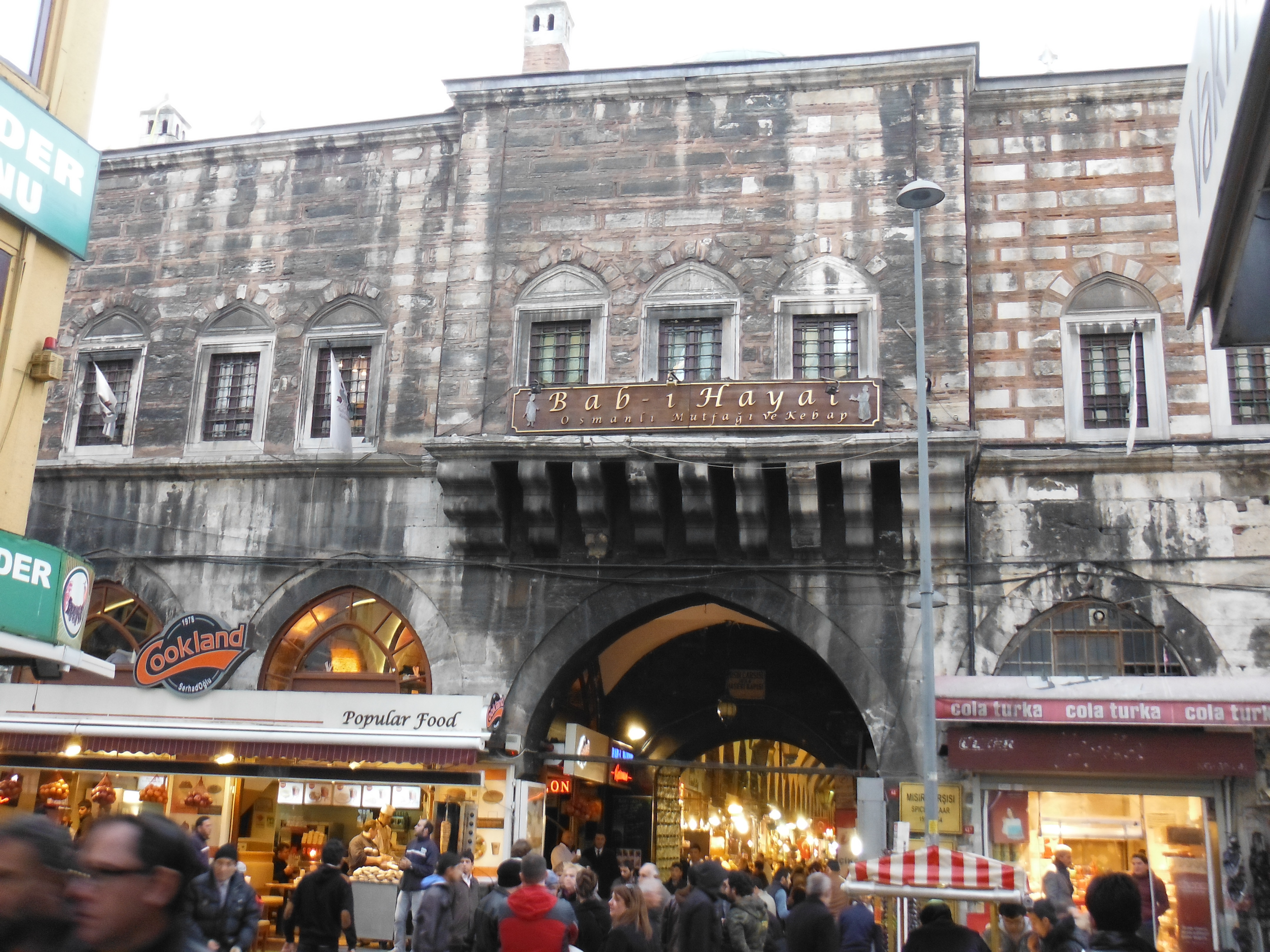 hanging, as they do, in the window. The pieces were placed in the street on a piece of paper whereupon the dog rejected them!
Istanbul – The Blue Mosque, Hagia Sophia and the Grand Bazaar
 The Blue Mosque and the Hagia Sophia dominate this part of the city. They look at one another with 2000 years of built history between them. One is a living mosque, the other a museum having been both a mosque and a church. The Blue Mosque is blue by virtue of the blue tiles that adorn the walls. The dome (left) is vertiginous. However, the mosque is not as blue as the name suggests, but as a place of worship, one is in awe of its scale.
The Hagia Sophia was designated a museum in 1934 by the state’s founder, Ataturk himself. I suspect February is not the best time to visit as it is a naturally dark and cool space. But the scale is incomprehensible and the remnants of the mosaics stunning. There are two levels for visitors – ground level where one finds the alter, and a mezanine where one finds the mosaics coupled with an elevated panorama. The mosaic on the right – the Virgin receiving a model of the new church from Justinianus and the city from Constantine (10th Century).
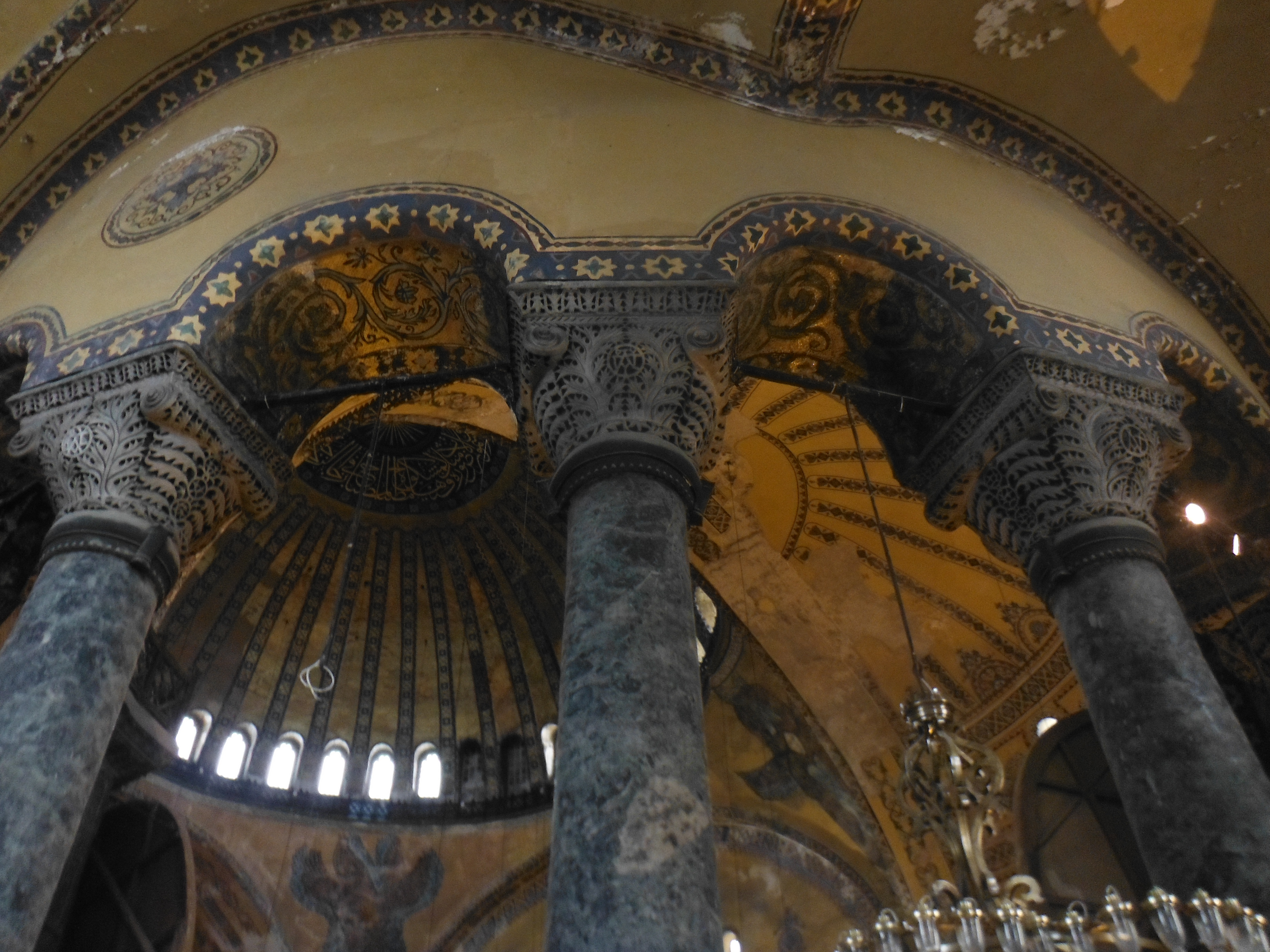 The columns below are pervasive around the building, but have some beauty in their detail.
The Grand Bazaar is as one would expect. Large, Byzantine (of course) and challenging. However, it is not a Souk similar to what I have experienced in Marakesh, for example. The Grand Bazaar is merely a glorified shopping centre, complete with cash machines for those caught without enough currency. We visitors are always at a disadvantage when it comes to bartering, but we came away with a few items at prices that we can live with. Lots of textiles, leather goods, spices and trinkets. Very busy, of course.
Today the sun shines. Time for a go on the ferries along the Bosphorus.
Istanbul – some observations
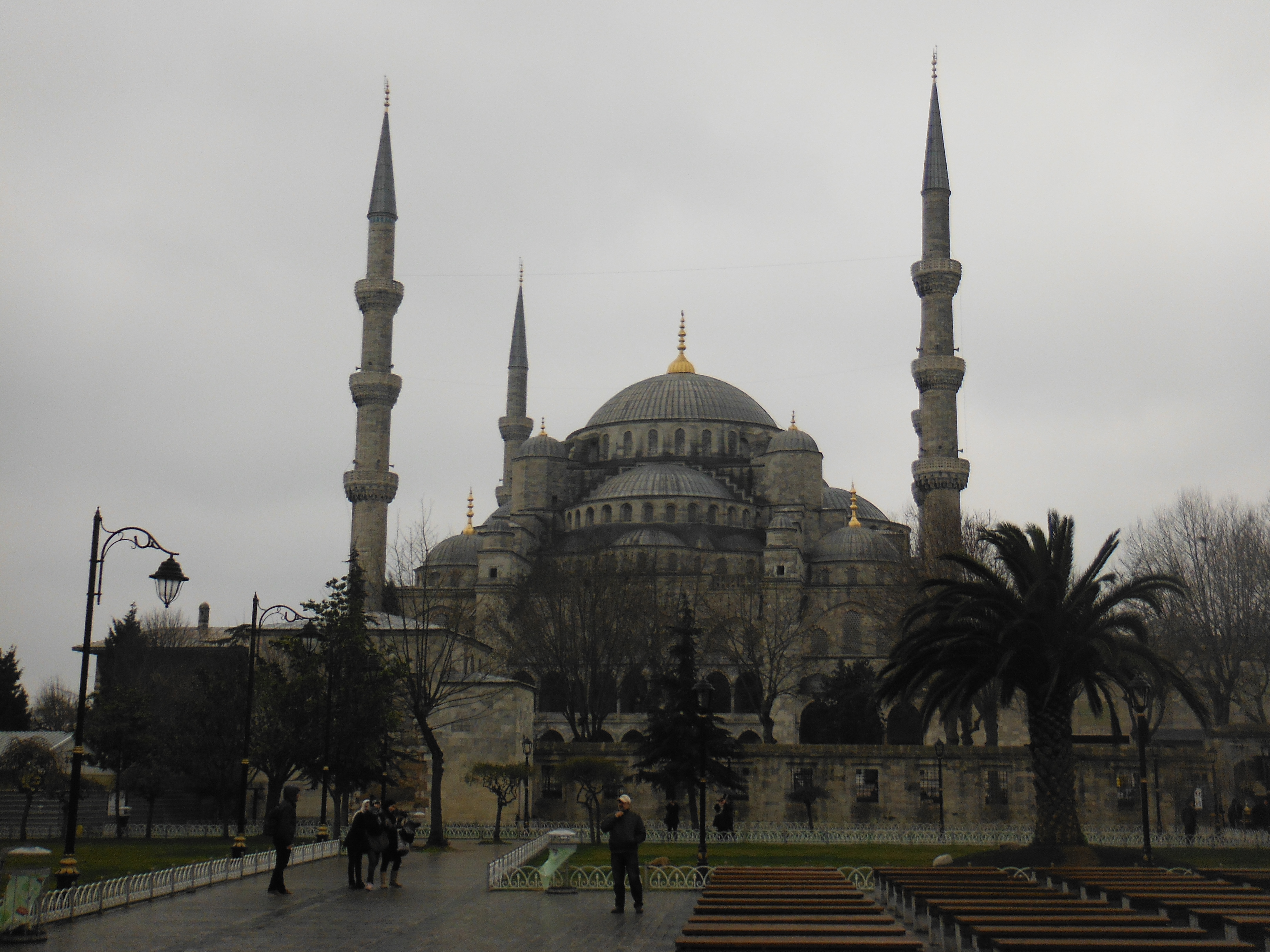 I’m enjoying a very short sojourn in Istanbul. We are staying in a hotel located in the shadow of the Blue Mosque looking out onto the Mamara Sea into which flows the Bosphorus.The district is called Sultanahmet. It is connected to Taksim Square, another centre of interest, by a modern tramway. Our hotel is the newly-built Magnaura Palace Hotel. Extraordinary place. The breakfast room is on the roof with a fabulous view. Would recommend.
February is optimal in terms of travel and hotel deals, if not the weather. It has rained today and the temperature is around 8 degrees. As one might expect, there are a lot of very friendly people, largely men. The desire to sell is high. There are also large populations of feral dogs and cats.
Eating is very easy for vegetarians. Vegetable casseroles and Kebaps are ubiquitous and come in at about 20 Turkish Lira (about 8 pounds). The wine is excellent. In particular we enjoyed Yakut. We’ve also tried some of the Turkish dark beer, EFES. At 6 per cent proof, it is strong. But it has lots of flavour.
Tipping is expected at 10 per cent. Service is, however, to a very high standard. There are a few well maintained and clean public toilets. Charges were 1 Lira – about 35 UK pence.
Picture – Blue Mosque, Istanbul, 28 February 2012
Horsemeat
 The discovery of horsemeat in ‘value’ burgers in UK supermarkets comes as no surprise. Whether the ‘mafia’ – as alleged by yesterday’s Guardian newspaper – is at the root of it, who knows? And any debate about whether the British have a problem with eating horses is a red-herring. The safety concerns are, of course, a factor. The content of manufactured food is supposed to be traceable. Clearly the inclusion of horse renders the contents far from traceable. Rather amusing really. Though the question is, what type of horse has been included. I do not mean the difference between a pony and a cart horse. I do mean the difference between one full of drugs or disease – or both – that should not be in the food chain and those that are not.
Rather, the issue is about price. Animal protein is expensive to produce. Using traceable meat particularly so, even if it is mechanically re-configured, or whatever they call it. The pressure on food producers is to cut costs in order to produce – for many people – affordable meat products. The pressure often comes from the supermarkets – and it is no surprise that it is the discounters and those offering ‘value’ level products particularly affected here. That said, there is no evidence so far that ‘premium’ products are not also contaminated.
Maybe this is just a critique of global capital. There are so many non-UK subcontractors in this story, one can see how messed up is the food industry. The eventual supply has been traced to Romania (via Cyprus and the Netherlands and France). Why Romania? Arguably, there are still many working horses there. Perhaps more importantly, the cuts in funding for trading standards departments in local authorities has reduced the detection capabilities.
I do not eat meat, but I do often cook from scratch – beans, vegetables and fruits. It takes time to prepare and cook, but I am pretty sure it is cheaper than cooking with meat.
Picture source: Wikipedia (Waugsberg)
Gerald Scarfe cartoon
So, Rupert Murdoch has apologised for the publication of an offensive cartoon in the Sunday Times. The topic is Israel’s relations with its neighbours and the wall it is building in order to keep them out. “Good fences make good neighbours” as the poet Robert Frost wrote.
The cartoon depicts Benjamin Netanyahu building the wall himself – the mortar is red and what looks like some Palestinians have been built into the wall. I am not going to post the cartoon – readers can see it for themselves here: http://fromthetopcom.blogspot.co.uk/2013/01/gerald-scarfe-cements-hate-on-holocaust.html
The Today programme on Radio 4 this morning pitted cartoonist Steve Bell of the Guardian against Stephen Pollard of the Jewish Chronicle debating – of sorts – the issue. Quite heated in places. Listen here.
The question is, are we talking about Jews – and hence being anti-semitic – or are we talking about Israel and the Israeli government? At the very least, when a country defines itself coterminous with a race, the depiction of a key player in the story – in this case Netanyahu – can be seen as an attack on the race more generally. On Holocaust Memorial Day, particularly so.
Update: 1 February 2013 – Media Lens has now evaluated this case. The assessment is at the following address. http://www.medialens.org/index.php/alerts/alert-archive/alerts-2013/717-cartoon-politics-rupert-murdoch-the-pro-israel-lobby-and-israel-s-crimes.html
 Be informed