Tandem Tour 2013 – Dessau to Magdeburg
Filed under: Cycling, Travel | Tags: Dessau, Elberadweg, Magdeburg
 Leave a Comment
 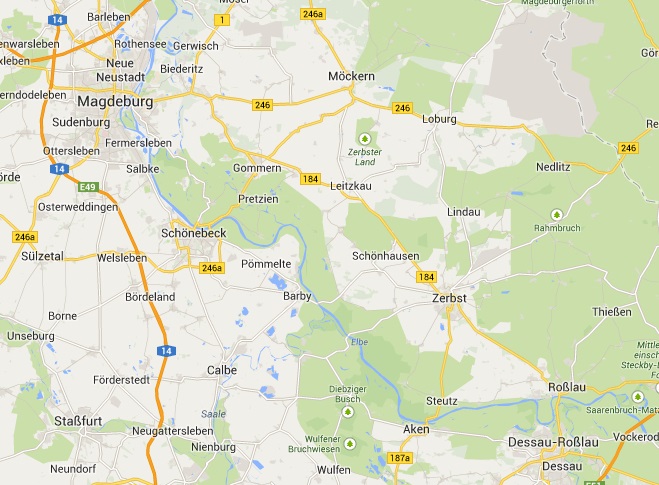 This is a very quiet stretch of river in every sense. From Dessau we took a bit of a short cut to Aken where we crossed the Elbe on one of the ubiquitous ferries. The larger villages and towns are on the opposite side such as Schönebeck. But it is very green and peaceful. There is also a campsite at Plötsky, an option we wanted to keep open. It also promises a quieter approach to Magdeburg through the Stadtpark Rotehorn.
We arrived in Magdeburg again quite late and in the dark. Finding a hotel was not so easy, though we headed towards the railway station and came across the Roncalli Haus with vacancies. Roncalli became Pope Johannes XXIII. The Haus is a hotel, conference/seminar/meeting space, restaurant, etc. My misgivings about the religious affiliation dissolved quite quickly. The people were friendly – they actually put themselves out to help us on more than one occasion during our short stay. The adjacent café served up some good vegetarian fayre. They cook to order; suffice to say, this is not a place to get through in a hurry.
Magdeburg itself seems to have come of age. The cathedral tells a different Lutheran story to that found in Wittenburg. Clearly Luther was not universally loved; indeed, the panels in the cathedral go out of their way to highlight some of his less-endearing characteristics.
 More secular is die Grüne Zitadelle (right), the final building by Austrian architect Friedensreich Hundertwasser (http://www.gruene-zitadelle.de/englisch/). Inside one finds over 100 dwellings, visitor accommodation, workspaces, shops and a theatre. Hundertwasser never saw it built, but his rejection of symmetry and straight lines is clear from the outside. Though we did not venture inside, there is plenty more unsymmetry if the photographs displayed in the foyer are anything to go by.
Tandem tour 2013 – Dresden to Dessau
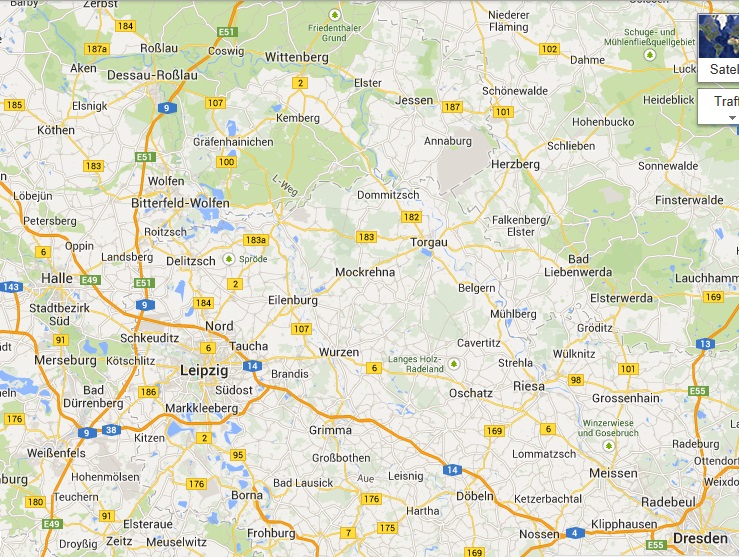 We arrived in Dresden 1530 on Sunday 18 August. We got off the train one stop short of Hauptbahnhof (Dresden Neustadt) in order to make way to a campsite situated to the North of the City marked on the Bikeline guide in Wilschdorf (and checked the night before online). It proved not to be there. We had to continue on to a site located to the south of Moritzburg (Bad Sonnenland). There we pitched, showered and ate at the onsite restaurant. Just in time (most campsite restaurants close by 2100). We also took breakfast on the site before our first real day of pedalling.
Monday 19 August was the only wet day that we had. Even then it was not too bad. We  sheltered away from the worst of it at a café in Meissen (having decided not to go back into Dresden). The castle and cathedral (right) huddle together for safety.
We camped for the second night at a site to the north of the small town of Strehla. It is a town of one restaurant, one hotel, a zoo and a massive outdoor swimming pool which also hosts the  campsite (left). The campsite is spacious – but the showers are not very private – there are no doors to the cubicles and one is also exposed to a seating area adjacent to the Sanitär. The restaurant was unexpectedly good, however.
A bit of overnight rain cleared and we got on our way following the Radweg to Lutherstadt Wittenberg through Belgern, Torgau, Dommitzsch (where we crossed by ferry) and Elster. Lutherstadt Wittenberg is where martin Luther had nailed his theses to the door of the church. After a very late arrival in the dark, we checked into a recommended small hotel (Am Alten Anker) and decided to have a day to explore the town and nearby Dessau, the second and final home of the Bauhaus.
Lutherstadt Wittenberg is a bit of a tourist trap and its proximity to the UNESCO World Heritage Site at nearby Dessau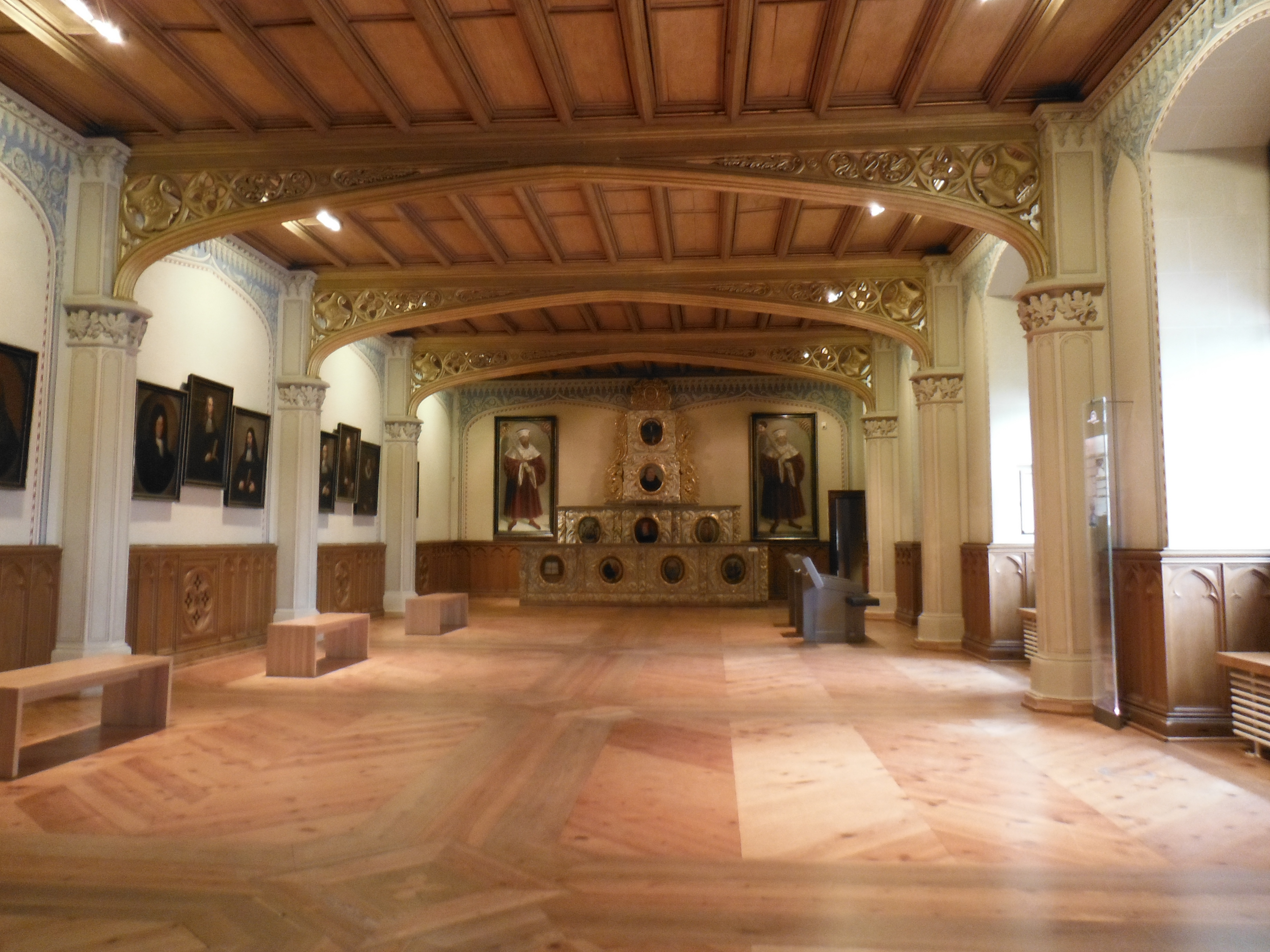 adds to this. We visited the Luther House where he lived with his wife, a notable business woman in her own right, for many years. The museum in the house is, as small provincial museums go, breathtaking. the artefacts are not many, but they are treasures. The life of the man and history that he made are documented in large panels in German and English.
The room (right) was one of my favourites – the altarpiece at the end has Luther as close to God as possible. The man had quite an ego as well as guts to go to Worms to face the wrath of the Pope.
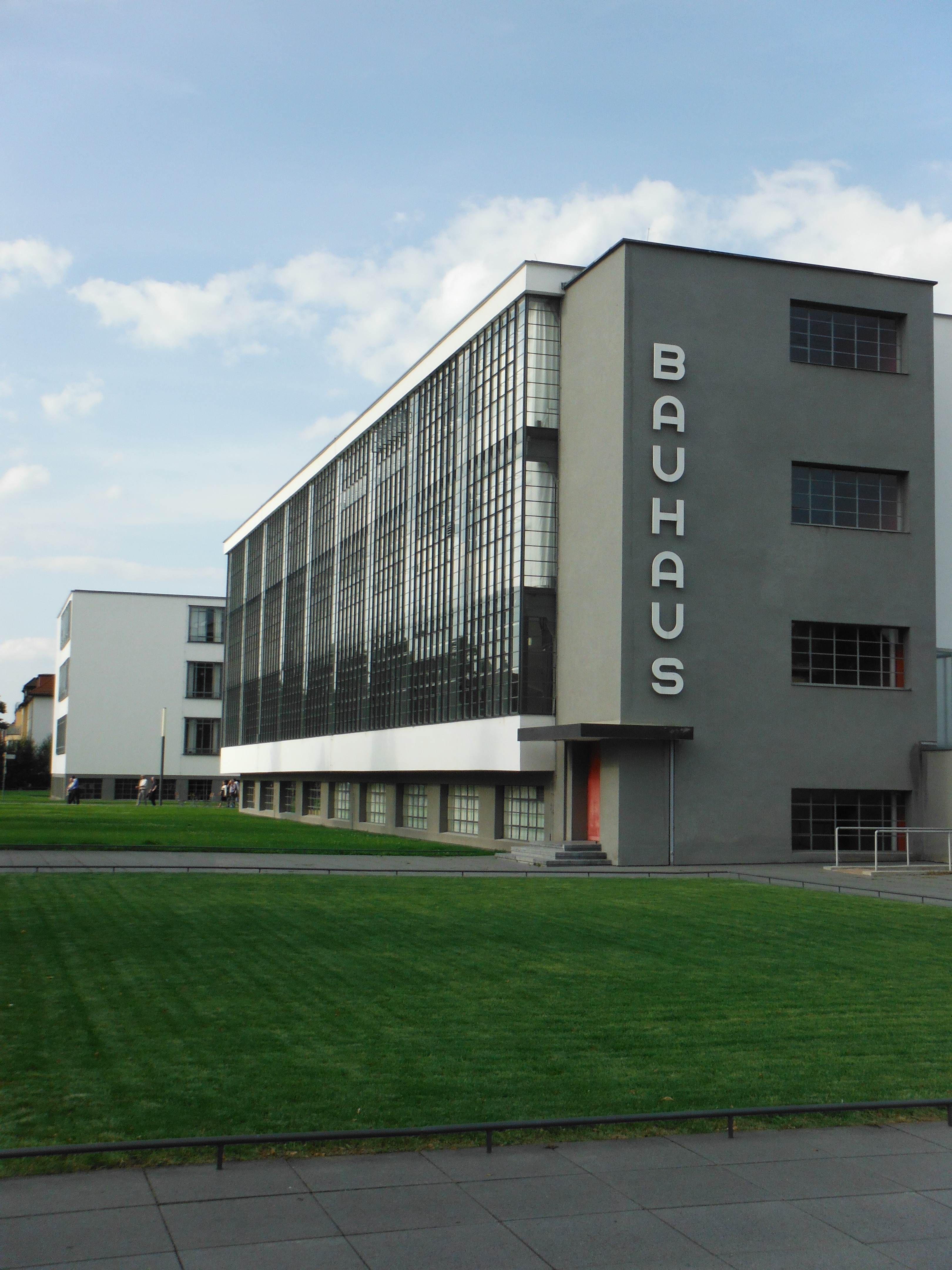 On the same day we took in Dessau. We took the train (35 minutes) and headed to the Bauhaus which is close to the station. The really iconic Bauhaus buildings are located in Dessau, now part of the university in the town.
The museum – constituting only two rooms – is in the basement. One room focuses on artefacts, the other on teaching and ‘philosophy’. The Bauhaus is one of the few institutions whose history is perhaps best told through the minds behind it (easy when it was so short-lived). Figures like Walter Gropius, Hannes Meyer, Ludwig Mies van der Rohe, Josef and Anni Albers, Wassily Kandinsky, Marcel Breuer, Marianne Brandt and Paul Klee, to name a few. There is in the second room a large biographical graphic that locates these figures in history from birth to death, from place of birth to places of career, etc. The Bauhaus was dissolved by the Nazis who regarded it as subversive and ‘un-German’. There is a chilling photograph of the Bauhaus buildings in ruins with some satisfied Nazis celebrating a job well done.
Tandem tour 2013: introduction
 This year’s tour was really two contrasting rides. The first section Dresden to Hamburg along the banks of the Elbe. For this tour we followed the Elberadweg (paths on both banks) guided by the publication from Bikeline (http://www.esterbauer.com/db_rtb_detail.php?buecher_code=ELBE1). We complemented this with our Garmin Navigation device (see entry: 14 June 2013 https://weiterzugehen.net/category/cycling/). We selected the banks on the basis of places to stay (campsites) and places of interest (Luterstadt Wittenberge, Dessau, etc.). There are not so many bridges across the river; though there are many ferries – some are for passengers and bicycles only, others carry cars and small commercial vehicles. Some use a sophisticated cabling system to cross the river, others use conventional diesel motors.
The second part of the tour involved a coastal tour along the north coast of Holland starting in Groningen and ending at Europoort. This took in  the amazing 30km-long Afsluitdijk separating the North Sea and the Ijsselmeer. This route was of our own making; but those readers who have cycled in the Netherlands will be aware that the Dutch make cycling and navigation particularly easy. The cycle tracks are superb (though one has to beware of mopeds) – and usually separated from the road. In addition, cycle signs make navigation relatively simple with a numbering system that is intuitive. We used a national cycle map purchased from the Tourist Information Centre in Groningen. The map comes as a spiral bound book which, on the whole, works; though some of the numbers do not come out at the edge of each page. The Garmin navigation device, however, helped overcome this as the numbers are incorporated into the maps.
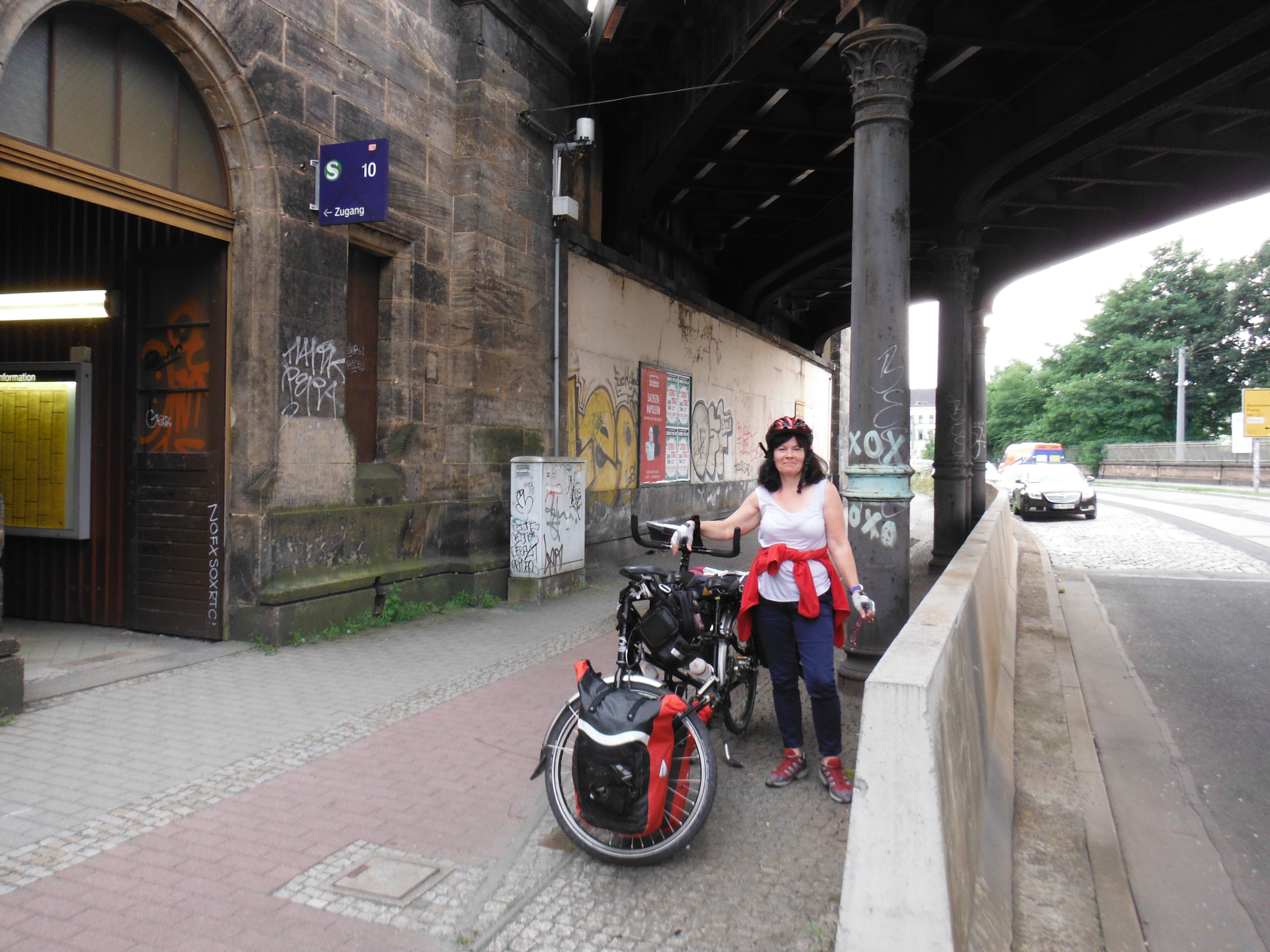 Tandems are quite difficult to get on and off trains. In Germany it is not possible to use the Intercity routes. One is restricted to Regional Services involving quite a few changes but are relatively inexpensive. We travelled from Munich to Dresden (arrival pictured left) with the tandem for under 50 Euros. The journey took over 7 hours: Munich to Nürnberg; Nürnberg to Saalfeld; Saalfeld to Leipzig; Leipzig to Dresden. We travelled on a Sunday. With hindsight, this was a mistake. The competition for bicycle spaces on regional services at the weekend is high. By contrast, travelling between Hamburg and Groningen on a Wednesday was uncomplicated (Hamburg to Bremen; Bremen to Leer: Leer to Groningen).
Railway stations are not optimised for bicycles, let alone tandems. Some, including Bremen, have no escalators. Changing platforms requires unloading bags and carrying the tandem down and up stairs. Some stations do have lifts, but these are too small to accommodate a tandem. Trains are also subject to platform change at late notice.
The Elberadweg is challenging. Riders encounter many surfaces. One of the least frien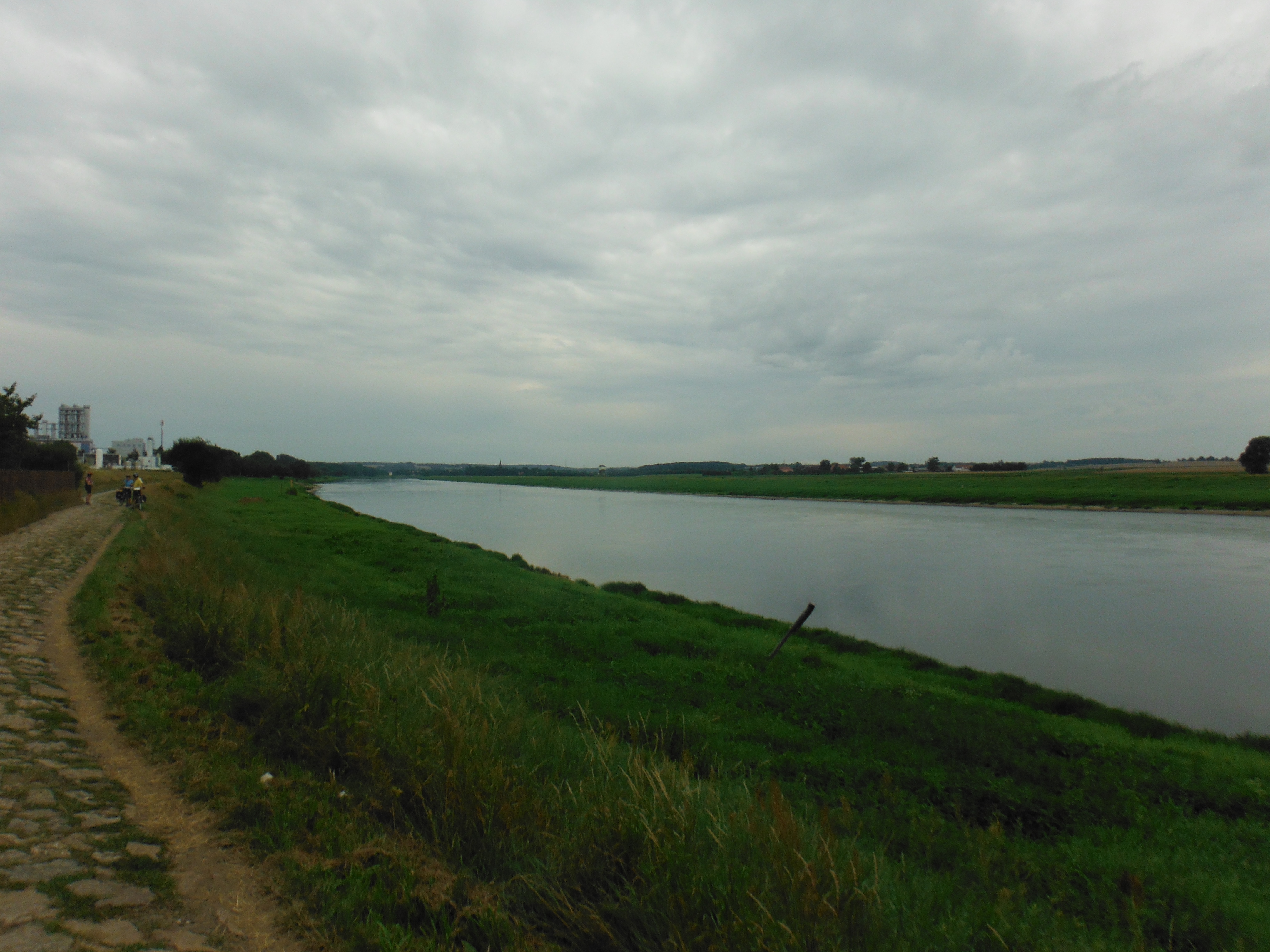 dly is cobblestone. In dry conditions cobblestones are manageable at slow speed (picture right). In the wet they will be very slippery.
Cobbles are encountered in most villages and towns through which one passes (for example, Lauenburg an der Elbe). Equally, in the countryside (pictured right) and in damp forested areas with gradients (the approach to Lauenburg an der Elbe on the north bank was particularly gruelling).
Other surfaces include asphalt, concrete and shingle (again, fine when dry but no so easy in the wet). Good puncture-proof tyres are advised.
The Elberadweg is peppered with campsites, small hotels, pensions and available rooms. We took with us a 25 year-old Vango 2-person tent, microlite sleeping bags, inflatable mats and pillows. We did not carry any means of heating or cooking food. We used either cafés onsite or in nearby villages. Bakery shops are also good sources of breakfasts. We did our best to eat a substantial meal in the mid-late afternoon. As vegetarians, we encountered some very interesting menus; but with some flexibility (especially where eggs are concerned), eating was not a problem.
My Blackberry
Filed under: Uncategorized | Tags: Blackberry, Samsung Galaxy S4 Mini
Leave a Comment My two years were up in August. Time to ‘ugrade’ my mobile. Even on the morning of my visit to the Carphone Warehouse, I really really wanted to stay with Blackberry. But the bad news about the state of Blackberry and the intelligence from app writers that there is little to be gained for writing for the platform, coupled with Nokia’s acquisition by Microsoft, indicated that a migration to another platform was reluctantly needed. Most converting Blackberry users, it seems, have over the past months migrated either to iPhone or alternatively to Samsung/Android. Whilst getting locked in to Google does not really appeal, getting locked out of Blackberry is even less attractive.
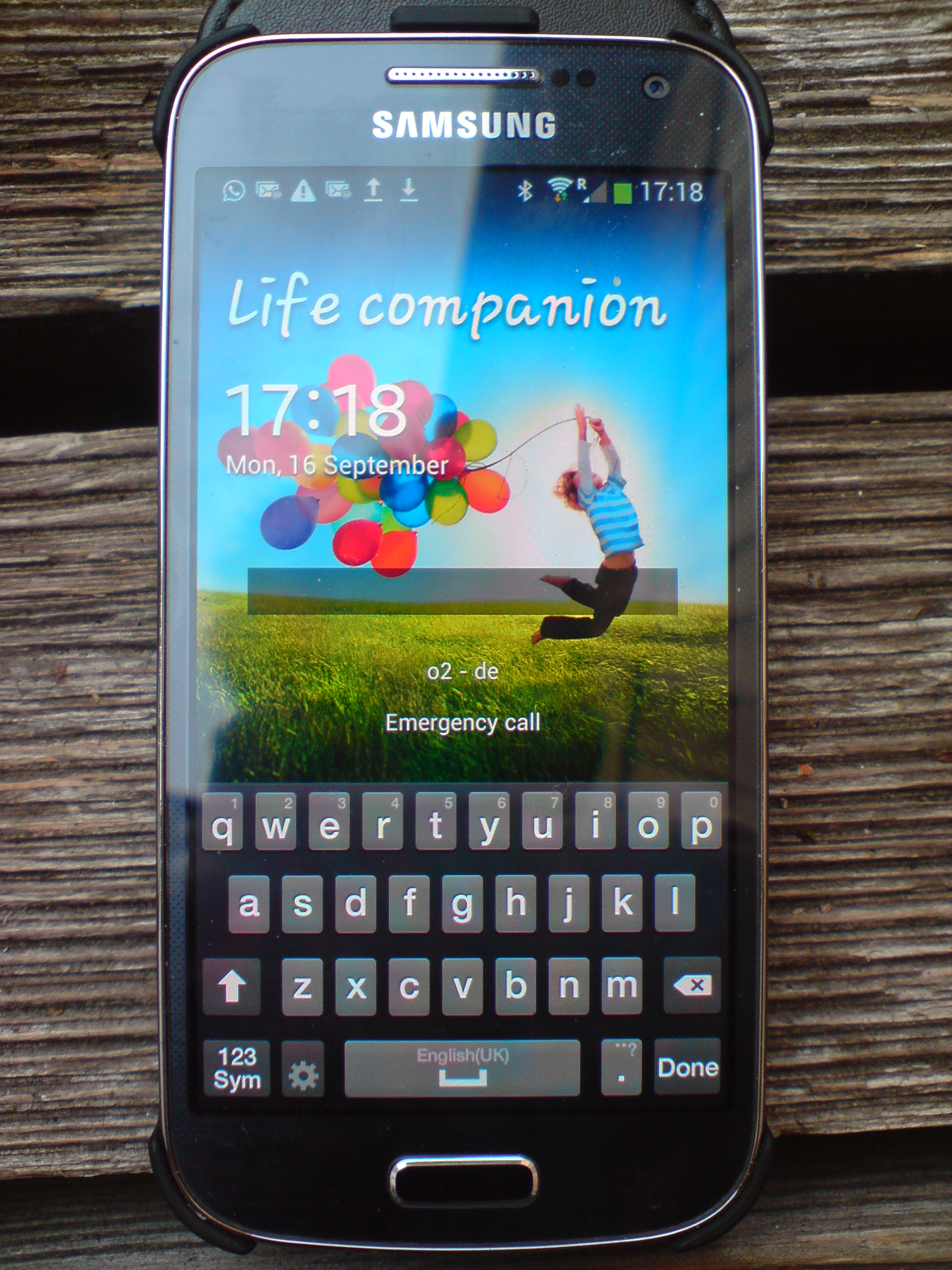 My new mobile is a Samsung Galaxy S4 Mini (left). I have not had it long enough to comment on its functionality. That comes later. In the meantime, any readers with whom I was connected on Blackberry Messenger, please be reassured that I did not deliberately break the link. Within 20 minutes of my visit to the shop, I had been transferred (they said it would take 24 hours).
Rotterdam, museums
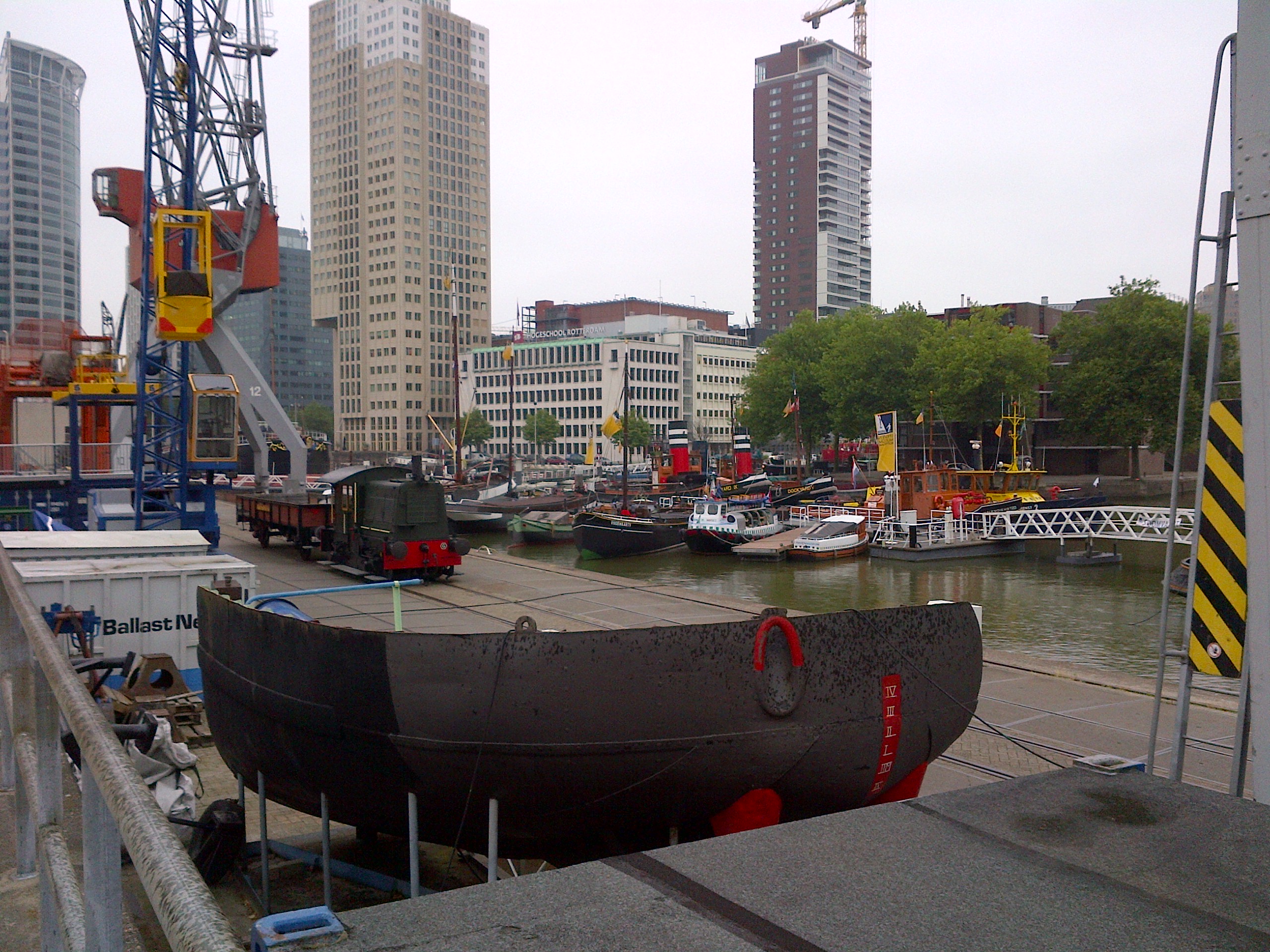 Rotterdam, at first sight, seems not to have any recognisable iconic buildings that so differentiate other European cities. However, Rotterdam makes up for this in museums and food. Spoilt for choice, just wandering around ensures that one encounters objects – cranes, boats, steam engines – from the maritime museum (left) with bi-lingual history plates.
The Museum Boijmans Van Beuningen is the City’s primary art gallery, home to an eclectic mix  of pictures, sculpture and furniture. Some of the pictures are very special. Paintings by René Magritte always seem like old friends, unless one has not met them before as in the case of La jeunesse illustree,1937 (right) with its path occupied by some familiar – and not so familiar – Magrittian objects against a blue sky and deep green grass. There are examples from a number of notable surrealists including Man Ray and Salvador Dali. Cubism in the guise of Picasso is also well represented.
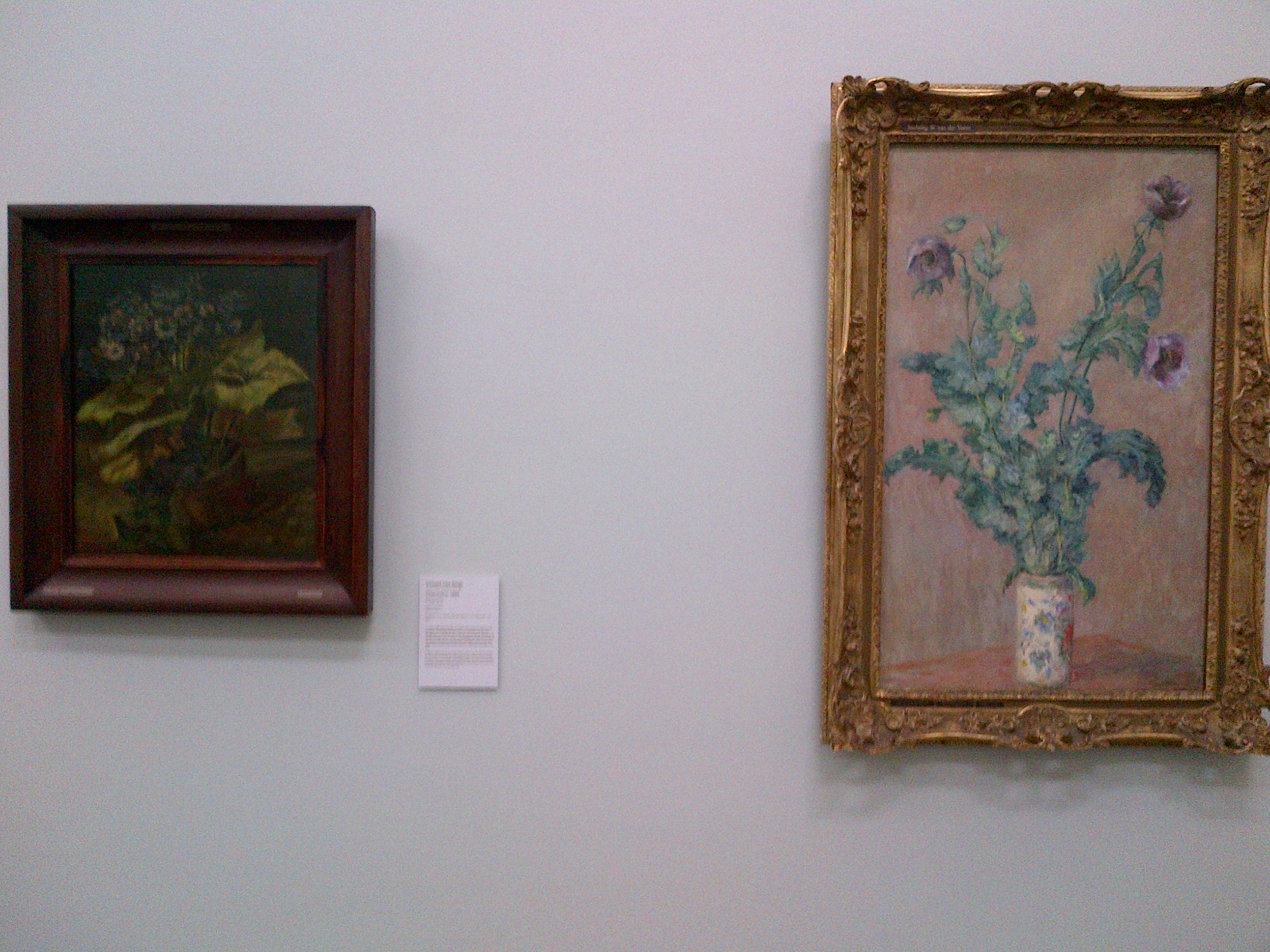 There is work by Van Gogh; for example, Cineraria’s from 1885. Still life is celebrated more widely, with Claude Monet’s Poppies in a Vase from 1883 (both left).
The curators of this museum have much humour integrated into the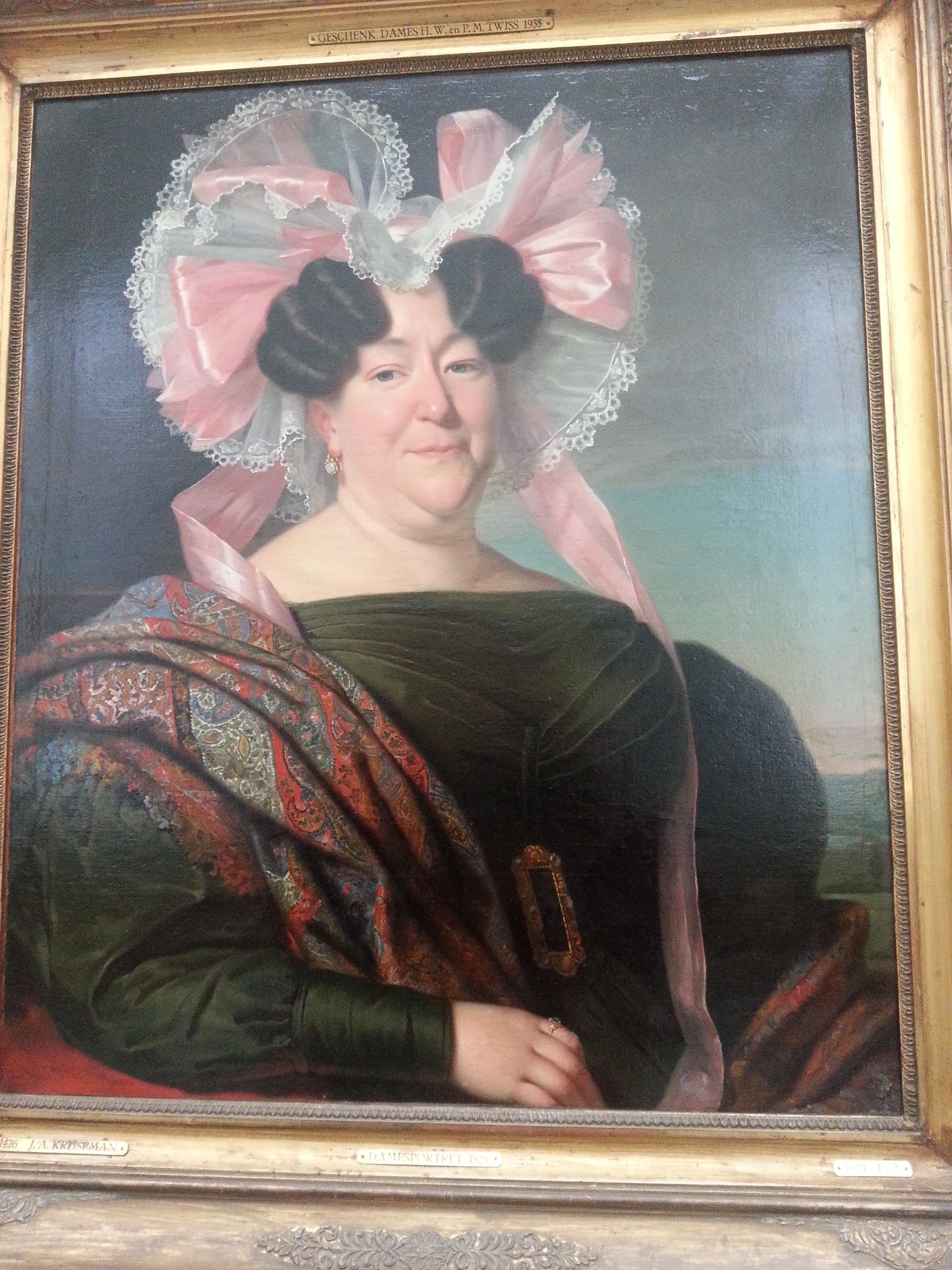 plates. For example, Jan Adam Kruseman’s Damesportret from 1829 (pictured right) is, according to the curators, apparently a lesson in timelessness. The unnamed sitter is dressed in all her finery, which, at the time, may have been the height of fashion, but now looks a little overdone and reflects badly on the judgement of the painter rather than the sitter. Lovely smile, though.
Equally, the plate accompanying van Gogh’s Cineraria’s (above), informs us that this painting was supposed to be lighter and more commercial to help sales. However, the plate concludes with the statement, “it is still not very colourful”. Contrasted with Monet, certainly.
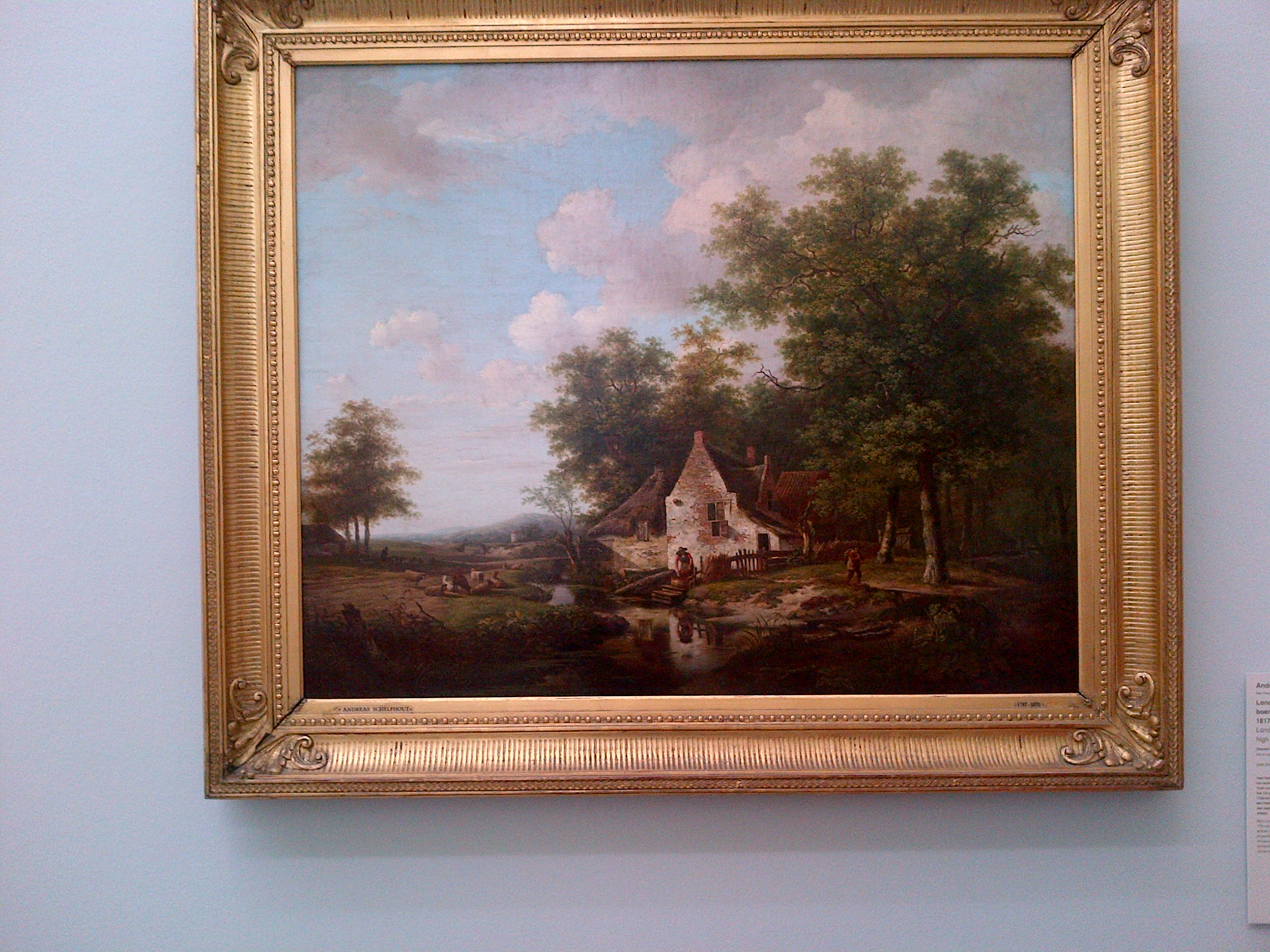
There are also examples of the legitimisation of the flat landscape as a subject. Paul Gabriël’s 1898 work, Landschap bij Overschie (Polder with mills near Overschie) is a notable example (bottom left). Earlier one finds the more traditional approach to landscape painting such as Andreas Schelfhout’s Landschap met rechts een boerderij tussen hoge bomen (Landscape with farm between high trees) from 1817 (below right).
|
|
 |

The museum also houses a collection of modern design artefacts. This collection is not really systematic nor specifically Dutch. There are collections of desk lamps, chairs, even door handles all tracing design innovations and materials. There are also plenty of metal and ceramic artefacts.
Left luggage facilities – Rotterdam Centraal
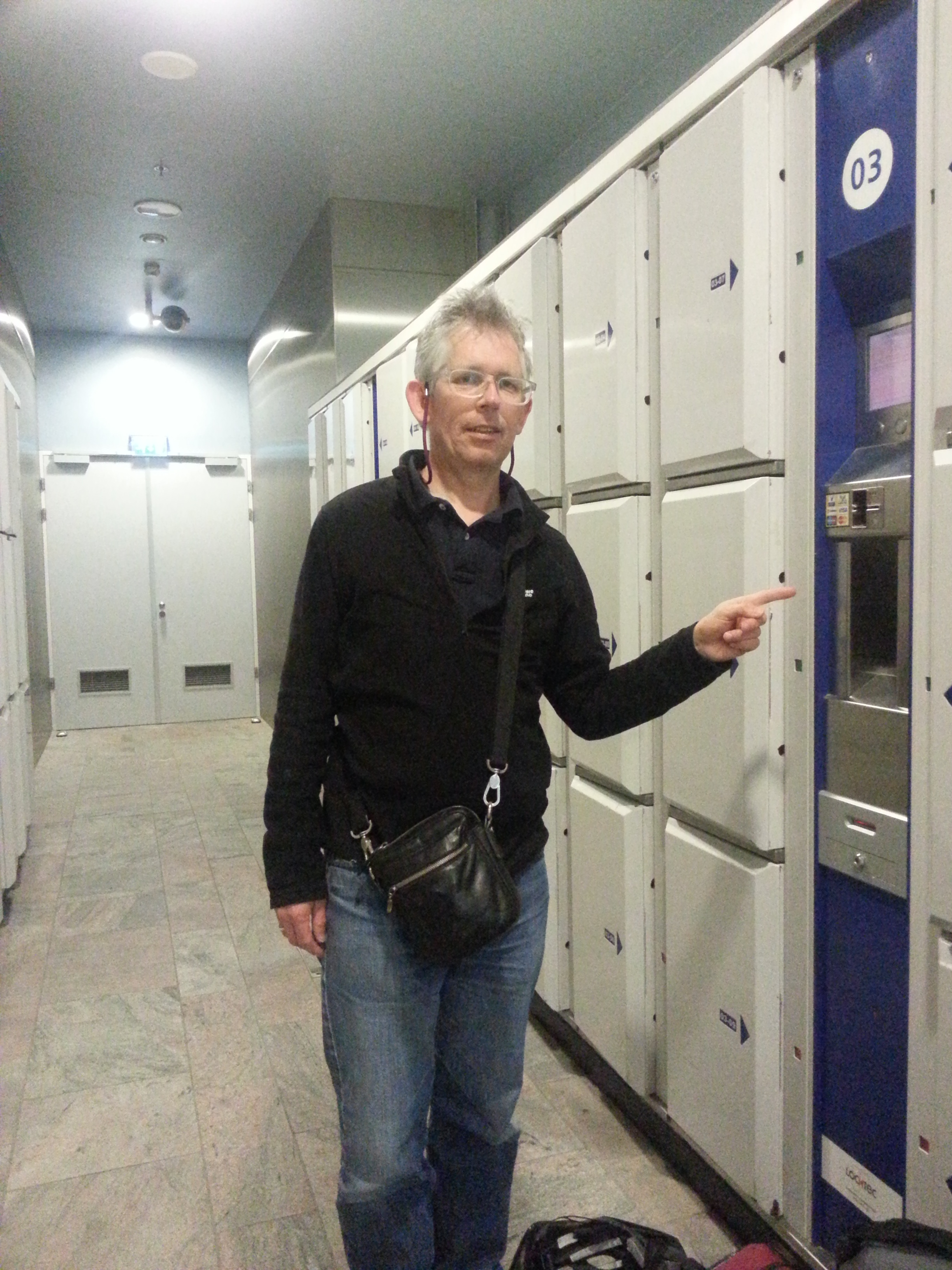 Rotterdam Centraal Station is huge and new. It was very much a building site when we arrived (15 August 2013). The left luggage lockers (left) are located near to platform 17, come in two sizes (5-8 Euros for 24 hours) and require a credit or debit card – no cash. The key is a flimsy card a shade bigger than a credit card. The lockers open when it is inserted. Once open it cannot be relocked without payment.
Wretched terms and conditions
 There is a lot of talk at the moment in the UK media about Zero Hours contracts for employees. Seemingly – and to the surprise for some of the UK’s lawmakers – many high profile firms offer these contracts as standard. For example, MacDonald’s and Burger King Hamburgers, Mike Ashley’s Sports Direct clothing retailer (Ashley also owns Newcastle United football club), Domino’s Pizzas. Less high profile is how certain private firms that provide public services such as home helps for the elderly and handicapped use Zero Hours contracts for their ’employees’ who are paid only for their contact time with ‘clients’ and not for travel time, fuel, etc; nor are they afforded national insurance contributions. Moreover, Zero Hours workers do not know how many hours they may be working from week-to-week. This builds in immense uncertainty and affects negatively things such as credit ratings. There are over 1 million British workers on these contracts according to a recent poll by the Chartered Institute of Personnel Development.
Oddly, Mike Ashley seems to be able to pay his footballers well and on long contracts. I assume footballers are well represented by agents who earn for themselves a nice percentage of any footballer’s transfer fee – a good case for organised labour if ever I heard it.
Now here is my link. I have been for many years a satisfied customer of Charles Tyrwhitt menswear. Until now. My last online order – few sale items including some shorts it being summer – was confirmed with the message that my order will be delivered by Hermes Couriers.
Hermes is a German company, part of the Otto group (German readers will know about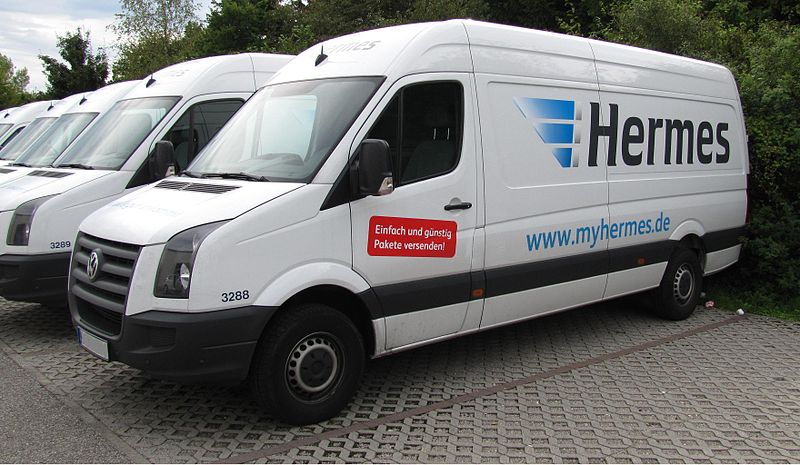 Otto), that came to the UK in 2000 in what seems to have been a joint-venture with Speedlink. Its business model is based on sub-contracting the delivery to ‘self-employed’ drivers. My attention was brought to this company by chance watching a TV documentary made by Germany’s national broadcaster ARD. (http://programm.ard.de/TV/daserste/ard-exclusiv–das-hermes-prinzip/eid_281066630812527)
This sub-contracting was found to involve sub-sub contractors all earning progressively less as the parcels moved down the food chain. The sub-contractors are effectively paid piece rates, often having to work very long hours to deliver the requisite number of parcels to cover costs. When the man or woman from Hermes arrives at 2100 it is not because it is convenient, but rather that the sub-contractor needs the delivery to make a living.
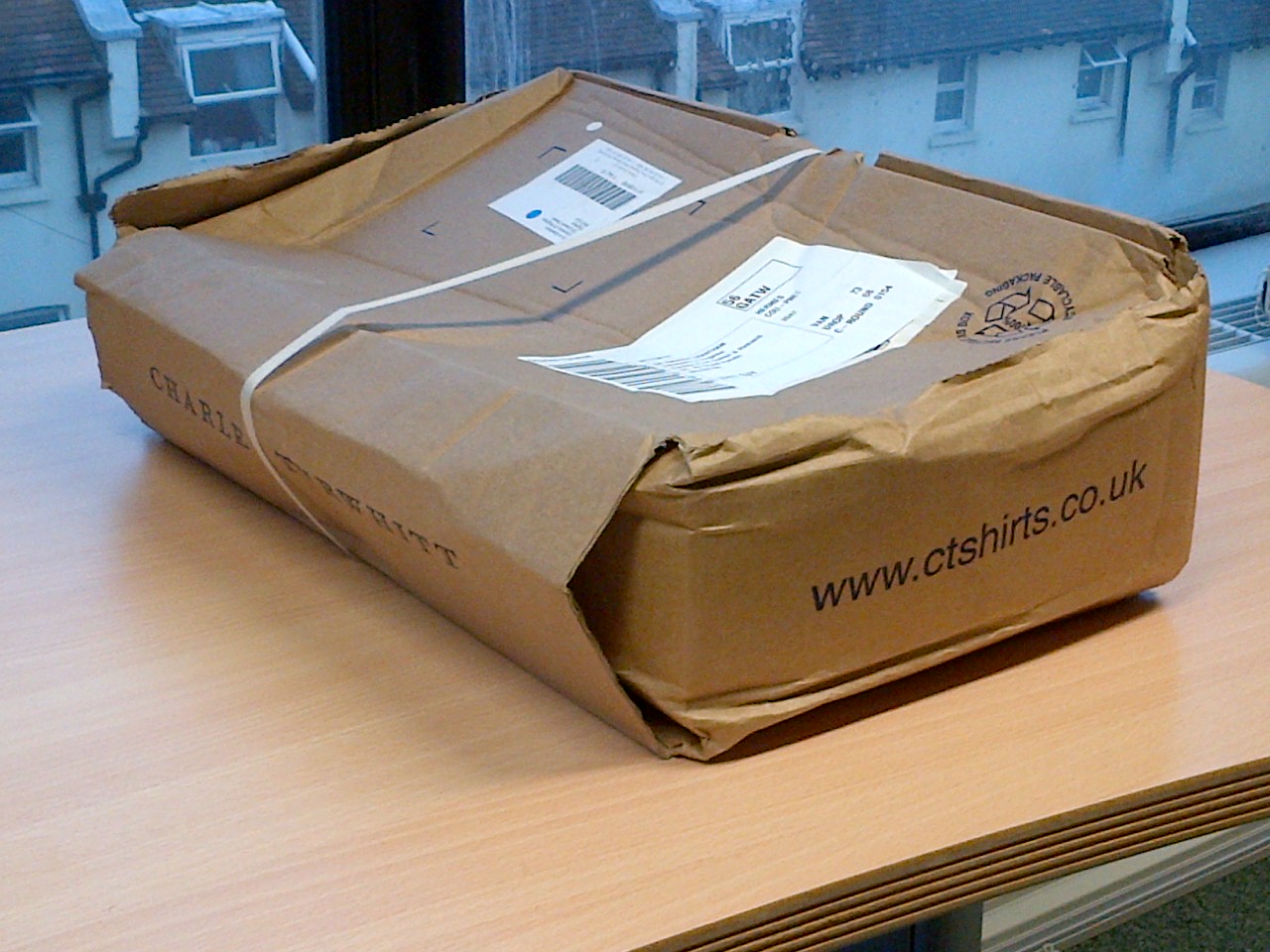 Here is the package (left) that arrived from Hermes a couple of days ago. Fortunately in this box is a shirt, tie and a pair of shorts. On the whole not fragile. One must ask, however, what kind of operation is it that does this to a humble box of clothes? Actually, we do not need too much imagination.
So, what I thought was a reputable retailer – Charles Tyrwhitt – uses a disreputable courier to squeeze out profit. Oh, and while we are at it, those very same lawmakers who are so surprised at Zero Hours contracts want to privatise the Royal Mail – a state-owned parcel service that has organised workers who earn a living wage.
Credits:
Hermes van: Musikmichi1407
Make the call
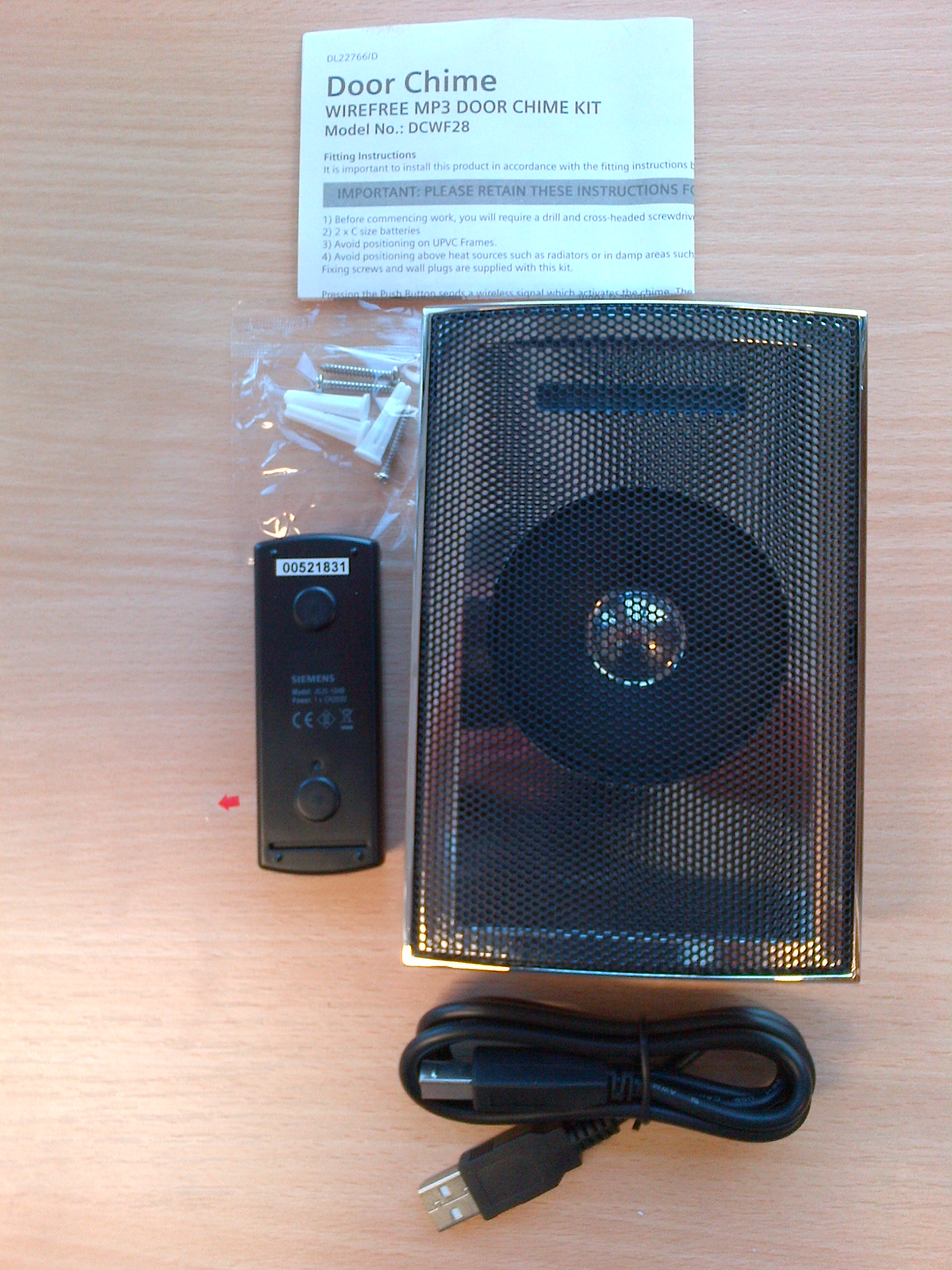 Ok, this is my latest purchase. A wirefree doorbell. With a loud chime.
In my bid to source from as near to home as possible, I was expecting a difficult task in finding a Europe-made doorbell. This one is made by Electrium Sales, a Siemens subsidiary. I thought that I was in with a fighting chance, having not been aware previously that Siemens had made doorbells.
No country of origin on the box. I then opened the box and looked on the instructions. No guide to where it was made. Then on the device itself. No.
I then opted to phone them, they having conveniently given their number on the instructions. A model number and two minutes later we had tracked down the device to its manufacture in Withernshaw, near Manchester. Thanking the woman who engaged me in this investigation, I asked why such information was not on the box…
Worth the call.
Bad customer service – Sussex Computer Centre, Hove
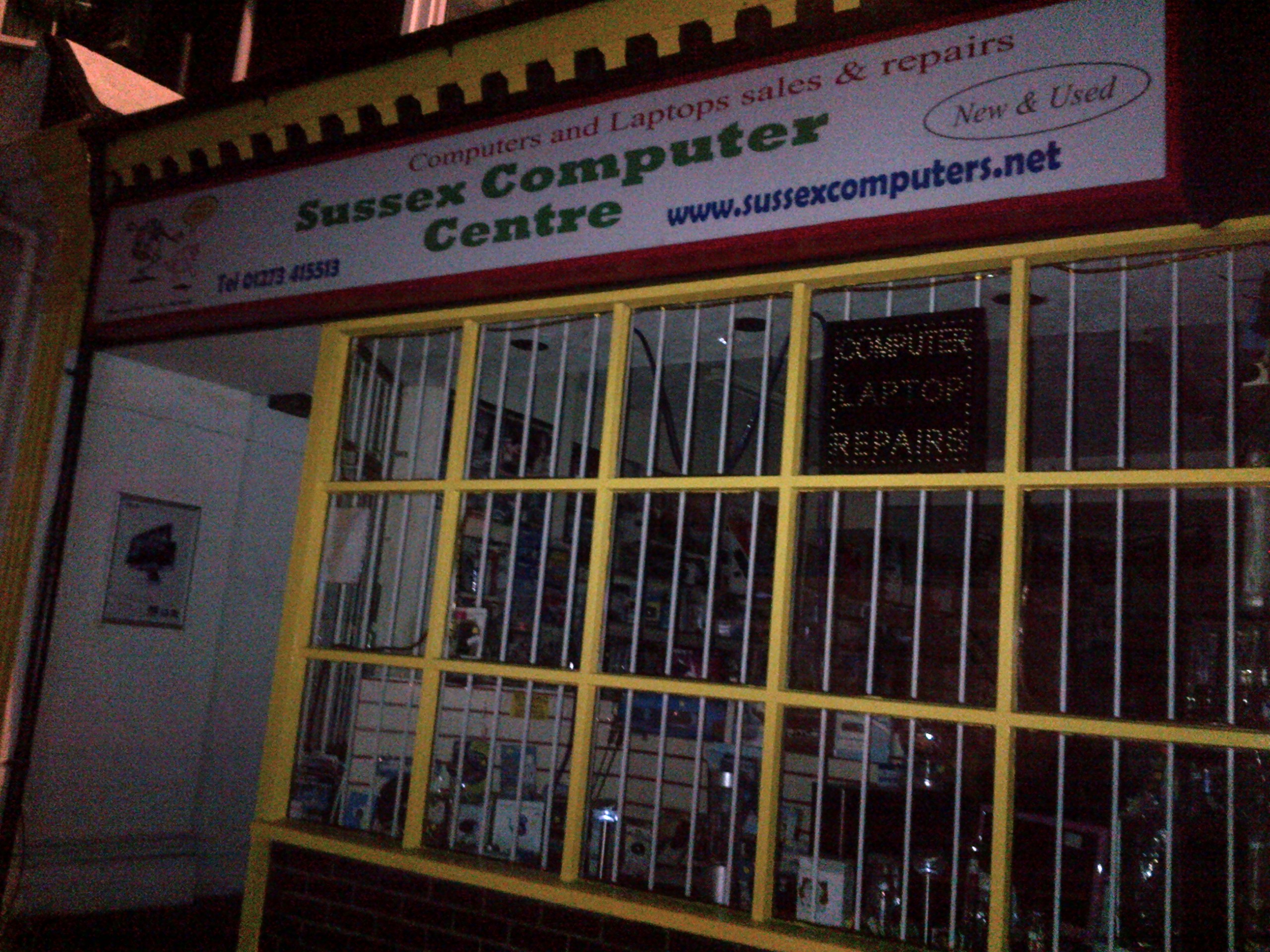 I apologise about the parochial nature of this post. But bad customer service gets me angry. I try to shop locally – to support local traders against the onslaught of the superstores and the internet. Not 100m from where I sit now is long-established small business, Sussex Computer Centre, where one can get computer repairs, peripherals, software, etc. When I bought my Blackberry Playbook, I thought that I would augment it with a portable mini Bluetooth keyboard. I visited Sussex Computer Centre on 7 July and purchased the keyboard pictured bottom right. It cost me £29.50
On the top right is – or was – a little button that acts as a mouse. Neat idea, but seemingly not fit-for-purpose. When I extracted the keyboard from my bag, I discovered that had broken off. I retrieved the remnants of the mouse from the bag and presented them yesterday morning to the owner of Sussex Computer Centre.
I do not think that any shop owner relishes a customer trying to return items that either do not work or are damaged. But bearing in mind this business has been running for over ten years, I would have thought the owner might have developed some customer service skills in preparation. Seemingly not.
Essentially, it was my fault. Indeed, he asked me whether I had dropped it. Or put another way, I dropped it and therefore it is a ‘customer problem’. The fact that he may have sold me something that is not actually fit-for-purpose does not come into it. He will not be selling me anything in future.
Latitude 2013 – music
Latitude is a music, comedy and arts festival held over three days in parkland in rural Suffolk, England. There are a number of stages located very much in earshot of one another generating a cacophony of sound. The main stage is called The Obelisk Arena. The stage is flanked by two large screens; a further one sits behind the production platform. On Saturday night, the Obelisk Arena was stunned by Kraftwerk. Tracy Thorn, formally of Everything but the Girl, appearing in the Literature tent, described Kraftwerk to author and DJ Stuart Maconie as “four old blokes with laptops”. In a literal sense she is correct. But she misses the point. 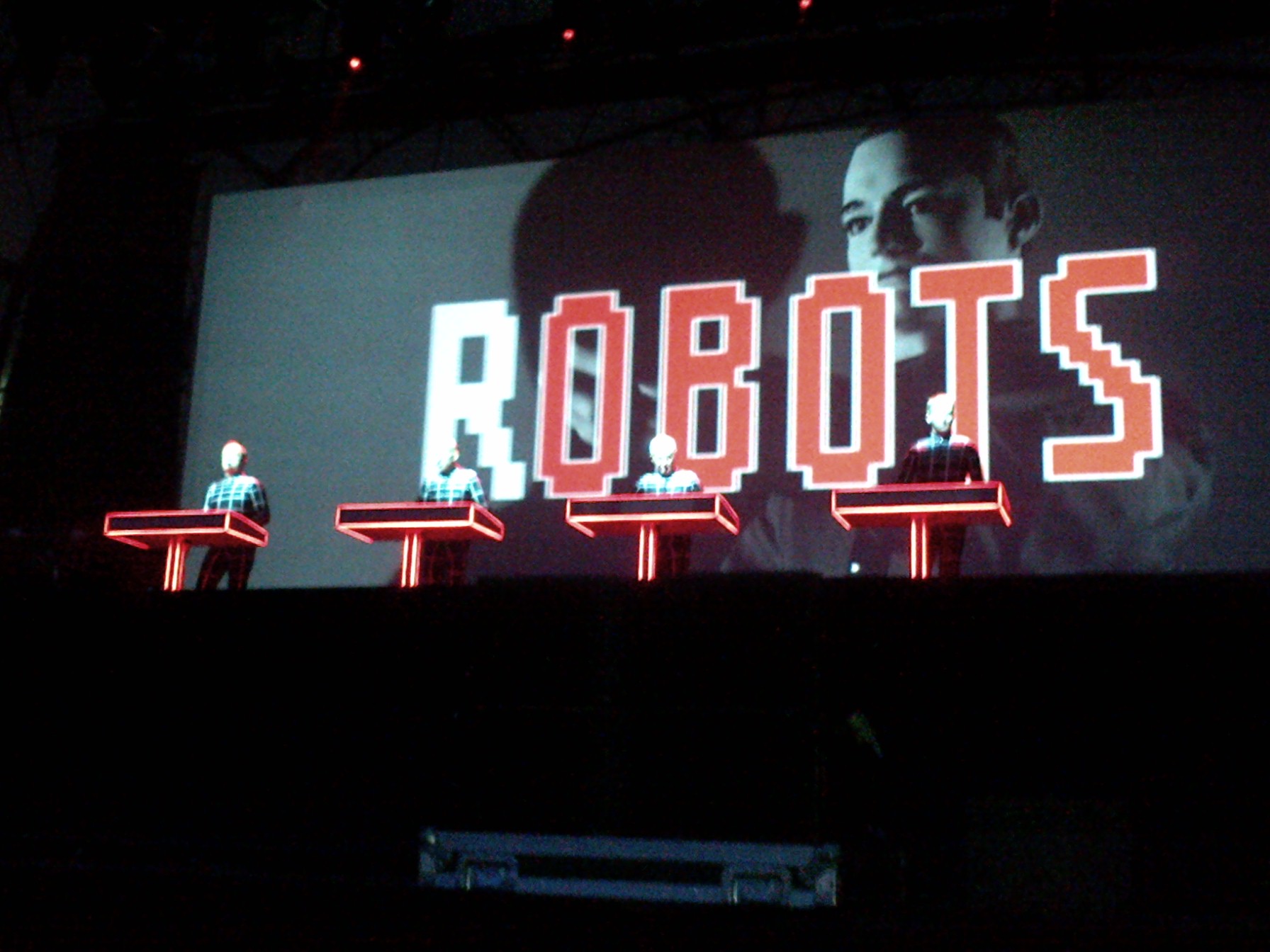 The pioneers of electronic music pioneer on; whist the music is unchanged – partly because of its timelessness – its presentation is awe inspiring. The Robots – a fabulous track in its own right – is accompanied by four pixelated erstwhile ‘Man Machine’ Kraftwerkers rotating in front of the current incarnation (only Ralph Hütter of the original line-up remains). By contrast, ‘The Model’ and ‘Tour de France’ played to archive footage of models and racing cyclists respectively. Trans-Europe Express featured a geometric train. And then Autobahn played to imagery of an idealised Autobahn hosting iconic German vehicles, VW Beetles, campers and classic Mercedes from an unspecifiable period in the past. For the time being, this is unmatchable music presentation.
Many of the bands performing this year owe much to Kraftwerk. So much so, in the case of Hot Chip who preceded Kraftwerk in the Obelisk Arena, that singer Alex Taylor adorned his Kraftwerk Autobahn t-shirt for their performance. And what a belter it was. Largely featuring tracks from the most recent album, In Our Heads, the band flitted from one instrument to another as if playing musical chairs. Their website features their effortless performance of ‘Are you ready for the floor’ (at the time of writing the visuals are not working well). http://www.hotchip.co.uk/2013/07/test/
  The other band that we saw with a Kraftwerk debt are Austra (left). Appearing on the BBC 6 Music Stage, they performed tracks from their new album, Olympia. This album is disappointing relative to their debut, ‘Feel it Break’. But played live, one can jettison the bemusing melancholy of the lyrics that weigh down the album, and enjoy the extraordinariness of lead singer, Kate Selmanis’ voice.
Also on the BBC 6 Music stage was the Laura Mvula with her band featuring a cello, violin, double bass, harp, drums and 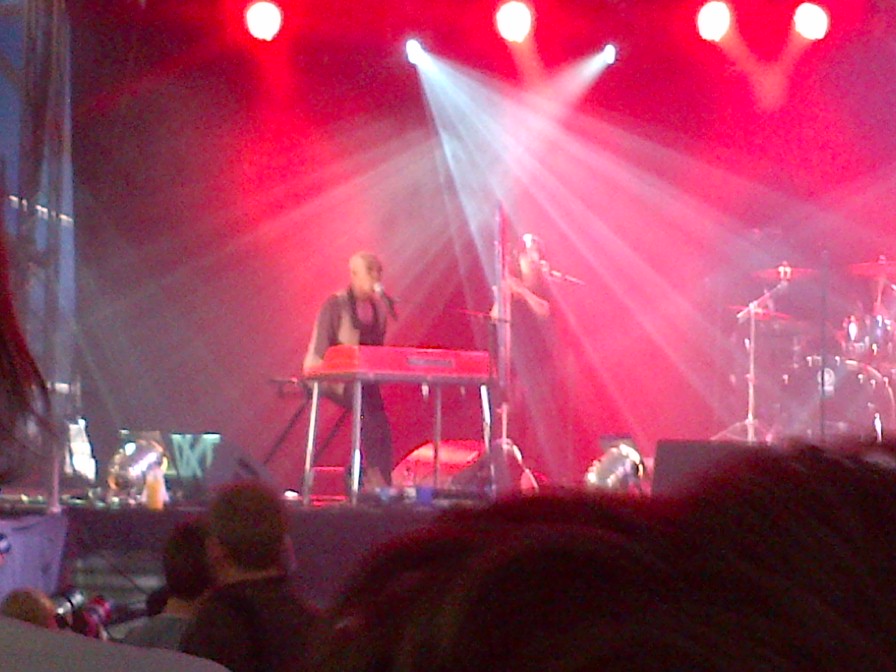 keyboards. Their set was irritatingly short as many are in the middle of the day at festivals. She told us that her husband doesn’t really like her songs, but he approves of ‘She’, so we got to hear that. ‘Sing to the Moon’, the title track from the album renders one mortal and also the upbeat ‘Is there anyone out there’ played, partly on her own admission, because recent gigs had been a bit quiet. A large appreciative audience at Latitude certainly made her feel wanted.
Our first musical encounter on Friday afternoon was the enigmatic I am Kloot. I am not sure what to make of them. Their own profile has it that they are “an oddball pop trio based in Manchester, England, that consists of vocalist/guitarist John Bramwell, drummer Andy Hargreaves, and guitarist/bassist Pete Jobson.” The music is rocky, melodious melancholy. A bit grizzled. Songs about too much alcohol; reflection and mortality.
Friday was also an opportunity to hear Texas – never a fan – but the rocky show had a feel-good sense to it with lead singer, Sharleen Spiteri, seemingly overwhelmed by the reception. Bizarre shirt, though. They were the only band allowed an encore.
We also saw the Yeah Yeah Yeahs. Karen O’s shrill voice didn’t quite penetrate the guitars. She seemed to get more and more angry as the set went on. And thoroughly unhappy with being ‘managed’ off the stage. Or so it seemed.
We dipped into Grizzly Bear, but actually found them a bit uninspiring. We stumbled across The D.O.T. ignominiously in the cinema tent. A duo, Mike Skinner (formally The Streets) and Rob Harvey (formerly The Music), with some great little urban songs. A version of ‘how we all Lie’ that we heard live can be found on Youtube http://www.youtube.com/watch?v=JqrliWEYIko.
 Be informed