Archive for the ‘Travel’ Category
Marlboro ‘relaunch’; Lucky Strike in a tin
Filed under: Cigarette advertising | Tags: Lucky Strike, marlboro
 Leave a comment
 ![download_20140710_111039[1]](https://weiterzugehen.net/wp-content/uploads/2014/07/download_20140710_1110391.jpeg) These are heady times in cigarette advertising campaigns in Germany. I assume this has something to do with the World Cup with its healthy lifestyle promotion of beer, fast food and lethal nicotine dispensers. Clearly, Marlboro has been conceding ground to Lucky Strike on the ‘all American-ness front (see posts under this tag). So, the advertising agencies suggest a relaunch. And here it is, ‘Red’.
These are heady times in cigarette advertising campaigns in Germany. I assume this has something to do with the World Cup with its healthy lifestyle promotion of beer, fast food and lethal nicotine dispensers. Clearly, Marlboro has been conceding ground to Lucky Strike on the ‘all American-ness front (see posts under this tag). So, the advertising agencies suggest a relaunch. And here it is, ‘Red’.
It is true that cigarette boxes have always been wonderfully designed, fit-for-purpose, artefacts. Beautifully engineered. I have always found smoking to be pretty repulsive, but the boxes have consistently fascinated me. Largely unchanged for decades. The clean design here is seductive. That I can see. The pinnacle, as I understand it, is when the actual brand does not need to be spelled out.![download_20140703_193114[1]](https://weiterzugehen.net/wp-content/uploads/2014/07/download_20140703_1931141.jpeg)
As reported earlier, Lucky Strike has been promoting previous times before technology when people met and talked over a cigarette. I have reported elsewhere how Lucky Strike’s characters are now into books rather than social networks. Here is another one (right). Pure unadulterated manhood.
![download_20140710_111048[1]](https://weiterzugehen.net/wp-content/uploads/2014/07/download_20140710_1110481.jpeg) But to add a certain confusion, here is the latest. “Luckies kann man nicht selber machen” [one cannot make Luckies by oneself]. When applying the strike-through magic, it becomes “Luckies selber machen” [make your own Luckies]. At first, it looked like a tin of tobacco soup. I realised that was stupid. Actually, it is Lucky Strike going into roll-ups. In a tin. Collectable and beautifully engineered, but let us see how a Lucky Strike roll-up goes down. Watch this space.
But to add a certain confusion, here is the latest. “Luckies kann man nicht selber machen” [one cannot make Luckies by oneself]. When applying the strike-through magic, it becomes “Luckies selber machen” [make your own Luckies]. At first, it looked like a tin of tobacco soup. I realised that was stupid. Actually, it is Lucky Strike going into roll-ups. In a tin. Collectable and beautifully engineered, but let us see how a Lucky Strike roll-up goes down. Watch this space.
Lucky Strike underwhelming
 The last batch of Lucky Strike advertisements were pushing the boundaries of their ‘strike-through’ campaign. The life cycle of each poster seems to be getting shorter. Only two weeks’ ago was I discussing ‘the main thing’ (14 June, 2014); on my return to Munich, there are two more Lucky Strike posters that, for me at least, lack any Wow! factor. The first, left, tries to be contemporary. The image is of a man reading a book (a first for a cigarette advertisement, perhaps?) instead of, as the strike-through would suggest, networking online with friends. I have to say, my own experience of reading a book in that position is not good. He’ll soon be back to the relative comfort of sitting at a table with his laptop. A position that also makes it easier to consume the product.
The second poster is bemusing to say the least. The poster has the slogan 364 Friends, with 36 being struck through, as it were, leaving four friends. Nice. But I cannot work out what the 364 means. Maybe the character had 364 friends on Facebook, but since taking up book reading he has only four left. Alternatively, the other 360 friends have all died after consuming this product.
Lucky Strike out Marlboros Marlboro
Filed under: Cigarette advertising | Tags: Lucky Strike, marlboro
Leave a comment  Since Marlboro’s controversial Maybe campaign (various examples on this blog), Marlboro has been pursuing a “without additives” approach. Dull if nothing else. Meanwhile Marlboro’s traditional territory, men in farming landscape with cigarettes, seems to have been reoccupied by Lucky Strike. Lucky Strike is still perfecting its strike-through approach (left). So we go from the main point of everything being right (Hauptsache-recht), to everything being real (echt), including the lung cancer.
To save on budget, as I imagine these fantastically clever strike-through slogans must cost a fortune to compose, they are using them twice (right).
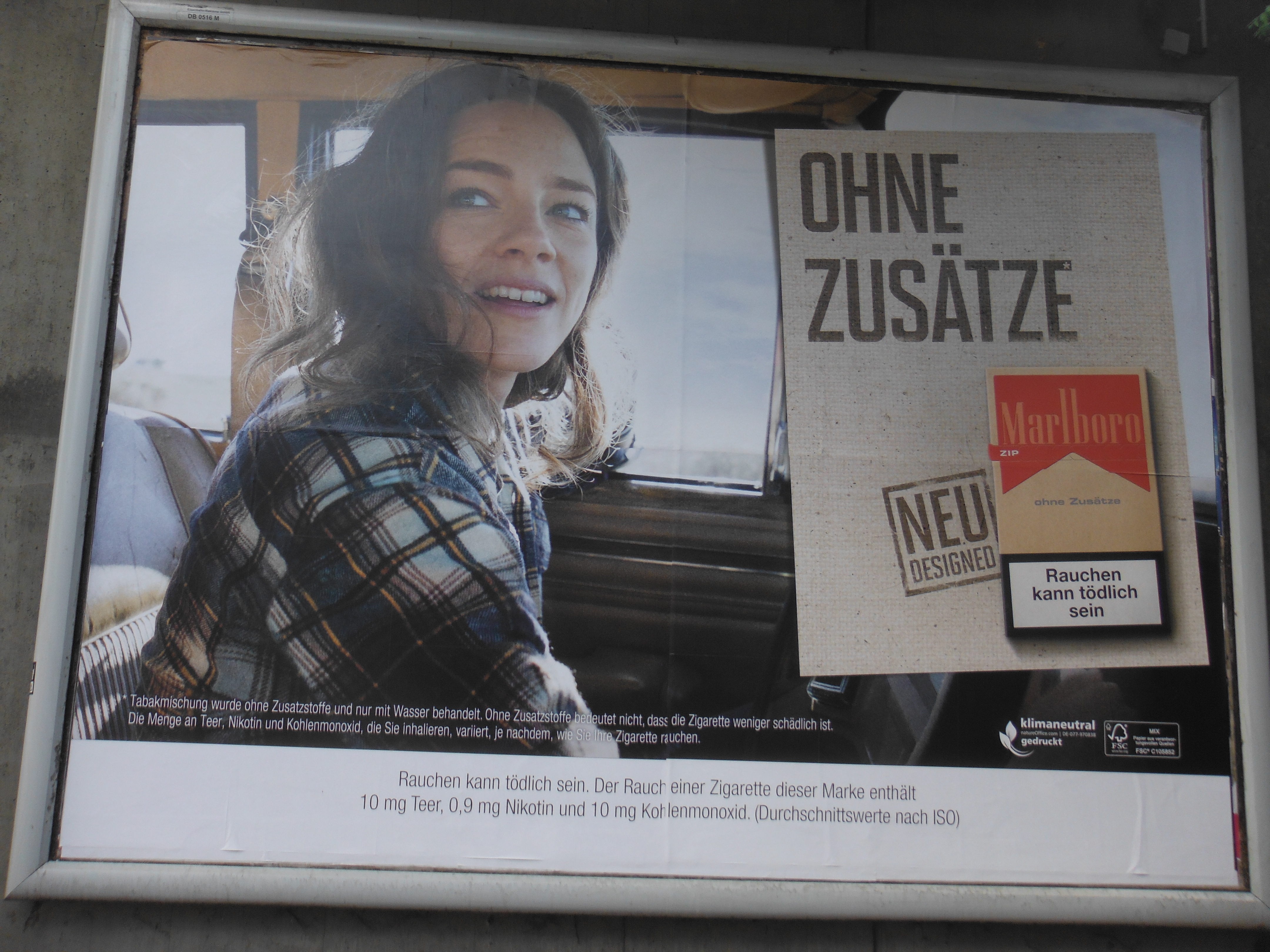 Poor old Marlboro. But wait a minute, there is now a fight back (left). It is the Marlboro Frau wearing the lumberjack shirt, in a vehicle in the countryside with added no additives. Take me to the tobacconist.
After the elections…
 …back come the cigarette advertisement posters. Currently we find Pall Mall with its summer love theme. Young people enjoy life (see also post 19 April 2014), this time with a camper van that does not quite seem to be a VW. If I read it correctly, the van has broken down, but it does not matter because there are three women and two blokes with beards and/or cigarettes. Who needs travel?
Rail nationalisation – think it through
 I woke up yesterday morning to a news story that 30 or so candidates for the Labour Party in the UK are arguing for a partial nationalisation of the railways in line with Ed Miliband’s indication that a new Labour Government would seek not just to ‘run’ the country but to ‘change’ it. In order to avoid paying compensation to incumbent franchise owners, franchise contracts will simply not be re-let when existing contracts expire. The East Coast franchise, they argue, having been run by DOP (a public-sector company) for four-and-a-half years after it was abandoned by National Express after failing to meet targets, has been a ‘success’. There is a better way to run the railways, seemingly. And one that will see a reduction in ticket prices.
Let us just examine this in a shade more detail.
First, what is success? DOP delivered returns to the Treasury (£208.1m last year according a Guardian Newspaper report, 26 October 2013), but did not match the National Express contract commitments; not least because they were flawed. Though customer satisfaction levels were, it seems, at a record high (2-3 percentage point higher than the Intercity averages).
Second, the railway is a capital intensive: infrastructure (already in the public sector as Network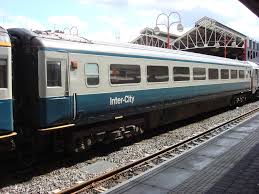 Rail) and rolling stock (trains – all privately owned by Angel Trains; Porterbrook; Eversholt Rail Group and QW Rail Leasing).
The Franchises own virtually nothing over and above a few ticket machines. The costs, therefore, are largely fixed. They pay track access charges (to Network Rail) and rental charges (to one of three rolling stock leasing companies). The profit comes from a margin between fares, subsidy and operating efficiency.
Should the franchises be transferred to the public sector, those costs will not change significantly. Certainly not significantly enough to see a reduction in ticket prices.
 Third, under the present structure of the transport industry, who benefits from reduced ticket prices? The unfortunate reality is that the main beneficiaries are the relatively wealthy middle classes. The routes in the South East of England – in and out of London – attract the most attention for this reason. Also because the routes encompass some of the most sensitive electoral constituencies. And richest. The least wealthy areas, even in London, do not enjoy links with either the national rail network or the Underground. Actually, these areas are much more dependent on buses than trains. On that basis, it makes much more sense to nationalise the bus industry than the railway industry.
Now I am not arguing against nationalisation. It is clear in the years before privatisation, the railway industry was efficiently managed. Privatisation was at best a scorched-earth policy by the outgoing Major Government and, at worst, asset stripping by foreign and national ‘operators’. Any nationalisation programme will need to find a way to bring back all of the assets, including the rolling stock, back into public ownership.
 However, the issue is not about the ownership of the railways, rather transport policy more generally. What are the railways for and how do they link into the provision of mobility ‘rights’ for citizens, by whatever mode? And what is that worth in terms of transfer payments from the taxpayer to operators whether public or private? Let us not also forget the role of public transport in meeting environmental protection targets, such as CO2 emissions. It is cheaper, in many cases, to use private motor vehicles, particularly over longer distances.
Then there is the question of demographics. So much public money goes into servicing passengers in the South East of England because of the London effect. Government policy surely has to consider equalising wealth and opportunities across the country rather than concentrating it in the Capital which perverts demand for transport services.
In essence, then, a radical policy is not about the ownership of a few railway franchises. A radical policy requires new thinking about transport, its function, value and impact on other policy domains such as housing and economic development (beyond the capital).
Picture:
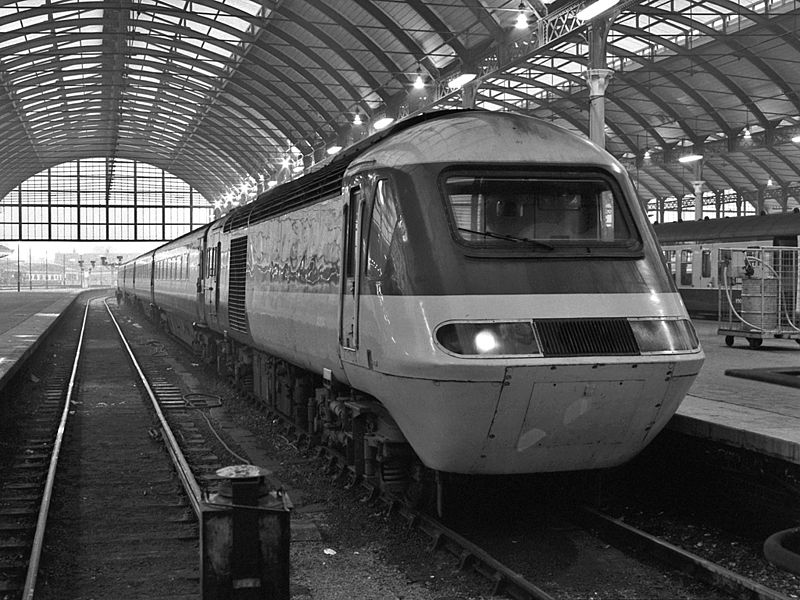
InterCity coach and 125 in Hull Paragon Station: Oxyman/Wikipedia
Nationalisation graphic, Bring back British Rail: http://www.bringbackbritishrail.org/news/page/2/
Pall Mall und Frauen
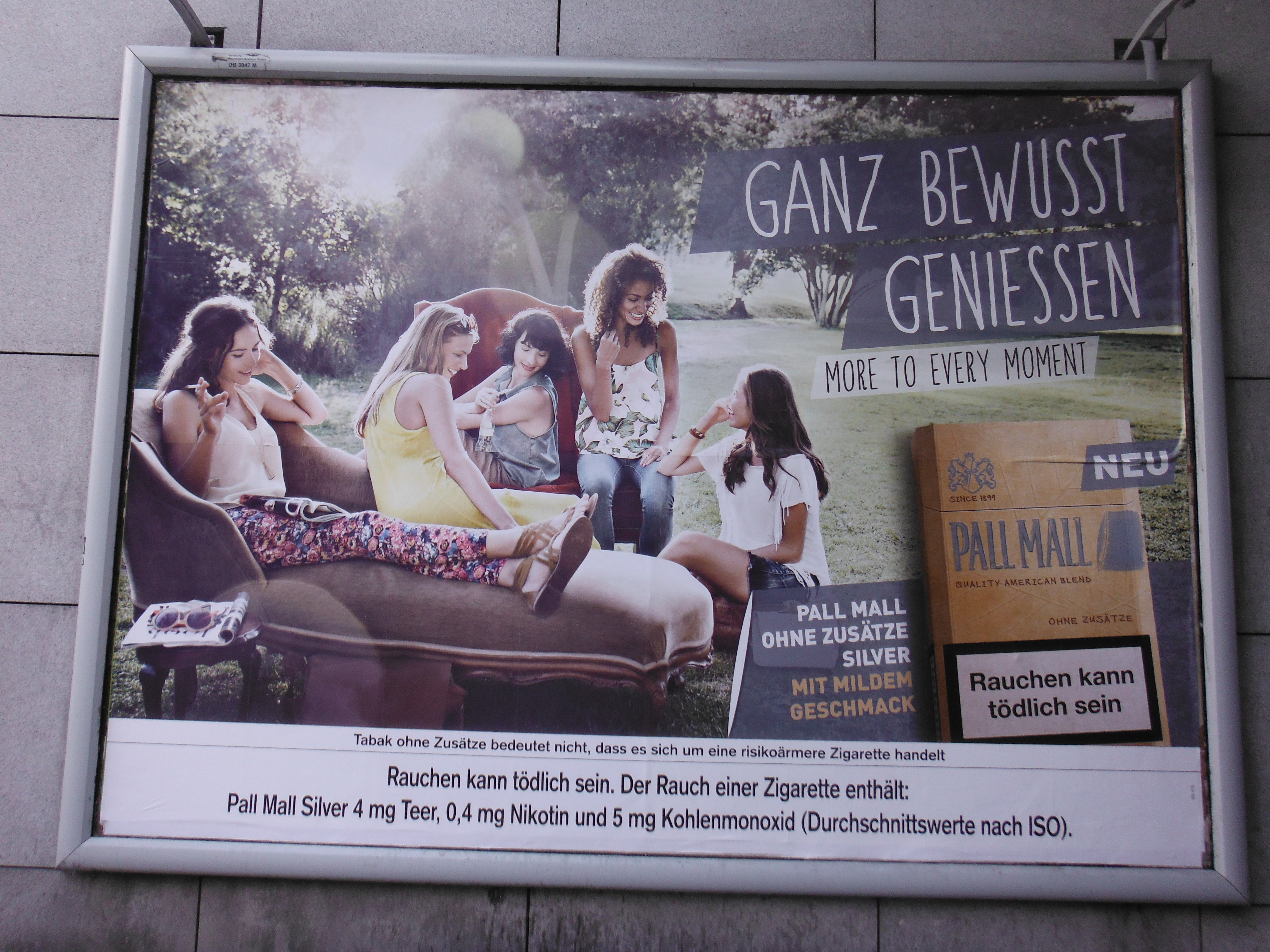 Five women spend time together outside in the sunshine. One reclines on a chaise loungue with a cigarette reading a magazine. The other four seem to be in conversation. One wonders if there is a relationship between the lone woman with cigarette and the others. Has she been isolated? The others seem to prefer water or nothing.
This particular Pall Mall product has a mild taste, whatever that is. But clearly it reflects the moment. Presumably, if they were doing something more edgy, they may choose a minty one (see post 18 April 2014)?
Pall Mall gets minty
 How refreshing. Cold water and minty cigarettes. Pall Mall leads the way.
It takes a devoted woman to relish being sprayed with water, not only damaging her new leather jacket, but that cigarette is not going to light after this. At a fiver a pack, that’s at least 25c down the drain. And if the full packet is in a pocket, even more. Not forgetting the matches.
Lucky Strike’s ever curious campaign
![download_20140413_221610[1]](https://weiterzugehen.net/wp-content/uploads/2014/04/download_20140413_2216101.jpg) Lucky Strike’s approach to marketing its products in Germany is as curious as any. Take a statement, cut out some superfluous words (by putting a line through them so as not to render them illegible) and celebrate the outcome.
Lucky Strike’s approach to marketing its products in Germany is as curious as any. Take a statement, cut out some superfluous words (by putting a line through them so as not to render them illegible) and celebrate the outcome.
So the latest one – excuse the poor picture, but I take them, or ask others to take them when spotted – goes from zweifel, dass die anders schmecken? (doubt the difference in taste?) to zwei die anders schmecken (two that are different in taste). From a question to a statement. How clever.
See earlier post: 15 June 2013
More reflections on my home town

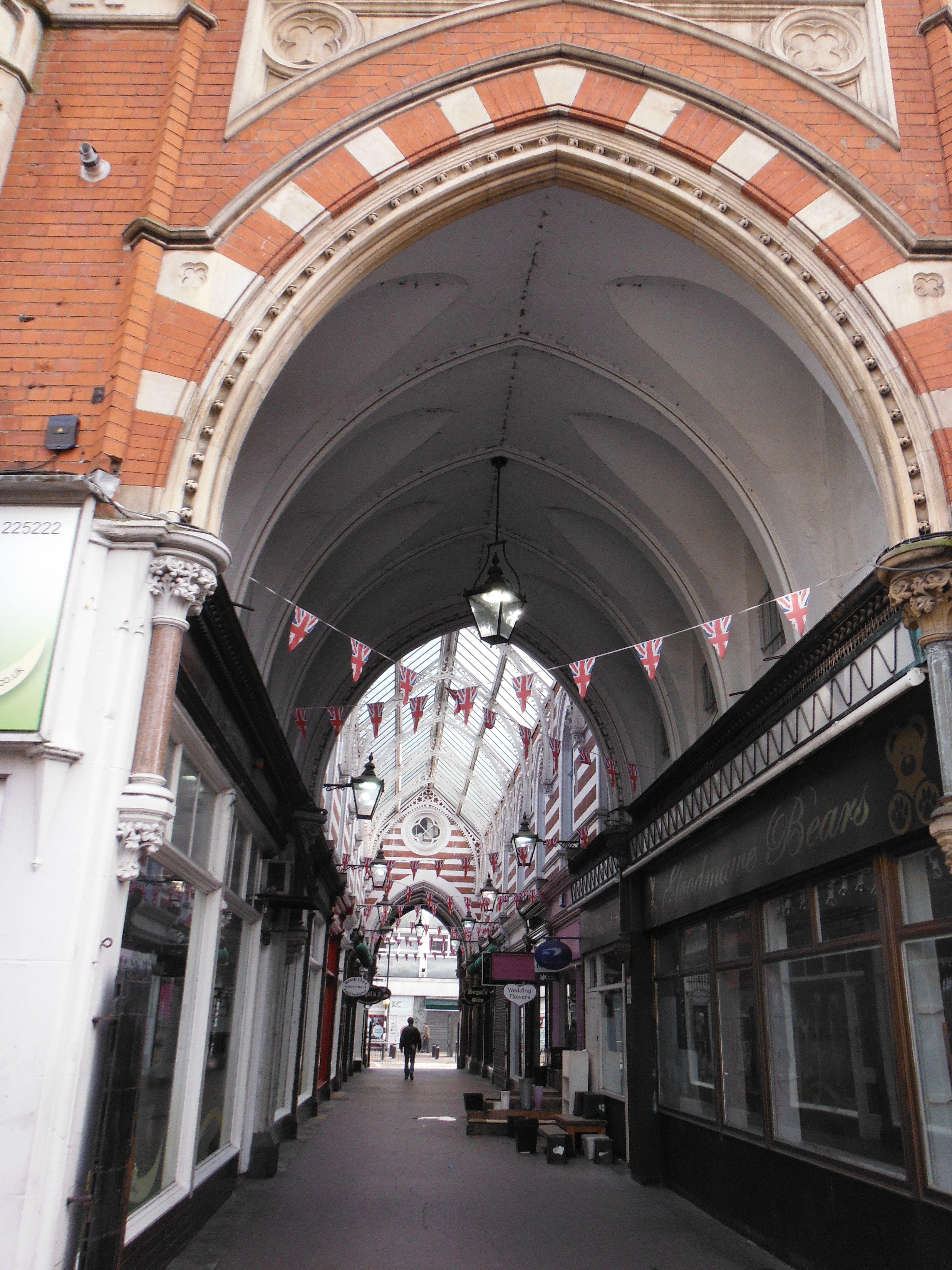 Back in Hull for the funeral of my father. After the funeral I took some air and wandered around to pick out some of the City’s architectural delights such as the Town Docks Museum (left). Located in between two docks (one filled in and turned into a park, the other retained with an unattractive shopping centre built over the top). But not all retail space is ugly in the city. Paragon Arcade (right) is attractive as any that one might find in Paris. And it is not the only one.
Opposite the Town Docks Museum is the City Hall (concert hall, below left). I can trace the advent of my own hearing problems – tinnitus – to a concert by Souxsie and the Banshees at this venue in 1980. Not many bands came to Hull, probably because 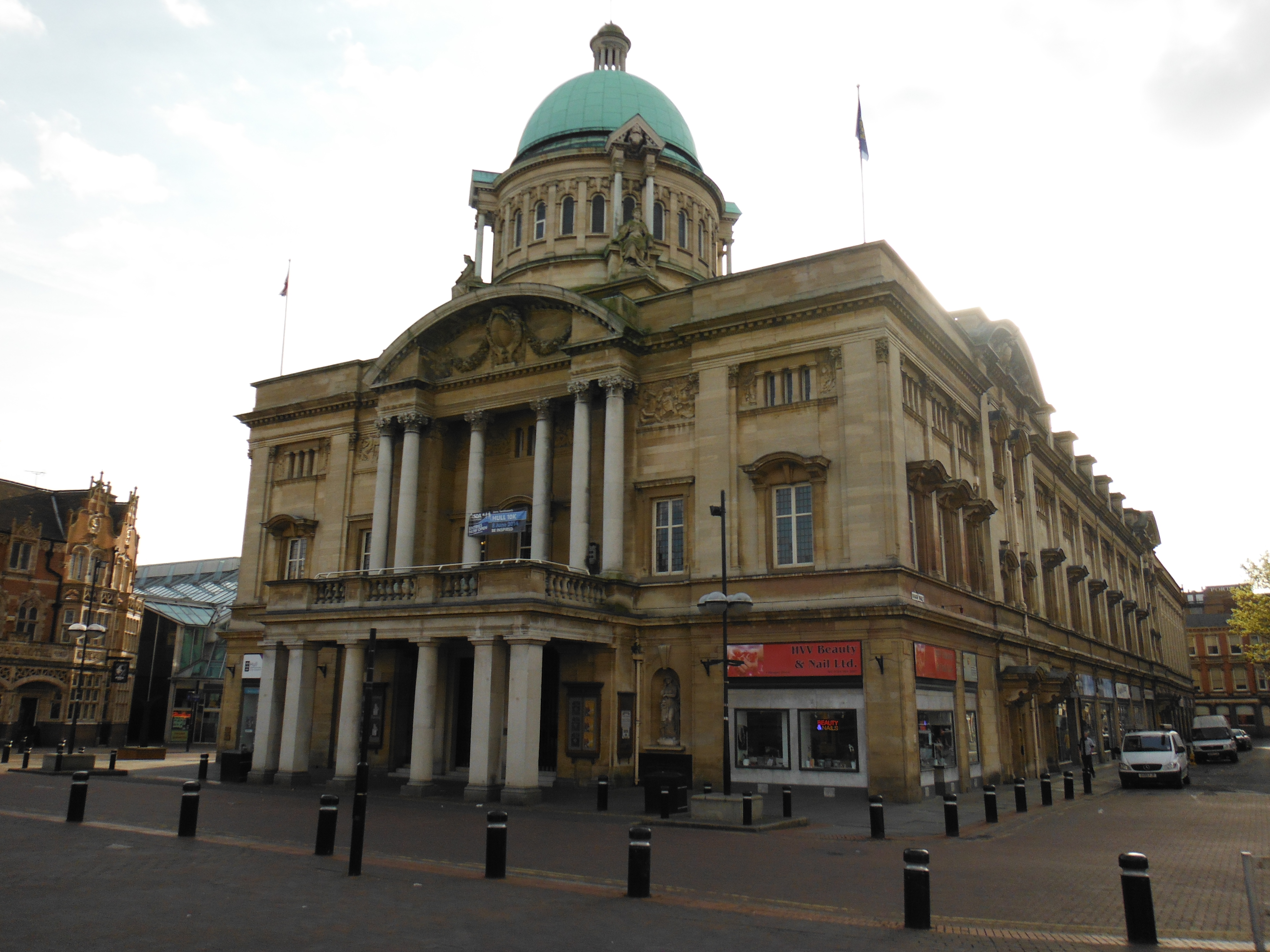 the acoustics are pretty awful. Or Hull is just unfashionable.
Hull is also exemplary in public toilets. I know this does not sound complimentary, but three of the City’s public facilities are extraordinary. One sat under Lowgate – only for men – used to have goldfish in the toilet glass cisterns. Or is that apocryphal? The second key set are under Queen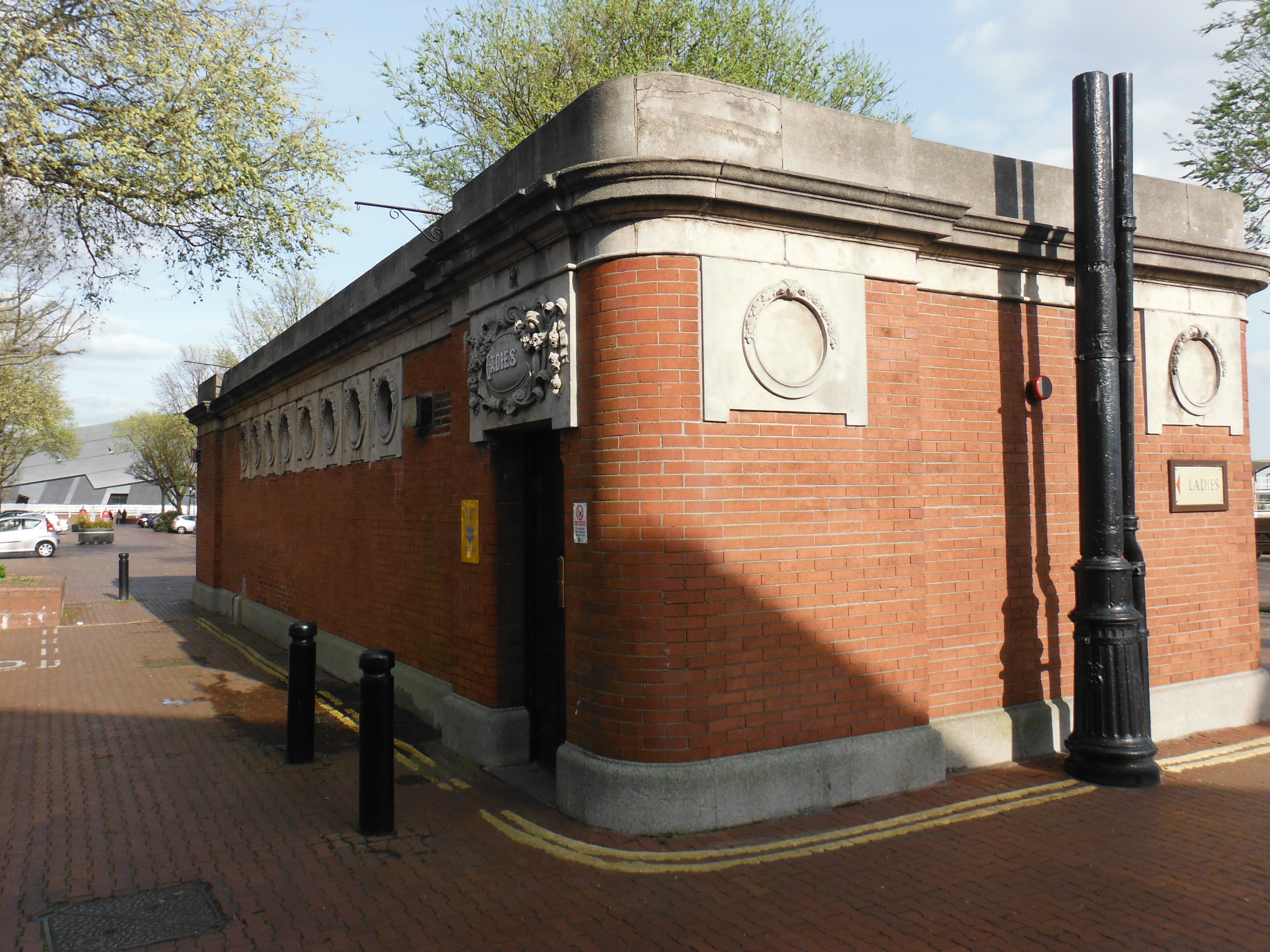 Victoria Square flanked by the Town Docks Museum, the Ferens Art Gallery and the City Hall. One route in and one route out. Fascinating as a child.
And finally, are those sat in the middle of the road at Victoria Pier, the one-time terminus for the Humber Ferry prior to the building of the Humber Bridge. I can only talk about the men’s. The urinals are huge. They seem to envelop the user with white porcelain. The attendants decorate the space with flowers whilst keeping them spotlessly clean.
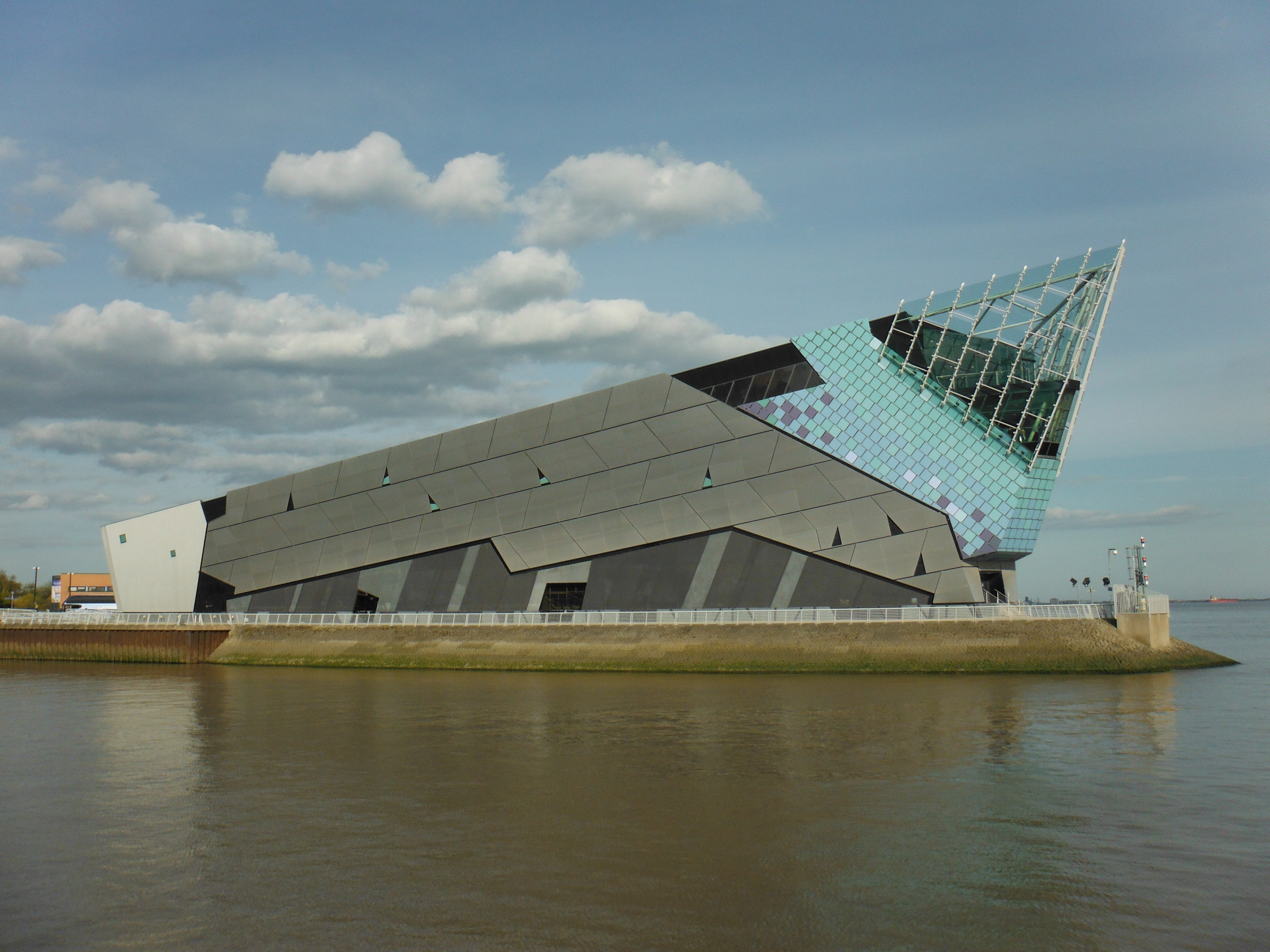 Just along the road from the toilets is one piece of modern architecture that houses the city’s aquarium, the Deep (left). Built on Sammy’s point, where the River Hull meets the Humber, in 2001. The architect was Sir Terry Farrell, and was constructed by Mero-Schmidlin (UK) PLC. It is as striking as any building in the city.
When I lived in the city, I was obsessed with the bridges across the River Hull. For anyone living in the east of the city, the triplets, Drypool (1961), North (1932) and Sutton Road (1939), Scott Street swing (1901 and no longer functioning), Sculcoates (1874) and Stoneferry (now replaced) bridges guaranteed the uncertainty for any commuter at high tide. When the bridges were open, half an hour could pass easily before the traffic could again move. Always exciting. Myton Bridge (1981) followed carrying the A1033 that linked the motorway to the docks. And for cyclists and pedestrians, there was always the abandoned Wilmington railway bridge (1907). Despite the Withernsea railway being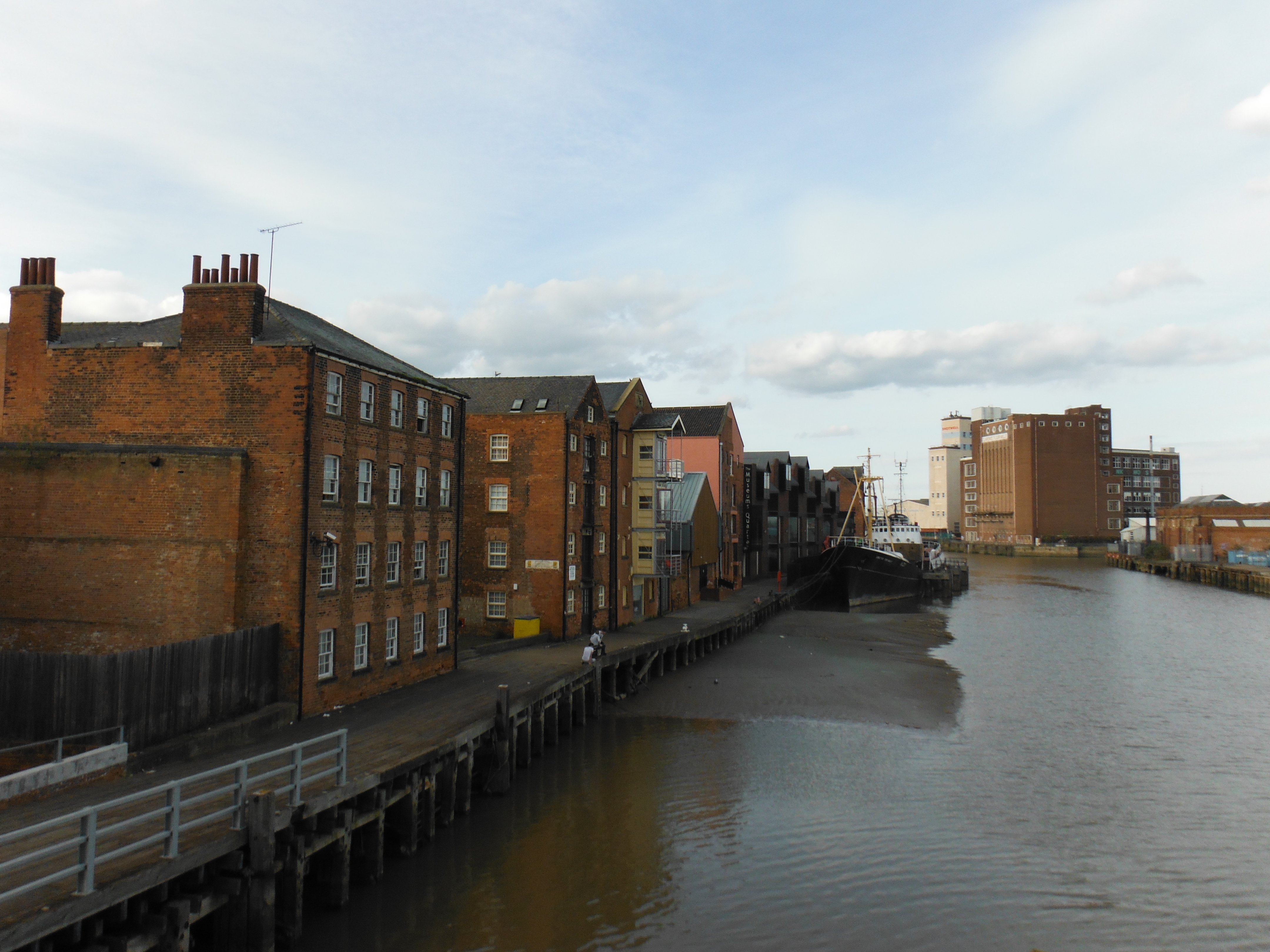 decommissioned in the 1968, the bridge remained; maintained and operated. Then two footbridges emerged. The first – the Millennium – links the west and east sides adjacent to the Deep. The second, Scale Lane, finished in 2013, links the west and east sides for easy access to the museums (view of museums from bridge, right). This bridge is unique in that pedestrians can stay on it when it swings to allow ships to pass.
I’ll post up some pictures of those bridges after my next visit.
Here is a link that may be of interest: http://www.theguardian.com/uk-news/the-northerner/2014/apr/10/hull-books-snobbery-nordic-noir-david-mark
Reflections on my home town
Keeping a meaningful blog up-to-date is not trivial, I find. In recent weeks I have been busy moving house (some reflections to come) and dealing with the sudden death of my father. The latter has clearly taken up much mental space rendering most other issues less significant.
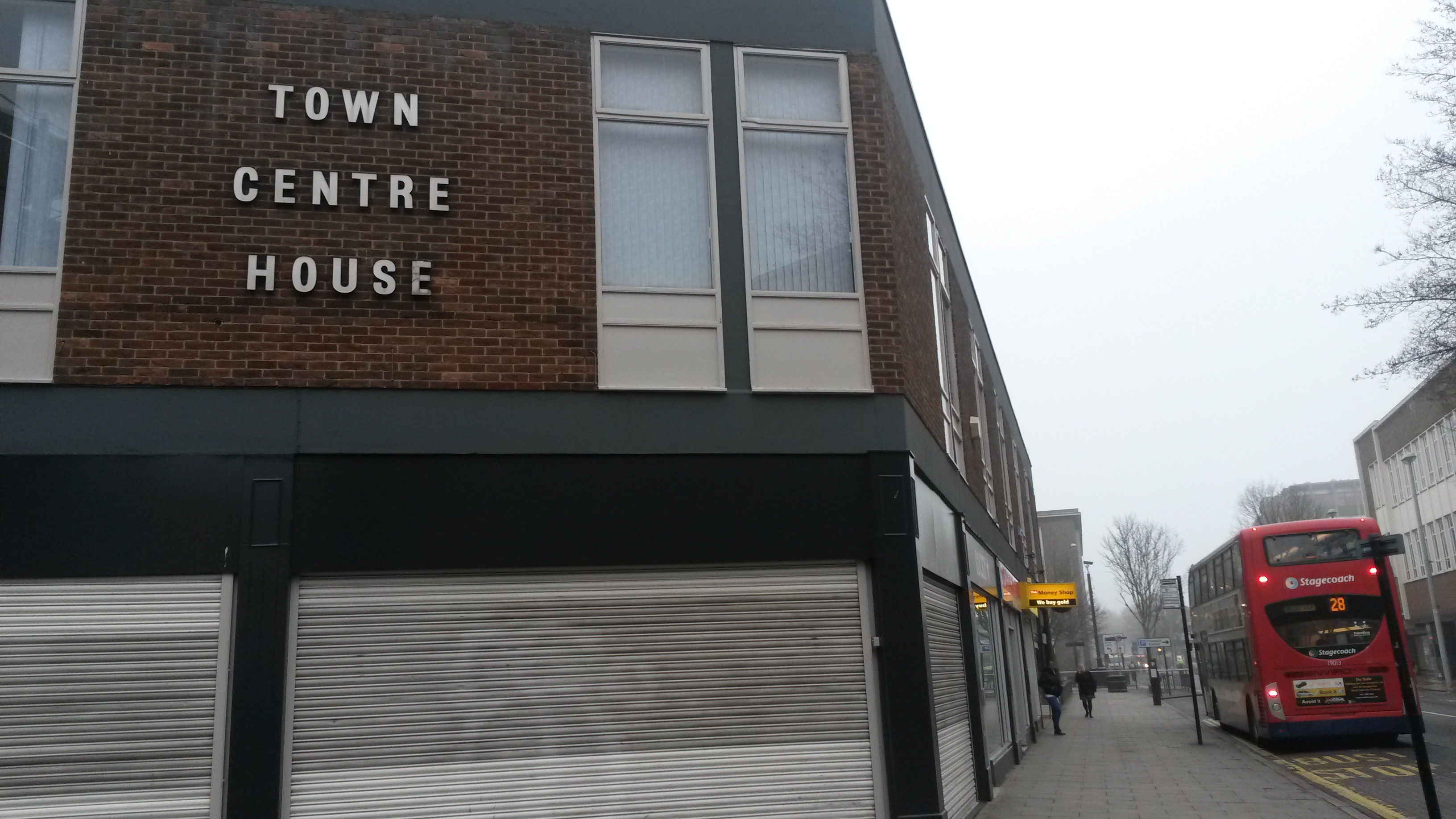 I find myself writing now from my home town, Kingston-Upon-Hull in the East Riding of Yorkshire in the UK. It is not a pretty town. It was heavily bombed during the war – it was and is a significant port – and the rebuilding was not the most sensitive. Take this picture (left) for example. This is Prospect Street in the City Centre at 0815 on a weekday morning. This is a utilitarian 1960s building showing considerable creativity with respect to naming. Actually, the name is fit-for-purpose. The shutters are ubiquitous as are the pawnbrokers and betting shops.
That said, Hull, as it is known locally, has a historic quarter and grand buildings to demonstrate its former significance and power.![20140403_224345[1]](https://weiterzugehen.net/wp-content/uploads/2014/04/20140403_2243451.jpg) The Guildhall (right) is one of the most impressive in the county which boasts both York, Leeds and Sheffield. It was designed by Edwin Cooper and completed in 1916. It was damaged in the war but restored fully in 1948. Nikolaus Pevsner, the architectural writer and critic, not a man to be easily impressed, described its Baroque Revival style exterior and interiors as a ‘tour de force’. Nearby are the Town Docks buildings – as grand as Liverpool’s waterfront, arguably – the City Hall (concert hall) and the Ferens Art Gallery, bearing the name of one of the City’s great benefactors.
The Guildhall (right) is one of the most impressive in the county which boasts both York, Leeds and Sheffield. It was designed by Edwin Cooper and completed in 1916. It was damaged in the war but restored fully in 1948. Nikolaus Pevsner, the architectural writer and critic, not a man to be easily impressed, described its Baroque Revival style exterior and interiors as a ‘tour de force’. Nearby are the Town Docks buildings – as grand as Liverpool’s waterfront, arguably – the City Hall (concert hall) and the Ferens Art Gallery, bearing the name of one of the City’s great benefactors.
![20140403_224200[1]](https://weiterzugehen.net/wp-content/uploads/2014/04/20140403_2242001.jpg) Hull’s relative isolation delivered over the years a number of quirks. For some reason, British Telecom – and its predecessor, the General Post Office (GPO) – did not swallow up Hull’s Corporation-owned and run telephone service, epitomised most visibly by the cream public telephone boxes (left). These two fine specimens are located next to the equally grand GPO office on Lowgate, now a Wetherspoons pub.
Hull’s relative isolation delivered over the years a number of quirks. For some reason, British Telecom – and its predecessor, the General Post Office (GPO) – did not swallow up Hull’s Corporation-owned and run telephone service, epitomised most visibly by the cream public telephone boxes (left). These two fine specimens are located next to the equally grand GPO office on Lowgate, now a Wetherspoons pub.
In recent years there has been much regeneration in the Town Centre. Ferensway – named after the benefactor – has been completely redeveloped; it is dominated by a shopping centre, though nearby is the splendid Hull Truck Theatre and the Albermarle Music Centre – an upgrade of the former youth centre on the site. That said, the shopping centre reaffirmed the railway station area as the centre of the city. Over recent years, the heart of the city had shifted slightly East. But such is the poverty in this city, the new focus has just caused the existing 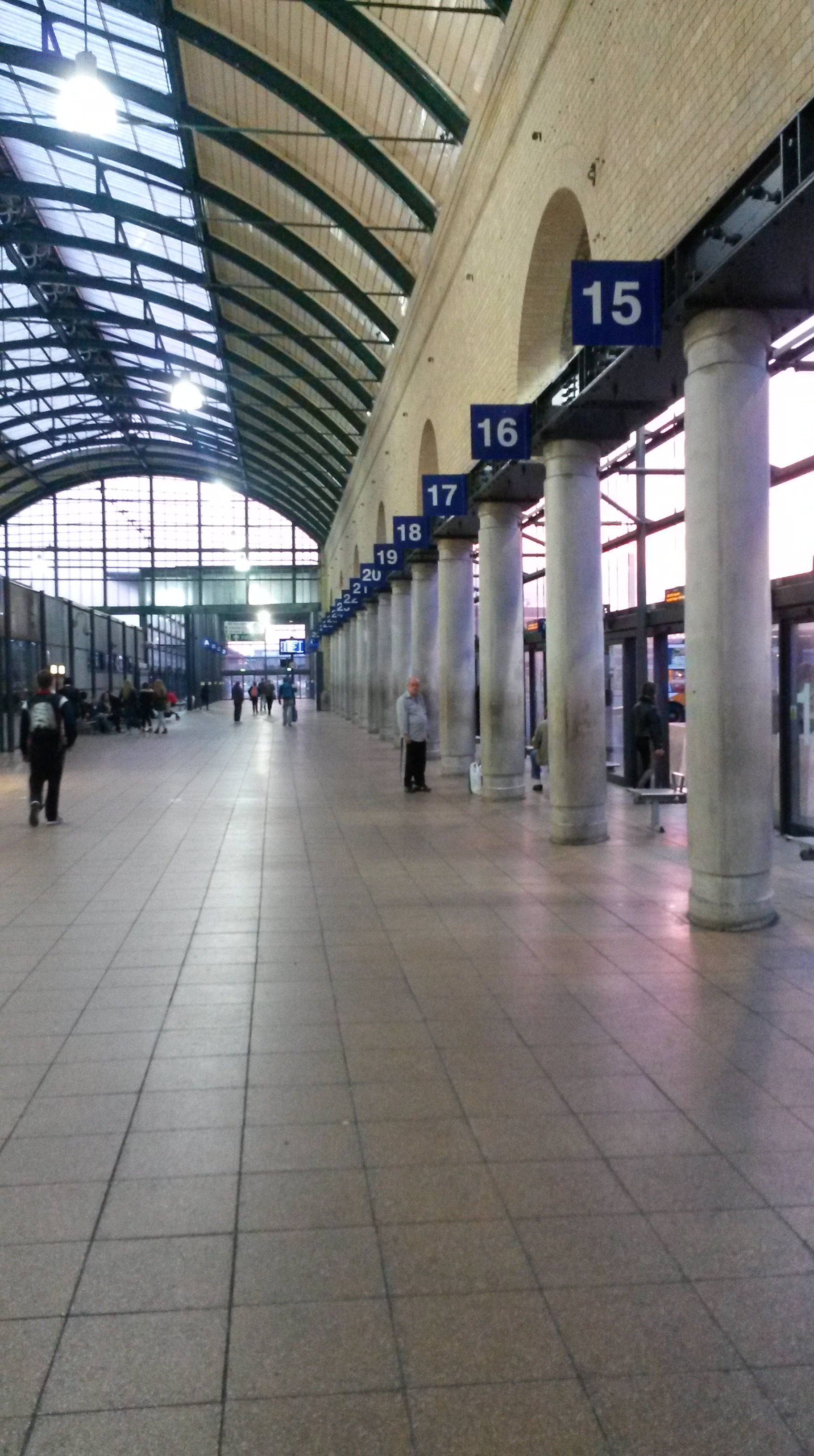 shopping areas to fall into disrepair, with those shops/chains able to do so, moving.
To my eyes also, there was a missed opportunity. The grand Paragon railway station had its stone façade re-instated (in the 1960s another utility office block was parked in front of it). The old bus station was demolished and an ‘interchange’ built. Not before time, but the result is less-than satisfactory (right). It straddles the side of Paragon Station. With 40 stands it is long, cold, echoey and slightly threatening.
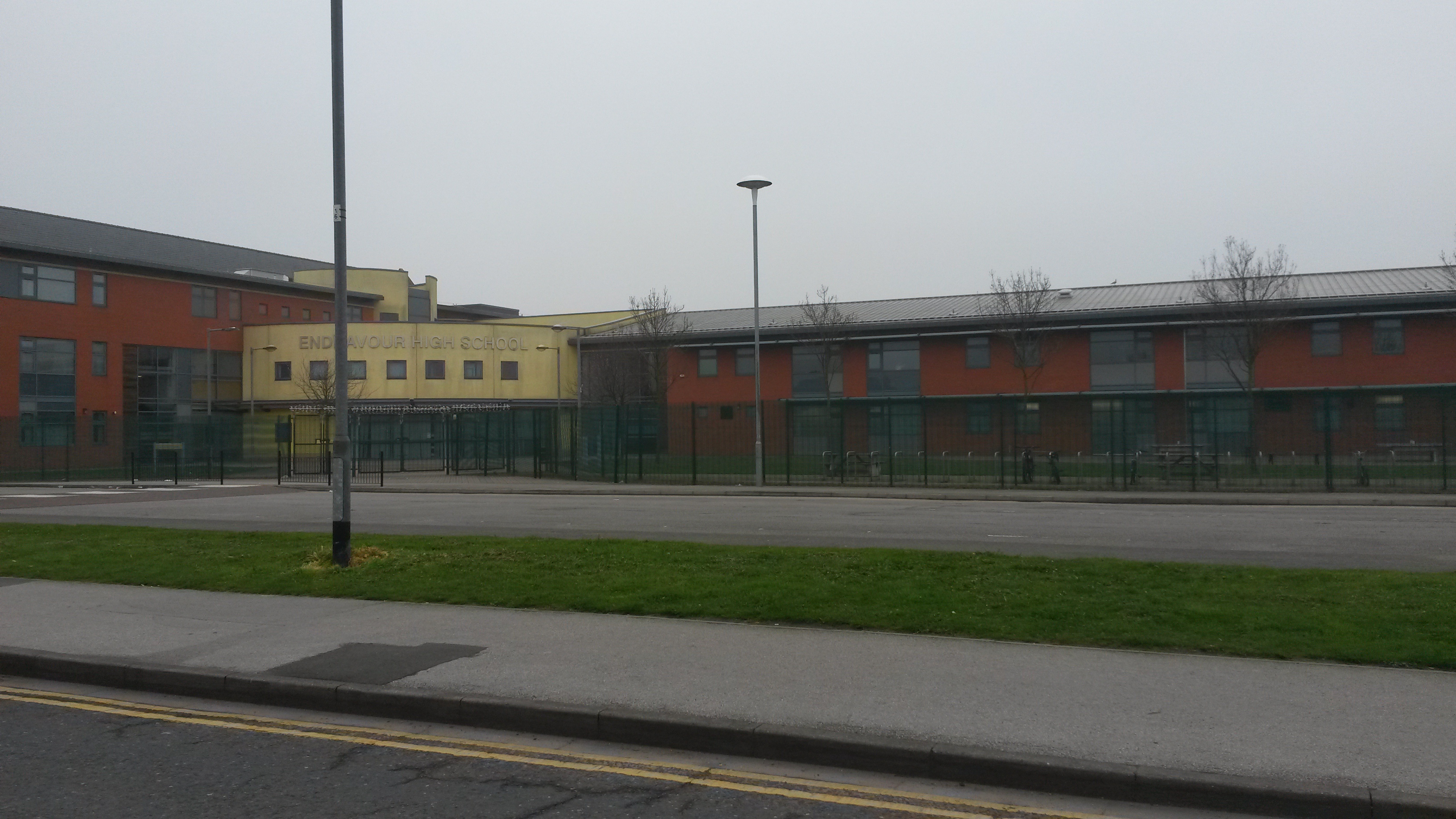 New architecture is appearing all over the City. I cannot help feeling that the errors of the 1950s are being repeated. Take the Endeavour School on Beverley Road (left). The naming is what one might expect (and in contrast to the ‘Town Centre House’, above). But it really looks like a ‘secure’ facility rather than a place of learning, youth and endeavour.
I will return with my camera and a copy of Pevsner for some more reflections about this City. There are things to be optimistic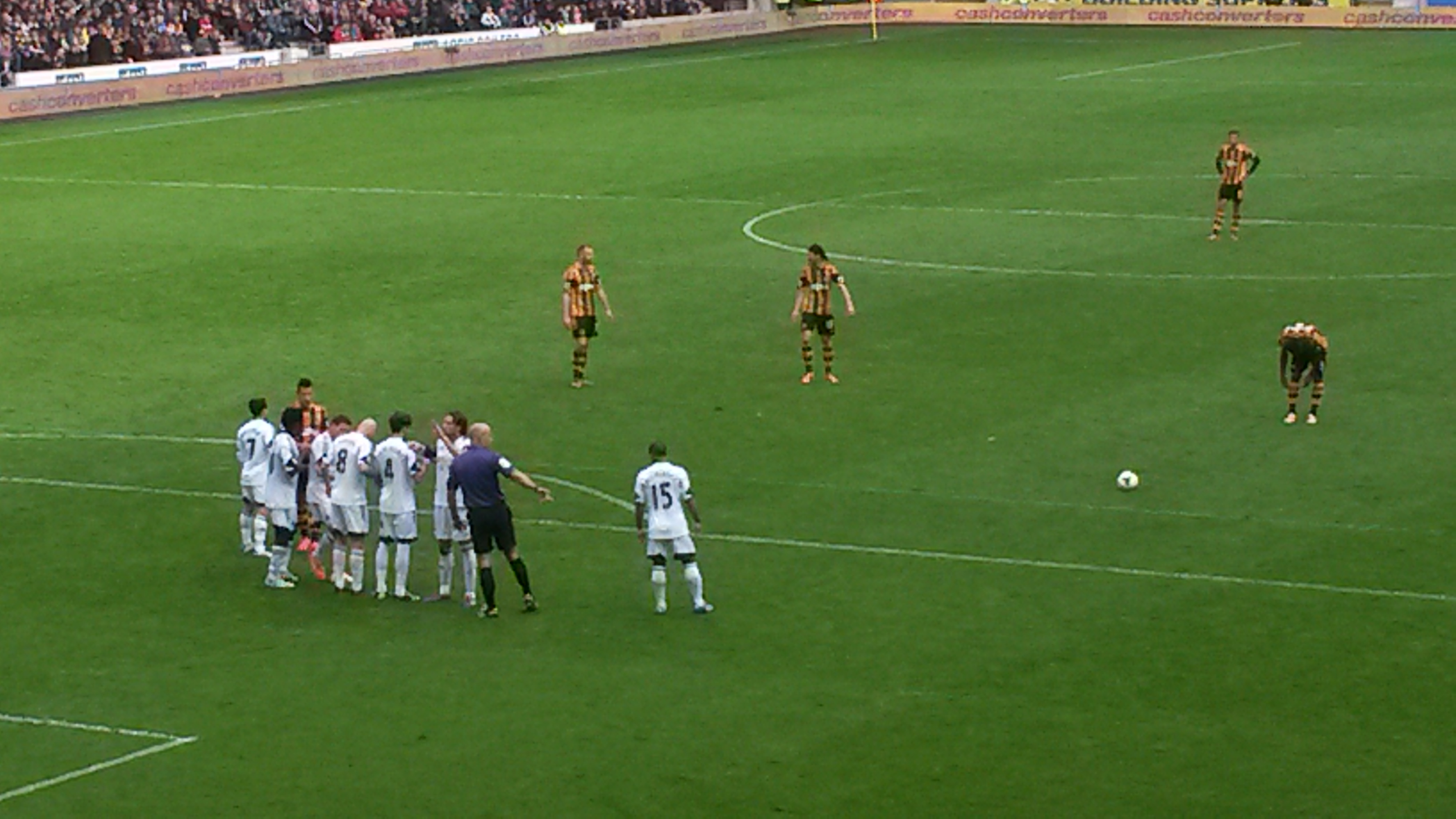 about. Siemens is investing heavily in a Wind Turbine manufacturing facility here. It will be City of Culture in 2017. And the football team (right) are in the Premier League. That quirky telephone company provided the funds to build the stadium that enabled improved fortunes for the club.
Further reading on the architecture of the Guildhall available from English Heritage: http://list.english-heritage.org.uk/resultsingle.aspx?uid=1279708
 Be informed