Pessimism: not my usual state of mind
Filed under: Politics | Tags: antibiotics, Hilary Benn, Lynton Crosby
 Leave a Comment
  I’ve noted the names of all of the Labour MPs who voted to bomb Syria in the recent vote. Hilary Benn (left) in particular is a disgrace and clearly short of rhetorical intelligence. As Simon Jenkins, the Guardian columnist noted after the debate, those who invoke Hitler (as Benn did) to argue for war need to think through their nonsense. ISIS, notes Jenkins, is not a threat to UK sovereign territory, unlike the UK in 1939. Moreover, we are in “dodgy dossier” territory here. The dodgy dossier was used by Tony Blair to make the “case” for war in Iraq in 2003 claiming weapons of mass destruction.
Human folly knows no bounds. The discovery of Penicillin in 1928 by Alexander Fleming heralded the era of antibiotics and the ability to treat many serious diseases such as Tuberculosis and syphilis. This is humanity at its most creative. But their effectiveness always depended on their irregular use. Essentially, show the micro-organisms antibiotics too often and they will find a way to be resistant. Humans, however, cannot seem to use finite resources appropriately. Doctors seem to over-prescribe; patients seem not to take a necessary whole course of treatment. But most stupidly, they are given to animals not to protect them against disease; i.e. for their welfare, rather to enable intensive farming to be possible. Seemingly the antibiotic of last resort, Colistin, has now been found to be ineffective against Enterobacteriaceae, a nasty little microbe that causes pneumonia, amongst other things. This might be a high price to pay for cheap meat. The challenges are, however, even greater.
Some of the public figures I most admire are those that have eschewed gongs – honours bestowed upon subjects of the Queen for good work. Musician, David Bowie, playwright Alan Bennett, artist L.S. Lowry (won award for the most times rejected) and scientist Michael Farraday are notable declinees. But the list is impressive and honourable. This year’s list of gongees, as I might call them, include Lynton Crosby (right), the architect of the Conservative Party’s “victory” in the General Election in May 2015. Crosby’s campaign was an abomination. One in which blatant lies were used against the opposition and David Cameron’s refusal to debate head-to-head with David Miliband. These are not services worthy of a Knighthood, even if I believed in them.
Enough. Happy new year to my readers. Thank you.
Pics:
Hilary Benn – http://www.defra.gov.uk/corporate/website/copyright/
Lynton Crosby – Wikipedia
Filtered French chic
Filed under: Cigarette advertising | Tags: Gauloises, JSP, Lucky Strike
Leave a Comment  It’s all in the filters at the moment. The delivery of carcinogens to willing humans takes great scientific endeavour. The current JSP campaign in Germany leads on this and takes on Lucky Strike and Marlboro whose new filter, Advance, is advertised to build anticipation as if it was a Star Wars film (“Are you ready for Advance?).
I apologise for the poor quality of this picture – it was taken at night across a railway platform. However, “Qualität die sich lassen kann” loosely translates as “allow yourself quality” coupled with “Jetzt mit festerem Filter” earns the ad agency its fee. And the smoker cancer.
Thank goodness, then, for the creativity of Gauloises’ ad agency. Vive le  Moment has the obligatory bearded man in a tuxedo, stylishly arriving at some gig with his bicycle slung over his shoulder (easier to ride, I would have thought). “Enzigartiger Stil, grossartiger geschmack. Meine Wahl” reads as “Unique style, great taste. My choice”. How clever is that; I mean, what a fantastic play on the concept of style? So cool.
By the way, just behind the door is the Grim Reaper.
Everything Everything, Strom, Munich, 5 December 2015
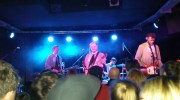
 I am a recent convert to the music of Everything Everything, a 4/5-piece based in Manchester, formed in 2007. This tour co-incides with the release of their 3rd album, Get to Heaven (left). We were first exposed to them on Jools Holland’s BBC music show, Later. I distinctly recall noting that they were rubbish. The lead singer, Jonathan Higgs, had a ridiculous hairstyle and sang in falsetto (too much Bee Gees imagery for me). Alas, my partner put me right. I bought the album and then booked us two tickets for this gig. And what a gig it was.
The set was a near complete rendition of the album, plus a few oldies, Kemosabe, for example, which was nominated as Best Contemporary Song at the 2014 Ivor Novello Awards, amongst others. The first thing to say is that the band have an extraordinary presence to which their TV performance did not do justice. Higgs engages with the audience and genuinely seems to be enjoying himself.
The second thing to say is that the band’s music is curious. I would call it Post-modern, a collage of styles, genres and techniques that, generally, work together. That is perhaps the skill. But lyrically – and certainly the songs on Get to Heaven – render this album worthy of attention. It is an acutely contemporary political statement/observation set to music. They are on the right side of the political spectrum. It does feel rather uncomfortable actually enjoying it when its subject matter includes Islamic State, the 2015 UK general election and mass shootings.
 But even with the knowledge about what the album is about, it is still rather esoteric. Take, for example, Reptiles, where the lyric “Oh baby it’s alright, it’s alright to feel like a fat child in a pushchair old enough to run. Old enough to fire a gun” is chillingly surreal if nothing else. The opening track, To the Blade, is seemingly about the beheading of captives by IS. It starts with “So you think there’s no meaning in anything that we do?” Distant Past kicks off the theme of time – “Take me to the distant past, I want to go back”. But why? The printed lyrics are not much help. “Saw off my stinking limbs, blood dripping down my sunken monkey chin”. Maybe. “Did you ever watch your life slide out of your hands?” (Regrets) and then the mild relief of “Spring, Summer, Winter, Dread, I don’t want to get older”. This is a beguiling apocalypse.
Bombing Syria
Filed under: Arab Spring, International, Politics | Tags: David Cameron, IS, Syria
Comments (1)  I was sickened by the attacks in Paris. As a regular attender at gigs, I can only imagine the terror of a gunman in a dark confined space, let alone two gunmen. Paris is special.
France’s President Hollande (left), however, is not. I sense that he is using this opportunity to reinvent himself as a statesman, he doing not so well on the being President gig. He seems now to strut around inspecting his troops and embracing photo-opportunities with the scenes of terror as a backdrop. Oh, and bombing Raqqa in Syria, the Capital of the Islamic State, the perpetrator of the atrocity.
Whilst Raqqa may be the Capital, it is also a city full of civilians, many living under occupation. Any attack will have civilian casualties. But for President Hollande it does seem now that they are dispensable in the pursuit of his statesmanship. For goodness sake, the perpetrators of the atrocities were French nationals living in Belgium! Arguably, the attacks should have been prevented as there seems to be plenty of evidence that the perpetrators were known to the authorities. Warnings had been issued. They were not acted upon. That is not to excuse them, but we spend a lot of money on the security services and have – and will continue to – voluntarily concede civil liberties in order for these individuals to be monitored.
IS is of our own making. The US/UK illegitimate invasion of Iraq is one component. Our continued support for Saudi Arabia, arguably the source of the IS-statehood – a variation of Wahabi-ism – where beheadings are legitimate forms of punishment and the subjugation of women institutionalised, is another.
And then there is the ally of the French across the Channel, the UK, with its very own statesman pretender, David Cameron. Now, it seems, it is time for him to push ahead with his much-heralded desire to bomb Syria. He argues that we, the British, are already bombing Iraq and the Syrian border at the moment is a bit nebulous (see chart, right). It is not really respected by IS and Assad is a bit holed up in Damascus to do much about any incursions. That is until the Turks blow out of the sky a Russian fighter and film the pilot being being shot at as he descends with a parachute. Spend 17 seconds over Turkey without an invitation and boom!
I can only hope that the UK Labour Party MPs do not accede to Cameron’s war mongering. I fear that they will. We seem not to learn the lessons of history – both near and far.
Picture of President Hollande: , Wikipedia
Graphic: Guardian newspaper: http://www.theguardian.com/politics/2015/nov/26/david-cameron-persuading-labour-mps-back-syria-airstrikes
Unease over corporate scandal: Olympus
Filed under: Finance and Economics | Tags: Kikukawa, Michael Woodford, Olympus
Comments (1)  Last night we watched documentary screened by the BBC called 1.7 billion dollar fraud: full exposure broadcast under the Storyville series banner. It is the story of an accounting fraud perpetrated over a 10 or so year period by the Board of the company to hide losses. It is an intriguing story told in an engaging way. Or so it seemed on first viewing.
The plot is simple. Successive presidents of the company have hidden losses by a variety of means – offshoring debt, buying shell companies, etc. – in order to keep up the share price and, ultimately, avoid bankruptcy. The knight in shining armour, as it were, was Michael Woodford, a humble Brit from Liverpool who started work for a subsidiary of Olympus 30 years ago and rose to be its president, at least in name. Without him, the scandal would have been ignored in Japan even though the story had been articulated in a small Japanese language financial magazine, FACTA. The story is even more complicated than the film presents.
Now there is no doubt that Olympus perpetrated significant accountancy fraud. And in order to do it, some rather dubious players – Yakuza and various Cayman Island firms – were employed. But it is also clear that the causes were not all they might seem. At first sight, the successive Presidents “instructed” their Finance directors, in particular Hisashi Mori, to move, hide and do whatever else to get rid of the debt for personal gain. Surely, should such losses be reported, they, as the person sat at the top would have to go? But what if the motive was not personal gain but rather the social welfare of employees? The capitalist west – or certainly the USA and the UK – has no real problem with this. Firms fail, employees find new jobs. Or not.
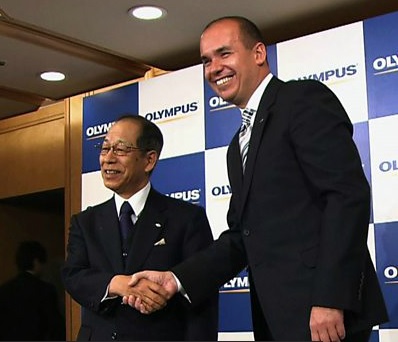
Tsuyoshi Kikukawa and Michael Woodford shake hands over appointment as President in 2011
But even a cursory knowledge about Japanese firms and Japanese business methods alerts us to the non-universality of this approach. The firm may be bigger than the President (despite what Michael Woodford says about – Tsuyoshi Kikukawa – in the film) with the livelihoods of employees, families and pensions all locked into the success of the firm.
Moreover, the losses have their origins in global capitalist systems. First, the Plaza Accord of 1985 where a group of countries including Japan, the USA, UK, France and West Germany, decreased the value of the Dollar relative to the Yen. The purpose of this was to make the US more competitive and its goods and services cheaper. The downside was that Japanese products became more expensive, including Olympus products. Whilst this was not threatening, Olympus’ profits were affected. In order to keep them up – and this was not unique to Olympus – firms invested in stocks, bonds and other financial “instruments”. When the crash of 2008 came, these companies found their balance sheets compromised. Olympus acted to protect itself from those losses.
In the film, Michael Woodford is portrayed as being a victim. He was badly treated by Kikukawa particularly. For example, he tells the story of how he was invited to a lunch meeting where he saw that he had been served a Tuna sandwich and the other Japanese participants, Sushi, as a way of demonstrating his inferiority vis-a-vis his Japanese counterparts. He also tells of how he feared for his life when on the day he was sacked. But what was also telling is that Michael Woodford did not speak any Japanese. Now I am far from qualified to comment on this, but it seems to me that language is the most important aspect of culture. It is clear that some of the Japanese (writing) signs are made up of concepts of honour, loyalty, etc. To understand the language is to understand the culture. One cannot hope to understand Japanese capitalism in English. Maybe that is the biggest scandal, that Michael Woodford thought that he could. Or that capitalism speaks a universal language?
Picture: Olympus HQ ja:利用者:Kamemaru2000
Kikukawa and Woodford: screengrab from film
B&H marketers seem to go to the wrong gigs
Filed under: Cigarette advertising | Tags: B&H, Benson and Hedges
Leave a Comment  It seems to me that only at truly awful gigs is it better to stand outside with a bunch of nicotine addicts rather than enjoy to music of a live band. And even then I am not sure. Seemingly not in B&H world (left). The caption reads “Inside plays the band. Outside the music”. Essentially, spending time with/being ignored by (as the woman seems to be) two unshaven men is better than watching Richard Hawley, for example. I think not.
Richard Hawley, Brighton Dome, 25 October 2015
 Richard Hawley (left), denizen of Sheffield and purveyor of guitar baritone romance and melancholy is difficult to match. We were quite late to the party and had to wait even longer to get to see him. His first words when he came on stage were “we’re back!” For some, maybe.
He played for getting on 95 minutes with his band Shez Sheridan (best mate and guitar), Dean Beresford (Drums), Colin Elliot (bass) and Jon Trier (keyboards and known to Hawley as the Librarian). Good value, if nothing else. With a new album to plug, one might have expected a full track listing. But this is a rather humble and knowing Richard Hawley. We were treated to the full range across the repertoire and the six-and-a-half albums of which I have four, including his latest, Hollow Meadows.
He dedicated to his audience a track from Hollow Meadows, Heart of Oak, as a metaphor for his loyal followers. That was nice. We were treated to the romantic hits, Open up your Door (from Truelove’s Gutter), The Ocean (from Coles Corner) and Tonight the Streets are Ours (from Lady’s Bridge). For those in the audience wanting louder – and the audience was a shade vocal, almost hecklers at one point – got a good chunk of his very loud album, Standing at the Sky’s Edge including the title track, She Brings the Sunlight and the quieter Don’t Stare at the Sun. This is an album, so loud is it, that one needs a lyric sheet. If you want loud, this is the section of the gig for you.
So, the music was great and sustained. The banter good natured. But the care with which the set was played 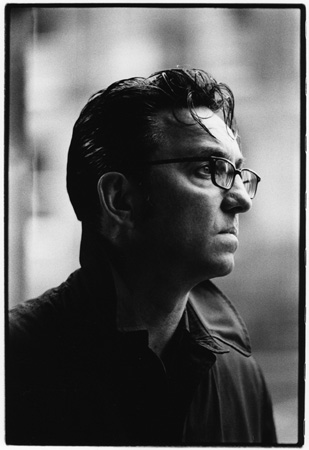 impressed me no end. Hawley has a guitar dresser or caddy (as golfers have). The said character was a wisp-like man in jeans and a tee-shirt armed with a duster and a keen ear for tuning. Each of Hawley’s guitars (at least eight) got his tender loving care. Tuned to perfection and the dusted so that they sparkled in the lights. Hawley’s attire is equally choreographed. It might only be a pair of jeans and denim jacket. But it is an ironed pair of jeans and denim jacket.
Here is the Independent’s review of the same gig: http://tinyurl.com/p68dmhe
Pic (right): http://www.richardhawley.co.uk/photos/promo/
At the time of writing the remaining gigs are the following:
Wed October 28 2015 – SCARBOROUGH Spa
Fri October 30 2015 – DUBLIN Vicar Street
Sun November 01 2015 – LEEDS O2 Academy Leeds
Mon November 02 2015 – MANCHESTER Albert Hall
Tue November 03 2015 – GATESHEAD Sage Gateshead
Thu November 05 2015 – GLASGOW Barrowland
Fri November 06 2015 – SHEFFIELD Sheffield Arena
Sun November 08 2015 – LONDON Roundhouse
Mon November 09 2015 – BRISTOL Colston Hall
Tue November 10 2015 – SOUTHAMPTON O2 Guildhall Southampton
Sat February 20 2016 – SOUTHAMPTON O2 Guildhall Southampton
Sun February 21 2016 – NORWICH The Nick Rayns LCR
Tue February 23 2016 – LONDON Eventim Apollo
Wed February 24 2016 – MANCHESTER O2 Apollo
Sun February 28 2016 – CARDIFF Cardiff University
New death delivery method
Filed under: Cigarette advertising | Tags: Lucky Strike, marlboro
Comments (1)  I wish I was as advanced as the product developers at Marlboro (bottom rigtht) and Lucky Strike (left). Is this the innovation equivalent of vinyl to cassette in the music industry (i.e. not really)? So, there are new filters on the market delivering “a cleaner taste” (Marlboro does not even bother to accommodate the language of the smoker, in this case German) and mildness through a “new flow filter” (Lucky Strike).
It does seem that the designers of the Marlboro poster did not trial it properly. On this example, if the poster is not perfectly pasted on the billboard, it does not matter how advanced the filter, the cigarette itself seems a shade, what can I say, bent. Never mind, advanced cigarettes are just as effective at delivering death as their predecessors.
Increasingly undemocratic
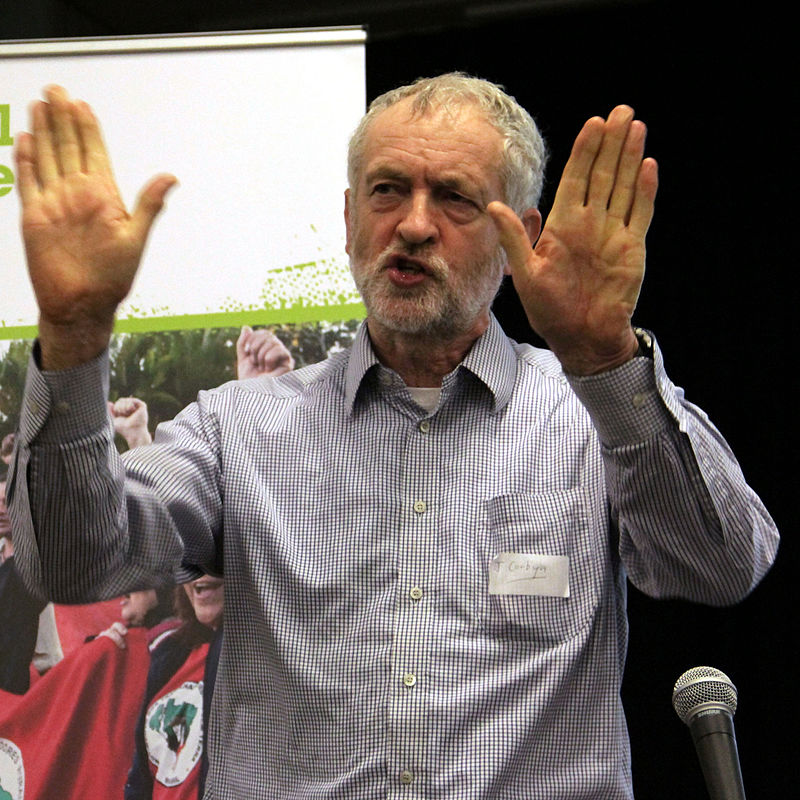 Some regular readers of this blog have expressed a disappointment over the lack of political content in recent months. To paraphrase, “I do not care about your tandem tour or cigarette advertising, but I do like to read what you think about…Jeremy Corbyn (left) or whoever/whatever”. Like a few of my peers, since the UK General Election in May, it has been quite difficult to muster much in the way of enthusiasm for writing about politics in the knowledge that a significant minority of the population voted for a bunch of lying, thieving and privileged men (largely) to run (down) the country, destroy the trade unions and the Labour Party and oppress working people.
What Cameron said about Jeremy Corbyn at the Tory Party conference earlier this month was outrageous slander. It is true that Corbyn was elected the leader of the Labour Party against all of the odds and in spite of the best efforts of the Tory-lite brigade within the party and their media friends. It is refreshing to hear a leading politician publicly renounce the use of nuclear weapons, expose the lie of the deficit, decline to sing the national anthem and bow before the queen.
Let’s just deal with the national anthem and patriotism. I regard myself as being fiercely patriotic without being nationalistic. I do not sing the national anthem, even at the Proms of which I am passionate. However, as a republican atheist, it is quite difficult to retain authenticity if one starts singing “God Save the Queen”. Surely? Corbyn was respectful at the Battle of Britain memorial service. He just did not sing the words. Moreover, if one listens to national anthems the world over, mostly they say something about the country, its people, the landscape, etc. The British National Anthem says nothing about these things. It is unsingable for any rational patriot.
Another thing that defines Corbyn is his commitment to democracy. OK, sometimes leadership is necessary, and merely listening might not be enough. The Conservative Government realise that their programme cannot be taken through the UK parliament and be ratified. There is simply not enough support for the programme in both houses. So what does the Government do? Find a way of not taking policy through normal channels, that’s what. For example, there is a law against new selective grammar schools in the UK. They are regressive and favour the already privileged children of middle- and upper-class parents. So instead of trying to get the legislation through parliament – which the Government knows is impossible – it sanctions the establishment of a new school as an annex of an existing school some 20km away, claiming that it is not a new school.
Then there is the issue about sale of social housing units – housing association properties to you and me. Notwithstanding the fact that attempts to sell off social housing stock at a discount is a bad idea as it transfers much needed affordable housing into the private sector funded by us, the taxpayer, to benefit private landlord (this is what happened with the sale of council houses in the 1980s). Additionally, Housing Associations are separate entities from the state and government. The houses are not the Government’s to sell. Yet. Again, knowing that it cannot get this measure through the Parliament, what has the Government done? Well, it has negotiated with the National Housing Federation an extra-parliamentary deal. According to the Guardian newspaper “Housing association leaders believe a voluntary deal will guarantee their independence as charities and private housing providers, and head off a full-scale battle with government, which has been critical in recent weeks of association performance and efficiency.” In other words, taking on the Government would undermine charitable status, a central plank of their identity and constitution. Essentially, they would then just become private companies, like any other. Or more likely public assets and available for sale. Fortunately, some Associations are resisting this bullying. Overwhelmingly.
Picture: Jeremy Corbyn by JMiall, Wikipedia
Never smart, always square
Filed under: Cigarette advertising | Tags: John Player Special
Leave a Comment  Talking of John Player, here’s the latest offering from the JPS brand’s autumn campaign. As if smoking is not enough of a death wish, this bloke (wearing his suit and satchel) is smoking whilst on a skateboard on a busy road probably following lots of VW diesel cars just to show how cool he is. To make matters even worse for the brand, its own strapline is “Born that way…” Indeed!

