Flight Behaviour by Barbara Kingsolver, book review
This is my review of Barbara Kingsolver’s novel, Flight Behaviour. It has plenty of spoilers so read on only if you have already read the book or do not intend to.
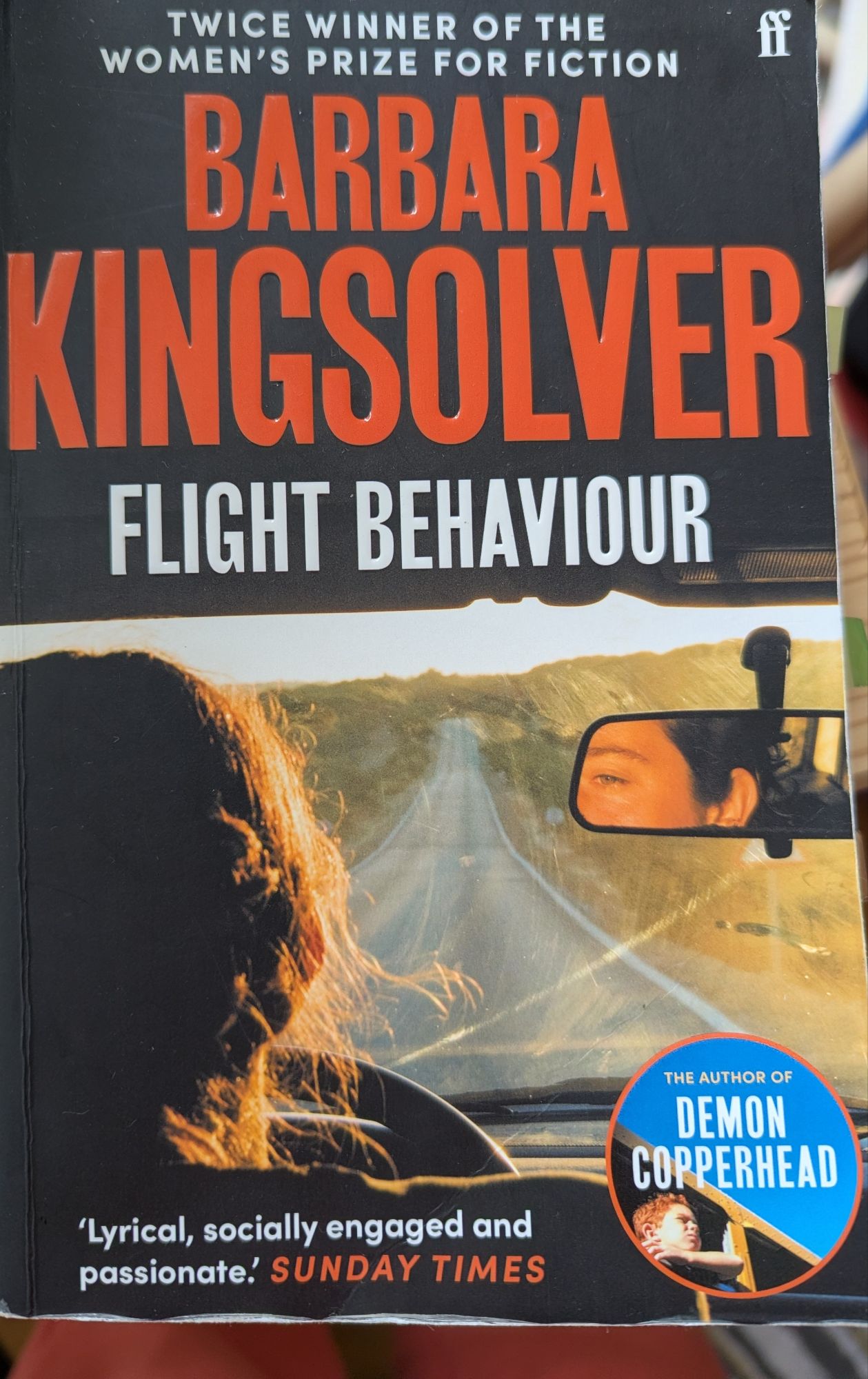
I was a little apprehensive about this book, it did not look like anything I would want to read and 600 pages of something that one does not want to read is beyond the call of duty. My conclusion is simple, although I am unlikely to claim this as a favourite to join me in my tomb, for a book published in 2012 it shows remarkable perceptiveness. It also addresses climate change from the perspective of farming families in rural Tennessee. The family of Dellarobia Turnbow, her husband Cub, their two children, Preston and Cordie, and the dog, Roy, who live near to the fictional Feathertown – a place that we can all imagine. Nearby live Cub’s parents Hester and Bear who own much of the forested land as well as property.
New arrivals, new thinking, new opportunities
Times are really hard on the farm, not least because of the relentless rain. Unusual but increasingly common because of climate change. Our protagonists are not wholly aware of the causes, only the effects. Bear decides to cash in on the wood in his forests after a lumber company offers him money to clear it. He agrees to wait until the butterflies have migrated before the felling starts.
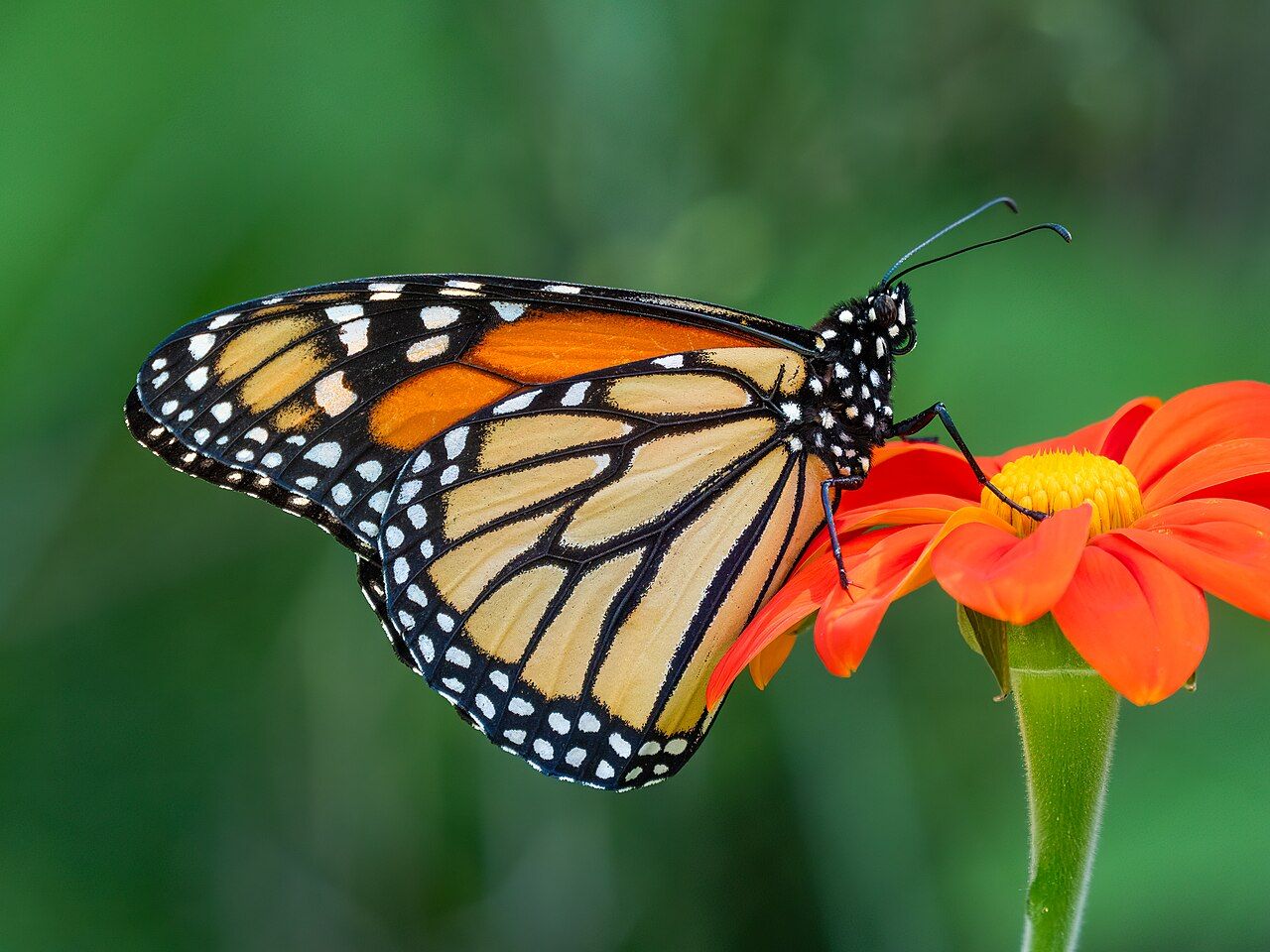
Central to the exploration of the changing lives of of the characters is the unexpected arrival and discovery of a huge population of Monarch butterflies (below right) in the forest. On seeing them for the first time by accident, Dellarobia has somewhat of an epiphany as she and her son become obsessed with the lives and survival of the butterflies that are normally expected to over-winter in Mexico. We learn that the habitat in Mexico has been destroyed, hence the unexpected migration.
Dellarobia becomes somewhat of a local celebrity and the spectacle becomes an attraction which Hester and Bear try to monetise unsuccessfully. The television media (News Nine) take a particular interest (pp274-288) and journalist Tina Ultna exploits a naïve Dellarobia through an interview in which she reveals that she went into the forest to kill herself (not true, it was to start an affair in the old hunting hut, but the cause was the same, alienation). On seeing the butterflies she realised that she was too focused on herself and not on the wider world including her children. Some weeks later Tina and different cameraman, Everett, came back for a follow up that is much more revealing but less reportable (see below).
A series of visitors begin to change everything. First a Mexican family call on them (pp132-142). The child, Josefina, is in Preston’s class at school. The parents Lupe and Reynaldo are not so proficient in English. They come and request to see the butterflies. They do, of course, have a parallel experience of being displaced from Michoacán (Angangueo) like the butterflies (it is a bit of a crude rhetorical device, but there are quite a few of these in the book). Indeed, they used to be guides in the forest for visitors coming to see the butterflies, such a spectacle they are/were. But then came the flood. All was gone. Be under no illusions on this point as the novel progresses.
The most significant visitor is a scientist called Dr Ovid Byron (pp143-174) who changes everything for the family. He is a 40 something tall and handsome black man and drives a rented orange VW Beetle. In an exchange with her closest friend, we get the following:
“Wait a sec,” Dovey said. “He flew across the whole damn country and drove to your place to see butterflies?”
“That is correct”
“Did he seem, I don’t know, insane?”
“How would I know? I spend my whole life with people that want to eat thumbtacks off the floor.”
Without hesitation she invites him for supper with the family after coming back from the mountain to look at the butterflies. Dellarobia likened him to Sidney Poitier because of the movie plot. At supper he charmed both Dellarobia and Preston. Dellarobia was amazed to find that scientists exist that specialise not only in butterflies, but to these butterflies. So much so that she progressively learns from Byron not only about Monarch butterflies but natural history more widely and the impact of climate change, a subject that was something they were living through but where the trust, ultimately, was in the hands of God. Preston, equally becomes beguiled by this stranger whose knowledge he can aspire to in a way that his mother, and particularly his father, cannot.
From this moment on, Dellarobia and Preston are different people. Cub is different because of the impact of Byron on his family. For a matter of weeks, Dellarobia is employed by Byron along with a research team of Mako, Bonnie and Pete (who lodged nearby) plus local and not-so-local volunteers, many of whom are hardy souls living rough in the forest throughout the winter – albeit a mild one. Byron himself lives in a mobile home parked on the farm and an outbuilding is converted into a laboratory, for a rent of course. Dellarobia’s employment on her own terms provides her with a small income that enables a degree of autonomy and the ability to provide a few of the presents that she has wanted to buy her children but couldn’t. But more important is Dellarobia’s education – learning by doing. Everything from counting, sexing, measuring, looking out for food sources and signs of flight. She realises that human life is intertwined with that of the natural world and humans’ impacts not only lead to extinctions (Byron believes that they are watching a species extinction) but hardship for human beings as well. Farming becomes uncertain; security, too, and migration becomes necessary for those whose habitats have changed so much that their lives cannot be sustained there.
Ephemera
Perhaps one of the most telling chapters, Chapter 11, is the visit to a very large second hand store in the nearby town of Clearly visited by Dellarobia, Dovey and the children. The shop is a magical place full of useful stuff ranging from bedding to toys, homeware to clothes, bicycles to books, aquariums to wigs, and so on. All at exceedingly affordable prices. The merchandise largely comes from house clearances, but the symbolism of this extended chapter speaks volumes. It tells us that:
- There are a lot of poor people, (even) in modern America
- Used stuff has value
- We are reflected in all of the things we own; we reveal our identities often after death
- It lays bare the possessions that humans acquire through life
- [resale] is a metaphor for genetic mutation (p439)
- There is such a thing as society (even in highly individualised societies, or maybe particularly in such societies)
- People come together to trade, exchange, commune and replenish.
Media culpability
And so to the second encounter with Tina Ultna and cameraman, Everett (pp498-510). Again, arriving without warning, Dellarobia (with Dovey) takes her to meet Byron, a man who is not keen on talking to the media about his work. After some goading he lets Tina have copy, but not of the kind she wants or expects. This is a long exchange, but here is the critique of media coverage of the climate crisis:
“…What is your name again?”
“Tina Ultna,” she said in a different, off-camera voice.
“To see only beauty here is very superficial. Certainly in terms of news coverage. I would say it’s off message.”
“You’re saying there’s a message here? And what is that?”
“…After a long pause, Tina tried again. “Dr Byron, something new is happening here. Most of us are struck by the beauty of this phenomenon. But” she cocked her head theatrically as if burdened by a keen insight – “do you think it might possibly be a sign of some deeper problem with the ecology?”
“Yes!” Ovid cried. “A problem with the environment is what you are trying to say. Pervasive environmental damage. This is a biological system falling apart along its seems. Yes. Very good, Tina Ultna.”
“And briefly, Dr Byron, tell us the nature of the problem.”
“Briefly? Unseasonable temperature shifts, droughts, a loss of synchronization between foragers and their host plants. Everything hinges on the climate.”
She blinked a couple of times. “Are we talking about global warming?”
“Yes, we are.”
Tina made a downward wave at Everett to stop the camera, and bizarrely her own animation clicked off too, her face slack as she walked across the lab, maybe starting to feel homesick for her average flaming interstate wreck. Tina checked something on the camera, then walked back to her interview spot and spoke in a subdued voice. “The station has gotten about 500 e-mails about these butterflies, almost all favourable. Is this really where you want to go with this segment? Because I think you’re going to lose your audience.
Ovid looked genuinely startled. “I am a scientist. Are you suggesting I change my answer to improve your ratings?”
Byron gets angrier as the dialogue progresses. It ends with Byron telling Tina that humanity has been drifting for decades but now we are at Niagara Falls in a canoe. Tina responds by saying that at least if this was Niagara Falls “I’d have a decent background.” On they go. Byron tells Tina that she is part of the problem, dancing to the tune of her sponsors and not doing real inquiry.
All the while, Dovey was recording with her phone. She had an unedited version of the exchange and very quickly it was on the internet.
Religion
Religion, of course, plays its part in the story. This is a religious community. Though there is a lot of doubt. Hester gave up after a miscarriage (not her own but she had given up a baby for adoption) and labelled Dellarobia a 9/11 Christian, “in the event of an emergency, call the Lord” (p82). The local pastor, Bobby Ogle, was an attraction beyond Feathertown and is more than a cleric. He set up his own “no heller” church. He could look past petty things. “[H]e was not into things of this world. Just love.” He also takes a role of mediating the change for and amongst those in his congregation. So much so that he has a significant influence over the fate of the trees once the butterflies have gone.
After church (chapter 13) the family meet Pastor Ogle in his office to discuss the logging contract. Not before, however, having sung “Oh this earth is a garden, the garden of my Lord, and He walks in His garden in the cool of the day.” amongst other references in a distinctly organic sermon. Surprisingly it was Cub who started the bidding pointing out the potential for mudslides and contamination of the well water. Pastor Ogle offered Bear alternatives, including selling equipment (back to the secondhand theme) and how community can help to send work his way (keeping the machine shop open). Bear stayed firm. Then the insults: “Bear apparently at the end of his argument rope, responded by calling Bobby [the Pastor] a tree hugger.” (p556). The Pastor responded with “…what have you got against the Lord’s trees?”
That is not the end of the story, suffice to say Dellarobia and Cub come to an arrangement over their marriage and the duties to their children, but not before a climate-related natural event occurs that parallels the experience of the Lupe, Reynaldo and Josefina. We observe the events with little real surprise. Kingsolver is not the subtlest of writers. It does leave us with a few questions but they are overridden by the change to all brought about by the butterflies as symbols of our own fragilities, vulnerabilities and detachment from the natural world that supports us.
Pictures: Monarch butterfly (Brooklyn Botanic Garden, CCBY-SA 4.0)
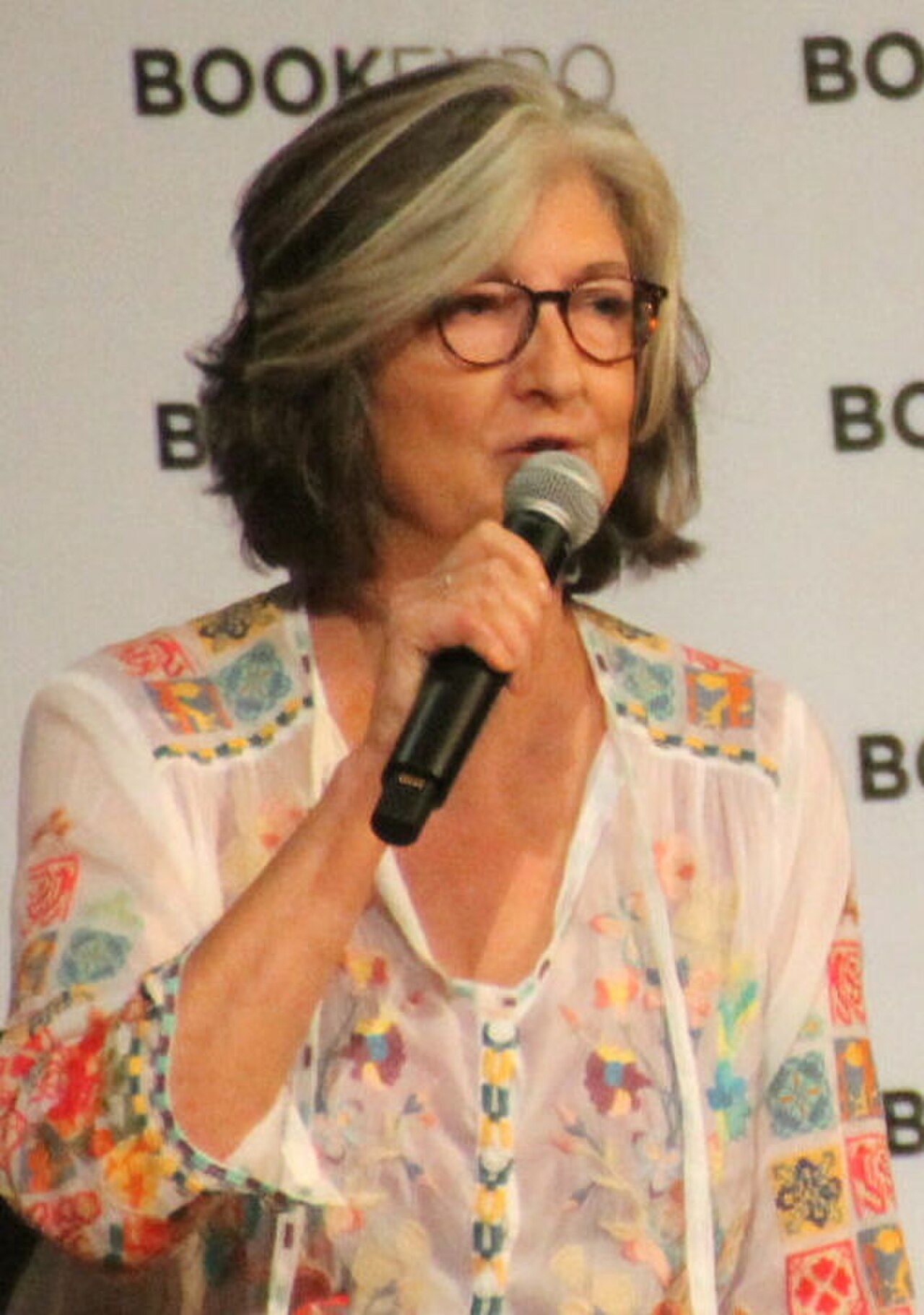
Barbara Kingsolver: Terry Ballard – https://www.flickr.com/photos/terryballard/40684622480/


Leave a Reply