Archive for October, 2026|Monthly archive page
The day the Earth stood still (1951 and 2008)
Filed under: Environment | Tags: climate change, film, Gort, Keenau Reeves, Klaatu, movie, movies, Ringo Starr, sci-fi, Science fiction, science-fiction, The Day the Earth Stood Still
 Leave a comment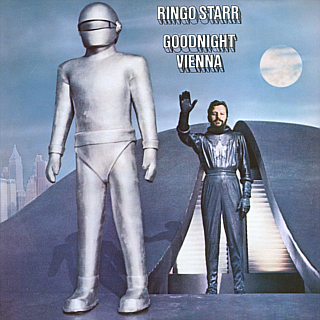
I think my first encounter with the 1951 original was not the film itself, rather the cover of Ringo Starr’s album, Goodnight Vienna (left). I also remember the BBC running a series of evening sci-fi films – the winter Monday night treat starting after the 9 O’Clock news (back in the 1970s). Too late to watch to the end, but I always tried to start them. Another film in that series, I recall, was The Incredible Shrinking Man. Profound, I with hindsight.
Spoiler alert – if you intend to watch either of these films, do so before reading further this review.
Of course I have been watching quite a bit of sci-fi in addition to my reading. The theme of my film watching has been climate change (The Road, for example). In the 2008 remake, Klaatu (the spaceman) comes to Earth to warn of the consequences for humankind of further erosion of the Earth systems. In the original carried a classic cold war message against militarisation and extending it beyond the Earth. It is a time of atomic weapons and nascent space exploration. It is a chilling message delivered firmly by Klaatu as he departs. Gort, his robot, is an example of a robot that is programmed to protect Klaatu’s race from violence and war, They are powerful peace keepers that can effectively vaporise military equipment and personnel.
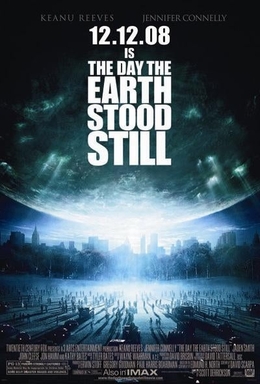
In the 2008 remake, Gort has a slightly different purpose. Whilst the robot is made of a material that cannot be penetrated by humanity’s most powerful diamond drills, Gort cannot be damaged. Whilst Gort is enclosed, much to the delight of the military personnel trying to eliminate the alien threat, the robot is not disarmed. Indeed it is programmed to convert itself into tiny insects that can pulverise buildings such as a sports stadium. The reason for Gort’s transformation is humanity’s rejection of his request to speak to the United Nations. This is an interesting critique of the institution. My goodness, a humanoid space traveller, that speaks a common human language, is denied access to the only representative global body of nations.
Klaatu’s human ally, just as in the original, is called Helen Benson. In the remake Helen is an astrobiologist called on to facilitate the US State’s understanding – and handling – of the approach of a fast-moving object that looks like it will crash into the Earth with devasting effects. Of course, the craft, such that it is (it is a spherical object of light), slows and lands conveniently in Central Park (the classic flying saucer of the original lands in The National Mall in Washington). The Helens both have a role in allowing Klaatu to understand humanity’s humanity. In the remake Helen pleads with Klaatu to give humanity a chance to change. In the original, Helen tries to help him to safety after her fiancé betrays him in pursuit of fame and riches.
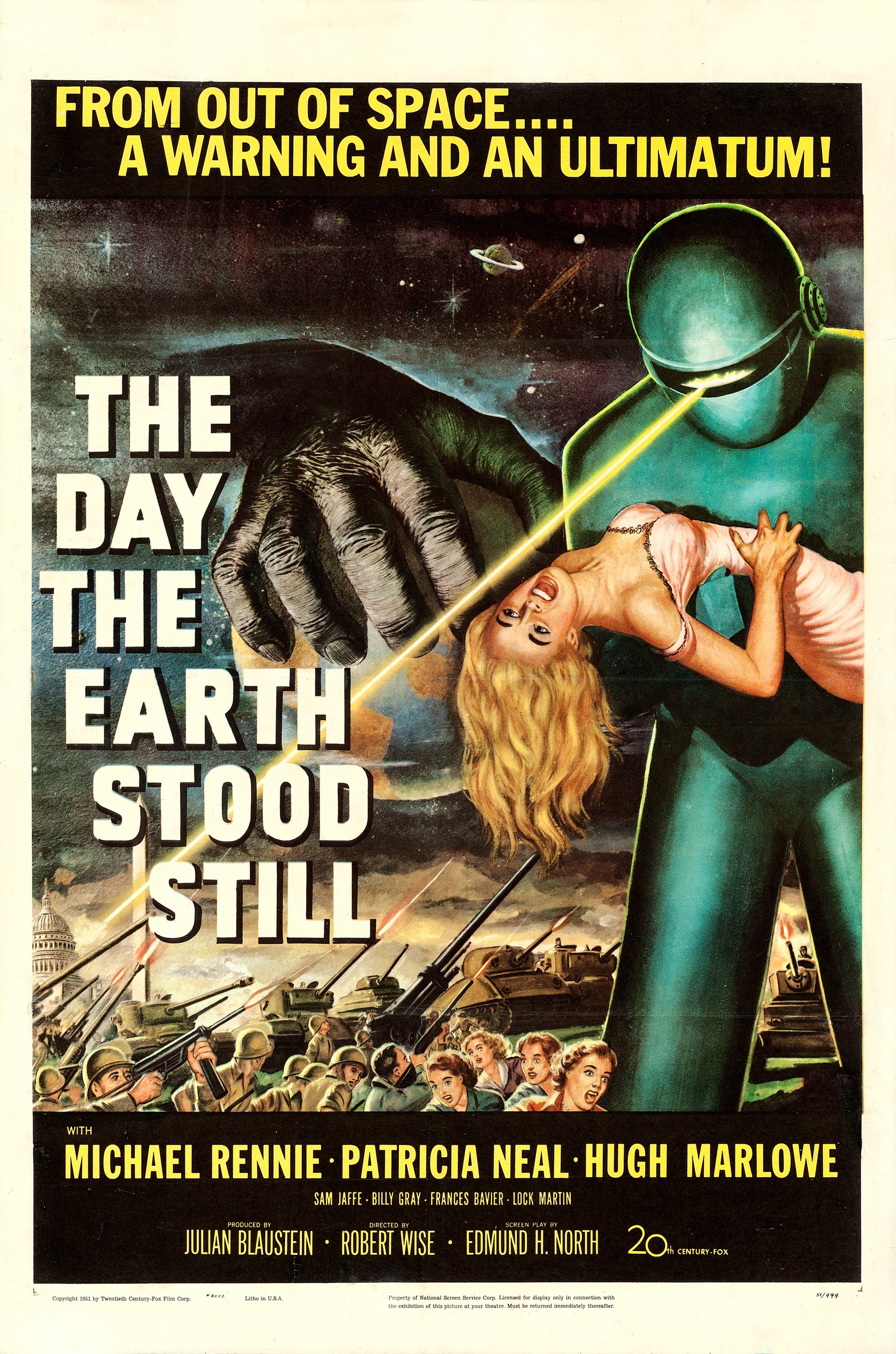
In both films there is a Professor Barnhardt. In both cases Klaatu assists the Barnhardt in solving one of mathematics’ most troubling problems (quaintly on a chalk board). In the original, Klaatu is gets Professor Barnhardt to convene a grand meeting of international scientists to address them. In the remake, Professor Barnhardt, played bizarrely by John Cleese, makes the case for humanity arguing that the species is on a precipice, just like Klaatu’s own planet in an earlier time.
There is also a role for children. Helen Benson from the original, has a precocious son called Bobby. He entertains Klaatu in and around Washington. Klaatu visits the Lincoln memorial and defers to his greatness after reading the inscription. Ultimately, there is wisdom in humanity as well as destructive force. In the remake it is the child who betrays Klaatu, he himself accepting the dominant media narrative that Klaatu must be caught and killed. After Helen (who is his step mother and not his birth mother) is snatched by the military, he and Klaatu have to negotiate a forest in the pouring rain and find a way to get back to New York and the ship. Meantime, Helen convinces the Secretary of Defense, Regina Jackson, who is leading the military response, that she alone can convince Klaatu to stop the flight of the destructive insects. She rendezvous with Klaatu and Jacob and along with a colleague (who dies as the SUV they are driving in unwittingly hits mines that have been laid). The boy is fatally wounded by the insects but is – for want of a better word – resuscitated to rejoin humanity. Klaatu’s own regenerative abilities are quite something (in both movies).
Some concluding thoughts
I started with the remake. Keenau Reeves as Klaatu was a suitable choice (I have always thought he was a bit wooden). That aside, the ecocide message in 2008 was quite something. It predates the Paris Agreement, though the IPCC had published ever-increasingly worrying reports and the Conference of the Parties (CoPs) were well established albeit fractious. The sense that aliens felt the need to save Earth’s flora and fauna from its most destructive product of evolution, humans, is quite something. Because 18 years’ on, it does. We are introduced to the idea that Earth, in cosmic terms, is special indeed. Not unique, but certainly rare. The other planets hosting life cannot allow Earth to go sterile again. This is not really explained, but it is an interesting concept.
The military play a huge role in both films. Actually, the mobilisation scenes are impressive, and I imagine on an Imax screen, doubly so. Though in both cases it illustrates the real impotence of the military when confronted by forces greater then themselves. Especially the forces of peace. The military leaders are depicted negatively with little sense of empathy, diplomacy and understanding. Kill, kill and kill. In the original, the standing still part is a 30-minute global power cut. In the remake, Klaatu leaves Earth with a permanent power cut. An opportunity for humanity to restart (or at least reset). This is a fair ending as, clearly, the film could not end with the destruction of human society. I suppose the weakness here is that humans will reconnect the power grid and carry on where it left off. If the original has any lessons, it is that Klaatu’s message was largely ignored. Our current trajectory will see off civilisation without the intervention of other planetary organic life forms.
Album cover source: By Apple Records/EMI – https://store.ringostarr.com/products/ringo-starr-peace-love-goodnight-vienna-lp?variant=4667045740585, Fair use, https://en.wikipedia.org/w/index.php?curid=62166849f
Poster (2008) By The cover art can or could be obtained from Collider.com or 20th Century Fox., Fair use, https://en.wikipedia.org/w/index.php?curid=20122070
Poster 1951: By “Copyright 1951 by Twentieth Century-Fox Film Corp.” – Scan via Heritage Auctions., Public Domain, https://commons.wikimedia.org/w/index.php?curid=86859809
Bonfires
Filed under: Environment, History | Tags: bonfires, climate change, environment, global-warming, Guy Fawkes, Hastings, pallets, sustainability
Leave a comment I have come to realise in 2026 that the challenge of climate change means that lives and lifestyles have to change if we are to survive. But all around I see business-as-usual, with the odd bit of recycling and kitchen waste collections. I have to start saying things that are unpopular. So here goes…
It is bonfire season in the UK. We mark the foiling of the so-called gunpowder plot to blow up the British Parliament and see off the Protestant king. In a nutshell. We do this by adding huge amounts of carbon dioxide into the atmosphere along with a cocktail of other toxic chemicals and with explosives. Usually there are casualties, but they are either unlucky or stupid. It is worth it.
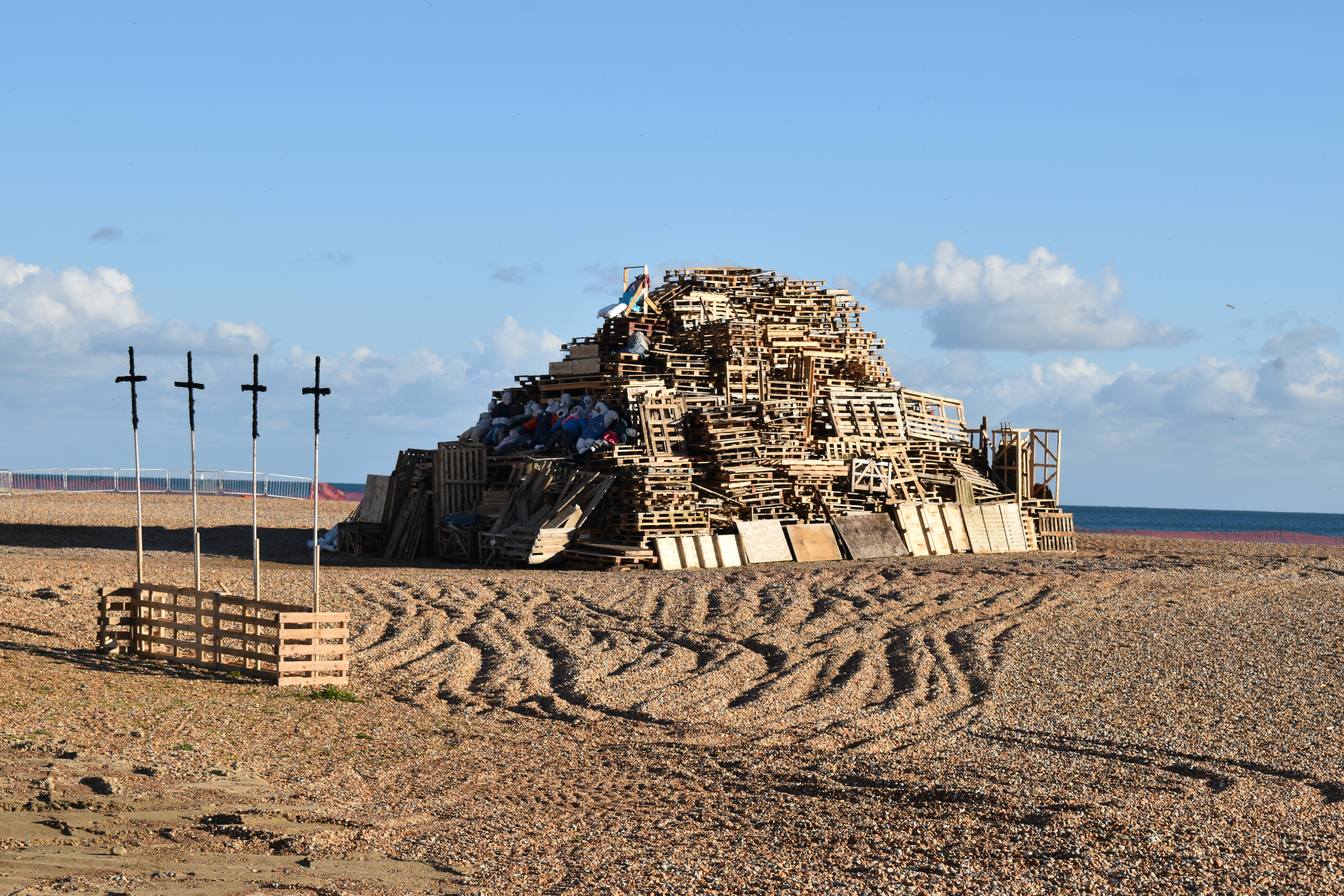
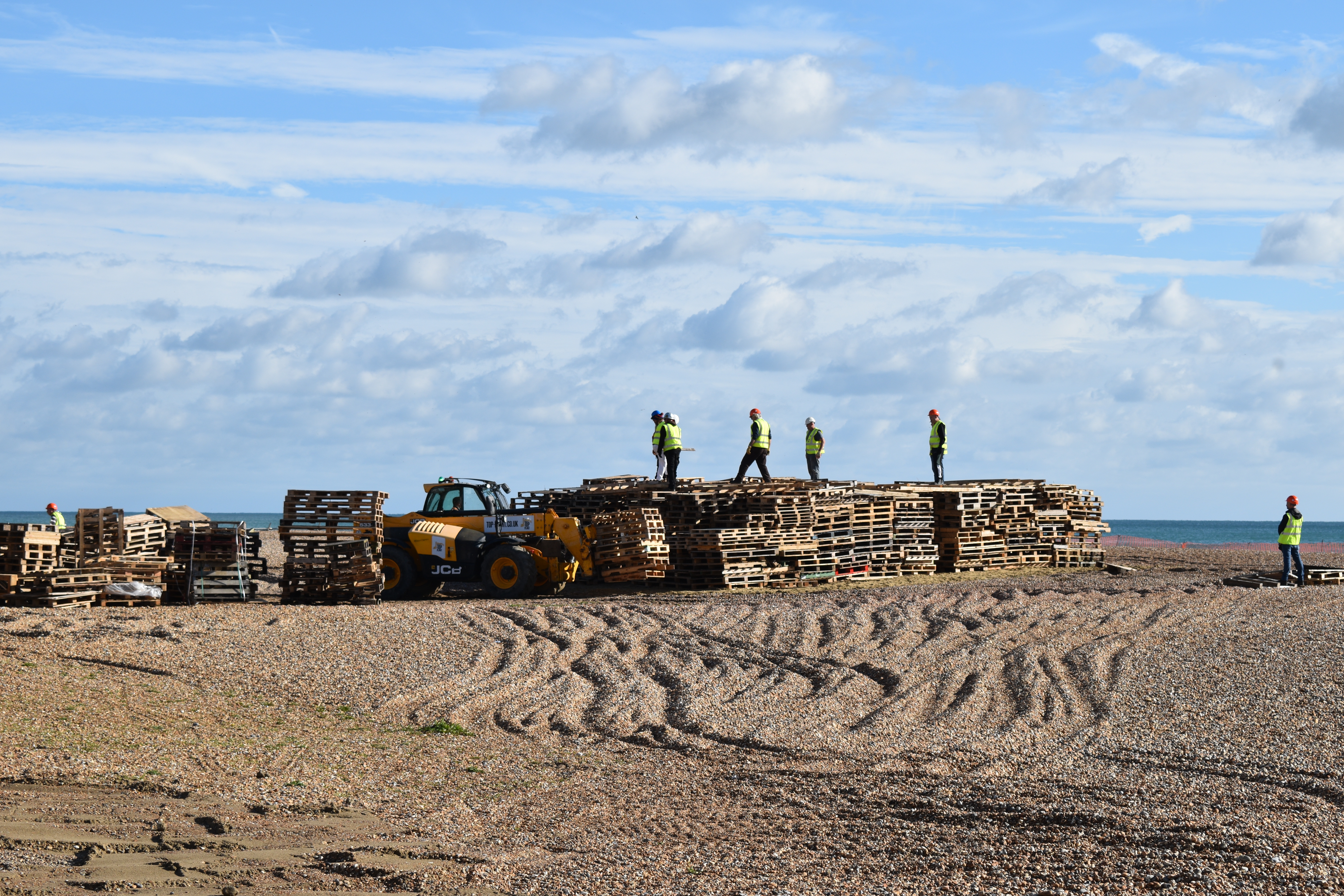
I took a late stroll on 15 October, in my adopted town of Hastings, UK. I came across an area of the beach that had been cordoned off and some pallets piled up inside the cordon. The next day I ventured back in daylight to take a photograph (left).
What is going on? The Council has declared a climate emergency but is allowing the release of c29 tonnes of carbon dioxide – the most abundant of the greenhouse gases – currently locked into the wood from trees that captured it from the atmosphere when they were growing. The Council enables this for no reason at all (of course, this is disputable). In addition to carbon dioxide, the burning of the wood released potentially toxic chemicals (wooden pallets are treated with a range of chemicals such as fumigants and preservatives), and dangerous particulates. It stresses wildlife and pets.
It does not come cheap, either. There is an opportunity cost here. Let us add up the costs: security, fencing (even the fountain is cordoned off), pallets, fireworks, litter clearance (strewn everywhere), medical support, use of resources to manufacture and sell tat…
How much carbon?
I assume 800 pallets. Each pallet weighs approximately 20kg. Each pallet is, again, roughly, 50 per cent carbon. That is 10kg carbon per pallet and 8000 for 800 pallets. When it burns it oxidises. The formular is CO2=C×44/12. So that is 8000x(44/22)=29.3 tonnes. If the calculation is incorrect, please let me know.
Incidentally, the average per capita emission is 7,000 kg. The average Briton, estimated by Mike Berners-Lee, has a footprint of 13,000 kg. It is not negligible. Every kilo matters because every fraction of a degree Celsius of warming matters.
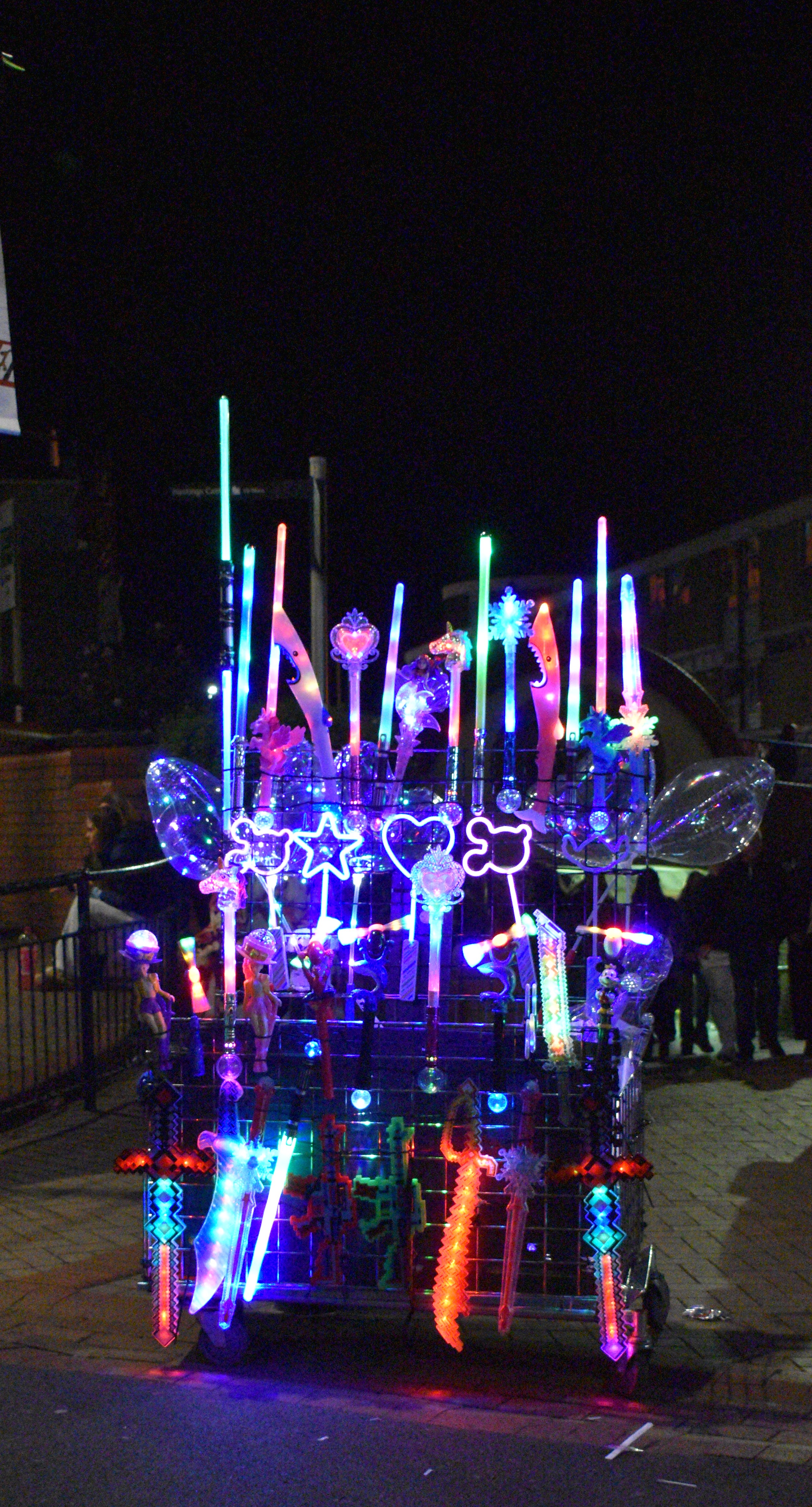
For all of the official events, there is always a fringe. Descending on the town are the “tat” sellers. I do not know if they are licensed, but they seem very organised. They sell toys that are irresistible to children as they are brightly coloured and glow very much in the dark (right). They are single use. They will be thrown away. And my goodness, do they shift this tat. Behind this stuff is a climate disaster in the making, notwithstanding the cheap labour exploited to make it and the addition carbon generated in shipping.
You are stopping people from having fun – get a life
At this time of the year, these bonfire events are taking place across the country ahead of the climax on 5 November. As a kid, of course, I loved this night of the year. November 5th would fall on the week after our school half term. That whole week would be spent collecting wood to build the bonfire. (Pallets were not an option at the time.) Children would go house-to-house with their “Guy” (Guy Fawkes, one of the plotters who managed the explosives) to collect money to buy fireworks. We would have to defend our wood from other gangs who were looking to steal it for their own fire. The idea that we might collaborate did not come into the equation. It was pre- (knowledge about) climate change.
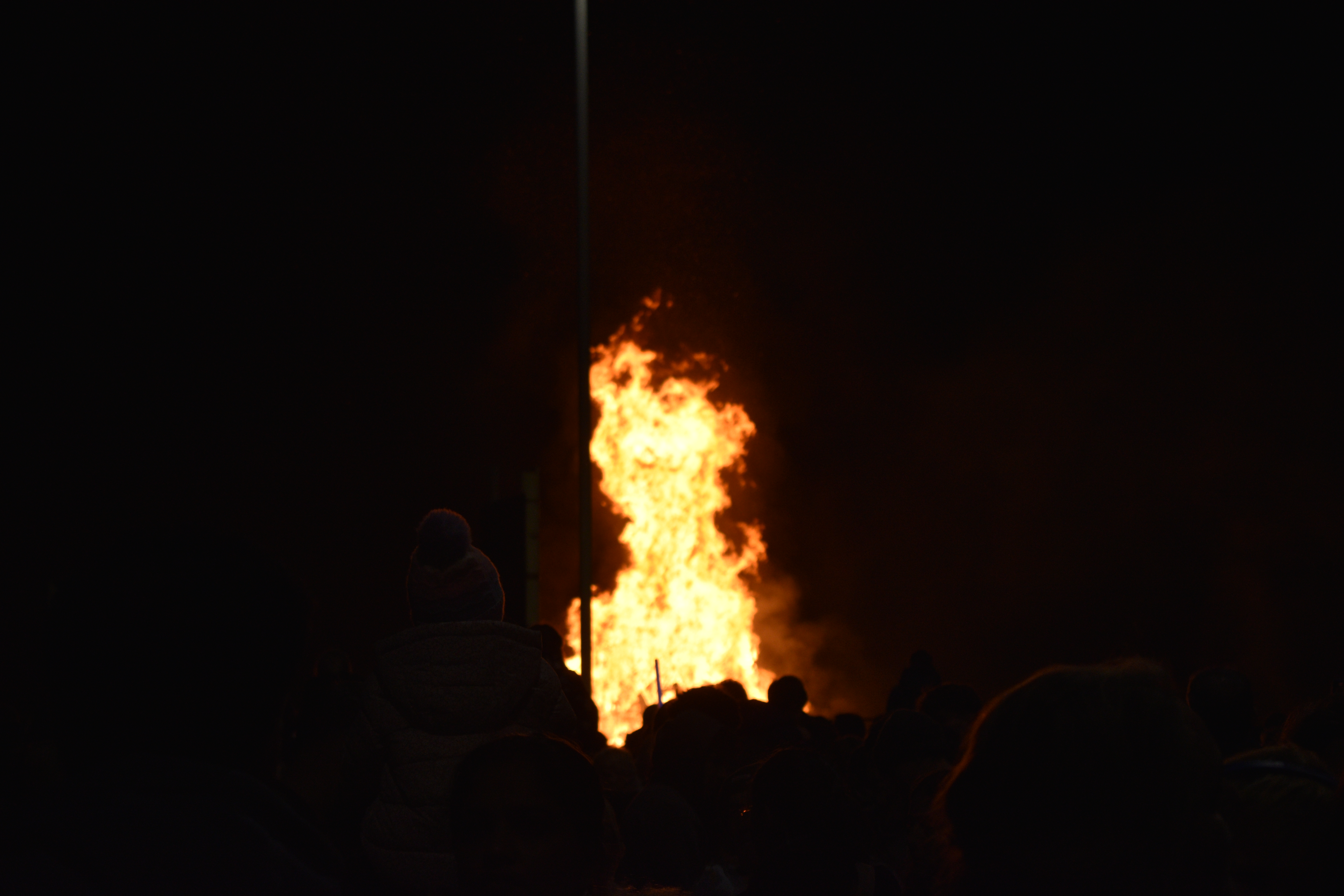
The event in Hastings is a major attraction. It brings in welcome extra money for businesses in the centre of the town, in particular hospitality. The downside is the observation that the streets around the centre of the town were choked with illegally parked cars. Huge ones, all consuming fossil fuels for their motive power. Not a single parking ticket to be seen. I have also been criticised for seeming to be petty – “it is only one bonfire once a year” and “what about the conflagrations taking place currently in France?” I tried to respond politely, but people are naturally defensive and most miss the point that I am making. I am not attacking a particular bonfire or people having fun. I am trying to make the case for improving awareness of the climate emergency and our response to it in our daily lives.
Amateur photographer 2
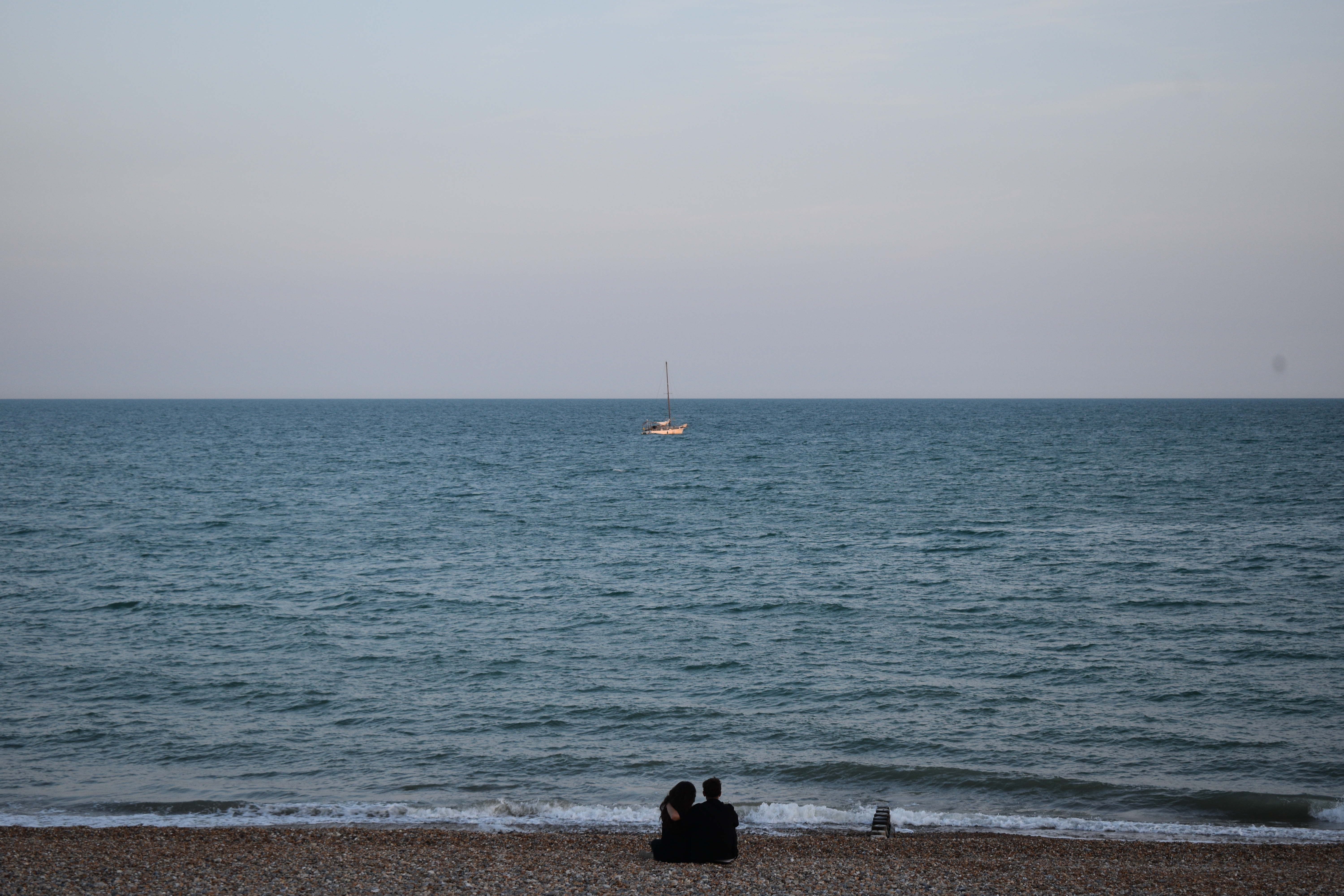
I got the horizon just about level. I would have liked to have lined up the couple and the yacht. I know next time!
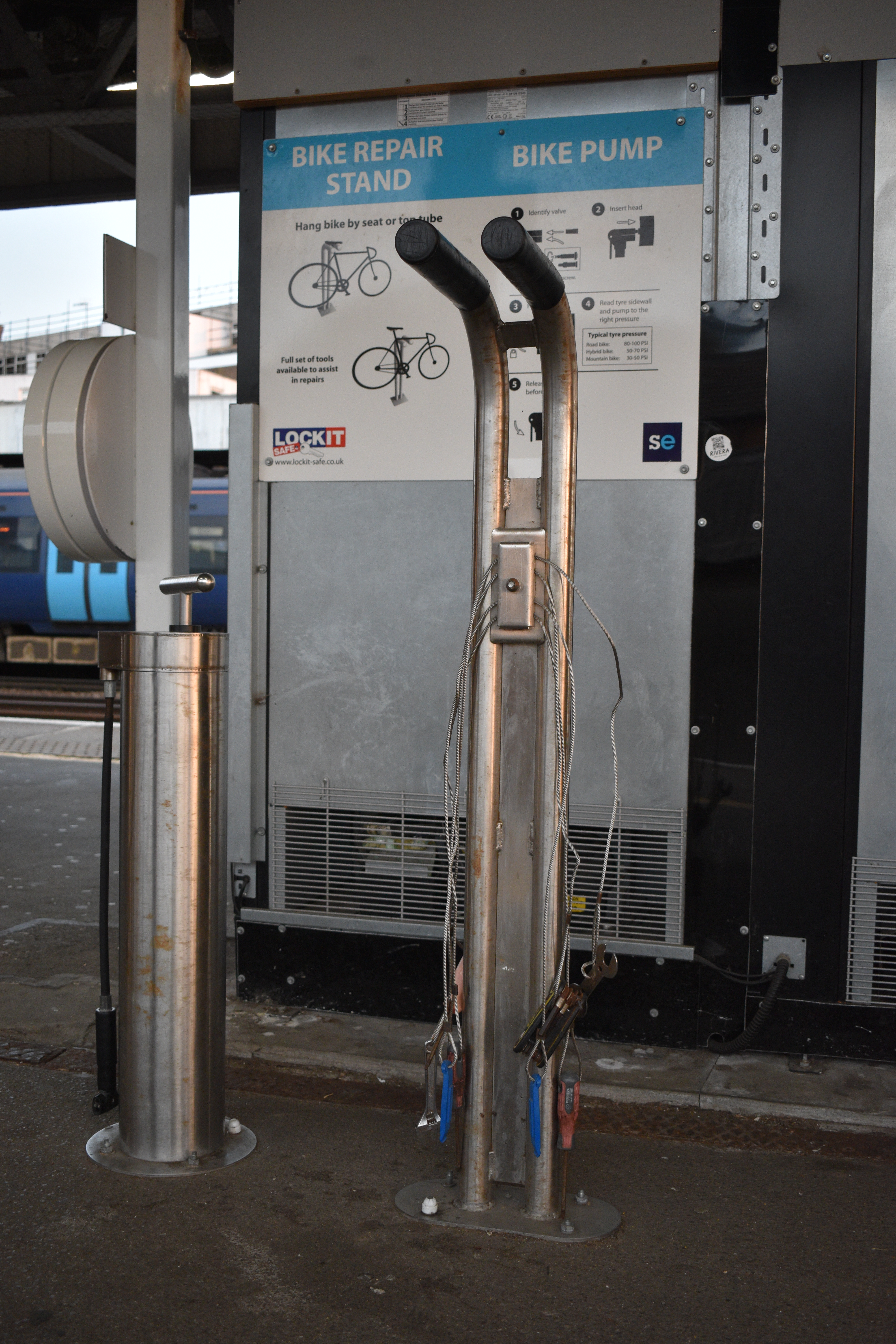
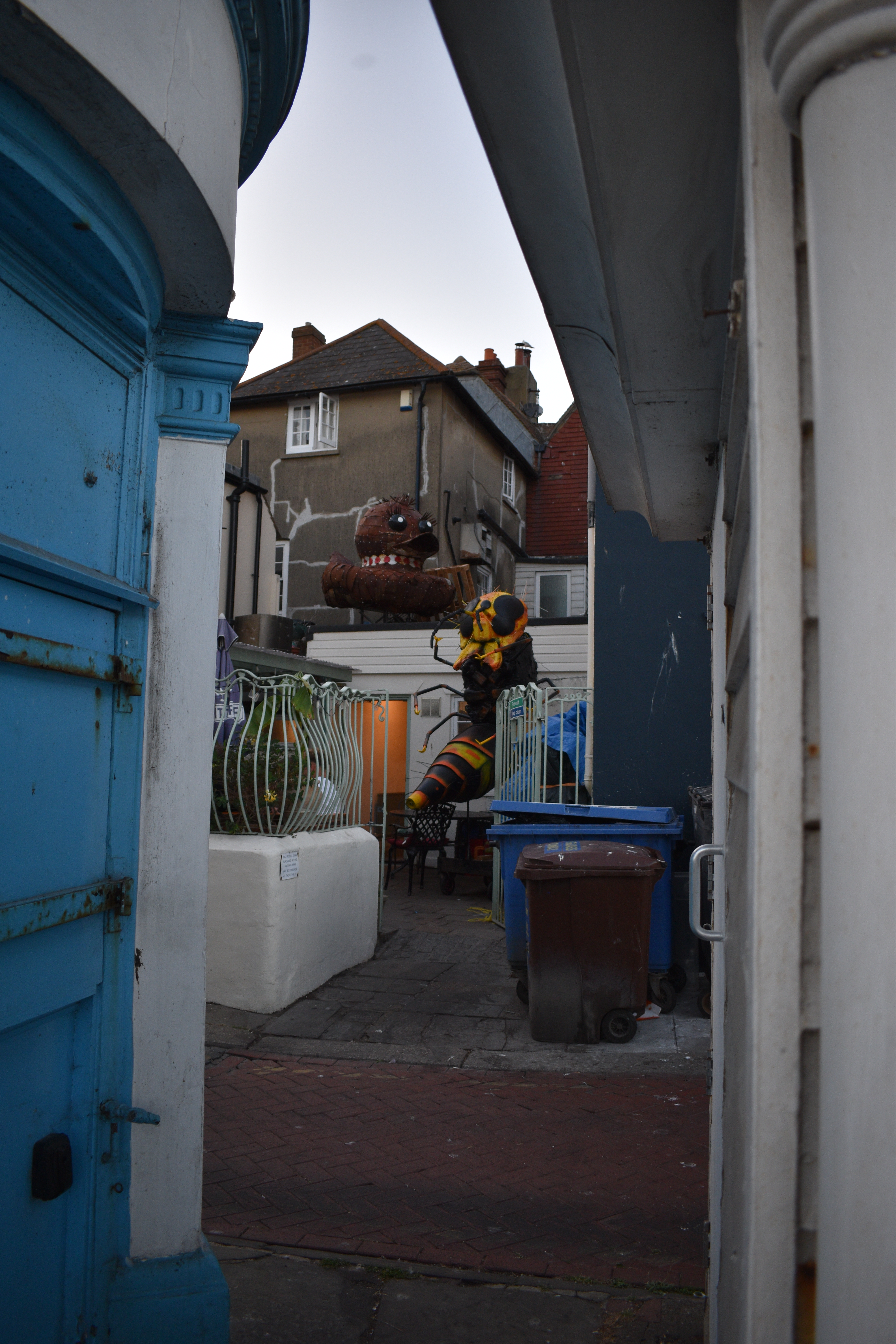
Not immediately obvious at Tonbridge Station, but quite an array of tools should you need them. As for the pub garden, I think these objects were once part of a parade of some kind. Hastings does parades like most people have lunch. Talking of which…

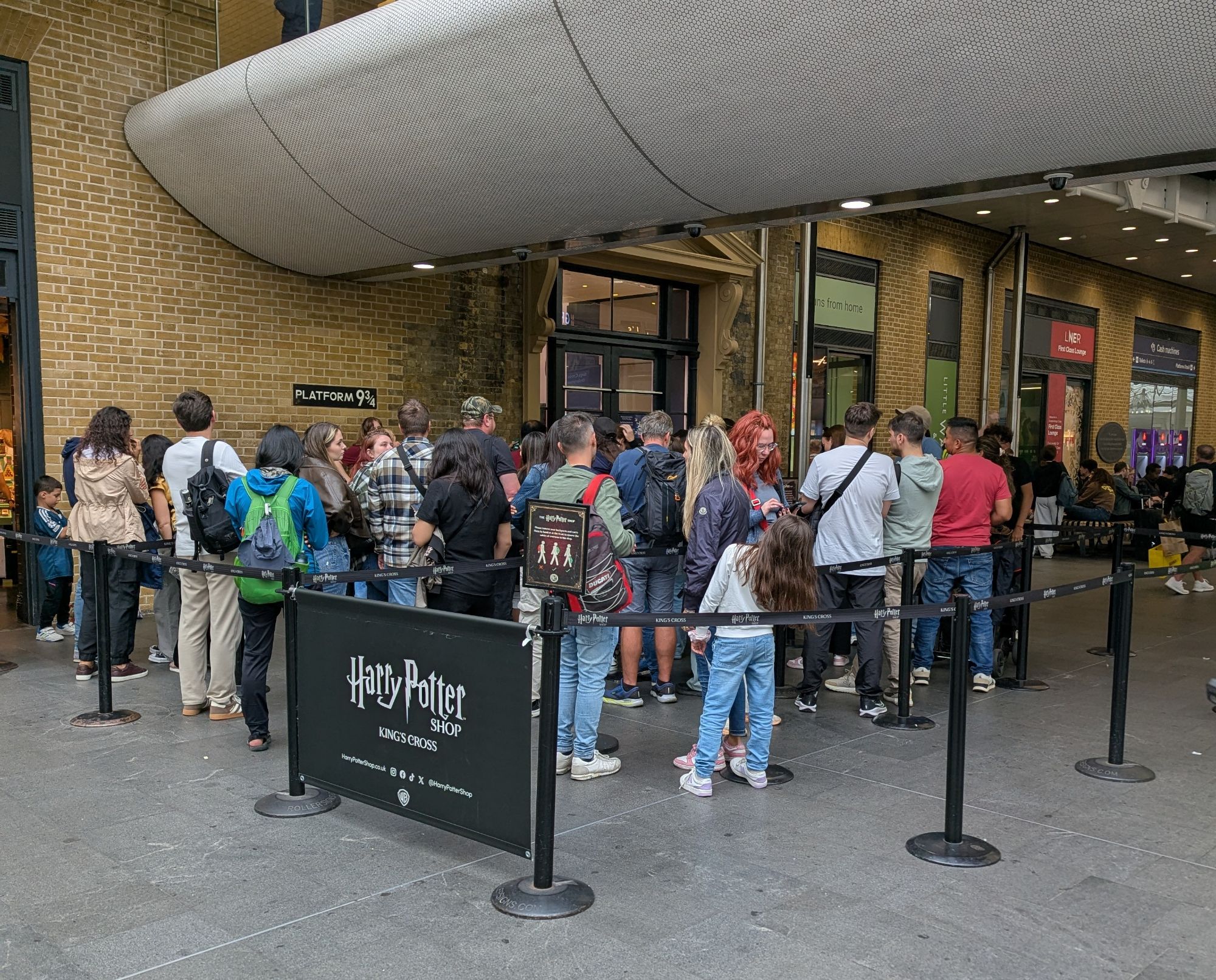
I have never been a fan of Harry Potter. I have never, to my knowledge, queued outside a non-food shop to buy tat. And what we know about JK Rowling and her hate agenda, I would never consider buying anything that helps her hate campaign. At any level, what are these people doing?
Juice by Tim Winton, book review
Filed under: Book reviews, Environment | Tags: book review, books, fiction
Leave a comment 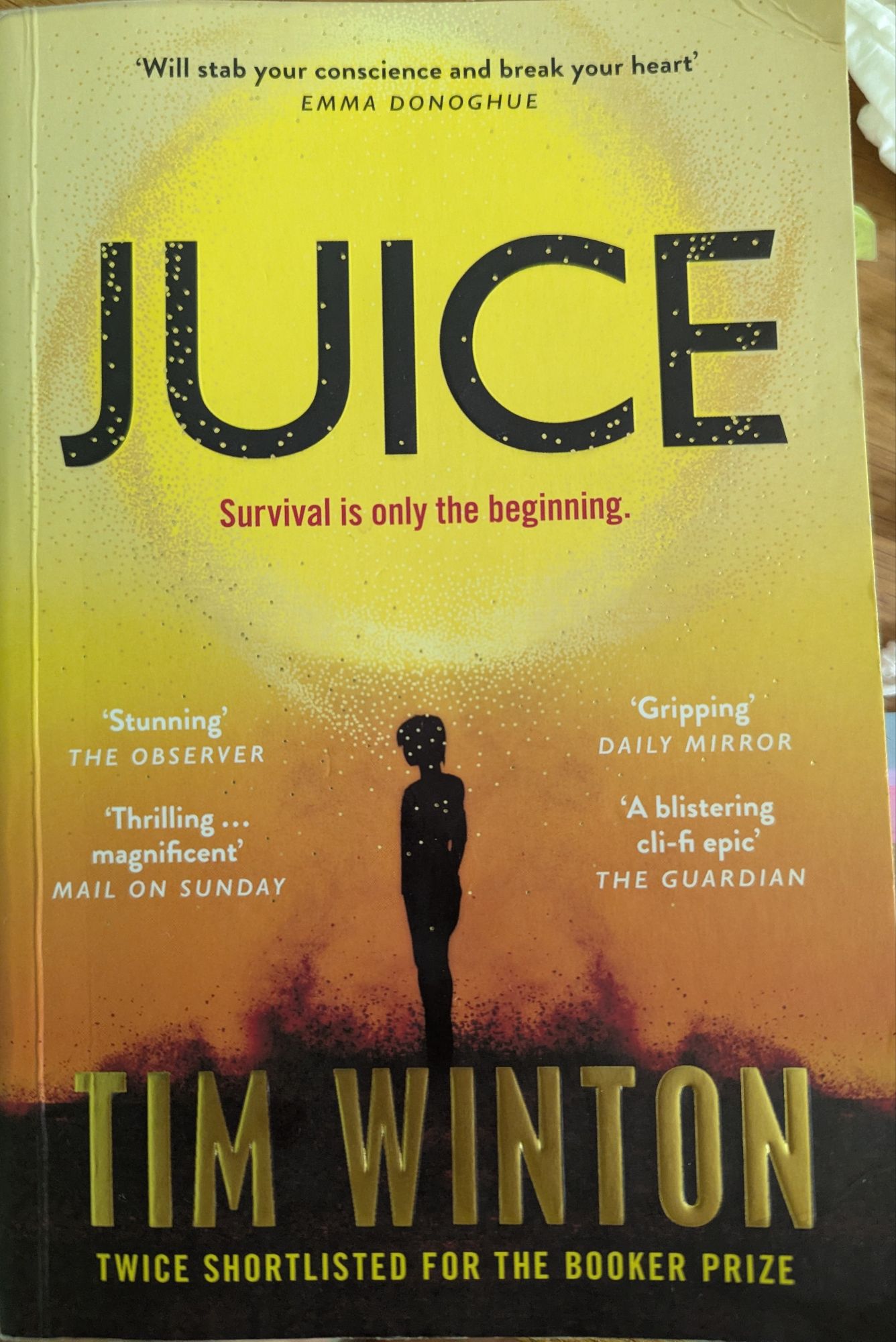
This is an epic – over 500 pages for the Picador paperback edition published in 2024. Of all of the cli-fi novels I have so far read (scroll in this blog to see the others), it is probably the most chilling. It is chilling because this is a novel informed by the scientific consensus about global warming: it is happening, life will become increasingly difficult in our lifetimes (and I am heading out of this world more than I am heading into it), civilisation will break down, though not universally (more on this below), and there will be violence. Oh, and there is a little sub-plot about machines that can either help us if we let them or kill us.
This review is full of spoilers – read no further if this book is on your reading list.
It is written in the first person, which is not my favourite style. Most of the characters are nameless; there are a few exceptions including the lead character’s wife, Sun, and their daughter, Ester. It is set on an Australian homestead run and worked by the lead character and his mother. Sun joins later. They are successful in growing food, raising fowl and harvesting water. They live underground for half of the year as the heat – over 55 degrees Celsius – is too much on the surface. The lead character is big into salvage and has a whopping great solar-powered truck (rig) to repatriate his finds. The economy is one of barter. People trade in the nearby hamlet through a co-op known as The Association.
One day, the lead character goes to the hamlet to trade for parts to repair a warped central axle on their barrel turbine caused by a recent storm. He encounters the Filmlayer, a trader with one eye and broken teeth. The Filmlayer was known to visit his mother. He grabbed the young man and frog-marched him to a shelter where he encounters a nameless woman whose payment for the new axle is his attention. He consents and is confronted by a visual display of the realities of the world transformed by the warming (wildfires, for example) along with fast moving images of houses, people, vehicles, “kit”, etc. He was being recruited to a highly secret organisation known as the The Service. A mixture of fear and curiosity led to his agreement to undertake the “Basic” training under the tutelage of a woman known as Awe.
The book starts somewhat close to the end (of the lead character’s story). Our character is in his rig along with a child searching for that one place to settle. He drives up to, what appears to be, a deserted mine, only to find it is occupied with a rather aggressive man, the Bowman, who takes them prisoner underground. It is in the course of one evening/night that our lead character tells the Bowman his story. It is an incredible one at that. We know that the oath to secrecy about the Service has gone, but we do not know why. The Bowman also claims to be a veteran and is equally scarred and disenchanted.
The Service
During the basic training, volunteers are inculcated with the purpose of the Service; namely to rid the world of networks and bloodlines of the people who caused the warming – largely the fossil fuel company bosses and their helpers. Because of their vast wealth from extraction, these people live in protected, remote and secret citadels. It is clear that a lot of intelligence work goes into finding the citadels and drawing up the plans to attack them in elaborate and complex operations involving planes, helicopters, ships and sophisticated weaponry.
Our lead character is a decorated veteran having been part of, or leader in, some of the most high profile raids. He played a leading role in the operation that saw off the so-called Exxons, for example, commonly referred to as the Utah operation. The Bowman claimed to be part of that operation, too. The story of that raid takes us into the bowels of the citadel revealing the privileged lifestyle of its residents, relative to homesteaders, city dwellers and itinerants.
In between these secret operations, the lead character maintains his life as homesteader. Sun enters as an apprentice vet who comes to the homestead to assess the health of the fowl. He is immediately smitten. When she finds out that she is no longer required by the vet she agrees to join the homestead and make a new life away from the city. They build their own house from salvage and the largesse that is a reward for service. And eventually they have a child whom they name Ester because of the association with the smell of sweet fruit and for the “warrior queen of the sagas” (p294)
By virtue of the fact that the lead character is no longer with Sun and Ester or his mother, we know that something happened along the way. Ultimately, there are two causes. Sun and Ester leave the homestead whilst the lead character is on an operation. The cause is a rumour that when he is away he is actually with another family in the South. His mother pleads with him not to go looking for them. The lead character convinces himself that they will be back. The second reason is the growing harshness of the climate. Storms not only flood homesteads but huge hailstones destroy everything – homes, growing houses, vehicles. Notwithstanding the increasing temperatures in which nothing grows. The homesteads’ self-sufficiency evaporates. The people become refugees heading south seeking cooling and new lives. After the death of his mother, our lead character continues alone for a few more seasons punctuated by one final mission: to get the Aramcos!
The Sims
The Aramco mission is like no other. Normal protocols are broken but defended by the leaders as necessary to destroy this critical citadel. They will use a proscribed weapon, fire. They travel by sea and are acclimatised to the extreme conditions on board wearing full combat gear and being forced to stand for long periods. Volunteers die during the voyage and are committed to the sea. Those that remain are tough, ready to do their service.
It does not go well. Whilst many enemy defenders are killed, it is impossible to penetrate the citadel not least because so many Service members are themselves killed. Our character is injured but is picked up and protected by 11 sims (p420) who seemingly were “slaves” of the Aramcos. Sims are human in form, seemingly partly organic, but most certainly electronic as witnessed when they are destroyed by fighters or others. Our character will have a later encounter with a sim after fleeing the homestead.
This group of sims are looking for liberation and they want to be taken to Australia and away from the desert. Our character reassures them that he will honour that wish in exchange for safe passage to the coast where the support ship is waiting for the escaping Service people. They take him through the searing desert under an insulation blanket as well as plying him with food and water. The personnel on the support ship do not wait for explanations and summarily destroy the sims. Another question is raised. And it is a significant one. Who is running all of this? A drone delivered ordinance, was it directed by human or is it autonomous? The sims only shrug at this question (p419).
As noted, our lead character has another encounter with a sim. On his search for sanctuary in the South he encounters a sim who has taken responsibility for an orphan child. He agrees to take them with him, despite being one extra mouth to feed (the sim is recharged by sunbathing). One evening they are confronted by three men who take her prisoner, sexually abuse her and then destroy her. Our lead character in turn kills them leaving him alone with the child. These are not the only people he uses violence against – a man caught trying to steel his water maker (clearly a valuable piece of kit) is beaten and has his wrist broken. Another has his rig burned and is left by the roadside bound and gagged.
The big questions
This final mission raises many questions that have not been asked earlier. Among them, who runs the Service? How does the intelligence work? How is the killing ultimately justified? Where does all of the kit come from? Should the current clan members be held responsible for the actions of their predecessors, even though they are living off the proceeds? Indeed, the Service volunteers have no history with the people who caused the warming. Indeed, our central character during basic training says “The dirty world is long gone. These people are dust now.” (p121) We may ask what kind of justice is being meted out and at what cost to Service volunteers (at best, diminished mental health at worst, death)? One final concern seems to be the secrecy and whose interests it serves. Whilst our lead character thinks that he is the only person in the Association who has been recruited, we learn later that that is not the case. Everyone is lying to everyone else all of the time. This is a society of zero trust. And for what? The World heats up relentlessly. The tipping points have been reached. No amount of killing is going to bring back the Holocene. “Maybe it was a mistake, I say. Trying to purify the world one dead body at a time.” (p461)
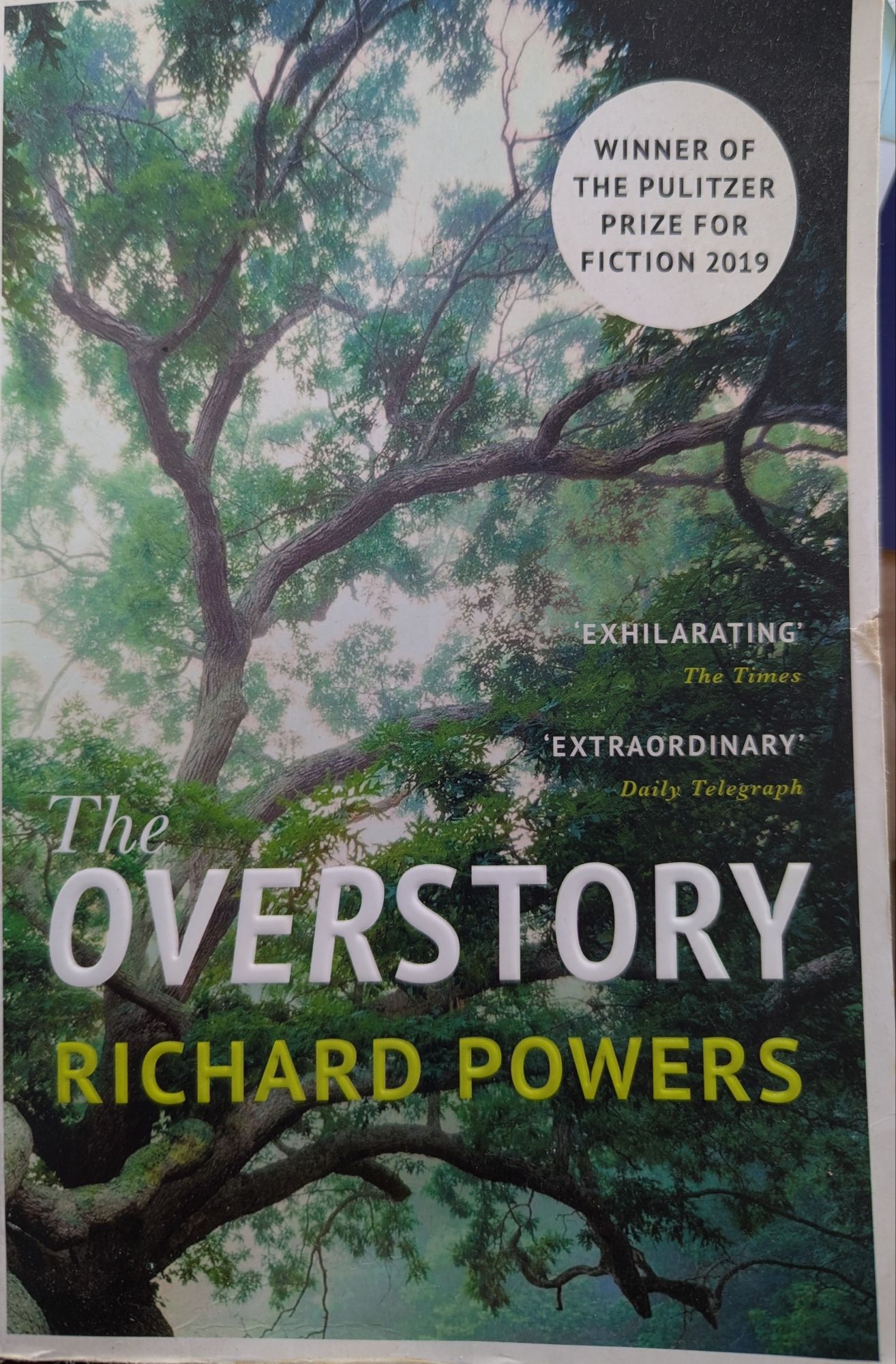
This reminds me very much of Richard Powers’ book, The Overstory, in which the protagonists’ direct action to protect a forest and its trees inadvertently leads to the death of loggers. A number of years pass and the group disperses with no accountability for their actions. That is until, for one of them, the guilt boils over and he implicates others leading to arrests and jail. In Juice, the lead character, in his big reveal, exposes his own culpability for the deaths. Through his exchange with the Bowman, he confronts his doubts. It is catharsis. It is the first time he has been able to tell the whole story. Reluctantly, if I read it correctly, the Bowman can no longer doubt him. Living the lie is over.
There’s another comparator that springs to mind, too. As I write this the BBC is airing its next series of Traitors – the celebrity version. This year featuring the likes of Hannah Fry, Michael Sheen, Richard E Grant, James Blunt and Joe Lycett (these are some of the ones I recognise). I have never watched Traitors because of the concept; namely deceit. I trust in the analysis by Rupert Read on the mechanics, but instead of it being a show for problem solving by collaboration, it is one that deliberately pits people against one another – in some cases, siblings and professional collaborators. Trust no one. They are out to kill you (or at least oust you from the show). That is how civilisation ends.
Here is the Guardian’s review by Rachel Seiffert of October 2024.
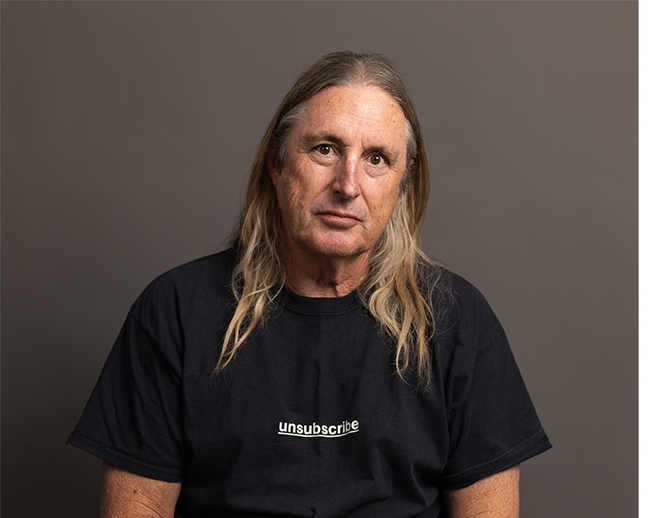
Picture, Tim Winton https://www.greenbelt.org.uk/artists/tim-winton/

