Archive for November, 2026|Monthly archive page
Digger, the movie (2026) Review
Filed under: Environment, film | Tags: digger, John Goodman, movies, Reviews, Tom Cruise
 Leave a comment

Tom Cruise is a bit of a turn-off for me. I was there for Risky Business back in 1983 – precisely when I was coming of age. So, I am always reluctant to part with money to see him in a film. The last time was Eyes Wide Shut because of the Kubrick connection rather than Cruise.
This time, despite Cruise, I fork out £26 for the two of us to enter a cinema at the unearthly film hour of 1030 on the grounds that this movie is significant in its approach to mainstreaming climate change awareness. It is significant. And although it had only a short stay on cinema screens, I recommend catching up with it when it is streamed. Despite Cruise.
Spoiler Alert – read no further if you are going to stream it. A viewer’s interpretation of events will determine how embedded they are in climate narratives.
The plot is straightforward. Digger is an oil magnate who lives in this surreal house with his cat. There’s definitely a nod to Goldfinger in this. The cat is old, incontinent and on its last legs. It is, however, the only other living thing he seems to care about. The rest is just money. It is a comedy. Some of it is slapstick, It is very funny. It is very dark humour, though. We are meant to laugh. Watch out for the spade and the fate of the cat. There is some great comedy timing.
So when he learns that his drilling in Greenland is causing an ice sheet to float free and collide with Europe he seeks to blame everyone other than himself for the catastrophe, including the president of the USA played brilliantly by John Goodman. That scenario is fantastical, but it is not meant to be accurate. For film goers who see it through to the end, reality and fantasy are constantly in flux. Ultimately we are being told that the oil industry can and will do untold damage to the planet. It is not just about that iceberg. It is about tipping points. These are the triggers that unleash irreversible chain reactions, including plague. There is also the scenario that using nuclear weapons to break up the iceberg leads to nuclear war as the act itself is interpreted as an act of war. This realisation knocks the smile off the military commander who thought he had a reason to use his nuclear arsenal to show off the power of the USA.

There is one particular standout scene. Standout in terms of its script, visuals and performance (right). He flies to Europe to “defend” himself over his culpability for the tragedy. If one has not been paying attention, the expectation is that he will show some contrition for the lives, livelihoods and lost land. If you have been paying attention, you will know that Digger will never do that (remind you of someone?). Digger’s speech follows that of his chief scientist who can no longer hold his lip. He comes clean to the Europeans and expects serious consequences from Digger. But he gets none of it as it provides the opportunity for Digger to present his own truth.
He tells the Europeans that they are culpable. It is they that are addicted to fossil fuels. It is their people whose lifestyles depend on fossil fuels and the products of oil such as plastic and fibres. He only satiates the addiction. I have not really done it justice here. It is a magnificent piece of writing delivered with swagger (that is probably why Cruise was perfect for the role). It is visually stunning, too. Digger is the only person present in the room with colour. The hall itself is the Coliseum with Digger as a victorious gladiator.
The imagery throughout, though, is quite disconcerting. It is so retro, despite the computer screens. Digger’s bed is something to behold. It all reminds me of Yorgos Lanthimos’ Poor Things. Indeed it was all filmed in Pinewood Studios in the UK. There is no location as such. If you get to the end, there are a few twists. I missed the last one. Not to be missed.
William Nordhaus’legacy
Filed under: Environment | Tags: climate, climate change, Climate economics, CoP31, DICE, environment, Genevieve Guenther, global-warming, sustainability, William Nordhaus
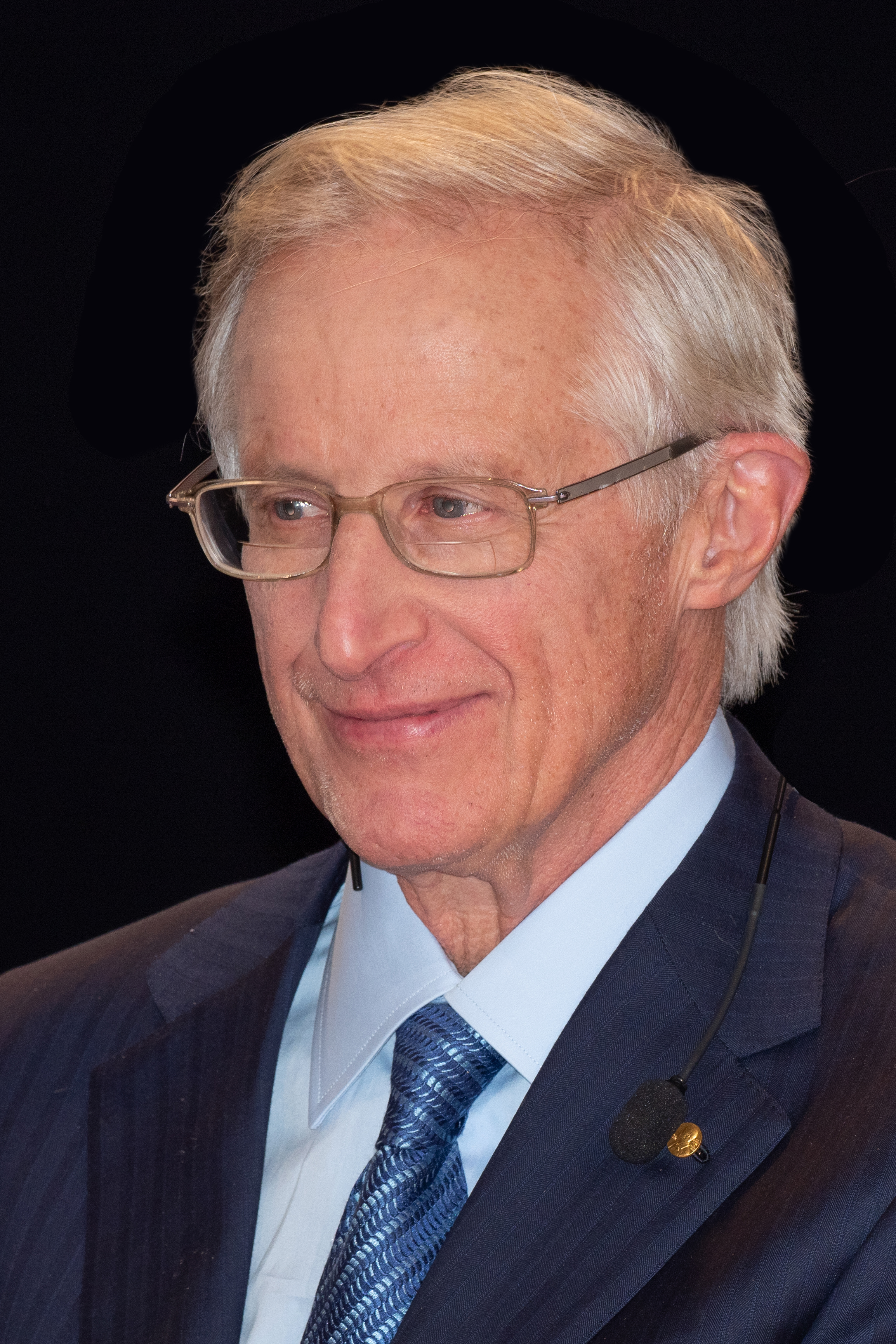
Leave a comment Nobel Laureate, William Nordhaus died on 30 October 2026 at the age of 85. He remained to his death a Yale professor seemingly packing out lecture halls. Not surprisingly the Economist (7 November 2026) lauds him and his economics as a “triumph of pragmatism” that curiously produced “numbers that were useful” Usefulness came at a cost of precision, but he is forgiven for that.
I think it is fair to say that, despite what the Economist says, most progressives engaged in climate change scholarship – natural scientists, social scientists including economists and those from the humanities are more on the side of the British economist, Nicholas Stern, Nordhaus’ nemesis on the case for valuing the lives of those in the future a little bit more and respecting the science. Nordhaus makes the case for adapting to 3 degrees Celsius of warming (around the year 2100). We are confident that such temperatures are not tolerable and that civilisation will be challenged by such increases.
His work was picked up by policymakers because, essentially, it makes the case for business-as-usual. With numbers and equations and the maintenance of GDP as the main measure of welfare. What is more, DICE makes clear that rising temperatures will only have a marginal impact on GDP, 2 per cent, for example, for an increase of 3 degrees Celsius. That can be offset by more growth, bizarrely.
At this point I defer to the work of Genevieve Guenther and her book, The Language of Politics: Fossil fuel propaganda and how to fight it (2025). In this book she devotes nine pages to his notoriety. She credits him with almost inventing climate economics on the publication of his Dynamic Integrated Climate Economy model (DICE). That is as far as the credits go. Nordhaus published his work just at the right time when the United Nations, on establishing the Framework Convention on Climate Change, was looking for something to work with. DICE was it. Nordhaus cautions against too rapid decarbonisation because that could render capital unproductive. Capital should be deployed against climate change only when it becomes urgent. In the meantime capital should continued to be invested productively and in ways that rewards investors today. The growth driver will remain, largely, fossil fuels.
It seems that Nordhaus’ could not see that productivity will be impacted (already is) by heat, extreme weather, flood and desertification. Guenther notes that Hurricane Harvey in 2017, intensified 15 per cent by global warming (at just over 1 degree Celsius of warming) that hit Texas and Louisiana had a greater impact on GDP than Nordhaus’ model predicts and that was below 1.5 degrees Celsius of warming. Whether on his death, policymakers will revisit DICE remains to be seen. With CoP31 starting imminently (November 2026) we will get a flavour of his longevity.
Photo of William Nordhaus: By Bengt Nyman – Flickr, CC BY 2.0, https://commons.wikimedia.org/w/index.php?curid=74934773

