Tandem Tour 2015: Altmühl and Main Radwege, campsites
Main
 |
Kitzingen | Great campsite. Camping area just behind a children’s play area. Approx. €15. Showers included. Washing machine and drier (tokens required). Greek Taverne adjacent on the river. |
| Bizarre campsite. Very large over two sites. Cheap, – €12. Showers included. Washing machine and dryer. A cluster of decaying caravans in a distant corner. Don’t go to the toilet in the middle of the night as the facilities will be being cleaned. A few mosquitos to deal with. Village has Greek Taverne near to the church. Adds to the strangeness. | Sand am Main |  |
 |
Lichtenfels | Public facility on the banks of the Main. Presided over by a larger-than-life manager. €10 per night. Miele washing machine and dryer (both €3). Excellent local baker drives mobile shop onto site each day at 0800 (queue forms in anticipation). Manager supplies coffee and table/chairs making perfect breakfast. Camp cat. |
Tandem Tour 2015 – Tauber Altmühl and Main Radwege, Bayern, Germany
 This year we decided not to stray too far from our base in Munich. In previous years we have had to negotiate up to 5 trains with the tandem (bicycles are not carried on InterCity trains in Germany) to get to our starting point. This year, the starting point was Regensburg, a relatively quick couple of hours by cycle-friendly regional train.
We are feeling a shade smug this year in that we managed to camp for all but one night, and that was because there were no campsites on that particular stretch. We navigated by means of a Garmin Edge 800 bicycle navigation system (topped up nightly largely by energy generated from our Power Monkey Solar battery pack) and ADFC Reiseführer “Tauber Altmühl Radweg” (Hans Luntz) and Bikeline (Esterbauer), “Main Radeweg”.
Both paths are well signposted taking in both designated cycle track and minor roads. That said, it is possible to lose the tracks, especially when negotiating the towns. Below are my comments on the campsites. Some, as ever, are better than others!
Altmühl
 |
Pillhausen (west of Kelheim) | Family-run campsite directly on the river. Gasthof serves food until late. Food simple, but effective. Inexpensive (€15). Showers inclusive. One criticism, the owners knowingly admitted a group intending to have an all-night party with amplified music. Sleep was a challenge. |
| This is really a mobile home parking facility. But there is room for tents, right on the path and adjacent to the river. Very cheap at €8 paid using a ticket machine. Showers, 50 Euro Cent. Recommended. | Eichstätt | 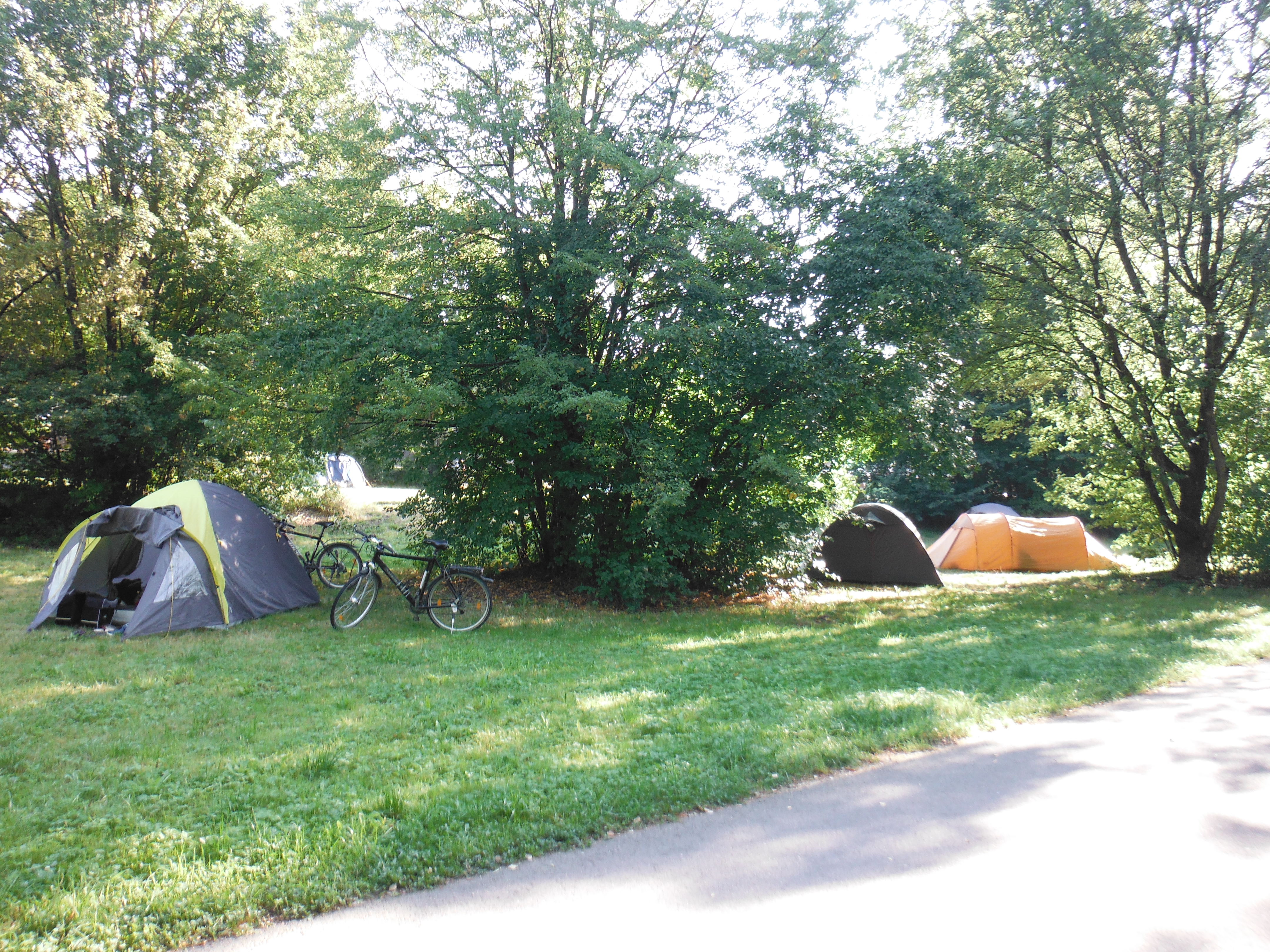 |
 |
Camping Herzog, Gunzenhausen (Altmühl See) | Very much purpose-built facility acting as a resort (Altmühl See is a big lake suitable for watersports). €21 per night (all pitches are the same size whether you are a caravan and car or a two-person tent and bicyle). Ground totally unsuitable for tent pegs. Washing machine and dryer. Showers 50 Euro Cent extra. On-site restaurant that was not bad (we enjoyed both the food and the company/clientele). |
| Rothenburg has two adjacent campsites. This one was the smaller of the two. Relatively cheap (approx €12, showers inclusive). The village has two Gasthofs with alternate closing evenings (Monday and Tuesday). Ignore any sign saying reservations essential. | Rothenburg ob der Tauber (Detwang) |  |
 |
Tauber-bishofsheim Badischer Hof Hotel | We took the hotel because this section of the route has no campsites (in our direction of travel). €89 including breakfast – proved good value. Hotel has restaurant, but we went to the nearby Chinese restaurant (Asia Wok) and had a significant veggie meal (tofu, vegetables and noodles) at a fraction of the price. Hotel has garage for secure bicycle storage. |
BBC Proms – the Sibelius symphonies and more
Filed under: Music | Tags: BBC Proms, Julian Rachlin, Sibelius
 Leave a Comment
  The BBC Proms is an extraordinary annual classical music festival. For two-and-a-half months, each night some amazing orchestra (and sometimes more than one) takes to the stage in the Royal Albert Hall in London and plays some amazing music. For visitors, it is possible to see this spectacle for 5 Pounds (the standing space in the arena). If that does not appeal, it is possible to have a seat ranging from the Circle at what seems to be close to the moon (and hence cheap), or the stalls just around the arena (a shade more expensive). Relative to most ticket prices for Orchestra performances, it is the best deal in town over the summer.
We mix and match, sometimes in the circle, others in small boxes (otherwise known as the second tier). We often dress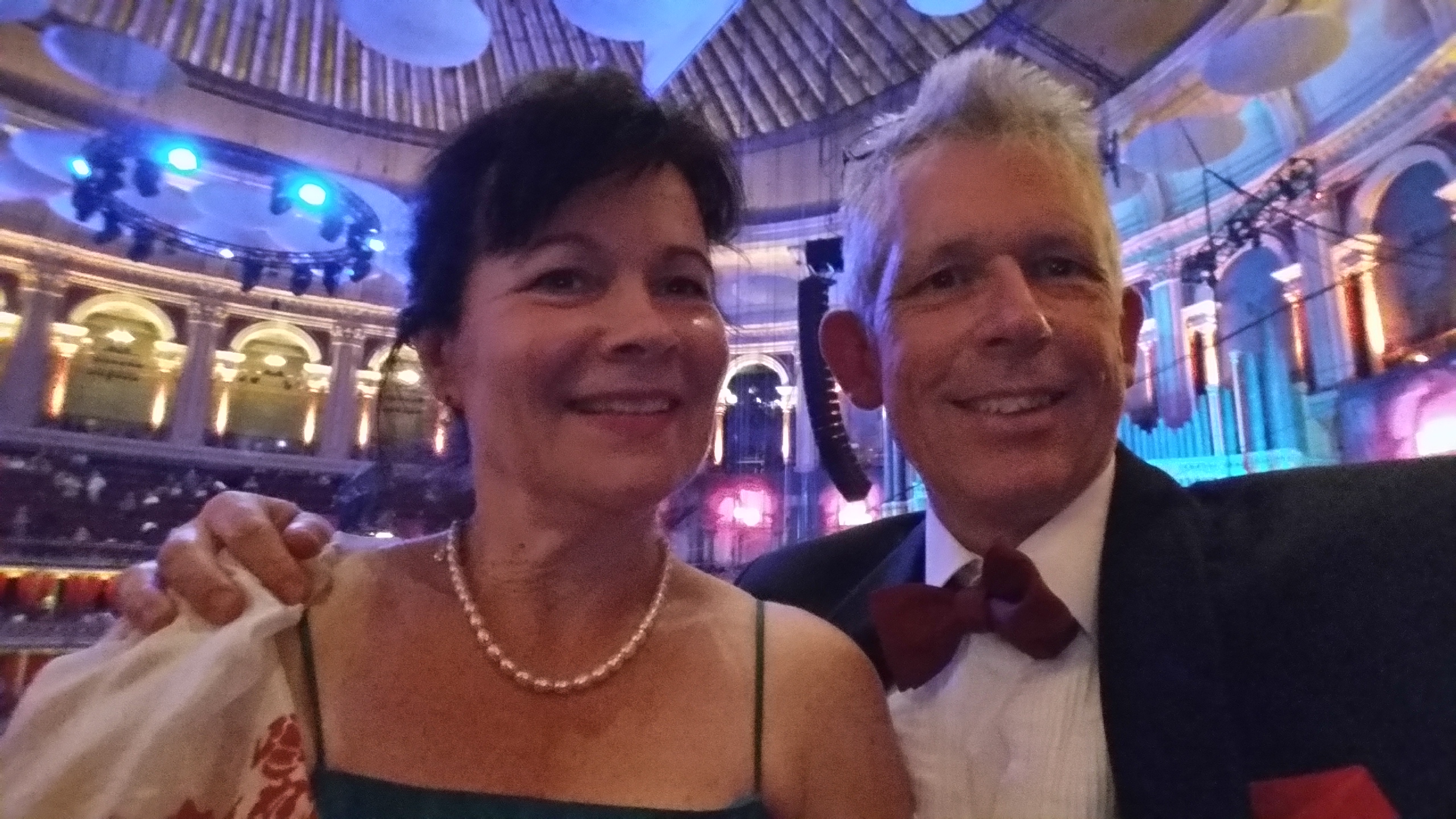 up for the occasion (right). This year we have been quite strategic in our choice. It is the 150th anniversary of the birth of Sibelius and to mark it all of his symphonies are being performed over three nights (that is 7 in all). Moreover, the BBC being what it is, does not just play the music, but it tries to give context and develop listeners’ understanding of music in general and specific pieces in particular. It is fair to say that we knew very little of Sibelius other than he being Finnish. We learn that at the time that Sibelius was writing at the turn of the 19th Century, Finland was a place with little history and national identity. Sibelius became a cheerleader for Finnish nationalism and independence (first from Sweden and then Russia – finally getting independence in 1963, six years after his death).
 One of his most famous pieces, Finlandia, dating from 1899, is an eight-minute call to national self-determination. It seems to me, it is a piece to Sibelius what Bohemian Rhapsody is to Queen in more modern times. It was a great way to start. But then come the symphonies – some against the backdrop of tumultuous change, others against his own alcoholism (his wife would go searching local bars to drag him home). His fourth symphony is a paen to landscape. The programme notes for this symphony make reference to conductor Herbert Blomstedt, who described it as ‘an essay in trying to be happy which fails.’ That works for me.
They are a mixed bag. Again, my ignorance takes over. Sibelius’ symphonies were not written for huge orchestras. Strings do much of the work (there is a lot of string plucking going on which doubles as percussion; there is not much of a percussion section). Woodwind and brass also feature. There are a lot of key changes. They are not the most accessible or indeed friendly. In his later years, he was a recluse, retreating to a country residence, Ainola, touchingly named after his wife, Aino. Though he did compose an eighth symphony, the score for which he destroyed.
We were treated, however, to Sibelius’ violin concerto. The soloist was Julian Rachlin (right). Seemingly, this is not an easy piece for violin. The expectations for finger and bow coordination are considerable. Rachlin, however, is a virtuoso – a child prodigy – and handled it with aplomb – and provided an encore (a little frowned upon at the Proms). The concerto demonstrates the brilliance of the composer who, it seems, always doubted his ability.
And maybe that accounts for – what seems to me to be – the inconsistency between the symphonies. His influences may also be a factor. In his early work inevitably Tchaikovsky is evident, as well as Brahms. Later he seemed to be in some kind of battle with Schoenberg, certainly in terms of pushing the boundaries of what actually is a symphony. For example, the Seventh Symphony which is about a river is composed in a single movement (normally one would expect three or four). That said, if one really listens closely, the separate movements are there. Maybe he was just trying not to give an opportunity for the audience to shuffle and cough inbetween movements (a very Proms thing to do)? His efforts at creating his own identity may well have done the opposite. I’m not sure how easy it would be for us to immediately identify a Sibelius piece, say for example against Mozart or Beethoven. One feature, perhaps, is Sibelius’ curious way of ending movements and symphonies. The end can often come by surprise for the uninitiated. I think further listening is needed.
Pictures:
Sibelius (BBC Proms website)
Julian Rachlin: (Wikipedia)
Design Museum, London. Camper Shoes exhibition
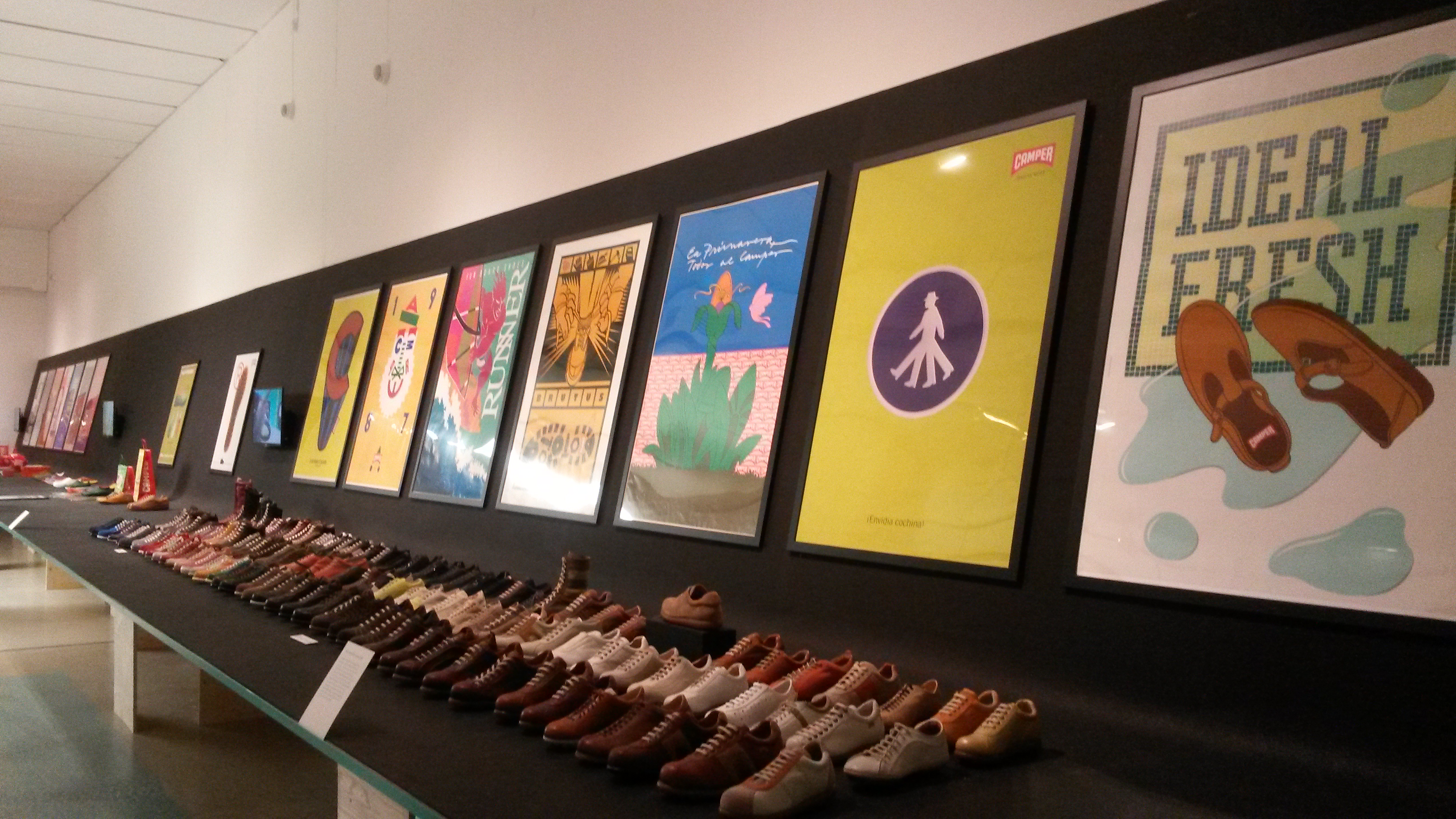 The Design Museum in London is currently offering an exhibition of history of the Spanish family-owned shoe maker, Camper. I’m not a particular fan of the style of the shoes, iconic though they are (left).
For those unfamiliar with Catalan, Camper means peasant or farmer, suitably betraying the origins of the company. They are a hybrid work-leasure-sport shoe. The company tells its own history here.
The exhibition itself does three things excellently. First, it shows the core artefact, the shoes. Second, the process of design and manufacture is explained, not just for Campers, but for shoes more generally, complete with tools and demonstrations using video screens.
 Finally, there is a business element. Camper has a rich marketing heritage (even though the firm dates only from 1975). The advertising (left and above left) has a 1930s feel about it. The brand itself is simple and distinctive.
The exhibition runs until 1 November 2015.
Design Museum exhibition – Designs of the Year 2015
I’ve said this before, the people at the Design Museum in London know how to present artefacts. One of the current exhibitions, Designs of the Year 2015 is a case in point. Conceptually, it is very simple: present 60 or so design ideas to demonstrate the scope for design in modern times. Scope is everything from fashion to ways to save the planet. Here is a selection of what I deemed to be the best after my visit on 29 July.
 The evolution of chairs is a perennial design discussion. This one (left), I like the most as it takes inspiration and scientific validation from nature. It is by the Italian designer Odo Fioravanti, and is called Dragonfly. Seemingly dragonflies have an imbalance between the weight distribution between their front legs and tail. The chair deals with this with ribbing (which can be seen underneath). Equally interesting, however, is the process involved. In order to validate the design, computer aided structural tests were undertaken and plastic mudflow analysis conducted before the injection moulding process started.
Next, is an example as design for safety. 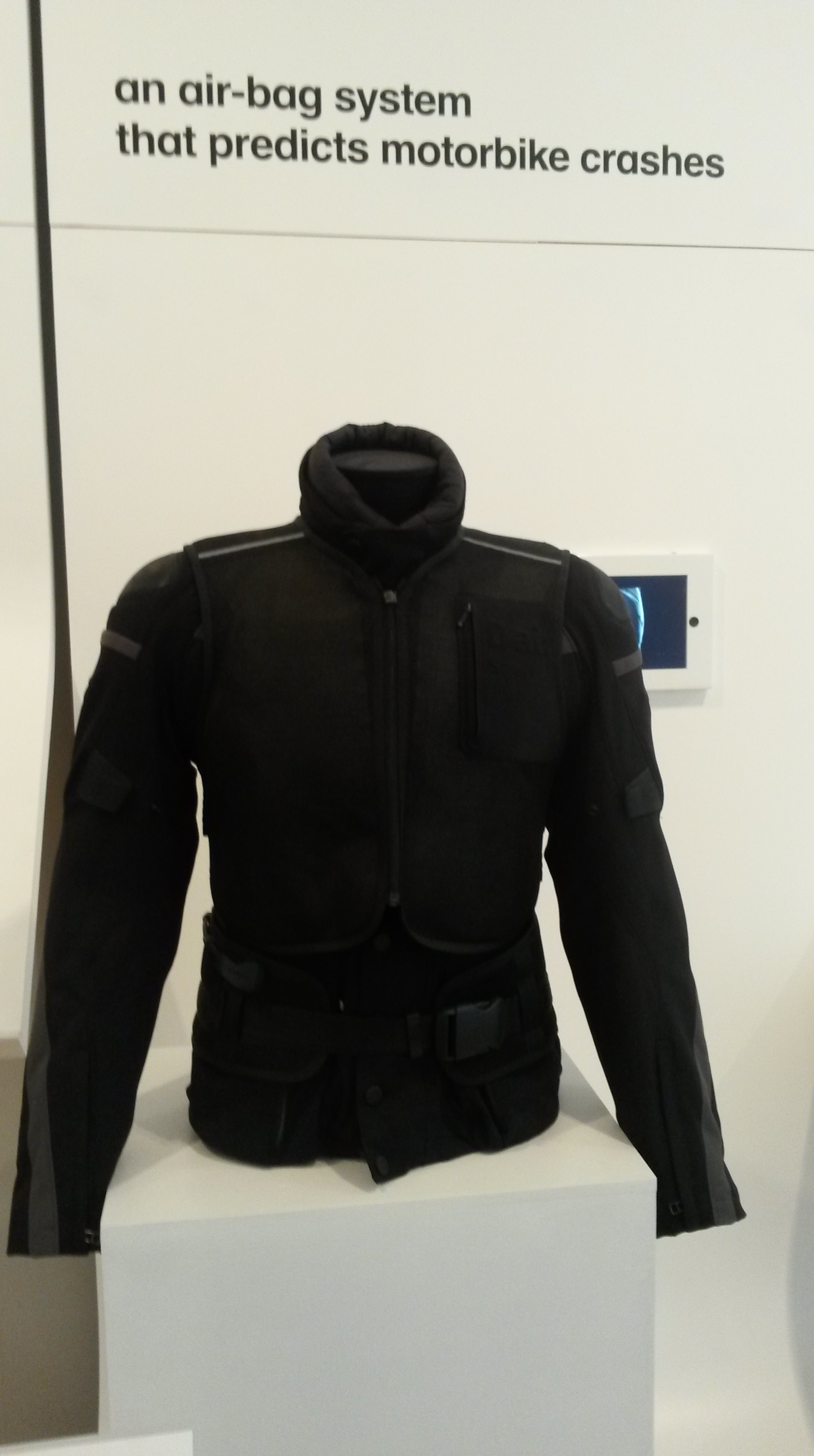 It is a jacket that anticipates a body-damaging accident or fall from a motorbike. There are sensors in the front fork (to detect a collision) and on the side (in anticipation of a non-collision-caused fall). A wireless signal is sent to the jacket which then inflates and protects the vital organs and bones. The designer is Vittorio Cafaggi.
 As a cyclist, the development of bicycle lights over the years has been welcome. In the old days they were big, unreliable and often invisible to other road users. I currently have a set of Brainy Bikelights which I am delighted with. However, these (left) by the Paul Cocksedge Studio, are great for urban riders prone to having their lights stolen. The idea is that when the rider locks the bicycle with a D-lock, the lights can be locked at the same time as they have a suitable hole in the middle. Neat.
Next up is the electricity-generating table (right) by Marijam van Aubel.  The table is for home or library use and can, without direct sunlight, generate enough electricity to charge a mobile phone, tablet, etc. This is another good example of borrowing from nature as the 8 dye sensitized solar cells replicate the process of photosynthesis used by plants. The dye replaces chlorophyll. Stylish, too.
 Continuing on the energy theme (left) is the kinetic floor system. Essentially these are slabs that absorb the energy injected into them when one walks over them and converts it into electricity. Each slab flexes by 5mm – enough to create 5w of power. Seemingly, slabs on a highly walked-over area at peak time – say in the morning – can generate sufficient electricity to provide the street lighting in the evening for the walk back.
Moving on to the humble kettle. Normally we overfill them 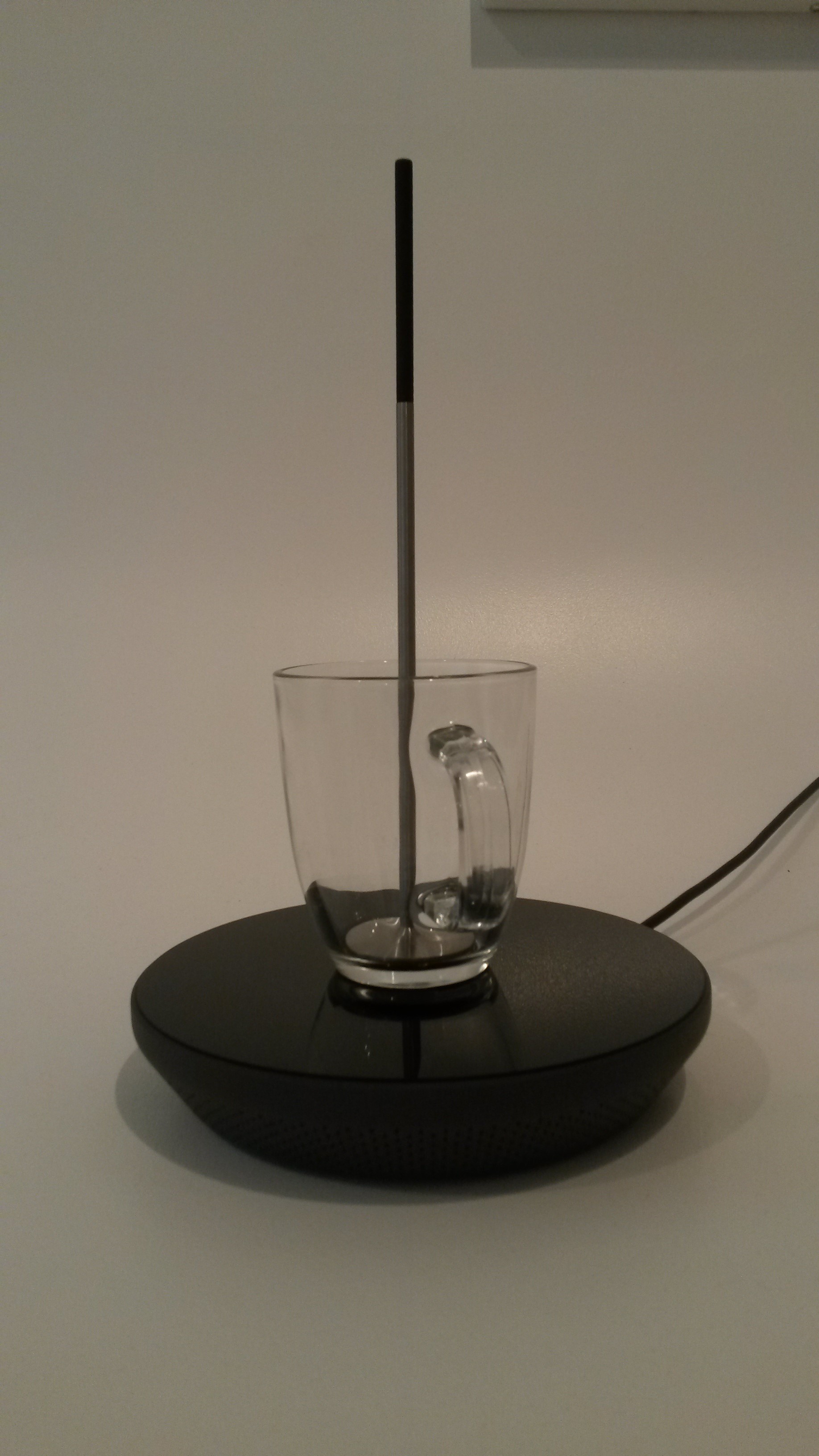 and waste energy in the process. This device, called Milto (right), is by Nils Chudy and Jasimina Grase which ‘re-imagines’ the kettle. This is a common ruse of designers, the ‘re-imagination’. It uses ‘induction technology’ similar to that employed in hobs on domestic cookers. The cup, teapot, or whatever is placed on the base and the rod inserted. It then heats the liquid and turns off when boiled. Extraordinary.
Three more designs are of note. First – and certainly one that is for me special if it reduces the use of animals in medical research – is the so-called, human-organs-on-chips experimental technology. It is the work of Donald Ingber and Dan Dangeun Huh. Ingber is a biologist at the Wyss Institute for Biologically Inspired Engineering at Harvard in the USA. Essentially they are computer chips with a piece of polymer lined with living human cells that mimic the tissue structure, function and mechanical motions of whole human organs. It seems perfectly feasible that this technology could be far superior to the animal models in its predictability and efficacy.
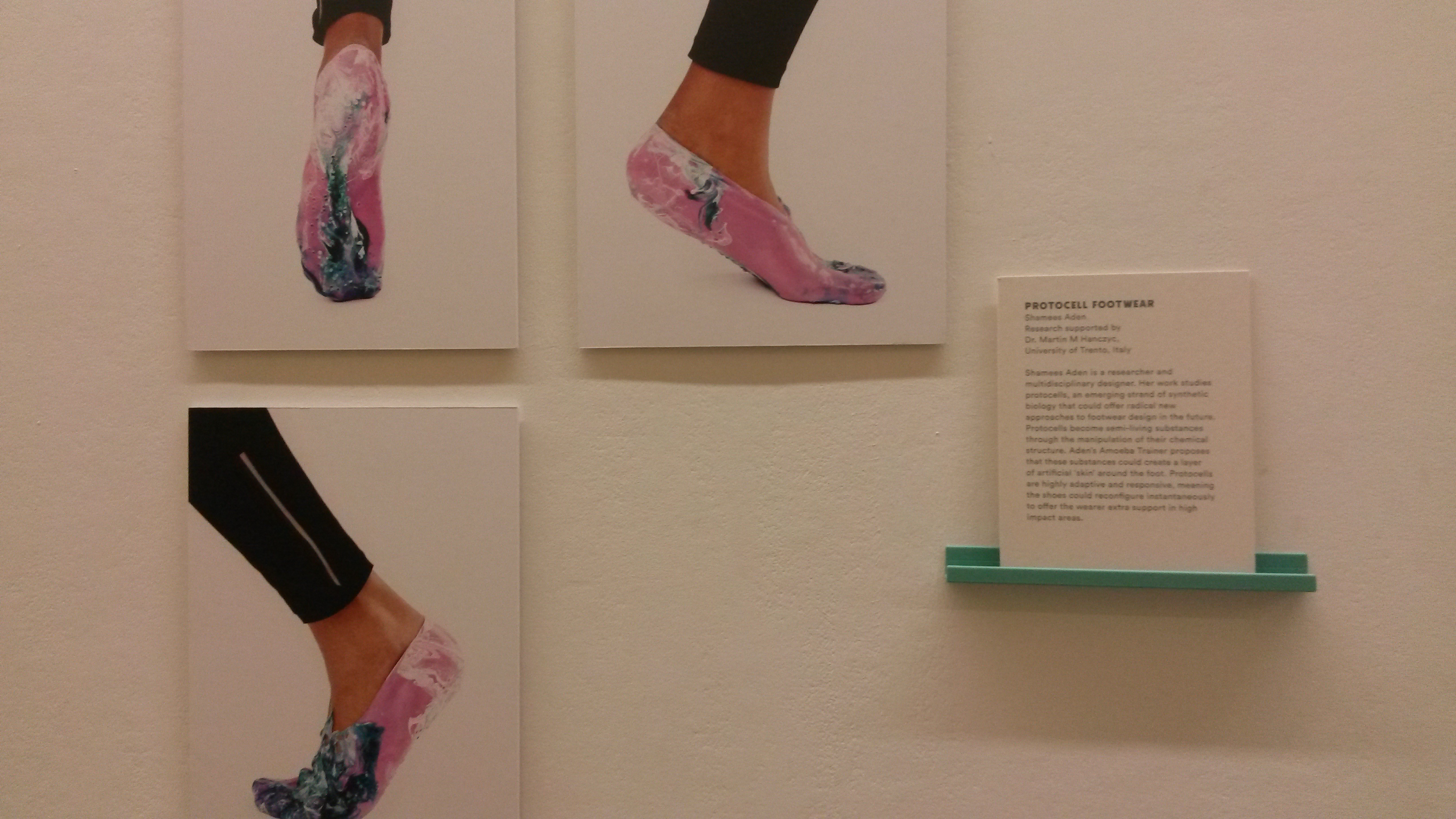 Second, is protocel footwear. The idea here is to create footwear that changes depending on the level of impact generated by different surfaces. Seemingly, protocels become semi-living substances through the manipulation of their chemical structure. It is the work of Shamees Aden who thinks that it could be possible for the shoes to create a layer of skin on the foot. Not yet the height of fashion, even in training shoes, but I can see the benefits.
And finally, the exhibition hall has a big board on which to display the votes of visitors for the best design. Leading by a country mile, and deservedly so, is the Daniel Project (right). It is what is says on the can – 3-D printing of prosthetics for people affected by conflict. It is the brainchild of Nick Abeling of a design studio called, appropriately, Not Impossible. Daniel lost both arms in an explosion when he was tending his cattle in South Sudan. They are now producing one arm a week and transforming the lives of amputees as a result. Though of course, getting rid of the munitions that cause the problem in the first place needs to be done as well.
I recommend this exhibition to all. And these are only a sample of the ideas.
L&M beach women
 The L&M brand is the summer winner in German cigarette advertising. Munich is blanketed with this idyllic image of four women enjoying the beach, two of whom are smoking. What can one say about the strapline? “Without extras and everything inclusive”, including chronic disease. Enjoy the peace and inclusivity whilst you can, I say.
More bearded men
 JSP’s summer campaign seems to suggest that it is cool to be a hipster. Two such men take time out to kill themselves (or at least one of them, the other gets it passively). “Always easy going, never boring”, claims the strapline.
Talking about boring, what about Pall Mall (right)? “tastes superior and longer” – the tobacco sticks seem to be longer in length than those of the competitors. This is a stripped down version of an earlier poster.
Fracking as a metaphor
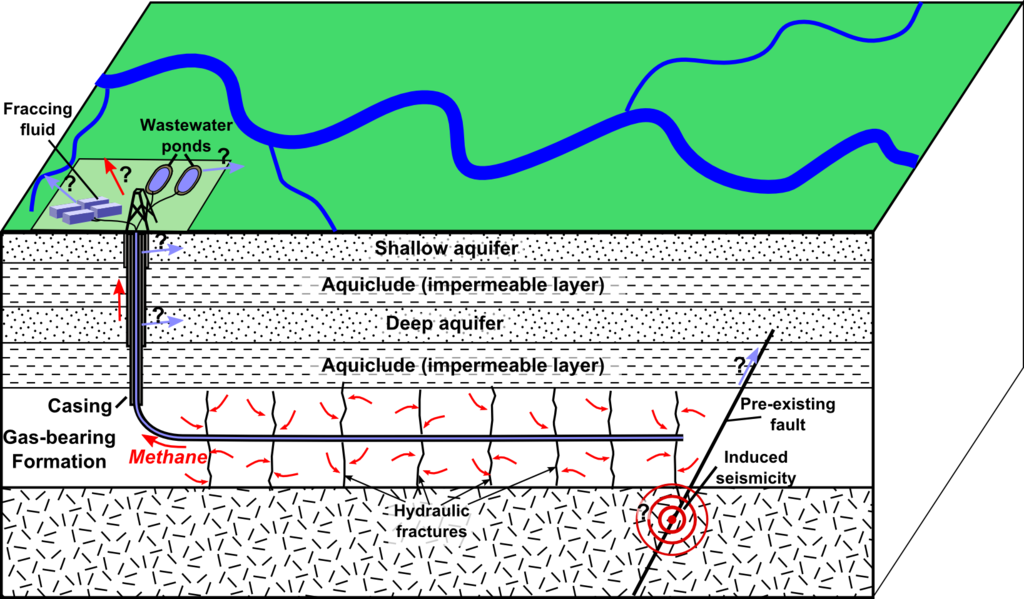 I was reading in the Guardian newspaper an article by comedy screenwriter Ian Martin (In the Thick of It) about how we are all being fracked as corporations find new ways of extracting more and more from us in pursuit of profit. Fracking, for those unfamiliar with the process, is the extraction of gas from rocks by using high pressure jets underground to break them up to the release the gas. Firms that are seeking licences to do this on a commercial scale are experiencing serious opposition from local people, not least because of the likelihood of toxic chemicals contaminating water courses and hence threatening human health (see graphic above left).
Moreover, the Murdoch newspapers take the position that that fracking is some sort of panacea – cheap, plentiful energy, produced locally and not subject to the whim of international diplomacy. Russia, for example.
I had not really thought of a metaphor of blasting rocks with high pressure jets. Fracketeering, as Martin calls it. So how are we being fracked? Here are a couple of examples from the article:
- estate agents’ “client progression fees”, where the buyer has to pay the estate agent to make the offer to the seller, even though the seller has already paid for this “service”;
- admin fees paid on online transactions – such as concert tickets – where the marginal cost is near to zero and where we, the customer, have already spent 20 minutes of our valuable time getting to the screen that tells us that we will have to pay for the privilege of paying (for our tickets).
Here are some that I am subject to, seemingly.
- In order to get online with my internet provider, I have to have a phone line that I do not need or want. The phone line costs the same as the broadband. No phone, no Broadband.
- paying to upload to this blog pictures of an illuminated Eiffel Tower that I took with my own camera;
- not being able to roll over digital credit from one month to the next on my dongle. Have I bought my 3Gb or not? Why can I not pay again when I have used it?
Graphic: “HydroFrac” by Mikenorton – Own work. Licensed under CC BY-SA 3.0 via Wikimedia Commons – https://commons.wikimedia.org/wiki/File:HydroFrac.png#/media/File:HydroFrac.png
Journalists reporting on Greece
Filed under: International, Journalism and News Reportage, Politics | Tags: Grexit, Paul Mason, Simon Nixon
Leave a Comment I was relatively late to the world of Twitter as a source of news. Naturally, one needs to follow a few journalists as well as informed individuals and institutions in order fully to appreciate its special immediacy. When it comes economics, I follow, amongst others, Paul Mason from Channel 4 TV in the UK and Simon Nixon from the Wall Street Journal and the Times of London. What these two journalists have in common is a passion for Greece and for reporting on the nature of the current Greek crisis and potential – though unknowable – solutions.
 Mason has taken to vlogging on a daily basis, usually from a cafe with an ATM in view of himself and/or the camera (left). He’s reflective and tries desperately to understand and articulate what is going on and what is needed from both sides to, at least temporarily, avert a potential conflagration across the Eurozone and Europe more generally. It seems to me that his tolerance of the Greek government and its leadership is based on its democratic legitimacy, the flawed logic of austerity as a means to economic growth and, perhaps, the sense that this crisis does have the potential to bring about a change in the global system of sovereign debt relief that, largely, benefits rich countries at the expense of the poor. He is not anti-capitalism.
By contrast, Nixon, is a conservative steeped in the belief in the legitimacy of the global system as it is. The crisis in Greece seems to have brought out worst in him. The tweet below, for example, demonstrates his belief in his own ability to diagnose the problem; namely, Syriza, and Yanis Varoufakis particularly.
So, for Nixon, there seems to be little recognition of any culpability for the previous, seemingly corrupt, Greek governments; the Euro project itself; the EU or monetarism. Only Syriza. My Twitter feed was overwhelmed on Tuesday evening with Nixon’s tweets from the “yes” demonstration in Athens. Whilst it was impressive, it is not surprising that there is a polarisation of opinion and that people take to the streets to express it. It does not make it right or viable. Ultimately we do not know. We cannot know.
Twitter, however, remains the most immediate way of following fast-moving stories.
Grexit
 When I was at university back in the 80s, I took a course entitled Political Sociology. Essentially it was a study of power. The core text was Stewart Clegg’s Frameworks of Power, an extremely difficult text (for an undergraduate), but every week ahead of the seminars, a chapter was consumed and prepared to present.
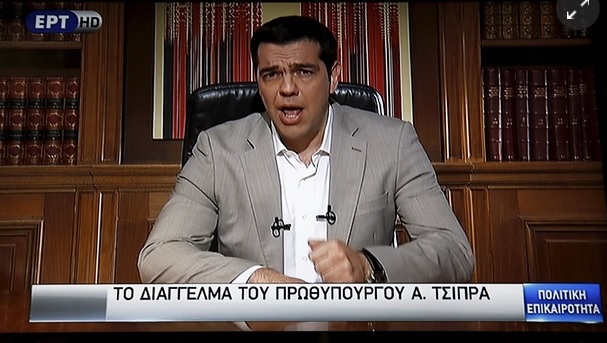
Clegg introduced me to the concept of Organisational Outflanking. This post is a partial celebration of this concept and a very good example of its employment. Say what we might about Alexis Tsipras, the Greek Prime Minister (above left), he is a fine exponent of the art. It does not matter how poor is the hand that one is dealt, it is still possible to outflank opponents by doing something unexpected. Tsipras announcing a referendum in the home of democracy was a master stroke. The creditors (the EU, the IMF and the ECB – the so-called Troika) were not expecting that. It took a little while for a response, the best indicator of a successful outflanking, as it were.
In writing this, I risk the wrath of Greek friends and colleagues who are being hurt by this crisis. Let us not forget that the crisis that we continue to try to deal with was caused by the banking sector, not the people of Greece. Moreover, Greece’s continued membership of the Euro was managed – conceivably fraudulently – by the banking sector for its own ends. That wonderful banking institution Goldman Sachs made a lot of money out of helping the then Greek Government to hide the true extent of the deficit in contravention of the Maastricht Treaty.
Locking poorer members of the European Union into a currency regime managed from the heart of Europe’s strongest economy, Germany, is a nonsense. When the going gets tough, countries devalue their currencies to render products and services cheaper. Without that lever, what other options are available to Governments? Erm…asking the Troika for money to pay back the Troika and the transfer of state assets, healthcare provision, etc.? 50 per cent unemployment of young people is but one unacceptable consequence of this.
I’m glad to see that Nobel Prizewinning economist, Paul Krugman, reported in Business Insider seems to have come out in support of Tsipras. Summed up in a nutshell:
“Over the past seven years, Krugman argues, the financial noose Europe has placed around Greece’s neck has strangled the Greek economy. Each time Europe has loaned Greece money, it has demanded spending cuts in return. And these spending cuts — austerity — have further damaged the Greek economy.
In the past, every time the situation has come to a head, Greece has caved. And, in the process, it has transformed itself into little more than a financial slave state mired in an economic depression.
There is no way Greece will ever be able to cut its way to prosperity, Krugman argues. And history suggests that any argument to the contrary is crazy.
Given that Europe refuses to restructure Greece’s debt in a sustainable way and allow the country to try to grow its way out of its misery, Greece has no choice but to default and withdraw.”
It is going to be tough with the banks closed. It is not just the people at the ATMs, but the economy more generally.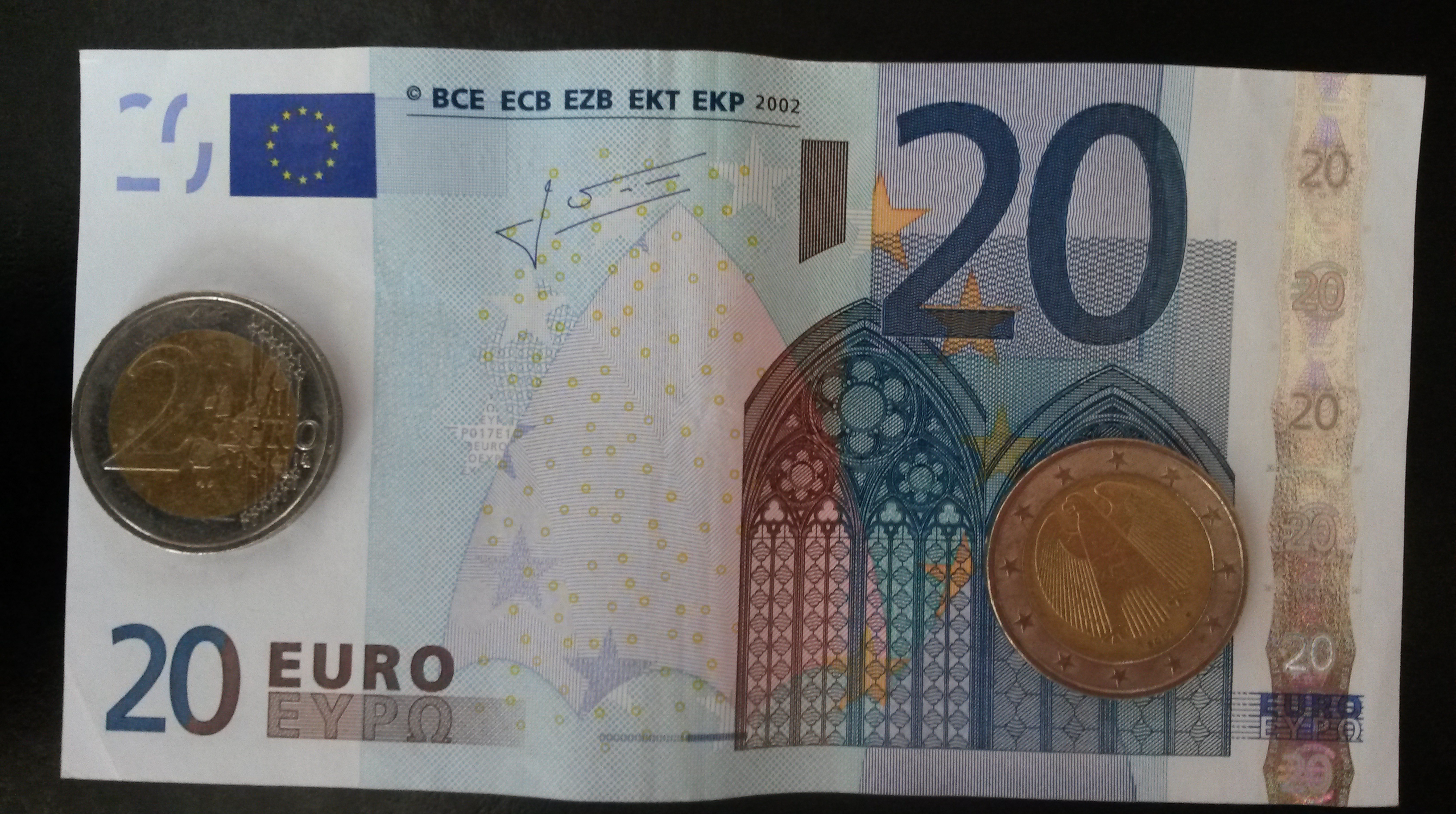 The whole point about banks is they deal the means of exchange of value; i.e. money. And when they are shut, this becomes very difficult. In response, we either find other stores of value such as gold (or as happened in Douglas Adams’ Hitch Hikers Guide to the Galaxy, the leaf) or we merely exchange things on the basis of a perceived equivalence.
The outcome – either the Troika gets real and accepts that we are dealing with real people and not inanimate institutions, or Greece goes it alone. It has been done before. But if that happens, Europe has to take a close look at itself.
By contrast:
https://twitter.com/strassenbahn13/status/615422529180704768
 Be informed
